
.png)


What is Rezūm, and why do people need it?
Rezūm water vapour therapy is a minimally invasive treatment for benign prostatic hyperplasia. BPH is a non-cancerous enlargement of the prostate, a gland located below the bladder and around the urethra.
Think of the urethra as a hose running through the middle of the prostate. When prostate tissue grows inward, it can squeeze the hose and slow the flow of urine.
Common BPH symptoms include:
- A weak, slow, or interrupted urine stream
- Difficulty starting urination
- Straining to urinate
- A feeling that the bladder did not empty
- Urgency or frequent urination
- Waking several times at night to urinate
- Dribbling after urination
- Episodes of urinary retention, when the bladder cannot empty
BPH is not prostate cancer. However, BPH symptoms can overlap with prostate cancer, infection, bladder conditions, urethral narrowing, and other problems. A urologist should confirm the cause before treatment.
What actually happens
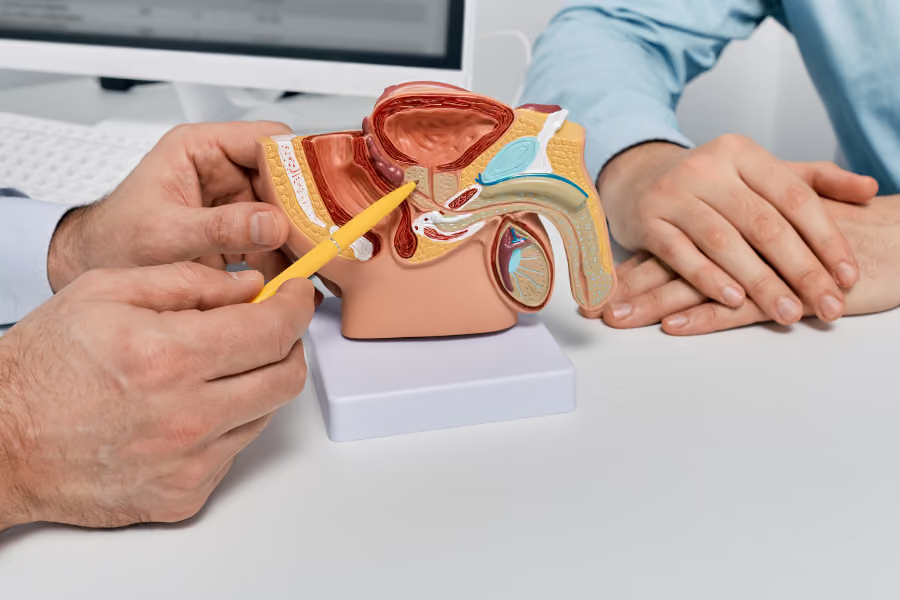
A urologist passes a narrow Rezūm device through the urethra. No skin incision is required. A small needle enters selected areas of enlarged prostate tissue and releases controlled water vapour for about nine seconds at each treatment site.
When the vapour condenses back into water, it releases stored heat inside the targeted tissue. This damages the obstructing cells. Over the following weeks and months, the body gradually removes the treated tissue. As the prostate shrinks, pressure on the urethra decreases.
The urologist plans the number and location of treatments based on the length, shape, and size of the prostate. Rezūm can also treat selected median-lobe enlargement, where tissue bulges near the bladder opening.
Why do it?
Rezūm may be considered when BPH symptoms are disrupting sleep, work, travel, exercise, or daily routines and when lifestyle changes or medication are not enough, cause unwanted side effects, or are not preferred.
It may appeal to people who want:
- An outpatient procedure without external incisions
- Local anaesthesia or light sedation rather than general anaesthesia in many cases
- No permanent implant
- A lower expected risk of new sexual dysfunction than many tissue-removing operations
- A treatment that can address selected median-lobe obstruction
- A shorter initial recovery than operations such as TURP or HoLEP
The trade-off is that improvement is gradual. Urinary symptoms can temporarily worsen before the treated tissue shrinks. Rezūm may also provide less dramatic or less immediate flow improvement than tissue-removing surgery.
In a five-year randomized study of adults over 50 with prostates measuring 30–80 cc, symptom and flow improvements remained significant at five years. The surgical retreatment rate was 4.4%. Those results apply to the study population and do not guarantee an individual outcome.
How much do BPH procedures cost in Canada?
How we estimate surgical costs: Ranges are estimates drawn from our network of 100+ private clinics and surgeons, and they're intentionally broad. Two people seeking the same procedure can receive very different quotes depending on province, surgeon, facility fees, and case complexity. Published prices aren't always comparable either—some are complete bundles, others exclude consultation, imaging, or follow-up. Only the clinic can give you an exact, itemized quote.
Exact fees depend on the clinic, province, anaesthesia plan, testing, catheter care, and follow-up. Ask for a written, itemized quote and confirm what happens if the procedure is postponed because of infection or another finding.
Cost in Canada (private)
Typical range: $4,000 – $9,000+
Cost in the United States
Typical self-pay range: US$3,000 –$8,000+
U.S. costs vary widely by office versus hospital setting, anaesthesia, insurance, and deductible. A low advertised office price may exclude consultation, cystoscopy, ultrasound, laboratory tests, anaesthesia, catheter supplies, or follow-up. Confirm the total expected cost in writing.
What is usually included
- Urologist’s procedure fee
- Rezūm single-use device and equipment
- Procedure room or facility fee
- Nursing and monitoring
- Local anaesthesia or the clinic’s standard sedation plan
- Immediate recovery care
- Catheter insertion and basic supplies
- A standard follow-up or catheter-removal visit
What may not be included
- Initial consultation
- Urinalysis, urine culture, blood work, or ECG
- PSA testing or prostate-cancer assessment
- Ultrasound, uroflowmetry, post-void residual testing, or cystoscopy
- Anesthesiologist-administered sedation
- Prescriptions after discharge
- Additional catheter supplies or an extra voiding trial
- Emergency care, hospital transfer, or unplanned admission
- Extra follow-up visits
- Travel and accommodation
Tips for comparing quotes
Ask whether the quote includes:
- Consultation and all pre-procedure testing
- Anaesthesia or sedation
- The Rezūm device
- Facility and nursing fees
- Catheter, drainage bags, and removal
- Medications provided at the clinic
- Follow-up visits and urine-flow testing
- After-hours support
- Management of urinary retention or infection
- Taxes, if applicable to any non-medical component
Insurance and financing options
- Private health insurance: Generally do not cover this procedure. Confirm directly with the insurer before booking.
- Financing plans: Some clinics use third-party payment plans. Review interest, fees, cancellation terms, and the total amount payable.
- Medical Expense Tax Credit (METC): Eligible out-of-pocket medical expenses may qualify for a non-refundable Canadian tax credit. Learn more about how to claim the METC for private surgery and confirm eligibility with the Canada Revenue Agency or a tax professional.
Rezūm procedure steps: what to expect
Rezūm commonly takes about 10–30 minutes, although total time at the clinic is longer for check-in, preparation, anaesthesia or sedation, recovery, and catheter teaching.
Basic steps
Assessment and confirmation
- The team confirms your symptoms, medications, urine results, prostate anatomy, treatment goals, and consent. Active urinary infection should be treated before the procedure.
Anaesthesia and comfort plan
- Depending on the clinic, you may receive local freezing around the prostate, medication to reduce anxiety, light intravenous sedation, or another anaesthetic plan. General anaesthesia is usually not required but may be used in selected settings.
Positioning and sterile preparation
- You lie on your back with your legs supported. The genital area is cleaned, and numbing gel may be placed in the urethra.
Device insertion
- The urologist gently passes the Rezūm instrument through the urethra to view the prostate and bladder outlet.
Water vapour treatments
- A small needle delivers brief doses of vapour into targeted areas of enlarged tissue. The number of treatments depends on prostate anatomy, including whether a median lobe is present.
Final check
- The device is removed. The urologist checks for bleeding and confirms the catheter plan.
Catheter placement
- Many people leave with a temporary urinary catheter because swelling can make urination difficult. A common plan is several days, but the duration may be longer with a larger prostate, urinary retention, weak bladder function, or significant swelling.
Recovery and discharge
- You are observed until it is safe to leave. The team reviews catheter care, medications, activity limits, expected urinary symptoms, and warning signs. Arrange a ride if you received sedation.
What can I expect from the recovery process?
Every recovery is different. Follow your urologist’s instructions if they differ from this general guide. Rezūm works gradually, so early irritation does not mean the treatment has failed.
First 24–72 hours
What it may feel like
- Burning or stinging with urination
- Urgency, frequency, or bladder spasms
- Pelvic, perineal, or penile discomfort
- Pink urine or a small amount of blood
- Tiredness after sedation
- Catheter discomfort or urine leaking around the catheter
Goals
- Keep urine draining
- Control discomfort
- Rest and walk gently
- Prevent constipation and straining
Drink fluids as directed. More is not always better for people with heart or kidney conditions, so follow your care team’s plan.
Week 1
Symptoms may be temporarily worse because the prostate is swollen. Many people have a catheter for part of this period.
- Take prescribed medicines as directed.
- Walk several short times each day.
- Avoid heavy lifting, strenuous exercise, cycling, and activities that put pressure on the perineum.
- Limit caffeine, alcohol, carbonated drinks, and spicy or acidic foods if they worsen urgency.
- Keep the catheter bag below bladder level and prevent kinks in the tubing.
- Do not pull on or remove the catheter unless instructed.
Ask when sexual activity can resume. Many clinicians recommend waiting until bleeding and significant discomfort have settled.
Weeks 2–4
Burning, urgency, frequency, and small amounts of blood may come and go. Some people notice early improvement, while others still feel irritated.
Goals: Resume light routines, keep bowel movements easy, and avoid activities that trigger bleeding or pelvic discomfort.
Many people can return to desk work within several days, but catheter use, sleep disruption, or urinary urgency may make a longer break more comfortable.
Weeks 5–12
Urine flow and bladder emptying often improve as treated tissue shrinks. Nighttime urination and urgency may take longer to settle because the bladder has adapted to obstruction over time.
Your urologist may repeat:
- International Prostate Symptom Score (IPSS)
- Urine-flow testing
- Post-void residual measurement
- Urinalysis or urine culture if symptoms suggest infection
Months 3–6
Improvement may continue for several months. Not every urinary symptom comes from the prostate, so urgency, frequency, or nighttime urination may persist if overactive bladder, diabetes, sleep apnea, excess evening fluids, or another condition is contributing.
Helpful tips
- Plan for the catheter: Use loose clothing and ask for written instructions before leaving.
- Prevent constipation: Fluids, fibre, walking, and a stool softener may help if approved.
- Track symptoms: Note stream strength, nighttime trips, urgency, discomfort, and medication use.
- Ease bladder irritation: Reduce caffeine and alcohol while symptoms are active.
- Avoid cycling early: A bicycle seat places pressure on the healing area.
- Keep follow-up: Catheter removal and a voiding trial should happen on schedule.
Red flags—call your care team or seek urgent care
- You cannot urinate after catheter removal
- The catheter stops draining and your lower abdomen becomes painful or swollen
- Fever of 38°C or higher, chills, or feeling acutely unwell
- Heavy bleeding, large clots, or bright-red urine that does not improve
- Severe pain not controlled by the recommended medication
- Foul-smelling or cloudy urine with worsening symptoms
- Chest pain, shortness of breath, fainting, or another medical emergency
What is Surgency?
As a family doctor in the public system, I believe transparency is a form of care. I created Surgency to help my patients struggling on long waitlists who wanted to understand all their options for timely medical attention.
Surgency is a free resource designed to empower and educate—helping you understand private pathways and find accredited surgeons within Canada. I hope Surgency brings you clarity.
Dr. Sean Haffey

Is Rezūm covered by insurance (OHIP, MSP, RAMQ, AHCIP)?
Rezūm is only covered in Manitoba. Other provincial public insurers, such as OHIP, AHCIP, MSP, RAMQ, do not cover Rezūm.
Choosing a surgeon and clinic
Choosing a clinician is an important part of private care. Look beyond a general claim of “BPH experience” and ask about Rezūm-specific assessment, technique, catheter management, and outcomes.
Rezūm-specific experience and volume
Ask how many Rezūm procedures the urologist performs each year and how often they treat:
- Prostates similar in size to yours
- Median-lobe obstruction
- People already using a catheter
- Larger glands or anatomy outside the pivotal-trial range
- People with previous BPH procedures
- Patients travelling from another province
Volume alone does not guarantee quality. The urologist should also explain how patient selection and treatment placement affect results.
Credentials and training
- Verify active licensure with the relevant provincial college.
- Look for an FRCSC-certified urologist or an appropriately qualified urologist with training in lower urinary tract and BPH procedures.
- Ask about device-specific Rezūm training.
- Confirm hospital privileges and the clinic’s emergency-transfer pathway.
For more detail, read How to understand surgeon credentials in Canada.
Outcomes and safety
Ask for recent clinic-specific information where available:
- Change in IPSS symptom scores
- Change in urinary flow and residual urine
- Typical catheter duration
- Urinary retention after catheter removal
- Urinary tract infection rate
- Emergency visits or unplanned hospital transfers
- Stricture or bladder-neck narrowing
- New ejaculatory or erectile symptoms
- Need to restart BPH medication
- Repeat Rezūm or another BPH procedure
Published trial results provide context, but a clinic should not present them as guaranteed personal outcomes.
A careful diagnosis before treatment
A high-quality assessment should confirm that prostate obstruction is the main cause of symptoms. Depending on your history, this may include:
- Symptom score and quality-of-life discussion
- Digital rectal examination
- Urinalysis and urine culture
- PSA testing when appropriate
- Prostate size measurement by ultrasound or other imaging
- Uroflowmetry
- Post-void residual measurement
- Cystoscopy in selected cases
- Bladder-function testing when the diagnosis is unclear
The clinician should consider infection, prostate cancer, urethral stricture, bladder stones, overactive bladder, medication effects, diabetes, neurologic disease, and sleep disorders.
Candidacy and alternatives
The pivotal five-year Rezūm trial involved adults over 50 with moderate-to-severe symptoms and prostate volumes of 30–80 cc. Real-world practice may include different patients, but evidence is not equally strong for every situation.
Your urologist should compare:
- Continued monitoring and lifestyle changes
- Alpha-blockers, 5-alpha-reductase inhibitors, tadalafil, or combination therapy
- UroLift or another minimally invasive option
- Aquablation
- TURP
- GreenLight laser treatment
- HoLEP or another enucleation procedure
- Simple prostatectomy for very large glands in selected cases
Ask why Rezūm fits your prostate size, shape, symptom severity, bladder function, and priorities better than these alternatives.
Treatment plan
Ask:
- How many treatment sites are expected?
- Is there a median lobe, and will it be treated?
- What anaesthesia or sedation will be used?
- Will I go home with a catheter?
- How long is the catheter expected to stay?
- What is the plan if I cannot urinate after removal?
- When should I expect early and full improvement?
- Which BPH medicines should I continue and when might they stop?
Facility and safety systems
Choose an appropriately accredited facility with:
- Sterile cystoscopy equipment and trained nursing staff
- Appropriate monitoring for the anaesthesia level used
- A clear plan for urinary retention, bleeding, infection, or an allergic reaction
- Written catheter education
- After-hours contact instructions
- A defined pathway for emergency transfer to hospital
Aftercare for out-of-province patients
Before travelling, confirm:
- How long you should remain near the clinic
- Where and when the catheter will be removed
- Who will perform a repeat voiding trial if needed
- Whether follow-up is virtual or in person
- Who manages infection, retention, or bleeding after you return home
- Whether the clinic sends an operative note and follow-up plan to your local clinician
Transparent pricing
Request an itemized quote showing the urologist, facility, device, anaesthesia, catheter, follow-up, and testing fees. Ask what could increase the total and what happens if treatment is cancelled or delayed.
Questions to ask at your Rezūm consultation
Experience and results
- How many Rezūm procedures do you perform each year?
- How often do you treat a prostate like mine?
- What are your catheter, infection, retention, and retreatment rates?
Diagnosis and fit
- What is causing my symptoms, and how confident are you that the prostate is the main problem?
- What is my prostate volume? Do I have a median lobe?
- Would medication, UroLift, Aquablation, TURP, HoLEP, or another option fit me better?
Procedure and safety
- What anaesthesia will I receive?
- How many vapour treatments do you expect to deliver?
- What is the plan if cystoscopy shows a stricture, stone, or unexpected anatomy?
- How do you manage urgent complications after hours?
Catheter and recovery
- Will I leave with a catheter, and for how long?
- Where will it be removed?
- What happens if I cannot urinate afterward?
- When can I drive, work, exercise, cycle, travel, and have sex?
Sexual and urinary outcomes
- What changes to ejaculation, erections, orgasm, urgency, or leakage are possible?
- How long should I wait before deciding whether treatment worked?
- When would you recommend medication or another procedure?
Cost and logistics
- What is included in the quote?
- Are testing, sedation, catheter supplies, removal, and follow-up included?
- What costs could arise from retention, infection, or additional visits?
Signals of a high-quality Rezūm program
- Confirms BPH and rules out other causes of urinary symptoms
- Measures prostate size and assesses median-lobe anatomy
- Explains why Rezūm fits your goals—and when it does not
- Shares realistic benefits, limitations, and retreatment possibilities
- Has a written catheter and failed-voiding-trial plan
- Operates in an appropriately accredited facility
- Provides clear after-hours support and hospital-transfer protocols
- Gives transparent, itemized pricing
If you're currently interested in private surgical pathways within Canada, you can click here for a list of providers.

Frequently asked questions
How do I know if Rezūm is right for me?
Rezūm may be appropriate when prostate enlargement is causing meaningful urinary symptoms and you want a minimally invasive option that does not leave a permanent implant.
Signs Rezūm may fit your goals
- Your symptoms are bothersome: Weak stream, urgency, frequency, incomplete emptying, or nighttime urination affects daily life.
- Testing supports BPH obstruction: Your history, examination, flow testing, residual urine, imaging, or cystoscopy points to the prostate as the main cause.
- Conservative care is not enough: Lifestyle changes or medicines have not provided acceptable relief, cause side effects, or are not preferred.
- You value sexual-function preservation: Avoiding ejaculatory or erectile changes is a major priority, while understanding that no treatment has zero risk.
- You accept gradual improvement: You can tolerate temporary irritation and wait weeks to months for the full effect.
- Your anatomy is suitable: Prostate size and shape can be treated safely, including a selected median lobe when present.
When another option may be better
- You need immediate, powerful relief: Severe obstruction, recurrent retention, or complications may favour a tissue-removing procedure.
- Your prostate is very large: HoLEP, Aquablation, or another operation may provide more predictable opening in selected large glands.
- Your bladder muscle is weak: Removing prostate obstruction may not restore normal emptying if the bladder cannot contract well.
- You have another blockage: A urethral stricture, bladder-neck contracture, or stone may require different treatment.
- Cancer has not been assessed: Rezūm treats BPH, not prostate cancer.
- You have an active infection: Infection should be treated before instrumentation.
- You cannot manage a temporary catheter: Discuss whether another pathway or support plan is safer.
Seek assessment sooner if you have
- Inability to urinate
- Recurrent urinary infections
- Blood in the urine
- Bladder stones
- Kidney swelling or reduced kidney function related to obstruction
- Increasing residual urine or repeated retention
- Unexplained weight loss, bone pain, or other concerning symptoms
Inability to urinate with painful lower-abdominal swelling requires urgent medical care.
Do I need a referral?
Yes and no—you can reach out to any of the private surgeons listed on Surgency without a referral. Their intake teams are happy to answer questions, explain what they treat, share pricing ranges, and walk you through next steps.
However, to book a formal consultation with the surgeon, you'll typically need a referral from your family doctor or nurse practitioner. Don't have one? Many of the clinics can help coordinate a virtual GP appointment to get the referral paperwork sorted. All surgeons listed on Surgency offer virtual initial consultations, so you don't need to travel until you and the surgeon have agreed on a plan.
Before your consultation, expect the clinic to request relevant medical records and recent diagnostic imaging (X-ray, MRI, CT, ultrasound, lab work, etc.). Having these ready speeds up the process and lets the surgeon give you specific guidance on your very first call.
How do I prepare?
Your urologist’s instructions come first. Ask for a written plan, especially for medicines, fasting, transportation, antibiotics, and catheter care.
Complete the assessment
Your clinic may request:
- Urinalysis and urine culture
- PSA testing when appropriate
- Kidney function and other blood work
- Prostate ultrasound or other imaging
- Uroflow and post-void residual measurement
- Cystoscopy
- ECG or anaesthesia assessment based on your health and sedation plan
Tell the clinic if you develop fever, burning urination, cloudy urine, or worsening urgency before the procedure. An active infection may require treatment and rescheduling.
Review medicines and supplements
Provide a complete list, including:
- Blood thinners and antiplatelet medicines
- Diabetes medicines
- BPH medicines
- Anti-inflammatory medicines
- Herbal products and supplements
- Allergies to antibiotics, latex, adhesive, or anaesthetic medicines
Do not stop a blood thinner on your own. The prescribing clinician and urologist should give a safe plan.
Ask whether to continue your alpha-blocker or other BPH medicine during the first weeks after Rezūm. Some clinicians continue it temporarily while swelling settles.
Prepare for a catheter
Assume you may go home with a catheter unless your urologist says otherwise.
- Learn how to empty and switch drainage bags.
- Ask how to secure the tubing to your thigh.
- Obtain written instructions for blockage, leakage, blood, or bladder spasms.
- Confirm the removal date and location.
- Arrange help if you have limited hand mobility or vision.
- Wear loose trousers and supportive underwear.
Prepare your home
- Place water, food, medicines, and a phone within easy reach.
- Have a thermometer available.
- Stock simple, fibre-rich foods to reduce constipation.
- Avoid planning strenuous work, cycling, long drives, or air travel immediately after treatment.
- Arrange a ride home if you receive sedation.
The day before and morning of treatment
- Follow fasting instructions exactly if sedation is planned.
- Use any prescribed antibiotic as directed.
- Shower and follow the clinic’s skin-preparation instructions.
- Bring identification, health information, a medication list, and requested test results.
- Leave valuables at home.
- Bring glasses and hearing aids so you can understand discharge teaching.
Plan for recovery
Before booking, confirm:
- Expected time off work
- Catheter duration
- Driving restrictions
- When sexual activity and exercise can resume
- Who to contact after hours
- Where to go if the catheter stops draining
How much does Surgency cost?
Surgency is free for patients, funded for by surgeons.
Surgeons—who meet our listing criteria—pay a flat fee to list on the Surgency platform. To maintain objectivity, there are no commissions, referral fees, nor any ranking or recommending one surgeon over another.
Surgency is patient-first. Our goal is to make the process of finding a private surgeon as simple as possible. You choose who to contact. Learn more in our Advertising Policy.
What are the risks involved?
Your personal risk depends on prostate size and shape, bladder function, infection history, blood-thinning medicine, previous procedures, and general health. Discuss your individual risk with your urologist.
Common and usually temporary
- Burning with urination: Often settles as inflammation improves.
- Urgency and frequency: Symptoms may initially worsen before getting better.
- Blood in urine or semen: Usually light and temporary but may recur with activity.
- Pelvic or penile discomfort: May include bladder spasms or discomfort with ejaculation.
- Temporary difficulty urinating: Swelling may require a catheter.
- Catheter discomfort: Leakage, bladder spasms, and irritation can occur.
Less common
- Urinary tract infection: May require antibiotics.
- Prolonged urinary retention: A catheter may need to stay longer or be reinserted.
- Epididymitis or prostatitis: Inflammation or infection can cause pain and swelling.
- Urethral stricture or bladder-neck narrowing: Scar tissue may reduce urine flow and require another procedure.
- Persistent irritative symptoms: Urgency or frequency may continue, especially when bladder dysfunction also exists.
- Urinary leakage: New or worsened incontinence is possible.
Sexual side effects
Rezūm is often selected to reduce the likelihood of sexual side effects compared with some operations, but preservation is not guaranteed.
Possible issues include:
- Reduced ejaculatory volume
- Dry or absent ejaculation
- Pain or discomfort with ejaculation
- Changes in orgasm
- New or worsened erectile dysfunction
The pivotal five-year trial reported no sustained new device- or procedure-related erectile dysfunction in the study group. Individual results and broader real-world experiences can differ.
Treatment may not provide enough relief
- Symptoms may improve only partly.
- Flow may remain limited if bladder weakness or another obstruction is present.
- BPH medication may still be needed.
- Prostate tissue can regrow or symptoms can return.
- Repeat Rezūm or a different procedure may be required.
Uncommon but important
- Significant bleeding or clot retention
- Severe infection or sepsis
- Bladder or urethral injury during instrumentation
- Anaesthesia or sedation complications
- Allergic reaction
- Unplanned emergency transfer or hospital admission
How you can lower risk
- Treat urinary infection before the procedure.
- Follow the blood-thinner plan exactly.
- Keep the catheter tubing unkinked and the bag below the bladder.
- Attend catheter removal and follow-up on schedule.
- Avoid heavy lifting, cycling, and straining until cleared.
- Report fever, blocked drainage, retention, or heavy bleeding promptly.
- Do not judge the result too early; improvement is usually gradual.
What are the risks of delaying Rezūm?
Not everyone with BPH needs a procedure. The right choice depends on symptom severity, bladder emptying, complications, kidney health, and how much the symptoms affect your life.
Possible risks when obstruction is significant
Worsening bladder symptoms
- The stream may weaken further.
- Urgency, frequency, and nighttime urination may increase.
- Sleep, travel, work, and social activities may become more difficult.
Acute urinary retention
- The bladder may suddenly become unable to empty.
- Emergency catheter placement may be needed.
Bladder muscle damage
- Long-standing obstruction can stretch and weaken the bladder.
- Even after the prostate is treated, a severely weakened bladder may not empty normally.
Infections and stones
- Residual urine can contribute to recurrent urinary infections or bladder stones.
Bleeding
- An enlarged prostate can sometimes cause visible blood in the urine. Blood should still be assessed because other conditions can cause it.
Kidney or upper urinary tract problems
- Severe chronic retention can increase pressure on the kidneys and affect kidney function in some people.
Ongoing medication burden
- Continuing medication may be reasonable, but side effects, interactions, and adherence should be reviewed over time.
When watchful waiting can be reasonable
Monitoring may be appropriate when:
- Symptoms are mild and manageable
- Bladder emptying is acceptable
- Kidney function is stable
- There are no recurrent infections, stones, or retention episodes
- Lifestyle changes or medication provide adequate relief
- You understand which changes require reassessment
When not to delay assessment
Seek prompt medical review for:
- Inability to urinate
- Recurrent retention
- Fever or infection symptoms
- Visible blood in the urine
- Recurrent urinary infections
- Bladder stones
- Increasing post-void residual urine
- Kidney swelling or reduced kidney function
- New bone pain, unexplained weight loss, or concern for prostate cancer
A procedure should follow a clear diagnosis and shared decision-making—not urgency or pressure to purchase treatment.
I still have questions
If you still have questions, then feel free to contact us directly.
Please note: Surgency is not a clinic itself. Nor can we help with emergency situations, or provide personalized medical advice—that is between you and your surgeon. If you are experiencing acute or severe symptoms, please present to your local emergency department or urgent care centre.






.avif)