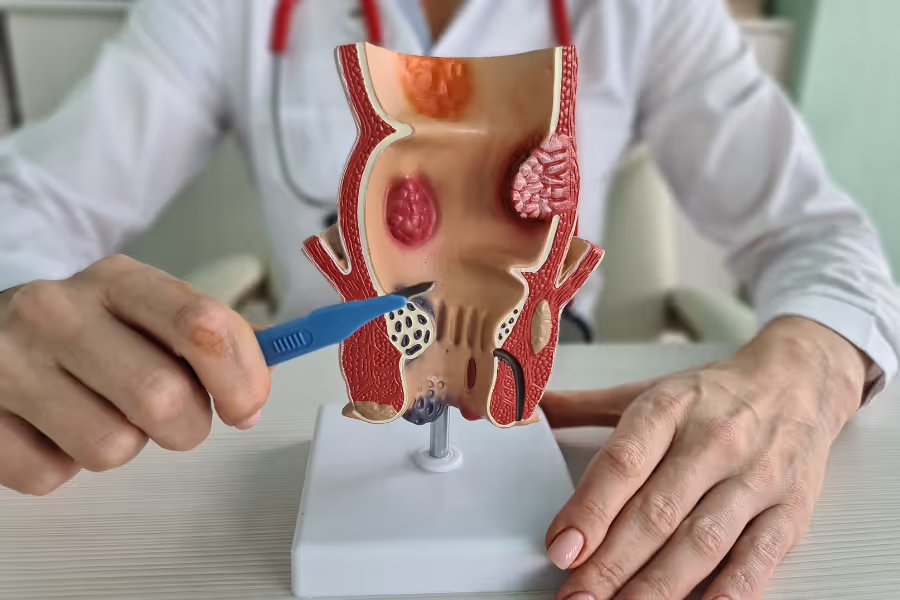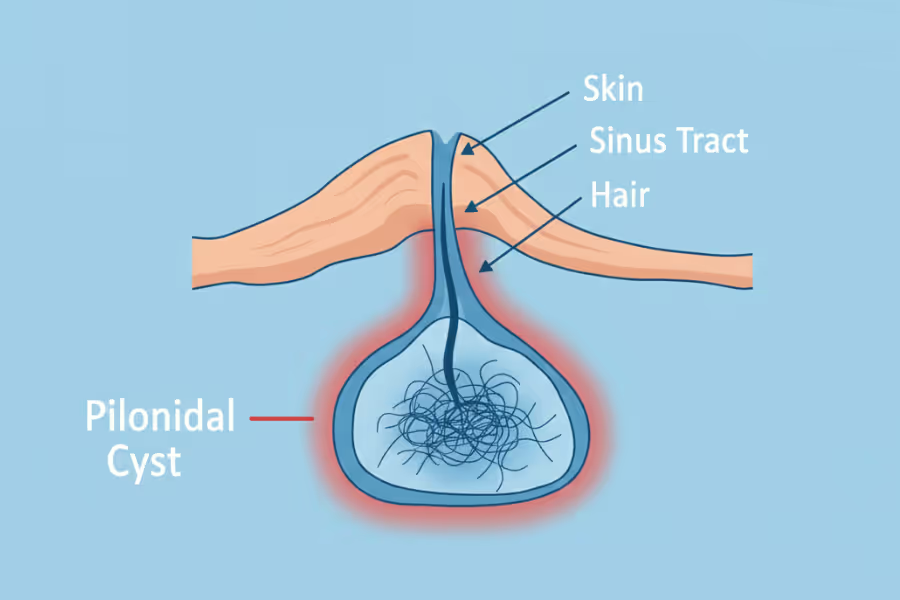

Looking to learn more about a specific colorectal, anal, or pilonidal procedure? Click “See Procedures” below. If you’d like to speak with a private surgeon, click “See Surgeons” for a list of accredited colorectal or general surgeons in Canada. You can explore their profiles and reach out directly.

As a family doctor in the public system, I believe transparency is a form of care. I created Surgency to help my patients struggling on long waitlists who wanted to understand all their options for timely medical attention.
Surgency is a free resource designed to empower and educate—helping you understand private pathways and find accredited surgeons within Canada. I hope Surgency brings you clarity.
Dr. Sean Haffey

Learn more about specific colorectal, anal, and pilonidal surgeries by clicking into our procedure guides below. Each guide covers what the procedure is for, what the surgical process typically looks like, cost considerations, recovery timelines, how to compare surgeons, and the key risks to understand.
Healthcare rules vary by province, but people often need to travel out-of-province for private colorectal, anal, and pilonidal surgery because most of these operations are considered “medically necessary” and are therefore insured under the provincial plan. In many provinces, surgeons/hospitals can’t bill you privately for an insured procedure (or surgeons can’t easily opt out), so private access is limited locally—making out-of-province options the reality under current regulations.
Procedures that are often not medically necessary (and therefore more likely to be available privately without out-of-province travel) include the removal of asymptomatic perianal skin tags, cosmetic perianal procedures, and other elective interventions where the primary purpose isn’t treatment of an insured medical condition.
For an in-depth understanding on the private system, see How Does Private Surgery Work in Canada.
Colorectal and anal symptoms can be agonizing. Waiting for care can mean ongoing sharp pain, bleeding, recurrent abscesses or drainage, sitting discomfort, and shrinking confidence—often with a daily “mental load” of managing symptoms and dreading bathroom visits.
Many patients choose private care because they want to get back to living normally—sitting comfortably, exercising, working, and traveling without planning everything around bathroom access, pain management, or fear of severe flare-ups.
Sensitive colorectal procedures benefit heavily from reliable follow-up. Staying in Canada can provide a regulated environment and easier access to your surgical team during recovery, including support for complex pain control, bowel management, or delicate wound concerns if they arise.
Surgency is a directory and educational resource, not a clinic. We help you compare accredited surgeons, clarify
These procedures relieve daily, agonizing discomfort—but they are also incredibly sensitive, intimate surgeries in complex areas where specialized experience really matters. Going private means choice. Reach out to a few surgeons and look for someone who routinely performs your exact operation (hemorrhoidectomy, anal fissure repair, or pilonidal cysts), can clearly explain the recovery timeline, and treats your situation with the utmost dignity and respect.





FRCSC-certified general surgeon specializing in minimally invasive and mesh-free hernia surgery, gallbladder removal, and additional focus on anal reconstruction/ rejuvenation.

A leading expert in minimally invasive general surgery specializing in advanced laparoscopic techniques for safe, rapid-recovery procedures for hernias & gallbladder disease.
When accessing private care, patients can expect a rigorous standard of safety and professionalism comparable to top Canadian public institutions.
Colorectal procedures involve sensitive, infection-prone areas. In private settings, patients should expect regulated facilities, strong anesthesia standards, and careful case selection—especially for complex fistulas, advanced hemorrhoids, or recurrent pilonidal disease.
Outcomes heavily depend on specialized technique to preserve continence and ensure proper healing. A high-quality consult usually includes: the exact nature of the problem, the planned surgical strategy, realistic expectations for pain during recovery, and discussion of recurrence risk. Patients should expect specificity—vague reassurance is a red flag.
For advanced disease (like complex inflammatory bowel conditions), patients may need ongoing medical management. You can expect the surgeon to be explicit about what they can cure surgically versus what requires long-term gastroenterology support.
Private care typically offers clearer timing, fewer unknowns, and more predictable planning—plus detailed prep instructions (like bowel prep, if required) and a defined post-op plan (sitz baths, bowel management, hygiene, and pain control).