


.png)
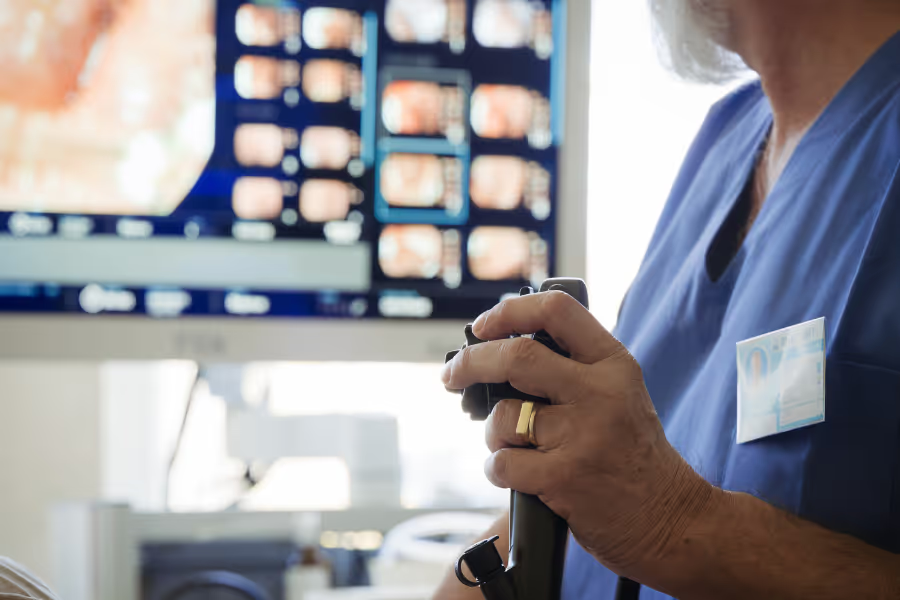

What is an upper endoscopy (gastroscopy / EGD) and why do people need it?
An upper endoscopy (often called a gastroscopy or EGD) is a procedure that lets a doctor visually inspect the upper part of your gastrointestinal (GI) tract—which includes the esophagus, stomach, and the beginning of the small intestine (duodenum).
Think of it as a highly detailed, real-time video tour of your upper digestive system. Using a thin, flexible tube equipped with a tiny camera and light (an endoscope), the doctor can see exactly what is causing your symptoms.
What actually happens
Visual inspection
The endoscope transmits high-definition images to a monitor, allowing the doctor to look for inflammation, ulcers, tumors, or strictures (narrowing).
Biopsy
If the doctor sees anything unusual, they can pass tiny instruments through the scope to take a small tissue sample (biopsy) for testing. This is painless.
Treatment
In some cases, the doctor can treat problems right then and there—such as stretching a narrowed esophagus or removing polyps.
Double procedures
Many patients who need an upper endoscopy also have lower GI symptoms or are due for colon cancer screening. Clinics often offer a "double procedure" (gastroscopy and colonoscopy) done back-to-back under the same sedation, which is more convenient and saves significantly on facility and anaesthesia fees compared to doing them separately.
Why do it?
When conservative treatments like diet changes and antacids fail to resolve chronic heartburn, difficulty swallowing, or unexplained abdominal pain, a gastroscopy provides definitive answers. It is the gold standard for diagnosing conditions like GERD, Barrett's esophagus, celiac disease, and stomach ulcers.
How much does upper endoscopy cost in Canada?
How we estimate surgical costs: Ranges are estimates drawn from our network of 100+ private clinics and surgeons, and they're intentionally broad. Two people seeking the same procedure can receive very different quotes depending on province, surgeon, facility fees, and case complexity. Published prices aren't always comparable either—some are complete bundles, others exclude consultation, imaging, or follow-up. Only the clinic can give you an exact, itemized quote.
Exact prices depend on the clinic and whether biopsies are needed. Always ask for a written, itemized quote.
Cost in Canada (private)
Typical range: $1,500 - $3,000+
Cost in the United States
Typical range: CA$3,000 - CA$5,000+
What’s usually included
- Specialist fee and sedation/anaesthesia services.
- Accredited facility time and the use of the endoscopic equipment.
- Standard biopsies (taking the sample).
What’s often not included
- Initial consults prior to the procedure.
- Pathology fees: The laboratory cost to analyze the biopsy samples is often billed separately.
- Therapeutic interventions: If the doctor finds something that needs immediate treatment (like removing a polyp or stretching a stricture), there may be additional surgical or equipment fees depending on the clinic.
- Travel and accommodation if you’re out-of-province.
Tips to compare quotes
Ask if the quote is a global bundle. Specifically, ask how pathology (lab) fees are handled, as these can add unexpected costs if biopsies are taken.
Insurance and financing options
- Private health insurance: Some plans may cover part of the diagnostic costs. Check your policy directly.
- Financing plans: Many clinics offer monthly payment options. Learn more about your financing options here.
- Medical Expense Tax Credit (METC): This is a non-refundable credit that reduces your taxes when you pay out-of-pocket for eligible medical expenses. Learn more about how to claim METC for private surgeries.
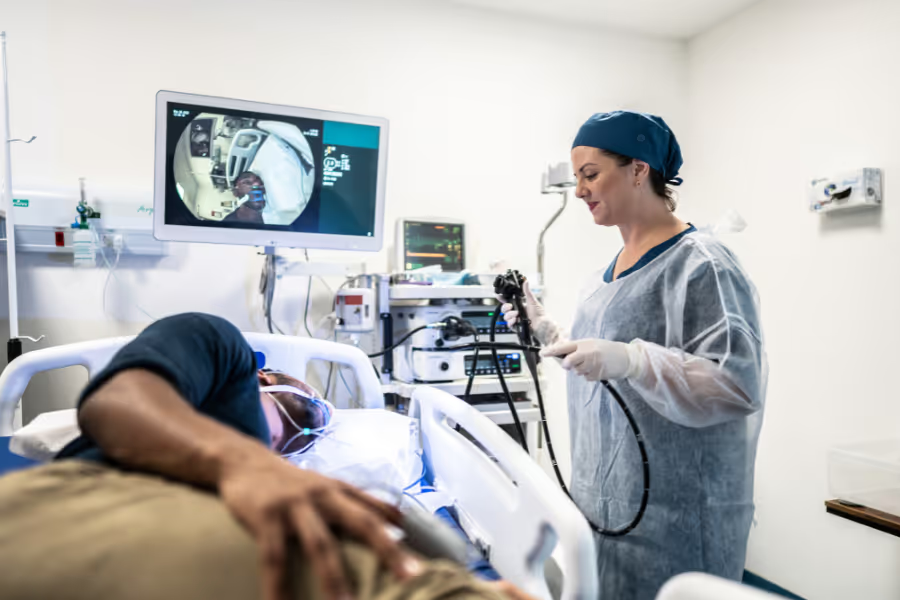
Upper endoscopy: what to expect
A typical upper endoscopy is very quick, usually taking only 10 to 20 minutes of actual procedure time. Add an hour or two at the centre for check-in, sedation, and recovery.
Basic steps
1. Check-in and confirmation
You meet the team, review your medical history, and complete safety checks.
2. Sedation and prep
Most patients receive conscious sedation (an IV medication that makes you deeply relaxed and drowsy) so you won't feel discomfort or remember the procedure. A local anaesthetic spray may also be used to numb your throat.
3. Positioning
You will be asked to lie comfortably on your left side. A small mouth guard is placed to protect your teeth and the scope.
4. The endoscopy
The doctor gently guides the endoscope through your mouth, down your esophagus, into your stomach, and into the duodenum. Air is gently pumped in to expand the stomach for a clear view.
5. Examination and biopsy
The doctor examines the lining and takes biopsies if needed. You will not feel the biopsies being taken.
6. Wake-up and instructions
The scope is removed, and you are taken to a recovery area to wake up. Once the sedation wears off, you will be given discharge instructions and can go home.

What to expect from the recovery process
Recovery from a gastroscopy is fast since no incisions are made.
The First 24 Hours
Reality check: You will likely feel groggy from the sedation. Your throat may feel mildly sore or scratchy, and you might feel a bit bloated from the air pumped into your stomach during the exam.
Goals: Rest and let the sedation completely leave your system.
Activities: Rest at home. You must not drive, operate machinery, or make major legal decisions for 24 hours. Start with soft foods and liquids, then return to your normal diet as tolerated.
Day 2 and Beyond
Back to normal.
Goals: Wait for any biopsy results and follow your new treatment plan.
Activities: You can return to work, driving, and all normal activities the day after the procedure. Your throat should feel completely normal within a day or two.
Helpful tips
- Arrange a ride: You cannot drive yourself home after receiving sedation. A trusted friend or family member must pick you up.
- Throat lozenges: If your throat feels scratchy, a mild throat lozenge or warm tea can help.
Red flags—call your care team
- Severe, worsening abdominal pain (more than just mild gas cramps).
- Vomiting blood or material that looks like coffee grounds.
- Difficulty breathing or severe trouble swallowing.
- A fever or chills.
What is Surgency?
As a family doctor in the public system, I believe transparency is a form of care. I created Surgency to help my patients struggling on long waitlists who wanted to understand all their options for timely medical attention.
Surgency is a free resource designed to empower and educate—helping you understand private pathways and find accredited surgeons within Canada. I hope Surgency brings you clarity.
Dr. Sean Haffey
Why do Canadians get this procedure done privately?
Shorter wait times
Public wait lists for a specialist consult and an endoscopy can stretch for months if your symptoms are not considered an immediate emergency. Living with daily stomach pain, severe reflux, or anxiety about a missed diagnosis is incredibly draining. Private centres can often line up an assessment and procedure in weeks, getting you answers and a treatment plan much faster.
Choice and control
Going private lets you:
- Pick your specialist (typically a gastroenterologist or general surgeon).
- Schedule the procedure around your work or personal life.
- Choose the level of sedation you are most comfortable with.
Peace of mind
You know exactly when your scope will happen. Getting answers quickly allows you to move forward with the right medications or lifestyle changes without the prolonged stress of not knowing.
Integrated care
Private pathways often offer a streamlined experience, moving from consultation to procedure to pathology results efficiently, with virtual follow-ups available to discuss your results.
How to choose a specialist and clinic
Choosing the right clinic ensures a comfortable, safe experience with accurate results. Here's how to choose wisely for an upper endoscopy.
What to look for
Experience and volume
Ask how many endoscopies they perform each year. You want a specialist who is highly experienced in identifying subtle mucosal changes.
Also ask about their case mix:
- Biopsies and polyp removal — do they routinely take biopsies for H. pylori or celiac disease during the scope?
- Therapeutic procedures — if they find a stricture, are they equipped to dilate it during the same procedure?
Credentials and training
- Verify licensure with your provincial college (CPSO Ontario, CPSBC BC, CPSA Alberta, CMQ Québec, etc.)
- Look for FRCPC-certified gastroenterologists or FRCSC-certified general surgeons.
For a more in-depth guide, read How to Understand Surgeon Credentials in Canada
Outcomes and safety (ask for real numbers)
Request recent data, ideally for upper endoscopies specifically:
- Perforation rate (a very rare but serious complication)
- Bleeding rate (requiring intervention)
- Patient-reported outcomes: satisfaction with sedation and communication of results
Clear indications and alternatives
Make sure they confirm you're a good candidate for the procedure. A careful specialist should explicitly assess:
- whether symptoms match clinical indications (refractory GERD, dysphagia, unexplained weight loss)
- whether you've had an adequate trial of conservative treatment (like a course of PPI medications)
- whether non-invasive testing (like a breath test for H. pylori) is a better first step
Facility accreditation and safety systems
Choose accredited centres (e.g., Accreditation Canada / CAAASF) with:
- stringent endoscope cleaning and sterilization protocols (ask about their reprocessing standards)
- experienced anaesthesia teams for conscious sedation or propofol
- a clear transfer pathway to a hospital if needed
Rehab integration
You want a written plan for:
- how and when you will receive your biopsy pathology results
- dietary instructions for the first 24 hours
Transparent pricing
Request an itemized quote including:
- specialist fee
- facility fees
- anaesthesia
- pathology fees (crucial to know if biopsy lab work is included)
- follow-ups (and whether virtual follow-ups are included)
Questions to ask at your endoscopy consultation
Specialist and plan
- How many upper endoscopies do you perform yearly?
- Will you automatically test for H. pylori or celiac disease while you are in there?
Technique and safety
- What are your rates of perforation or bleeding?
- What are your clinic's endoscope sterilization protocols?
Recovery and after-care
- How long does it usually take to get biopsy results back?
- What symptoms should prompt an urgent call?
Costs and logistics
- What exactly is included in my quote?
- Are pathology/lab fees for biopsies included, or billed separately?
- How are follow-ups handled if I live out of province?
Signals of a high-quality program
- Performs endoscopies regularly (not rarely) and explains the process clearly
- Operates in an accredited facility with flawless sterilization records and experienced anaesthesia
- Provides a clear timeline for pathology results and follow-up
- Offers transparent, itemized pricing with clear terms
If you're currently interested in private surgical pathways within Canada, you can click here for a list of providers.

Frequently asked questions
How do I know if an upper endoscopy is right for me?
An upper endoscopy is right for patients who have unexplained upper digestive symptoms or who haven't responded to standard treatments.
Signs an upper endoscopy might be right for you
- Conservative treatment has failed: You've tried prescription antacids or diet changes for weeks with no relief from severe heartburn.
- Troubling symptoms (Red Flags): You are experiencing difficulty swallowing (food getting stuck), unexplained weight loss, or persistent vomiting.
- Diagnostic clarity: You need a biopsy to confirm a diagnosis like celiac disease or Barrett's esophagus.
- You want a definitive solution: You're looking for an exact diagnosis rather than guessing which medication might work.
When it might not be the right option
- Symptoms are recent and mild: If you've only had heartburn for a few days, a trial of over-the-counter medication is usually recommended first.
- Lower GI focus: If your symptoms are exclusively lower abdominal pain, diarrhea, or bright red blood in your stool, a colonoscopy is likely the appropriate procedure.
When to get assessed sooner
- You are vomiting blood or material that looks like coffee grounds.
- You have black, tarry stools (a sign of upper GI bleeding).
- You are entirely unable to swallow food or liquids.
Do I need a referral?
Yes and no—you can reach out to any of the private surgeons listed on Surgency without a referral. Their intake teams are happy to answer questions, explain what they treat, share pricing ranges, and walk you through next steps.
However, to book a formal consultation with the surgeon, you'll typically need a referral from your family doctor or nurse practitioner. Don't have one? Many of the clinics can help coordinate a virtual GP appointment to get the referral paperwork sorted. All surgeons listed on Surgency offer virtual initial consultations, so you don't need to travel until you and the surgeon have agreed on a plan.
Before your consultation, expect the clinic to request relevant medical records and recent diagnostic imaging (X-ray, MRI, CT, ultrasound, lab work, etc.). Having these ready speeds up the process and lets the surgeon give you specific guidance on your very first call.
How should I prepare for upper endoscopy?
Your clinic's instructions come first — follow their fasting plan precisely.
Prehab and health optimization
Maintain what you can
- Keep generally active, but avoid strenuous exercise the morning of the procedure.
Medication review
- Share all prescriptions, OTC meds, and supplements.
- Diabetes medications: You will need specific instructions on adjusting insulin or oral meds since you will be fasting.
- Pause blood thinners and anti-inflammatories as directed to reduce bleeding risk if a biopsy is taken.
Food, meds, and surgery-day prep
Fasting (The Golden Rule)
- You must completely stop eating solid foods at least 8 hours before the procedure.
- You can usually have clear liquids (water, apple juice, black coffee without milk) up until 2 to 4 hours before the scope. Following these fasting rules is critical for your safety to prevent choking or aspiration while sedated.
What to bring
- Health card/ID and medication list.
- Comfortable clothing.
- Someone to drive you home (mandatory).
Red flags to know
- Severe pain: Severe, worsening abdominal pain (more than just mild gas cramps).
- Bleeding: Vomiting blood or passing black, tarry stools.
- Breathing issues: Difficulty breathing or severe trouble swallowing.
- Fever: Temperature above 38.5°C.
How much does Surgency cost?
Surgency is free for patients, funded for by surgeons.
Surgeons—who meet our listing criteria—pay a flat fee to list on the Surgency platform. To maintain objectivity, there are no commissions, referral fees, nor any ranking or recommending one surgeon over another.
Surgency is patient-first. Our goal is to make the process of finding a private surgeon as simple as possible. You choose who to contact. Learn more in our Advertising Policy.
What are the risks involved?
An upper endoscopy is considered a safe and routine procedure. Discuss any concerns with your specialist.
Common and usually temporary
- Sore throat: Mild irritation that resolves in a day or two.
- Bloating/Gas: From the air used to expand the stomach for a better view. You may burp frequently for a few hours.
Less common
- Reaction to sedation: Some people may feel nauseous or experience minor breathing fluctuations, which are closely monitored by the anaesthesia team.
- Bleeding: Minor bleeding can occur at a biopsy site or polyp removal site, but it almost always stops on its own.
Procedure-specific considerations
- Dental damage: There is a very slight risk of damage to teeth or dental work when the scope is inserted, which is why a mouth guard is always used.
Uncommon but important
- Perforation: A tear in the lining of the esophagus, stomach, or duodenum. This is extremely rare (less than 1 in 10,000 diagnostic scopes) but is a serious complication that may require surgery to repair.
- Infection: Extremely rare due to rigorous sterilization protocols.
How you can lower risk
- Fast properly: Adhering strictly to the fasting guidelines eliminates the risk of aspirating food into your lungs while sedated.
- Disclose medications: Ensure the clinic knows about all blood thinners and supplements.
- Don't drive: Do not attempt to drive or operate machinery for 24 hours after receiving sedation.
What are the risks of delaying or not pursuing the procedure?
Delaying a needed gastroscopy means delaying a definitive diagnosis for potentially serious conditions.
Main risks of delaying (when symptoms are significant)
Missed diagnoses
- Conditions like Barrett's esophagus, stomach ulcers, or early-stage stomach/esophageal cancers are highly treatable when caught early. Delaying the scope gives these conditions time to progress to a more dangerous stage.
Complications of untreated issues
- An untreated bleeding ulcer can lead to severe anemia or a sudden medical emergency.
- Chronic, untreated acid reflux can cause permanent scarring and strictures (narrowing) of the esophagus, making swallowing permanently difficult.
Quality of life impact
- Continuing to live with severe reflux, pain, or nausea that could be easily treated if the root cause were known.
- The ongoing mental anxiety of not knowing what is causing your symptoms.
When watchful waiting can be reasonable
- If your doctor has prescribed a short trial (e.g., 4-8 weeks) of a new acid-reducing medication (PPI) to see if your mild symptoms resolve entirely.
When not to delay (seek prompt assessment)
- You have "alarm symptoms" like unexplained weight loss, persistent vomiting, or difficulty swallowing.
- You have a family history of upper GI cancers.
- Your symptoms are worsening rapidly despite taking prescription medication.
I still have questions
If you still have questions, please feel free to contact us directly.
Please note: Surgency is not a clinic itself. Nor can we help with emergency situations, or provide personalized medical advice—that is between you and your surgeon. If you are experiencing acute or severe symptoms, please present to your local emergency department or urgent care centre.

.avif)