
From fibroid treatment to pelvic organ prolapse procedures, get the gynecology care you need, faster.
Surgency offers transparency on gynecologist costs, and helps you find accredited gynecologists across Canada.

.png)
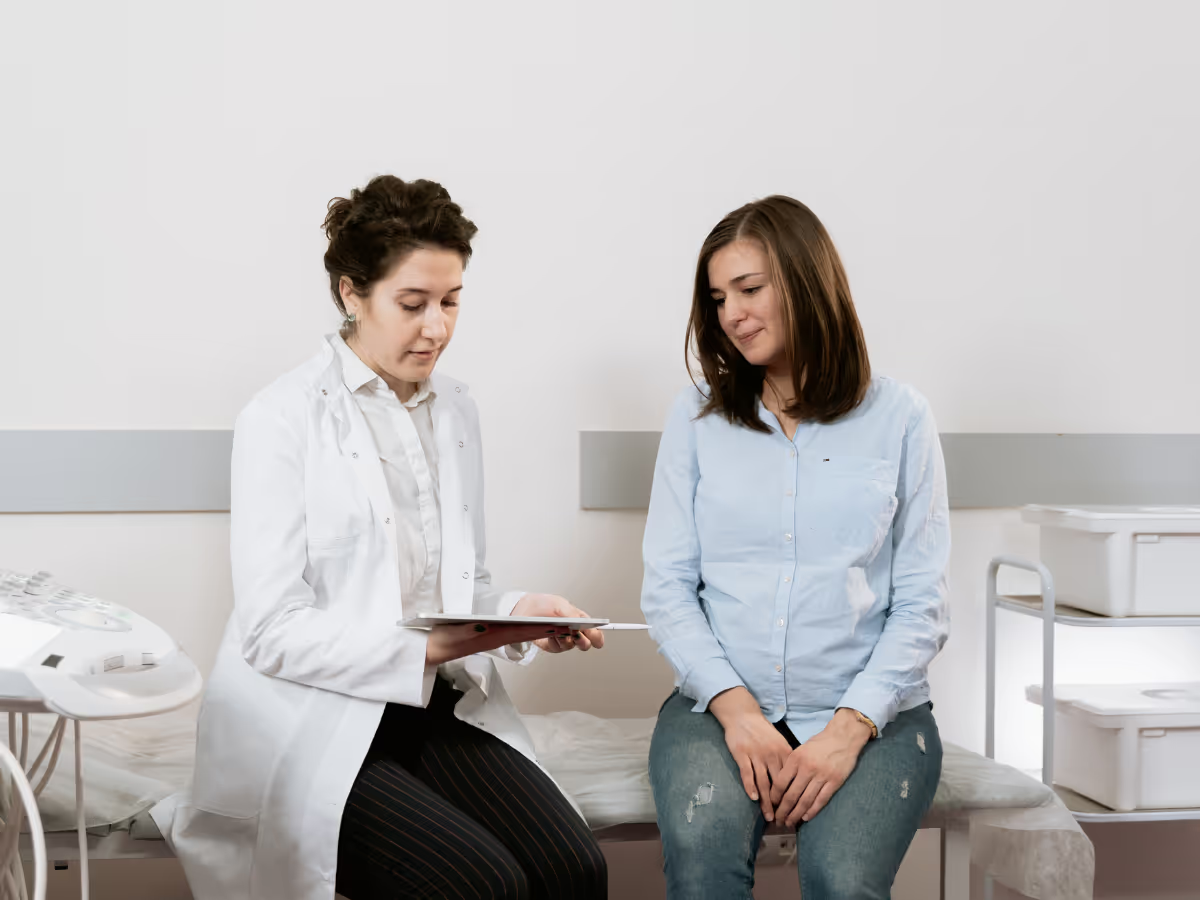
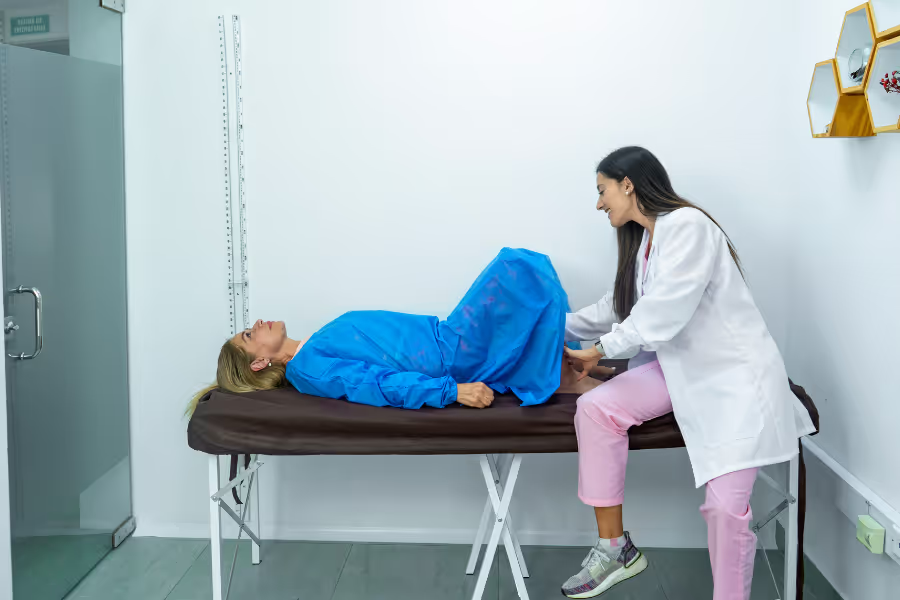
Canadians might consider private gynecology options when bleeding, pelvic pain, or fibroid symptoms are running your life, and the public wait list is months—or years. Long delays can mean worsening anemia, more pain, missed work or school, and a constant “waiting to cope” feeling.
Private gynecology surgery offers faster access to quality care for hysteroscopy, fibroid treatment, endometriosis procedures, and minimally invasive options when appropriate. You can compare clinics, review credentials, and get clear timelines for care. For many people, choosing a private option is about protecting health, energy, and quality of life while putting less strain on the public healthcare system.
Surgency is your guide—not a clinic—connecting you with out-of-province options through accredited, licensed clinics and surgeons. We help you compare options, costs, qualifications, and provide the resources you need to make confident, informed decisions.
An experienced urogynecologist, and former President of the Alberta Society of Obstetricians and Gynecologists. Providing surgical and non-surgical treatments for prolapse, incontinence & cosmetic concerns.

An experienced urologist and urogynaecologist with over 20 years of experience, Dr. Carlson specializes in prostate and pelvic floor procedures while offering general urologist surgery.
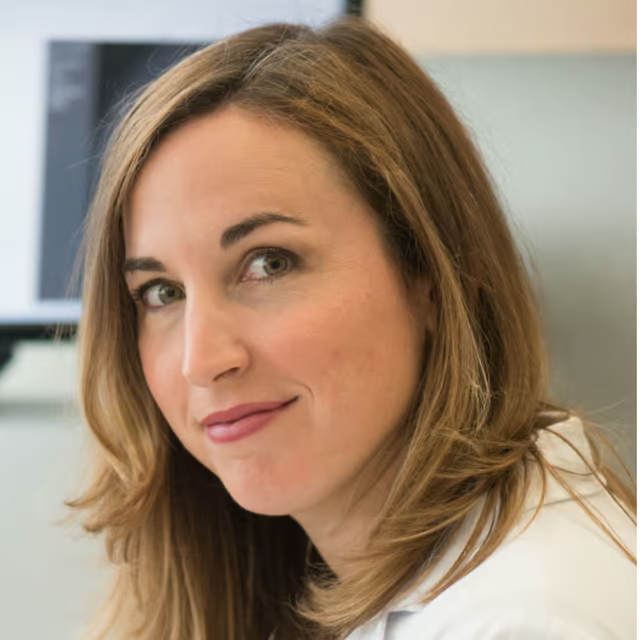
Fellowship-trained urologist specializing in female pelvic medicine and reconstructive surgery with procedural expertise in pelvic organ prolapse, urinary incontinence (male and female), voiding disorders, BPH.
Choosing your surgeon and clinic is one of the primary benefits of the private route. In gynecology, the key to a successful outcome isn't just the procedure itself, but the surgeon's specialized focus on surgical solutions (rather than obstetrics) and their ability to preserve fertility and hormonal function when appropriate.
Experience and sub-specialization
Gynecology is often paired with Obstetrics (delivering babies). For surgery, you want a surgeon who dedicates a significant portion of their practice to operative gynecology. Ask about:
Credentials and training
Decision philosophy: “Organ preservation vs. Symptom relief”
A quality surgeon should explain, in plain language:
Outcomes and safety
Request surgeon-specific or clinic-level data regarding:
Imaging and planning
Facility accreditation & anesthesia plan
Recovery and travel integration
Pelvic surgery carries specific risks for travellers, such as DVT (blood clots):
Surgeon and surgery plan
Recovery and aftercare
Costs and logistics
Access to private gynecology surgery (hysterectomy, myomectomy, excision for endometriosis) is perhaps the most restricted field in Canadian private healthcare. Generally, provinces do not permit surgeons to charge a patient within that same province directly for a 'medically necessary' surgery covered by the public health plan.
However, surgeons are allowed to treat patients privately for 'medically necessary' surgery if they come from out-of-province. Consequently, most Canadians seeking private gynecological care must travel.
Unlike orthopedics or urology, private gynecology faces four specific barriers that make finding a clinic even harder:
Quebec is the most developed, open market for private gynecological surgery in Canada.
Following the 2005 Chaoult Supreme Court ruling, Quebec allows surgeons to become "Non-Participating Professionals." These doctors completely opt out of the public system and take zero public money, allowing them to legally charge patients directly at fair market rates—including Quebecois. Quebec has the most robust network of private clinics and acts as the primary hub for out-of-province patients seeking advanced excision surgery for endometriosis.
Alberta has high surgical capacity, but accessing it is legally complex for locals.
Alberta uses "Chartered Surgical Facilities" largely to handle Workers' Compensation (WCB) cases. While these facilities have the infrastructure, the regulations make it difficult for Albertans to pay out-of-pocket for major gyn procedures.
However, private surgeons (such as those specializing in endometriosis excision) can see patients from out-of-province. This has made Alberta a destination for patients from BC and Ontario seeking specialized excision that they cannot access timely in their home province.
Strict regulations make it difficult to find a surgeon who can treat BC residents privately for medical conditions.
The BC Medicare Protection Act heavily fines clinics that charge patients for medically necessary services, and recent court battles (Cambie Case) have reinforced these restrictions. While private clinics exist, they focus almost exclusively on Cosmetic Gynecology (Labiaplasty, Vaginoplasty) which is not insured. Finding a private surgeon for a medical hysterectomy or fibroid removal is nearly impossible for a BC resident.
Ontario allows surgeons to opt out—in theory—but it is financially infeasible, so there are effectively no opted-out surgeons for major gynecological work.
The Commitment to the Future of Medicare Act (CFMA) makes charging for insured services onerous. Furthermore, the College of Physicians and Surgeons requires private facilities to meet hospital-level standards. Because of the "Level 3" facility requirements mentioned above, almost no private clinics in Ontario are equipped for major gyn surgery.
Private clinics in Ontario mostly focus on "Lifestyle" treatments (MonaLisa Touch, cosmetic procedures). For a standard medical procedure like a hysterectomy or myomectomy, an Ontario resident has no legal option to pay privately within the province.
The public system "buys up" the private capacity.
Saskatchewan pioneered the "Privately Delivered, Publicly Funded" model. The government pays private clinics to perform surgeries to keep public wait times down. Because the clinics are busy with government contracts, there is very little direct-to-consumer time available for private surgery.
Populations are generally too small to sustain high-overhead private surgical facilities. Patients in these provinces almost exclusively travel to Quebec, Alberta, Ontario, or BC..
Canadian private gynecology surgeons must prioritize your health over profit.
In Canada, every surgeon is legally bound by the Canadian Medical Association (CMA) Code of Ethics and Professionalism, which explicitly mandates acting in the patient’s best interest regardless of practice setting.
They are strictly licensed and audited by their provincial College of Physicians and Surgeons (e.g., CPSO, CPSA, CMQ). Recommending unnecessary surgery for profit risks license revocation and massive malpractice lawsuits.
The standard of care is identical to the public system, dictated by clinical guidelines from the Canadian Association of General Surgeons (CAGS). Furthermore, private clinics must pass rigorous Non-Hospital Medical and Surgical Facilities Accreditation Programs (NHMSFAP) to legally operate.
Yes, private gynecology surgery is legal in Canada, but it is heavily restricted by provincial laws designed to protect the public single-payer system.
Here is how the legality works in practice:
For a more in-depth overview, please read How Private Surgery Works in Canada.
The cost of private gynecology surgery in Canada varies widely depending on the complexity of the procedure, the type of anesthesia required, and the facility's location.
For minor, outpatient procedures—such as a diagnostic hysteroscopy, laser therapy for vaginal atrophy, or a labiaplasty—costs typically range from $2,000 to $6,000.
For more complex pelvic surgeries requiring general anesthesia, advanced laparoscopic tools, and a full operating room team—such as a hysterectomy, myomectomy for fibroids, or deep endometriosis excision—you can expect to pay anywhere from $10,000 to $30,000+.
For more granular pricing info, visit our Cost Comparison guide or the Procedure Guide for the specific procedure you are interested in.