


.png)


What is anal sphincterotomy and why do people typically need it?
An anal sphincterotomy (often called Lateral Internal Sphincterotomy or LIS) is a highly effective surgery for a chronic anal fissure. A fissure is a small tear in the delicate lining of the anal canal.
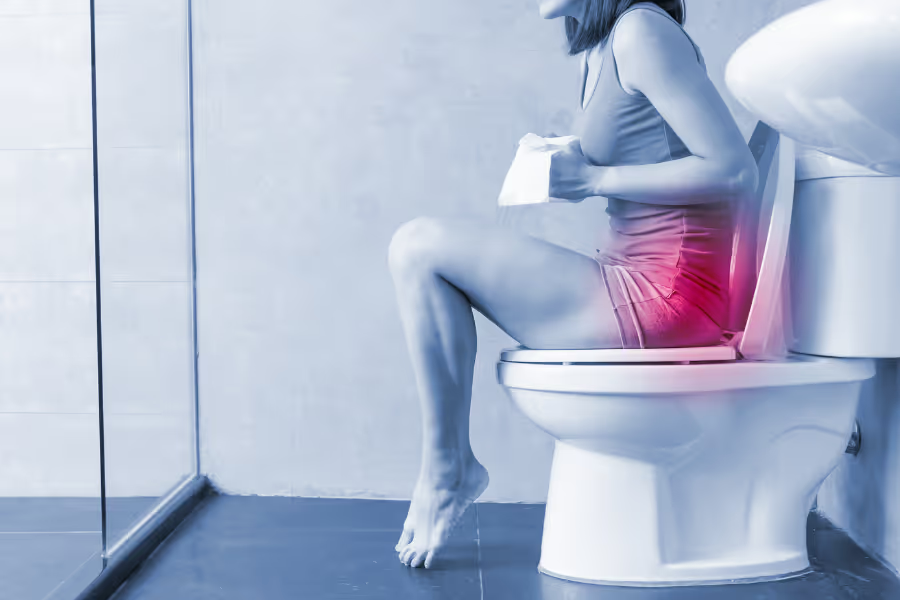
Think of the anal muscle like a tight rubber band. When a tear happens, the muscle spasms in response to the pain. This spasm pulls the edges of the tear apart and reduces blood flow, making it impossible to heal. Every bowel movement re-tears it, creating a vicious cycle of severe pain.
What actually happens
- Releasing the muscle: The surgeon makes a tiny incision in the internal anal sphincter muscle (the muscle that causes the involuntary spasms).
- Restoring blood flow: This releases the tension, stopping the spasms instantly.
- With the muscle relaxed, normal blood flow returns to the area, allowing the fissure to finally heal naturally.
Why do it? When creams, diet changes, and Botox haven't worked, an anal sphincterotomy is the gold standard. It breaks the cycle of pain and heals the fissure in over 90% of cases.
How much anal sphincterotomy costs in Canada
How we estimate surgical costs: Ranges are estimates drawn from our network of 100+ private clinics and surgeons, and they're intentionally broad. Two people seeking the same procedure can receive very different quotes depending on province, surgeon, facility fees, and case complexity. Published prices aren't always comparable either—some are complete bundles, others exclude consultation, imaging, or follow-up. Only the clinic can give you an exact, itemized quote.
Exact prices depend on the specific clinic and whether any other issues (like a skin tag or hemorrhoid) are addressed at the same time. Always ask for a written, itemized quote.
Cost in Canada (private)
Typical range: $3,500 - $6,000+
Cost in the United States
Typical range: CA$6,000 - CA$12,000+
What’s usually included
- Surgeon fee and anaesthesia services.
- Accredited facility/OR time, nursing, and standard disposables.
- Immediate recovery care and early follow-up visit(s).
What’s often not included
- Initial consults outside the clinic.
- Prescriptions after discharge (pain meds, stool softeners).
- Travel and accommodation if you’re out-of-province/state.
Insurance and financing options
- Private health insurance: Some plans may cover part of the costs. Check your policy directly.
- Financing plans: Many clinics offer monthly payment options to help spread out the cost. Learn more about your financing options here.
- Medical Expense Tax Credit (METC): This is a non-refundable credit that reduces your taxes when you pay out-of-pocket for eligible medical expenses. Learn more about how to claim METC for private surgeries.
What to expect from the surgery process
Typical anal sphincterotomy is a very quick procedure, often taking about 15 to 30 minutes of operating time. Add time at the centre for check-in, anaesthesia, and recovery.
Basic steps
1. Check-in and confirmation
You meet the surgical team, review the plan, and complete safety checks.
2. Anaesthesia
It is typically done under general anaesthesia (you’re fully asleep) or with a spinal block and light sedation.
3. Small incision
The surgeon makes a tiny cut either just inside the anal canal or just outside it to reach the internal sphincter muscle.
4. Releasing the muscle
A small portion of the muscle is carefully divided to release the tension and stop the spasm.
5. Close up
The tiny wound is either left open to heal naturally or closed with a few dissolving sutures.
6. Wake-up and instructions
You recover in the post-anaesthesia care unit. Most patients go home the exact same day with wound-care and diet instructions.

What to expect from the recovery process
Every patient heals differently, but many report immediate relief from their fissure pain.
Week 1
Reality check:
You will have some soreness at the surgical site, and mild bleeding or spotting on the toilet paper is completely normal. Surprisingly, many patients find that the surgical discomfort is actually much less severe than the sharp fissure pain they were living with.
Goals: Keep the stools soft and the area clean.
Activities: Short walks. Take warm sitz baths (soaking the area in warm water) several times a day, especially after bowel movements, to soothe the area and keep it clean.
Weeks 2–4
Still annoying but improving:
The fissure itself begins to heal rapidly now that the muscle is relaxed. Bleeding should decrease and stop.
Goals: Maintain a high-fibre diet and excellent hydration.
Activities: Return to light work and normal daily routines. Avoid heavy lifting or intense exercise until your surgeon clears you.
Weeks 5–8
Confidence building:
The fissure and the surgical site should be fully healed.
Activities: You can gradually return to all normal physical activities, including heavy lifting and strenuous exercise.
Helpful tips
- Fibre is your best friend: Drink plenty of water and use fibre supplements or stool softeners to ensure you never strain during a bowel movement.
- Sitz baths: These are incredibly soothing and promote blood flow for healing.
Red flags—call your care team
- Heavy, continuous bleeding (more than just spotting).
- Fever, spreading redness, or foul-smelling drainage.
- Inability to urinate (a rare but possible temporary side effect of the anaesthesia).
What is Surgency?
As a family doctor in the public system, I believe transparency is a form of care. I created Surgency to help my patients struggling on long waitlists who wanted to understand all their options for timely medical attention.
Surgency is a free resource designed to empower and educate—helping you understand private pathways and find accredited surgeons within Canada. I hope Surgency brings you clarity.
Dr. Sean Haffey

Why do Canadians get anal sphincterotomy done privately?
Shorter wait times
Public wait lists for general surgery consults can be agonizingly long. Living with the severe, glass-like pain of an anal fissure every time you use the washroom is exhausting. Private centres can often arrange an assessment and surgery in weeks rather than months.
Choice and control
Going private lets you pick a surgeon with specific expertise in colorectal issues and schedule the procedure when it works best for your life, allowing you to limit time away from work or family.
Peace of mind
You know exactly when your nightmare with washroom pain will end. Predictable dates make it easier to arrange time off, travel, and recovery.
Integrated care
Private pathways offer streamlined consultations, fast access to the operating room, and clear post-operative support, ensuring you aren't left guessing during your recovery.
How to choose a surgeon/clinic?
Choosing your surgeon is a major benefit of pursuing private surgery. Here’s how to choose wisely for an anal sphincterotomy (LIS).
What to look for
Experience and volume (sphincterotomy-specific)
Ask how many anal sphincterotomies they perform each year.
Sphincterotomy has a learning curve and is precision-dependent because:
- the incision must be just deep enough to release the spasm but not so deep as to affect bowel control.
- outcomes depend on appropriate patient selection (chronic fissure vs. Crohn's disease or other issues).
Also ask about their case mix:
- simple fissure vs complex/recurrent fissures
- concurrent procedures (e.g., removing a sentinel pile/skin tag at the same time).
Credentials and training
- Verify licensure with your provincial college (CPSO Ontario, CPSBC BC, CPSA Alberta, CMQ Québec, etc.)
- Look for FRCSC-certified general surgeons, ideally with a subspecialty or fellowship in colorectal surgery.
For a more in-depth guide, read How to Understand Surgeon Credentials in Canada
Outcomes and safety (ask for real numbers)
Request recent data, ideally for sphincterotomy specifically:
- Infection rate
- Incontinence rates (temporary flatus/gas incontinence vs. permanent issues).
- Recurrence rate (fissure returning).
- Patient-reported outcomes: pain relief, satisfaction, and typical return-to-work timelines.
Clear indications and alternatives
Make sure they confirm you’re a good candidate for sphincterotomy. A careful surgeon should explicitly assess:
- whether your fissure is chronic (lasting more than 6-8 weeks) and resistant to conservative therapy.
- whether there’s an underlying condition like Crohn's disease that might make sphincterotomy risky.
- whether your resting sphincter tone is actually high (some surgeons use manometry to test this).
They should also compare sphincterotomy to:
- continued use of topical muscle relaxants (nifedipine/diltiazem)
- Botox injections as a less invasive, but temporary, alternative.
Surgical plan and technique
Ask:
- Which technique do they use (open vs closed sphincterotomy) and why?
- Will they address any associated skin tags (sentinel piles) or enlarged papillae?
- How do they ensure they are only cutting the internal sphincter and protecting the external sphincter?
Facility accreditation and safety systems
Choose accredited centres (e.g., Accreditation Canada / CAAASF) with:
- experienced anaesthesia staff (important for comfortable positioning and pain control).
- clear post-operative discharge instructions for wound care.
Transparent pricing
Request an itemized quote including:
- surgeon fee
- facility/OR fees
- anaesthesia
- follow-ups (and whether virtual follow-ups are included)
Clarify add-ons like removing a skin tag.
Questions to ask at your consultation
Surgeon and plan
- How many anal sphincterotomies do you perform yearly?
- Am I a candidate for sphincterotomy, Botox, or further conservative treatment—and why?
Technique and safety
- What are your rates of infection and long-term incontinence (gas or stool)?
- How do you determine exactly how much muscle to divide?
Recovery and after-care
- When can I return to work and resume gym activities?
- What symptoms should prompt an urgent call?
Costs and logistics
- What exactly is included in my quote?
- How are follow-ups handled?
Signals of a high-quality program
- Performs sphincterotomies regularly and explains candidacy clearly.
- Shares complication rates openly, especially regarding incontinence risks.
- Operates in an accredited facility.
- Provides a written recovery plan focusing on bowel management and sitz baths.
If you're currently interested in private surgical pathways within Canada, you can click here for a list of providers.

Frequently asked questions
How do I know this surgery is right for me?
Anal sphincterotomy is a highly effective treatment for chronic anal fissures. It is right for patients who have severe pain and have not found relief with non-surgical treatments.
Signs sphincterotomy might be right for you
- Failed conservative therapy: You have tried high-fibre diets, sitz baths, and prescription ointments for 6-8 weeks without healing.
- High resting pressure: Your pain is driven by intense muscle spasms (hypertonia) in the internal sphincter.
- Severe impact on quality of life: The pain of bowel movements is excruciating, lasting hours afterward, and causing anxiety or avoidance of eating.
When it might not be the right option
- Pre-existing incontinence: If you already struggle with bowel control (e.g., due to previous surgeries or obstetric injuries), cutting the sphincter muscle carries a high risk of worsening the problem.
- Inflammatory Bowel Disease (IBD): Patients with Crohn's disease are often poor candidates due to poor wound healing and higher complication risks.
- Normal sphincter tone: If your fissure is not caused by muscle spasms, other treatments (like an advancement flap) may be safer.
When to get assessed sooner
- Rapidly worsening pain, new swelling, or signs of an abscess (fever, throbbing pain independent of bowel movements, foul drainage) mean you should seek a surgical opinion quickly.
Do I need a referral?
Yes and no—you can reach out to any of the private surgeons listed on Surgency without a referral. Their intake teams are happy to answer questions, explain what they treat, share pricing ranges, and walk you through next steps.
However, to book a formal consultation with the surgeon, you'll typically need a referral from your family doctor or nurse practitioner. Don't have one? Many of the clinics can help coordinate a virtual GP appointment to get the referral paperwork sorted. All surgeons listed on Surgency offer virtual initial consultations, so you don't need to travel until you and the surgeon have agreed on a plan.
Before your consultation, expect the clinic to request relevant medical records and recent diagnostic imaging (X-ray, MRI, CT, ultrasound, lab work, etc.). Having these ready speeds up the process and lets the surgeon give you specific guidance on your very first call.
How do I prepare for surgery?
Your surgeon’s instructions come first—follow their plan if it differs.
Prehab and health optimization
Bowel management plan
- The key to a smooth recovery is soft, easy-to-pass stools. Begin taking a fibre supplement (like psyllium husk) and drinking plenty of water days before surgery.
- Purchase stool softeners (like PEG or docusate) as recommended by your surgeon.
Walk and light cardio
- Build a daily walking habit now; better cardiovascular health improves healing.
Quit nicotine
- Nicotine constricts blood vessels and severely impairs wound healing in the sensitive anal area. Stop at least 4 weeks before surgery to reduce infection and failure risks.
Medication review
- Share all prescriptions, OTC meds, and supplements.
- Pause blood thinners and anti‑inflammatories as directed (bleeding control is vital).
Home prep
Recovery station
- Purchase a sitz bath (a small basin that fits over your toilet) and plain Epsom salts. You will use this multiple times a day.
- Stock up on unscented baby wipes or a peri-bottle/bidet instead of dry toilet paper.
Soft food diet
- Stock up on high-fibre, easy-to-digest foods (soups, oatmeal, fruits, vegetables, smoothies).
Constipation plan
- Pain meds slow the gut; have stool softeners and hydration ready. Never strain on the toilet after surgery.
What to bring
- Health card/ID, medication list.
- Loose, comfortable clothing (sweatpants) for the ride home.
Red flags to know
- Wound issues: Spreading redness, foul drainage, or excessive bleeding (more than spotting on the toilet paper).
- Fever or chills: Signs of a potential developing abscess.
- Inability to urinate: A known, temporary side effect of pelvic surgery and anaesthesia that requires medical attention if prolonged.
How much does Surgency cost?
Surgency is free for patients, funded for by surgeons.
Surgeons—who meet our listing criteria—pay a flat fee to list on the Surgency platform. To maintain objectivity, there are no commissions, referral fees, nor any ranking or recommending one surgeon over another.
Surgency is patient-first. Our goal is to make the process of finding a private surgeon as simple as possible. You choose who to contact. Learn more in our Advertising Policy.
What are the risks involved with surgery?
Your personal risk depends on your anatomy, your baseline continence, and your general health. Discuss your specific risks with your surgeon.
Common and usually temporary
- Minor bleeding: Spotting of blood on the toilet paper or in the toilet bowl during bowel movements is very common for the first few weeks.
- Mild gas incontinence: Difficulty controlling flatus (gas) is common initially as the muscle adjusts to the new tension.
- Surgical site pain: While usually less severe than the fissure pain itself, the incision will be tender.
- Urinary retention: Difficulty peeing immediately after surgery, especially if spinal anaesthesia was used.
Less common
- Infection/Abscess: Risk of the surgical site becoming infected, requiring antibiotics or further drainage.
- Fecal urgency: Feeling an intense, sudden need to have a bowel movement.
- Poor wound healing: The incision may take longer than expected to heal completely.
Procedure-specific considerations (Anal Sphincterotomy)
- Long-term incontinence: A small risk (typically 2-5%) of permanent, mild incontinence to flatus or liquid stool. This is why careful patient selection and precise surgical technique are critical.
- Recurrence: In a small percentage of cases, the fissure may not heal or may return years later, requiring further treatment.
How you can lower risk
- Stop nicotine: Essential for proper blood flow and healing.
- Strict bowel regimen: Never strain. Keep stools soft to prevent re-tearing the surgical site.
- Sitz baths: Keep the area meticulously clean to prevent infection.
What are the risks of delaying or not pursuing surgery?
Your situation depends on symptom severity and the chronicity of the fissure.
Main risks of delaying (when symptoms are significant)
Chronic pain and psychological distress
- The severe, sharp pain during and after bowel movements can lead to intense anxiety, fear of eating, and a significantly reduced quality of life.
Fibrosis and anatomical changes
- The longer a fissure persists, the more the edges become scarred (fibrotic).
- It can develop a hypertrophied anal papilla (internal swelling) or a sentinel pile (external skin tag), making conservative healing nearly impossible.
Abscess or fistula formation
- Although less common, a deep, chronic fissure can occasionally become infected, leading to an abscess or a fistula that requires more complex surgery.
Medication dependence
- Relying on painkillers or experiencing the side effects of prolonged topical muscle relaxant use (like severe headaches from nitroglycerin).
When watchful waiting can be reasonable
- Symptoms are mild, intermittent, and manageable with diet and fibre.
- You are steadily improving with conservative treatments.
When not to delay (seek prompt assessment)
- Severe, constant pain: Pain that lasts for hours after a bowel movement and disrupts your sleep or ability to work.
- Signs of infection: A new lump, swelling, fever, or throbbing pain that is constant and not just related to bowel movements.
I still have questions
If you still have questions, please feel free to contact us directly.
Please note: Surgency is not a clinic itself. Nor can we help with emergency situations, or provide personalized medical advice—that is between you and your surgeon. If you are experiencing acute or severe symptoms, please present to your local emergency department or urgent care centre.

.avif)