


.png)

What is sinus tract & fistulae excision surgery?
Sinus tract & fistulae excision is a surgical procedure that removes an abnormal tunnel (tract) that shouldn’t be there.
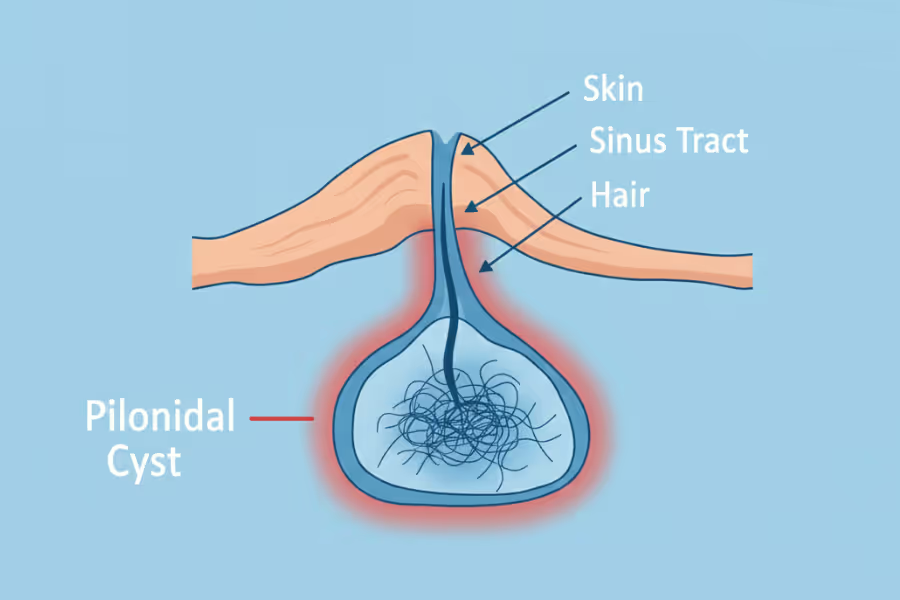
A sinus tract (not to be confused with your nasal sinus) is usually a channel that runs from a deeper pocket of chronic inflammation or infection to the skin surface, causing a persistent opening that can repeatedly drain fluid or pus.
A fistula is an abnormal connection between two body structures—for example, between the bowel/anal canal and the skin (common in perianal fistula), or between other tissues depending on the underlying cause.
In an excision, the surgeon aims to identify the tract, remove the chronically inflamed lining and any associated infected tissue, and then manage the wound so it can heal properly. Depending on the location and complexity, the surgeon may:
- remove the tract completely (excision),
- open it up to heal from the inside out (sometimes used in infected cases),
- and/or place a drain or seton (a loop that helps keep drainage controlled and protects important muscles—especially in perianal fistula surgery).
This surgery is different from simply treating flare-ups with antibiotics or draining an abscess. Those steps can reduce acute pain and pressure, but they may not remove the tract—so the problem can keep recurring.
How much does private sinus tract & fistulae excision cost in Canada?
How we estimate surgical costs: Ranges are estimates drawn from our network of 100+ private clinics and surgeons, and they're intentionally broad. Two people seeking the same procedure can receive very different quotes depending on province, surgeon, facility fees, and case complexity. Published prices aren't always comparable either—some are complete bundles, others exclude consultation, imaging, or follow-up. Only the clinic can give you an exact, itemized quote.
Sinus tract and fistulae surgery is generally more expensive than simple cyst removal because it is technically more difficult, often requires an operating room setting (rather than a simple procedure room), and may involve general anesthesia.
In Canada
At private clinics, you can typically expect: $1,800 - $4,500+
Why the range?
- Simple Sinus Tract ($1,800 – $2,500): Superficial skin tract, local anesthetic, procedure room.
- Complex/Deep Fistula ($2,500 – $4,500+): Involves muscle or deeper tissue, requires sedation/general anesthesia, accredited surgical centre fees, and potentially longer surgical time.
In the United States
Typical range: CA$4,000 - CA$10,000+
Why does the price vary so much?
- Facility Fees: Using a hospital OR or Ambulatory Surgery Center (ASC) is significantly more expensive than an office setting.
- Anesthesia: Anesthesiologist fees for general anesthesia add $1,000+.
- Complexity: Anal fistulae requiring setons or flap repairs are complex operations.
- Geography: Major medical hubs (NY, LA, Boston) have higher rates.
What’s usually included
- Surgeon fee (procedure).
- Facility/OR fee.
- Local anesthetic / Sedation (if bundled).
- Post-op care kit (gauze, irrigation syringe).
- Initial follow-up visits.
What’s usually not included
- Pre-op Imaging: MRI or Ultrasound (often required for fistulae to map the tract) is usually extra.
- General Anesthesia: If an anesthesiologist is required, this is often billed separately.
- Prescription meds: Painkillers and antibiotics.
- Multiple stages: If you need a seton placement first and a repair later, these are usually billed as two separate procedures.
Insurance Note
In Canada, medically necessary sinus tract & fistulae excision care can be covered in the public system; private excision is typically out-of-pocket, though some extended plans may reimburse parts—ask for an itemized invoice.

Sinus tract & fistulae excision steps: what to expect
Sinus tract and fistula surgery is often an outpatient procedure, typically taking 30–90 minutes depending on the complexity and location (e.g., pilonidal, perianal, or abdominal). Expect to be at the clinic or surgical centre for several hours including intake and recovery.
1) Check-in and confirmation
- The surgeon confirms the site and reviews your symptoms.
- If you have recent imaging (MRI, ultrasound, or CT), they will review the "roadmap" of the tract.
- You’ll confirm the plan: simple excision, laying open the tract (fistulotomy), or placing a seton (a drainage loop) if muscles are involved.
2) Anaesthesia
- Local anesthetic: Used for small, superficial skin tracts away from sensitive areas.
- Sedation or General Anaesthesia: Very common for perianal, rectal, or deep pilonidal cases to ensure muscle relaxation and patient comfort.
- Spinal block: Sometimes used for lower body/rectal procedures.
3) Prep and sterile setup
- The area is cleaned with antiseptic.
- If the tract is near the rectum, you may be placed in a specific position (lithotomy or prone) to give the surgeon the best view.
4) Identifying and treating the tract
- The surgeon may use a probe or inject a harmless dye to map exactly where the tunnel goes.
- Excision: The entire tract and inflamed tissue are cut out.
- Fistulotomy: The tunnel is cut open so it becomes a flat groove that can heal from the bottom up.
- Seton placement: If the tract passes through important muscle (like the anal sphincter), a rubber loop (seton) might be placed to drain the infection safely over weeks, rather than cutting the muscle.
5) Closure (or lack thereof)
- Closed: Small, clean excisions may be stitched shut.
- Open (Healing by Secondary Intention): Many sinus tracts and fistulae are left open to heal from the inside out. This reduces the risk of the infection returning. You may have gauze packing inside the wound.
6) Same-day discharge
- You go home once the sedation wears off.
- You will leave with specific instructions on wound packing, sitz baths (soaking), and pain management.

What can I expect from the sinus tract & fistulae excision recovery process?
Your exact recovery plan comes from your surgeon, but here’s the general idea. Recovery is often slower than a simple cyst removal because the wound is frequently left open to heal.
First few days
What it feels like
- Soreness and stinging, especially during dressing changes or bowel movements (if perianal).
- Drainage is expected—often blood-tinged or yellowish fluid on the dressing.
- Fatigue if you had general anesthesia.
Main goals
- Manage pain (often higher than cyst removal).
- Keep the area clean (sitz baths or shower rinses are key).
- Manage the packing if the wound was left open.
Typical instructions
- Take pain meds as prescribed.
- Sitz baths: Soaking the area in warm water 3–4 times a day (common for anal/rectal/pilonidal cases).
- Diet: High fibre/stool softeners to prevent straining.
Weeks 1–3
What it feels like
- Pain decreases, but the wound is still "active."
- Drainage continues but should become clearer and less bloody.
- Itching is common as new tissue forms.
Main goals
- Ensure the wound heals from the bottom up (not bridging over the top).
- Prevent new infection.
- Return to light work/activity.
Typical steps
- Regular wound checks to ensure it’s filling in correctly.
- Gradually return to walking and light daily tasks.
- If you have a seton: it remains in place, usually causing minor irritation but keeping the tract draining.
Weeks 4–8+
What it feels like
- The wound becomes smaller and shallower.
- Drainage significantly reduces.
- Stiffness or scar tissue starts to form.
Main goals
- Complete healing of the skin.
- Return to sports/gym (once the wound is fully closed).
Typical steps
- Final closure of the skin layer.
- Resume normal sitting/exercise habits.
- If a seton was placed, a second small procedure might be scheduled to remove it or tighten it.
Red flags anytime
Call your care team if you notice:
- Fever (>38°C) or chills.
- Sudden increase in pain or swelling (abscess returning).
- Loss of bowel control (if perianal surgery).
- Heavy bleeding that soaks through dressings rapidly.
- Foul-smelling pus (new infection).
What is Surgency?
As a family doctor in the public system, I believe transparency is a form of care. I created Surgency to help my patients struggling on long waitlists who wanted to understand all their options for timely medical attention.
Surgency is a free resource designed to empower and educate—helping you understand private pathways and find accredited surgeons within Canada. I hope Surgency brings you clarity.
Dr. Sean Haffey

Why do Canadians get sinus tract & fistulae excision surgery done privately?
Shorter wait times
Time matters when a tract or fistula is causing persistent drainage, recurrent infections/abscesses, odour, skin irritation, or ongoing pain. Private clinics can book assessment and treatment sooner—meaning less time managing dressings, antibiotics, and repeated flare-ups.
Choice and control
Going private can let you:
- Choose a surgeon experienced with the specific type and location of your sinus tract/fistula (for example, perianal vs. abdominal wall vs. post-surgical)
- Plan treatment around work, travel, caregiving, and symptom cycles
- Choose the right setting (clinic procedure room vs. accredited day-surgery centre for deeper or more complex cases)
Peace of mind
You know who will do the procedure, what the plan is, and what recovery will look like—often with clearer timelines for follow-up and wound care. A clear date also makes it easier to plan around school, work, and travel; and arrange time off.
Preventing further decline
- Fewer flare-ups and disruptions: Definitive treatment can reduce repeated drainage and abscess cycles
- Lower complication burden: Repeated inflammation can create scarring and branching tracts that become harder to treat
- Mental load: Less day-to-day uncertainty and “waiting for the next infection”
Choosing a surgeon and clinic
Choosing your surgeon is one of the benefits of going private. Here’s how to choose wisely for sinus tract and fistulae surgery.
What to look for
Experience and volume (specific to the location)
- Ask how often they treat fistulae or sinus tracts specifically (not just general abscess drainage).
- Context matters: A pilonidal sinus (tailbone) is different from a perianal fistula (rectum) or an abdominal mesh sinus.
- If your fistula is complex, recurrent, high-up (near sphincter muscles), or associated with Crohn’s disease, ask if they have specific fellowship training (e.g., Colorectal Surgeon) or handle complex cases regularly.
Credentials and training
- Confirm they are licensed with the provincial college (CPSO, CPSBC, CPSA, etc.).
- Look for:
- FRCSC General Surgeon with Colorectal focus (Best for perianal/rectal fistulas).
- FRCSC General Surgeon (Common for pilonidal, abdominal, or soft-tissue tracts).
- FRCSC Plastic Surgeon (Sometimes best for hidradenitis or complex skin-healing issues).
Diagnostic confidence (mapping the tract)
- Ask how they confirm the track's path:
- Clinical exam with probing vs. MRI / Ultrasound / Fistulogram.
- Crucial: Ask if they use imaging before surgery to ensure they don’t miss side-branches (a common cause of recurrence).
- Confirm whether tissue will be sent to pathology (essential to rule out underlying causes like Crohn’s or rare malignancies).
Safety and outcomes
- Recurrence rate: Fistulas have higher recurrence rates than cysts. Ask what their rate is and how they minimize it.
- Continence risk: For perianal fistulas, ask specifically about the risk to the sphincter muscle and bowel control.
- Staged approach: Ask if they might use a seton (a temporary drain/loop) first, rather than cutting everything at once, to protect muscles.
Clinic standards and facility
- Sedation/Anaesthesia: Many fistula surgeries require deeper sedation or general anesthesia than a simple cyst. Ensure the facility is an accredited surgical centre (e.g., CAAASF, Accreditation Canada) with proper airway monitoring.
- Emergency plan: What is the protocol if you have bleeding or severe pain after hours?
Questions to bring to your consultation
About the surgeon and plan
- How many fistula excisions do you perform annually?
- Do you think this is a simple tract, or is it complex/branching?
- Do I need an MRI or ultrasound before the procedure?
Technique and Strategy
- Will you remove the tract (“fistulectomy”) or lay it open (“fistulotomy”)?
- Is there a chance I will wake up with a seton (loop) or drain in place?
- How do you protect the muscle function (if near the anus)?
Infection-specific questions
- If it is currently draining or has an abscess, should we drain it first and wait for it to calm down before excising?
- What is the plan if it abscesses again while I am waiting for the surgery date?
Recovery and costs
- What is included in the quote (MRI review, surgery, facility, pathology, follow-ups)?
- Does the quote cover a second stage if I need a seton removed later?
- When can I sit comfortably / drive / return to work?
If you're currently interested in private surgical pathways within Canada, you can click here for a list of providers.

Frequently asked questions
How do I know if sinus tract & fistulae excision excision is right for me?
Sinus tract excision is usually not the first step if the issue is a one-time infection. It is something you consider when the tract is chronic, recurrent, or refusing to heal. Unlike cysts, fistulas rarely heal permanently on their own without intervention. Consult your doctor or surgeon to better understand your personal situation.
Signs excision might be right for you
If the area keeps flaring or coming back
- Repeated abscesses in the same spot (pain, swelling, pus).
- You have had an incision and drainage (I&D) previously, but the wound never fully closed or the lump returned.
If you have chronic drainage
- Persistent leakage of fluid, blood, or pus from a small opening.
- Constant need to wear pads or dressings to protect clothing.
- Unpleasant odour or skin irritation around the opening.
If it is interfering with daily life
- Pain or discomfort when sitting (common with pilonidal/perianal), walking, or exercising.
- It affects your hygiene routine or sexual health.
- You are avoiding swimming, gyms, or intimacy due to the drainage/odour.
If there is diagnostic clarity
- An MRI, ultrasound, or exam has confirmed a tract exists.
- Your surgeon has identified the internal and external openings.
When it might not be time yet
- There is an active, large acute abscess (hot, red, expanding). This usually requires simple drainage first to let inflammation subside before the actual tract can be safely excised.
- You have underlying active Crohn’s disease or inflammation that needs medical management (medication) before surgery is safe.
- The diagnosis is unclear, and imaging is still pending.
When to get assessed sooner
- You develop a fever, chills, or feel systemically unwell (signs of sepsis).
- The pain becomes severe and throbbing, preventing sleep or sitting.
- Redness spreads rapidly away from the opening.
- You have new difficulty urinating or controlling bowel movements.
Do I need a referral?
Yes and no—you can reach out to any of the private surgeons listed on Surgency without a referral. Their intake teams are happy to answer questions, explain what they treat, share pricing ranges, and walk you through next steps.
However, to book a formal consultation with the surgeon, you'll typically need a referral from your family doctor or nurse practitioner. Don't have one? Many of the clinics can help coordinate a virtual GP appointment to get the referral paperwork sorted. All surgeons listed on Surgency offer virtual initial consultations, so you don't need to travel until you and the surgeon have agreed on a plan.
Before your consultation, expect the clinic to request relevant medical records and recent diagnostic imaging (X-ray, MRI, CT, ultrasound, lab work, etc.). Having these ready speeds up the process and lets the surgeon give you specific guidance on your very first call.
How do I prepare for sinus tract & fistulae excision?
Your surgeon will give you a specific plan, especially regarding bowel preparation if the fistula is perianal.
Health and medication prep
- Medication List: Provide a full list of prescriptions, OTC meds, and supplements.
- Blood Thinners: You will likely need to pause blood thinners (e.g., aspirin, anticoagulants) earlier than for minor skin procedures, as fistula surgery can bleed more. Wait for surgeon instructions.
- Smoking/Vaping: Nicotine significantly increases the risk of wound breakdown and recurrence in fistula surgery. Stopping 4+ weeks prior is highly recommended.
Site-specific prep (The biggest difference from cysts)
- Bowel Prep (for perianal cases): You may be asked to do a Fleet enema or take a laxative the day before/morning of surgery to clear the rectum.
- Fasting: Since sedation or general anesthesia is common, strictly follow fasting rules (usually no food after midnight).
- Hygiene: Shower thoroughly with antibacterial soap as instructed. Do not shave the area yourself (unless told to) to avoid micro-cuts.
Logistics
- Ride Home: You cannot drive yourself if you have sedation/general anesthesia. Arrange a ride and responsible adult to stay with you for 24 hours.
- Home Setup: Buy gauze, pads, and a sitz bath (a basin that fits over the toilet) if recommended for soaking after surgery.
- Clothing: Wear loose, baggy pants or a skirt. Avoid tight waistbands or denim.
What to bring
- Photo ID and health card.
- A pad or extra underwear (you may have drainage immediately post-op).
- Your medication list.
How much does Surgency cost?
Surgency is free for patients, funded for by surgeons.
Surgeons—who meet our listing criteria—pay a flat fee to list on the Surgency platform. To maintain objectivity, there are no commissions, referral fees, nor any ranking or recommending one surgeon over another.
Surgency is patient-first. Our goal is to make the process of finding a private surgeon as simple as possible. You choose who to contact. Learn more in our Advertising Policy.
What are the risks if I delay or don't get a sinus tract/fistulae excision?
Your situation depends on the tract’s location and cause (pilonidal vs. perianal vs. post‑surgical, Crohn’s-related, hidradenitis, etc.), how often it flares, and what imaging/exam shows. Some cases can be managed for a while, but chronic sinus tracts and fistulae often don’t fully resolve on their own—and delay can mean more cycles of infection and more complex disease. Always review your personal risks with your surgeon.
Main risks of delaying (when symptoms are persistent or recurrent)
More flare-ups: swelling, pain, and drainage
Sinus tracts and fistulae often cycle between “quiet” and “active.” With delay, you may have more episodes of pain, swelling, and drainage—often with increasing disruption to work, exercise, travel, and sleep.
Higher chance of abscess and infection (and urgent visits)
A blocked fistula or tract can collect fluid and turn into an abscess, which may require urgent incision and drainage, antibiotics, or even emergency assessment. Repeated infections can also lead to repeated courses of antibiotics (and their side effects).
The tract can become more complex over time
Ongoing inflammation can lead to:
- branching side channels (“complex” tracts)
- deeper extensions
This can make later treatment more technically difficult, sometimes requiring staged procedures rather than a single operation.
More scarring and harder surgery later
Repeated inflammation and prior drainages create scar tissue. That can:
- make the anatomy less clear
- increase the difficulty of removing the entire tract
- increase the likelihood of prolonged healing
Ongoing skin breakdown, odour, and constant wound care
Chronic drainage can irritate the surrounding skin, cause rashes and breakdown, stain clothing, and keep you in a constant routine of pads, gauze, and hygiene workarounds.
Impact on quality of life and mental load
Many people end up avoiding sitting, certain clothing, intimacy, swimming, or long days out because they can’t trust the drainage. The uncertainty (“Will it flare again this week?”) is a real burden.
Missing an underlying condition (the important one)
Not every draining opening is “just a tract.” Delaying workup can delay diagnosis or management of underlying causes such as:
- Crohn’s disease (in some fistula types)
- chronic foreign body/reaction to prior surgery
- rarely, other pathology
If something is atypical, persistent, or worsening, it deserves proper assessment and sometimes imaging.
When “watch and wait” can be reasonable
- symptoms are mild, infrequent, and manageable
- there’s no recurrent abscess or spreading infection
- you and your clinician have a clear diagnosis and a plan to monitor
- an underlying condition (e.g., Crohn’s) is being optimized first
When it’s probably not wise to keep delaying (get assessed soon)
- fever, chills, or feeling unwell
- rapidly worsening pain, swelling, or a new lump (possible abscess)
- spreading redness or increasing drainage/odour
- recurrent infections or repeated drainages in the same location
- new bowel/urinary issues (location-dependent)
- a wound/opening that won’t heal after weeks
What are the risks involved with sinus tract & fistulae excision surgery?
Every surgery has risks. Your personal risk depends on your overall health, the tract’s location, depth, complexity, whether it’s inflamed/infected, and how closely you follow wound-care instructions. Review your specific situation with your surgeon.
Common and usually temporary
- Pain, swelling, bruising around the incision
- Mild bleeding/oozing in the first 24–48 hours
- Ongoing drainage (often expected, especially if left to heal open)
- Tightness or pulling with movement near the incision
- Temporary numbness or tingling near the scar
- Itching, redness, or sensitivity of the scar as it heals
Less common risks
- Infection (skin or deeper tissue), especially if there’s active inflammation
- Wound healing problems (opening, delayed healing), more likely with diabetes, nicotine use, or high-friction areas
- Hematoma (blood collection) or seroma (fluid pocket)
- Noticeable scarring or scar tenderness
- Persistent drainage longer than expected
- Recurrence (the tract/fistula returns), especially in complex or branching disease
- Need for additional procedures (staged surgery is common in some fistula types)
Uncommon but more serious (often location-dependent)
- Nerve irritation or injury causing lasting numbness or neuropathic pain
- Damage to nearby structures in anatomically complex areas
- Significant bleeding requiring urgent treatment (rare)
- Blood clots (DVT/PE) in higher-risk patients or longer operations (uncommon)
- For perianal fistulae: risk to sphincter muscle function (continence). A good surgeon will explain your fistula type and why their chosen approach protects function (often why setons or staged repairs are used).
- Unexpected pathology, which can change follow-up or treatment
How to lower your risk
- Stop nicotine (smoking/vaping) before and after surgery if you can
- Share a full list of medications/supplements, especially blood thinners and anti-inflammatories
- Follow wound-care instructions closely (dressings, sitz baths if advised, keeping skin protected)
- Avoid friction, heavy lifting, and early strain until cleared
- Attend follow-ups so problems are caught early
Red flags: when to call
- Fever/chills or feeling unwell
- Increasing redness, warmth, worsening pain, or pus-like drainage/bad smell
- Rapid new swelling or a tense expanding lump (possible abscess/hematoma)
- Bleeding that won’t stop with firm pressure
- New or worsening numbness/weakness, or new bowel/urinary control issues (especially for perianal cases)
I still have questions
If you still have questions, then feel free to contact us directly.





.avif)