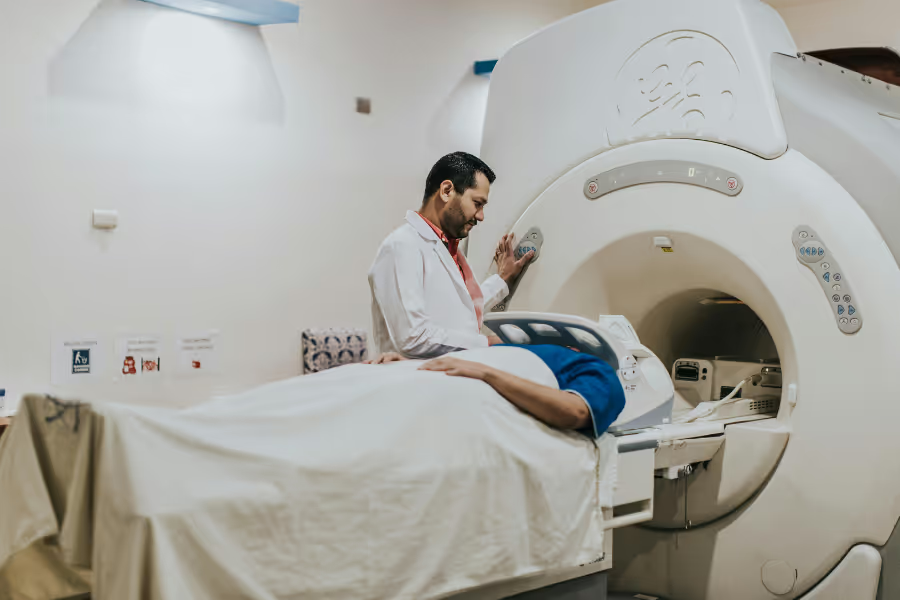

Private MRI

A private MRI scan can help you get answers faster, so you and your doctor can make decisions sooner. Find the right centre that fits your needs below, serving Canadians in major cities like Vancouver, British Columbia; Calgary, Alberta; Toronto, Ontario; and Montréal, Québec.

The founder of Surgency, Dr Sean Haffey smiling
Reviewed and approved by Dr. Sean Haffey
Credit card mockup

Informational purposes only, not medical or legal advice. Please consult your doctor or surgeon.

How Surgency works

icon indicating surgery location

Decide where to go

Private surgery in Canada generally requires travelling out-of-province. So step one is deciding where.
icon indicating search on the platform

Search by specialty

Our app makes it easy to search Surgeons by specialty & location.
icon indicating send secure consult request to surgeon

Schedule a consult

Book a consult directly on Surgency. It's secure, private, fast.

What is magnetic resonance imaging?

An MRI (magnetic resonance imaging) is a scan that uses a powerful magnet and radio waves to create detailed pictures of the inside of your body—without radiation. It’s especially useful for looking at soft tissues like muscles, ligaments, discs, cartilage, the brain, spinal cord, and internal organs.

A private MRI means you book the scan at an accredited, fee‑for‑service imaging clinic instead of waiting for a publicly funded appointment. The scan itself is the same type of test. The main difference is timing and convenience—private clinics often offer faster scheduling, extended hours, and clearer appointment timelines.

Why do people choose to get MRIs done privately?

Canadians might consider a private MRI when public wait times stretch weeks to months, and symptoms—pain, numbness, unexplained headaches, or a suspicious finding—are affecting daily life, work, or peace of mind. Long delays can mean slower diagnosis, delayed treatment decisions, and more time living with uncertainty or worsening symptoms.

Understanding the two types of private MRI

Think of the difference like your Maps app vs. Street View.

Preventative (screening) MRI

Like looking at a whole city from a satellite—you can see big things like major landmarks or obvious problems. It's a general "is everything okay?" check when you feel healthy but want to look under the hood for hidden issues like early cancer or aneurysms.

Key features:

  • Scans your entire body in one session (usually 60–90 minutes)
  • Lower resolution with thicker "slices" (like cutting bread into 4 big chunks)
  • Usually no contrast dye
  • Great for spotting large abnormalities, but may miss tiny tears, small tumours, or subtle early-stage disease
  • If something is found, you'll often need a diagnostic MRI anyway to figure out exactly what it is

Diagnostic MRI

Like using Street View on one specific house—you zoom in with high detail to see exactly what's wrong because you already know where to look.

Key features:

  • Focuses on one body part (brain, knee, spine, shoulder, etc.) for 30–45 minutes
  • High resolution with very thin "slices" (like cutting bread into 50 thin pieces)
  • Often uses contrast dye injected into your arm, which lights up blood vessels, inflammation, and tumors
  • Critical for distinguishing between scar tissue and active disease, or seeing tiny ligament tears
  • Provides the specific answer your doctor needs to start treatment

Which Type Do Most Canadians Need?

Choose Preventative (Screening) MRI if:

  • You're healthy and curious about a general safety check
  • You have strong family history and want early detection
  • You're willing to accept lower resolution and possible follow-up scans

Choose Diagnostic MRI if:

  • You have pain, a lump, numbness, or a specific symptom
  • Your doctor ordered an MRI for a known problem
  • You need high-detail imaging to guide treatment decisions
  • You want the clearest possible answer about what's wrong

Most Canadians seeking private MRI need diagnostic scans because they have a specific symptom or concern that requires detailed imaging to move forward with care.

Dashboard mockup
Why use Surgency

For Canadians who want surgery in weeks, not months

Surgency is a free resource by a Canadian physician in the public system to help you find the right surgeon for your needs.

  1. Confirm your diagnosis. Most patients start with a family doctor or specialist who confirms that  surgery is advisable. A private surgeon can also confirm the diagnosis if needed.
  2. Research.
    • You can find surgeons in Vancouver, British Columbia; Calgary, Alberta; Toronto, Ontario; and Montréal, Québec on our app, and review qualifications, as well as pricing.
  3. Schedule an initial consultation. Most surgeons offer in-clinic and online consults.
    • Consultations are usually booked within days or a few weeks.
    • Note: expect a consultation fee between $150 - $350.
    • We recommend booking 2 - 4 consultations with different surgeons to better understand your options.
  4. Consultation. The surgeon will review your condition, symptoms, and any previous treatments or diagnostics, such as x-rays or MRIs.
  5. Post consultation. The surgeon will then review your case and provide surgical (and non-surgical) options based on your needs; review the risks and expected outcomes; and present pricing and scheduling options.
  6. Schedule your surgery date. Once you confirm the procedure and payment, the clinic will schedule your surgery—generally within a few weeks.

MRI: what to expect

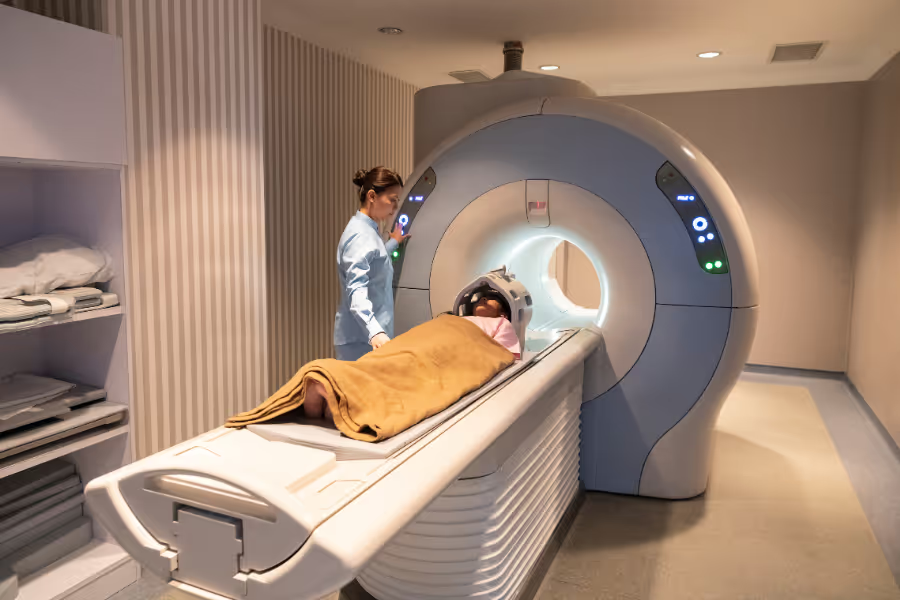
Most MRI scans take 20–60 minutes (sometimes longer for complex studies). You’ll be asked to arrive early to complete forms and a safety screening.
What it feels like

  • The scanner is a tight space. If you’re claustrophobic, tell the clinic ahead of time—many offer open alternatives.
  • You’ll hear loud knocking sounds. Earplugs or headphones are usually provided.
  • You need to stay still. You can breathe normally unless asked to hold your breath for short moments (common for abdominal scans).

Food and medications

  • Some MRI types require fasting, others don’t. Follow the clinic’s instructions.
  • Keep taking your regular medications unless told otherwise.
MRI technician helping patient into machine

How much does private MRI cost in Canada?

Pricing varies by province, clinic, body part, and whether contrast is used.

Typical private MRI ranges in Canada

  • Screening MRIs: $600 – $6,000+
  • Diagnostic MRIs: $950 - $6,000+

Costs tend to be higher for:

  • Whole body scans or multiple body regions in one visit (i.e. prostate, abdomen, spine, brain)
  • Contrast vs non-contrast use
  • Specialized scans (MR arthrogram, cardiac MRI, full spine)

What’s usually included

  • The MRI scan
  • Radiologist interpretation and report
  • Image storage and basic report delivery to the referring provider

What may not be included (ask the clinic to itemize)

  • IV contrast fee (if applicable)
  • Creatinine bloodwork (kidney function test) before contrast
  • Sedation fees (if offered)
  • Copies of images on CD/USB or patient portal access fees (some clinics include this)

Choosing a surgeon and clinic

Not all clinics are equal. Quality and safety matter.

What to look for

  • Accreditation (provincial requirements like DAP in BC, CPSA in AB, Accreditation Canada, and/or recognized accreditation bodies)
  • Radiologists who are licensed in Canada
  • Clear protocols for contrast safety and implant screening
  • Transparent pricing and timelines
  • Convenient image sharing (secure portal, direct delivery to your provider)

Questions to ask

  • What magnet strength do you use (1.5T vs 3T), and is it appropriate for my scan?
  • How quickly will the report be ready?
  • Do you provide images as well as the report?
  • If I’m claustrophobic, what options do you have?
  • Do you offer evening/weekend appointments?

Private MRI frequently asked questions

How do I know if I should get an MRI scan?

A diagnostic MRI is often a good test when your provider needs detailed images of soft tissues or nerves, or when X‑rays and ultrasound don’t fully explain your symptoms.

It might be right for you if:

  • You have persistent pain, weakness, numbness, or swelling that hasn’t improved
  • Your provider suspects a ligament, meniscus, disc, nerve, cartilage, or brain/spinal cord issue
  • The result will change the treatment plan (for example: rehab vs injection vs surgery)

An MRI might not be the best first test if:

  • A simpler test will answer the question (X‑ray, ultrasound, CT)
  • You have certain implants or devices that are not MRI‑safe (some are safe—this is individual)
  • You cannot tolerate lying still in a tight space without support (though options exist)

Do I need a referral?

Yes, you do need a referral for private MRI scans in Canada. However, you can generally contact the centre directly, and they will assist with setting up the referral for you.

What happens after the MRI?

What happens next depends on why you had the MRI. A screening MRI is a broad “check everything” scan, while a diagnostic MRI is a high‑detail scan of one specific area.

After a Screening (Preventative) MRI

  1. Your images get read by a radiologist
    • A radiologist (a doctor trained to read scans) reviews the full set of images and writes a report.
  2. You get a report (and usually a “next steps” note)
    • Because screening MRIs scan a lot of body parts quickly, results often fall into 3 buckets:
      1. Normal / no concerning findings
      2. Incidental findings (common): small cysts, mild disc bulges, benign-looking spots that often mean nothing
      3. Something unclear that needs a closer look
  3. If something shows up, you may need follow‑up testing
    • Screening MRIs are meant to spot potential issues, but they don’t always confirm exactly what something is. Next steps might be:
      1. A diagnostic MRI of one area (higher detail, sometimes with contrast)
      2. An ultrasound (common for kidneys, thyroid, gallbladder, soft tissue lumps)
      3. A CT scan or X‑ray (depending on the body part)
      4. Bloodwork or a specialist referral
  4. You decide what to do with the information
    • If findings are minor, you may just:
      1. Monitor symptoms
      2. Share the report with your family doctor
      3. Repeat imaging later if recommended

After a Diagnostic MRI

  1. Your images are read with a specific question in mind. Diagnostic MRIs usually answer a clear question like:
    • “Is this a torn meniscus?”
    • “Is there a slipped disc pressing on a nerve?”
    • “Is this lump benign or suspicious?”
    • The radiologist’s report is usually more focused and actionable.
  2. Your doctor reviews the report and connects it to your symptoms. The MRI result matters most when it matches your exam and symptoms.
  3. You get a plan
    • Common next steps include:
      • No surgery needed: physio, targeted rehab, meds, injections, activity modification
      • Specialist referral: orthopedics, neurology, neurosurgery, ENT, urology, etc.
      • Further imaging: if contrast is needed, if the view wasn’t clear, or if more areas need scanning
      • Procedure planning: MRI can guide surgery, injections, or treatment timing
  4. Treatment can start sooner. This is a big reason people go private: once you have a clear diagnosis, you can stop guessing and start the right treatment plan.

What are the risks involved with MRIs?

MRI is considered very safe, but there are still risks to understand.

Common and usually minor

  • Anxiety/claustrophobia
  • Discomfort from lying still
  • Loud noise (ear protection is used)

Safety risks (important)

  • Metal and implants: The magnet can move or heat certain metals. This is why screening is strict.
  • Contrast (gadolinium): Usually safe, but can rarely cause allergic reactions. People with severe kidney disease need special consideration.
  • Pregnancy: MRI can be done in pregnancy when medically needed, but contrast is usually avoided unless essential.

If you have any implanted device (pacemaker, cochlear implant, aneurysm clip), always confirm MRI compatibility before booking.

How do I prepare for an MRI scan?

Preparation depends on the body area and whether contrast is planned.

Before you book

  • Tell the clinic about implants, prior surgeries, or metal exposure (especially eye/metal work injuries)

The day before / day of

  • Wear comfortable clothing without metal (no zippers, underwire bras, or metal buttons if possible)
  • Remove jewelry and piercings
  • Bring your referral and any prior imaging reports if requested

If contrast is planned

  • You may need recent kidney function bloodwork (creatinine/eGFR)
  • Tell the clinic if you’ve had prior contrast reactions (rare with MRI contrast, but important)

If you’re claustrophobic

  • Tell the clinic at booking. Options may include:
    • Short‑bore or wider scanners (availability varies)
    • Coaching/breathing strategies
    • Mild sedation (requires an escort and additional planning)

I still have questions

If you still have questions, then feel free to contact us directly.
Browse Vetted Private Surgeons for MRI

QC
Accepting patients from all provinces
VM Med Radiology Center
Surgeon location icon
Montréal, QC
English, French
Sees adult patients

Offering rapid, high-res diagnostic MRI, CT, and PET-CT, specialized in fast breast cancer detection.

ON
Accepting patients from all provinces
Whole Body MRI
Surgeon location icon
Toronto, ON
English
Sees adult patients

Get a complete picture of what's happening inside your body to help you detect issues early and give you time to act.