Justin LeBlanc
Double fellowship-trained orthopedic surgeon deeply specialized in shoulder reconstruction and upper extremity surgery.

We research every surgeon’s training and practice, and verify their credentials, before can list.

Double fellowship-trained orthopedic surgeon deeply specialized in shoulder reconstruction and upper extremity surgery.

Dual fellowship-trained orthopedic surgeon practicing in Vancouver, Kelowna, Calgary & Edmonton. Arthroscopic shoulder, knee and elbow surgery for sports injuries.

Orthopaedic surgeon in Calgary, Alberta, with fellowship training from Harvard and the Mayo Clinic in sports medicine and complex shoulder reconstruction.

Orthopaedic surgeon whose practice is dedicated to shoulder conditions, with private surgical care in Calgary. 20+ years of experience.

FRCSC-certified orthopedic surgeon specializing in complex hip and knee conditions, using both traditional and advanced techniques, including robotic-assisted joint replacements.
You can reach out without a referral. Intake teams answer questions, share pricing ranges and walk you through next steps.
A formal consultation typically needs a referral, plus recent imaging and records. Many clinics can help arrange the referral.
All surgeons listed on Surgency offer virtual consultations, so you don’t need to travel until you and the surgeon have agreed on a plan.
Shoulder problems tend to escalate quietly—a sore rotator cuff today becomes a full-thickness tear next year. This page is a practical guide for patients and caretakers considering private shoulder options in Calgary: rotator cuff repair, replacement, labral and stabilization procedures, surgeon availability, and which Alberta-based surgeons are opted out of AHCIP.
Note: in general, Alberta residents cannot pay privately for surgery within Alberta (unless the surgeon is opted-out of AHCIP). For more shoulder options, view Vancouver, BC; Edmonton, AB; Toronto, ON; Montréal, QC.

More than 300,000 surgeries are performed in Alberta each year, including over 13,000 hip and knee replacements alongside tens of thousands of other orthopedic procedures—shoulder surgeries like rotator cuff repair, shoulder replacement, and labral repair among them. Most shoulder surgeries are delivered through the publicly funded Alberta Health Care Insurance Plan (AHCIP).
Private shoulder surgery options in Calgary are currently limited for Albertans. While some services are available privately (certain elective surgeries, ophthalmology, cosmetics), many Calgarians pursue interprovincial private shoulder surgery when local wait times for rotator cuff repair, replacement, or stabilization procedures are not workable.
Current regulations: Medically necessary shoulder surgery is covered by AHCIP, so Albertans can only pay privately for it in Alberta with a surgeon who has opted out of AHCIP or is approved for dual practice. To find these surgeons, look for profiles without the "Private unavailable for Alberta residents" note. This rule doesn't apply to patients from other provinces.
About dual practice: Alberta's new dual practice option lets approved surgeons stay in the public system while charging patients directly for eligible elective procedures. It's new, so ask a surgeon whether they're approved before you plan around it.
Wait times depend on urgency, imaging, and OR capacity. Two waits matter:
If you’re over 60 with degenerative arthritis, you may be triaged differently than a younger patient with a locked knee or acute ligament injury. The fastest path usually comes from: clear diagnosis + complete imaging + documented failed conservative care.

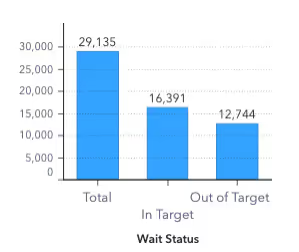
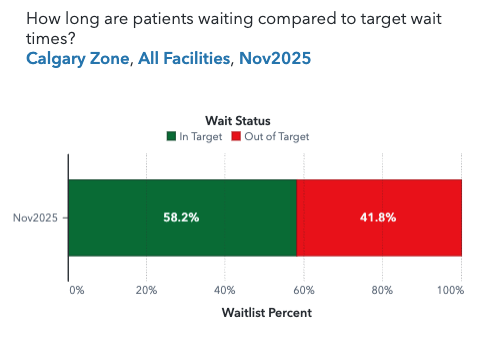
In Calgary, there are ~29,000 patients waiting for surgery. via Wait Times Alberta
Of those patients waiting for surgery, 42% are out of target. That means 42% of patients are waiting for a scheduled surgery longer than is clinically recommended by the Alberta Coding Access Targets for Surgery system.

For hip and knee replacement surgery, wait times vary considerably. The tenth percentile gets surgery within 5 weeks. 50% are seen within 25 weeks. And the 90th percentile are seen within 55 weeks.
Shoulder surgeons are orthopedic surgeons who specialize in conditions affecting the shoulder joint, rotator cuff, labrum, and surrounding tendons. The most common reasons people seek shoulder care include:
You want a second opinion on whether surgery is the right next step
Please consult your physician for more guidance.
It depends on the surgeon's status. For medically necessary shoulder surgeries—such as rotator cuff repair, shoulder replacement, labral repair, or stabilization—Albertans generally cannot pay privately to a surgeon enrolled in the Alberta Health Care Insurance Plan (AHCIP).
That is why some Albertans seeking timely private shoulder care choose to go out-of-province (typically to Québec).
There are two exceptions within Alberta: a shoulder surgeon who has formally opted out of AHCIP, or one approved for Alberta's new dual practice option, which lets surgeons stay in the public system while charging patients directly for eligible elective procedures. In either case, you pay the full cost out-of-pocket and can't claim it back from the government. Dual practice is new, so ask a surgeon whether they're approved. To find surgeons who can treat Alberta residents privately, look for profiles without the "Private unavailable for Alberta residents" note.
Yes and no—you can reach out to any of the private surgeons listed on Surgency without a referral. Their intake teams are happy to answer questions, explain what they treat, share pricing ranges, and walk you through next steps.
However, to book a formal consultation with the surgeon, you'll typically need a referral from your family doctor or nurse practitioner. Don't have one? Many of the clinics can help coordinate a virtual GP appointment to get the referral paperwork sorted. All surgeons listed on Surgency offer virtual initial consultations, so you don't need to travel until you and the surgeon have agreed on a plan.
Before your consultation, expect the clinic to request relevant medical records and recent diagnostic imaging (X-ray, MRI, CT, ultrasound, lab work, etc.). Having these ready speeds up the process and lets the surgeon give you specific guidance on your very first call.
This is general information, please seek professional tax guidance.
Generally, private surgeries performed in Canada are paid for out-of-pocket or via private insurance / employer benefits.
Provincial plans (like AHCIP, MSP, RAMQ, or OHIP) typically do not cover procedures at private clinics, though some exceptions exist for WCB-Alberta (Workers' Compensation) claims or specific inter-provincial programs.
Standard extended health benefits (e.g. Sun Life, Manulife, Alberta Blue Cross) typically do not cover the cost of the surgery itself. However, they often cover related costs such as:
If your employer provides a Health Spending Account (HSA) or "flex account," you can often use these funds to pay for the surgery. Unlike standard benefits, HSAs are usually flexible enough to cover CRA-eligible medical expenses, including private facility fees.
You may be able to get some financial relief at tax time.
Medical Expense Tax Credit (METC): You can generally claim eligible private surgery fees as a medical expense on your federal tax return. Learn more about the METC here.
Alberta Provincial Credit: Alberta has a parallel medical expense tax credit that can further reduce your provincial tax liability.
Travel costs: Mileage, parking, and accommodation may also be claimable if you travel more than 40 km (for travel expenses) or 80 km (for accommodation and meals) to receive medical services not available near your home.
Please consult a tax professional before claiming any private surgery fees on your taxes.

Surgency is free for patients, funded by surgeons/surgical providers.
Surgeons and providers—who meet our listing criteria—pay a flat fee to list on the Surgency platform. To maintain objectivity, there are no commissions, referral fees, nor any ranking or recommending one surgeon over another.
Surgency is patient-first. Our goal is to make the process of finding a private surgeon as simple as possible. You choose who to contact. Learn more in our Advertising Policy.
There's no single price—shoulder surgery covers a wide range of procedures, so cost depends heavily on what you need, plus the surgeon, facility, implant, and the specifics of your case.
As a general guide, private shoulder surgery in Canada commonly ranges from $5,000 (for straightforward diagnostics/arthroscopy) to $28,000+ (for shoulder replacements or complex repairs).
The surgeon's fee, anesthesia, facility fee, and (for replacements) the implant make up most of the bill. Costs tend to be lower in Québec relative to other provinces, and higher in Alberta and Ontario.
Pre-op imaging, medications, bracing, and physiotherapy may or may not be bundled in, so it's best to ask each clinic for a written, itemized quote before you decide.
This is general information, not a quote—pricing varies by clinic and case.
Private surgeons typically charge a consultation fee because a surgical consult involves clinical work before, during, and after the appointment.
Most consultation costs range between $200 - $400, however they can be up to 10% of the overall surgery costs. In many cases this fee will get rolled into the total cost of the surgery itself—ask the surgeon.
A surgical consultation isn’t a “meet and greet.” It’s a formal medical assessment where the surgeon may:
Private clinics also cover operating costs that public hospitals don’t fund in the same way, including:
The consultation fee helps support these resources and the infrastructure required to provide timely, organized care outside publicly funded hospital operations.
As a family doctor in the public system, I believe transparency is a form of care. I created Surgency to help my patients struggling on long waitlists who wanted to understand all their options for timely medical attention.
Surgency is a free resource designed to empower and educate—helping you understand private pathways and find accredited surgeons within Canada. I hope Surgency brings you clarity.
Dr. Sean Haffey

Review each surgeon’s credentials and experience, then request a virtual consultation. No commitment to surgery. No referral needed.