




Key takeaways
- Post-surgery home care covers two things:
- skilled clinical care, such as wound care and medication management from a nurse, and
- personal support with daily tasks like bathing, dressing, and meals.
- In Canada, private home care typically runs about $30 to $40 per hour for a personal support worker and roughly $50 to $65 per hour for a registered practical nurse (via an agency), or $70 to $90+ for a registered nurse (via an agency), with live-in care around $550 per day. This varies by province.
- Public home care exists in every province and is free when you qualify, but hours are based on assessed medical need and can be limited, especially in the first weeks after discharge.
- Some families choose to use public hours as a base and buy 15 to 30 hours of private care per week on top.
- Some private home care costs, including nursing and personal support worker wages for care in your own home, can count toward the federal Medical Expense Tax Credit.
If you are still choosing where and with whom to have your surgical procedure, you can compare private surgeons and clinics through Surgency's Surgeon Finder.
What is post-surgery home care?
That gap is real, and it has been measured. Research published in CMAJ found that more than one in five patients discharged from a Canadian teaching hospital experienced an adverse event after going home, and many of those events were preventable or could have been reduced with better support and follow-up. Most of the risk sits in the first days and weeks at home, exactly when families are least prepared for it.
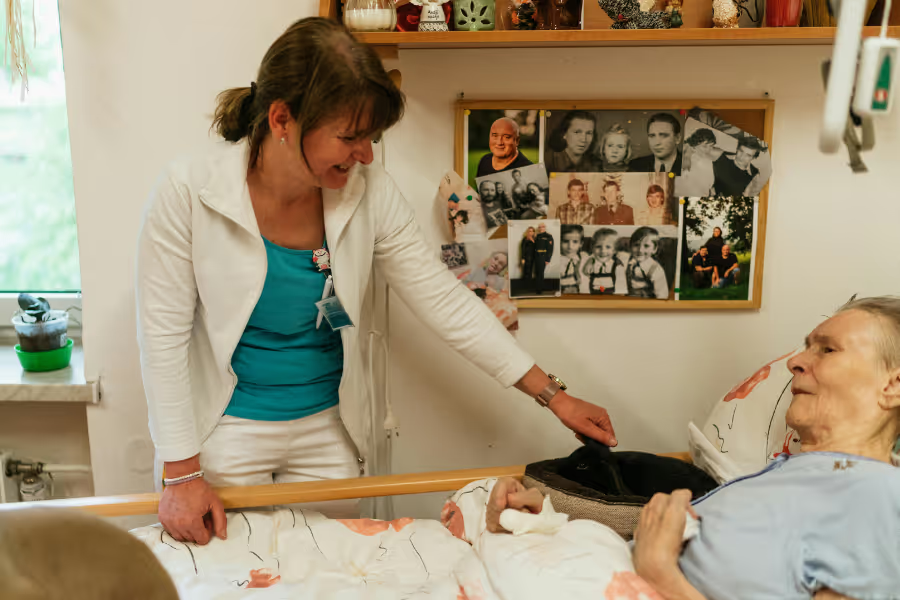
Post-surgery home care is professional recovery support delivered in your home after an operation, rather than in a hospital or rehab facility. It can last a few days or several weeks, and it scales from a nurse visiting once a day to round-the-clock support. The point is to keep recovery on track and catch problems early, in the place most people heal best.
There is good reason to take the home stretch seriously. Enhanced Recovery After Surgery (ERAS) protocols, now used across many Canadian hospitals, are built on the finding that early mobilization and structured recovery reduce complications, shorten recovery, and lower costs. Getting up, moving safely, eating well, and managing pain are not small things. They are the work of recovery, and home care is one way to make sure that work actually happens.

Home care versus home health care
These two terms get used interchangeably, but they describe different things, and the difference drives most of the cost.
Home care, sometimes called personal care or non-medical care, covers help with daily living: bathing, dressing, meals, light housekeeping, mobility, and company. It is usually delivered by a personal support worker (PSW) and does not require a doctor's order.
Home health care is clinical. It involves licensed nurses or therapists doing medical tasks: changing surgical dressings, managing medications, monitoring vital signs, giving injections, or running through physiotherapy exercises. Because it requires training and carries more liability, it costs more per hour. Most people recovering from surgery need a mix of both, weighted toward clinical care early on and personal support as they regain independence.
How it fits with your discharge plan
Home care is part of leaving the hospital well, not an afterthought. Most Canadian hospitals have a discharge planner or social worker whose job is to coordinate the move from hospital bed to home, and in Ontario that coordination runs through Ontario Health atHome, which can arrange publicly funded nursing and personal support before you are discharged.
Ask for that conversation early, ideally a day or two before your planned discharge date. The questions that matter most: has a referral for home care been submitted, when will someone assess you, and who is covering the first 24 to 48 hours at home? Get your discharge summary and a written, up-to-date medication list before you leave the building. Whoever supports you at home, public or private, will need both.
What post-surgery home care includes
The specific services depend on your surgery, your health, and how your recovery goes, but most post-surgery care plans pull from four areas. A good provider builds a plan that shifts over time, heavier on clinical care in week one and lighter by week four.
Skilled nursing
This is the clinical core of post-surgical recovery. A registered nurse (RN) or registered practical nurse (RPN) can change and assess surgical dressings, watch a wound for signs of infection, manage drains, give injections, reconcile and administer medications, and check vital signs. Public community nursing covers much of this when you qualify; British Columbia, for example, includes wound care, medication management, and post-surgical care in its community nursing services, though usually on a short-term basis.
Medication is a common failure point after discharge, especially when prescriptions change in the hospital. Having a nurse confirm doses and timing in the first week prevents a category of mistakes that sends people back to the emergency department.
Personal support and daily living
A personal support worker handles the parts of recovery that are not medical but are hard to do with a fresh incision, limited mobility, or a body that tires fast. That means help with bathing and dressing, meal preparation, light housekeeping, getting to the bathroom safely, and moving around the house without falling.
Nutrition belongs here too. Surgery raises the body's demand for protein and fluids, and appetite often drops when pain medication is involved. Someone preparing proper meals and keeping you hydrated does more for healing than it sounds.
Rehabilitation and mobility
Physiotherapy and occupational therapy help you regain function and do it safely. A physiotherapist guides the exercises that rebuild strength and range of motion after orthopedic and many other surgeries. An occupational therapist focuses on daily tasks and home safety, which matters because deconditioning sets in fast after an operation.
Early, supported movement is one of the better-evidenced parts of recovery. It is a pillar of the ERAS approach precisely because lying still too long raises the risk of blood clots, pneumonia, and muscle loss.
Monitoring, coordination, and emotional support
Part of the value of having a professional in the home is simply that someone is watching. They notice a wound that looks worse, a fever creeping up, confusion, or pain that is not responding to medication, and they know when those signs warrant a call to the surgeon or a trip to the ER.
Good home care also keeps everyone in the loop, updating family and flagging issues to your family doctor or surgical team. The emotional side is easy to dismiss and shouldn't be. Recovery can be isolating, and steady company tends to help people stick with the slow, dull work of getting better.
How much does post-surgery home care cost in Canada?
Private home care is priced by the hour for most services, and the rate depends mostly on who is providing the care. There is no single national price, and figures vary by province and city, so treat the ranges below as planning numbers rather than quotes.
For procedure-specific budgeting, Surgency keeps cost estimates in its private surgery cost resource and in each of its procedure guides.
Hourly rates by care type
The pattern is consistent across providers: the more clinical training a role requires, the higher the rate.
- Personal support worker: roughly $30 to $45 per hour for help with daily living.
- Registered practical nurse (RPN/LPN): roughly $45 to $65 per hour for wound care, medication management, and monitoring.
- Registered nurse (RN): $65-100 for more involved medical needs and monitoring.
Most agencies set a minimum visit length, often around three hours, so a quick 30-minute dressing change can still be billed as a longer block.
Live-in and overnight care
When someone needs support around the clock, agencies offer live-in or overnight care rather than stacking hourly visits. MF Homecare puts live-in care at roughly $450 to $550 per day. This is common in the first week after major surgery, after which most people step down to scheduled daytime visits.

What drives cost, and the fees to ask about
Beyond the hourly rate, the total depends on the type and complexity of care, your province and city, how many hours you need, and how long you need them. The cheapest advertised rate is not always the cheapest bill, because add-on fees vary a lot between providers.
Questions to ask before you sign with a home-care provider
- What is the minimum number of hours per visit?
- Do you charge for travel or mileage, and how is it calculated?
- Are there surcharges for statutory holidays?
- Are supplies billed separately, and if so, what do they cost?
- What is your cancellation policy, and are there fees?
What public home care covers, and what it does not
Every province and territory funds some home care, and when you qualify it is free at the point of use. The catch is in how much you get and how fast.
Public home care is real support, not a token. In Ontario, for instance, Ontario Health atHome provides nursing, personal support, physiotherapy, and occupational therapy at no cost to people who are assessed as eligible, with no referral required. Nursing visits cover wound care, medication help, and recovery from an injury or procedure. Other provinces run comparable programs through their health authorities.
The limits are practical. Coverage is based on assessed medical need, not on what would make recovery comfortable or convenient, so personal support hours in particular are often capped at a few per week. There is also usually a lag between discharge and the first publicly funded visit while a care coordinator completes an assessment, which leaves a gap in the highest-risk window right after you get home.
That gap is not trivial for older patients. The Public Health Agency of Canada reports that falls are the leading cause of injury-related hospitalization among Canadians aged 65 and older, and about one in three older adults falls each year. A deconditioned body fresh out of surgery, alone at home for the first few days, is the exact scenario that statistic describes. Private care most often gets used to bridge that early gap, then taper off as public hours and your own strength catch up.
One more wrinkle is worth knowing if you are considering private surgery specifically. Under the Canada Health Act, medically necessary hospital and physician services must be publicly covered, which shapes how private surgery works in Canada and often means travelling out of province for the procedure.
Surgency explains the mechanics in our overview of how private surgery works in Canada.
How to pay for post-surgery home care
Most people cover private home care through some combination of four sources, and they are worth lining up before surgery rather than after.
Out-of-pocket is the simplest: savings or family support pay the bill directly.
Extended health benefits are the next place to look, since some workplace and private plans cover skilled nursing or rehabilitation after surgery, though coverage for non-medical personal care is patchy. Call your insurer and ask specifically about both skilled and personal care, because the two are treated very differently.
Financing and payment plans are a third route, offered by some agencies and third-party lenders.
The fourth is the one people miss: tax credits. The Canada Revenue Agency lets you count attendant care, including salaries and wages paid for nursing and personal support worker care in your own home, toward the Medical Expense Tax Credit, provided you keep detailed receipts that name the care recipient and break down the charges. The rules are specific, so keep paperwork from day one. Seniors in Ontario may also qualify for the Ontario Seniors Care at Home Tax Credit, a refundable credit worth up to 25% of eligible expenses to a maximum of $1,500, which can stack with the federal credit.
For the full picture, including how the tax credit applies to private surgery costs, see Surgency's resources on financing private surgery and the Medical Expense Tax Credit. A tax professional can confirm what applies to you.
How to arrange home care before discharge
The best time to set up home care is before surgery, not the day you are sent home. Care can often start the day of discharge if it is arranged in advance, while waiting until after you are home can leave you exposed during the riskiest days.
Start by asking your hospital's discharge planner what public home care has been arranged and when it begins. Then decide whether you need to fill any gaps privately, line up a provider, and confirm the first visit is booked for discharge day. Have your discharge summary, medication list, and a contact for your surgical team ready to hand over.
Questions to ask any provider
A short list of questions separates a well-run provider from a cheap rate. Before you commit, ask:
- Who actually provides the care: a registered nurse, an RPN, or a PSW, and is it the same person each visit?
- What is the minimum visit length, and what are the charges for travel, holidays, supplies, and cancellations?
- Is there a 24/7 number to reach a nurse or on-call staff if something goes wrong at night?
- What happens if I have a complication, and how do you coordinate with my surgeon and family doctor?
- Are your caregivers screened, insured, and trained for post-surgical care?
Agency, on-demand platform, or independent caregiver
There are three ways to source care, and they trade off cost against convenience and oversight.
A traditional agency handles screening, training, scheduling, insurance, and backup coverage if your caregiver is sick. You pay more for that, and matching can take a few business days.
On-demand platforms connect you directly with independent caregivers, often faster and cheaper than agencies, with you doing more of the coordination.
Hiring an independent caregiver privately is usually the cheapest hourly rate, but you take on everything: vetting, scheduling, payroll, taxes, and finding a replacement when needed. For complex clinical recovery, the oversight of an agency tends to be worth the premium.
For straightforward personal support, a platform or independent hire can stretch the budget further.
Planning recovery when you travel for private surgery
Because medically necessary surgery generally cannot be paid for privately within your home province, many Canadians travel to another province for a private procedure. That adds a layer to recovery planning, because your surgeon will be far away when you get home.
Two documents make the handoff work. Ask your surgical team for your operative notes before you travel home, and arrange a transfer-of-care letter to your family doctor so they can manage your routine follow-up with the full picture. Confirm which follow-up visits can be done by video, and get a direct after-hours number for the clinic in case of problems on the trip back.
You will also want home care arranged at your destination for the days you cannot fly or drive, and again at home once you return.
Surgency covers the logistics in detail in our guide to aftercare when you travel for private surgery in Canada, and our step-by-step guide to booking a private surgeon folds recovery into the wider process.
Recovery timeline and when to call for help
Every surgery has its own timeline, and yours should come from your surgeon, not a general article. That said, recovery tends to move through rough phases, and knowing them helps you plan how much home care you will need and when.
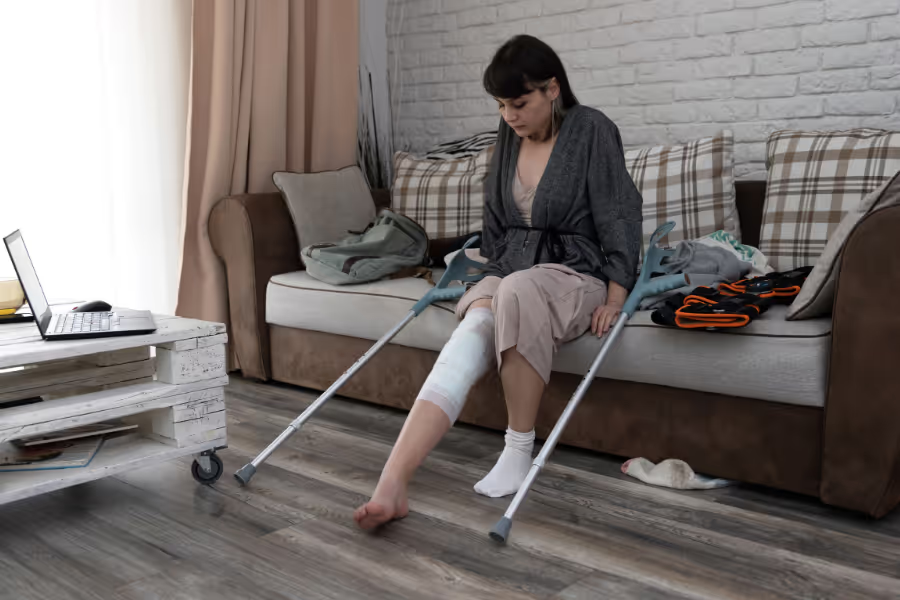
The first 72 hours are the most fragile. Pain is at its peak, mobility is lowest, and the risk of falls, medication errors, and early complications is highest. This is when round-the-clock or daily nursing support earns its keep. Over the first one to two weeks, most people step down to scheduled visits for wound care, medication management, and help with daily tasks. From roughly week three onward, the focus shifts to rehabilitation and rebuilding strength, and home care often tapers to physiotherapy and lighter personal support.
Throughout, certain symptoms mean you should contact your surgical team right away, or seek emergency care if they are severe: a fever or spreading redness, swelling, or discharge around the incision; pain that is getting worse rather than better or is not controlled by your medication; heavy bleeding; trouble breathing or chest pain; or new swelling and pain in a calf, which can signal a blood clot. When in doubt, call. A nurse in the home, or a clinic's after-hours line, exists for exactly these moments.
If you are weighing a private procedure and want recovery support factored in from the start, you can browse private surgeons and clinics by experience, location, and approach through Surgency.
Frequently asked questions
Does insurance cover home care after surgery in Canada?
Public health insurance covers some post-surgery home care, including nursing visits and limited personal support, when a care coordinator assesses you as eligible. Many extended health plans also cover skilled nursing or rehabilitation, though coverage for non-medical personal care is limited. Call your insurer and ask specifically about both skilled and personal care.
How much does post-surgery home care cost?
In Canada, private home care generally runs about $30 to $40 per hour for a personal support worker and $45 to $65 per hour for a registered practical nurse, $65-100 for a registered nurse, with live-in care around $450 to $550 per day.
How do you arrange home care after surgery?
Start before discharge by asking your hospital's discharge planner what public home care has been arranged and when it begins. Then line up any private care you need so it can start on discharge day, and have your discharge summary and medication list ready to hand over. Booking ahead avoids a dangerous gap in the first days at home.
What does post-surgery home care include?
It covers skilled clinical care, such as wound care, dressing changes, medication management, and monitoring by a nurse, and personal support with daily tasks like bathing, dressing, meals, and mobility. Many plans also include physiotherapy or occupational therapy. The mix shifts from heavier clinical care early on to lighter personal support as you recover.
How long do you need home care after surgery?
It depends on the procedure and your health, but the most intensive support is usually needed in the first one to two weeks, with lighter help continuing for several weeks during rehabilitation. Your surgeon can give you a realistic timeline for your specific operation.