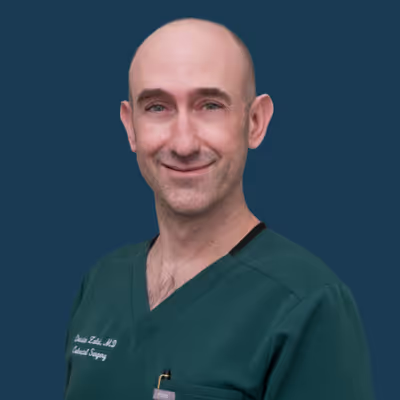


Hernia repair and gallbladder removal are among the most-performed surgeries in Canada, yet wait times in Québec's public system can be measured in months for non-urgent cases. This page is a practical guide for patients and caretakers exploring private general surgery in Montréal: scope of routine procedures, which surgeons are opted out of RAMQ, and how to compare options.
Note: in general, Québec residents cannot pay privately for surgery within Québec (unless the surgeon is opted-out of RAMQ). For more general surgery options, view Vancouver, BC.

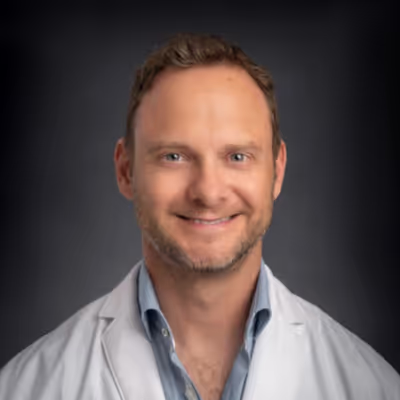
A leading expert in minimally invasive general surgery specializing in advanced laparoscopic techniques for safe, rapid-recovery procedures for hernias & gallbladder disease.
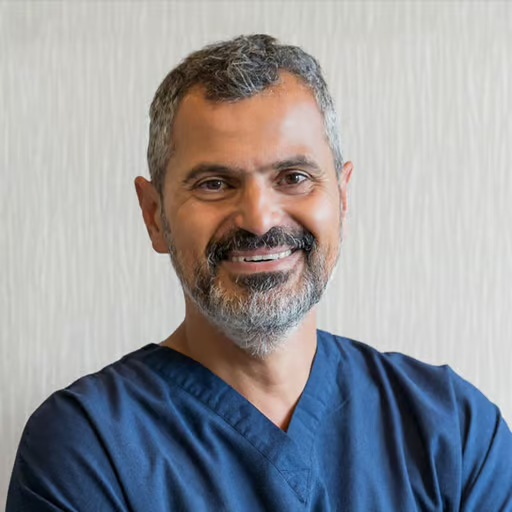
Breast and thyroid specialist, combining diagnostic precision with surgical compassion, guiding thousands of women through breast cancer diagnosis and treatment for over 23 years.
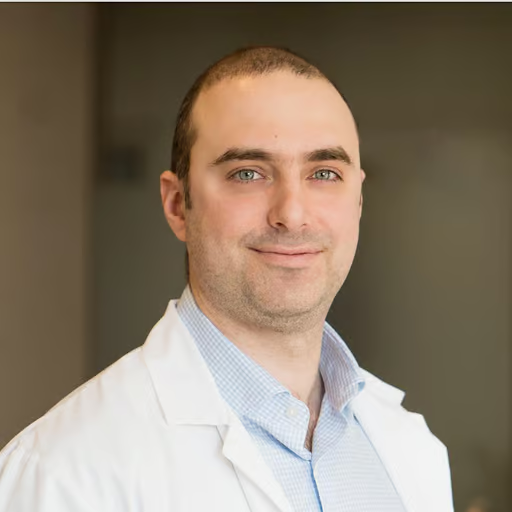
Highly specialized endocrine & general surgeon with a focus on minimally invasive management of thyroid and parathyroid disorders, prioritizing rapid recovery and minimal scarring for his patients.
It depends on the procedure and setting. For purely elective, non-essential surgeries (such as cosmetic lipoma, cyst removals, laser pilonidal sinus treatment, hemorrhoid banding/sclerotherapy), Québec residents can pay out of pocket for surgery within Québec.
But for essential general surgeries (e.g. hernia repair, gallbladder removal, appendectomy, colorectal procedures, lumps & cysts, etc.), the answer is generally no. That is why many Québecois who seek private general surgery go out-of-province.
The only exception to this is private surgeons who are 'opted out' of RAMQ may see Québecois within Québec.
Yes and no—you can reach out to any of the private surgeons listed on Surgency without a referral. Their intake teams are happy to answer questions, explain what they treat, share pricing ranges, and walk you through next steps.
However, to book a formal consultation with the surgeon, you'll typically need a referral from your family doctor or nurse practitioner. Don't have one? Many of the clinics can help coordinate a virtual GP appointment to get the referral paperwork sorted. All surgeons listed on Surgency offer virtual initial consultations, so you don't need to travel until you and the surgeon have agreed on a plan.
Before your consultation, expect the clinic to request relevant medical records and recent diagnostic imaging (X-ray, MRI, CT, ultrasound, lab work, etc.). Having these ready speeds up the process and lets the surgeon give you specific guidance on your very first call.
This is general information, please seek professional tax guidance.
Generally, private surgeries performed in Canada are paid for out-of-pocket or via private insurance / employer benefits.
Provincial plans (like RAMQ, OHIP, MSP, or AHCIP) typically do not cover procedures at private clinics, though some exceptions exist for CNESST (Workers' Compensation) claims or specific inter-provincial programs.
Standard extended health benefits (e.g. Sun Life, Manulife, Beneva) typically do not cover the cost of the surgery itself. However, they often cover related costs such as:
If your employer provides a Health Spending Account (HSA) or "flex account," you can often use these funds to pay for the surgery. Unlike standard benefits, HSAs are usually flexible enough to cover CRA-eligible medical expenses, including private facility fees.
You may be able to get some financial relief at tax time.
Medical Expense Tax Credit (METC): You can generally claim eligible private surgery fees as a medical expense on your federal tax return. Learn more about the METC here.
Québec Tax Credit for Medical Expenses: Québec has a parallel medical expense tax credit that can further reduce your provincial tax liability. You claim eligible expenses minus 3% of your combined family net income.
Refundable Tax Credit for Medical Expenses: Québec offers a second, refundable credit for low-income workers. If your work income is low but your medical expenses are high, Québec may pay you money back even if you paid no tax.
Travel costs: Mileage, parking, and accommodation may also be claimable if you travel more than 40 km (for travel expenses) or 80 km (for accommodation and meals) to receive medical services not available near your home.
Please consult a tax professional before claiming any private surgery fees on your taxes.
Surgency is free for patients, funded by surgeons/surgical providers.
Surgeons and providers—who meet our listing criteria—pay a flat fee to list on the Surgency platform. To maintain objectivity, there are no commissions, referral fees, nor any ranking or recommending one surgeon over another.
Surgency is patient-first. Our goal is to make the process of finding a private surgeon as simple as possible. You choose who to contact. Learn more in our Advertising Policy.
There's no single price. "General surgery" covers everything from minor skin procedures to complex abdominal operations, so cost depends heavily on the procedure, the type of anaesthesia, surgeon experience, the facility, and the specifics of your case.
As a general guide, private general surgery in Canada commonly ranges from $1,000 to $4,000 for minor outpatient procedures under local anaesthesia; to $15,000+ for complicated hernias. Costs tend to be lower in Québec, and higher in Alberta and Ontario.
The surgeon's fee, anaesthesia, and facility fee make up most of the bill, and complexity is the biggest driver—a simple outpatient procedure costs far less than an operation needing general anaesthesia and an overnight stay.
Pre-op imaging, medications, and follow-up care may or may not be bundled in, so it's best to ask each clinic for a written, itemized quote before you decide.
This is general information, not a quote—pricing varies by clinic and case.
Private surgeons typically charge a consultation fee because a surgical consult involves clinical work before, during, and after the appointment.
Most consultation costs range between $200 - $400, however they can be up to 10% of the overall surgery costs. In many cases this fee will get rolled into the total cost of the surgery itself—ask the surgeon.
A surgical consultation isn’t a “meet and greet.” It’s a formal medical assessment where the surgeon may:
Private clinics also cover operating costs that public hospitals don’t fund in the same way, including:
The consultation fee helps support these resources and the infrastructure required to provide timely, organized care outside publicly funded hospital operations.
As a family doctor in the public system, I believe transparency is a form of care. I created Surgency to help my patients struggling on long waitlists who wanted to understand all their options for timely medical attention.
Surgency is a free resource designed to empower and educate—helping you understand private pathways and find accredited surgeons within Canada. I hope Surgency brings you clarity.
Dr. Sean Haffey

General surgeons diagnose and treat a broad range of conditions involving the abdomen, digestive tract, skin, and soft tissues, as well as breast, hernia, and minor vascular problems. The most common reasons people seek general surgery care include:
Please consult your physician for more guidance.
An estimated 424,384 surgeries are performed in Québec each year. Tens of thousands of these are general surgery procedures such as hernia repair, gallbladder removal (cholecystectomy), appendectomy, breast and thyroid surgery, and colorectal procedures. Most medically necessary general surgery is delivered through the publicly funded Régie de l'assurance maladie du Québec (RAMQ).
Unlike Ontario, Québec permits surgeons to "opt out" of RAMQ, allowing them to provide private general surgery directly to Québec residents within the province. Surgeons listed below who are opted-out will note "Accepting patients from all provinces."
Québec has the most established private surgical landscape in Canada, and Greater Montréal is at the centre of it. Opted-out general surgeons and private clinics operate across the island and surrounding communities (Laval, Saint-Hubert, Joliette), offering privately funded hernia repair, gallbladder removal, breast and thyroid surgery, and colorectal procedures.
Current regulations: Québec's regulatory environment is more permissive than Ontario's. Surgeons who opt out of RAMQ may charge patients directly for services, including some medically necessary procedures. This has allowed a parallel private system to develop alongside the public one. Regulations continue to evolve, and not all general surgery procedures or surgeons are available privately.
What this means for you: Greater Montréal residents generally have more in-province private general surgery options than patients in most other Canadian provinces. Depending on your procedure, you may be able to access private care without travelling out of province.