
.png)
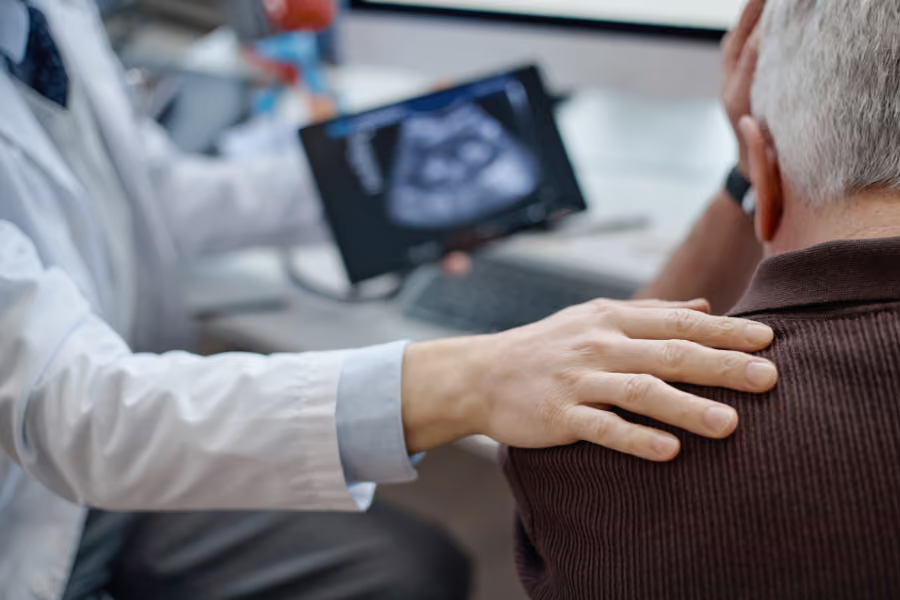

What is Optilume BPH, and why do people need it?
Benign prostatic hyperplasia (BPH) is a non-cancerous enlargement of the prostate. The prostate surrounds the urethra—the tube that carries urine out of the bladder. As prostate tissue enlarges, it can squeeze the urethra and make urination difficult.
Common symptoms include:
- A weak, slow, or stop-start urine stream
- Difficulty starting urination
- Straining to empty the bladder
- A feeling that the bladder has not emptied
- Urinating frequently during the day
- Waking repeatedly at night to urinate
- Sudden urgency or leakage before reaching a toilet
- Dribbling after urination
Optilume BPH is a drug-and-device treatment for obstructive urinary symptoms associated with BPH. It is different from the separate Optilume balloon used for urethral strictures.
What actually happens
The Optilume BPH system uses two specially shaped balloons:
- Pre-dilation balloon: The first balloon mechanically opens the prostatic urethra and separates the obstructing lateral lobes along the front of the prostate.
- Drug-coated balloon: A second balloon repeats the dilation and transfers paclitaxel to the prostatic urethra.
Paclitaxel limits cell growth and scar formation. Its purpose is to reduce the chance that the prostate lobes will rejoin during healing, helping the new urinary channel remain open.
The balloons are removed after treatment. No permanent implant is left behind, and prostate tissue is not cut away, lazered, heated, steamed, or vaporized.
The FDA indication is for men aged 50 or older with obstructive urinary symptoms caused by BPH. In the PINNACLE trial, participants had prostate volumes from 20 to 80 g. At two years, average symptom scores had improved from 23.4 to 11.0, and average peak urine flow increased from 8.9 to 19.0 mL/second. About 68% met the study definition of a symptomatic responder without medical or surgical retreatment. These averages do not guarantee an individual result.
How much does Optilume cost in Canada?
How we estimate surgical costs: Ranges are estimates drawn from our network of 100+ private clinics and surgeons, and they're intentionally broad. Two people seeking the same procedure can receive very different quotes depending on province, surgeon, facility fees, and case complexity. Published prices aren't always comparable either—some are complete bundles, others exclude consultation, imaging, or follow-up. Only the clinic can give you an exact, itemized quote.
Exact fees depend on the clinic, province, anaesthesia plan, testing, and follow-up. Ask for a written, itemized quote and confirm what happens if the procedure is postponed because of infection or another finding.
Cost in Canada (private)
Typical range: $4,000 – $9,000+
Costs vary by province, provider expertise, clinic, and condition complexity. Optilume is not covered by provincial insurance.
Cost in the United States
Range estimate: US$5,500–$9,500+
These are estimates—not guaranteed patient prices. Prices vary due to state, provider experience, clinical vs ambulatory centre setting, anaesthesia team.
What may be included
- Urologist’s Optilume BPH procedure fee
- Dedicated Optilume BPH pre-dilation and drug-coated balloon kit
- Cystoscopy and standard procedural supplies
- Facility and nursing fees
- Local anaesthesia or sedation
- Temporary Foley catheter
- Routine early follow-up
What may not be included
- Initial urology consultation
- PSA, urinalysis, urine culture, or blood work
- Uroflowmetry and post-void residual measurement
- Cystoscopy or prostate ultrasound performed before treatment
- Treatment of a urinary infection
- Anaesthesia fees when billed separately
- Prescriptions after discharge
- Unplanned emergency care or hospital transfer
- Travel and accommodation
- Follow-up outside the treating province
- Future BPH medication or retreatment
Tips for comparing quotes
Confirm that the quote is specifically for Optilume BPH, not the Optilume urethral-stricture procedure. Ask whether it includes both BPH balloons, the urologist, facility, anaesthesia, catheter care, and follow-up. Clarify what happens financially if anatomy discovered during cystoscopy makes another BPH treatment more appropriate.
Insurance and financing options
- Provincial insurance: Optilume BPH is not currently listed as a routinely covered benefit under Canadian provincial health plans.
- Private health insurance: Most private insurers do not cover Optilume. Check with your provider.
- Financing plans: Some clinics offer monthly payment options. Learn more about financing private surgery.
- Medical Expense Tax Credit (METC): Eligible medical expenses may qualify for a non-refundable tax credit. Learn more about claiming the METC.
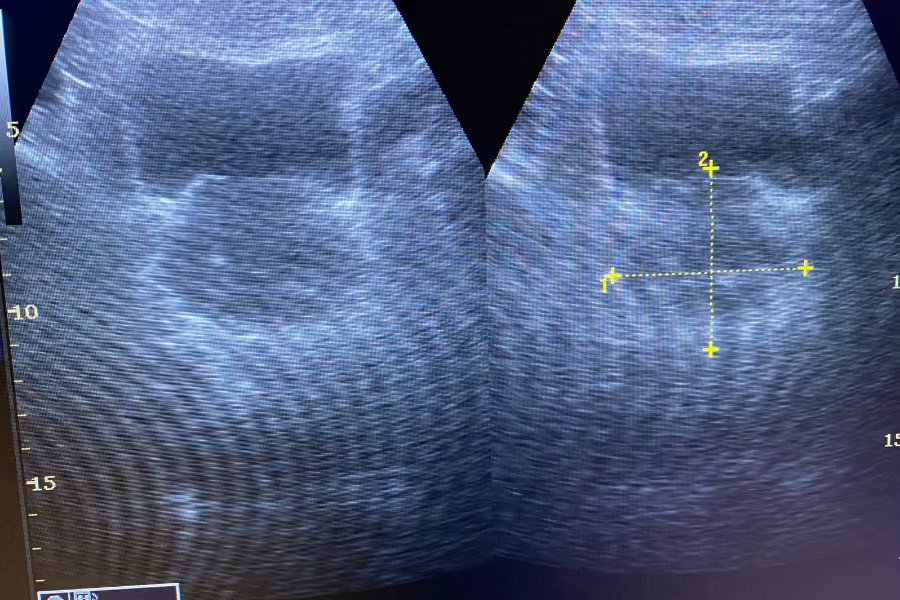
Optilume procedure steps: what to expect
The treatment is generally performed in an office or outpatient surgical centre. A Canadian provider describes a procedure time of approximately 15–20 minutes, although your full visit is longer because of preparation, anaesthesia, cystoscopy, catheter placement, and monitoring.
Basic steps
Check-in and safety review
- The team confirms your symptoms, testing, allergies, medications, urine culture, and treatment plan. An active urinary tract infection must be treated first.
Anaesthesia
- Local anaesthesia with light sedation is commonly used. Some centres may use regional or general anaesthesia based on your health, anatomy, and preferences.
Cystoscopy
- A small camera is passed through the urethra. The urologist examines the urethra, prostate, bladder neck, and bladder.
Measurement and positioning
- The urologist confirms the length of the prostatic urethra and selects the matching balloon size.
Pre-dilation
- The first double-lobe balloon is positioned across the prostate. Controlled inflation opens the channel between the lateral prostate lobes.
Drug-coated balloon treatment
- The paclitaxel-coated balloon is positioned under direct cystoscopic vision. The coating hydrates for about one minute, and the balloon is generally inflated for at least five minutes.
Removal and final check
- The balloon is completely deflated and removed. No implant remains in the body.
Urinary catheter
- A Foley catheter is usually left temporarily to drain the bladder while swelling settles. A Canadian provider commonly removes it after two to three days, but timing varies.
Discharge
- Most patients go home the same day. Arrange a ride and follow the centre’s rules after sedation or anaesthesia.

What can I expect from the recovery process?
Follow your urologist’s plan if it differs from this general timeline.
First 24–72 hours
You may have:
- Burning or discomfort around the catheter
- Blood-tinged urine
- Urgency or bladder spasms
- Pelvic or penile discomfort
- Tiredness from sedation or anaesthesia
Drink fluids as directed. Keep the catheter tubing free of bends, secure it to your leg, and empty the bag before it becomes heavy. Take prescribed antibiotics, pain medication, or bladder-spasm medication exactly as instructed.
Catheter removal
The catheter is commonly removed after a few days. You may be asked to urinate at the clinic so the team can measure flow and check how much urine remains in your bladder.
A stronger stream may be noticeable after catheter removal, but swelling and irritation can temporarily cause urgency, frequency, or burning.
Days 3–7
Many people return to desk work and light activities within a few days. Avoid heavy lifting, intense exercise, cycling, motorcycles, horseback riding, and prolonged pressure on the perineum until cleared.
Weeks 2–6
Irritative urinary symptoms should gradually settle. Urine flow and bladder emptying may continue to improve.
Follow-up
Your urologist may repeat:
- International Prostate Symptom Score (IPSS)
- Uroflowmetry
- Post-void residual bladder scan
- Urinalysis or culture
- PSA testing when clinically appropriate
Sexual activity and contraception
Optilume BPH contains paclitaxel, which can remain in semen after treatment.
- Abstain from sex or use a condom for at least 30 days to reduce a partner’s exposure.
- If your partner could become pregnant, use highly effective contraception and avoid fathering a child for at least 12 months after treatment, according to the current device instructions.
- Discuss fertility plans before the procedure. The effect on sperm and sperm production is not fully known.
Red flags—call your care team or seek urgent care
- The catheter stops draining and your bladder becomes painful or swollen
- You cannot urinate after catheter removal
- Fever, chills, increasing pain, or foul-smelling urine
- Heavy bleeding, large clots, or bright-red urine that does not improve
- Severe lower-abdominal or pelvic pain
- Rash, facial swelling, wheezing, or breathing trouble
- Chest pain, shortness of breath, or fainting
What is Surgency?
As a family doctor in the public system, I believe transparency is a form of care. I created Surgency to help my patients struggling on long waitlists who wanted to understand all their options for timely medical attention.
Surgency is a free resource designed to empower and educate—helping you understand private pathways and find accredited surgeons within Canada. I hope Surgency brings you clarity.
Dr. Sean Haffey

Is Optilume covered by insurance (OHIP, MSP, RAMQ, AHCIP)?
Optilume is not covered by any provincial public insurer in Canada, such as OHIP, AHCIP, MSP, RAMQ.
Choosing a surgeon and clinic
Choosing the right urologist is as important as choosing the procedure. Optilume requires careful diagnosis, accurate sizing, direct cystoscopic visualization, and a plan if symptoms persist.
Experience and procedure volume
Ask how many Optilume BPH procedures the urologist performs each year. Experience with the urethral-stricture version of Optilume is not the same as experience with the BPH system.
Ask about experience across BPH treatments, including:
- Optilume BPH
- Rezūm
- TURP
- HoLEP
- GreenLight laser
- Aquablation
A balanced urologist should explain why Optilume fits your anatomy and goals rather than recommending the same treatment to every patient.
Credentials and training
- Confirm active licensure with the provincial college.
- Look for Royal College certification in urology.
- Ask whether the urologist completed device-specific Optilume BPH training.
- Ask about experience managing urinary retention, bleeding, infection, and catheter problems.
For more detail, read How to understand surgeon credentials in Canada.
Diagnostic rigour
A careful assessment should confirm that BPH is the main cause of your symptoms. Similar symptoms can come from overactive bladder, urethral stricture, prostate or bladder cancer, infection, stones, neurologic disease, or weak bladder muscle.
Your assessment may include:
- Medical and medication history
- Digital rectal examination
- Urinalysis or urine culture
- PSA testing when appropriate
- IPSS questionnaire
- Uroflowmetry
- Post-void residual measurement
- Prostate volume and prostatic urethral length
- Cystoscopy or ultrasound when needed
The PINNACLE trial included men aged 50–80 with prostate volumes from 20 to 80 g. Real-world candidacy requires an individual assessment, especially for very large prostates, a prominent middle lobe, prior BPH surgery, urinary retention, or suspected bladder weakness.
Outcomes and safety
Ask the urologist for recent, procedure-specific results:
- Average symptom-score improvement
- Improvement in urine flow
- Catheter duration
- Urinary retention and recatheterization rates
- Urinary infection rate
- Bleeding or clot-retention rate
- Ejaculatory and erectile outcomes
- Medical and surgical retreatment rates
- Emergency visits or hospital transfers
Treatment alternatives
A high-quality consultation should compare Optilume with:
- Continued monitoring
- Alpha-blockers, 5-alpha-reductase inhibitors, tadalafil, or combination medication
- Rezūm or another minimally invasive treatment
- TURP, HoLEP, GreenLight, or Aquablation
- Simple prostatectomy for selected very large prostates
Ask how each option differs in durability, symptom improvement, catheter time, anaesthesia, bleeding risk, sexual effects, and retreatment.
Facility accreditation and emergency planning
Choose a provincially regulated or accredited facility with:
- Sterile cystoscopic equipment
- Staff experienced in endoscopic prostate procedures
- Appropriate anaesthesia monitoring
- Protocols for bleeding, infection, urinary retention, and allergic reactions
- A clear hospital-transfer pathway
- Written after-hours instructions
Transparent pricing
Request an itemized quote showing:
- Consultation and testing
- Optilume device
- Urologist and facility fees
- Anaesthesia or sedation
- Catheter supplies and removal
- Routine follow-up
- Possible additional charges
Questions to ask at your consultation
Diagnosis and candidacy
- Are my symptoms mainly caused by BPH?
- What are my prostate volume and prostatic urethral length?
- Do I have a middle lobe or another feature that changes the plan?
- Is my bladder muscle working well enough to benefit?
- Why do you recommend Optilume instead of Rezūm, TURP, HoLEP, or medication?
Experience and safety
- How many Optilume BPH procedures have you performed?
- What are your rates of infection, retention, bleeding, and retreatment?
- What happens if you find a urethral stricture or unexpected anatomy?
- Where would I be transferred if hospital care were needed?
Recovery
- How long will I need a catheter?
- When can I drive, work, exercise, and have sex?
- Which medications should I continue or stop?
- When will you measure my flow and bladder residual?
Sexual function and fertility
- How could treatment affect ejaculation or erections in my case?
- What contraception precautions should I follow?
- Should I consider sperm banking before treatment?
Costs and logistics
- Is the device included in the quote?
- Are anaesthesia and follow-up billed separately?
- What could increase the cost?
- How will follow-up work if I live out of province?
If you're currently interested in private surgical pathways within Canada, you can click here for a list of providers.

Frequently asked questions
How do I know if Optilume is right for me?
Optilume may be reasonable when urinary symptoms are clearly caused by BPH and you want a minimally invasive option without tissue removal or a permanent implant.
Signs it may be a reasonable option
- You are aged 50 or older.
- You have moderate to severe urinary symptoms affecting sleep or daily life.
- Testing confirms bladder outlet obstruction from BPH.
- Medication has not helped enough, causes side effects, or is not your preferred long-term plan.
- Your prostate anatomy can be treated with the available balloon sizes.
- Preserving erectile and ejaculatory function is important to you.
- You accept that symptoms may recur and another treatment may eventually be needed.
When it may not be the right choice
- Active urinary tract infection: This must be treated first.
- Paclitaxel allergy: The device is contraindicated.
- Penile prosthesis or artificial urinary sphincter: These are listed contraindications.
- Suspected prostate or bladder cancer: Further investigation comes first.
- Very large or complex prostate anatomy: A tissue-removing procedure may provide stronger decompression.
- Severe urinary retention or weak bladder muscle: Opening the prostate may not restore normal emptying.
- Need for maximum durability: HoLEP, TURP, Aquablation, or another operation may be more appropriate.
- Family planning concerns: Paclitaxel can remain in semen, and effective contraception is advised for at least 12 months when a partner could become pregnant.
When to get assessed sooner
Seek prompt assessment for repeated urinary infections, worsening retention, visible blood in the urine, bladder stones, or kidney changes. Go to emergency care if you cannot urinate, have fever with urinary symptoms, or develop severe lower-abdominal pain.
Do I need a referral?
Yes and no—you can reach out to any of the private surgeons listed on Surgency without a referral. Their intake teams are happy to answer questions, explain what they treat, share pricing ranges, and walk you through next steps.
However, to book a formal consultation with the surgeon, you'll typically need a referral from your family doctor or nurse practitioner. Don't have one? Many of the clinics can help coordinate a virtual GP appointment to get the referral paperwork sorted. All surgeons listed on Surgency offer virtual initial consultations, so you don't need to travel until you and the surgeon have agreed on a plan.
Before your consultation, expect the clinic to request relevant medical records and recent diagnostic imaging (X-ray, MRI, CT, ultrasound, lab work, etc.). Having these ready speeds up the process and lets the surgeon give you specific guidance on your very first call.
How do I prepare?
Your urologist’s instructions come first. Ask for a written plan, especially for medicines, fasting, transportation, antibiotics, and catheter care.
Confirm the diagnosis and anatomy
Complete requested testing, which may include IPSS, uroflowmetry, a post-void residual scan, PSA, urinalysis, ultrasound, or cystoscopy. Ask whether your prostate size, urethral length, bladder function, and middle-lobe anatomy make Optilume suitable.
Treat urinary infection
An active urinary tract infection is a contraindication. Complete urine testing and any prescribed antibiotics. Report fever, chills, cloudy urine, or new burning before treatment.
Review medications
Give the team a complete list of:
- Blood thinners and antiplatelet drugs
- BPH medications
- Diabetes medications
- Anti-inflammatory drugs
- Prescriptions and non-prescription medications
- Vitamins and supplements
- Paclitaxel or other medication allergies
Do not stop a blood thinner or BPH medication unless instructed by the responsible clinician.
Discuss fertility
Tell the urologist if you may want biological children. The effect of paclitaxel exposure on sperm is not fully known. Ask whether sperm banking or fertility counselling should be considered.
Prepare for the catheter
- Learn how to empty and secure the drainage bag.
- Have clean catheter supplies ready.
- Wear loose clothing on procedure day.
- Ask who will remove the catheter and when.
- Know what to do if it stops draining.
Prepare your home and schedule
- Arrange a ride after sedation or anaesthesia.
- Plan several days of light duties.
- Avoid scheduling flights or remote travel immediately afterward.
- Prepare fluids, simple meals, and prescribed medications.
- Keep the clinic’s daytime and after-hours numbers available.
Procedure-day preparation
- Follow fasting instructions exactly.
- Take or hold medications as directed.
- Bring identification, health card, medication list, and relevant test results.
- Bring your CPAP machine if instructed.
- Do not shave the treatment area unless told to do so.
How much does Surgency cost?
Surgency is free for patients, funded for by surgeons.
Surgeons—who meet our listing criteria—pay a flat fee to list on the Surgency platform. To maintain objectivity, there are no commissions, referral fees, nor any ranking or recommending one surgeon over another.
Surgency is patient-first. Our goal is to make the process of finding a private surgeon as simple as possible. You choose who to contact. Learn more in our Advertising Policy.
What are the risks involved?
Your personal risk depends on prostate anatomy, bladder function, infection history, medications, and general health.
Common and usually temporary
- Blood in the urine
- Burning or pain with urination
- Urgency and frequency
- Pelvic or urethral discomfort
- Bladder spasms
- Blood in the semen
- Temporary catheter discomfort
Less common
- Urinary tract infection
- Difficulty urinating or acute urinary retention
- Need for a longer catheter period or recatheterization
- Significant bleeding or clot retention
- Urinary leakage
- Prostate or genital inflammation
- Urethral or bladder-neck narrowing
- Injury, false passage, or perforation involving the urethra, bladder, sphincter, or prostate capsule
- Need for another BPH medication or procedure
Sexual and reproductive considerations
Clinical trial questionnaires did not show a decline in erectile or ejaculatory function at the group level, but an individual can still experience a different outcome.
Paclitaxel may remain in semen for an extended period. The current instructions advise condoms or abstinence for 30 days and highly effective contraception for at least 12 months when a partner could become pregnant. Effects on sperm and sperm production remain uncertain.
Paclitaxel-specific considerations
- Allergic or hypersensitivity reactions are possible.
- Formal interaction studies have not been completed for the locally delivered drug.
- Long-term effects of semen exposure are not fully known.
- The local dose is different from intravenous chemotherapy; systemic effects are not expected, but discuss specific concerns with the urologist.
How to lower risk
- Treat infection before the procedure.
- Follow medication and fasting instructions.
- Choose a trained urologist and accredited centre.
- Care for the catheter carefully.
- Avoid heavy exertion until cleared.
- Follow sexual and contraception precautions.
- Attend follow-up even if symptoms improve quickly.
What are the risks of delaying Optilume?
BPH does not always require a procedure. Mild symptoms can often be monitored or treated with medication. The risk of waiting depends on symptom severity, bladder emptying, infections, and kidney health.
Possible risks of delaying significant obstruction
Acute urinary retention
The bladder may become so full that you cannot urinate, requiring urgent catheterization.
Recurrent urinary infections
Urine left in the bladder can support bacterial growth.
Bladder muscle damage
The bladder must work harder against the obstructed prostate. Over time it can become thickened, overactive, or weak. Even after the blockage is treated, normal emptying may not fully return.
Bladder stones or bleeding
Incomplete emptying can contribute to stones, irritation, and blood in the urine.
Kidney damage
Severe, prolonged obstruction can raise pressure in the urinary tract and impair kidney function.
Increasing dependence on medication or catheters
Symptoms may require additional drugs, intermittent catheterization, or an indwelling catheter.
Loss of treatment options
Progressive enlargement, retention, or bladder weakness may make a minimally invasive option less suitable and lead to a more substantial operation.
When watchful waiting may be reasonable
Monitoring may be appropriate when symptoms are mild, bladder emptying is acceptable, and there are no repeated infections, stones, retention episodes, or kidney concerns. Regular reassessment matters because symptoms do not always reflect the degree of obstruction.
When not to delay
Seek prompt urological assessment for:
- Rapidly worsening urine flow
- Increasing post-void residual
- Repeated urinary infections
- Visible blood in the urine
- Bladder stones
- Repeated retention or catheter dependence
- Kidney-function changes
Seek immediate care if you cannot urinate, develop fever or chills with urinary symptoms, or have severe lower-abdominal pain.
I still have questions
If you still have questions, then feel free to contact us directly.
Please note: Surgency is not a clinic itself. Nor can we help with emergency situations, or provide personalized medical advice—that is between you and your surgeon. If you are experiencing acute or severe symptoms, please present to your local emergency department or urgent care centre.



.avif)