


.png)

What is gynecomastia surgery and why do people get it?
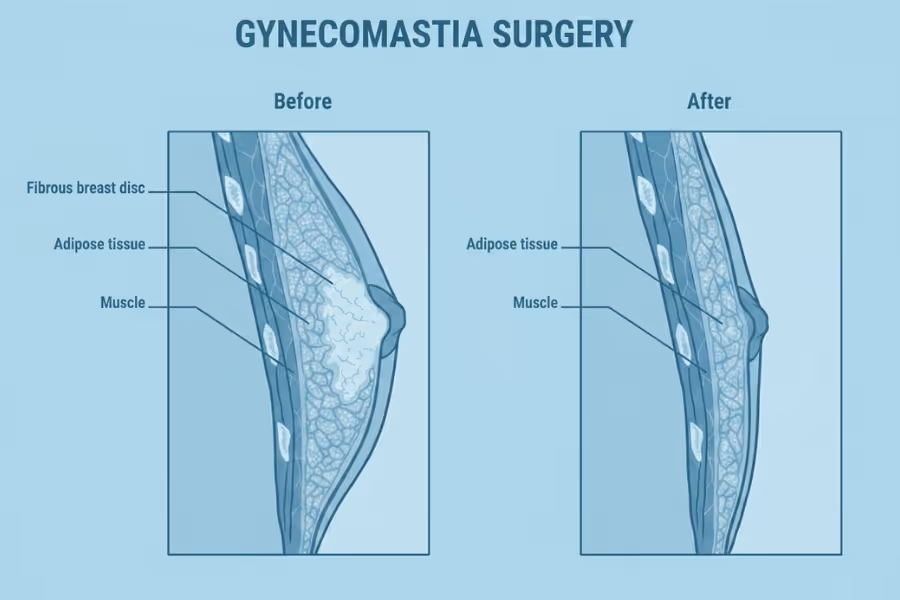
Gynecomastia surgery is a procedure to flatten and reshape the male chest by removing extra glandular breast tissue, fat, and—if needed—loose skin.
Think of gynecomastia as a mismatch in the chest: a small disc of firm breast tissue sits behind the nipple, sometimes mixed with extra fat. Diet and exercise can shrink fat, but they can't shrink that firm glandular tissue. Surgery is what physically removes it.
What actually happens
Because every chest is different, your surgeon will choose a technique (or combination) based on how much tissue is glandular vs fat, and how much skin needs to tighten:
- Liposuction alone: Used when the issue is mostly fatty tissue (sometimes called pseudogynecomastia). Small incisions are made near the chest, and a thin tube (cannula) suctions out the fat.
- Gland excision (subcutaneous mastectomy): Used when there is firm glandular tissue, especially behind the nipple. The surgeon makes a small incision—often along the lower edge of the areola—and removes the disc of breast tissue directly.
- Combined liposuction and excision: The most common approach for mixed cases. Liposuction reshapes the surrounding chest while gland excision removes the firm tissue under the nipple.
- Skin excision (with possible nipple repositioning): Used when there is significant loose or stretched skin (common after major weight loss or in larger reductions). The surgeon removes extra skin and may reposition the nipple to sit naturally on the new chest contour.
Why do it?
True glandular gynecomastia rarely goes away on its own once it has been present for more than a year or two. Surgery is the most reliable way to flatten the chest, reduce nipple puffiness, and relieve tenderness, chafing, or self-consciousness around clothing, swimming, and intimacy.
How we estimate surgical costs: Ranges are estimates drawn from our network of 100+ private clinics and surgeons, and they're intentionally broad. Two people seeking the same procedure can receive very different quotes depending on province, surgeon, facility fees, and case complexity. Published prices aren't always comparable either—some are complete bundles, others exclude consultation, imaging, or follow-up. Only the clinic can give you an exact, itemized quote.

What to expect from the surgery process
A typical gynecomastia surgery takes about 1.5–3 hours of operating time, depending on whether liposuction, excision, or both are needed, and whether skin is being removed. Add time at the centre for check-in, anaesthesia, and recovery (usually a few extra hours). Larger reductions or post–weight loss cases can take longer.
Basic steps
1. Check-in and confirmation
You meet the team, review your goals and photos, and confirm the plan. The surgeon marks your chest while you're standing, since gravity changes how tissue sits.
2. Anaesthesia
Most cases are done under general anaesthesia (you're fully asleep). Smaller, liposuction-only cases can sometimes be done under local anaesthesia with sedation.
3. Position and prep
You're positioned on your back with arms supported. The chest is cleaned and draped sterilely.
4. Liposuction (if part of the plan)
Small incisions (a few millimetres) are made in hidden areas—usually around the lower chest or armpit. A thin cannula is used to break up and suction out fatty tissue and feather the edges so the chest blends smoothly.
5. Gland excision (if part of the plan)
A small incision is made, typically along the lower edge of the areola. The firm disc of glandular tissue behind the nipple is carefully removed, leaving a thin layer to prevent a "crater" deformity.
6. Skin tightening (if needed)
For larger reductions or post–weight loss patients, extra skin is removed and the nipple may be repositioned so it sits naturally on the new chest contour.
7. Shaping and check
The surgeon checks symmetry from multiple angles, feels for any remaining firmness, and refines the contour.
8. Close up
Incisions are closed with dissolving sutures. A compression vest or garment is placed to control swelling and help the skin retract. Small drains are sometimes used in larger cases.
9. Wake-up and instructions
You recover in the post-anaesthesia care unit, then go home the same day with someone to drive and stay with you. You'll get wound-care, garment, and activity instructions before you leave.

What to expect from the recovery process
Every chest is different—follow your surgeon's plan. Steady, smart progress beats pushing too hard.
Week 1
Reality check:
Soreness, swelling, and bruising are normal. The chest can feel tight, "buzzy," or numb in patches. Many people are surprised by how un-sharp the pain is—it's more of a deep ache, similar to a hard chest workout.
Goals: Control pain, protect the incisions, and walk safely.
Activities: Wear your compression garment as directed (often 23 hours a day). Short, frequent walks. Sleep on your back, slightly propped up. Keep incisions clean and dry; no submerged baths, pools, or hot tubs. Avoid lifting anything heavier than a kettle.
Weeks 2–4
Still puffy but improving.
Goals: Reduce swelling, protect skin retraction, ease back into daily life.
Activities: Many people return to desk or school work in the first 1–2 weeks. Keep wearing the compression garment as instructed. Light walking is encouraged. Avoid push-ups, bench press, heavy lifting, and anything that strains the chest.
Weeks 5–8
The patience phase.
Goals: Build endurance and gradually reload the chest.
Activities: With clearance, restart lower-body workouts and light cardio. Upper-body strength training is usually re-introduced slowly and last. Scars may look pink or firm—this is normal and improves with time.
Weeks 9–12
Confidence building.
Goals: Near-normal activity; return to most sports and gym routines.
Activities: Most people are cleared for full chest workouts by around 8–12 weeks, depending on the technique used. Continue scar care (silicone tape or gel, sun protection).
Months 3–12
Final results settle in.
Goals: Let swelling fully resolve and scars mature.
Activities: Resume all sports and lifting. The final shape is usually clear by 3–6 months, with scars continuing to soften and fade for up to a year.
Helpful tips
- Compression garment: Wear it religiously—it's one of the biggest factors in a smooth result.
- Sleep on your back: Stomach and side sleeping put pressure on healing tissue.
- Hydrate and walk: Both help reduce swelling faster.
- Scar care: Once cleared, silicone tape or gel and strict sun protection (SPF 30+) help scars fade.
Red flags—call your care team
- Fever, spreading redness, or foul drainage from an incision.
- Rapidly growing swelling or a hard, painful lump on one side (possible hematoma).
- Increasing pain that's not improving day to day.
- A painful, swollen calf, chest pain, or shortness of breath.
- Skin changes around the nipple (darkening, blistering) that don't improve.
What is Surgency?
As a family doctor in the public system, I believe transparency is a form of care. I created Surgency to help my patients struggling on long waitlists who wanted to understand all their options for timely medical attention.
Surgency is a free resource designed to empower and educate—helping you understand private pathways and find accredited surgeons within Canada. I hope Surgency brings you clarity.
Dr. Sean Haffey

How to choose a surgeon or clinic
Choosing your surgeon is a major benefit of pursuing private surgery. Here's how to choose wisely for gynecomastia surgery.
What to look for
Experience and volume (gynecomastia-specific)
Ask how many gynecomastia cases they do each year, not just "breast surgery" or "liposuction" in general.
Gynecomastia has a real learning curve and is more aesthetic-driven than many procedures because:
- The chest is a flat, visible area where small contour issues are obvious
- Leaving too much tissue behind the nipple causes a "puffy" residual look; removing too much causes a sunken "crater" deformity
- Skin retraction is hard to predict, especially in older patients or after major weight loss
Also ask about their case mix:
- Liposuction-only cases vs excision vs combined
- Post–weight loss / bariatric patients (these need skin management)
- Revision cases (fixing a previous gynecomastia surgery)
Credentials and training
- Verify licensure with your provincial college (CPSO Ontario, CPSBC BC, CPSA Alberta, CMQ Québec, etc.)
- Look for FRCSC-certified plastic surgeons (Plastic Surgery)
- Bonus: surgeons who regularly publish on or teach gynecomastia techniques, or are active in plastic surgery societies (not required, but often correlates with subspecialty focus)
For a more in-depth guide read, How to Understand Surgeon Credentials in Canada
Outcomes and safety (ask for real numbers)
Request recent data, ideally for gynecomastia specifically:
- Infection rate
- Hematoma rate (blood collection requiring drainage)
- Seroma rate (fluid collection)
- Revision rate (touch-up or re-operation) and reasons (residual tissue, contour irregularity, loose skin)
- Nipple sensation changes
- Patient-reported outcomes: satisfaction, return-to-work, return-to-gym timelines
Clear indications and alternatives
Make sure they confirm you're a good candidate for surgery, not just "able to pay for it." A careful surgeon should explicitly assess:
- Whether your chest is mostly glandular, mostly fatty, or mixed
- Whether skin laxity will be an issue (especially after weight loss or in older patients)
- Whether anything points to a medical cause that should be investigated first (medications, hormonal issues, rapid one-sided growth)
- Whether further weight loss or stabilization should happen before surgery
They should also compare surgery to:
- Continued non-operative care if your gynecomastia is mild and you're still losing weight or finishing puberty
- Treating an underlying cause (medication change, hormonal workup)
Surgical plan and technique
Ask:
- Which technique do you recommend for me (liposuction, excision, combined, with or without skin removal) and why?
- Where will my scars be, and how long?
- Will my nipple need to be repositioned?
- What's your plan if you find more tissue (or more skin laxity) than expected once you're in?
Imaging and planning
Good programs use a thoughtful workup:
- Standardized before photos from multiple angles
- Physical exam to feel for glandular vs fatty tissue
- Ultrasound or mammogram if there's a one-sided lump, rapid growth, pain, or family history of breast cancer—this should not be skipped
Facility accreditation and safety systems
Choose accredited centres (e.g., Accreditation Canada / CAAASF) with:
- Experienced anaesthesia
- Clear protocols for managing bleeding, hematoma, and fluid collections
- A clear transfer pathway to a hospital if needed
Recovery and follow-up plan
You want a written plan for:
- Compression garment schedule
- Activity limits week by week (work, driving, gym, sports)
- Scar care timeline
- Follow-up visits (in-person and virtual)
Transparent pricing
Request an itemized quote including:
- Surgeon fee
- Facility/OR fees
- Anaesthesia
- Pathology
- Compression garments
- Follow-ups (and whether virtual follow-ups are included)
Clarify add-ons:
- Skin excision if needed
- Pathology fees
- Revision/touch-up policy and cost
Questions to ask at your gynecomastia consultation
Surgeon and plan
- How many gynecomastia surgeries do you perform yearly?
- How many cases like mine (similar size, similar skin quality, similar goals)?
- Am I a candidate for liposuction only, excision only, combined, or do I need skin removal—and why?
Technique and safety
- Where will my incisions be, and what will my scars look like long-term?
- What are your rates of: infection, hematoma, seroma, revision, and changes in nipple sensation?
- What's your plan if you find more tissue or more skin laxity than expected during surgery?
Recovery and after-care
- How long do I wear the compression garment?
- When can I drive, return to desk work, lift weights, and do chest workouts again?
- What symptoms should prompt an urgent call (one-sided swelling, fever, severe pain)?
Costs and logistics
- What exactly is included in my quote?
- What could increase the cost (skin excision, pathology, revisions)?
- How are follow-ups handled if I live out of province?
Signals of a high-quality gynecomastia program
- Performs gynecomastia surgery regularly and explains candidacy clearly
- Shares complication and revision rates openly and sets realistic expectations
- Investigates possible medical causes (medications, hormones, suspicious lumps) before operating
- Operates in an accredited facility with experienced anaesthesia and emergency pathways
- Provides a written recovery plan and coordinates follow-ups (including virtual)
- Offers transparent, itemized pricing—including a clear revision/touch-up policy
If you're currently interested in private surgical pathways within Canada, you can click here for a list of providers.

Frequently asked questions
How do I know this surgery is right for me?
Gynecomastia surgery is most helpful when the issue is firm glandular tissue or stubborn fat that has not responded to time, weight loss, or addressing medical causes.
Signs gynecomastia surgery might be right for you
- Stable, persistent tissue: Your chest tissue has been present for more than 12 months and hasn't changed with weight loss, exercise, or time.
- Firm tissue behind the nipple: You can feel a disc of firm tissue under the areola—this is glandular and won't shrink with diet alone.
- Stable weight: You're at or near a weight you can maintain (further large weight changes will affect the final result).
- Medical causes ruled out or addressed: Any medications, supplements, or hormonal issues that could be contributing have been reviewed with your doctor.
- Impact on quality of life: You avoid swimming, intimacy, fitted clothing, or contact sports because of how your chest looks or feels.
When it might not be the right option (yet)
- Adolescents still in puberty: Many cases of teenage gynecomastia resolve on their own within 1–2 years.
- Active weight loss: If you're still losing significant weight, it's usually better to stabilize first.
- Untreated medical cause: New, painful, or one-sided growth deserves a workup (medications, hormones, occasionally imaging) before surgery.
- Unrealistic expectations: Surgery flattens and reshapes the chest, but it leaves scars and cannot guarantee a fitness-model contour.
When to get assessed sooner
- A new, hard, one-sided lump, especially if painful or growing quickly
- Nipple discharge, skin dimpling, or skin changes over the breast tissue
- A family history of breast cancer (yes, men can get breast cancer too)
These signs deserve prompt assessment with a physician—often including an ultrasound or mammogram—regardless of whether you ultimately have surgery.
Do I need a referral?
Yes and no—you can reach out to any of the private surgeons listed on Surgency without a referral. Their intake teams are happy to answer questions, explain what they treat, share pricing ranges, and walk you through next steps.
However, to book a formal consultation with the surgeon, you'll typically need a referral from your family doctor or nurse practitioner. Don't have one? Many of the clinics can help coordinate a virtual GP appointment to get the referral paperwork sorted. All surgeons listed on Surgency offer virtual initial consultations, so you don't need to travel until you and the surgeon have agreed on a plan.
Before your consultation, expect the clinic to request relevant medical records and recent diagnostic imaging (X-ray, MRI, CT, ultrasound, lab work, etc.). Having these ready speeds up the process and lets the surgeon give you specific guidance on your very first call.
How do I prepare for surgery?
Your surgeon's instructions come first—follow their plan if it differs.
Prehab and health optimization
Stabilize your weight
- Try to be at or near a weight you can maintain for 3–6 months before surgery. Large weight swings after surgery can change the final contour.
Build a baseline of fitness
- A daily walking habit improves circulation and healing.
- Light cardio and lower-body training are fine right up until surgery.
Quit nicotine
- Crucial: Nicotine (including vaping and nicotine gum) tightens blood vessels and dramatically increases the risk of poor wound healing, skin loss, and infection. Stop at least 4–6 weeks before surgery and stay off until fully healed.
Medication and supplement review
- Share all prescriptions, over-the-counter meds, and supplements.
- Pause blood thinners, anti-inflammatories (like ibuprofen), fish oil, vitamin E, and certain herbal supplements as directed—these increase bleeding and bruising.
- Flag any medications known to contribute to gynecomastia so your surgeon and family doctor can review them together.
Limit alcohol
- Cut back significantly in the week or two before surgery; alcohol increases bleeding and swelling.
Home prep
Safe layout
- Clear clutter and rugs to prevent falls in the first week.
- Set up a "recovery zone" with essentials at waist or chest height—you'll want to avoid reaching overhead.
Sleep setup
- Plan to sleep on your back, slightly propped up with pillows for the first 1–2 weeks. A wedge pillow or recliner can help a lot.
Bath setup
- Non-slip mat and handheld shower head.
- A shower chair is helpful for the first few days.
Clothing
- Loose, zip-up or button-up shirts are essential—you won't want to pull anything over your head.
- Make sure your compression garment fits before surgery day if you have it in advance.
Food, meds, and surgery-day prep
Easy meals
- Stock up on simple, protein-rich meals for the first week (soups, smoothies, pre-made meals, eggs).
Constipation plan
- Pain meds slow the gut; have stool softeners, fibre, and hydration ready.
Skin prep
- Use any antiseptic wash exactly as directed (usually the night before and morning of).
- Avoid shaving the chest in the 24 hours before surgery to prevent micro-cuts (your team will handle hair removal if needed).
What to bring
- Health card/ID, medication list, and any imaging.
- A loose, comfortable zip-up top to go home in.
- A pillow for the car ride home (seatbelt comfort).
- CPAP machine if you use one.
Plan a ride and a helper
- You must have someone drive you home and ideally stay with you for the first 24 hours.
Practice ahead
- Try getting in and out of bed using your abs and legs, not your arms or chest—this is how you'll need to move for the first week or two.
Red flags to know after surgery
- Rapidly growing, hard, painful swelling on one side (possible hematoma).
- Spreading redness, fever, or foul drainage from an incision.
- Skin colour changes around the nipple that worsen (darkening, blistering).
- Calf pain or swelling, chest pain, or shortness of breath.
- Pain that gets worse, not better, after the first few days.
How much does Surgency cost?
Surgency is free for patients, funded for by surgeons.
Surgeons—who meet our listing criteria—pay a flat fee to list on the Surgency platform. To maintain objectivity, there are no commissions, referral fees, nor any ranking or recommending one surgeon over another.
Surgency is patient-first. Our goal is to make the process of finding a private surgeon as simple as possible. You choose who to contact. Learn more in our Advertising Policy.
What are the risks involved with surgery?
Your personal risk depends on the technique used, how much tissue is removed, your skin quality, and your general health. Discuss your specific risks with your surgeon.
Common and usually temporary
- Swelling and bruising: Expected for several weeks; can be uneven side to side at first.
- Numbness or altered sensation in the chest skin and nipples, usually improving over weeks to months.
- Tightness and firmness around the incisions and chest that softens over time.
- Mild asymmetry during early healing as swelling resolves at different rates.
Less common
- Hematoma: A collection of blood under the skin that may need to be drained. Most likely in the first 24–72 hours.
- Seroma: A pocket of fluid that may need to be aspirated in clinic.
- Infection: Usually treated with oral antibiotics; rarely requires more.
- Wound healing issues: Slow healing or small areas of skin breakdown, more likely in smokers and people with diabetes.
- Contour irregularities: Small dips, ridges, or firm spots—usually improve with time and massage; sometimes need a touch-up.
- Persistent or recurrent puffiness if too little tissue is removed.
- "Crater" deformity if too much tissue is removed under the nipple.
Procedure-specific considerations
- Scarring: All techniques leave some scar. Liposuction scars are small (a few millimetres); excision scars sit at the lower edge of the areola; skin-removal cases have longer scars. Scars typically fade over 6–12 months but never fully disappear.
- Nipple sensation changes: Numbness, hypersensitivity, or reduced erotic sensation; usually temporary but can be permanent.
- Nipple position issues: Rarely, the nipple can sit too high, too low, or asymmetrically after larger reductions.
- Loose skin: If skin doesn't retract as hoped, a second-stage skin excision may be discussed.
- Recurrence: New growth can occur with significant weight gain, steroid/medication use, or hormonal changes.
Uncommon but important
- Blood clots (in the legs or lungs), especially with longer surgeries and immobility.
- Adverse reaction to anaesthesia.
- Nipple skin loss in very large reductions (rare but serious).
- Need for revision surgery.
How you can lower risk
- Stop nicotine well before and after surgery—this is one of the biggest risk-reducers.
- Wear your compression garment as directed.
- Avoid heavy lifting and chest work until cleared.
- Avoid blood thinners and certain supplements (as advised) around the surgery date.
- Stay hydrated and walk to reduce clot risk.
- Protect your scars from the sun for at least a year to help them fade.
Will my gynecomastia come back after surgery?
Gynecomastia surgery is considered a long-term solution, and true recurrence is uncommon. But "uncommon" isn't "impossible," and the honest answer depends on what type of tissue you have, how completely it's removed, and what happens to your body afterward.
What the evidence shows
- A long-term follow-up study published in Aesthetic Plastic Surgery found that recurrence rates were significantly higher in patients with lipomatous (fatty) gynecomastia than in patients with glandular gynecomastia, and that BMI changes after surgery played a meaningful role in regrowth (Fricke et al., 2017).
- A large retrospective analysis of 4,996 male patients over 14 years reported low overall complication rates and identified higher BMI as an independent risk factor for problems after surgery — reinforcing that weight stability matters both for recurrence and for healing (Mocharnuk et al., 2024).
- In men whose gynecomastia is driven by anabolic-androgenic steroid (AAS) use, careful and complete glandular excision is emphasized specifically to minimize recurrence; continued AAS exposure after surgery is a well-described driver of regrowth (Sayed Ahmed et al., 2023, Aesthetic Plastic Surgery).
Why recurrence happens when it does
- Incomplete removal of glandular tissue. Surgeons intentionally leave a thin layer behind the nipple to avoid a "crater" deformity. In experienced hands this is balanced carefully; when too much tissue is left, residual puffiness can look like recurrence.
- Weight gain. Significant weight gain can re-deposit fat in the chest, especially in lipomatous or mixed cases. The glandular disc doesn't grow back, but the surrounding contour can change.
- Anabolic steroids, SARMs, or certain medications. Substances that disrupt the estrogen-to-androgen balance can stimulate new glandular growth — even years later. This includes some prescription medications (certain anti-androgens, antipsychotics, and others); review your medication list with your doctor.
- Untreated underlying medical causes. Hormonal conditions (low testosterone, hyperthyroidism, liver disease) that were never identified or addressed can keep driving tissue growth after surgery.
How to keep your results long-term
- Aim for a stable weight before surgery and afterward.
- Avoid anabolic steroids and SARMs. If you use or have used them, be upfront with your surgeon — it changes the surgical plan.
- Review medications and supplements with your family doctor if you notice any new chest changes.
- Get any new, one-sided, hard, or painful lump assessed promptly, even years after surgery.
The bottom line
When the right technique is matched to the right tissue type — and weight and hormonal drivers stay stable — the vast majority of men keep their results for life. Recurrence, when it happens, is usually tied to a specific, identifiable cause rather than the surgery "wearing off."
I still have questions
If you still have questions, please feel free to contact us directly.
Please note: Surgency is not a clinic itself. Nor can we help with emergency situations, or provide personalized medical advice—that is between you and your surgeon. If you are experiencing acute or severe symptoms, please present to your local emergency department or urgent care centre.

.avif)