


.png)
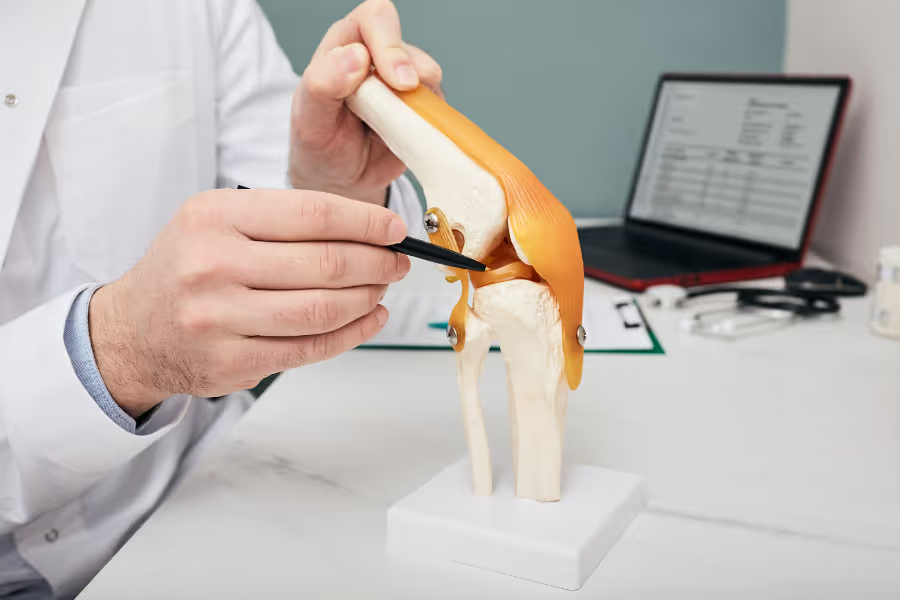

What is private meniscal repair/ meniscectomy?
Meniscal surgery treats a tear in the knee’s “shock absorber” cartilage (the meniscus).
Think of the meniscus like a rubber gasket between the thighbone and shinbone. When it tears, it can flap or pinch inside the joint—causing pain, swelling, and sometimes locking.
What actually happens
- Meniscal repair (save it): The surgeon stitches the torn meniscus back together so it can heal. Best for tears in the outer “blood supply” zone; longer protected rehab, but preserves cushioning.
- Meniscectomy (trim it): The surgeon removes only the unstable torn fragment and smooths the edges. Faster recovery, but less meniscus tissue remains, which can increase arthritis risk over time.
Costs of private meniscal repair & meniscectomy
How we estimate surgical costs: Ranges are estimates drawn from our network of 100+ private clinics and surgeons, and they're intentionally broad. Two people seeking the same procedure can receive very different quotes depending on province, surgeon, facility fees, and case complexity. Published prices aren't always comparable either—some are complete bundles, others exclude consultation, imaging, or follow-up. Only the clinic can give you an exact, itemized quote.
Exact pricing depends on the province, facility fees, whether it’s repair vs meniscectomy, whether both knees are treated, and whether any add-ons are done (cartilage procedures, loose body removal, microfracture, etc.). Always ask for a written, itemized quote.
Cost in Canada
- Typical range: $6,000 - $15,000+ per knee
- (Repairs often cost more than meniscectomy due to time and implant/suture devices.)
Cost in the United States
- Typical range: CA$10,000 - CA$30,000+ per knee
- (Highly variable by state, hospital vs surgery centre)
What’s included (most quotes)
- Surgeon and anaesthesiologist fees
- Facility/OR fees
- Arthroscopy equipment and standard disposables
- Meniscus repair implants/suture devices (confirm whether included)
- Nursing and immediate post‑op care
- Early follow-up visit(s)
What’s usually not included
- Pre-op consults, MRI/X-rays, and medical clearance outside the clinic
- Medications after discharge
- Long-term physiotherapy
- Travel/accommodation if out-of-province
- Time off work and caregiver support
Insurance and financing (Canada)
- Private insurance: Sometimes covers parts (diagnostics, physio, braces), but not the full private surgical bill—confirm directly with your plan.
- Financing plans: Some clinics offer payment plans.
- Medical Expense Tax Credit (METC): Out-of-pocket eligible expenses may qualify for tax credits—keep receipts and confirm eligibility with a tax professional. Learn more about the METC here.
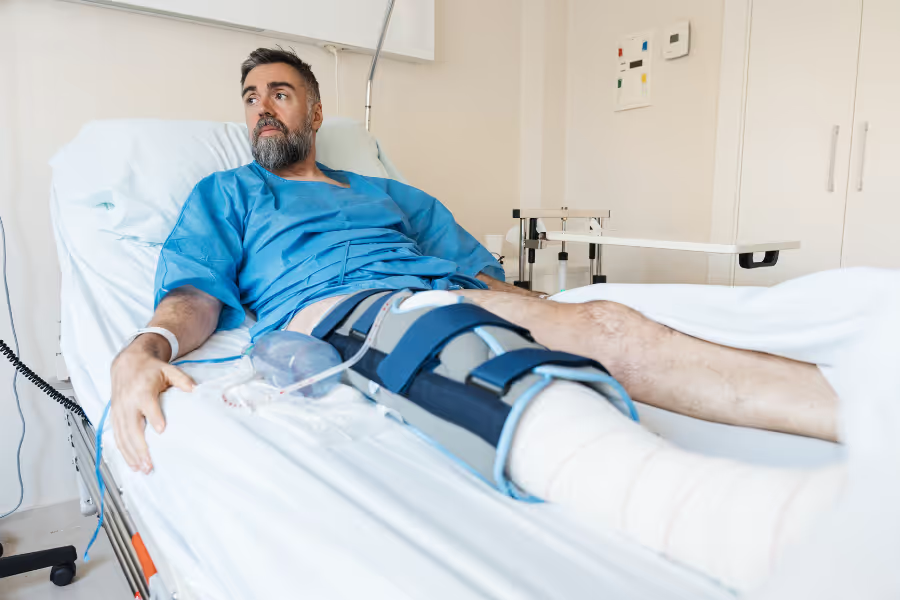
Meniscal repair & meniscectomy steps: What to expect
The surgery itself is no different from what’s performed in the public system. Surgeons use the same arthroscopic techniques, implants (when needed), and safety standards.
Typical operating time: about 30–90 minutes (can be longer for complex repairs or additional procedures). Add a few hours at the centre for check‑in, anaesthesia, and recovery.
Basic steps
- Anaesthesia: Often general anaesthesia, or spinal + sedation depending on the centre and your preferences/health.
- Incisions (arthroscopy): 2–3 small keyhole incisions around the kneecap for a camera and instruments.
- Inspection: The surgeon examines the meniscus, cartilage surfaces, ACL/PCL, and other structures to confirm the tear pattern and treat any additional issues.
- If meniscectomy (trim): The torn, unstable fragment is removed and the remaining meniscus is smoothed to a stable rim.
- If repair (save): The tear is sutured back together using small anchors/suture devices. (Repairs are chosen when the tear is repairable and healing potential is reasonable.)
- Rinse and check: The knee is irrigated; stability of the repair/trim is confirmed.
- Close up: Small sutures/steri‑strips and a dressing are applied. A brace may be placed (more common after repairs).
- Mobilize: Many patients stand and walk (with assistance) shortly after surgery and go home the same day.
What can I expect from the recovery process?
Your clinic should provide a detailed plan covering pain control, swelling management, physiotherapy, and follow-up. Recovery varies a lot depending on whether you had a meniscectomy (faster) or a meniscal repair (slower, more protected)—so follow your surgeon’s protocol exactly.
Some private clinics offer virtual follow-ups, while others coordinate with local providers in your home province.
Week 1
Reality check: Swelling and soreness are expected. Getting comfortable walking and sleeping can be annoying.
Goals: Pain control, swelling reduction, safe walking, and early range of motion.
Activities: Ice/elevation, short walks, basic exercises (quad activation, gentle ROM). Wound care and meds as directed.
Weeks 2–4
Meniscectomy (typical): Rapid improvement; many return to desk work quickly.
Meniscal repair (typical): Still protective—brace and/or crutches are common; knee bending may be limited early.
Goals: Normalize gait (as allowed), restore motion, build routine strength without flare-ups.
Activities: Structured physio, stationary bike if cleared, progressive strengthening.
Weeks 5–12
The work phase.
- Meniscectomy: Many patients are back to most normal daily activity; higher-impact sport progression is individualized.
- Repair: Strength and motion ramp up, but cutting/pivoting is usually still restricted until healing is confirmed.
Goals: Strength, endurance, balance/proprioception, controlled return to activity.
Activities: More challenging physio, single-leg control work, gradual return-to-run program only when cleared.
Months 3–6+
- Meniscectomy: Many return to sport earlier (often in the 6–12 week range for straightforward trims, depending on sport).
- Repair: Return to pivoting sports often occurs closer to 4–6+ months, depending on tear type, healing, and surgeon protocol.
Goals: Full function, sport-specific conditioning, and protecting long-term knee health.
Red flags—call your team
Fever, increasing redness/drainage, calf swelling/pain, chest pain/shortness of breath, worsening inability to bear weight, or sudden locking after initial improvement.
What is Surgency?
As a family doctor in the public system, I believe transparency is a form of care. I created Surgency to help my patients struggling on long waitlists who wanted to understand all their options for timely medical attention.
Surgency is a free resource designed to empower and educate—helping you understand private pathways and find accredited surgeons within Canada. I hope Surgency brings you clarity.
Dr. Sean Haffey

Why do people choose to have meniscal repair or meniscectomy done privately?
If knee symptoms are limiting work, sleep, or sport, time matters. Private pathways can offer more choice and faster scheduling.
Timing
Public wait times can be long—especially when you factor in MRI delays and the referral-to-consult (“Wait 1”) stage. Private care can shorten the path from diagnosis to surgery, often within weeks.
Choice and control
Private options may let you:
- choose a surgeon with high meniscus volume (repair vs meniscectomy decision-making matters)
- select the clinic location
- schedule around work, family, and athletic seasons
Clarity upfront
Private programs typically provide a clear timeline, helping you plan time off, transportation, caregiver support, and physiotherapy.
Preventing further decline
Some tears worsen with time and can shift from “repairable” to “not repairable.” Ongoing locking/catching may also drive cartilage damage—timely care can protect the joint in select cases.
Choosing a surgeon or clinic
Choosing your surgeon is one of the benefits of going the private route. For meniscus surgery, the key decision is often repair vs trim—and that depends heavily on surgeon judgment, tear type, and rehab planning.
What to look for
Experience and volume
Ask how many knee arthroscopies they do each year, and specifically:
- how many meniscal repairs vs meniscectomies (repairs are a different skill set)
- their repair rate in patients like you (age, sport, tear pattern)
- whether they routinely manage complex tears (root tears, ramp lesions, radial tears)
Higher relevant volume usually means smoother care, better decision-making intra‑op, and a clearer rehab pathway.
Credentials and training
- Confirm licensure with the provincial college (e.g., CPSO, CPSBC, CPSA).
- Look for FRCSC-certified orthopaedic surgeons.
- Ideally: sports medicine / arthroscopy fellowship training (often labeled Orthopaedic Sports Medicine or Arthroscopy fellowship).
For a deep dive on understanding surgeon credentials, visit How to Understand Surgeon Credentials in Canada.
Decision philosophy: “save meniscus when appropriate”
A quality surgeon should explain, in plain language:
- whether your tear is repairable (location, pattern, tissue quality)
- the tradeoff: repair = longer rehab but better meniscus preservation, vs meniscectomy = faster recovery but less cushioning long term
- what they would do if the tear looks different than expected on the day of surgery
Outcomes and safety
Request clinic or surgeon-level rates (when available), such as:
- infection
- DVT/PE (rare in arthroscopy, but still relevant)
- re-tear / reoperation after repair
- stiffness/arthrofibrosis (uncommon, but can happen)
- return-to-sport timelines and criteria
Imaging and planning
- Ensure they’ve reviewed your MRI images (not just the report).
- Confirm a proper knee exam (alignment, ligament stability, mechanical symptoms).
- Ask if they assess for “missed” issues that change the plan (ACL deficiency, cartilage defects, meniscus root tear).
Facility accreditation & anesthesia plan
- Use an accredited facility (e.g., CAAASF or Accreditation Canada standards).
- Ask about anesthesia options (general vs spinal + sedation), nerve blocks, and multimodal pain control.
Rehab integration
You want a written, phased protocol tailored to:
- repair vs meniscectomy
- weight-bearing rules and brace use (common after repairs)
- range-of-motion limits (some repairs require early flexion restrictions)
- clear return-to-run / return-to-sport criteria
Also ask how they coordinate with your local physiotherapist if you’re travelling.
Questions to ask during your meniscus consultation
Surgeon and surgery plan
- How many meniscal repairs and meniscectomies do you perform per year?
- Based on my MRI and exam, do you think my tear is repairable? Why/why not?
- If you plan to repair, what technique do you use (inside‑out, all‑inside, root repair) and why?
- If you get in there and it’s not repairable, what’s the plan—partial meniscectomy only? Any cartilage procedure?
Recovery and aftercare
- Will I need crutches/brace? For how long?
- What are my ROM limits (if any) for the first 2–6 weeks?
- When can I drive, return to desk work, return to manual work, and return to sport?
- Who do I contact after surgery, and what’s the expected response time?
- How many follow-ups are included? Can any be virtual?
Costs and logistics
- What’s included in the quote (surgeon, anesthesia, facility, implants for repair, brace, follow-ups)?
- What could add cost (extra implants, longer OR time, additional procedures, complications)?
- If a complication occurs, what’s the escalation plan—transfer agreement with a hospital?
If you're currently interested in private surgical pathways within Canada, you can click here for a list of providers.
Frequently asked questions
How do I know if surgery is right for me?
Meniscus surgery isn’t for everyone. It may be worth considering when:
- you have persistent pain/swelling or mechanical symptoms (locking, catching) despite physio and activity modification
- an MRI-confirmed tear matches your symptoms and exam
- symptoms are limiting work, sleep, sport, or daily movement
- your surgeon feels the tear is either repairable (worth preserving) or clearly causing mechanical problems that trimming would reliably relieve
A consultation is especially important if you’re being advised to “just trim it” without a clear explanation of whether a repair is possible.
Do I need a referral?
Yes and no—you can reach out to any of the private surgeons listed on Surgency without a referral. Their intake teams are happy to answer questions, explain what they treat, share pricing ranges, and walk you through next steps.
However, to book a formal consultation with the surgeon, you'll typically need a referral from your family doctor or nurse practitioner. Don't have one? Many of the clinics can help coordinate a virtual GP appointment to get the referral paperwork sorted. All surgeons listed on Surgency offer virtual initial consultations, so you don't need to travel until you and the surgeon have agreed on a plan.
Before your consultation, expect the clinic to request relevant medical records and recent diagnostic imaging (X-ray, MRI, CT, ultrasound, lab work, etc.). Having these ready speeds up the process and lets the surgeon give you specific guidance on your very first call.
How do I prepare for surgery?
Your surgeon will provide specific instructions, but common prep includes:
Prehab
- Do a short course of physio focusing on swelling control, quad activation, and knee extension.
- Maintain low-impact cardio if tolerated (bike, walking).
Home prep
- Clear tripping hazards; set up a main-level “recovery zone.”
- Arrange ice packs/compression sleeve; prep a comfortable leg-elevation setup.
- Shower chair optional but helpful if you’re unsteady right after anesthesia.
Support
- Arrange a ride home (you can’t drive yourself).
- Have someone check in on you the first night.
Work planning
- Plan time off based on procedure:
- meniscectomy: often shorter
- repair: often longer due to crutches/brace restrictions
Practice
- If you may be on crutches, practice stairs and safe transfers ahead of time.
How much does Surgency cost?
Surgency is free for patients, funded for by surgeons.
Surgeons—who meet our listing criteria—pay a flat fee to list on the Surgency platform. To maintain objectivity, there are no commissions, referral fees, nor any ranking or recommending one surgeon over another.
Surgency is patient-first. Our goal is to make the process of finding a private surgeon as simple as possible. You choose who to contact. Learn more in our Advertising Policy.
What are the risks involved with surgery?
Individual risk varies with age, health, tear type, surgical technique, and rehab. Discuss your specifics with your surgeon.
Common and usually temporary
- Pain, swelling, bruising; sleep disturbance early on
- Temporary stiffness and limited range of motion
- Nausea from anesthesia; constipation from pain meds
- Temporary numbness around portal incisions
Less common
- Infection (superficial or deep)
- Blood clots (DVT/PE)
- Persistent swelling (effusion)
- Ongoing pain if arthritis/cartilage damage is a major driver
- Repair failure/re-tear (higher risk with early pivoting/return-to-sport)
Uncommon but important
- Nerve or vessel injury (rare)
- Arthrofibrosis (significant stiffness)
- Need for further surgery (repeat arthroscopy, revision repair, later osteotomy/arthroplasty in arthritic knees)
What increases risk
Smoking, uncontrolled diabetes, poor rehab adherence, high BMI, significant cartilage wear/arthritis, ligament instability (e.g., ACL deficiency), and returning to pivoting too early.
What are the risks of delaying or not pursuing surgery?
Progressive symptoms and function loss
- Persistent pain/swelling, reduced walking tolerance, inability to train/work normally
Tear progression / loss of repairability (select cases)
- Some tears (especially in younger/athletic patients) can enlarge or become less repairable over time
Secondary joint damage (select cases)
- Ongoing mechanical catching can contribute to cartilage wear in certain patterns
Deconditioning
- Quad weakness and loss of knee extension can make recovery harder later
When watchful waiting can be reasonable
- Mild/moderate symptoms with preserved function
- No true locking and symptoms improving with physiotherapy
- Tear pattern in an arthritic knee where surgery is unlikely to help much
When not to delay
- True locking (can’t fully straighten/bend)
- Recurrent swelling with activity plus persistent mechanical symptoms
- Clear functional decline despite optimized conservative care
I still have questions
If you still have questions, please feel free to contact us directly.
Please note: Surgency is not a clinic itself. Nor can we help with emergency situations, or provide personalized medical advice—that is between you and your surgeon. If you are experiencing acute or severe symptoms, please present to your local emergency department or urgent care centre.















.avif)