


.png)


What is Tennis Elbow surgery?
Epicondyle release (also called lateral epicondylitis surgery or tennis elbow surgery) is a procedure that relieves chronic outer elbow pain by removing degenerated tendon tissue and releasing tension where the extensor tendons attach to the lateral epicondyle (the bony bump on the outside of the elbow).
Think of the extensor tendons like a rope anchored to the outer elbow. Repetitive gripping, twisting, and lifting motions cause micro-tears in this rope — particularly in the extensor carpi radialis brevis (ECRB) tendon. Instead of healing normally, the tissue degenerates, becoming painful and weak. This is lateral epicondylitis — commonly known as tennis elbow, though most people who get it have never picked up a racquet.
What actually happens
- Debridement (remove the damaged tissue): The surgeon identifies and removes the degenerated, scarred portion of the ECRB tendon. Any bone spurs on the lateral epicondyle are trimmed.
- Release and reattach: The remaining healthy tendon may be released from tension and reattached. Small drill holes in the bone can be made to improve blood flow and encourage healing.
Why do it? When imaging findings match your symptoms (chronic lateral elbow pain with grip weakness that hasn't responded to 6–12 months of conservative treatment), epicondyle release can remove the source of pain and restore function. Only about 1 in 10 tennis elbow patients ultimately need surgery — but for those who do, the success rate is 80–95%.
How much does epicondyle release cost in Canada?
Costs vary depending on surgical technique, facility fees, anaesthesia, and whether additional procedures (e.g., bone spur removal, nerve assessment) are required.
Estimated costs in the Canada (private)
Epicondyle release (arthroscopic or open): $9,000 - $15,000+
Costs vary depending on surgical technique, facility fees, anaesthesia, and whether additional procedures (e.g., bone spur removal, nerve assessment) are required
Some private centres include pre-operative consultations, facility fees, surgeon fees, and anaesthesia in a single bundled price; others itemize separately
Estimated costs in the United States
- Epicondyle release surgery: CA$11,000 - CA$19,000,+
- Pricing varies widely by state, facility, and surgeon; patients without insurance may face higher out-of-pocket costs
What's usually included
- Surgeon fee and anaesthesia services.
- Accredited facility/OR time, nursing, and standard disposables.
- Basic intra-op imaging and routine supplies.
- Immediate recovery care (PACU) and early follow-up visit(s).
What's often not included
- Initial consults and pre-op imaging/labs (ultrasound, MRI, X-rays) done outside the clinic.
- Extra procedures or longer OR time beyond the booked block.
- Prescriptions after discharge (pain, anti-inflammatories).
- Post-op physiotherapy beyond the first visits.
- A counterforce brace if needed.
- Travel and accommodation if you're out-of-province/state.
Tips to compare quotes
Ask if it's a global bundle and request line items for: surgeon, facility, anaesthesia, imaging, follow-ups, and what triggers extra charges (e.g., if additional procedures like nerve decompression are needed during surgery).
Insurance and financing options
- Private health insurance: Some plans may cover part of the costs. Check your policy directly.
- Financing plans: Many clinics offer monthly payment options to help spread out the cost. Learn more about your financing options here.
- Medical Expense Tax Credit (METC): This is a non-refundable credit that reduces your taxes when you pay out-of-pocket for eligible medical expenses. Learn more about how to claim METC for private surgeries.
Epicondyle release: what to expect from surgery
Epicondyle release is performed as a day surgery (outpatient procedure), meaning you go home the same day. The surgery itself typically takes about 20 to 30 minutes.
Before surgery
- You'll receive regional anaesthesia (a nerve block to numb the arm) or general anaesthesia, depending on your surgeon's preference and your medical history
- The surgical team will position your arm and sterilize the area around the elbow
During surgery (open technique)
- Your surgeon makes a small incision (approximately 2–5 cm) over the lateral epicondyle on the outside of the elbow
- Soft tissues are gently moved aside to expose the extensor tendon and its attachment point on the bone
- The damaged, degenerated portion of the ECRB tendon is identified and carefully removed (debrided)
- Any scar tissue or bone spurs on the lateral epicondyle are removed
- The remaining healthy tendon is released or reattached to the bone
- Small holes may be drilled into the bone to improve blood flow and promote healing
- The incision is closed with sutures and a dressing is applied
During surgery (arthroscopic technique)
- One or two small incisions (about 1 cm each) are made around the elbow
- An arthroscope (a thin tube with a camera) is inserted to visualize the joint
- Surgical instruments are used through the second portal to debride the damaged tendon and release tension
- The joint is inspected for any additional damage (loose bodies, cartilage issues)
- Incisions are closed with sutures or surgical tape
After surgery
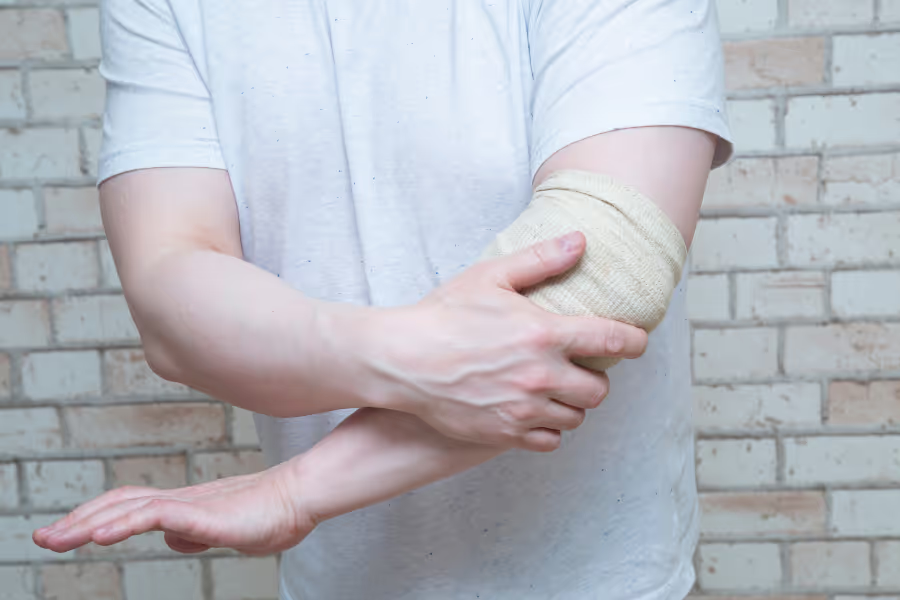
- Your arm is wrapped in a bandage and placed in a splint or sling for comfort
- You'll be monitored briefly in recovery before being discharged home the same day
- Pain medication and post-operative instructions are provided

What does the recovery process look like?
Recovery from epicondyle release is gradual. Arthroscopic recovery tends to be slightly faster than open surgery, but the general timeline is similar.
Week 1–2: Protection and early healing
- Arm is kept in a splint or sling; stitches are removed around 7 to 10 days
- Elevate the arm and apply ice to manage swelling
- Gentle hand, wrist, and finger movements are encouraged to prevent stiffness
- Avoid lifting or gripping
Weeks 2–6: Restoring flexibility
- The splint is removed; a physiotherapy programme begins
- Focus on gentle range-of-motion exercises for the elbow and wrist
- Gradually return to light daily activities (most people manage basic tasks by 2 to 6 weeks)
- Avoid heavy lifting, forceful gripping, or repetitive arm movements
Months 2–3: Building strength
- Light strengthening exercises are introduced under physiotherapy guidance
- Gradual return to work duties (desk work may resume as early as 3 weeks; manual labour typically 6 to 12 weeks)
- Continue wearing a counterforce brace during activities if recommended
Months 4–6: Full recovery
- Progressive return to sports, heavy lifting, and full physical activity
- Most patients achieve significant pain relief and improved grip strength by this stage
- Strength exercises may continue for up to a year to fully rebuild the forearm muscles
What is Surgency?
As a family doctor in the public system, I believe transparency is a form of care. I created Surgency to help my patients struggling on long waitlists who wanted to understand all their options for timely medical attention.
Surgency is a free resource designed to empower and educate—helping you understand private pathways and find accredited surgeons within Canada. I hope Surgency brings you clarity.
Dr. Sean Haffey

Why do Canadians get epicondyle release surgery privately?
Shorter wait times
Public wait lists for orthopaedic consults, imaging, and OR time can be long — especially if your symptoms are painful but not considered emergent. Private centres can sometimes line up assessment and surgery in weeks rather than months, cutting time spent with grip pain, sleep-killing discomfort, and inability to work or exercise.
Choice and control
Going private can let you:
- Pick your surgeon (orthopaedic surgeon or sports medicine specialist) based on elbow and upper-extremity experience and case volume
- Schedule around work, exams, caregiving, or travel
- Get a clear plan for whether you need open vs. arthroscopic release, and what additional work (bone spur removal, nerve assessment) may be needed
Peace of mind
You know who's operating, when it's happening, and what approach they'll use. Predictable dates make it easier to arrange time off, travel, and post-op physiotherapy.
Preventing further decline
- Function: ongoing tendon degeneration can mean worsening grip weakness, forearm pain, and difficulty with everyday tasks like opening jars, turning doorknobs, or typing
- Compensatory injuries: favouring your injured arm can lead to overuse problems in the opposite arm, shoulder, or wrist
- Performance and wellbeing: faster relief can protect sleep, mood, and ability to exercise and work
Integrated care
Private pathways may offer streamlined imaging, coordinated anaesthesia and physio plans, and virtual follow-ups if you live far away.
How to choose a surgeon and clinic
Choosing your surgeon is a major benefit of pursuing private surgery. Here's how to choose wisely for epicondyle release.
What to look for
Experience and volume
Ask how many epicondyle release procedures they perform each year (not just general elbow surgeries).
Also ask about their case mix:
- Open vs. arthroscopic releases — what's their preferred approach and why?
- Combined procedures — do they handle cases with concurrent nerve issues (e.g., posterior interosseous nerve compression) or bone spur removal?
- Revision cases — have they treated patients who had prior failed surgery?
Credentials and training
- Verify licensure with your provincial college (CPSO Ontario, CPSBC BC, CPSA Alberta, CMQ Québec, etc.)
- Look for FRCSC-certified orthopaedic surgeons** with fellowship training in upper-extremity surgery, sports medicine, or hand and wrist surgery
- Bonus: surgeons who regularly teach elbow techniques or participate in orthopaedic societies (not required, but often correlates with high-volume subspecialization)
For a more in-depth guide, read How to Understand Surgeon Credentials in Canada
Outcomes and safety (ask for real numbers)
Request recent data, ideally for epicondyle release specifically:
- Infection rate
- Nerve injury rate (radial nerve and its branches are nearby)
- Pain recurrence rate and reasons
- Unplanned return to OR within 30–90 days
- Patient-reported outcomes: grip strength recovery, pain relief, satisfaction, and typical return-to-work timelines
Clear indications and alternatives
A careful surgeon should explicitly assess:
- whether symptoms match clinical findings (lateral epicondyle tenderness, pain with resisted wrist extension)
- whether imaging (ultrasound or MRI) confirms tendon degeneration
- whether you've had an adequate trial of conservative treatment (6–12 months)
- whether there are other causes of lateral elbow pain (e.g., nerve entrapment, elbow arthritis, radial tunnel syndrome) that need to be ruled out
They should also compare surgical release to:
- continued non-operative care if you're still gradually improving
- other interventional options (PRP, shockwave therapy) if not yet tried
Facility accreditation and safety systems
Choose accredited centres (e.g., Accreditation Canada / CAAASF) with:
- experienced anaesthesia for upper-extremity regional blocks
- a clear transfer pathway to a hospital if needed
Rehab integration
You want a written plan for:
- splint/sling use and timeline
- return to desk work, driving, manual labour
- physiotherapy timeline (mobility → strengthening → sport/work-specific)
- technique modification to prevent recurrence
Transparent pricing
Request an itemized quote including:
- surgeon fee
- facility/OR fees
- anaesthesia
- imaging
- follow-ups (and whether virtual follow-ups are included)
Clarify add-ons:
- additional procedures (nerve decompression, bone spur removal)
- longer OR time
Questions to ask at your epicondyle release consultation
Surgeon and plan
- How many epicondyle releases do you perform yearly?
- Do you recommend open or arthroscopic for my case, and why?
- How many cases like mine (same symptoms, similar duration, similar imaging)?
Technique and safety
- What are your rates of: infection, nerve injury, pain recurrence, and revision surgery?
- If you find additional pathology during surgery (nerve compression, cartilage damage), what's the plan?
Recovery and after-care
- When can I drive, return to desk work, and resume manual/sport activities?
- What symptoms should prompt an urgent call (worsening numbness, increased swelling)?
Costs and logistics
- What exactly is included in my quote?
- What could increase the cost (additional procedures, extended OR time)?
- How are follow-ups handled if I live out of province?
Signals of a high-quality program
- Performs epicondyle releases regularly (not rarely) and explains candidacy clearly
- Shares complication/recurrence rates openly and sets realistic expectations
- Operates in an accredited facility with experienced anaesthesia and emergency pathways
- Provides a written recovery plan and coordinates physiotherapy/virtual follow-ups
- Offers transparent, itemized pricing with clear terms
If you're currently interested in private surgical pathways within Canada, you can click here for a list of providers.
Frequently asked questions
How do I know if epicondyle release is right for me?
Epicondyle release is right for patients who have exhausted conservative options and have confirmed tendon degeneration causing their chronic lateral elbow pain.
Signs epicondyle release might be right for you
- Conservative treatment has failed: You've tried physiotherapy, bracing, injections, and activity modification for 6–12 months without lasting relief.
- Pain limits your function: Gripping, lifting, and twisting motions cause significant pain that interferes with work, daily tasks, or sleep.
- Grip weakness: You've noticed your grip strength has decreased — difficulty opening jars, shaking hands, or holding objects.
- Imaging confirms the diagnosis: Ultrasound or MRI shows tendon degeneration at the lateral epicondyle consistent with your symptoms.
- You want a definitive solution: You're looking for resolution rather than ongoing symptom management.
When it might not be the right option
- Symptoms are recent: If your tennis elbow has been present for less than six months, conservative treatment should be tried first — most cases resolve without surgery.
- Other diagnoses: If your pain is caused by nerve entrapment (radial tunnel syndrome), elbow arthritis, or cervical spine issues rather than tendon degeneration, surgery for tennis elbow won't help.
- Mild and manageable: If pain is controlled with activity modification and doesn't significantly impact your life, watchful waiting may be reasonable.
When to get assessed sooner
- Grip weakness is rapidly worsening or you're dropping things.
- Pain has spread beyond the elbow or you have new numbness/tingling in the hand.
- Your ability to work is significantly compromised and you're running out of conservative options.
Do I need a referral?
Yes and no—you can reach out to any of the private surgeons listed on Surgency without a referral. Their intake teams are happy to answer questions, explain what they treat, share pricing ranges, and walk you through next steps.
However, to book a formal consultation with the surgeon, you'll typically need a referral from your family doctor or nurse practitioner. Don't have one? Many of the clinics can help coordinate a virtual GP appointment to get the referral paperwork sorted. All surgeons listed on Surgency offer virtual initial consultations, so you don't need to travel until you and the surgeon have agreed on a plan.
Before your consultation, expect the clinic to request relevant medical records and recent diagnostic imaging (X-ray, MRI, CT, ultrasound, lab work, etc.). Having these ready speeds up the process and lets the surgeon give you specific guidance on your very first call.
How do I prepare for surgery?
Your surgeon's instructions come first — follow their plan if it differs.
Prehab and health optimization
Maintain what you can
- Keep using the opposite arm normally and stay generally active — better cardiovascular health improves healing.
- If cleared, gentle shoulder and upper-back exercises help maintain overall upper-body function.
Quit nicotine
- Nicotine impairs tendon healing and increases infection risk. Stop 4+ weeks before surgery.
Medication review
- Share all prescriptions, OTC meds, and supplements.
- Pause blood thinners and anti-inflammatories as directed.
Home prep
Safe layout
- Arrange frequently used items within easy reach of your non-surgical hand.
- Pre-prepare meals or stock easy-to-make food — you'll be one-handed for a while.
Clothing (important)
- Button-up or zippered tops are easiest to put on with one arm in a splint or sling.
- Slip-on shoes avoid tying laces one-handed.
Bath setup
- Non-slip mat and handheld shower.
- You'll need to keep the incision dry for the first 1–2 weeks — plan for covering the elbow while showering.
Food, meds, and surgery-day prep
Constipation plan
- Pain meds slow the gut; have stool softeners and hydration ready.
Skin prep
- Use the antiseptic wash as directed (usually night before and morning of).
What to bring
- Health card/ID, medication list, and imaging.
- A loose-fitting top you can put on one-handed.
- Someone to drive you home.
Practice ahead
- Try doing key tasks one-handed (brushing teeth, eating, getting dressed) to identify what you'll need help with.
- Set up your phone, charger, and essentials on your non-surgical side.
Red flags to know
- Wound issues: Spreading redness, foul drainage, or increasing warmth around the incision.
- Neurologic changes: New or worsening numbness, tingling, or weakness in the hand or fingers.
- Uncontrolled pain: Pain that isn't responding to prescribed medication or is getting worse.
- Fever: Temperature above 38.5°C.
How much does Surgency cost?
Surgency is free for patients, funded for by surgeons.
Surgeons—who meet our listing criteria—pay a flat fee to list on the Surgency platform. To maintain objectivity, there are no commissions, referral fees, nor any ranking or recommending one surgeon over another.
Surgency is patient-first. Our goal is to make the process of finding a private surgeon as simple as possible. You choose who to contact. Learn more in our Advertising Policy.
What are the risks involved with surgery?
Your personal risk depends on the surgical technique (open vs. arthroscopic), your anatomy, and your general health. Discuss your specific risks with your surgeon.
Common and usually temporary
- Soreness and swelling: Normal around the outer elbow for several weeks after surgery.
- Stiffness: Temporary difficulty fully extending or bending the elbow, usually resolved with physiotherapy.
- Bruising: May spread down the forearm; resolves on its own.
Less common
- Infection: Risk is generally low with this procedure (less than 1% of cases).
- Wound healing issues: Hematoma (blood collection) or delayed healing which might require attention.
- Persistent or recurring pain: Surgery is successful in 80–95% of cases, but a small percentage of patients may continue to have symptoms or experience recurrence.
- Loss of grip strength: Some patients experience mild, lasting reduction in forearm or grip strength compared to pre-injury levels.
Procedure-specific considerations
- Loss of extension: Slight difficulty fully straightening the arm can occur in rare cases, particularly after open surgery.
- Nerve irritation: The posterior interosseous nerve (a branch of the radial nerve) runs near the surgical site. Temporary numbness or tingling is possible; permanent injury is rare.
- Need for revision: In uncommon cases, a second procedure may be necessary if symptoms persist or recur.
Uncommon but important
- Radial nerve injury: The main radial nerve passes near the lateral epicondyle. Damage could cause numbness, weakness, or wrist drop (very rare).
- Blood vessel damage: Uncommon but possible during the procedure.
- Anaesthesia-related risks: Nausea, allergic reactions, or nerve block complications (rare).
How you can lower risk
- Stop nicotine: Essential for tendon healing.
- Follow the physio plan: Controlled, progressive rehabilitation reduces the risk of stiffness and recurrence.
- Modify your technique: Work with your physiotherapist to change the movement patterns or equipment that caused your tennis elbow in the first place.
- Don't rush back: Returning to heavy gripping or repetitive motions too early is the most common reason for setbacks.
What are the risks of delaying or not pursuing surgery?
Your situation depends on symptom severity, how long you've had tennis elbow, and whether conservative treatment is still showing improvement.
Main risks of delaying (when symptoms are significant)
Progressive tendon degeneration
- Ongoing degeneration can make the tendon damage more extensive, potentially making future surgery more complex and recovery longer.
- Chronic tendinopathy becomes harder to treat the longer it persists.
Worsening grip weakness
- Prolonged tendon damage weakens your ability to grip, lift, and carry — affecting work performance, daily tasks, and independence.
- Forearm muscle atrophy can develop from prolonged disuse.
Compensatory injuries
- Favouring your injured arm can lead to overuse problems in the opposite arm, shoulder, or wrist.
- Altered movement patterns can cause neck and upper-back tension.
Medication dependence
- Relying on repeated corticosteroid injections carries risks (tendon weakening with multiple injections).
- Long-term NSAID use can cause stomach, kidney, and cardiovascular issues.
Quality of life and work impact
- Chronic pain affects sleep, mood, work productivity, and participation in hobbies or sports.
- Inability to perform manual tasks may affect employment, income, or career progression.
When watchful waiting can be reasonable
- Symptoms are manageable and you're still gradually improving with conservative care.
- You've had tennis elbow for less than six months (most cases resolve without surgery).
- Pain doesn't significantly interfere with work or daily function.
When not to delay (seek prompt assessment)
- Grip weakness is getting worse despite treatment.
- You've tried 6–12 months of conservative care without meaningful improvement.
- Your ability to work or perform daily tasks is significantly compromised.
- Imaging shows significant tendon degeneration.
I still have questions
If you still have questions, please feel free to contact us directly.
Please note: Surgency is not a clinic itself. Nor can we help with emergency situations, or provide personalized medical advice—that is between you and your surgeon. If you are experiencing acute or severe symptoms, please present to your local emergency department or urgent care centre.



.avif)