


.png)

What is a computer tomography scan?
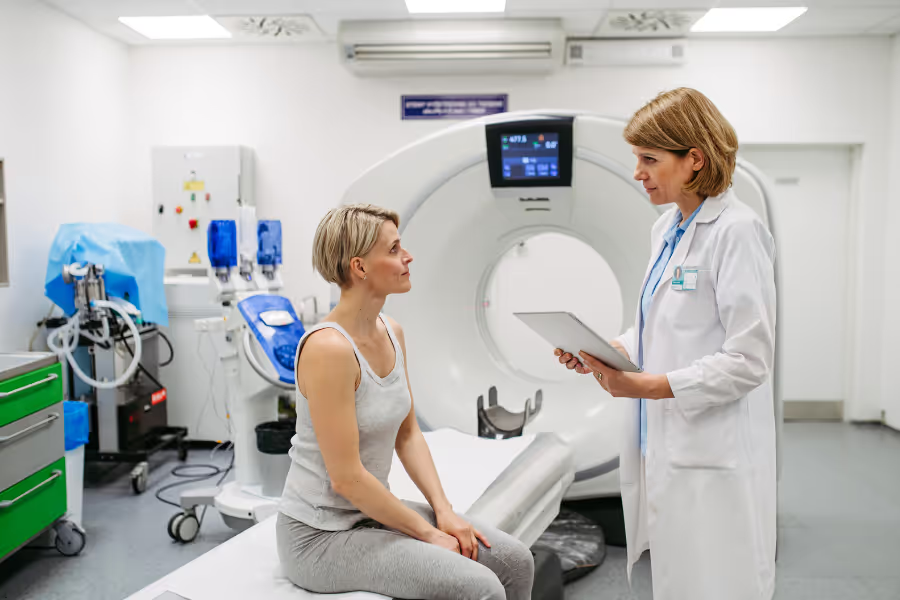
A CT scan (computed tomography) is a scan that uses X-rays and computer processing to create detailed cross-sectional pictures of the inside of your body—like slicing a loaf of bread to see each layer. It's especially useful for looking at bones, organs, blood vessels, and detecting injuries, infections, tumors, or internal bleeding quickly.
A private CT scan means you book the scan at an accredited, fee-for-service imaging clinic instead of waiting for a publicly funded appointment. The scan itself is the same type of test. The main difference is timing and convenience—private clinics often offer faster scheduling (sometimes same-day or next-day), extended hours, and clearer appointment timelines.
How much does private CT cost in Canada?
How we estimate surgical costs: Ranges are estimates drawn from our network of 100+ private clinics and surgeons, and they're intentionally broad. Two people seeking the same procedure can receive very different quotes depending on province, surgeon, facility fees, and case complexity. Published prices aren't always comparable either—some are complete bundles, others exclude consultation, imaging, or follow-up. Only the clinic can give you an exact, itemized quote.
CT scan costs vary by body part, whether contrast dye is used, and the clinic's location and equipment.
Canada
Typical range you can expect in private diagnostic imaging centres is: $600–CA$3,000
Factors affecting cost:
- Body part scanned: head/brain, chest, abdomen/pelvis, spine, extremities
- With or without contrast: contrast dye adds cost
- Single area vs multiple areas: combined scans (chest + abdomen) cost more
- Facility type: hospital-based vs independent imaging centre
Common examples:
- CT head (no contrast): CA$400–CA$700
- CT chest: CA$650–CA$1,000
- CT abdomen/pelvis with contrast: CA$800–CA$1,500
- CT angiography (CTA): CA$1,200–CA$2,300
How much in the United States?
U.S. pricing is typically higher: CA$700–CA$4,200+
What's typically included?
- Radiologist interpretation and written report
- CD or digital access to images
- Contrast dye administration (if ordered)
- Immediate post-scan monitoring
What's often not included?
- Requisition or referral fees (if your doctor charges separately)
- Follow-up imaging if findings require more scans
- Specialist consultations to discuss results
- Treatment based on findings
Tips
- Ask for an itemized quote upfront
- Confirm whether contrast is included in the price
- Ask about report turnaround time (many private clinics offer same-day or next-day reports)
- Check if your extended health insurance covers private imaging
CT: what to expect
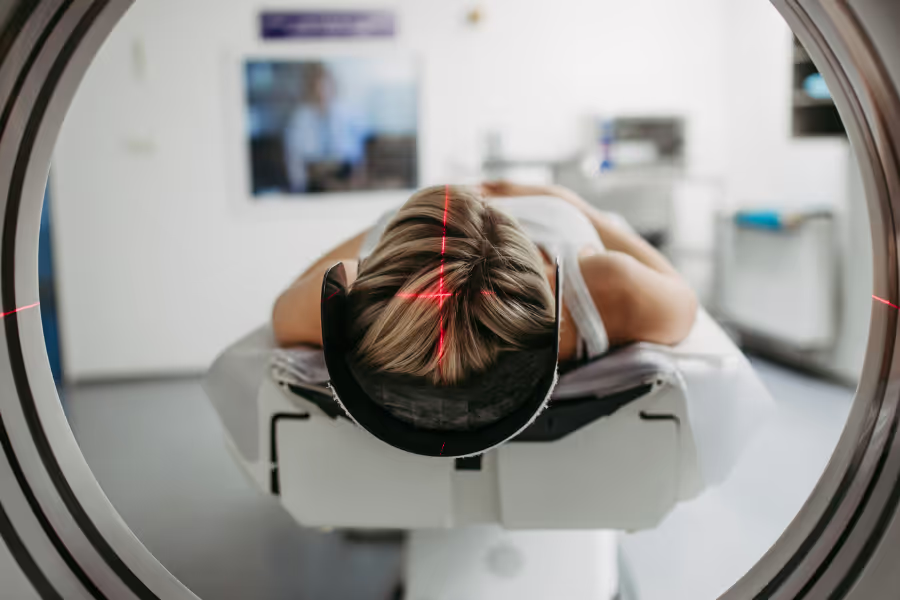
Most CT scans take 5–15 minutes (a bit longer if contrast is used). You’ll be asked to arrive early to complete forms, confirm your requisition, and answer safety questions (including pregnancy status and contrast allergy history).
What it feels like
- The CT scanner is a wide, open ring (not a long tunnel), so it’s usually easier if you’re claustrophobic.
- The machine makes quiet whirring/clicking sounds as it takes images.
- You’ll need to stay still. You may be asked to hold your breath for a few seconds, especially for chest or abdominal scans.
- If you receive IV contrast, you might feel a brief warm flush or metallic taste—this is common and passes quickly.
Food and medications
- Some CT scans (especially abdomen/pelvis with contrast) require fasting for 4–6 hours; others don’t. Follow the clinic’s instructions.
- Keep taking your regular medications unless told otherwise.
- If you take metformin or have kidney disease, tell the clinic—extra instructions or recent kidney bloodwork may be needed when contrast is used.
What is Surgency?
As a family doctor in the public system, I believe transparency is a form of care. I created Surgency to help my patients struggling on long waitlists who wanted to understand all their options for timely medical attention.
Surgency is a free resource designed to empower and educate—helping you understand private pathways and find accredited surgeons within Canada. I hope Surgency brings you clarity.
Dr. Sean Haffey

Why do Canadians choose to get CT scans done privately?
Canadians might consider a private CT scan when public wait times stretch days to weeks, and symptoms—chest pain, abdominal issues, suspected fractures, or neurological concerns—may need timely answers. Long delays can mean slower diagnosis, delayed treatment decisions, and more time living with pain, worry, or worsening symptoms that could become serious.
Understanding CT scans: fast answers when time matters
Unlike MRI, CT scans don't come in "screening" vs "diagnostic" types the same way. CT is almost always diagnostic—it's ordered when your doctor needs fast, detailed images to figure out what's wrong, especially in urgent or acute situations.
Think of CT like an express lane for answers.
What makes CT different from MRI?
CT scan:
- Uses X-rays (involves radiation, but modern scanners use low-dose protocols)
- Very fast: most scans take 5–15 minutes
- Excellent for bones, organs, blood vessels, and detecting bleeding, fractures, or acute problems
- Often the first choice in emergency or trauma situations
- Can use IV contrast dye to highlight blood vessels, tumors, or infections
MRI:
- Uses magnets and radio waves (no radiation)
- Slower: most scans take 30–60 minutes
- Better for soft tissues like ligaments, cartilage, brain detail, and spinal cord
- Not ideal for people with metal implants or claustrophobia
- Better for non-urgent, detailed soft-tissue imaging
When do Canadians choose private CT?
Choose private CT if:
- You have acute symptoms that need fast answers (chest pain, abdominal pain, head injury, suspected stroke)
- Your doctor ordered a CT and the public wait is weeks away
- You need urgent diagnosis to guide treatment decisions (surgery, medication, specialist referral)
- You have trauma or injury and need to rule out fractures, internal bleeding, or organ damage
- You need cancer staging or monitoring and can't wait
- You want peace of mind quickly when symptoms are worrying
CT may be the right choice when:
- Speed matters (trauma, stroke symptoms, acute pain)
- You need to see bones, organs, or blood vessels clearly
- Your doctor specifically ordered a CT (not an MRI)
- You need contrast imaging of blood vessels (CT angiography)
Most Canadians seeking private CT need fast diagnostic answers
Because CT is almost always used for specific, often urgent problems, most Canadians choosing private CT do so to avoid delays that could worsen their condition or prolong uncertainty. Getting a CT within 24–48 hours instead of weeks can mean starting treatment sooner, avoiding complications, and getting back to normal life faster.
Choosing a clinic
Choosing the right imaging centre matters for scan quality, safety, and how quickly you get results.
What to look for
Accreditation and equipment quality
- Accreditation (provincial requirements like DAP in BC, CPSA in AB, Accreditation Canada, and/or recognized accreditation bodies)
- Radiologists who are licensed in Canada
- Clear protocols for contrast safety and implant screening
- Transparent pricing and timelines
- Convenient image sharing (secure portal, direct delivery to your provider)
- Ask about CT scanner generation (newer multi-slice scanners—16, 64, 128+ slice—provide better detail and faster scans)
- Low-dose protocols for radiation safety
Radiologist credentials
- Board-certified radiologists (FRCPC—Fellow of the Royal College of Physicians of Canada)
- Subspecialty training relevant to your scan (neuroradiology for brain, body imaging for abdomen, etc.)
- How quickly reports are delivered to you and your doctor
Turnaround time
- How soon can you book?
- How quickly do you get results? (same-day, 24 hours, 48 hours?)
- Can urgent cases be accommodated?
Referral requirements
- Some centres require a physician referral; others accept self-referral
- Confirm what documentation you need to bring
Costs and transparency
- Request a detailed, itemized quote
- Ask what's included (contrast, radiologist fee, report delivery)
- Clarify billing for follow-up scans if findings require more imaging
Questions to ask during your consultation
Scan details
- Which body part(s) will be scanned?
- Will I need contrast dye? (oral, IV, or both?)
- How long does the scan take?
- What generation/type of CT scanner do you use?
Safety and preparation
- How much radiation exposure is involved? Do you use low-dose protocols?
- Do I need to fast or stop medications before the scan?
- Are there risks with the contrast dye? (allergic reactions, kidney function concerns)
- Can I have a CT if I'm pregnant or breastfeeding?
Results and next steps
- When will I get the report?
- Will the report go directly to my doctor, or do I need to arrange that?
- What happens if the scan finds something that needs follow-up?
Costs and logistics
- What exactly is included in the price?
- Are there extra fees for contrast, CD copies, or rush reports?
- Does my extended health insurance cover this?
If you're currently interested in private surgical pathways within Canada, you can click here for a list of providers.
Frequently asked questions
How do I know if I should get a CT scan?
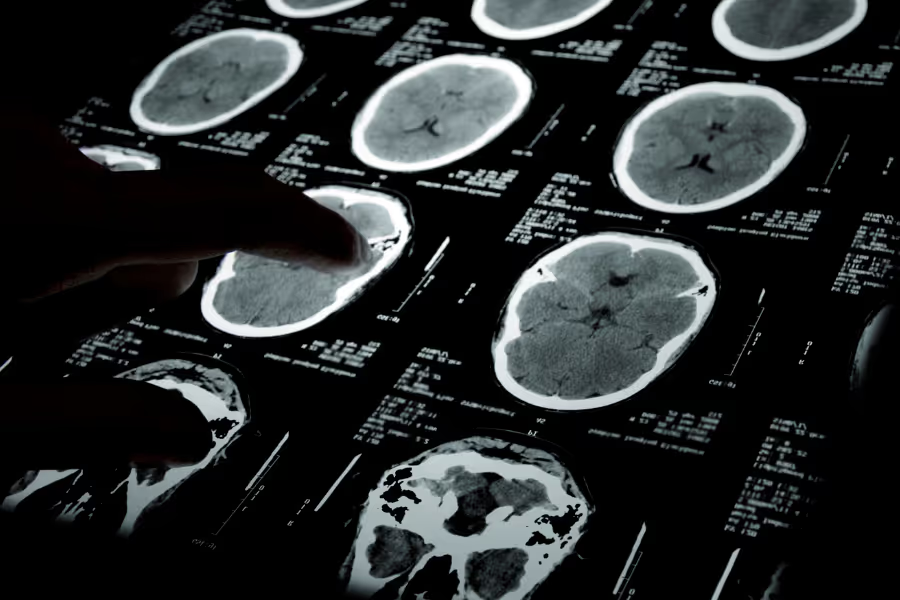
A CT scan is a diagnostic imaging test—it helps doctors see inside your body to figure out what's wrong. It's usually the right choice when you need fast, detailed images of bones, organs, or blood vessels.
It might be right for you if:
- You have trauma or injury (suspected fractures, internal bleeding, head injury)
- You have chest pain or breathing problems that need urgent evaluation
- You have abdominal pain and doctors need to rule out appendicitis, kidney stones, or other acute issues
- You have neurological symptoms like sudden severe headache, stroke symptoms, or seizures
- You need cancer staging or monitoring (CT is often used to check for tumors or track treatment response)
- You have unexplained symptoms and other tests (X-ray, ultrasound, physical exam) haven't given a clear answer
When a CT scan might not be right (yet)
- Pregnancy: CT uses radiation, so MRI or ultrasound are usually preferred
- Kidney problems and contrast dye: if you have poor kidney function, contrast may not be safe
- Allergy to contrast dye: alternatives or pre-medication may be needed
- Simpler test would work: sometimes an X-ray or ultrasound is enough
Signs you're a strong candidate
- Your doctor has ordered a CT and you're facing a long public wait
- You have acute symptoms that need fast answers (pain, trauma, suspected stroke)
- You need staging or follow-up imaging for a known condition
What to ask your doctor
- Do I need a CT, or would another test (MRI, ultrasound, X-ray) work?
- What are you looking for on the scan?
- Do I need contrast dye?
- Are there risks I should know about (radiation, contrast reactions)?
Do I need a referral?
Yes and no—you can reach out to any of the private surgeons listed on Surgency without a referral. Their intake teams are happy to answer questions, explain what they treat, share pricing ranges, and walk you through next steps.
However, to book a formal consultation with the surgeon, you'll typically need a referral from your family doctor or nurse practitioner. Don't have one? Many of the clinics can help coordinate a virtual GP appointment to get the referral paperwork sorted. All surgeons listed on Surgency offer virtual initial consultations, so you don't need to travel until you and the surgeon have agreed on a plan.
Before your consultation, expect the clinic to request relevant medical records and recent diagnostic imaging (X-ray, MRI, CT, ultrasound, lab work, etc.). Having these ready speeds up the process and lets the surgeon give you specific guidance on your very first call.
What happens after the CT?
What happens next depends on why you had the scan and what it shows.
1. Your images are read by a radiologist
A radiologist (a doctor trained to read scans) reviews your CT images and writes a detailed report describing:
- What they see (normal anatomy, abnormalities, injuries, masses, etc.)
- Their interpretation and any diagnoses
- Recommendations for follow-up (more imaging, specialist referral, treatment, etc.)
2. You get the report
- Turnaround time: Private clinics often provide reports within 24–48 hours (some offer same-day for urgent cases)
- The report usually goes to:
- Your referring doctor (family doctor or specialist)
- You directly (ask for a copy—it's your right)
- You may also receive a CD or digital link with the actual images
3. Your doctor reviews the report and connects it to your symptoms
The CT result matters most when combined with your exam, symptoms, and medical history. Your doctor may say:
- "This explains your symptoms"
- "We found something that needs follow-up"
- "Everything looks normal—let's explore other causes"
4. You get a plan
Common next steps include:
No urgent findings
- Reassurance and symptom management
- Monitor and repeat imaging later if needed
- Continue conservative treatment (physio, meds, lifestyle changes)
Something found that needs treatment
- Specialist referral: surgeon, oncologist, neurologist, cardiologist, etc.
- Medication or procedure: antibiotics for infection, blood thinners for clots, surgery for appendicitis/fractures, etc.
- More imaging: MRI for better soft-tissue detail, ultrasound for follow-up, PET scan for cancer staging
Incidental findings (common)
- Small cysts, mild arthritis, benign-looking spots that often mean nothing
- Your doctor will decide if they need monitoring or can be ignored
5. Treatment can start sooner
This is a big reason people go private: once you have a clear diagnosis, you can stop guessing and start the right treatment plan—whether that's surgery, medication, physio, or specialist care.
How much does Surgency cost?
Surgency is free for patients, funded for by surgeons.
Surgeons—who meet our listing criteria—pay a flat fee to list on the Surgency platform. To maintain objectivity, there are no commissions, referral fees, nor any ranking or recommending one surgeon over another.
Surgency is patient-first. Our goal is to make the process of finding a private surgeon as simple as possible. You choose who to contact. Learn more in our Advertising Policy.
What are the risks involved with CT scans?
CT scans are generally very safe, but like any medical test, there are some risks to be aware of. Your individual risk depends on the body part being scanned, whether contrast dye is used, your overall health, and how many CT scans you've had in the past.
Common and usually minor
- Radiation exposure: CT uses X-rays, which carry a small cancer risk over a lifetime (higher with repeated scans)
- Warm, flushed feeling when IV contrast is injected (normal and temporary)
- Metallic taste in your mouth from contrast (goes away quickly)
- Mild nausea from oral or IV contrast
Less common
- Allergic reaction to contrast dye: mild (itching, hives, nausea) to moderate (vomiting, facial swelling)
- Kidney problems (contrast-induced nephropathy): rare, but more likely if you already have kidney disease, diabetes, or dehydration
- Bruising or discomfort at the IV site
Rare but serious
- Severe allergic reaction (anaphylaxis): difficulty breathing, throat swelling, severe drop in blood pressure—imaging centres are equipped to handle this
- Kidney failure (in people with pre-existing kidney disease who receive contrast)
- Contrast extravasation: IV contrast leaks into surrounding tissue (causes swelling/pain; usually resolves on its own)
Radiation considerations
- One CT scan = low risk, but radiation is cumulative over your lifetime
- Children and young adults are more sensitive to radiation
- Pregnant women should avoid CT unless absolutely necessary (MRI or ultrasound preferred)
- Modern scanners use low-dose protocols to minimize exposure
How you can lower risk
- Only get a CT when medically necessary (don't repeat unnecessarily)
- Tell the clinic about kidney problems, diabetes, allergies, or previous contrast reactions
- Stay hydrated before and after contrast
- Ask if a low-dose protocol is available
- If you're pregnant or might be, tell the technologist before the scan
Red flags—call your doctor or go to urgent care/ER
- Severe itching, hives, or rash after contrast
- Difficulty breathing or throat tightness
- Severe swelling at the IV site
- Chest pain or rapid heartbeat
- Decreased urination or dark urine (sign of kidney stress)
How do I prepare for an CT scan?
CT scans are quick and non-invasive, but a little preparation ensures the best images and safest experience.
Medical prep (days before)
Confirm the scan details
- Which body part is being scanned?
- Will you need contrast dye? (IV, oral, or both)
- Do you need a referral or requisition from your doctor?
Kidney function (if contrast is ordered)
- Contrast dye is filtered by your kidneys, so some centres require recent bloodwork (creatinine/eGFR) to confirm your kidneys are healthy
- If you have diabetes or kidney disease, discuss this with your doctor
Allergies
- Tell the clinic if you've ever had a reaction to contrast dye or iodine
- Pre-medication (steroids, antihistamines) may be needed
Medications
- Most medications can continue as usual
- If you take metformin (diabetes med) and are having IV contrast, you may need to pause it briefly—ask your doctor
- Bring a list of all medications and supplements
Day-before and day-of prep
Fasting (if required)
- Abdomen/pelvis scans with contrast: you may need to fast for 4–6 hours before
- Head, chest, or extremity scans: usually no fasting needed
- Follow your clinic's specific instructions
Oral contrast (if required)
- Some abdominal/pelvis scans require you to drink contrast liquid 1–2 hours before
- It tastes chalky or slightly sweet; drink it slowly and stay near a bathroom
Clothing
- Wear comfortable, loose clothing with no metal (zippers, snaps, underwire bras)
- You may be asked to change into a gown
Remove metal objects
- Jewelry, watches, belts, hairpins, glasses, hearing aids, dentures (if they contain metal)
- Leave valuables at home
What to bring
- Photo ID and health card
- Requisition or referral (if required)
- Previous imaging (CD or reports) if comparing to old scans
- Medication list
- Extended health insurance info (if applicable)
At the imaging centre
Check-in and paperwork
- You'll fill out a form about allergies, kidney function, pregnancy, and medical history
IV line (if contrast is ordered)
- A nurse will place a small IV in your arm
- You may feel a warm, flushed sensation or metallic taste when contrast is injected—this is normal
The scan itself
- You'll lie on a motorized table that slides through a large donut-shaped machine
- The scan is painless and quick (usually 5–15 minutes)
- You'll need to hold still and may be asked to hold your breath briefly
- The machine makes whirring/clicking sounds
After the scan
- If you had IV contrast, drink plenty of water to help flush it out
- Most people can resume normal activities immediately
- Breastfeeding: if you had contrast, some centres recommend pumping and discarding milk for 12–24 hours (ask your radiologist)
I still have questions
If you still have questions, then feel free to contact us directly.

.avif)