
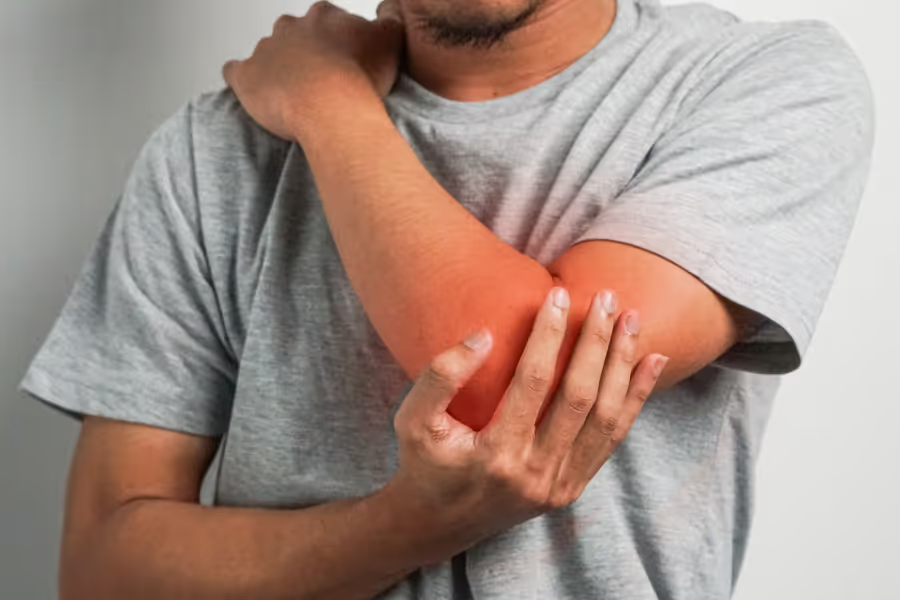
Private Elbow Arthroscopy

Elbow arthroscopy surgery may help if persistent elbow pain, stiffness, catching, or locking is disrupting your sleep, sports, work, and daily activities. Learn more and find the right surgeon that fits your needs below, serving Canadians in major cities like Vancouver, British Columbia; Calgary, Alberta; Toronto, Ontario; and Montréal, Québec.
Le fondateur de Surgency, le Dr Sean Haffey, souriant
Révisé et approuvé par le Dr Sean Haffey
Maquette de carte de crédit

À titre informatif seulement, ne constitue pas un avis médical ou juridique. Veuillez consulter votre médecin ou votre chirurgien.

Comment fonctionne Surgency

Icône indiquant le lieu de l'intervention chirurgicale

Décidez où aller

La chirurgie privée au Canada nécessite généralement de voyager hors de sa province. La première étape consiste donc à décider où.
Icône indiquant la recherche sur la plateforme

Rechercher par spécialité

Notre application facilite la recherche de chirurgiens par spécialité et par emplacement.
Icône indiquant l'envoi d'une demande de consultation sécurisée au chirurgien

Planifiez une consultation

Prenez rendez-vous pour une consultation directement sur Surgency. C'est sécurisé, confidentiel et rapide.

What is elbow arthroscopy?

Elbow arthroscopy is a 'keyhole' surgery that lets doctors look inside your elbow joint and fix problems using tiny tools.

Instead of making a big cut, the surgeon makes a few small incisions (about the size of a pencil eraser). A camera called an arthroscope goes through one incision and shows a live, magnified view of your joint on a screen. Through the others, the surgeon slides in instruments to shave bone spurs, remove loose cartilage, smooth rough surfaces, release tight tissues, or wash out inflammation.

Pourquoi le faire?

It helps with common issues like locking or catching from loose bodies, stiffness from scar tissue, painful bone spurs, tennis elbow that hasn’t improved with therapy, or early arthritis changes. Because the cuts are small, there’s usually less pain and swelling, fewer scars, and a faster recovery than open surgery—though it’s still real surgery and rehab matters.

Why do people get elbow arthroscopy done privately?

Délais d'attente plus courts

Elbow arthroscopy often follows lengthy queues. Instead of waiting months for a consultation and OR time, private centers can schedule surgery within weeks—reducing time spent with locking, catching, or night pain, and helping you get back to school, work, or sport sooner.

Choix et contrôle

Passer au privé vous donne plus de pouvoir dans votre prise en charge. Vous pouvez :

  • Choose your elbow arthroscopy surgeon based on forearm/throwing‑injury experience and credentials.
  • Sélectionnez l’emplacement de la clinique (souvent hors province).
  • Plan surgery around school, competitive seasons, or work commitments.

Tranquillité d'esprit

Patients value knowing exactly who will operate, when it will happen, and the detailed plan (anesthesia, approach, rehab). This certainty eases anxiety and helps families coordinate time off, support, and physical therapy.

Prévenir une détérioration supplémentaire

Function and performance: Limits months of pain, motion loss, and grip weakness that derail training, exams, or work.

Joint health: Persistent impingement, loose bodies, or scar tissue can worsen stiffness and cartilage wear; earlier arthroscopy can address mechanical problems before they escalate.

Surgical complexity: Repeated inflammation and scar can make later surgery more extensive, with harder rehab.

Mental load: Reduces time living with uncertainty, restricted activities, and poor sleep from night symptoms.
Maquette de tableau de bord
Pourquoi choisir Surgency

Pour les Canadiens qui souhaitent une chirurgie en quelques semaines, et non en quelques mois

Surgency est une ressource gratuite, offerte par un médecin canadien du système public, pour vous aider à trouver le bon chirurgien selon vos besoins.

How do I get a private elbow arthroscopy in Canada?

  1. Confirmez votre diagnostic. La plupart des patients commencent par consulter un médecin de famille ou un spécialiste qui confirme que la chirurgie est conseillée. Un chirurgien privé peut également confirmer le diagnostic si nécessaire.
  2. Faites des recherches.
    • Vous pouvez trouver des chirurgiens à Vancouver, en Colombie-Britannique; Calgary, en Alberta; Toronto, en Ontario; et Montréal, au Québec sur notre application, et consulter leurs qualifications ainsi que les tarifs.
  3. Planifiez une consultation initiale. La plupart des chirurgiens proposent des consultations en clinique et en ligne.
    • Les consultations sont généralement fixées en quelques jours ou quelques semaines.
    • Remarque : prévoyez des frais de consultation entre 150 $ et 350 $.
    • Nous vous recommandons de prendre 2 à 4 consultations avec différents chirurgiens afin de mieux comprendre vos options.
  4. Consultation. Le chirurgien examinera votre état, vos symptômes et tout traitement ou diagnostic antérieur, comme des radiographies ou des IRM.
  5. Après la consultation. Le chirurgien examinera ensuite votre dossier et vous proposera des options chirurgicales (et non chirurgicales) en fonction de vos besoins; il passera en revue les risques et les résultats attendus; et présentera les options de tarification et de planification.
  6. Planifiez la date de votre chirurgie. Une fois que vous aurez confirmé la procédure et le paiement, la clinique fixera la date de votre chirurgie – généralement dans un délai de quelques semaines.

Elbow arthroscopy steps: what to expect

Most elbow arthroscopies take about 45–90 minutes of operating time. Expect a few extra hours at the surgical centre for check-in, anesthesia, and recovery before you go home.

Étapes de base :

  • Check-in and marking: You meet the team, the surgeon marks the elbow, and you review the plan.
  • Anesthesia: You’ll get either general anesthesia (asleep) and/or a nerve block to numb the arm.
  • Position and prep: Your arm is positioned on a padded support. The skin is cleaned and covered in sterile drapes.
  • Small portals (tiny cuts): The surgeon makes 2–4 small incisions (about the size of a pencil eraser).
  • Camera in: A pencil-thin camera (arthroscope) goes through one portal and shows the inside of your elbow on a screen.
  • Fix the problem: Through other portals, tiny tools remove loose fragments, shave bone spurs, smooth rough cartilage, release tight tissue, or wash out inflammation—whatever your elbow needs.
  • Rinse and check: The joint is flushed with sterile fluid. The surgeon re-checks motion and stability.
  • Close up: The small incisions are closed with steri-strips or stitches and covered with a dressing; a light bandage/splint may be applied.
  • Wake-up and instructions: You recover in the PACU, get discharge instructions, and head home the same day.

Experiences do vary. Your surgery may look different, so consult your surgeon.
What can I expect from the elbow arthroscopy recovery process?

Every elbow is different—follow your surgeon’s plan. Taking rehab seriously usually means better results. Some private clinics offer virtual follow-ups or coordinate physio near home. In general, what to expect:

Semaine 1

Reality check: soreness, stiffness, swelling, and sleep hassles. Not fun.

Goals: control pain and swelling, protect the elbow, start gentle motion.

Activités :

  • keep the dressing clean/dry
  • wear sling as told
  • Glace/Élévation
  • hand/wrist/shoulder moves
  • gentle elbow bends/straightening as cleared
  • short walks
  • nerve block may keep the arm numb for a day

Semaines 2 à 4

Toujours gênant, mais en amélioration.

Goals: restore basic range of motion (ROM), reduce swelling, use the arm for light tasks.

Activités :

  • stitch removal if needed
  • Physio régulier
  • more elbow flex/extend and forearm rotate (supination/pronation) within limits
  • light daily use (keyboard, phone, eating) if comfortable
  • gradually less sling time (per your surgeon)

Semaines 5 à 12

La phase de travail.

Goals: near-full ROM, start strength.

Activités :

  • progress exercises (isometrics to light resistance)
  • scapular/shoulder and grip strengthening
  • functional tasks (lifting light objects close to the body)
  • avoid heavy lifting or forceful twisting until cleared

Weeks 13–24

Refining strength and confidence.

Goals: full ROM, stronger forearm/arm, sport/work-specific drills.

Activités :

  • progressive resistance, endurance, coordination
  • start controlled sport skills if approved (e.g., easy throws/drills for athletes)

Month 6+

Most people feel “normal-ish,” but keep smart loading and maintenance exercises. Return to full sport or heavy work only when cleared by your surgeon/physio.

Red flags anytime: fever, worsening redness/drainage, severe calf pain/swelling, chest pain/shortness of breath, new numbness/weakness—call your care team.

How much does private elbow arthroscopy cost in Canada?

Elbow arthroscopy is a minimally invasive surgery, however the costs are significant and very because of the potential complexity involved in certain instances. Private clinics in Canada typically charge $6,500 to $9,000.

In the United States, the costs vary even more: CA$7,250 to CA$12,700.

Les coûts varient énormément selon l’emplacement, l’expérience du chirurgien, le type d’établissement, la portée des traitements potentiels, la complexité du problème et les services inclus (certaines cliniques offrent tout compris, tandis que d’autres facturent séparément l’anesthésie, les soins de suivi, etc.).

Ce qui est inclus

Most quotes for private elbow arthroscopy cover:

  • Surgeon fee (and assistant if used) and anesthesiologist/general anesthesia.
  • Frais d’établissement (temps en salle d’opération, soins infirmiers, fournitures, équipement d’arthroscopie).
  • Soins de récupération immédiatement post-opératoire et suivis matinaux de routine (vérification de la plaie, retrait des points de suture).
  • Les instructions de base pour l’écharpe et la réadaptation initiale (varient selon la clinique).

Ce qui n'est généralement pas inclus :

  • Pre‑op consults and advanced imaging beyond basics (MRI, MRI‑arthrogram).
  • Braces/splints or special implants beyond standard supplies.
  • Unexpected overnight admission or ER visits; additional imaging for complications.
  • Formal physiotherapy/occupational therapy beyond initial guidance.
  • Médicaments post-sortie (antidouleurs, anti-nausées).
  • Travel and accommodation if out‑of‑province.
  • Frais pour la gestion des complications ou les réopérations au-delà de la période globale habituelle (selon la politique).

Options d'assurance et de financement

  • Assurance maladie privée : Certains régimes peuvent couvrir une partie des coûts, comme les frais d'hospitalisation. Il est important de vérifier directement votre police d'assurance.
  • Plans de financement : De nombreuses cliniques proposent des options de paiement mensuel pour vous aider à étaler les coûts. Apprenez-en davantage sur vos options de financement ici.
  • Crédit d'impôt pour frais médicaux (CIFM): Il s'agit d'un crédit non remboursable qui réduit vos impôts lorsque vous payez de votre poche des dépenses médicales admissibles. Apprenez-en davantage sur la façon de demander le CIFM pour les chirurgies privées.

Choisir un chirurgien et une clinique

Choosing your surgeon is one of the benefits of going the private route. Here’s what to consider and the key questions to bring to your elbow arthroscopy consultation.

Ce qu'il faut rechercher

  • Expérience et volume d'interventions
    • Ask how many elbow arthroscopies they perform each year and their mix (loose body removal, synovectomy, debridement for arthritis, osteophyte/impingement work, OCD lesions, plica, contracture release, tennis elbow, nerve decompression adjuncts).
  • Qualifications et formation
    • Confirmez leur permis d'exercice auprès de l'ordre provincial des médecins (par exemple, le Collège des médecins et chirurgiens de l'Ontario, le Collège des médecins et chirurgiens de la Colombie-Britannique, le Collège des médecins et chirurgiens de l'Alberta).
    • Look for FRCSC-certified orthopaedic surgeons with a shoulder & elbow or sports/upper‑extremity surgery fellowship.
  • Sécurité
    • Renseignez-vous sur les taux d’infection, les retours imprévus, les taux de raideur, les délais de retour au sport.
  • Technique et anesthésie
    • Portal strategy, need for concomitant procedures (ulnar nerve decompression/transposition, microfracture, capsular release, osteophyte removal).
    • For throwers or valgus overload, clarify if any UCL evaluation is planned and whether arthroscopy is diagnostic vs therapeutic.
  • Accréditation de l'établissement
  • Intégration de la réadaptation
    • Access to elbow‑savvy physiotherapy, clear phased protocol, and communication with your local therapist if you’re traveling.

Questions to ask during your elbow arthroscopy consultation

Chirurgien et plan chirurgical

  • How many elbow arthroscopies do you perform yearly, and for my specific condition?
  • What are your rates in the last 12–24 months for infection, nerve complications (especially ulnar), stiffness needing additional procedures, and unplanned readmissions?
  • Which procedures do you anticipate for me (e.g., loose body removal, synovectomy, debridement, microfracture, capsular release, osteophyte resection)? What are the trade‑offs?
  • What anesthesia do you recommend (regional block + sedation vs general) and your pain‑control plan (multimodal meds, nerve block duration, rescue meds)?
  • Is this same‑day outpatient? Any chance I’d need an overnight stay?

Rétablissement et suivi postopératoire

  • What’s my expected timeline to: come out of the sling/brace, achieve near‑full motion, return to desk vs manual work, non‑impact cardio, and sport‑specific drills?
  • What movement limits will I have early on (lifting limits, end‑range extension/flexion, forearm rotation, throwing restrictions)?
  • What red flags should trigger a call/ER visit (fever, increasing redness/drainage, severe swelling/pain, numbness/weakness in hand/fingers)?Who is my post‑op contact (direct phone/email)?
  • How many follow‑ups are included and when?

Coûts et logistique

  • What exactly is included in my quote (surgeon, anesthesiologist, facility fees, standard disposables, anchors/implants if needed, nerve block, immediate post‑op care, first follow‑ups)?
  • What could add cost (extra anchors/implants, microfracture tools/biologics, ulnar nerve decompression, longer OR time, unexpected imaging, braces, complications)?
  • If additional procedures are required once you’re in the joint, how do you handle consent and pricing in real time?
  • If complications occur, how are they managed and billed? Do you have a transfer agreement with a hospital?
  • If I’m traveling from another province, which follow‑ups can be virtual?

Elbow arthroscopy frequently asked questions

How do I know if elbow arthroscopy is right for me?

Elbow arthroscopy is a minimally invasive surgery where a surgeon uses a tiny camera and tools to look inside your elbow and fix problems. It might be right for you if:

  • Daily pain or locking that messes with school, sports, work, or sleep
  • You’ve tried simpler treatments (rest, bracing, physio, meds, injections) and they haven’t helped enough
  • Imaging (X‑ray/MRI/CT) shows a fixable issue inside the joint
  • Your doctor can point to a specific problem on exam or imaging that arthroscopy can fix (like a loose body or scar tissue)

Common reasons people get elbow arthroscopy

  • Loose bodies: Small bone or cartilage chips floating around that cause locking, catching, or sharp pain
  • Impingement/osteophytes: Extra bone growths that block motion (common in throwers or after injuries)
  • Synovitis: Inflamed joint lining causing swelling and pain (can be from overuse or arthritis)
  • Stiffness/contracture: Scar tissue blocking movement after an injury or surgery
  • Osteochondritis dissecans (OCD) or cartilage damage: Pain with motion, swelling, or catching
  • Debridement/cleanup: Smoothing rough areas, removing scar tissue, or rinsing out inflamed tissue

When elbow arthroscopy might not be right

  • Severe arthritis where most of the cartilage is gone (sometimes open surgery or joint replacement-type options are better)
  • Major deformity or big bone spurs that arthroscopy can’t reach safely
  • Active infection
  • You haven’t tried basic non‑surgical care long enough yet

Ai-je besoin d'une référence?

No, you do not need a referral for private elbow arthroscopy in Canada. You can book a consultation directly with a surgeon, and they will review your condition, symptoms, and any previous treatments or diagnostics.

How do I prepare for elbow arthroscopy?

Your surgeon will give specific instructions based on your condition and the exact procedure.

Préparation et optimisation de la santé

Exercises: You’ll likely be given gentle range-of-motion and strengthening exercises for your shoulder, wrist, and hand to reduce stiffness and improve recovery. Work on swelling control (ice/elevation) if your elbow is puffy.

Stop smoking/vaping: Nicotine reduces blood flow and raises infection and stiffness risks. Quitting 4+ weeks before surgery improves healing.

Medications: Tell your team about all meds and supplements. You may need to pause blood thinners (aspirin, warfarin, DOACs), certain anti-inflammatories, and some herbal supplements that increase bleeding. Only stop meds if your surgeon or family doctor tells you to.

Weight and general fitness: Light cardio and a balanced diet can help reduce risks and speed recovery. Aim for good sleep and hydration.

Préparation à domicile

One-handed setup: After surgery, your arm may be in a bulky dressing or sling for a short time. Set up your space to be easy to navigate and one-hand friendly.

Declutter: Remove tripping hazards (cords, sliding rugs, clutter). Keep frequently used items at waist/chest height.

Comfort aids: Ice packs/ice machine, extra pillows to support your arm, a small side table to keep phone/meds/water nearby.

Clothing: Lay out loose, front-opening tops and elastic-waist bottoms; slip-on shoes. Button-ups or zip hoodies are easier one-handed.

Soutien et logistique

A helper: Arrange for someone to drive you home and stay the first 24–48 hours. Have a backup contact for the first couple of weeks.

Work and school: Plan time off. Desk work may be possible sooner than manual labor, but you’ll need time for swelling control, pain management, and early rehab.

Childcare/pets: Set up help for lifting, walks, and errands for the first 1–2 weeks.

Transportation: Practice fastening the seatbelt and getting in/out of the car with one arm protected.

Nourriture, médicaments et préparation pour le jour de la chirurgie

Fasting: Follow your anesthesia team’s instructions on when to stop eating and drinking (usually no solid food after midnight; clear fluids up to a certain time).

Pain plan: You may receive a nerve block that numbs the arm for 12–24 hours. Have over-the-counter meds (acetaminophen/ibuprofen if allowed) and any prescribed pain meds ready at home before surgery.

Nausea/constipation: Ask for anti-nausea meds if you’ve had issues before. Pick up stool softeners/fibre—pain meds can constipate.

Skin prep: Follow any antiseptic wash instructions (e.g., chlorhexidine) the night before and morning of surgery. Don’t shave the operative arm.

What to bring: Photo ID, insurance (if applicable), medication list, loose top, and your sling (if provided).

Jewelry and nails: Remove rings/bracelets; avoid heavy nail polish or acrylics on the operative hand for monitoring.

Pratique post-opératoire

One-handed routines: Practice opening containers, preparing simple meals, dressing, and personal hygiene using your non-operative hand.

Sleep position: Try sleeping on your back or the non-operative side with pillows supporting the operative arm.

What are the risks if I delay or don't get elbow arthroscopy?

Your own situation depends on your pain level, motion limits, what’s seen on imaging (loose bodies, bone spurs, cartilage wear, synovitis, scar bands), your sport/work demands, and how well non‑surgical care works (physio, activity changes, meds, injections). Discuss specifics with your surgeon.

Main risks of delaying or not having elbow arthroscopy (when symptoms are significant/persistent)

  • Douleur progressive et perte de fonction
    • Increasing daily pain, night pain, and reliance on pain meds.
    • Worsening stiffness: harder to fully straighten or bend; difficulty with basics like eating, grooming, lifting a backpack, throwing, or push‑ups.
  • Progression des dommages articulaires
    • Ongoing cartilage wear from repeated catching/impingement or loose bodies can speed arthritis.
    • Bone spurs (osteophytes) can grow and lock in motion limits, making later surgery more complex.
    • Scar tissue can thicken, making contractures tougher to release later.
  • Nerve and tendon irritation
    • Continued swelling/impingement can irritate nearby nerves (often ulnar nerve), causing numbness/tingling or weakness in the hand.
    • Tendons around the elbow can get chronically inflamed from altered mechanics.
  • Increased deconditioning and overuse elsewhere
    • Avoiding arm use leads to weakness and poorer joint nutrition.
    • Compensating with the shoulder/wrist can cause new aches or injuries.
  • Chirurgie et récupération plus difficiles par la suite
    • Larger spurs, more scar tissue, or more advanced arthritis can lengthen surgery and limit the best possible motion afterwards.Nerve irritation that’s been present for months may take longer to settle.

Quand l'observation attentive peut être raisonnable

  • Mild, intermittent symptoms with good function.
  • Non‑operative measures help: targeted physiotherapy (capsular stretching, strength), activity modification, short courses of NSAIDs/acetaminophen, bracing/taping as advised, and/or occasional injections.
  • No progressive loss of motion/strength, no frequent locking/catching, and no worsening nerve symptoms on check‑ups.

Quand il ne faut pas tarder

  • Frequent mechanical symptoms: locking, catching, or sharp “impingement” pain that stops activity.
  • Worsening motion loss that limits daily tasks or sport (can’t straighten within ~10–15° or bend enough to eat/groom comfortably).
  • Night pain or pain most days requiring regular meds.
  • Nerve symptoms (numbness/tingling/weak grip) that are new or getting worse.
  • Imaging shows loose bodies, large spurs, or scar bands that match your symptoms, and non‑surgical care hasn’t fixed the problem.

What are the risks involved with elbow arthroscopy?

Your individual risk depends on your health, anatomy, exact elbow problem, the procedures done during arthroscopy (e.g., debridement, loose body removal, microfracture), anesthesia, and how closely you follow rehab. Discuss your personal risks with your surgeon.

Courants et généralement temporaires

  • Pain, swelling, bruising; stiffness in the first few weeks
  • Sleep trouble the first days; soreness when the nerve block wears off
  • Nausées dues à l'anesthésie; constipation due aux analgésiques.
  • Temporary numbness around the small incisions
  • Fluid leakage from the portals for a day or two; mild forearm/hand swelling

Moins courants

  • Infection (skin/portal infection; deeper joint infection is uncommon)
  • Blood clots (DVT/PE) — rare after elbow arthroscopy but possible; movement and prevention steps lower risk
  • Wound healing problems or hematoma (blood collecting under the skin)
  • Nerve irritation/injury (e.g., ulnar, radial, posterior interosseous, median) causing numbness, tingling, or weakness — usually temporary, occasionally longer-lastingPersistent stiffness or loss of motion if scar tissue reforms or rehab is delayed
  • Cartilage or bone injury from instruments (rare in experienced hands)
  • Complex regional pain syndrome (CRPS) — uncommon pain/swelling/skin-sensitivity condition

Procedure-specific risks (depend on what’s being done)

  • Loose body removal/debridement: residual fragments or recurrent catching if more pieces form
  • Synovectomy (removing inflamed lining): recurrence of inflammation over time
  • Osteophyte/impingement work: incomplete relief if bony spurs return or if motion limits are from other causes
  • Microfracture/cartilage procedures: slower recovery, need for protected use; variable cartilage healing
  • Contracture release: risk of re-stiffening without diligent therapy; rare instability if too much tissue is released

Rare mais important

  • Deep joint infection requiring further surgery and antibiotics
  • Lésion nerveuse avec faiblesse ou engourdissement durable
  • Vascular injury (damage to a blood vessel) requiring urgent repair (very rare)
  • Ongoing pain or limited function if the underlying problem is more advanced than expected (e.g., significant arthritis)
  • Need for additional procedures (e.g., open surgery, ligament repair/reconstruction) if arthroscopy can’t fully fix the issue

Comment réduire les risques

  • Follow pre-op instructions (stop nicotine, manage meds, antiseptic wash)
  • Elevate, ice, and start approved motion early to control swelling and stiffness
  • Gardez les plaies propres et sèches; surveillez l'apparition de rougeurs, d'écoulements ou de fièvre
  • Do physiotherapy exactly as prescribed; don’t overdo gripping/lifting early

Know red flags: fever, worsening pain/swelling, new numbness/weakness, calf pain/swelling, shortness of breath — call your care team or go to the ER if they happen.

Elbow arthroscopy is generally safe and effective for targeted problems, with most issues being mild and temporary. The biggest concerns are stiffness, temporary nerve irritation, infection (uncommon), and—depending on the procedure—the need for disciplined rehab. Your surgeon can explain which risks matter most in your specific case and how they’ll minimize them.

When can I return to sports or active hobbies after elbow arthroscopy?

Elbow arthroscopy treats a range of issues in the elbow, and some involve more substantial recovery times than others. Your return to normal activity and sport will depend on your unique circumstances.

In general, you can expect basic arm movement within 2-3 months, retuning to low impact sport within 6-8 months, and full recovery within ~12 months.

Consultez toujours votre chirurgien et votre physio pour obtenir des conseils.
Looking for an elbow surgeon?

Browse vetted elbow surgeons across Canada. Compare prices, qualifications, locations.

PARCOURIR LES CHIRURGIENS

Browse Accredited Private Surgeons for Elbow Arthroscopy

Les chirurgiens de Surgency sont vérifiés :

✓ Diplôme de médecine reconnu
✓ Permis d'exercice canadien (LMCC)
✓ Permis d'exercice médical provincial actif
✓ Certification du conseil (FRCSC/ABMS)
QC
Accepte les patients qui résident à l'extérieur du Québec
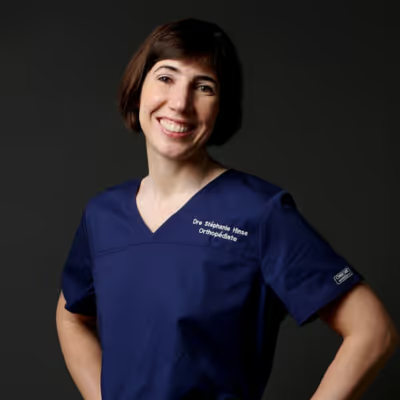
Stéphanie Hinse
MD, FRCSC
Icône de localisation du chirurgien
Montréal, QC
Anglais, Français
Accepte les patients adultes

Chirurgienne orthopédique ayant complété trois bourses de perfectionnement, avec une formation internationale et une expertise spécialisée en chirurgie du coude et de l'épaule, exerçant principalement à Montréal (QC).
Alberta
Accepte les patients de toutes les provinces, y compris l'Alberta
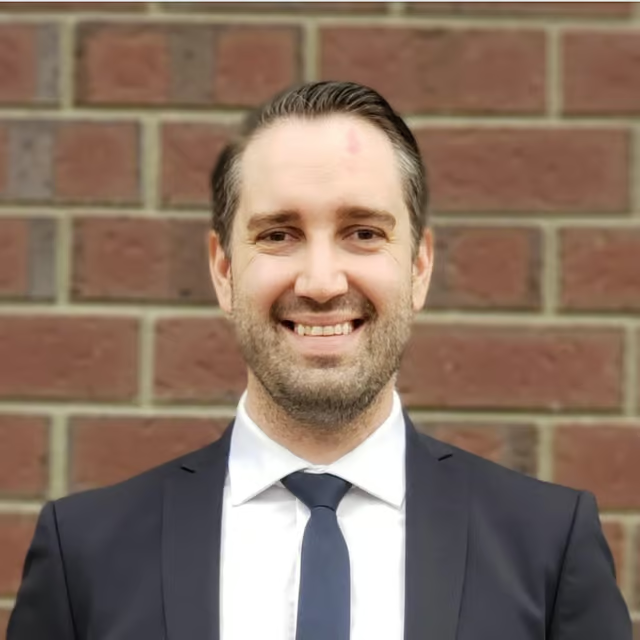
Tanner Dunlop
MD, FRCSC
Icône de localisation du chirurgien
Edmonton, AB
Anglais
Accepte les patients adultes

Chirurgien orthopédiste comptant 9 ans d'expérience, spécialisé en chirurgie des membres supérieurs (du coude à la main), en arthroscopie et en médecine sportive.