Private Breast Reconstruction Surgery After Mastectomy

Breast reconstruction surgery helps rebuild the shape of the breast after a mastectomy. Find the right surgeon that fits your needs below, serving Canadians in major cities like Vancouver, British Columbia; Calgary, Alberta; Toronto, Ontario; and Montréal, Québec.

Le fondateur de Surgency, le Dr Sean Haffey, souriant
Révisé et approuvé par le Dr Sean Haffey
Maquette de carte de crédit

À titre informatif seulement, ne constitue pas un avis médical ou juridique. Veuillez consulter votre médecin ou votre chirurgien.

Comment fonctionne Surgency

Icône indiquant le lieu de l'intervention chirurgicale

Décidez où aller

La chirurgie privée au Canada nécessite généralement de voyager hors de sa province. La première étape consiste donc à décider où.
Icône indiquant la recherche sur la plateforme

Rechercher par spécialité

Notre application facilite la recherche de chirurgiens par spécialité et par emplacement.
Icône indiquant l'envoi d'une demande de consultation sécurisée au chirurgien

Planifiez une consultation

Prenez rendez-vous pour une consultation directement sur Surgency. C'est sécurisé, confidentiel et rapide.

What is breast reconstruction surgery after mastectomy?

Breast reconstruction surgery rebuilds the shape and appearance of one or both breasts after mastectomy (breast removal due to cancer or high cancer risk). The goal is to restore symmetry, confidence, and body image using either implants (saline or silicone) or your own tissue (flap reconstruction using skin, fat, and sometimes muscle from the abdomen, back, or thighs).

Reconstruction can be done at the same time as mastectomy (immediate reconstruction) or months to years later (delayed reconstruction). The approach depends on cancer treatment plans (radiation, chemotherapy), your body type, health, and personal goals.

Implant-based reconstruction uses tissue expanders followed by permanent implants. Autologous (flap) reconstruction uses your own tissue to create a natural breast mound—common techniques include DIEP flap (abdomen), latissimus dorsi flap (back), or TRAM flap. Nipple and areola reconstruction, and surgery on the opposite breast for symmetry, are often done in later stages.

Recovery varies widely—implant reconstruction is typically faster, while flap procedures involve longer surgery and healing but offer more natural, long-lasting results.

Why do people choose to have breast reconstruction surgery done privately?

Breast reconstruction is deeply personal and time-sensitive—especially when coordinating with cancer treatment. Many Canadians choose private reconstruction to gain control over timing, surgeon choice, and the reconstruction method.
Délais d'attente plus courts

  • Public wait lists for surgery consults and reconstruction can stretch 6–18+ months, sometimes longer depending on province and surgeon availability.
  • Private centres may arrange assessment and surgery within weeks to a few months.
  • Faster access means less time living with asymmetry, discomfort from temporary expanders, or the emotional weight of waiting.

Choix et contrôle

  • Ability to choose a surgeon with specific, high-volume experience in breast reconstruction (implant vs flap techniques).
  • Option to discuss all reconstruction types (DIEP, latissimus, implants, fat grafting, nipple reconstruction) and choose what fits your body and lifestyle.
  • Schedule around cancer treatment, work, family, and personal readiness.

Coordination with cancer care

  • Private reconstruction can be timed to fit your oncology plan (before/after radiation, chemotherapy windows).
  • Some patients prefer immediate reconstruction (same time as mastectomy) to avoid a second major surgery—private options may offer more flexibility.

Tranquillité d'esprit

  • Clear timeline for a life-changing, emotionally charged procedure.
  • Direct access and communication with your surgeon and faster results sharing.

Access to specialized expertise

  • Breast reconstruction requires advanced microsurgical skills (especially for flap procedures); private centres may offer access to fellowship-trained reconstructive plastic surgeons.
  • Some private surgeons specialize exclusively in breast reconstruction and perform high volumes.

Privacy and discretion

  • Confidentiality for a deeply personal procedure.
  • Private recovery spaces and more personalized care.

Avantages pratiques (souvent)

  • Streamlined pre-op workup (imaging, photos, 3D planning, tissue assessment).
  • More time for detailed discussion of expectations, symmetry options, and staged procedures.
  • Post-op support, scar management, and revision planning.
Maquette de tableau de bord
Pourquoi choisir Surgency

Pour les Canadiens qui souhaitent une chirurgie en quelques semaines, et non en quelques mois

Surgency est une ressource gratuite, offerte par un médecin canadien du système public, pour vous aider à trouver le bon chirurgien selon vos besoins.

  1. Confirmez votre diagnostic. La plupart des patients commencent par consulter un médecin de famille ou un spécialiste qui confirme que la chirurgie est conseillée. Un chirurgien privé peut également confirmer le diagnostic si nécessaire.
  2. Faites des recherches.
    • Vous pouvez trouver des chirurgiens à Vancouver, en Colombie-Britannique; Calgary, en Alberta; Toronto, en Ontario; et Montréal, au Québec sur notre application, et consulter leurs qualifications ainsi que les tarifs.
  3. Planifiez une consultation initiale. La plupart des chirurgiens proposent des consultations en clinique et en ligne.
    • Les consultations sont généralement fixées en quelques jours ou quelques semaines.
    • Remarque : prévoyez des frais de consultation entre 150 $ et 350 $.
    • Nous vous recommandons de prendre 2 à 4 consultations avec différents chirurgiens afin de mieux comprendre vos options.
  4. Consultation. Le chirurgien examinera votre état, vos symptômes et tout traitement ou diagnostic antérieur, comme des radiographies ou des IRM.
  5. Après la consultation. Le chirurgien examinera ensuite votre dossier et vous proposera des options chirurgicales (et non chirurgicales) en fonction de vos besoins; il passera en revue les risques et les résultats attendus; et présentera les options de tarification et de planification.
  6. Planifiez la date de votre chirurgie. Une fois que vous aurez confirmé la procédure et le paiement, la clinique fixera la date de votre chirurgie – généralement dans un délai de quelques semaines.

Breast reconstruction surgery after mastectomy: what to expect

Breast reconstruction is often done in stages over several months. The exact steps depend on whether you choose implant-based or flap (autologous) reconstruction, and whether it's immediate (same time as mastectomy) or delayed (later).

Before surgery (weeks to months before)

Consultation and planning

  • Meet with a plastic surgeon who specializes in breast reconstruction
  • Discuss your goals, body type, cancer treatment plan (radiation, chemo), and timeline
  • Review reconstruction options:
    • Implant-based: tissue expander followed by permanent implant
    • Flap reconstruction: DIEP (abdomen), latissimus dorsi (back), TRAM, or other donor sites
    • Combination: implant + flap or fat grafting
  • Discuss symmetry procedures on the opposite breast (lift, reduction, augmentation)
  • Review photos, 3D imaging, and expected outcomes

Medical optimization

  • Pre-op bloodwork, ECG, chest X-ray, or other tests depending on age and health
  • Imaging (mammogram, MRI, CT) to assess donor sites if flap reconstruction
  • Smoking cessation (critical—nicotine dramatically increases flap failure and infection risk)
  • Optimize diabetes, blood pressure, and nutrition
  • Discuss medications: stop blood thinners, certain supplements as directed

Coordination with oncology team

  • Timing is planned around mastectomy, radiation, and chemotherapy
  • Radiation can affect implant results and flap healing—your team will advise on sequencing

Day of surgery

Check-in and prep

  • Arrive at the hospital or surgical centre
  • Meet the surgical team, anesthesiologist, and nursing staff
  • Surgical markings (incision lines, flap donor sites, symmetry planning)

Anesthésie

  • General anaesthesia (you're fully asleep)
  • IV lines, catheter, and monitoring equipment placed

Positioning and prep

  • You're positioned on your back (sometimes with arms extended for flap harvest)
  • Sterile draping of the chest and donor site (if applicable)

Main reconstruction (varies by type)

Implant-based reconstruction (2–4 hours for expander placement; 1–2 hours for implant exchange later)

Stage 1: Tissue expander placement (often immediate, same time as mastectomy)

  • The breast surgeon performs the mastectomy
  • The plastic surgeon places a tissue expander (a temporary balloon-like device) under the chest muscle or a synthetic mesh (acellular dermal matrix, ADM)
  • The expander is partially filled with saline
  • Drains are placed to collect fluid
  • Incisions are closed

Stage 2: Expansion (weeks to months after, outpatient)

  • You return to the clinic every 1–2 weeks
  • Saline is injected through a port in the expander to gradually stretch the skin and muscle
  • This continues until the desired size is reached (usually slightly larger than the final goal)
  • Expansion is paused if radiation is needed

Stage 3: Expander-to-implant exchange (3–6 months later, outpatient surgery)

  • The expander is removed
  • A permanent silicone or saline implant is placed
  • Adjustments for symmetry, pocket refinement, or fat grafting may be done
  • Drains placed, incisions closed

Flap (autologous) reconstruction (6–12+ hours, depending on technique)

DIEP flap (deep inferior epigastric perforator—abdomen tissue)

  • Skin, fat, and blood vessels are taken from the lower abdomen (like a tummy tuck)
  • No muscle is removed (muscle-sparing technique)
  • The tissue is transferred to the chest and shaped into a breast mound
  • Microsurgery is used to reconnect tiny blood vessels to chest vessels (usually internal mammary or thoracodorsal)
  • The abdominal incision is closed (similar to a tummy tuck scar)

Latissimus dorsi flap (back muscle and skin)

  • Muscle, skin, and fat are taken from the upper back
  • The flap is tunnelled under the skin to the chest
  • Often combined with an implant for added volume
  • Blood supply usually stays attached (pedicled flap), so no microsurgery needed

Other flap options

  • TRAM flap: similar to DIEP but includes abdominal muscle (less common now)
  • GAP flap: tissue from the buttocks (gluteal artery perforator)
  • TUG flap: tissue from the inner thigh

Shaping and closure

  • The flap is sculpted to match the opposite breast
  • Drains are placed at the chest and donor site
  • Incisions are closed with sutures

Immediate post-op (first hours)

  • You wake up in the recovery room
  • Pain control (IV meds, nerve blocks, oral meds)
  • Monitoring of flap blood flow (for flap reconstruction—Doppler checks, sometimes special monitoring devices)
  • Chest and donor site dressings, drains in place

Hospital stay

  • Implant reconstruction: often same-day or overnight
  • Flap reconstruction: typically 3–5 nights (longer for bilateral or complex cases)
  • Frequent flap checks (colour, temperature, Doppler signals) to ensure blood flow
  • Early gentle walking to prevent blood clots
  • Pain management, nausea control, drain care teaching
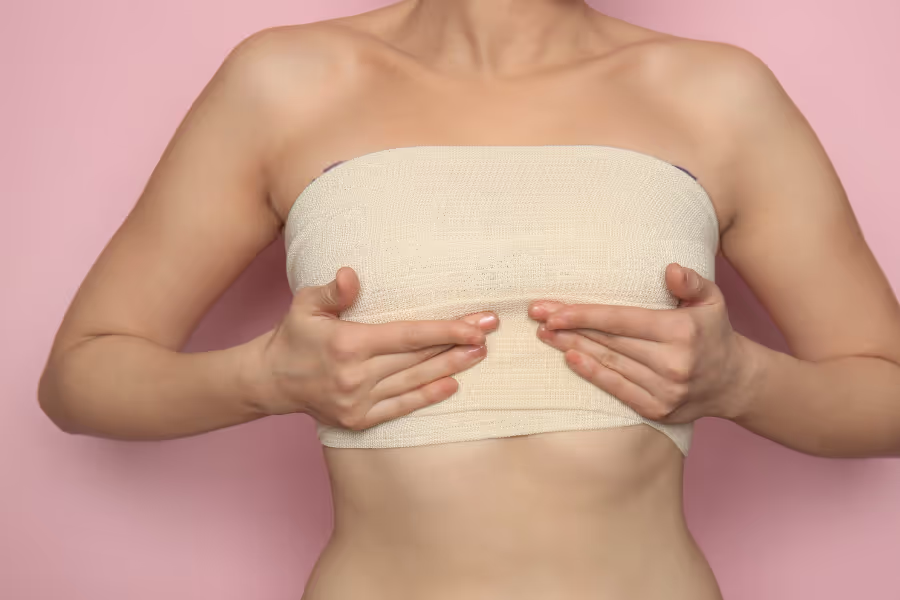
Woman holding bandage wrapper around her chest

What can I expect from the breast reconstruction surgery recovery process?

Recovery varies widely depending on the type of reconstruction. Implant-based recovery is generally faster; flap reconstruction involves longer surgery, more pain, and a slower return to normal activity.

First 24–48 hours (in hospital or at home)

Ce que vous ressentirez

  • Implant reconstruction: tightness, soreness, and pressure across the chest; feels like a very firm, swollen chest
  • Flap reconstruction: significant soreness at both the chest and donor site (abdomen, back, thigh, or buttock); fatigue from long surgery
  • Drains in place (chest and donor site); some discomfort from drain tubing
  • Drowsiness from anaesthesia; nausea possible

Objectifs principaux

  • Control pain and nausea
  • Monitor flap blood flow (for flap reconstruction—nurses check frequently)
  • Prevent blood clots: gentle walking, leg exercises, compression devices
  • Keep drains secure and emptying properly

Activités habituelles

  • Bed rest with head elevated; short walks to the bathroom or hallway
  • No lifting, reaching, or twisting
  • Sips of clear fluids, advancing to regular diet as tolerated
  • Drain care teaching (if going home with drains)

Days 3–14

Ce que vous ressentirez

  • Implant: tightness and soreness improve gradually; chest feels very firm and "high" (implants settle over weeks to months)
  • Flap: donor site pain often worse than chest pain initially (especially abdomen—feels like a tummy tuck); fatigue is significant
  • Drains still in place (usually removed within 1–2 weeks when output is low)
  • Swelling, bruising, and numbness across the chest and donor site

Objectifs principaux

  • Keep incisions clean and dry
  • Empty and record drain output daily
  • Avoid lifting, reaching overhead, or straining
  • Watch for signs of infection or flap problems (colour change, coolness, severe pain)

Activités habituelles

  • Light daily tasks at home; short, gentle walks
  • No driving (pain, drains, and pain meds make it unsafe)
  • Showering usually OK after a few days (check with your surgeon); no baths or soaking
  • Wear a surgical bra or compression garment as directed
  • Sleep on your back or slightly elevated

Semaines 3 à 6

Ce que vous ressentirez

  • Pain decreases significantly; soreness and tightness remain
  • Drains removed (relief!)
  • Swelling improves but breasts and donor site still look puffy
  • Numbness across the chest is common and may last months or be permanent
  • Energy slowly returns but fatigue lingers (especially for flap reconstruction)

Objectifs principaux

  • Gradual return to light activity
  • Scar care (silicone sheets, massage as directed)
  • Avoid heavy lifting, vigorous exercise, and overhead reaching

Activités habituelles

  • Return to desk work (often week 2–3 for implants; week 4–6 for flaps)
  • Light household tasks
  • Driving OK once off pain meds and able to move comfortably
  • Gentle stretching and range-of-motion exercises as directed
  • No gym, running, or heavy lifting yet

Weeks 6–12

Ce que vous ressentirez

  • Most acute pain is gone; occasional twinges or tightness
  • Swelling continues to improve
  • Breasts start to soften and settle (implants) or take final shape (flaps)
  • Scars are still red/pink and firm

Objectifs principaux

  • Gradual return to normal activity and exercise
  • Scar massage and management
  • Plan for next stage (if applicable): nipple reconstruction, symmetry procedures, fat grafting, or revision

Activités habituelles

  • Return to most normal activities
  • Light exercise (walking, stationary bike, light yoga)
  • Heavier lifting and upper body exercise cleared around 8–12 weeks (check with your surgeon)
  • Intimacy can usually resume around 6–8 weeks (check with your team)

Months 3–12+

Ce que vous ressentirez

  • Breasts continue to soften and settle into final shape
  • Scars fade from red to pink to white (takes 12–18 months)
  • Sensation may partially return in some areas, but permanent numbness is common
  • Donor site (abdomen, back, etc.) heals and scars mature

Objectifs principaux

  • Monitor for any late complications (capsular contracture with implants, fat necrosis with flaps)
  • Plan and complete additional stages: nipple reconstruction, areola tattooing, symmetry procedures, revisions
  • Return to full activity and exercise

Activités habituelles

  • Full return to work, exercise, and daily life
  • All restrictions lifted (usually by 3–6 months)
  • Regular follow-ups with your plastic surgeon and oncology team

Long-term (years)

Implant reconstruction

  • Implants are not lifetime devices; expect replacement or revision eventually (10–20 years average, but varies)
  • Monitor for capsular contracture (hardening), rupture, or malposition
  • Regular imaging (MRI for silicone implants) as recommended

Flap reconstruction

  • Flaps are permanent and age with you
  • Weight changes affect flap size
  • Rare late complications: fat necrosis, hernia at donor site (abdomen)

Nipple and areola reconstruction

  • Often done 3–6 months after the main reconstruction once the breast has settled
  • Tattooing for colour and detail

Symmetry procedures

  • The opposite breast may need a lift, reduction, or augmentation to match
  • Often done at the same time as implant exchange or as a separate stage

Red flags—call your team or go to ER

  • Flap colour change: dusky, blue, pale, or very dark (urgent—blood flow problem)
  • Fièvre ou frissons
  • Worsening redness, warmth, swelling, or pus-like drainage
  • Severe, worsening pain not controlled by prescribed meds
  • Sudden swelling or fluid collection (seroma, hematoma)
  • Chest pain, shortness of breath, or painful swollen calf (blood clot)
  • Inability to empty drains or sudden increase in drain output

How much does private breast reconstruction surgery cost in Canada?

Private breast reconstruction costs vary widely depending on the technique, number of stages, and whether symmetry procedures are needed.

How much in Canada?

Typical range:

  • Implant-based reconstruction (expander + exchange): CA$15,000–CA$35,000+ (total for both stages)
  • Flap reconstruction (DIEP, latissimus, etc.): CA$25,000–CA$60,000+
  • Nipple reconstruction: CA$2,000–CA$5,000
  • Symmetry procedures (opposite breast): CA$5,000–CA$15,000
  • Revisions, fat grafting, scar revision: varies

Factors affecting cost:

  • Reconstruction type (implant vs flap; flap procedures are significantly more expensive due to longer OR time and microsurgery)
  • Unilateral vs bilateral
  • Immediate vs delayed
  • Surgeon experience and location
  • Facility type (hospital vs ambulatory centre; flap reconstruction usually requires hospital)
  • Length of hospital stay
  • Use of acellular dermal matrix (ADM) or other advanced materials

How much in the United States (average)?

U.S. pricing is typically higher:

  • Implant-based: CA$20,000–CA$50,000+
  • Flap reconstruction: CA$40,000–CA$180,000+

What's usually included in the cost?

Most packages include:

  • Surgeon's fee
  • Anesthesiologist's fee
  • Frais d'établissement/de salle d'opération
  • Standard surgical supplies, implants, or flap harvest
  • Immediate post-op care and hospital stay
  • Often 1–3 follow-up visits for the first stage

What's often not included?

These are commonly separate:

  • Pre-op assessment done outside the clinic (imaging, bloodwork, ECG, photos)
  • Additional stages: expander-to-implant exchange, nipple reconstruction, symmetry procedures, revisions, fat grafting (each billed separately)
  • Prescriptions after surgery (pain meds, antibiotics, nausea meds)
  • Acellular dermal matrix (ADM) or other advanced materials (sometimes extra cost)
  • Compression garments, surgical bras, scar care products
  • Unplanned extra OR time, unexpected complexity, or complications requiring additional surgery
  • Follow-ups beyond the included visits
  • Travel, accommodation, and time off work

Important: Breast reconstruction is often done in multiple stages—make sure you understand the total cost across all stages, not just the first procedure.

Choisir un chirurgien et une clinique

Choosing your surgeon is one of the most important decisions in your reconstruction journey. Breast reconstruction is complex, deeply personal, and requires both technical skill and an understanding of your goals and body image.

Ce qu'il faut rechercher

Experience and volume (most critical)

  • Ask how many breast reconstructions the surgeon performs each year.
  • Ask specifically about the type you're considering:
    • Implant-based reconstruction (expanders, ADM, implant exchange)
    • Flap reconstruction (DIEP, latissimus, TRAM, GAP, TUG)
    • Microsurgery experience (critical for DIEP and other free flaps)
  • Higher volume generally means better aesthetic outcomes, fewer complications, and more experience handling complex cases.

Qualifications et formation

  • Verify licensure with your provincial college (CPSO, CPSBC, CPSA, CMQ, etc.).
  • Look for FRCSC-certified plastic surgeon with fellowship training in reconstructive or microsurgery.
  • Ask if they specialize in breast reconstruction or if it's part of a broader cosmetic practice.
  • Membership in professional societies (Canadian Society of Plastic Surgeons, American Society of Plastic Surgeons, etc.).

Résultats et sécurité

Ask for their recent numbers (last 12–24 months), such as:

  • Flap success rate
  • Infection rates
  • Capsular contracture rates (for implants)
  • Revision rates
  • Fat necrosis rates (for flaps)
  • Patient satisfaction scores

Reconstruction options and technique expertise

  • Does the surgeon offer both implant and flap options, or do they specialize in one?
  • For flap reconstruction: Do they perform muscle-sparing techniques (DIEP) or only older techniques (TRAM)?
  • Do they offer fat grafting for refinement and contouring?
  • Experience with nipple-sparing mastectomy and immediate reconstruction

Aesthetic approach and personalization

  • Review before-and-after photos of patients with similar body types and reconstruction goals
  • Does the surgeon discuss symmetry procedures on the opposite breast?
  • Do they offer 3D imaging or detailed planning?
  • Do they take time to understand your goals, lifestyle, and body image concerns?

Coordination with oncology team

  • Does the surgeon work closely with breast surgeons and oncologists?
  • Experience timing reconstruction around radiation and chemotherapy.
  • Clear communication and care coordination.

Qualité de l'établissement

  • Confirm the centre is accredited (Accreditation Canada/CAAASF or provincial equivalent).
  • For flap reconstruction: Does the facility have ICU or step-down monitoring for post-op flap checks?
  • Emergency protocols and transfer agreements if complications arise.

Realistic expectations

A good surgeon will:

  • Be honest about scarring, symmetry limitations, and sensation loss.
  • Explain the staged nature of reconstruction (multiple surgeries over months).
  • Discuss risks specific to your body type, cancer treatment, and reconstruction choice.
  • Not overpromise results.

Communication and support

  • Accessible for questions before and after surgery.
  • Clear, compassionate communication style.
  • Supportive office staff and care coordinators.
  • Post-op support, scar management, and revision planning.

Coûts et transparence

  • Request a written, itemized quote for all stages (not just the first procedure).
  • Ask what is included (anaesthesia, facility fees, implants/ADM, hospital stay, follow-ups) and what could add cost.
  • Transparent billing for revisions, complications, and additional stages.

Questions to ask during your Breast Reconstruction consultation

Surgeon and reconstruction plan

  • How many breast reconstructions do you perform yearly, and what types?
  • What are your flap success rates, infection rates, and revision rates?
  • Which reconstruction method do you recommend for me, and why?
  • What are the trade-offs between implant and flap reconstruction for my body and cancer treatment plan?
  • Do you recommend immediate or delayed reconstruction in my case?
  • How will radiation (if needed) affect my reconstruction and timing?

Technique and materials

  • For implants: Do you use tissue expanders? Acellular dermal matrix (ADM)? What type of implants?
  • For flaps: Which donor site do you recommend (abdomen, back, thigh, buttock)? Muscle-sparing or not?
  • Do you perform microsurgery for free flaps (DIEP, GAP)?
  • Do you offer fat grafting for contouring and refinement?

Stages and timeline

  • How many stages will my reconstruction require?
  • What is the timeline between stages?
  • When can nipple and areola reconstruction be done?
  • Will I need symmetry surgery on the opposite breast?

Outcomes and expectations

  • Can I see before-and-after photos of patients with similar body types and reconstruction goals?
  • What size and shape can I realistically expect?
  • What will scarring look like (chest and donor site)?
  • Will I have sensation in the reconstructed breast?
  • How closely will the reconstructed breast match my natural breast (or opposite breast)?

Risks and complications

  • What are the most common complications for the type of reconstruction you're recommending?
  • What is your plan if a flap fails or an implant becomes infected?
  • How do you minimize infection risk?
  • What are the long-term risks (capsular contracture, fat necrosis, hernia at donor site)?

Rétablissement et suivi postopératoire

  • How long will I be in the hospital?
  • When can I return to work, exercise, and normal activities?
  • What restrictions will I have (lifting, reaching, driving)?
  • How many drains will I have, and for how long?
  • What pain management plan do you use?
  • Who do I contact after surgery, and how quickly do you respond?

Coûts et logistique

  • What exactly is included in the quote for each stage?
  • What could add cost (ADM, fat grafting, extra OR time, complications, revisions)?
  • If complications occur, how are they managed and billed?
  • How many follow-ups are included?
  • Will I receive operative notes, photos, and care plans for my oncology team?

Breast reconstruction surgery frequently asked questions

How do I know if breast reconstruction surgery is right for me?

Breast reconstruction is a deeply personal choice. It's not medically necessary, but for many people it's an important part of healing, body image, and moving forward after cancer treatment.

Cela pourrait vous convenir si :

  • You want to restore breast shape and symmetry after mastectomy
  • Reconstruction aligns with your body image goals and sense of self
  • You're physically and emotionally ready for surgery and recovery
  • Your cancer treatment plan allows for reconstruction (timing around radiation, chemo)
  • You understand the staged nature of reconstruction (multiple surgeries over months)
  • You're willing to accept trade-offs: scars, possible sensation loss, donor site effects (for flaps), and the need for future revisions

Reconstruction is NOT right for everyone

  • Some people do not feel the need for reconstruction
  • External prosthetics (breast forms) are a valid, non-surgical option
  • Reconstruction is a major commitment (time, recovery, cost, multiple stages)
  • Some people prefer to focus fully on cancer treatment first and consider reconstruction later (or not at all)

What to consider

Timing: Immediate vs delayed

  • Immediate reconstruction (same time as mastectomy):
    • Pros: One fewer surgery; wake up with a breast mound; may preserve more skin
    • Cons: Longer initial surgery; radiation (if needed) can affect results; less time to process the decision
  • Delayed reconstruction (months to years later):
    • Pros: Focus on cancer treatment first; more time to research and decide; may have clearer radiation/chemo plan
    • Cons: Requires a second major surgery; living without a breast in the interim

Reconstruction type: Implants vs flaps

  • Implant-based:
    • Pros: Shorter surgery and recovery; no donor site; less invasive
    • Cons: Feels less natural; may need replacement eventually; higher risk of complications with radiation; capsular contracture risk
  • Flap (autologous):
    • Pros: More natural look and feel; ages with you; no implant to replace; often better with radiation
    • Cons: Longer surgery and recovery; donor site scar and potential complications (hernia, weakness); more complex

Your cancer treatment plan

  • Radiation: Can affect implant reconstruction (higher capsular contracture risk); flaps often tolerate radiation better
  • Chemotherapy: Timing of reconstruction may be adjusted around chemo cycles
  • Discuss timing and sequencing with your oncology and plastic surgery teams

Your health and body

  • Smoking dramatically increases flap failure and infection risk—quitting is essential
  • Diabetes, obesity, and other health conditions increase complication risk
  • Body type affects donor site options (e.g., enough abdominal tissue for DIEP flap?)

Your goals and priorities

  • How important is symmetry?
  • Are you willing to have surgery on the opposite breast for symmetry?
  • How do you feel about scars (chest and donor site)?
  • How much recovery time can you realistically take?

What to ask yourself

  • Why do I want reconstruction?
  • Am I doing this for me, or because I feel pressured?
  • Am I ready for multiple surgeries and a long recovery?
  • Do I understand the risks, limitations, and trade-offs?
  • Have I explored all my options (implants, flaps, no reconstruction, prosthetics)?
  • Do I have support at home during recovery?

What to ask your surgeon

  • Am I a good candidate for reconstruction based on my cancer treatment, health, and body?
  • Which reconstruction method do you recommend for me, and why?
  • What are realistic expectations for appearance, sensation, and symmetry?
  • What if I choose not to reconstruct—can I change my mind later?

En résumé

Breast reconstruction can be life-changing and deeply meaningful for many people—but it's not the right choice for everyone. Take time to understand your options, talk to your oncology and plastic surgery teams, connect with others who've been through it, and make the decision that feels right for you. There is no wrong choice.

Ai-je besoin d'une référence?

No, you do not need a referral for private breast reconstruction surgery in Canada. You can book a consultation directly with a surgeon, and they will review your condition, symptoms, and any previous treatments or diagnostics.

What are the options for breast reconstruction surgery after mastectomy?

There are two main categories of breast reconstruction: implant-based and autologous (flap) reconstruction using your own tissue. Within each category are several approaches. The right choice depends on your body type, cancer treatment (especially radiation), personal priorities (recovery time, feel, revision needs), and surgeon expertise.

1. Implant-Based Reconstruction

Uses silicone or saline implants to rebuild breast shape. Usually done in two stages: tissue expander first, then permanent implant.

Comment cela fonctionne

  1. Stage 1: Tissue expander placed under chest muscle or with mesh/ADM (acellular dermal matrix) support
  2. Expansion phase: Saline gradually injected over weeks/months to stretch skin
  3. Stage 2: Expander swapped for permanent silicone or saline implant (usually 3–6 months later)

Some patients qualify for direct-to-implant (one stage), skipping the expander.

Pros (why people choose it)

  • Shorter surgery (2–3 hours per stage vs 6–12+ for flaps)
  • Faster initial recovery (back to light activity in 2–4 weeks)
  • No donor site (no additional scars or weakness elsewhere)
  • Predictable size and shape (surgeon controls volume precisely)
  • Good option if you want to go larger than your natural size

Trade-offs

  • Feels firmer than natural breast tissue (less natural to touch)
  • Multiple surgeries required (expander placement, expansions, exchange—minimum 2 surgeries, often 3+ with revisions)
  • Capsular contracture risk (scar tissue tightens around implant, causing firmness or distortion—happens in 10–20% over time, higher with radiation)
  • Implants aren't lifetime devices—may need replacement in 10–20 years due to rupture, malposition, or contracture
  • Radiation significantly worsens outcomes (higher failure, contracture, infection rates)
  • Visible rippling or edges in thin patients
  • Less natural movement and feel
  • Risk of implant infection requiring removal

Best for

  • Patients who want shorter surgery and faster recovery
  • Those with no radiation (or radiation planned long after reconstruction)
  • Smaller to moderate breast size goals
  • Patients who prioritize predictability over the most natural feel

2. Autologous (Flap) Reconstruction

Uses your own tissue (skin, fat, sometimes muscle) from another part of your body to rebuild the breast. The tissue is moved with its blood supply intact (pedicled flap) or completely detached and reconnected using microsurgery (free flap).

Main flap options

DIEP Flap (Deep Inferior Epigastric Perforator)

  • Donor site: Lower abdomen (like a tummy tuck)
  • What's moved: Skin and fat only (no muscle taken)
  • Blood supply: Microsurgery reconnects tiny blood vessels in the chest
  • Pros: Most natural feel; bonus "tummy tuck"; preserves abdominal strength
  • Tradeoffs: Long surgery (6–10 hours); requires microsurgery expertise; risk of flap failure (~2–5%); abdominal donor site scar and potential numbness; not an option if prior tummy tuck or insufficient abdominal tissue

TRAM Flap (Transverse Rectus Abdominis Myocutaneous)

  • Donor site: Lower abdomen
  • What's moved: Skin, fat, and part of abdominal muscle
  • Pros: Similar to DIEP; reliable blood supply
  • Tradeoffs: Weakens abdominal wall (higher hernia risk, core weakness); longer recovery; same long surgery and donor site issues as DIEP

Latissimus Dorsi Flap

  • Donor site: Upper back (muscle, skin, fat)
  • What's moved: Back muscle tunnelled under skin to chest, usually with an implant added for volume
  • Pros: Reliable; good for patients without enough abdominal tissue; shorter surgery than DIEP/TRAM
  • Tradeoffs: Often still needs an implant (not enough tissue alone); back weakness (difficulty with pull-ups, swimming); visible back scar; less natural than pure flap

GAP Flap (Gluteal Artery Perforator—SGAP or IGAP)

  • Donor site: Buttock (upper or lower)
  • What's moved: Skin and fat from buttock
  • Pros: Option when abdomen isn't available; no muscle taken
  • Tradeoffs: Very long surgery; requires expert microsurgeon; less common (fewer surgeons offer it); buttock asymmetry; scar on buttock

TUG/PAP Flap (inner thigh)

  • Donor site: Inner thigh
  • What's moved: Skin, fat, small muscle
  • Pros: Option for smaller reconstructions
  • Tradeoffs: Limited tissue volume; thigh scar; less commonly performed

Pros of flap reconstruction (why people choose it)

  • Most natural look and feel (soft, warm, moves like natural breast)
  • Ages with you (gains/loses weight with your body)
  • No implant to replace—once healed, it's "yours"
  • Better long-term outcomes with radiation (your own tissue tolerates radiation better than implants)
  • Bonus body contouring (tummy tuck effect with DIEP/TRAM)
  • Often only one major surgery (vs multiple with implants)

Tradeoffs of flap reconstruction

  • Much longer surgery (6–12 hours for DIEP/free flaps)
  • Longer hospital stay (3–5 days vs often same-day or overnight for implants)
  • Longer recovery (6–8 weeks before returning to normal activity)
  • Donor site issues: scars, numbness, weakness, potential hernia (abdomen), back weakness (lat dorsi)
  • Risk of flap failure (partial or total loss of tissue if blood supply fails—rare but devastating, ~2–5%)
  • Fat necrosis (some fat doesn't survive, forming hard lumps—common, usually minor)
  • Requires specialized microsurgeon (not all plastic surgeons perform free flaps)
  • More complex surgery = higher risk of complications overall
  • Size limitations based on available donor tissue (can't go significantly larger than natural size)

Best for

  • Patients who want the most natural result
  • Those with radiation history or radiation planned
  • Patients with enough donor tissue (abdomen, buttock, thigh)
  • Willing to accept longer surgery and recovery for better long-term outcome
  • Want to avoid implants and future implant-related issues

3. Timing: Immediate vs Delayed Reconstruction

Immediate reconstruction

  • Done at the same time as mastectomy
  • Pros: Wake up with a breast mound; one fewer surgery; often better aesthetic outcome; psychological benefit
  • Tradeoffs: Longer single surgery; harder to plan if cancer staging unclear; radiation after immediate reconstruction increases complications

Delayed reconstruction

  • Done months or years after mastectomy (after cancer treatment complete)
  • Pros: Cancer treatment completed first; clearer surgical plan; allows time for decision-making; better outcomes if radiation needed
  • Tradeoffs: skin may be tighter/scarred

Delayed-immediate (hybrid)

  • Tissue expander placed at mastectomy, but not expanded until after radiation
  • Preserves skin envelope while allowing safe radiation delivery

4. Nipple and Areola Reconstruction

Usually a separate, minor procedure done 3–6 months after main reconstruction once swelling settles.

Options

  • Nipple reconstruction: Small flaps of local tissue shaped into a nipple projection
  • 3D tattooing: Realistic areola and nipple appearance (no projection)
  • Prosthetic nipples: Stick-on realistic nipples
  • No reconstruction: Some choose to go without

What are the risks involved with breast reconstruction surgery?

Your individual risk depends on your health, cancer treatment history (radiation, chemotherapy), the reconstruction type (implant vs flap), timing (immediate vs delayed), smoking status, and how closely you follow recovery instructions. Discuss your personal risks with your surgeon.

Courants et généralement temporaires

  • Pain, soreness, and tightness in the chest, back, or donor site (for flap reconstruction)
  • Swelling and bruising that can last several weeks
  • Fatigue and low energy for the first few weeks
  • Drain discomfort and irritation at drain sites
  • Numbness or altered sensation in the reconstructed breast and donor area (often improves but may be permanent)
  • Difficulty sleeping on your side or stomach initially
  • Nausées dues à l'anesthésie; constipation due aux analgésiques

Moins courants

  • Seroma or hematoma (fluid or blood collection) requiring drainage
  • Wound healing problems or separation at incision sites
  • Infection at the surgical site, requiring antibiotics or drain placement
  • Implant malposition (shifts out of place) requiring revision
  • Capsular contracture (scar tissue tightens around implant, causing firmness or distortion)—can develop months or years later
  • Temporary or permanent changes in shoulder or arm mobility (especially with flap procedures)

Risques spécifiques à la procédure

Implant‑based reconstruction:

  • Implant failure or rupture over time (implants are not lifetime devices)
  • Capsular contracture (most common long‑term complication)
  • Visible rippling or edge palpability, especially in thin patients
  • Implant infection requiring removal and delayed replacement
  • Need for revision surgery to adjust size, position, or replace implant
  • Rare: Breast Implant‑Associated Anaplastic Large Cell Lymphoma (BIA‑ALCL)—a rare type of lymphoma linked to textured implants

Autologous/flap reconstruction (DIEP, TRAM, latissimus dorsi, etc.):

  • Flap failure (partial or complete loss of transferred tissue due to blood supply problems)—rare but serious
  • Fat necrosis (some transferred fat doesn't survive, forming firm lumps)
  • Donor site complications: abdominal weakness, hernia (DIEP/TRAM), back weakness or seroma (latissimus)
  • Longer surgery and recovery time compared to implants
  • More extensive scarring at donor site
  • Asymmetry or contour irregularities requiring revision

Uncommon but important/long‑term

  • Deep infection requiring implant or flap removal and IV antibiotics
  • Blood clots in legs or lungs (DVT/PE)—higher risk with longer surgeries and flap procedures
  • Significant asymmetry between breasts requiring additional surgery
  • Chronic pain at chest wall or donor site
  • Delayed wound healing, especially in patients who've had radiation
  • Need for multiple revision surgeries to achieve desired result
  • Psychological adjustment challenges (grief, body image, intimacy concerns)

Radiation‑related risks

  • Radiation (before or after reconstruction) significantly increases complication rates:
    • Higher capsular contracture rates with implants
    • Poorer wound healing
    • Increased risk of implant failure or flap complications
  • Many surgeons recommend delaying reconstruction until after radiation, or choosing autologous tissue over implants

Comment réduire les risques

  • Stop smoking/vaping at least 4–6 weeks before surgery (critical—smoking dramatically raises flap failure, infection, and healing problems)
  • Follow pre‑op instructions: optimize nutrition, manage diabetes, stop certain meds as directed
  • Keep surgical sites and drains clean; follow drain care instructions exactly
  • Wear supportive surgical bras as directed
  • Avoid heavy lifting, overhead reaching, and strenuous activity until cleared
  • Attend all follow‑ups and report concerns early
  • Do gentle range‑of‑motion exercises as prescribed to prevent stiffness
  • Know red flags and act fast

Red flags—call your team or go to ER

  • Fièvre ou frissons
  • Worsening redness, warmth, swelling, or foul‑smelling drainage
  • Severe or worsening pain not controlled by prescribed meds
  • Sudden change in breast appearance (darkening, coolness, firmness)
  • Chest pain, shortness of breath, or painful swollen calf
  • Drain stops working or falls out
  • Signs of flap failure: breast becomes cool, dark, or very firm suddenly

How do I prepare for breast reconstruction surgery?

Breast reconstruction is major surgery, and prep is mostly about (1) making sure your body can heal well, and (2) making the first 2 weeks at home easy. Your surgeon will give you exact instructions based on whether you’re having implant reconstruction or a flap (like DIEP/TRAM/latissimus).

Medical prep (2–6+ weeks before)

Confirm the timing with your cancer team

  • Ask if reconstruction is immediate (same surgery as mastectomy) or delayed.
  • If radiation is planned or already done, ask how it changes your options and risk (implants vs flap).

Stop nicotine completely

  • Nicotine dramatically increases risk of flap failure, infection, wound breakdown, and implant complications
  • Quit at least 4–6 weeks before surgery (longer is better, especially for flap reconstruction)
  • This includes vaping, nicotine gum, and patches
  • Use cessation programs, medications, or counseling if needed
  • Your surgeon may test nicotine levels and postpone surgery if positive

Soutien et logistique

A helper (essential)

  • Arrange for someone to drive you home and stay with you for at least the first 3–5 days (longer for flap reconstruction)
  • You'll need help with:
    • Drain care and emptying
    • Préparation des repas
    • Getting dressed
    • Household tasks
    • Medication reminders
    • Getting to follow‑up appointments
  • Have a backup contact for the first 2–3 weeks

Work and school

  • Plan time off: 4–6 weeks minimum for implant reconstruction; 6–8+ weeks for flap reconstruction
  • Desk work may be possible sooner, but fatigue and drain management can be challenging
  • Physical jobs or those requiring overhead reaching will need longer

Childcare and pets

  • Arrange help for lifting, childcare, and pet care for at least 4–6 weeks
  • No lifting >5–10 lbs (including children, groceries, laundry) until cleared

Transportation

  • Line up rides to follow‑ups (you won't be able to drive while on pain meds or with drains)
  • Practice getting in/out of the car gently without using your arms to push

Aliments, médicaments et préparation le jour de la chirurgie

Stock easy meals

  • Prep freezer meals or arrange meal delivery for the first 1–2 weeks
  • Stock easy‑to‑open, nutritious snacks (protein bars, yogurt, fruit, nuts)
  • Have plenty of water, herbal tea, and electrolyte drinks
  • High‑fiber foods and prune juice to prevent constipation

Medications ready at home

  • Fill all prescriptions before surgery day:
    • Pain meds (opioids and/or non‑opioid options)
    • Anti‑nausea medication
    • Stool softener or laxative (start the day of or day after surgery)
    • Any antibiotics prescribed
  • Have over‑the‑counter acetaminophen or ibuprofen (if allowed) on hand

Fasting instructions

  • Follow your anaesthesia team's instructions exactly (usually no solid food after midnight; clear fluids up to 2 hours before)
  • Take only approved medications with a small sip of water

Préparation de la peau

  • Shower the night before and morning of surgery using antiseptic soap (chlorhexidine/Hibiclens) if instructed
  • Wash the chest, underarms, abdomen (if flap donor site), and groin
  • Do not shave the surgical areas
  • No lotions, deodorant, makeup, or perfume on surgery day

What to bring to surgery

  • Photo ID and health card
  • List of current medications and allergies
  • Loose, front‑opening top and comfortable pants
  • Slip‑on shoes
  • Post‑surgical bra (if instructed to bring one)
  • Phone charger
  • Small bag for personal items (you may stay overnight, especially for flap reconstruction)

Hair and nails

  • Remove all jewelry, piercings, contact lenses, and nail polish (especially on fingers—needed for oxygen monitoring)

Mental and emotional prep

Understand the process

  • Watch videos or read materials from your surgeon about what to expect
  • Consider online support groups for breast reconstruction (hearing from others who've been through it can help)
  • Understand this is a journey with stages—especially for implant reconstruction (tissue expander, then exchange surgery)

Manage expectations

  • Results take time: swelling, asymmetry, and positioning settle over months
  • Sensation changes: most reconstructed breasts have reduced or no sensation
  • Scars: they will fade but won't disappear
  • Revision surgery is common and often planned (nipple reconstruction, fat grafting, symmetry adjustments)

J'ai encore des questions

Si vous avez encore des questions, n'hésitez pas à nous contacter directement.
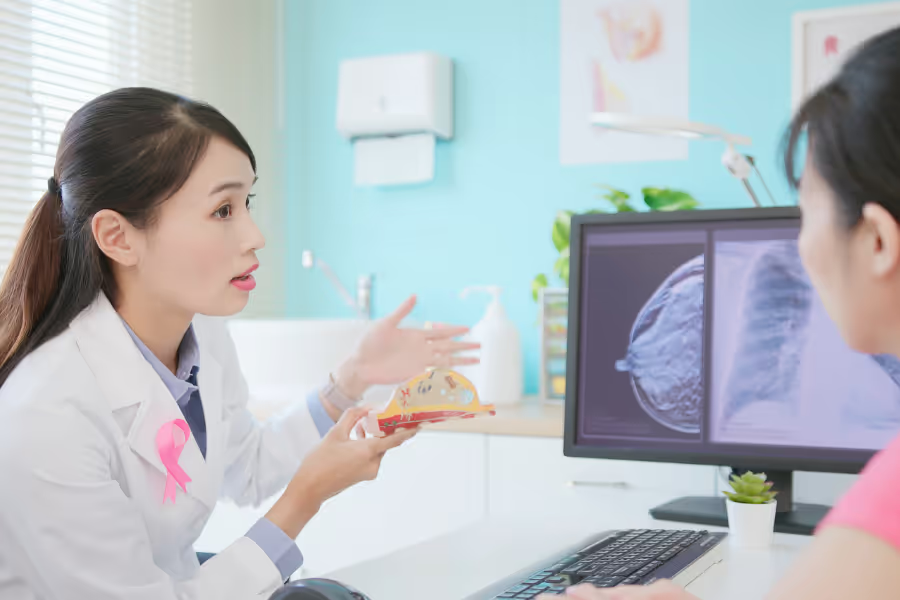
Surgeon consulting with patient regarding breast cancer screening

Looking for a surgeon for breast reconstruction surgery?

Browse vetted MCL/ MPFL surgeons across Canada. Compare prices, qualifications, locations.

PARCOURIR LES CHIRURGIENS

Browse Accredited Private Surgeons for Breast Reconstruction Surgery After Mastectomy

Les chirurgiens de Surgency sont vérifiés :

✓ Diplôme de médecine reconnu
✓ Permis d'exercice canadien (LMCC)
✓ Permis d'exercice médical provincial actif
✓ Certification du conseil (FRCSC/ABMS)
QC
Accepte les patients de toutes les provinces
Perry Gdalevitch
MD, MS, FRCSC, FACS
Icône de localisation du chirurgien
Montréal (QC)
Anglais, Français
Accepte les patients adultes

Chirurgienne doublement certifiée (Canada et États-Unis), reconnue pour son approche esthétique du « nombre d'or », combinant la précision de la microchirurgie et un engagement envers l'autonomisation des femmes, avec 15 ans d'expérience.
QC
Accepte les patients de toutes les provinces
Photo de profil du chirurgien Naim Otaky
Naim Otaky
MD, FRCSC
Icône de localisation du chirurgien
Montréal, QC
Anglais, Français
Accepte les patients adultes

Spécialiste du sein et de la thyroïde, alliant précision diagnostique et compassion chirurgicale, ayant accompagné des milliers de femmes à travers le diagnostic et le traitement du cancer du sein depuis plus de 23 ans.