



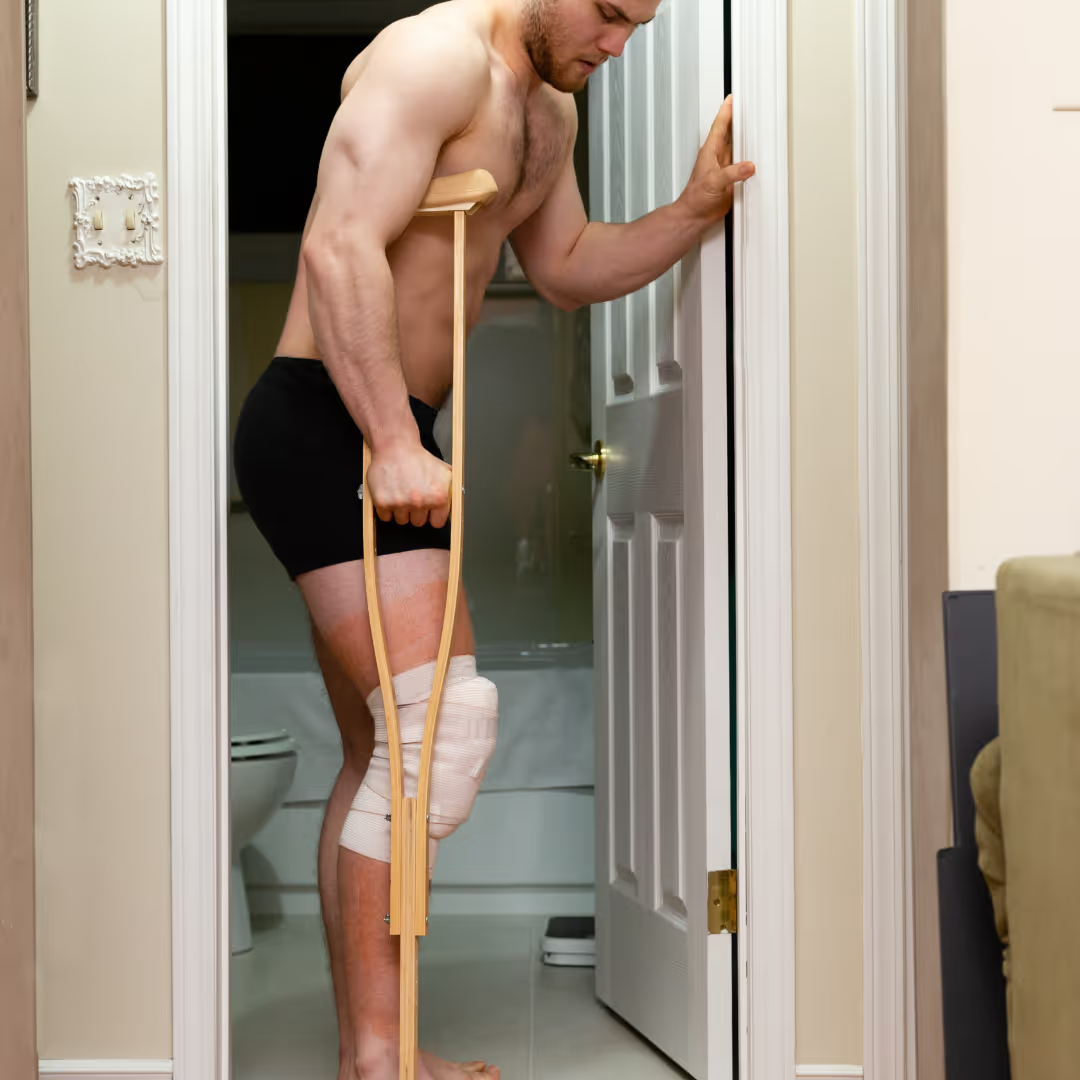
For knee surgery, recovery time isn't a single number, it's a series of milestones, and knowing what each stage looks like makes the whole thing far less daunting.
If a long public wait is part of your decision, a private ACL reconstruction can often be scheduled within weeks rather than months.
ACL surgery recovery timeline at a glance
Recovery moves through overlapping phases, and your surgeon and physiotherapist will set the pace based on your knee. This is a generalized timeline, yours could look very differnt. Follow your surgeon's guidance.
- Week 1: Protect the new graft, control pain and swelling, and start gentle movement. You'll be on crutches.
- Weeks 2 to 6: Straighten the knee fully, wake up the quad muscle, walk more, and ease off the crutches.
- Weeks 6 to 12: Walk unassisted, regain full range of motion, and return to driving and most daily activities.
- Months 3 to 6: Strength and balance work ramps up, with low-impact activities like cycling or swimming once you're cleared.
- Months 6 to 12: Sport-specific training builds, and once you pass strength and movement testing, you gradually return to your sport.
How long until I can walk after ACL surgery?
Most people walk with crutches the same day as surgery and put weight on the leg as comfort allows. Walking unassisted usually happens somewhere between 2 and 6 weeks, once the quad muscle reactivates and you can fully straighten the knee. A smooth, limp-free stride often takes around 6 to 8 weeks.
Those first steps feel awkward, and that's expected. The crutches are there to protect the graft and give your quad time to switch back on, since it tends to shut down after knee surgery. If you also had a meniscus repair, your surgeon may keep you on crutches longer or limit how much weight you put through the leg. Early on, the goal isn't speed. It's walking properly so you don't develop a limp that takes months to unlearn.
How long are you off work after ACL surgery?
If you work from home or at a desk, you can often return within 1 to 2 weeks, sometimes sooner if pain is well controlled and you can keep the leg elevated.
Jobs that involve standing, walking, lifting, or driving usually mean 6 to 12 weeks away, depending on how physical the role is.
Your surgeon can give you a realistic estimate for your specific job, so it's worth asking during your consultation. Plan for some help at home in the first week, when getting around is hardest.
One practical advantage of going private is the confirmed surgery date, which lets you arrange time off, caregiver support, and rehab well ahead. Budgeting matters too, and you can see what private ACL surgery costs in Canada before you commit.

How painful is ACL recovery?
The first week is the hardest. Expect genuine pain, swelling, and stiffness, managed with prescribed medication, ice, and elevation. Discomfort eases noticeably after the first 7 to 10 days, and within a few weeks most people are off the stronger medication and dealing more with stiffness and fatigue than sharp pain.
Surgency's surgeons describe week one plainly: it is not fun. Alongside the physical discomfort, emotional ups and downs are common, and that's a normal part of the process. The reassuring part is that this stage is temporary and fairly predictable. Beyond the few small incisions and the scar they leave behind, which fades over the following months, the intense pain is short-lived. That said, sudden severe pain, a hot or swollen calf, or spreading redness are warning signs worth calling your care team about rather than waiting out.
What affects how fast you recover?
No two recoveries look identical, and a handful of factors explain most of the difference:
- Whether other structures were repaired. An ACL-only reconstruction tends to recover faster than one combined with meniscus or cartilage work.
- Graft type. Whether the new ligament comes from your own tendon or a donor can influence early soreness and the rehab plan.
- Your starting point. Strong quads and good range of motion before surgery, often built through prehab, give you a head start.
- Age and general health. Younger, healthier patients often progress more quickly, though steady rehab matters more than age alone.
- How consistently you do your physio. This is the single biggest factor within your control.
Will I ever be 100% after ACL surgery?
Most people regain full, pain-free function for daily life and get back to the activities they love. Recovery usually takes about six to nine months, and roughly 55% return to sport and 65% of patients return to their pre-injury level of sport.
Whether you hit "100%" depends partly on how you define it. Return to sport is decided by testing, not the calendar: surgeons look at strength symmetry between legs, hop tests, and psychological readiness before clearing you. Lower psychological readiness is linked to higher reinjury in younger patients.
That clearance typically comes around 9 to 12 months, and high-impact, cutting sports can take up to two years. Some researchers estimate reinjury risk is cut by 51% for each month return to sport is delayed up to 9 months.
Rushing back raises the risk of re-tearing the graft, which is why patient, criteria-based progress wins. Many people describe the end result as a strong, reliable "new normal" rather than a knee that feels exactly like it did before. If you want a clear timeline for your own knee, you can find a vetted ACL surgeon and ask these exact questions in a consultation.
Key takeaways
- ACL surgery recovery time runs roughly 9 to 12 months for a full return to sport, though everyday function returns within weeks.
- Most patients walk unassisted within 2 to 6 weeks and return to desk work within 1 to 2 weeks.
- Pain is most intense in the first week and eases substantially after the first 7 to 10 days.
- Consistent physiotherapy is the biggest factor patients control in how quickly and fully they recover.
- About 65% of patients return to their pre-injury sport, with clearance based on strength and movement testing rather than time alone.
The bottom line
There's no shortcut through ACL recovery, but there is a clear path. The patients who do best treat rehab as the main event, hit their milestones in order, and check in with their care team when something feels off.
If you're weighing your options, understanding how private ACL reconstruction works can help you build a timeline that fits your season, your job, and your life. Always confirm the specifics with your own surgeon and physiotherapist, since your plan should be built around your knee.
When you're ready, you can find a vetted ACL surgeon accepting patients across Canada.
Frequently asked questions
How long after ACL surgery can you drive?
Most people return to driving between 2 and 6 weeks, once they're off opioid pain medication and have the strength and control to brake safely in an emergency. If your right knee was operated on, or you drive a manual transmission, expect the longer end of that range. It is estimated that brake reaction time normalizes ~4–6 weeks after right-sided and ~2–3 weeks after left-sided ACLR.
How should you sleep after ACL surgery?
Sleep on your back with the leg supported and slightly elevated to help control swelling, and keep your brace on overnight if your surgeon directs it. Broken sleep in the first couple of weeks is common and tends to improve as pain and swelling settle.
How long do you wear a brace and use crutches?
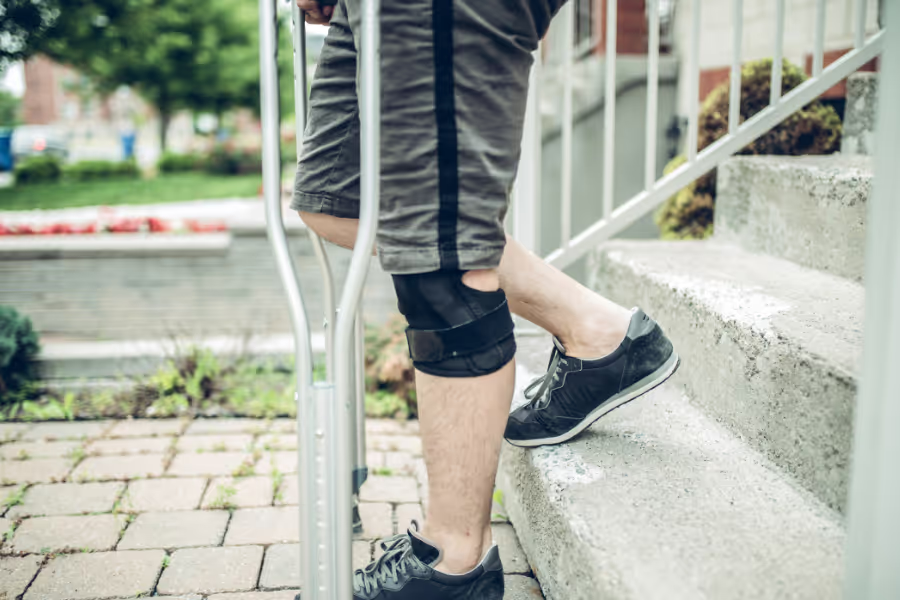
Crutches are typical for about 2 to 6 weeks, and many surgeons use a brace for the first several weeks to protect the healing graft. Your exact protocol depends on your graft type and whether any other repairs were done at the same time.
Does a meniscus repair make ACL recovery longer?
Often, yes. When a meniscus repair is done alongside the ACL reconstruction, surgeons usually limit weight-bearing and knee bending early on, which can add a few weeks to the timeline before you progress.
How long does it take to fully recover from ACL surgery?
Full recovery generally takes 9 to 12 months, and high-impact athletes may need up to two years to reach their previous level. Everyday activities return much sooner, usually within the first few months.
Medical disclaimer: This article is for informational purposes only and is not a substitute for professional medical advice. Always follow your surgeon and physiotherapy team's instructions, and seek urgent care for emergency symptoms. This draft should be reviewed by a qualified medical professional before publication.