


.png)


What is revision knee replacement
A primary knee replacement is the first time a surgeon replaces the damaged joint surfaces with metal and plastic parts.
A revision knee replacement means you’ve already had a knee replacement, but something has gone wrong or worn out, and the surgeon needs to repair, exchange, or replace some or all of the components.
Think of your knee replacement like a set of parts in a machine:
- If a part loosens, wears down, gets infected, or the knee becomes unstable, the machine can start to hurt, swell, or stop working properly.
- Revision surgery is the “rebuild” to get the knee working again.
Common reasons for revision
- Loosening: The parts lose their bond to bone (can cause pain with walking).
- Infection: Germs around the implant (may cause swelling, drainage, fevers, or persistent pain).
- Instability: The knee feels like it gives way.
- Stiffness (arthrofibrosis): Scar tissue limits motion.
- Wear of the plastic liner: The cushion between metal parts wears out.
- Fracture around the implant: A break in the bone near the replacement.
- Malalignment or wrong sizing/position: The knee mechanics are off, leading to pain or early failure.
What actually happens
Revision can range from simpler to more complex:
- Liner exchange only: Replace the plastic insert (when metal parts are solid and well positioned).
- Partial revision: Replace one side (femur or tibia component).
- Full revision: Replace most or all parts, sometimes using longer stems, augments, cones, or a more constrained design for stability.
- Infection revisions: Sometimes done in two stages (remove implant + spacer/antibiotics, then re-implant later), depending on the infection and surgeon plan.
How much does revision knee replacement surgery cost (Canada and the United States)?
How we estimate surgical costs: Ranges are estimates drawn from our network of 100+ private clinics and surgeons, and they're intentionally broad. Two people seeking the same procedure can receive very different quotes depending on province, surgeon, facility fees, and case complexity. Published prices aren't always comparable either—some are complete bundles, others exclude consultation, imaging, or follow-up. Only the clinic can give you an exact, itemized quote.
Exact pricing depends on what type of revision you need (liner exchange vs full revision vs staged infection), implant complexity, length of hospital stay, and where you have it done. Always ask for a written, itemized quote.
Cost in Canada
Typical range: $28,000 - $60,000+
- simpler revisions (like isolated liner exchange) may be lower
- complex revisions with specialized implants, bone loss management, or longer stays can be higher
Cost in the United States
Typical range: CA$42,600 - CA$100,000+
Prices vary widely by hospital, region, insurance status, and implant complexity.
What’s usually included
- surgeon and anaesthesiologist fees
- facility/OR fees and nursing care
- revision implant components (confirm what’s included)
- standard medications and supplies while in the facility
- immediate post‑operative care and follow-up visits (varies)
What’s often not included
- pre‑op imaging (X‑rays, CT, bone scan) and lab work done elsewhere
- infection workup costs (aspiration, cultures, special blood tests) if not bundled
- extended hospital stay, rehab facility stay, or home nursing
- outpatient physiotherapy after discharge
- medications after you return home
- travel and accommodation if out‑of‑province/state
Tips to compare quotes
Ask whether your quote is a global bundle. Request line items for: surgeon, facility, anaesthesia, implant costs, hospital stay/overnights, imaging, follow-ups, and what triggers extra charges.
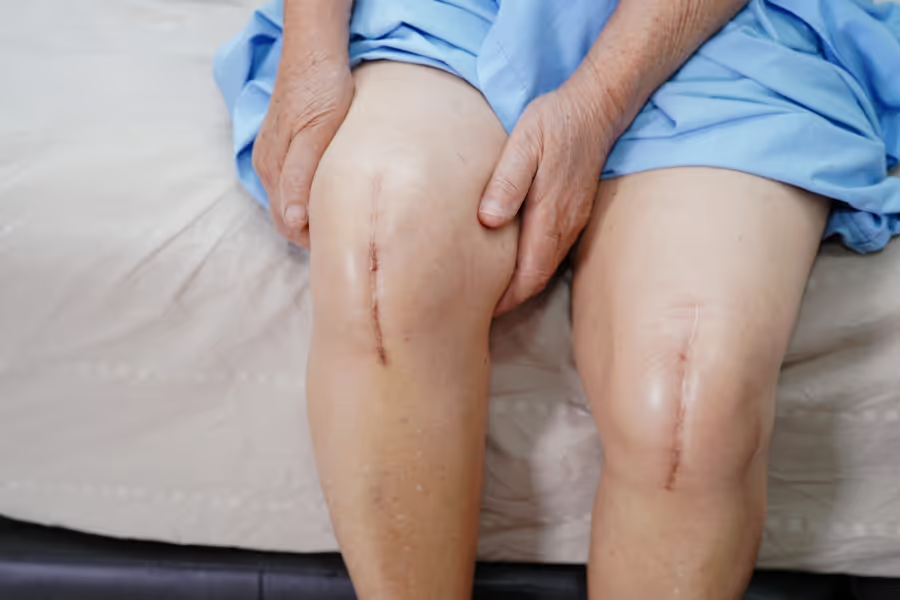
Revision knee replacement: what to expect
Revision cases vary a lot, so timing and steps depend on what needs fixing. Many revision procedures take 2–4+ hours of operating time (complex revisions can take longer). Expect additional time at the centre for check‑in, anaesthesia, and recovery.
Basic steps
- Check‑in and confirmation
The team confirms the plan, reviews imaging, and does safety checks (correct knee, implants planned, allergies, antibiotics). - Anaesthesia
Usually spinal anaesthesia (numbing from the waist down) with sedation, or general anaesthesia. Many centres use nerve blocks and a multimodal pain plan. - Incision and exposure
The surgeon reopens the prior incision (when possible) and carefully enters the joint. - Assess the current implant
They check which parts are stable, what is loose, and whether there is infection or bone loss. - Remove and replace what’s needed
- exchange the liner or components
- clean out scar tissue and inflamed tissue
- address bone loss with augments/cones/grafts if required
- place revision components (often with stems) and balance the ligaments for stability
- Test motion and stability
The knee is checked through bending and straightening to confirm alignment and stability. - Close up
The surgeon closes layers, applies a dressing, and sometimes places a drain depending on bleeding and complexity. - Recovery and mobilisation
You’ll start walking with physio when safe—often the same day or next day. Many revision patients stay 1–3 nights (longer if medically needed or if it’s a staged infection plan).
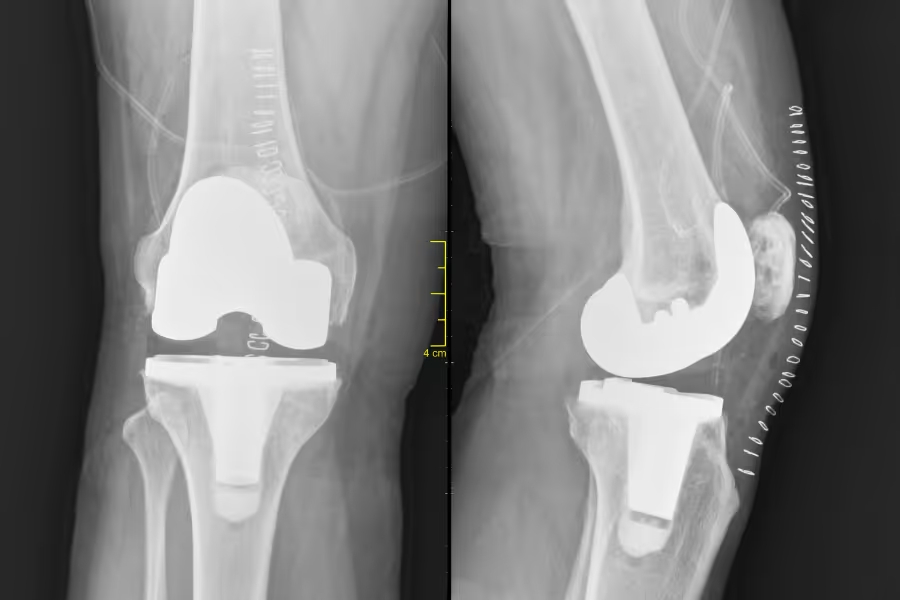
What to expect from the recovery process
Your clinic will provide a detailed recovery plan (physio, pain control, wound care, blood clot prevention, and follow-ups). Revision recovery can be slower than a first knee replacement, especially when bone loss, instability, or infection is involved. This is a general timeline, follow your surgeon's instructions.
Week 1
Reality check: Pain, swelling, bruising, and low energy are common. Walking will feel awkward at first.
Goals: Pain control, swelling reduction, safe transfers, and early motion.
Activities: Short walks with a walker/crutches, basic exercises (quad activation, gentle bending/straightening), ice/elevation, wound care, and blood thinner plan (if prescribed).
Weeks 2–4
Still tough, usually improving.
Goals: Better walking tolerance, improved knee straightening and bending, steady routine with physio.
Activities: Physio, daily exercises, gradual increase in walking distance. Many return to desk work with restrictions (timing varies).
Weeks 5–12
The work phase.
Goals: Build strength, balance, and endurance; reduce reliance on walking aids when safe.
Activities: More challenging strengthening, stationary bike if cleared, longer walks, stair practice.
Months 3–12
Long runway, real payoff.
Goals: Maximise function and confidence; return to preferred activities.
Activities: Continued strengthening and low-impact conditioning. Some symptoms (swelling, stiffness) can improve for many months.
Red flags—call your care team or seek urgent help
- fever, spreading redness, worsening drainage, or a wound that opens
- calf swelling/pain, chest pain, or shortness of breath (possible clot)
- sudden worsening pain, inability to bear weight, or a knee that feels newly unstable
- increasing confusion, severe weakness, or signs of dehydration
What is Surgency?
As a family doctor in the public system, I believe transparency is a form of care. I created Surgency to help my patients struggling on long waitlists who wanted to understand all their options for timely medical attention.
Surgency is a free resource designed to empower and educate—helping you understand private pathways and find accredited surgeons within Canada. I hope Surgency brings you clarity.
Dr. Sean Haffey

Why do Canadians get revision knee replacement surgery done privately?
Shorter wait times
Revision knee replacement is often more complex than a first-time replacement, and public surgical queues can be long. Private pathways can sometimes speed up assessment, imaging, and a surgical date—reducing months of pain and limited mobility.
Choice and control
Going private can let you:
- choose a surgeon who regularly does revision (not just primary replacements)
- choose a clinic/location
- plan timing around work, caregiving, and travel
Peace of mind
You can get clarity on:
- timelines
- what exactly is failing (loosening vs infection vs instability)
- whether you need a liner exchange, partial revision, full revision, or staged infection treatment
- what implants and constraints may be used
Preventing further decline
- ongoing loosening or instability can reduce walking, fitness, and independence
- some problems (like bone loss or fractures) can worsen over time, making surgery harder
- prolonged pain can affect sleep, mood, and overall health
Integrated care
Many private pathways offer streamlined diagnostics and coordinated plans for anaesthesia, pain control, and physiotherapy, with virtual follow-ups if you live far away.
Choosing a surgeon and clinic
Choosing your surgeon is a major benefit of pursuing private surgery. Revision knee replacement is more complex than a first knee replacement, so picking the right team matters.
What to look for
Experience and volume (revision‑specific)
Ask how many revision knee replacements they do each year (not just primary knee replacements).
Revision has a learning curve because it often involves:
- removing well‑fixed components without damaging bone
- managing bone loss (gaps/weak areas)
- restoring stability (ligaments may be stretched or deficient)
- dealing with infection workups and complex planning
- using specialised implants (stems, cones, augments, constrained designs)
Also ask about their case mix:
- liner exchange vs full component revision
- instability revisions
- bone-loss revisions (cones/augments)
- periprosthetic fracture cases
- infection cases (one‑stage vs two‑stage protocols, if offered)
Credentials and training
- Verify licensure with the provincial college (CPSO Ontario, CPSBC BC, CPSA Alberta, CMQ Québec, etc.)
- Look for FRCSC orthopaedic surgeons with knee arthroplasty training
- Bonus (not required): surgeons who focus on arthroplasty/revision, publish outcomes, or participate in arthroplasty societies
For more, read our guide: How to Understand Surgeon Credentials in Canada
Clear diagnosis (don’t skip the basics)
A good revision surgeon won’t jump straight to “we’ll revise it.” They should carefully confirm why your knee is failing.
They should be comfortable assessing:
- loosening vs wear vs instability vs stiffness
- whether pain could be coming from hip/spine/nerve issues
- whether there is infection (this is critical)
In many cases, a proper workup includes:
- updated X‑rays (standing alignment views)
- sometimes CT or bone scan/SPECT‑CT
- bloodwork (often ESR/CRP)
- sometimes a knee aspiration (fluid sample) for cell count and culture
Outcomes and safety (ask for real numbers)
Request recent data (or at least typical rates) for their revision practice:
- infection rate
- blood clots (DVT/PE)
- readmissions within 30–90 days
- unplanned return to the OR
- stiffness/need for manipulation (if applicable)
- re‑revision rate (needing another revision later)
- typical pain/function outcomes and return-to-activity expectations
If they can’t share exact numbers, they should still be able to explain their safety systems and what they see most often.
Surgical plan and implant strategy (revision is not “one size fits all”)
Ask:
- What is your working diagnosis and what are the options (liner exchange, partial revision, full revision, staged infection treatment)?
- What implant approach do you expect: standard vs stems, cones, augments, or a more constrained knee?
- How will you restore alignment and stability?
- What is the plan if you find more bone loss or ligament damage than expected?
Infection pathway (this is a big differentiator)
Revision outcomes depend heavily on how infection is detected and treated.
Ask:
- How do you rule out infection before surgery?
- If infection is found during surgery, what happens next?
- Do you use infectious disease support?
- Do you do one‑stage or two‑stage revisions (and in what situations)?
Facility accreditation and safety systems
Choose accredited centres (e.g., Accreditation Canada / CAAASF) with:
- experienced anaesthesia and internal medicine support when needed
- strong sterile processing and infection prevention standards
- access to bloodwork, imaging, and urgent reassessment
- a clear transfer agreement to a hospital for emergencies
- capacity for overnight stays if your case requires it (many revisions do)
Rehab integration (revision recovery is often longer)
You want a written plan covering:
- weight‑bearing status (some revisions require protection)
- physio milestones for motion and strength
- equipment (walker, brace if needed)
- how follow-ups work if you live out of province (virtual vs in-person)
- who to call after hours for wound issues, fever, or sudden swelling
Transparent pricing (revision implants can change the bill)
Ask for an itemized quote including:
- surgeon fee
- facility/OR fees
- anaesthesia
- implant costs (and which revision components are included)
- hospital stay/overnights (and what triggers extra nights)
- follow-ups, imaging, and labs
- what happens financially if the plan changes (e.g., liner exchange becomes full revision)
Questions to ask at your revision knee consultation
Surgeon and plan
- How many revision knee replacements do you do each year?
- How many cases like mine (same problem: loosening/instability/infection/bone loss)?
- What exactly is failing in my knee replacement, and how confident are you?
Safety and infection
- What tests will you use to rule out infection (ESR/CRP, aspiration, cultures)?
- What are your rates of infection, DVT/PE, readmission, and reoperation?
Technique and implants
- Do I need a liner exchange, partial revision, or full revision—and why?
- Will I need stems/cones/augments or a more constrained implant?
- What is your plan if you find unexpected bone loss or instability?
Recovery and aftercare
- How long will I be in hospital?
- When can I walk, drive, return to desk work vs physical work?
- What does physio look like for the first 12 weeks?
Costs and logistics
- What is included in my quote, and what could increase the price?
- If I’m travelling from another province, which follow-ups can be virtual?
- If a complication happens, where am I treated, and how is it billed?
Signals of a high-quality revision knee program
- The surgeon does revision cases regularly, not rarely
- They insist on a proper diagnosis (including infection rule‑out)
- They explain options clearly and set realistic expectations
- The clinic is accredited and has a clear hospital transfer pathway
- You receive a written rehab plan and clear follow-up process
- Pricing is transparent and itemized, including “what if the plan changes” terms
If you're currently interested in private surgical pathways within Canada, you can click here for a list of providers.

Frequently asked questions
How do I know this surgery is right for me?
Revision surgery is usually considered when:
- your symptoms are significant (pain, swelling, instability, or major stiffness)
- imaging suggests implant failure (loosening, malalignment, fracture, major wear)
- your knee replacement limits daily life despite reasonable non-surgical care
- infection is suspected or confirmed and needs definitive treatment
Revision is not always the answer if the main problem is coming from another source (for example: hip arthritis, back nerve pain, or widespread pain conditions). A good surgeon will help confirm the true pain driver before recommending surgery.
Do I need a referral?
Yes and no—you can reach out to any of the private surgeons listed on Surgency without a referral. Their intake teams are happy to answer questions, explain what they treat, share pricing ranges, and walk you through next steps.
However, to book a formal consultation with the surgeon, you'll typically need a referral from your family doctor or nurse practitioner. Don't have one? Many of the clinics can help coordinate a virtual GP appointment to get the referral paperwork sorted. All surgeons listed on Surgency offer virtual initial consultations, so you don't need to travel until you and the surgeon have agreed on a plan.
Before your consultation, expect the clinic to request relevant medical records and recent diagnostic imaging (X-ray, MRI, CT, ultrasound, lab work, etc.). Having these ready speeds up the process and lets the surgeon give you specific guidance on your very first call.
How do I prepare for surgery?
Your surgeon’s instructions come first—follow their plan if it differs.
Prehab and health optimisation
- Get your knee as straight as possible: Loss of extension makes recovery harder. Ask a physio for safe stretches and positioning.
- Strengthen what you can: Quads, glutes, and core (pain‑guided). Even small gains help.
- Walking habit: Build daily walking (or stationary bike) within your limits to improve fitness for surgery.
- Quit nicotine: Nicotine slows healing and increases infection risk. Stop well before surgery and stay off during recovery.
Medication review
- Share all prescriptions, OTC meds, and supplements.
- Pause blood thinners and certain anti‑inflammatories as directed.
- Ask what to do with diabetes medications and weight-loss drugs (some must be held before anaesthesia).
Infection prevention
- Tell your team about any dental, skin, urine, or respiratory infections.
- Follow antiseptic wash instructions (often night before and morning of).
Home prep
- Clear tripping hazards and set up a main floor “recovery zone”.
- Arrange a walker/crutches if advised, plus a shower chair and toilet riser if needed.
- Stock up on easy meals and a constipation plan (pain meds slow the gut).
Practice ahead
- Practise getting in/out of bed and chairs using your arms.
- If you have stairs, practise with guidance (or plan main-floor living early on).
How much does Surgency cost?
Surgency is free for patients, funded for by surgeons.
Surgeons—who meet our listing criteria—pay a flat fee to list on the Surgency platform. To maintain objectivity, there are no commissions, referral fees, nor any ranking or recommending one surgeon over another.
Surgency is patient-first. Our goal is to make the process of finding a private surgeon as simple as possible. You choose who to contact. Learn more in our Advertising Policy.
What are the risks involved with revision knee replacement surgery?
Your personal risk depends on why you need revision (loosening vs infection vs instability), bone quality, how much has to be revised, and your overall health. Discuss your specific risks with your surgeon.
Common and usually temporary
- pain, swelling, bruising; sleep disruption early on
- stiffness and slower return of strength than a first replacement
- low blood count/anaemia (sometimes needing iron, rarely transfusion)
- temporary numbness around the incision
- nausea/constipation from medications
Less common
- wound healing problems, hematoma (blood collection), or prolonged drainage
- blood clots (DVT/PE)
- instability or persistent pain even after revision
- fracture around the implant during or after surgery
- nerve irritation/injury (uncommon)
Uncommon but important/long‑term
- deep infection requiring further surgery
- implant loosening or failure over time
- significant stiffness (arthrofibrosis) requiring additional treatment
- need for further revision surgery (revision-after-revision)
How you can lower risk
- stop nicotine
- optimise diabetes, sleep apnoea, and nutrition
- treat infections before surgery
- follow blood clot prevention instructions and do your rehab plan consistently
What are the risks of delaying or not pursuing surgery?
Your situation depends on the cause of failure and how quickly it is progressing.
Main risks of delaying (when symptoms are significant)
- Progressive pain and disability: Less walking, worse stairs, poorer sleep, reduced independence.
- More bone loss: Loose components can damage bone, making later surgery more complex.
- Instability and falls: A knee that gives way increases fall and fracture risk.
- Infection progression (if present): Delays can allow infection to spread and damage bone/soft tissue.
- Deconditioning: Weakness and stiffness can make recovery longer and harder.
When watchful waiting can be reasonable
- symptoms are mild and stable
- imaging shows no clear failure
- non-surgical care gives acceptable function
- infection has been carefully ruled out
I still have questions
If you still have questions, please feel free to contact us directly.
Please note: Surgency is not a clinic itself. Nor can we help with emergency situations, or provide personalized medical advice—that is between you and your surgeon. If you are experiencing acute or severe symptoms, please present to your local emergency department or urgent care centre.















.avif)