

.png)


How much does penile enlargement surgery cost?
Cosmetic enlargement is not medically necessary in most cases, so provincial plans such as OHIP, MSP, RAMQ, AHCIP do not cover it. The price depends on the procedure, facility, anaesthesia, surgeon, number of treatment sessions and whether revision care is included.
These ranges are planning estimates, not quotes. Himplant’s manufacturer reports that most patients pay US$10,500–$19,000, with possible additional costs for circumcision, suprapubic fat reduction, laboratory work and travel. Prices advertised outside Canada may be in U.S. dollars.
What is usually included
- Surgeon and standard facility fees.
- Anaesthesia, when required.
- The planned implant or fat-transfer procedure.
- Routine dressings and early follow-up.
What may cost extra
- Consultation, blood work or medical clearance.
- Circumcision or suprapubic fat reduction.
- Traction devices or repeat fat-transfer sessions.
- Travel and accommodation outside Toronto, Markham or Canada.
- Treatment for infection, asymmetry, scarring, implant removal or revision.
Insurance and financing options
- Private health insurance: Plans do not generally cover cosmetic procedures such as penile enlargement.
- Financing plans: Many clinics offer monthly payment options to help spread out the cost. Learn more about your financing options here.
- Medical Expense Tax Credit (METC): The METC cannot be used for purely cosmetic procedures.
Does insurance (OHIP, MSP, AHCIP, RAMQ) cover penile enlargement surgery?
How we estimate surgical costs: Ranges are estimates drawn from our network of 100+ private clinics and surgeons, and they're intentionally broad. Two people seeking the same procedure can receive very different quotes depending on province, surgeon, facility fees, and case complexity. Published prices aren't always comparable either—some are complete bundles, others exclude consultation, imaging, or follow-up. Only the clinic can give you an exact, itemized quote.
No. Cosmetic enlargement intended only to change appearance is not an insured service under OHIP, MSP, RAMQ, nor ACHIP. If surgery is sought for an underlying, diagnosed medical condition, then coverage may apply.
Confirm your individual situation with the treating clinician; see Penile Implant Surgery (ED)
What to expect from the surgery process
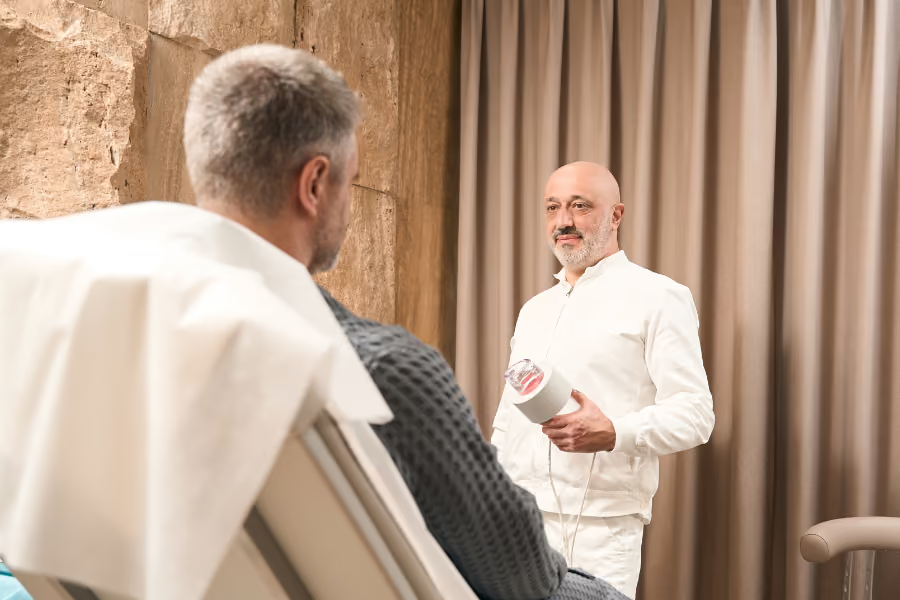
- Consultation and goal-setting. The surgeon reviews measurements, erection quality, medical history and the specific change you want. A careful consultation also screens for unrealistic expectations or body dysmorphic disorder.
- Options and consent. You discuss what may change in flaccid length, erect length and girth, plus alternatives, scars, revision possibilities and the limits of photography.
- Preparation. Follow medication, nicotine, fasting, skin-preparation and transportation instructions.
- Anaesthesia and surgery. Anaesthesia varies by procedure. Fat transfer includes liposuction and injection; ligament release uses an incision near the pubic area; cosmetic implants are placed beneath penile skin.
- Early recovery. Swelling and bruising are expected. You receive wound care, support-garment and activity instructions.
- Follow-up. Attend every scheduled visit. Do not begin traction, sex or exercise until the surgeon confirms it is safe.

Expert Surgeon Insight
Dr. Elterman MD MSc FRCSC: What to expect from the consultation
A consultation for penile prosthesis surgery goes beyond confirming candidacy—it is about aligning treatment with your expectations and long-term satisfaction. We review prior therapies, assess medical and psychosocial factors, and provide a detailed discussion of device options, surgical technique, and recovery. This personalized, high-detail approach ensures patients are fully informed, confident, and appropriately selected for optimal outcomes.
Dr. Dean Elterman is a urologist specializing in penile prosthetics serving patients in Toronto, Ontario. View his profile.
What can I expect from the recovery process?
Recovery depends on the procedure, whether treatments were combined, your health, and the surgeon’s protocol. Ligament release, fat transfer, and a cosmetic implant do not follow identical timelines. Your surgeon’s instructions take priority. Do not begin traction, massage, sex, or exercise without clearance.
Week 1
What it may feel like: Swelling, bruising, tenderness, tightness, and fatigue are common. The penis and nearby pubic or donor area may look uneven while swelling develops. Fat transfer may also cause soreness where fat was removed.
Goals: Protect the surgical area, control pain and swelling, support circulation, and identify early complications.
Activities:
- Take short, frequent walks and rest with the area positioned as instructed.
- Use supportive underwear, wraps, or dressings exactly as directed.
- Keep incisions clean and dry. Do not apply creams or ointments unless approved.
- Take prescribed medicines and follow constipation-prevention advice if using opioid pain medication.
- Avoid sex, masturbation, heavy lifting, cycling, running, and straddling activities.
- Do not judge the final size or contour during early swelling.
Weeks 2–4
The early-healing phase: Bruising and discomfort usually improve, but swelling and unevenness may remain.
Goals: Protect healing tissue, return to light daily activity, and prevent avoidable pressure or friction.
Activities:
- Increase walking gradually.
- Many people return to desk-based work when comfortable, although physically demanding work may require more time.
- Continue wound care and attend the first postoperative review.
- Wear support garments for the period prescribed.
- Do not massage transferred fat, manipulate an implant, or start traction unless the surgeon has given specific instructions.
- Continue to avoid sexual activity and strenuous exercise.
Weeks 5–8
The gradual-return phase: Incisions are usually stronger, but deeper tissues are still healing.
Goals: Restore normal movement without irritating the surgical area and begin procedure-specific care when approved.
Activities:
- The surgeon may allow a phased return to exercise and sexual activity.
- After ligament release, a prescribed traction program may begin or continue. Technique and duration matter; more force is not better.
- After fat transfer, contour and volume can continue changing as swelling resolves and some fat is absorbed.
- After a cosmetic implant, avoid pressure or activity that causes pain, shifting, or skin irritation.
Months 3–6
The settling phase: Scars soften, swelling continues to resolve, and the result becomes easier to assess. Fat-transfer volume may stabilize gradually. Ligament-release results may depend partly on consistent, correctly supervised traction.
Goals: Return to usual activities, monitor the result, and address concerns before they become harder to manage.
Activities:
- Resume heavier exercise only after clearance.
- Continue scar care, traction, or follow-up photography if prescribed.
- Discuss persistent lumps, asymmetry, shortening, discomfort, or implant visibility with the surgeon rather than trying to correct them yourself.
- Keep scheduled follow-ups even if recovery appears normal.
Longer-term expectations
Results can change over time. Transferred fat may be reabsorbed unevenly. Scar tissue may affect lengthening results. A cosmetic implant may remain in place for years but can require removal or revision. Ask when the surgeon considers the result stable and how long follow-up remains available.
Helpful recovery tips
- Plan for privacy and support: Arrange help without feeling obligated to share more detail than you want.
- Wear loose clothing: Reduce friction and pressure during early healing.
- Follow one protocol: Do not combine internet advice with the surgeon’s plan.
- Avoid nicotine: Nicotine can impair circulation and wound healing.
- Protect mental health: Early swelling can look alarming. Contact the clinic for guidance rather than repeatedly measuring or comparing photographs.
Red flags—contact your care team promptly
- Fever, spreading redness, foul drainage, or an opening incision.
- Rapid swelling, severe or increasing pain, or a tense blood collection.
- Darkening, blistering, cold, or pale skin.
- New numbness, difficulty urinating, or worsening erectile function.
- A new lump, marked asymmetry, visible implant edge, movement, or skin breakdown.
- Persistent vomiting, inability to keep fluids down, or medication reaction.
- Chest pain, shortness of breath, or a painful swollen calf.
What is Surgency?
As a family doctor in the public system, I believe transparency is a form of care. I created Surgency to help my patients struggling on long waitlists who wanted to understand all their options for timely medical attention.
Surgency is a free resource designed to empower and educate—helping you understand private pathways and find accredited surgeons within Canada. I hope Surgency brings you clarity.
Dr. Sean Haffey
What is cosmetic penile enlargement surgery?
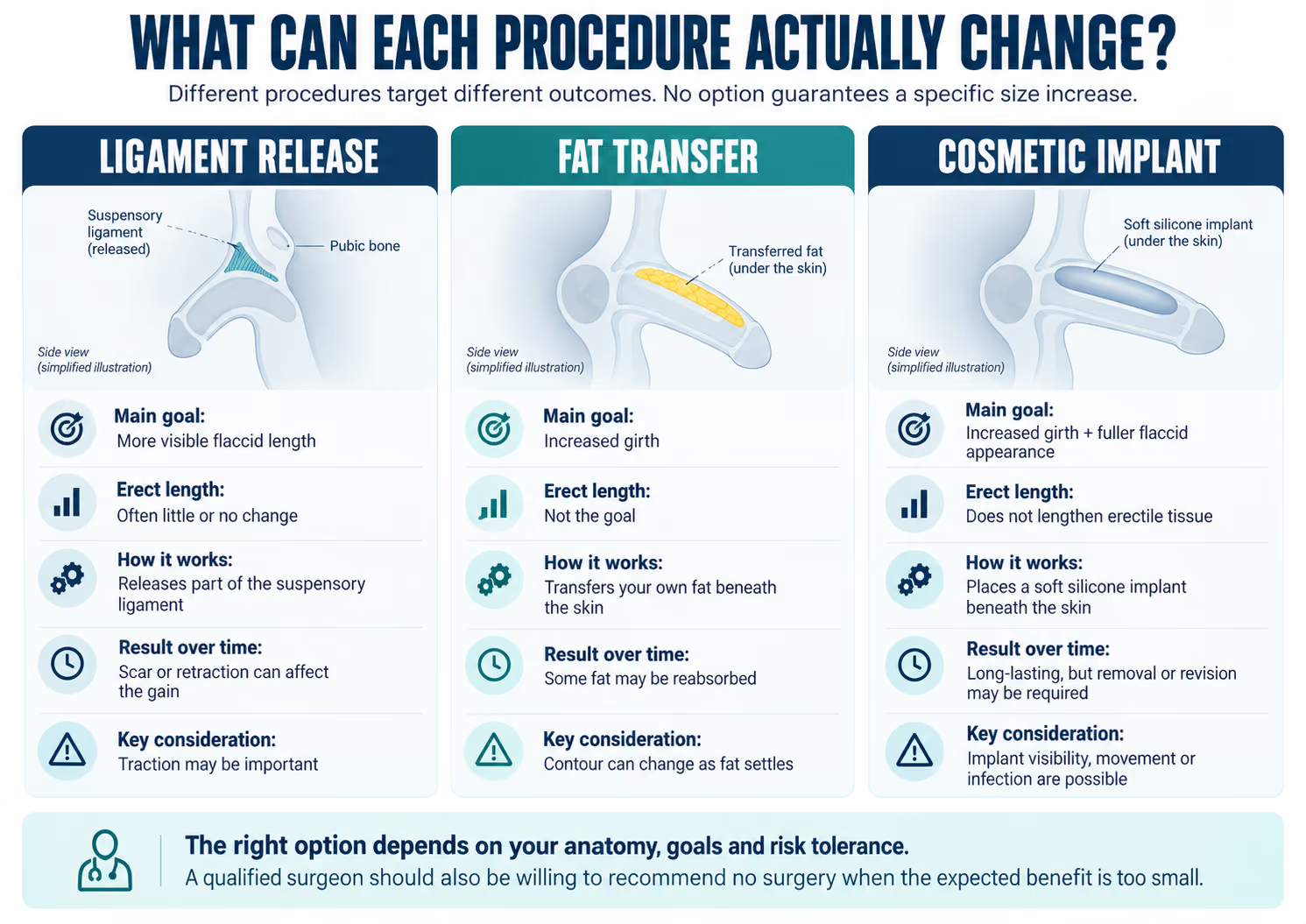
Cosmetic penis enlargement surgery aims to change appearance rather than restore erections. The right option depends on whether the goal is more visible flaccid length, greater girth, correction of a buried penis, or a combination.
Penile lengthening surgery
A surgeon may divide part of the suspensory ligament that anchors the penis to the pubic bone. This can allow more of the shaft to hang outside the body when flaccid. It generally does not lengthen the erectile tissue, and erect-length gains may be small or absent. The erection angle or stability may change. Postoperative traction may be recommended to reduce retraction and scarring.
Girth enhancement with fat transfer
Fat is removed from another body area by liposuction, prepared and injected beneath the penile skin. Some fat is usually reabsorbed. Results may change over time, and more than one session may be needed. Possible concerns include lumps, asymmetry, fat necrosis, infection and an uneven appearance.
Combined length and girth surgery
Some clinics combine ligament release with fat transfer or another girth procedure. Combining treatments may reduce the number of surgical dates, but it also adds variables to recovery and complication management. Ask what each component is expected to achieve separately.
Penuma and Himplant in Canada
Penuma and Himplant refer to a soft silicone cosmetic implant placed beneath penile skin to increase girth and the appearance of flaccid length. It is not an erectile-dysfunction prosthesis and does not create an erection.
Himplant Canada
Himplant is the current brand name used by the manufacturer for its FDA-cleared cosmetic implant in the United States. The manufacturer reports typical U.S. pricing of US$10,500–$19,000, depending on anatomy, surgeon and add-on procedures. Before travelling, confirm current Canadian availability directly with the manufacturer and verify the surgeon’s licence, device training, facility accreditation, follow-up plan and removal or revision policy.
Penuma implant Canada
Penuma is the earlier name commonly used by patients searching for this cosmetic implant. Searchers may still encounter both names. Do not assume that a clinic advertising “Penuma” or “permanent male enlargement” offers the current branded device, is authorized by the manufacturer or operates in Canada. Ask for the exact device name and regulatory status in writing.
Is cosmetic enlargement permanent?
Permanent male enlargement needs careful explanation. Ligament release changes anatomy but can scar or retract. Transferred fat can be reabsorbed. A silicone implant is long-lasting but may need removal or revision because of infection, fluid collection, displacement, contour problems or dissatisfaction. No responsible clinic should guarantee a permanent size increase or a specific measurement.
Choosing a surgeon or clinic
Choosing a surgeon is especially important because cosmetic genital procedures are technically sensitive and revision can be difficult. Look beyond advertising, location, price, and before-and-after images. The surgeon should explain what is realistically achievable, what cannot be changed safely, and whether no surgery is the better option.
Procedure-specific experience
Ask how many cases the surgeon performs each year for the exact procedure you are considering—not cosmetic surgery or urology in general. Relevant experience may include:
- Suspensory-ligament release and postoperative traction management.
- Fat harvesting, processing, and penile fat transfer.
- Penuma or Himplant placement, removal, and revision.
- Correction of buried penis, scarring, asymmetry, or complications from prior treatment.
- Revision surgery after infection, implant movement, fat necrosis, or an unsatisfactory result.
Higher volume does not guarantee a good outcome, but procedure-specific experience helps the surgeon anticipate technical and recovery issues.
Credentials and training
- Verify an active provincial licence, specialty, restrictions, and disciplinary history through the applicable medical college.
- Look for Royal College certification in urology or plastic surgery, with relevant genital-reconstructive, andrology, sexual-medicine, or cosmetic experience.
- Ask where the surgeon learned the technique and how often they perform it now.
- For Penuma or Himplant, verify current device training and authorization directly with the manufacturer.
- Confirm who performs each part of the operation and who provides postoperative care.
Assessment and treatment reasoning
A careful surgeon should assess anatomy, stretched penile length, erection quality, skin and tissue health, scars, pubic fat, expectations, and general health. Ask:
- What specific anatomical issue are we treating?
- Is my goal related to flaccid length, erect length, girth, a buried penis, or body image?
- Which result is realistic, and which result is unlikely?
- Are traction, weight management, counselling, or no treatment reasonable alternatives?
- Could surgery worsen erection angle, stability, sensation, contour, or function?
- How will results be measured consistently before and after surgery?
Surgical plan
Ask the surgeon to explain:
- The exact technique, incision, anaesthesia, and estimated operating time.
- Whether procedures will be combined and why.
- The device or material’s exact name and regulatory status.
- Expected scars and donor-site effects.
- The traction, wrapping, or support-garment protocol.
- The backup plan if anatomy or tissue quality differs from expectations.
- What happens if an implant becomes infected, visible, or displaced.
Outcomes and safety
Request the surgeon’s recent procedure-specific information, where available, including:
- Infection, hematoma, seroma, wound-healing, and skin-injury rates.
- Fat necrosis, lumps, asymmetry, and repeat fat-transfer rates.
- Retraction or change in erection angle after ligament release.
- Implant movement, visibility, removal, and revision rates.
- Typical patient-reported satisfaction and the most common reasons for dissatisfaction.
- The proportion of patients who need an unplanned procedure.
A responsible surgeon should explain that no measurement, cosmetic result, or permanent enlargement can be guaranteed.
Facility accreditation and emergency planning
Confirm that surgery takes place in an appropriately accredited facility. Ask about:
- Anaesthesia credentials and monitoring.
- Infection prevention and sterilization.
- Emergency equipment and trained recovery staff.
- A written hospital-transfer pathway.
- After-hours access to the surgical team.
- Local care arrangements if you travel home after surgery.
Revision and after-care planning
Before paying, clarify:
- Who will assess concerns after hours.
- How long you must remain near the clinic.
- Which follow-ups can be virtual and which must be in person.
- Who manages complications in your home province.
- Whether implant removal, corrective fat transfer, scar treatment, or revision is included.
- Whether the clinic provides your operative report and device details.
Transparent pricing
Request an itemized quote showing:
- Surgeon and assistant fees.
- Facility and anaesthesia fees.
- Implant, fat-transfer, liposuction, or traction-device costs.
- Preoperative tests and prescribed supplies.
- Follow-up visits and complication coverage.
- Additional costs for circumcision, suprapubic fat reduction, repeat treatment, removal, or revision.
Questions to ask at your consultation
Goals and candidacy
- What exact change is realistic for flaccid length, erect length, and girth?
- Which part of my goal cannot be achieved safely?
- Do you think my expectations are realistic?
- What happens if I choose no treatment?
Surgeon and technique
- How many procedures like mine do you perform each year?
- How many removals or revisions do you perform?
- Why do you recommend this technique over the alternatives?
- For Himplant or Penuma, how can I verify your current manufacturer authorization?
Safety and results
- What are your infection, revision, removal, asymmetry, and dissatisfaction rates?
- How do you prevent skin injury, implant movement, fat necrosis, and scarring?
- What result should I expect after swelling settles?
- How often do patients need another procedure?
Recovery and logistics
- When can I return to work, exercise, driving, and sex?
- Will I need traction, massage, wrapping, or a support garment?
- How long must I stay near the clinic?
- How will follow-up work if I travel from Winnipeg, another province, or outside Canada?
Costs
- What exactly is included in the quote?
- What could increase the cost?
- Who pays if I need removal or revision?
- What is the cancellation and refund policy?
Signals of a high-quality program
- Explains limitations and alternatives without pressure.
- Performs the exact procedure regularly and manages revisions.
- Uses consistent measurements and realistic language.
- Operates in an accredited facility with an emergency pathway.
- Provides a written recovery and follow-up plan.
- Gives itemized pricing and a clear complication policy.
- Encourages time to consider the decision rather than creating urgency.
If you're currently interested in private surgical pathways within Canada, you can click here for a list of providers.
Frequently asked questions
How do I know if penile enlargement surgery is right for me?
Cosmetic enlargement is an elective decision. It may be reasonable to explore when the expected cosmetic benefit matters to you, your goals are stable and realistic, and you accept the possibility of scars, complications, incomplete improvement, or revision.
Signs you may be ready for an assessment
- You are an adult in generally good health.
- Your goal is specific: visible flaccid length, girth, or correction of a buried appearance.
- You understand that erect length may not increase.
- You can follow restrictions, traction, wound care, and follow-up.
- You have considered cost, travel, time away from work, and revision risk.
- You would still feel comfortable with the decision if the improvement were modest.
When surgery may not be appropriate
- You expect surgery to fix erectile dysfunction, libido, fertility, or a relationship.
- You need a guaranteed measurement or “permanent” result.
- Your concern changes frequently or causes severe distress despite reassurance.
- A surgeon identifies body dysmorphic disorder or recommends psychological support first.
- You have an active infection, uncontrolled medical condition, poor circulation, or another risk that makes healing unsafe.
- You cannot stop nicotine or follow the recovery plan.
- The expected benefit is too small relative to the risk.
Clarify the underlying concern
A buried penis, Peyronie’s disease, erectile dysfunction, weight-related concealment, scarring, or a normal penis with body-image distress may require very different care. A qualified clinician should identify the actual problem before recommending a cosmetic procedure.
A penile prosthesis is a different operation used to treat erectile dysfunction. If erections are the main concern, read our guide to Penile Implant Surgery (ED).
Do I need a referral?
Yes and no—you can reach out to any of the private surgeons listed on Surgency without a referral. Their intake teams are happy to answer questions, explain what they treat, share pricing ranges, and walk you through next steps.
However, to book a formal consultation with the surgeon, you'll typically need a referral from your family doctor or nurse practitioner. Don't have one? Many of the clinics can help coordinate a virtual GP appointment to get the referral paperwork sorted. All surgeons listed on Surgency offer virtual initial consultations, so you don't need to travel until you and the surgeon have agreed on a plan.
Before your consultation, expect the clinic to request relevant medical records and recent diagnostic imaging (X-ray, MRI, CT, ultrasound, lab work, etc.). Having these ready speeds up the process and lets the surgeon give you specific guidance on your very first call.
How do I prepare for surgery?
Your surgeon’s instructions come first. Preparation should reduce infection and bleeding risk, support wound healing, and make early recovery easier.
Health optimization
Stop nicotine
Nicotine reduces blood flow and can increase skin, wound, infection, and scarring problems. Ask how long you must be nicotine-free before and after surgery and whether testing is required.
Review medical conditions
Work with your care team to manage diabetes, blood pressure, sleep apnea, heart or lung disease, and bleeding problems. Report any urinary, skin, or genital infection before surgery.
Review medicines and supplements
Provide a complete list of prescriptions, non-prescription medicines, cannabis products, vitamins, and supplements. Follow specific instructions for blood thinners, diabetes medicines, anti-inflammatory drugs, and herbal products. Do not stop prescribed medication without medical guidance.
Prepare your home
- Set up a clean recovery area with medicines, water, dressings, and a phone within reach.
- Choose loose trousers or shorts and supportive underwear recommended by the clinic.
- Prepare simple meals and supplies for constipation prevention.
- Arrange help with pets, children, shopping, or physical chores.
- Ask whether ice, elevation, wraps, or a specific sleep position are recommended.
Plan transportation and privacy
You cannot drive yourself home after sedation or general anaesthesia. Arrange an adult escort and ask whether someone should stay with you. Decide what you are comfortable sharing with an employer, family member, or caregiver while still ensuring safe support.
Plan work, travel, and follow-up
- Discuss time away from desk work and physical work separately.
- Do not schedule important travel, sport, or sexual activity during the restricted period.
- If travelling for surgery, ask how long you must remain nearby and when flying is safe.
- Identify a local clinician who can help if a complication occurs after you return home.
- Confirm which follow-ups are included and whether they are in person or virtual.
Surgery-day preparation
- Follow fasting and medication instructions exactly.
- Shower with an antiseptic wash if directed.
- Do not shave the surgical area unless instructed; small cuts can increase infection risk.
- Bring photo identification, medication list, and requested records.
- Wear loose clothing and leave valuables at home.
- Know how to reach the surgical team after hours.
How much does Surgency cost?
Surgency is free for patients, funded for by surgeons.
Surgeons—who meet our listing criteria—pay a flat fee to list on the Surgency platform. To maintain objectivity, there are no commissions, referral fees, nor any ranking or recommending one surgeon over another.
Surgency is patient-first. Our goal is to make the process of finding a private surgeon as simple as possible. You choose who to contact. Learn more in our Advertising Policy.
What are the side effects or risks of penile enlargement surgery?
Your personal risk depends on the procedure, whether treatments are combined, your anatomy and circulation, nicotine use, diabetes, previous surgery, facility, and surgeon’s experience. Cosmetic surgery can cause functional as well as cosmetic complications.
Common and usually temporary
- Pain, swelling, bruising, and tenderness.
- Temporary numbness or altered sensitivity.
- Firmness, tightness, or uneven appearance while tissues heal.
- Scarring at penile, pubic, or fat-donor incisions.
- Anxiety or dissatisfaction before swelling has settled.
General surgical risks
- Infection requiring antibiotics, drainage, removal, or further surgery.
- Bleeding, hematoma, or seroma.
- Poor wound healing, opened incisions, or thick scars.
- Skin injury or reduced blood supply, including tissue loss in severe cases.
- Medication, anaesthesia, heart, lung, allergic, or blood-clot complications.
- Persistent pain or altered sensation.
Risks of ligament release
- Little or no improvement in erect length.
- Retraction or loss of the initial visible gain as scar tissue forms.
- A lower or less stable erection angle.
- Scar tethering, asymmetry, or dissatisfaction.
- Need for prolonged traction or revision.
- Injury to nearby structures, although uncommon.
Risks of fat transfer
- Partial or substantial fat reabsorption.
- Lumps, oil cysts, calcification, or fat necrosis.
- Uneven girth, asymmetry, or contour change.
- Need for repeat fat transfer or corrective treatment.
- Infection or skin compromise.
- Donor-site bruising, contour irregularity, or scarring.
Risks of a cosmetic implant
- Visible or palpable implant edges.
- Implant movement, folding, asymmetry, or an unnatural contour.
- Fluid collection, infection, or delayed wound healing.
- Pressure on the skin, erosion, or exposure of the implant.
- Scar capsule, tightness, pain, or sensation changes.
- Need for implant removal or replacement.
- A different appearance after removal because of scar tissue or stretched skin.
How you can lower risk
- Choose a licensed, procedure-experienced surgeon and accredited facility.
- Stop nicotine for the required period.
- Optimize diabetes and other health conditions.
- Follow medicine, fasting, wound-care, and activity instructions.
- Do not begin traction, massage, or sex early.
- Attend follow-up and report warning signs promptly.
- Keep copies of the operative report and implant details.
Can surgery guarantee a specific size?
No. Results depend on anatomy, healing, scar formation, fat survival, device sizing, and measurement method. Be cautious of guaranteed gains, “risk-free” claims, or pressure to pay quickly.
I still have questions
If you still have questions, then feel free to contact us directly.
Please note: Surgency is not a clinic itself. Nor can we help with emergency situations, or provide personalized medical advice—that is between you and your surgeon. If you are experiencing acute or severe symptoms, please present to your local emergency department or urgent care centre.

.avif)