


.png)

What is MCL reconstruction surgery?
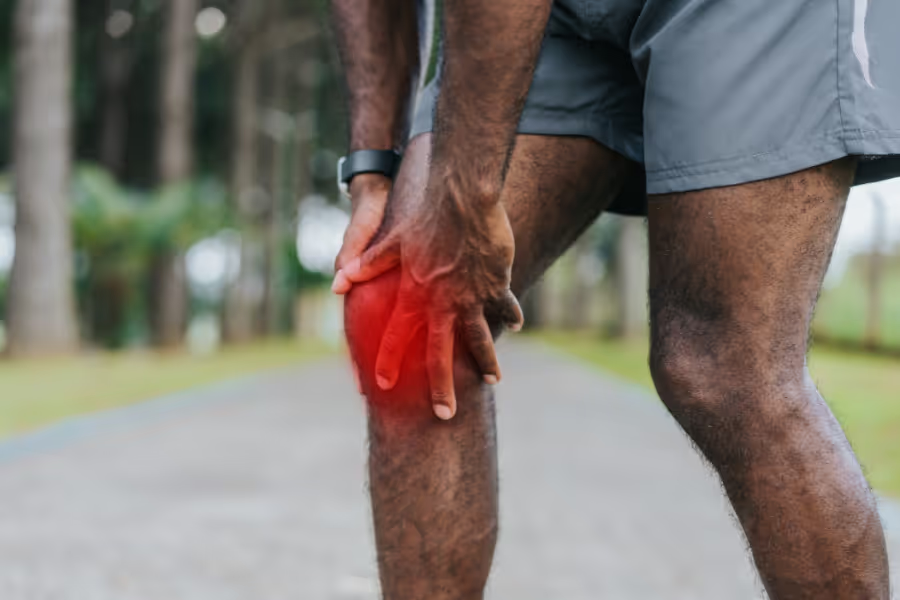
MCL surgery (which includes MCL repair or MCL reconstruction) is a procedure for the knee that restores stability by fixing a completely torn medial collateral ligament (the band of tissue on the inner side of your knee).
Think of your knee ligaments like thick ropes holding the bones together. The MCL sits on the inside of the knee and stops the joint from bending too far inward. When you suffer a severe twisting injury or a hit to the outside of the knee, this rope can snap. This causes inner knee pain, swelling, and a feeling that your knee is "giving out" or wobbling when you walk or pivot.
What actually happens
- MCL repair (fix the original): The surgeon reattaches your torn ligament directly to the bone, often using strong stitches or bone anchors. Sometimes an "internal brace" (a strong surgical tape) is added for extra support.
- MCL reconstruction (make a new one): If the ligament is too shredded to stitch back together, the surgeon uses a piece of tendon (a graft from your own body or a donor) to build a brand-new MCL.
Why do it?
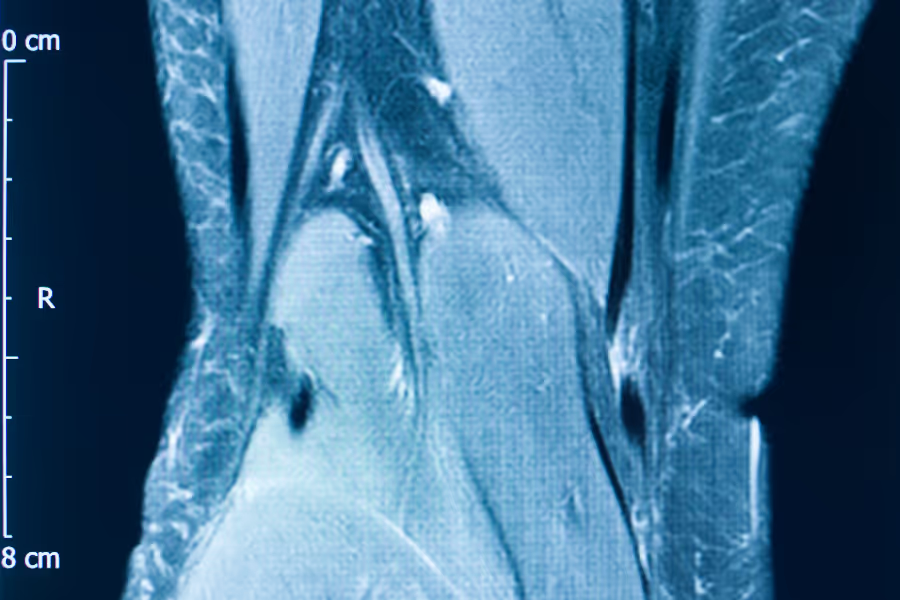
When clinical exams and MRI findings confirm a severe (Grade 3) tear that isn't healing with a brace—or if you have multiple torn ligaments (like an ACL + MCL tear)—surgery restores the knee’s stability so you can walk, run, and return to sports without your knee giving way.
How much does private MCL reconstruction surgery cost in Canada?
How we estimate surgical costs: Ranges are estimates drawn from our network of 100+ private clinics and surgeons, and they're intentionally broad. Two people seeking the same procedure can receive very different quotes depending on province, surgeon, facility fees, and case complexity. Published prices aren't always comparable either—some are complete bundles, others exclude consultation, imaging, or follow-up. Only the clinic can give you an exact, itemized quote.
Exact prices depend on the complexity of the tear, whether it is a repair or a full reconstruction, the type of graft and hardware used (bone anchors, screws), and where you have it done. Always ask for a written, itemized quote.
Cost in Canada (private)
Typical range: $12,000 - $25,000+
Note: If multiple ligaments are repaired at the same time (e.g., ACL and MCL), the cost will be higher.
Cost in the United States
Typical range: CA$20,000 - CA$45,000+
What’s usually included
- Surgeon fee and anaesthesia services.
- The surgical hardware/implants (anchors, screws, internal bracing tape).
- Accredited facility/OR time, nursing, and standard disposables.
- Basic intra‑op supplies.
- Immediate recovery care (PACU) and early follow‑up visit(s).
What’s often not included
- Initial consults and pre‑op imaging (MRI, X‑rays) done outside the clinic.
- Extra procedures discovered during surgery (like fixing a torn meniscus).
- Custom knee braces required for recovery (these can be expensive but are sometimes covered by private insurance).
- Prescriptions after discharge (pain, nausea, stool softeners).
- Post‑op physiotherapy beyond the first visits.
- Travel and accommodation if you’re out‑of‑province/state.
Tips to compare quotes
Ask if it’s a global bundle and request line items for: surgeon, facility, anaesthesia, implants/hardware (device cost), imaging, follow‑ups, and what triggers extra charges (e.g., if they need to fix cartilage damage while they are inside the knee).
Insurance and financing options
- Private health insurance: Some plans may cover part of the costs, such as hospital fees or implants. It’s important to check your policy directly.
- Financing plans: Many clinics offer monthly payment options to help spread out the cost. Learn more about your financing options here.
- Medical Expense Tax Credit (METC): This is a non-refundable credit that reduces your taxes when you pay out-of-pocket for eligible medical expenses. Learn more about how to claim METC for private surgeries.

MCL surgery: what to expect
Typical isolated MCL surgery often takes about 1–2 hours of operating time depending on whether it is a repair or a full reconstruction. Add time at the centre for check‑in, anaesthesia, and recovery (usually a few extra hours). Complex cases involving other ligaments (like the ACL) take longer.
Basic steps
1. Check‑in and confirmation
You meet the team, confirm which knee is being operated on, review imaging, and go over the plan. Safety checks are done (including marking the correct leg).
2. Anaesthesia
Usually general anaesthesia (you’re fully asleep), often combined with a regional nerve block to numb the leg and help with pain control after you wake up.
3. Position and prep
You’re positioned on your back. The leg is cleaned and draped sterilely. A tourniquet is often placed on the thigh to minimize bleeding.
4. Incision and exposure
An incision is made on the inner side of your knee. The surgeon carefully moves tissues aside to find the torn MCL while protecting nearby nerves and blood vessels.
5. Repair or reconstruction
For a repair, the torn ligament is stitched back to the bone using anchors. For a reconstruction, a tendon graft is passed through small tunnels drilled into the thigh and shin bones, and secured in place with screws or buttons.
6. Check stability
The surgeon moves your knee through its range of motion to ensure the new or repaired ligament is tight and the joint is stable.
7. Wash and close up
The joint is rinsed out. Layers of tissue and skin are closed with stitches or staples. A sterile dressing is applied.
8. Bracing
Your leg will be placed in a hinged knee brace locked in a specific position to protect the healing ligament.
9. Wake‑up and instructions
You recover in the post‑anaesthesia care unit, begin gentle movement when safe, and receive wound‑care and crutch instructions. Almost all patients go home the same day.
What can I expect from the MCL reconstruction surgery recovery process?
Every knee is different—follow your surgeon’s plan. Steady, smart progress with a physiotherapist beats pushing too hard.
Week 1
Reality check: Knee swelling, stiffness, and pain are very common. Your leg will feel heavy and clumsy. The nerve block will wear off in the first day or two, causing a spike in pain.
Goals: Control pain and swelling, protect the repair, and learn to walk safely with crutches.
Activities: Keep the leg elevated above your heart. Ice frequently. You will be in a hinged knee brace. Follow your surgeon's strict weight-bearing rules (you may only be allowed to lightly touch your toe to the ground).
Weeks 2–4
Still annoying but improving.
Goals: Reduce swelling, start regaining safe range of motion, and activate the thigh muscles (quadriceps).
Activities: Your surgeon will gradually unlock your brace to allow more bending. Start prescribed physio. You will likely transition from two crutches to one, then none, as allowed. Stitches/staples removed if needed.
Weeks 5–8
The work phase.
Goals: Walk normally without a limp, regain full knee bending, and build muscle.
Activities: The brace may be discontinued or transitioned to a lighter sports brace. Upright stationary bike; gentle closed-chain strengthening (like partial squats or leg presses). Avoid twisting or pivoting movements.
Weeks 9–12
Confidence building.
Goals: Near‑normal daily activity; gradual fitness and balance recovery.
Activities: Progress strengthening, balance work, and mobility with physio guidance. Light jogging or straight-line running may begin toward the end of this phase if cleared.
Months 3–6+
Back to sport and life.
Goals: Return to usual routines; sport‑specific training (cutting, jumping, pivoting).
Activities: Add impact and agility drills only with explicit clearance. Full return to contact sports usually happens around the 6 to 9-month mark.
Helpful tips
- Ice is your friend: Use it regularly after physio to calm the knee down.
- Quad control: Focus hard on the early exercises to "wake up" your thigh muscles—this protects the knee.
- Bowel plan: Pain meds can constipate—hydrate and use fibre/stool softeners if needed.
- Stick to the brace rules: The MCL takes time to heal to the bone; cheating on the brace can stretch it out and ruin the surgery.
Red flags—call your care team
- Fever, spreading redness, or foul/yellow drainage from the incision.
- Calf pain, swelling, or tenderness (signs of a potential blood clot).
- Sudden, severe worsening of knee pain or a feeling that the surgery "popped" or failed.
- Chest pain or sudden shortness of breath.
What is Surgency?
As a family doctor in the public system, I believe transparency is a form of care. I created Surgency to help my patients struggling on long waitlists who wanted to understand all their options for timely medical attention.
Surgency is a free resource designed to empower and educate—helping you understand private pathways and find accredited surgeons within Canada. I hope Surgency brings you clarity.
Dr. Sean Haffey

Why do Canadians choose to have MCL surgery done privately?
Shorter wait times
Public wait lists for orthopaedic consults, MRIs, and OR time can be long—especially for sports injuries that aren't deemed absolute emergencies. Private centres can line up assessment and surgery in weeks rather than months, cutting time spent dealing with knee instability, pain, and being sidelined from your active life.
Choice and control
Going private can let you:
- Pick your surgeon (a sports medicine or orthopaedic knee specialist) based on ligament reconstruction experience and case volume.
- Schedule around work, school semesters, sports seasons, or travel.
- Get a clear plan on whether an MCL repair vs. reconstruction is best, and what graft type they recommend.
Peace of mind
You know who’s operating, when it’s happening, and what surgical technique they’ll use. Predictable dates make it easier to arrange time off, travel, and the crucial post‑op physiotherapy.
Preventing further decline
- Function: Ongoing knee instability can lead to awkward walking, muscle wasting (atrophy) in the thigh, and chronic joint pain.
- Joint protection: An unstable knee puts extra stress on the meniscus (cartilage pads) and other ligaments. Fixing the MCL prevents further damage inside the knee.
- Performance and wellbeing: Faster stability means a quicker return to sports, protecting your mental health and physical fitness.
Integrated care
Private pathways may offer streamlined imaging, advanced surgical tools, and coordinated anaesthesia/pain/physio plans—with virtual follow‑ups if you live far away.
Choosing a surgeon and clinic
Choosing your surgeon is a major benefit of pursuing private surgery. Here’s how to choose wisely for MCL repair or reconstruction.
What to look for
Experience and volume (knee ligament–specific)
Ask how many knee ligament surgeries they do each year (specifically multi-ligament or MCL reconstructions, not just routine meniscus scopes).
MCL surgery has a learning curve because:
- the ligament must be tensioned perfectly so the knee isn't too tight or too loose.
- outcomes depend on choosing the right procedure (repairing the old ligament vs. building a new one).
- it is often combined with other injuries (like ACL tears) that require complex planning.
Also ask about their case mix:
- isolated MCL vs. multi-ligament cases (e.g., ACL + MCL)
- repair vs. reconstruction
- use of internal bracing (surgical tape to reinforce the repair)
Credentials and training
- Verify licensure with your provincial college (CPSO Ontario, CPSBC BC, CPSA Alberta, CMQ Québec, etc.).
- Look for FRCSC-certified orthopaedic surgeons with fellowship training in sports medicine or knee surgery.
- Bonus: Surgeons who treat high-level athletes or participate in orthopaedic sports societies often have extensive ligament experience.
For a more in-depth guide read, How to Understand Surgeon Credentials in Canada
Outcomes and safety (ask for real numbers)
Request typical data for their practice:
- Infection rate
- Stiffness / loss of motion rates (the MCL is notorious for getting stiff if rehab isn't managed perfectly)
- Re-tear / failure rate (residual instability requiring a second surgery)
- Patient-reported outcomes: return-to-sport rates and typical timelines
Clear indications and alternatives
Make sure they confirm you’re a good candidate for surgery. Note: This shouldn't be a problem, as Canadian surgeons are bound to act in the patient's best interests.
A careful surgeon should explicitly assess:
- whether the tear is truly a Grade 3 (complete) tear that has failed bracing and physio.
- whether your instability is affecting your daily life or ability to work/play sports.
- whether there is damage to other structures (meniscus, ACL) that need fixing at the same time.
They should also compare surgery to:
- continued non-operative care with a custom brace and aggressive physio.
Surgical plan and graft strategy
Ask:
- Are you planning a repair or a reconstruction? Why?
- If reconstruction, what type of graft will you use (hamstring, allograft/donor tissue, etc.) and why is it best for my lifestyle?
- Will you use an "internal brace" (suture tape) for extra support?
- If you find a meniscus tear while you are in there, what is your plan to fix it?
Imaging and planning
Good programs use imaging to confirm candidacy:
- MRI to see the ligament tear, meniscus, and bone bruising.
- X-rays (sometimes stress X-rays) to look at bone alignment and arthritis.
Confirm the imaging findings match:
- your specific feelings of instability (the knee "opening up" on the inside).
Facility accreditation and safety systems
Choose accredited centres (e.g., Accreditation Canada / CAAASF) with:
- experienced anaesthesia teams (often using nerve blocks for post-op pain).
- modern arthroscopic (camera) equipment.
- a clear transfer pathway to a hospital if needed.
Rehab integration (ligament surgery requires serious rehab)
You want a written plan for:
- brace use (type of brace, when to lock/unlock it, how long to wear it).
- weight-bearing status (crutches timeline).
- physiotherapy timeline (when to start stretching, when to start strengthening).
Transparent pricing
Request an itemized quote including:
- surgeon fee
- facility/OR fees
- anaesthesia
- surgical hardware/implants (anchors, screws, grafts)
- basic imaging
- follow-ups (and whether virtual follow-ups are included)
Clarify add-ons:
- extra OR time if other injuries (like meniscus tears) are found and fixed.
- cost of the post-op hinged knee brace.
Questions to ask at your MCL surgery consultation
Surgeon and plan
- How many MCL repairs/reconstructions do you perform yearly?
- Am I a candidate for a direct repair, or do I need a full reconstruction with a graft?
- If a reconstruction, what graft source do you recommend for my activity level?
Technique and safety
- Will you use an internal brace (suture tape) to reinforce the ligament?
- What are your rates of infection and post-op joint stiffness?
- If you find meniscus damage during the scope, how will that change my recovery?
Recovery and after-care
- What kind of brace will I need, and how long will I be on crutches?
- When can I drive, return to work, and get back to my specific sport?
- What symptoms should prompt an urgent call (calf pain, severe swelling)?
Costs and logistics
- What exactly is included in my quote (especially the hardware/anchors)?
- What could increase the cost (fixing a meniscus, custom bracing)?
- How are follow-ups handled if I live out of province?
Signals of a high-quality knee ligament program
- Performs ligament reconstructions regularly and explains graft choices clearly.
- Shares complication rates openly and sets realistic expectations for the long rehab.
- Operates in an accredited facility with experienced anaesthesia.
- Provides a strict, written protocol for brace use and physiotherapy.
- Offers transparent, itemized pricing—including hardware and clear terms for treating concurrent injuries (like meniscus tears).
If you're currently interested in private surgical pathways within Canada, you can click here for a list of providers.
Frequently asked questions
How do I know if MCL reconstruction surgery is right for me?
MCL surgery is a specific solution for severe inner-knee instability. It is right for patients whose knee consistently gives way or feels loose despite a dedicated attempt at resting, bracing, and physiotherapy. Consult with your doctor or surgeon for tailored advice for your unique situation.
Signs MCL surgery might be right for you
- Chronic instability: Your knee frequently "buckles," "gives out," or feels wobbly when walking on uneven ground, pivoting, or playing sports.
- The tear is severe: MRI confirms a Grade 3 (complete) tear that has pulled far away from the bone or involves multiple ligaments (like an ACL and MCL tear together).
- Failed conservative treatment: You have tried wearing a hinged brace and doing physiotherapy for several months, but the knee is still painful and unstable.
- You want to return to cutting/pivoting sports: High-demand activities (soccer, skiing, hockey) require a very stable MCL.
When it might not be the right option (or conservative care is better)
- Mild or moderate tears: Grade 1 and most Grade 2 tears heal very well on their own with a proper brace and physio. Surgery is rarely needed.
- Severe knee arthritis: If the joint is already heavily worn out (bone-on-bone arthritis), fixing the ligament may not relieve your pain. A knee replacement might be a better long-term option.
- You don't have time for rehab: Surgery is only step one. If you cannot commit to months of strict bracing and physiotherapy, the surgery may fail or your knee will become permanently stiff.
When to get assessed sooner
- A "locked" knee: You cannot straighten or bend your knee at all (often means a piece of meniscus is caught in the hinge).
- Multiple torn ligaments: If your knee is wildly unstable because the ACL, MCL, and/or other ligaments are all torn, early assessment is crucial for surgical planning.
Do I need a referral?
Yes and no—you can reach out to any of the private surgeons listed on Surgency without a referral. Their intake teams are happy to answer questions, explain what they treat, share pricing ranges, and walk you through next steps.
However, to book a formal consultation with the surgeon, you'll typically need a referral from your family doctor or nurse practitioner. Don't have one? Many of the clinics can help coordinate a virtual GP appointment to get the referral paperwork sorted. All surgeons listed on Surgency offer virtual initial consultations, so you don't need to travel until you and the surgeon have agreed on a plan.
Before your consultation, expect the clinic to request relevant medical records and recent diagnostic imaging (X-ray, MRI, CT, ultrasound, lab work, etc.). Having these ready speeds up the process and lets the surgeon give you specific guidance on your very first call.
What are the risks if I delay or don't get MCL surgery?
Your situation depends on symptom severity, whether you have other torn ligaments, and how much the instability affects your life.
Main risks of delaying (when symptoms are significant)
The 'Window of Opportunity' closes (for repairs)
- Losing the chance to repair: A freshly torn MCL can often be stitched directly back to the bone. If you wait months, the tissue scars and shrinks, making a direct repair impossible. You will then require a more complex reconstruction using a tendon graft.
Compensatory knee damage
- Meniscus tears: An unstable knee wobbles. This abnormal sliding puts massive shearing force on the meniscus (the shock absorbers). Every time the knee gives out, you risk tearing the meniscus.
- Early arthritis: Chronic instability causes the cartilage to wear out unevenly and prematurely, leading to osteoarthritis years earlier than normal.
Muscle atrophy and altered mechanics
- Avoiding movement and putting weight on the unstable leg leads to severe wasting of the thigh muscles (quadriceps).
- Limping alters your gait, which can cause secondary pain in your hip, back, or the opposite knee.
When watchful waiting can be reasonable
- It's a partial tear: Grade 1 and 2 tears usually heal well without surgery.
- Symptoms are mild: You don't have feelings of the knee "giving way" during your normal daily activities.
- You can modify activities: You are willing to stop playing cutting/pivoting sports and switch to straight-line activities (like cycling or swimming) to protect the knee.
When not to delay (seek prompt assessment)
- A "locked" knee: You suddenly cannot straighten or bend the knee (a piece of torn tissue may be caught in the joint).
- Multiple ligament injuries: If your knee is "blown out" (e.g., ACL, MCL, and meniscus all torn), surgical timing is critical to prevent permanent stiffness and instability.
- Severe swelling and inability to bear weight: Especially immediately following an acute injury.
How much does Surgency cost?
Surgency is free for patients, funded for by surgeons.
Surgeons—who meet our listing criteria—pay a flat fee to list on the Surgency platform. To maintain objectivity, there are no commissions, referral fees, nor any ranking or recommending one surgeon over another.
Surgency is patient-first. Our goal is to make the process of finding a private surgeon as simple as possible. You choose who to contact. Learn more in our Advertising Policy.
What are the risks involved with MCL surgery?
Your personal risk depends on the severity of the tear, whether a graft was used, and your general health. Discuss your specific risks with your surgeon.
Common and usually temporary
- Knee pain and swelling: Very common in the first few weeks. The knee will feel tight and full.
- Numbness around the incision: Small skin nerves are cut during the approach. You may have a permanent patch of numb skin near the scar, which usually shrinks over time and isn't a functional problem.
- Bruising: It is normal for bruising to travel down the shin and into the foot due to gravity.
Less common
- Joint stiffness (Arthrofibrosis): The MCL heals with a lot of scar tissue. If you don't follow the physio plan perfectly, the knee can become permanently stiff, losing the ability to fully bend or straighten.
- Infection: Risk is generally low, but requires prompt antibiotics or a joint "washout" if it occurs.
- Blood clots (DVT): Because you are less mobile, a clot can form in the leg veins. You will likely be given a blood thinner or aspirin protocol to prevent this.
Procedure-specific considerations (MCL Surgery)
- Residual instability: The repair or graft may stretch out over time, leaving the knee slightly loose (though usually much better than before surgery).
- Hardware irritation: The anchors or screws used to hold the ligament can sometimes irritate the tissues or cause a palpable bump under the skin.
- Graft site pain (if reconstruction): If a hamstring tendon from your own leg was used, you may have pain or cramping in the back of the thigh during recovery.
Uncommon but important
- Nerve or blood vessel injury: Major nerves and vessels run behind and down the side of the knee. Damage is rare but serious.
- Fracture: The bone can rarely crack when drilling tunnels for a reconstruction.
How you can lower risk
- Respect the brace: The brace protects the healing ligament from stretching. Do not walk without it or unlock it unless your surgeon/physio explicitly tells you to.
- Nail the physio: Finding the balance between protecting the repair and preventing stiffness is the hardest part of MCL recovery. Follow your physiotherapist's guidance exactly.
- Stop nicotine: Essential for bone-to-graft healing.
How do I prepare for MCL surgery?
Your surgeon’s instructions come first—follow their plan if it differs.
Prehab and health optimization
"Prehab" (Physiotherapy before surgery)
- Calm the knee down: Work with a physio to reduce swelling and regain as much bending and straightening as possible before surgery. A stiff knee going into surgery is more likely to be a stiff knee coming out.
- Activate the quads: Practice straight-leg raises to keep the thigh muscles firing.
- Upper body strength: You will be on crutches; strengthen your arms, shoulders, and unaffected leg.
Quit nicotine
- Crucial for healing: Nicotine constricts blood vessels, slowing down skin healing and preventing the ligament (or graft) from integrating into the bone. Stop 4+ weeks before surgery.
Medication review
- Share all prescriptions, OTC meds, and supplements.
- Pause blood thinners and certain anti‑inflammatories as directed.
Home prep
Safe layout
- Clear clutter/rugs to prevent tripping while on crutches.
- Set up a “recovery zone” with essentials (water, meds, phone charger, TV remote) within easy reach.
Bath setup
- A shower chair is highly recommended since you cannot stand on the surgical leg.
- Get a waterproof cast cover or large garbage bags/tape to keep the dressings completely dry.
Clothing
- Loose shorts or very baggy sweatpants: Your leg will be wrapped in bulky bandages and locked in a large hinged brace. Tight pants will not fit over it.
Food, meds, and surgery‑day prep
Meal prep
- Pre-cook and freeze meals, or stock up on easy-to-prep foods. Standing at a stove on crutches is difficult and tiring.
Constipation plan
- Pain meds slow the gut; have stool softeners, high-fibre foods, and hydration ready.
Skin prep
- Use the antiseptic wash as directed (usually night before and morning of).
- Do not shave the surgical leg yourself to avoid micro-cuts and infection risk.
What to bring
- Health card/ID, medication list, and imaging.
- Your post-op hinged knee brace (if provided beforehand) and crutches.
- Very loose shorts/pants to wear home.
Practice ahead
- Adjust your crutches to the correct height and practice walking on flat ground and stairs (up with the good leg, down with the bad leg).
Red flags to know
- Calf pain: Pain, swelling, or heat in the calf of your surgical leg (potential blood clot).
- Wound issues: Spreading redness, foul drainage, or sudden increasing joint swelling.
- Chest pain or shortness of breath: Requires immediate emergency care.
- Severe, unmanageable pain: Pain that breaks through your medication and prevents you from resting.
I still have questions
If you still have questions, then feel free to contact us directly.
Please note: Surgency is not a clinic itself. Nor can we help with emergency situations, or provide personalized medical advice—that is between you and your surgeon. If you are experiencing acute or severe symptoms, please present to your local emergency department or urgent care centre.









.avif)