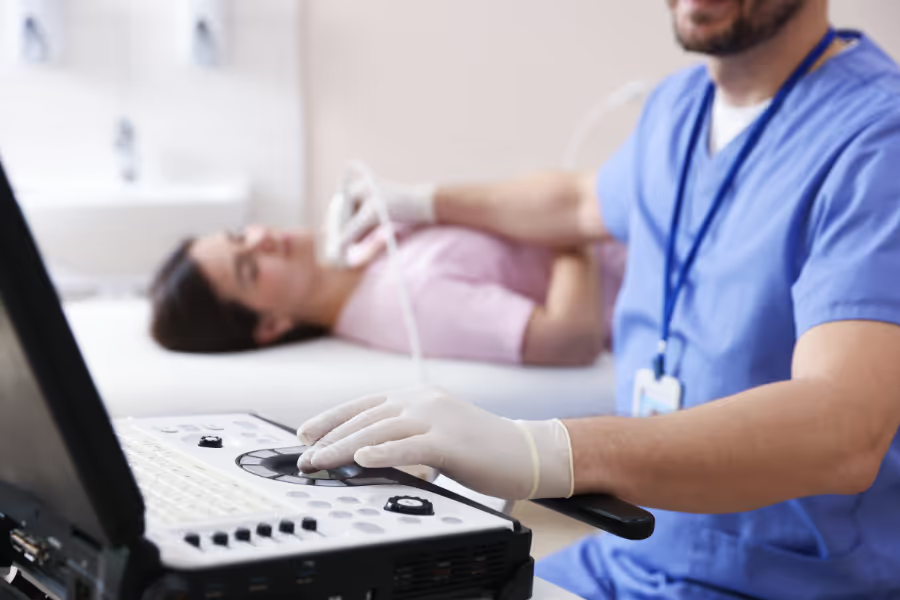

Private Ultrasound

A private ultrasound can help you get answers faster, so you and your doctor can make decisions sooner. Find the right centre that fits your needs below, serving Canadians in major cities like Vancouver, British Columbia; Calgary, Alberta; Toronto, Ontario; and Montréal, Québec.

Le fondateur de Surgency, le Dr Sean Haffey, souriant
Révisé et approuvé par le Dr Sean Haffey
Maquette de carte de crédit

À titre informatif seulement, ne constitue pas un avis médical ou juridique. Veuillez consulter votre médecin ou votre chirurgien.

Comment fonctionne Surgency

Icône indiquant le lieu de l'intervention chirurgicale

Décidez où aller

La chirurgie privée au Canada nécessite généralement de voyager hors de sa province. La première étape consiste donc à décider où.
Icône indiquant la recherche sur la plateforme

Rechercher par spécialité

Notre application facilite la recherche de chirurgiens par spécialité et par emplacement.
Icône indiquant l'envoi d'une demande de consultation sécurisée au chirurgien

Planifiez une consultation

Prenez rendez-vous pour une consultation directement sur Surgency. C'est sécurisé, confidentiel et rapide.

What is a ultrasound?

An ultrasound (sonography) is a scan that uses high-frequency sound waves to create real-time images of the inside of your body—without radiation.

It’s especially useful for looking at organs (like the liver, gallbladder, kidneys), pelvic structures (uterus/ovaries, prostate), soft tissue lumps, and blood flow (Doppler ultrasound).

A private ultrasound means you book the scan at an accredited, fee-for-service imaging clinic instead of waiting for a publicly funded appointment. The test itself is the same—what changes is usually speed, scheduling, and appointment clarity.

Why do Canadians choose to get ultrasounds done privately?

Canadians might consider a private ultrasound when public wait times delay diagnosis and symptoms—abdominal pain, pelvic pain, swelling, a new lump, or pregnancy concerns—need answers sooner. Waiting can mean prolonged discomfort, anxiety, delayed treatment, and more time away from work, school, travel, or family responsibilities.

Private ultrasound offers faster access to accredited Canadian imaging clinics with clearer timelines—often within days. For many people, choosing private imaging is about getting answers early and moving forward with a plan, while putting less strain on the public healthcare system.

Maquette de tableau de bord
Pourquoi choisir Surgency

Pour les Canadiens qui souhaitent une chirurgie en quelques semaines, et non en quelques mois

Surgency est une ressource gratuite, offerte par un médecin canadien du système public, pour vous aider à trouver le bon chirurgien selon vos besoins.

  1. Confirmez votre diagnostic. La plupart des patients commencent par consulter un médecin de famille ou un spécialiste qui confirme que la chirurgie est conseillée. Un chirurgien privé peut également confirmer le diagnostic si nécessaire.
  2. Faites des recherches.
    • Vous pouvez trouver des chirurgiens à Vancouver, en Colombie-Britannique; Calgary, en Alberta; Toronto, en Ontario; et Montréal, au Québec sur notre application, et consulter leurs qualifications ainsi que les tarifs.
  3. Planifiez une consultation initiale. La plupart des chirurgiens proposent des consultations en clinique et en ligne.
    • Les consultations sont généralement fixées en quelques jours ou quelques semaines.
    • Remarque : prévoyez des frais de consultation entre 150 $ et 350 $.
    • Nous vous recommandons de prendre 2 à 4 consultations avec différents chirurgiens afin de mieux comprendre vos options.
  4. Consultation. Le chirurgien examinera votre état, vos symptômes et tout traitement ou diagnostic antérieur, comme des radiographies ou des IRM.
  5. Après la consultation. Le chirurgien examinera ensuite votre dossier et vous proposera des options chirurgicales (et non chirurgicales) en fonction de vos besoins; il passera en revue les risques et les résultats attendus; et présentera les options de tarification et de planification.
  6. Planifiez la date de votre chirurgie. Une fois que vous aurez confirmé la procédure et le paiement, la clinique fixera la date de votre chirurgie – généralement dans un délai de quelques semaines.

What does an ultrasound help diagnose?

Ultrasound is often the first-line imaging test for many common concerns, including:
Abdomen

  • Gallstones and gallbladder inflammation
  • Liver and kidney cysts or masses
  • Kidney stones (sometimes), hydronephrosis
  • Abdominal fluid (ascites)

Pelvis

  • Fibroids, ovarian cysts, pelvic masses
  • Endometrial thickening, abnormal bleeding workup
  • Prostate size estimates (in some cases)

Soft tissue and lumps

  • Breast lumps (often paired with mammogram)
  • Thyroid nodules
  • Lumps in the arm/leg, cyst vs solid mass

Blood flow (Doppler ultrasound)

  • Blood clots (DVT) in the legs
  • Varicose veins and venous reflux studies
  • Blood flow problems in arteries (selected cases)

Grossesse

  • Dating/viability scans, fetal anatomy screening
  • Placenta location, fetal growth monitoring
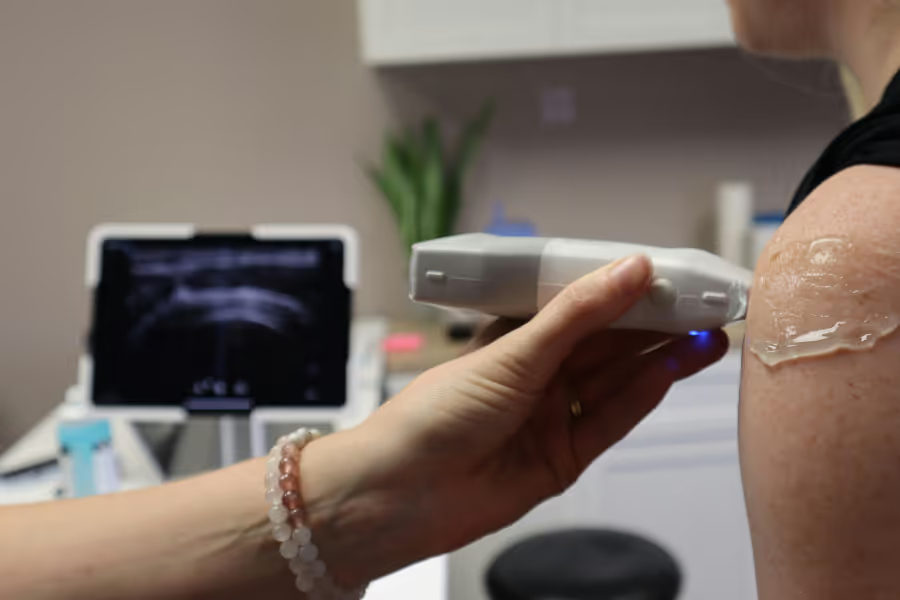
Closeup of private shoulder ultrasound

How much does a private ultrasound cost in Canada?

Costs vary by body part, whether Doppler is included, and the clinic location.

Typical private ranges:

  • $250–$450 for a single-region ultrasound
  • $450–$1,000+ if Doppler or multiple regions are included

Price is impacted by:

  • Single area vs multiple areas (e.g., abdomen + pelvis)
  • Doppler (blood flow assessment adds time and complexity)
  • Specialized studies (e.g., detailed vascular mapping)

Tip: ask if the fee includes the radiologist report and how quickly it’s delivered.

Choisir une clinique

Choosing the right imaging centre matters for scan quality, safety, and how quickly you get results.

Ce qu'il faut rechercher

Accreditation and equipment quality

  • Accréditation (exigences provinciales comme le DAP en Colombie-Britannique, CPSA en AB, Accréditation Canada et/ou organismes d’accréditation reconnus)
  • Experienced sonographers and board-certified radiologists reading the scan
  • Clear report turnaround times (often 24–72 hours)
  • Transparent pricing (including Doppler, extra views, copies of images)

Questions à poser

  • Is a referral required? If so, can the centre help coordinate?
  • How soon can I be scanned?
  • When will the report be ready—and who receives it?
  • Will a radiologist be onsite or reading remotely?
  • Is Doppler included if needed?

Private ultrasound frequently asked questions

How do I know if I should get an ultrasound scan?

Ultrasound is a good fit if

  • Your symptoms involve abdomen/pelvis, a new lump, or swelling
  • You need an imaging test that is radiation-free
  • Your doctor wants a fast, accessible first step before CT/MRI

Ultrasound may not be enough when

  • The area is hard to see with sound waves (e.g., deep structures, bowel gas)
  • You need detailed imaging of bones, lungs, or complex internal anatomy
  • Your doctor suspects something that’s better evaluated with CT or MRI

Ai-je besoin d'une référence?

Yes, you generally do need a referral for private ultrasounds in Canada. However, you can usually contact the centre directly, and they will assist with setting up the referral for you.

What happens after the ultrasound?

A radiologist reviews the images and writes a report. The report is sent to your referring provider (and often shared with you on request). Next steps depend on results:

  • Normal: you and your doctor may monitor symptoms or pursue other causes
  • Clear finding (e.g., gallstones, cyst): treatment plan or referral
  • Unclear finding: follow-up imaging (CT/MRI), repeat ultrasound, or specialist consult

What are the risks involved with ultrasounds?

Ultrasound is considered safe:

  • No radiation
  • Generally painless (pressure can be uncomfortable if the area is tender)
  • Very low risk overall

Potential minor issues:

  • Discomfort from probe pressure
  • Mild discomfort during transvaginal ultrasound

How do I prepare for an ultrasound scan?

Preparation depends on the type of ultrasound:

Abdomen ultrasound

  • Often requires fasting for 6–8 hours (improves gallbladder and liver visibility)
  • Water may be allowed—follow clinic instructions

Pelvic ultrasound (especially transabdominal)

  • You may need a full bladder (drink water beforehand)

Transvaginal ultrasound

  • Usually no full bladder needed
  • A probe is used internally for clearer pelvic images

Thyroid / soft tissue / limb ultrasound

  • Usually no special prep

Bring:

  • Your requisition (if required)
  • Any prior imaging reports (helpful for comparison)
  • A list of symptoms and where the pain/lump is located

J'ai encore des questions

Si vous avez encore des questions, n'hésitez pas à nous contacter directement.
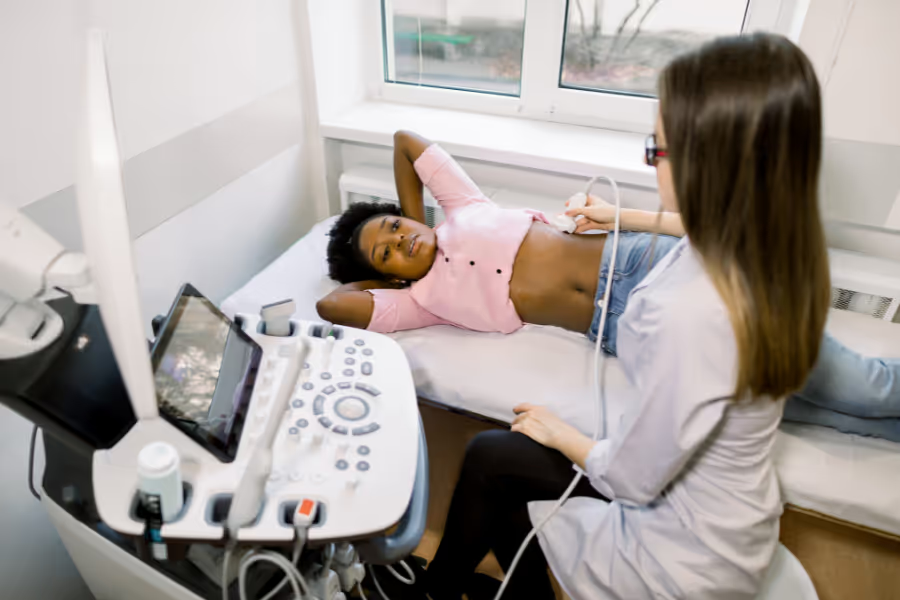
Browse Accredited Private Surgeons for Ultrasound

Les chirurgiens de Surgency sont vérifiés :

✓ Diplôme de médecine reconnu
✓ Permis d'exercice canadien (LMCC)
✓ Permis d'exercice médical provincial actif
✓ Certification du conseil (FRCSC/ABMS)
QC
Accepte les patients de toutes les provinces
Centre de radiologie VM Med
Icône de localisation du chirurgien
Montréal, QC
Anglais, Français
Accepte les patients adultes

Offrant des services rapides d'IRM, de tomodensitométrie (CT) et de TEP-CT diagnostiques à haute résolution, spécialisé dans la détection rapide du cancer du sein.

ON
Accepte les patients de toutes les provinces
IRM corps entier
Icône de localisation du chirurgien
Toronto, ON
Anglais
Accepte les patients adultes

Obtenez une image complète de ce qui se passe à l'intérieur de votre corps pour vous aider à détecter les problèmes tôt et vous donner le temps d'agir.