
Private Shoulder Stabilization

Whether you need an arthroscopic repair or a bone‑block procedure, find the right shoulder specialist and clinic that fits your injury, sport, and timeline below, serving Canadians in major cities like Vancouver, British Columbia; Calgary, Alberta; Toronto, Ontario; and Montréal, Québec.

Le fondateur de Surgency, le Dr Sean Haffey, souriant
Révisé et approuvé par le Dr Sean Haffey
Maquette de carte de crédit

À titre informatif seulement, ne constitue pas un avis médical ou juridique. Veuillez consulter votre médecin ou votre chirurgien.

Comment fonctionne Surgency

Icône indiquant le lieu de l'intervention chirurgicale

Décidez où aller

La chirurgie privée au Canada nécessite généralement de voyager hors de sa province. La première étape consiste donc à décider où.
Icône indiquant la recherche sur la plateforme

Rechercher par spécialité

Notre application facilite la recherche de chirurgiens par spécialité et par emplacement.
Icône indiquant l'envoi d'une demande de consultation sécurisée au chirurgien

Planifiez une consultation

Prenez rendez-vous pour une consultation directement sur Surgency. C'est sécurisé, confidentiel et rapide.

What is shoulder stabilization surgery?

Shoulder stabilization surgery repairs and tightens the structures that keep your shoulder in place so it stops popping out.

Think of your shoulder like a golf ball on a tee. It has lots of motion, but that makes it easier to slip out. After a dislocation, you can tear:

  • the labrum (a rim of cartilage that deepens the socket)
  • the capsule/ligaments (the “seatbelt” tissue)
  • sometimes bone on the socket or ball side (bony defects)

Surgery is typically done to:

  • prevent repeat dislocations
  • reduce the fear of the shoulder “giving way”
  • protect the joint from further damage over time

Common types include:

  • Arthroscopic Bankart repair (re-attach the torn labrum)
  • Capsular shift/plication (tighten a loose capsule)
  • Latarjet or bone‑block procedures (for significant bone loss or high‑risk recurrence)

Why do Canadians get shoulder stabilization surgery done privately?

If your shoulder keeps dislocating, time matters. Exploring a private pathway can give you more choice, control, and flexibility.

Timing

Wait times can be long in the public system, especially when you include MRI delays and specialist consult waitlists. Private clinics may offer surgery within weeks, which can mean fewer repeat dislocations while you wait.

Choix et contrôle

Passer au privé peut vous permettre de :

  • choose a shoulder-focused orthopedic surgeon
  • choose the clinic location
  • plan surgery around school, work, or your sport season

Clarity upfront

Private pathways often provide a clear timeline so you can plan time off, rides, and rehab.

Preventing further damage

Each dislocation can cause more labrum and cartilage damage, and sometimes bone loss. Earlier stabilization can reduce the chance the problem becomes more complex.
Maquette de tableau de bord
Pourquoi choisir Surgency

Pour les Canadiens qui souhaitent une chirurgie en quelques semaines, et non en quelques mois

Surgency est une ressource gratuite, offerte par un médecin canadien du système public, pour vous aider à trouver le bon chirurgien selon vos besoins.

  1. Confirmez votre diagnostic. La plupart des patients commencent par consulter un médecin de famille ou un spécialiste qui confirme que la chirurgie est conseillée. Un chirurgien privé peut également confirmer le diagnostic si nécessaire.
  2. Faites des recherches.
    • Vous pouvez trouver des chirurgiens à Vancouver, en Colombie-Britannique; Calgary, en Alberta; Toronto, en Ontario; et Montréal, au Québec sur notre application, et consulter leurs qualifications ainsi que les tarifs.
  3. Planifiez une consultation initiale. La plupart des chirurgiens proposent des consultations en clinique et en ligne.
    • Les consultations sont généralement fixées en quelques jours ou quelques semaines.
    • Remarque : prévoyez des frais de consultation entre 150 $ et 350 $.
    • Nous vous recommandons de prendre 2 à 4 consultations avec différents chirurgiens afin de mieux comprendre vos options.
  4. Consultation. Le chirurgien examinera votre état, vos symptômes et tout traitement ou diagnostic antérieur, comme des radiographies ou des IRM.
  5. Après la consultation. Le chirurgien examinera ensuite votre dossier et vous proposera des options chirurgicales (et non chirurgicales) en fonction de vos besoins; il passera en revue les risques et les résultats attendus; et présentera les options de tarification et de planification.
  6. Planifiez la date de votre chirurgie. Une fois que vous aurez confirmé la procédure et le paiement, la clinique fixera la date de votre chirurgie – généralement dans un délai de quelques semaines.

Shoulder stabilization: what to expect

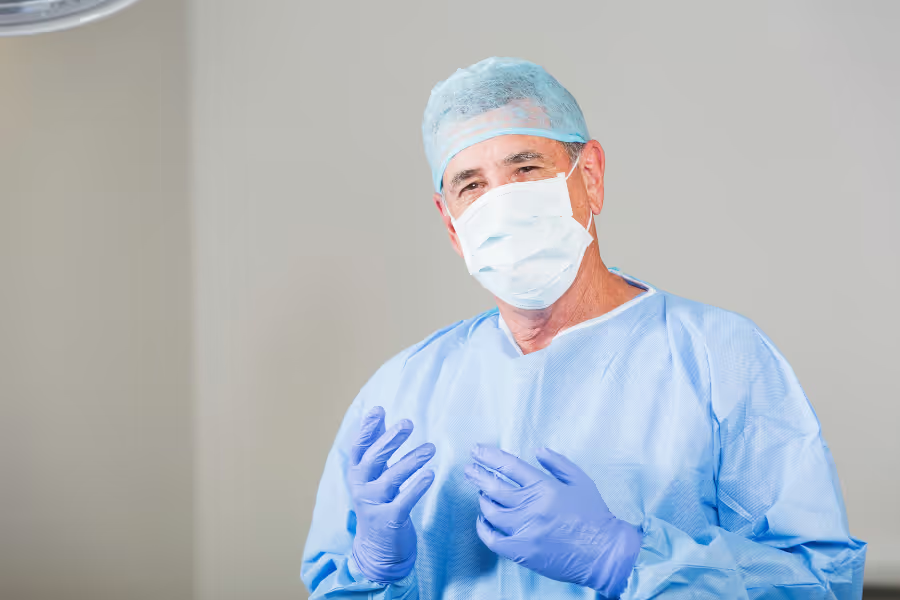
The surgery itself is no different from what’s performed in the public system. Surgeons use the same techniques, implants, and safety standards. The operation often takes 1–2 hours (longer for Latarjet/bone procedures).
Typical steps:

  • Anesthesia: Usually general anesthesia. Many patients also get a nerve block for pain control.
  • Incisions: Small cuts (arthroscopy) around the shoulder; sometimes a larger incision for bone‑block procedures.
  • Repair/tightening: The surgeon reattaches the labrum with small anchors, and tightens the capsule if needed.
  • If bone loss: A bone‑block procedure may be done to make the socket “bigger” and more stable.
  • Close and dressings: Skin closed, bandage applied.
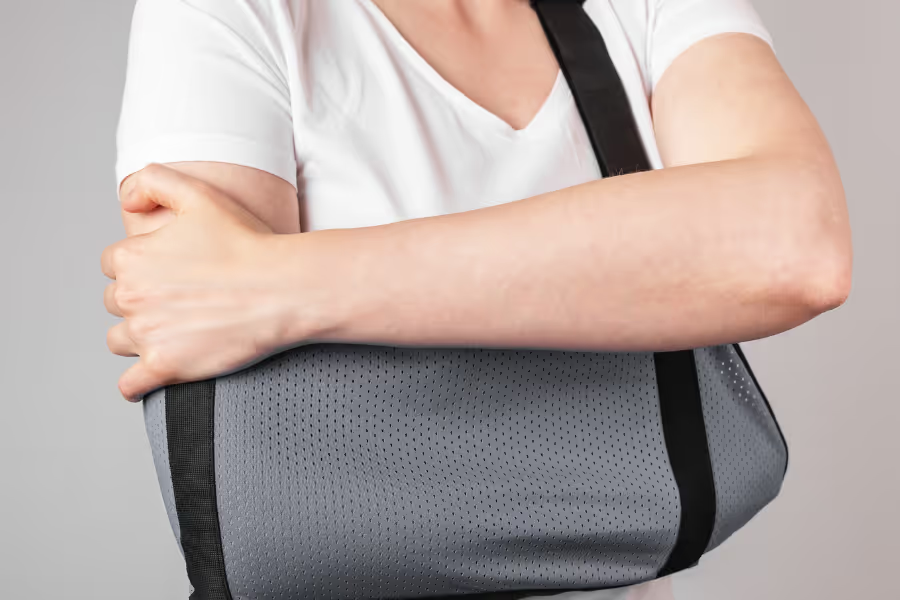
  • Sling on: You’ll usually leave in a sling the same day with a written rehab plan.
Man wearing a shoulder brace post surgery

À quoi s’attendre du processus de rétablissement

Your clinic should give you a detailed recovery plan (pain control, physio, restrictions, and follow-ups). Recovery varies depending on the procedure and your sport. Follow the protocol closely—this is one surgery where rehab rules really matter.

Some private clinics offer virtual follow-ups; others coordinate with your local providers in your home province.

Semaine 1

Goals: Pain control, protect the repair, manage swelling.
What it’s like: Sleeping can be awkward; the sling is annoying but important.
Activities: Sling full-time (usually), gentle hand/wrist/elbow motion, short walks, wound care.

Weeks 2–6

Goals: Protect healing tissue, start safe range of motion (ROM) as directed.
Activities: Physio begins (timing varies). ROM is often limited early to protect the repair. No lifting, pushing, or sudden reaching.

Weeks 6–12

Goals: Gradually restore ROM, start strengthening the rotator cuff and shoulder blade muscles.
Activities: Sling often comes off around this phase (depends on procedure). Strength work progresses slowly and should be pain‑guided.

Mois 3–6+

Goals: Build strength, control, and confidence; sport-specific training.
Activities: Return to sport depends on sport type:

  • non-contact activities often earlier
  • contact/collision or overhead sports often closer to 4–6+ months
    Your surgeon/physio should give criteria (strength, ROM, control), not just dates.

Red flags—seek help

Fever, increasing redness/drainage, severe worsening pain, new numbness/hand weakness, shortness of breath, or the shoulder dislocating again.

How much does shoulder stabilization cost?

Exact prices depend on the procedure (arthroscopic repair vs Latarjet), number of anchors, facility fees, anesthesia, and whether imaging and follow-ups are bundled.

Cost in Canada

Typical range: $7,000 - $20,000+

(Latarjet/bone procedures can be higher than a straightforward arthroscopic Bankart repair.)

What’s included (most quotes)

  • Surgeon and anesthesiologist fees
  • Les frais d'établissement ou de salle d'opération et les soins infirmiers.
  • Arthroscopy equipment and standard supplies
  • Implants (anchors) — confirm this line item
  • Immediate post-op care and follow-up visit(s)

Ce qui n’est généralement pas inclus

  • MRI/X-rays done outside the clinic
  • Sling/brace (sometimes included, sometimes not)
  • Physiotherapy after discharge
  • Medications at home
  • Travel/accommodation if out-of-province

Insurance and financing

  • Private insurance often covers parts (physio, imaging), but not always the private surgical fee—confirm with your plan.
  • Some clinics offer payment plans.
  • Eligible out-of-pocket costs may qualify for the Medical Expense Tax Credit (METC)—keep itemized receipts. Learn more about the METC here.

Choosing a surgeon & clinic

Choosing your surgeon is one of the benefits of going private. For instability surgery, correct procedure selection (Bankart vs Latarjet, etc.) matters as much as technical skill.

Ce qu'il faut rechercher

Expérience et volume d'interventions

  • How many shoulder stabilizations do they do yearly?
  • How many are Bankart repairs vs Latarjet/bone‑block procedures?
  • Do they treat athletes in your sport (contact vs overhead)?

Qualifications et formation

  • Confirm licensure with the provincial college (e.g., CPSO, CPSBC, CPSA).
  • Look for FRCSC-certified orthopedic surgeons, ideally with fellowship training in shoulder/elbow or sports medicine/arthroscopy.

Learn more about surgeon credentials, read How to Understand Surgeon Credentials in Canada.

Outcomes and safety

Ask for their rates of:

  • recurrent instability/dislocation
  • l'infection
  • nerve injury (rare, but important)
  • stiffness/frozen shoulder
  • reoperation

Imagerie et planification

A good program reviews the actual images (not just reports):

  • MRI/MRA for labrum and soft tissues
  • CT (sometimes) to measure bone loss if instability is recurrent

Facility accreditation

Choose an accredited surgical facility (e.g., Accreditation Canada / CAAASF standards) with clear emergency pathways.

Intégration en réadaptation

You want:

  • a written phased protocol
  • coordination with your local physio if travelling
  • clear return-to-work/sport milestones

Questions to ask at your consultation

  • What is causing my instability: labrum tear, loose capsule, bone loss, or all three?
  • Am I a better fit for a Bankart repair or a Latarjet, and why?
  • How many anchors do you expect to use, and are they included in the quote?
  • What are my chances of redislocation in my sport?
  • How long will I be in a sling? When can I drive, return to work/school, and return to training?
  • If I’m from another province, how are follow-ups handled?

Shoulder stabilization - frequently asked questions

How do I know this surgery is right for me?

Shoulder stabilization isn’t for everyone, but it becomes more likely when:

  • you’ve had more than one dislocation, or your shoulder feels unstable often
  • you can’t trust your shoulder for sport, work, or sleep
  • physiotherapy hasn’t restored stability
  • imaging shows a labrum tear and/or bone loss that matches your symptoms

If you have frequent dislocations, are in a contact sport, or have meaningful bone loss, getting assessed sooner is smart—delays can make future surgery more complex.

Comment puis-je me préparer à la chirurgie?

Your surgeon will provide specific instructions, but common prep includes:

Prehab

  • Physio to keep shoulder blade/rotator cuff muscles active (within safe ranges)
  • Work on posture and gentle range of motion without provoking instability

Préparation à domicile

  • Set up a “one‑handed” recovery zone: easy clothing, simple meals, chargers, pillows for sleeping upright
  • Remove tripping hazards (you’ll be in a sling)

Support

  • Arrange rides for surgery day and early follow-ups (you can’t drive initially)
  • Have someone help for the first 24–48 hours

Work/school planning

  • Plan time off, especially if your job uses your arm or you commute by driving

Practice

  • Practise dressing, showering, and getting comfortable sleeping with your arm supported (pillows help)

What are the risks involved with shoulder stabilization surgery?

Individual risk varies with age, sport, anatomy (bone loss), procedure choice, surgical technique, and rehab. Discuss your specifics with your surgeon.

Courants et généralement temporaires

  • Pain and swelling; sleep disruption early on
  • Temporary stiffness (often improves with physio)
  • Bruising and incision soreness
  • Temporary numbness near the incision sites

Moins courants

  • Infection
  • Recurrent instability/dislocation (risk depends on sport and bone loss)
  • Frozen shoulder (stiffness that takes longer to settle)
  • Anchor irritation or failure (rare)

Rare mais important

  • Nerve injury (rare, but can affect sensation or strength)
  • Blood clots (rare in upper-limb surgery, but possible)
  • Bone complications after Latarjet (graft issues, hardware irritation)
  • Ongoing pain from arthritis or cartilage damage

Quels sont les risques de retarder ou de ne pas subir la chirurgie?

  • More dislocations: each event can be painful, disruptive, and risky
  • More joint damage: repeated dislocations can increase labrum/cartilage damage and create bone loss
  • Harder surgery later: larger bone defects may require more complex operations
  • Lower confidence and activity: many people stop sports, work tasks, or normal movement due to fear of dislocation
  • Deconditioning: weaker shoulder/upper-back muscles can make rehab longer

Watchful waiting can be reasonable if it was a single dislocation, you’re improving with physio, and you don’t have high-risk features (contact sport, significant bone loss, repeated episodes).

Ai-je besoin d'une référence?

No, you do not need a referral for private shoulder stabilization in Canada. You can book a consultation directly with a surgeon, and they will review your condition, symptoms, and any previous treatments or diagnostics.

J'ai encore des questions

If you still have questions, please feel free to contact us directly.

Veuillez noter : Surgency n’est pas une clinique en soi. Nous ne pouvons pas non plus vous aider en situation d’urgence, ni fournir des conseils médicaux personnalisés — cela dépend de vous et votre chirurgien. Si vous présentez des symptômes aigus ou sévères, veuillez vous présenter à votre service d’urgence local ou à un centre de soins urgents.

Browse Accredited Private Surgeons for Shoulder Stabilization

Les chirurgiens de Surgency sont vérifiés :

✓ Diplôme de médecine reconnu
✓ Permis d'exercice canadien (LMCC)
✓ Permis d'exercice médical provincial actif
✓ Certification du conseil (FRCSC/ABMS)
C.-B.
Accepte les patients de l'extérieur de la C.-B.
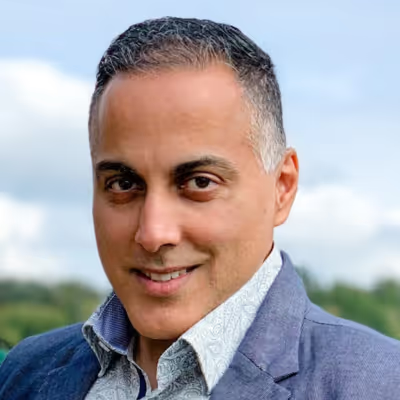
Abeer Syal
MD, FRCSC
Icône de localisation du chirurgien
Vancouver, C.-B.
Anglais, hindi, pendjabi
Accepte les patients adultes

Chirurgien orthopédiste ayant une formation postdoctorale—16 ans d'expérience—spécialisé en médecine sportive et en préservation articulaire, avec une expertise en reconstruction du genou et de l'épaule.
QC
Accepte les patients qui résident à l'extérieur du Québec
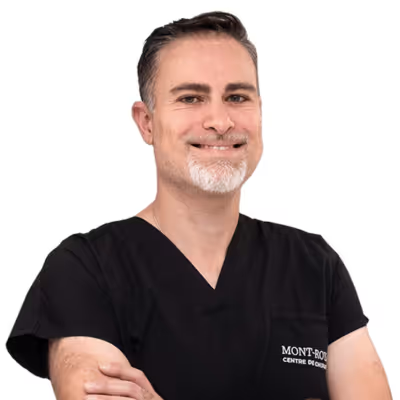
Dani Massie
MD, FRCSC
Icône de localisation du chirurgien
Montréal, QC
Anglais, Français
Accepte les patients adultes

Chirurgien orthopédiste expérimenté, reconnu pour son approche axée sur le patient et sa polyvalence technique, allant de la réparation des tissus mous (médecine sportive) aux remplacements articulaires complets (genou, épaule, hanche).
Alberta
Accepte les patients résidant à l'extérieur de l'Alberta
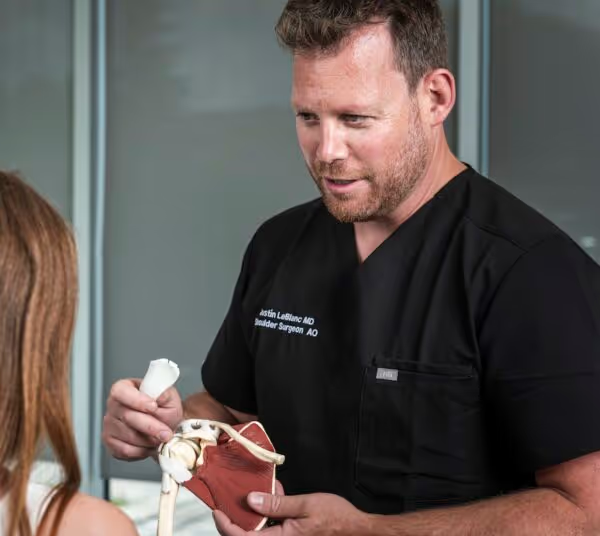
Justin LeBlanc
MD, MSc, FRCSC
Icône de localisation du chirurgien
Calgary, AB
Anglais
Accepte les patients adultes

Chirurgien orthopédiste ayant complété deux bourses de perfectionnement, profondément spécialisé en reconstruction de l'épaule et en chirurgie des membres supérieurs, avec 13 ans d'expérience.
QC
Accepte les patients qui résident à l'extérieur du Québec
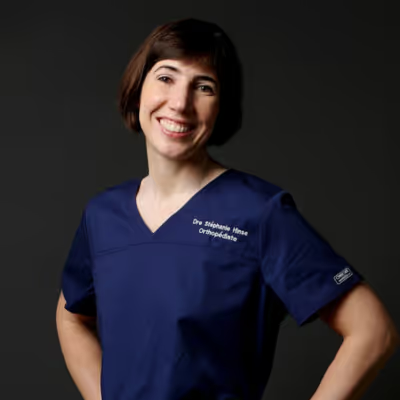
Stéphanie Hinse
MD, FRCSC
Icône de localisation du chirurgien
Montréal, QC
Anglais, Français
Accepte les patients adultes

Chirurgienne orthopédique ayant complété trois bourses de perfectionnement, avec une formation internationale et une expertise spécialisée en chirurgie du coude et de l'épaule, exerçant principalement à Montréal (QC).

C.-B.
Accepte les patients qui résident à l'extérieur de la Colombie-Britannique.
Danny Goel
MD, FRCSC
Icône de localisation du chirurgien
Vancouver, C.-B.
Anglais
Accepte les patients adultes

Chirurgien orthopédique ayant complété une bourse de perfectionnement, spécialisé exclusivement dans la chirurgie avancée de l'épaule et la préservation articulaire, avec plus de 20 ans d'expérience.
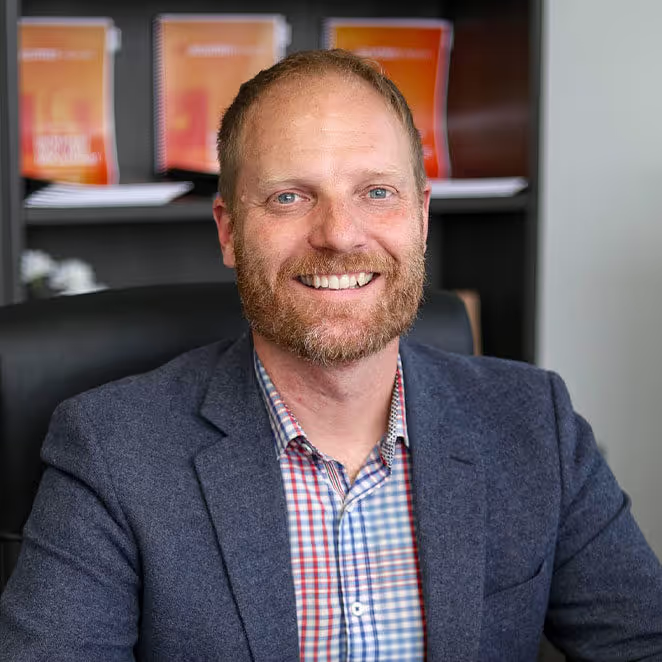
Alberta
Accepte les patients de toutes les provinces
Jesse Slade-Shantz
MD, FRCSC
Icône de localisation du chirurgien
Vancouver, BC; Kelowna, BC; Calgary, AB; Edmonton, AB
Anglais
Accepte les patients adultes

Chirurgien orthopédiste comptant 14 ans d'expérience, spécialisé dans les chirurgies arthroscopiques et ouvertes de l'épaule, du genou, du coude et des affections liées au sport.