
.png)


Qu’est-ce que la révision du remplacement du genou
Un remplacement primaire du genou est la première fois qu’un chirurgien remplace les surfaces articulaires endommagées par des pièces métalliques et en plastique.
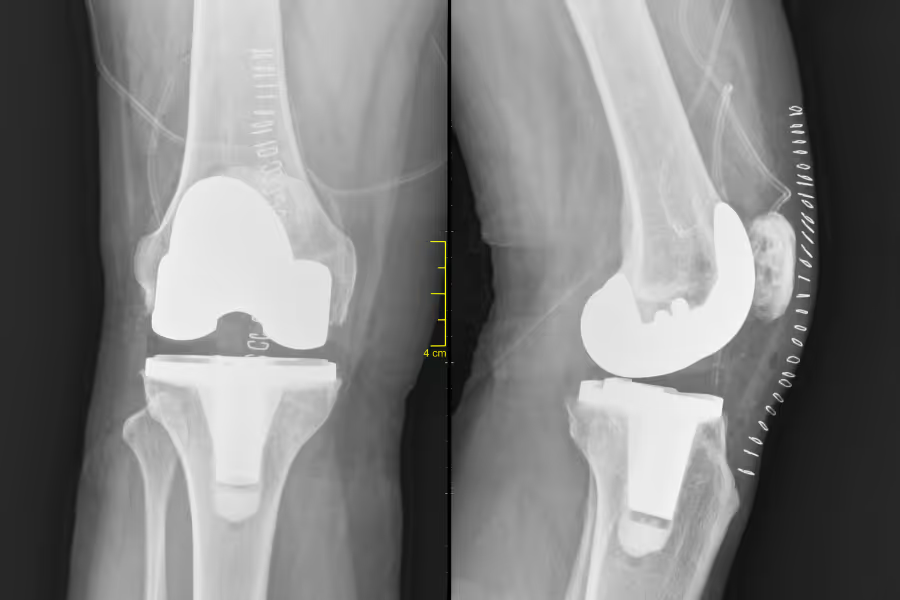
Un remplacement du genou en révision signifie que vous avez déjà subi une prothèse du genou, mais qu’il y a un problème ou s’est usé, et que le chirurgien doit réparer, remplacer ou remplacer certains ou tous les composants.
Pensez à votre remplacement de genou comme à un ensemble de pièces dans une machine :
- Si une pièce se relâche, s’use, s’infecte ou si le genou devient instable, la machine peut commencer à faire mal, enfler ou cesser de fonctionner correctement.
- La chirurgie de révision est la « reconstruction » pour remettre le genou en marche.
Raisons courantes de la révision
- Desserrement : Les parties perdent leur lien avec l’os (ce qui peut causer de la douleur en marchant).
- Infection : Les germes autour de l’implant (peuvent causer un gonflement, un écoulement, de la fièvre ou une douleur persistante).
- Instabilité : Le genou semble céder.
- Raideur (arthrofibrose) : Le tissu cicatriciel limite le mouvement.
- Usure de la doublure en plastique : Le coussin entre les pièces métalliques s’use.
- Fracture autour de l’implant : Une fracture de l’os près du remplaçant.
- Désalignement ou mauvaise taille/position : La mécanique du genou est déréglée, ce qui cause de la douleur ou une défaillance précoce.
Ce qui se passe réellement
La révision peut aller de plus simple à plus complexe :
- Échange de liner seulement : Remplacez l’insert en plastique (quand les pièces métalliques sont solides et bien positionnées).
- Révision partielle : Remplacez un côté (fémur ou tibia).
- Révision complète : Remplacez la plupart ou toutes les pièces, parfois avec des tiges plus longues, des augmentations, des cônes ou un design plus contraint pour la stabilité.
- Révisions des infections : Parfois en deux étapes (retrait de l’implant + espaceur/antibiotiques, puis réimplantation plus tard), selon l’infection et le plan du chirurgien.
Combien coûte la chirurgie de remplacement du genou de révision (Canada et États-Unis)?
Comment nous estimons les coûts chirurgicaux : Les fourchettes de prix indiquées sont des estimations basées sur notre réseau de plus de 100 cliniques et chirurgiens privés. Elles sont volontairement larges. Deux personnes souhaitant subir la même intervention peuvent recevoir des devis très différents selon la province, le chirurgien, les frais d’établissement et la complexité du cas. Les prix publiés ne sont pas toujours comparables : certains sont des forfaits tout compris, d’autres excluent la consultation, l’imagerie ou le suivi. Seule la clinique peut vous fournir un devis précis et détaillé.
Le prix exact dépend du type de révision dont vous avez besoin (échange de liner vs révision complète vs infection en phase avancée), de la complexité de l’implant, de la durée du séjour à l’hôpital et de l’endroit où vous la faites. Demandez toujours une soumission écrite et détaillée.
Coût au Canada
Fourchette typique : 28 000 $ - 60 000 $+
- Des révisions plus simples (comme l’échange de lignes isolées) peuvent être plus faibles
- Les révisions complexes avec implants spécialisés, la gestion de la perte osseuse ou des séjours plus longs peuvent être plus élevées
Coût aux États-Unis
Fourchette typique : CA$42,600 - CA$100,000+
Les prix varient considérablement selon l’hôpital, la région, le statut d’assurance et la complexité de l’implant.
Ce qui est habituellement inclus
- Honoraires de chirurgien et d’anesthésiste
- Frais d’établissement/salle d’opération et soins infirmiers
- Révision des composants de l’implant (confirmez ce qui est inclus)
- Médicaments et fournitures standards pendant son séjour dans l’établissement
- Soins postopératoires immédiats et visites de suivi (variables)
Ce qui n'est souvent pas inclus
- Imagerie préopératoire (radiographies, CT, scintigraphie osseuse) et analyses réalisées ailleurs
- Les coûts d’évaluation de l’infection (aspiration, cultures, analyses sanguines spéciales) si ce n’est pas regroupé
- Séjour prolongé à l’hôpital, séjour en centre de réadaptation ou soins infirmiers à domicile
- Physiothérapie ambulatoire après la sortie
- Médicaments après votre retour à la maison
- Voyage et hébergement si vous êtes hors province ou province
Conseils pour comparer les devis
Demandez si votre soumission est un ensemble global. Demandez des postes pour : chirurgien, établissement, anesthésie, coûts d’implants, séjour à l’hôpital/nuits, imagerie, suivis, et ce qui déclenche des frais supplémentaires.
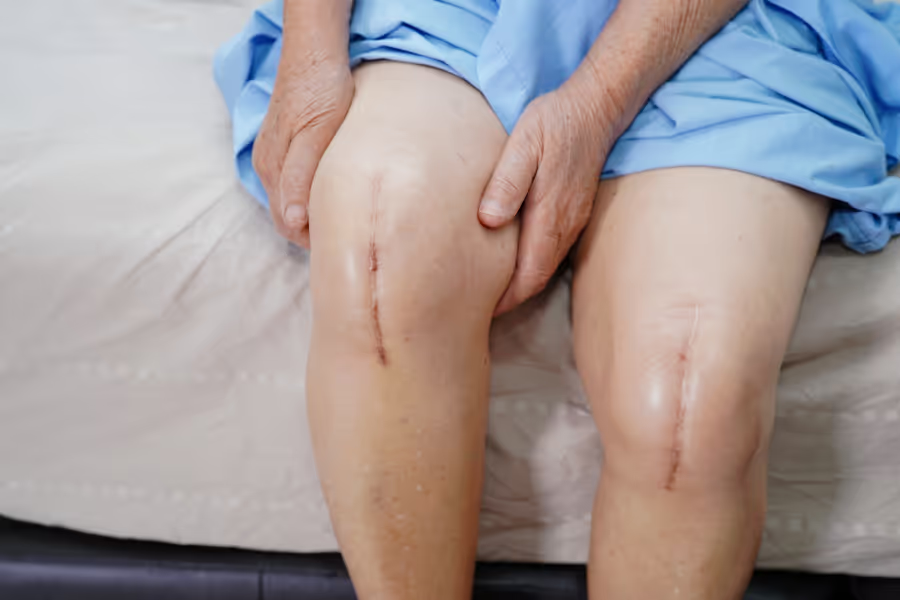
Remplacement du genou par révision : à quoi s’attendre
Les cas de révision varient beaucoup, donc le calendrier et les étapes dépendent de ce qui doit être corrigé. De nombreuses procédures de révision prennent de 2 à 4+ heures de fonctionnement (les révisions complexes peuvent prendre plus de temps). Attendez-vous à un temps supplémentaire au centre pour l’enregistrement, l’anesthésie et la récupération.
Étapes de base
- Enregistrement et confirmation
L’équipe confirme le plan, examine les examens d’imagerie et effectue des vérifications de sécurité (genou correct, implants prévus, allergies, antibiotiques). - Anesthésie
Habituellement anesthésie rachidaine (engourdissement de la taille vers le bas) avec sédation, ou anesthésie générale. De nombreux centres utilisent des blocs nerveux et un plan de douleur multimodal. - Incision et exposition
Le chirurgien rouvre l’incision précédente (lorsque c’est possible) et pénètre prudemment dans l’articulation. - Évaluez l’implant actuel
Ils vérifient quelles parties sont stables, lesquelles sont lâches, et s’il y a une infection ou une perte osseuse. - Retirez et remplacez ce qui est nécessaire
- Échangez la doublure ou les composants
- Nettoyer le tissu cicatriciel et le tissu enflammé
- Traiter la perte osseuse avec des augmentations/cônes/greffons si nécessaire
- placez les composants de révision (souvent avec des tiges) et équilibrez les ligaments pour la stabilité
- Mouvement d’essai et stabilité
Le genou est vérifié en pliant et en redressant pour confirmer l’alignement et la stabilité. - Gros plan
Le chirurgien ferme les couches, applique un pansement, et parfois place un drain selon le saignement et la complexité. - Reprise et mobilisation
Vous commencerez à marcher avec un physio quand c’est sécuritaire — souvent le jour même ou le lendemain. Beaucoup de patients en révision restent de 1 à 3 nuits (plus longtemps si c’est médicalement nécessaire ou si c’est un plan d’infection à plusieurs étages).
À quoi s’attendre du processus de rétablissement
Votre clinique fournira un plan de récupération détaillé (physiothérapie, contrôle de la douleur, soins des plaies, prévention des caillots sanguins et suivi). La récupération après révision peut être plus lente qu’une première prothèse du genou, surtout en cas de perte osseuse, d’instabilité ou d’infection. Voici une chronologie générale, suivez les instructions de votre chirurgien.
Semaine 1
Retour à la réalité : La douleur, l’enflure, les ecchymoses et le manque d’énergie sont fréquents. Marcher sera maladroit au début.
Objectifs : Contrôle de la douleur, réduction de l’enflure, transferts sécuritaires et mouvement précoce.
Activités : Courtes marches avec un déambulateur/béquilles, exercices de base (activation des quadriceps, flexion/redressement doux), glace/élévation, soins des plaies et plan anticoagulant (si prescrit).
Semaines 2 à 4
Toujours difficile, généralement en amélioration.
Objectifs : Meilleure tolérance à la marche, amélioration du redressement et de la flexion des genoux, routine régulière avec physio.
Activités : Physio, exercices quotidiens, augmentation progressive de la distance à pied. Beaucoup retournent au travail de bureau avec des restrictions (les délais varient).
Semaines 5 à 12
La phase de travail.
Objectifs : Développez la force, l’équilibre et l’endurance; Réduisez la dépendance aux aides à la marche lorsqu’elles sont sécuritaires.
Activités : Renforcement plus exigeant, vélo stationnaire si c’est dégagé, marches plus longues, pratique des escaliers.
Mois 3 à 12
Longue piste, vraie récompense.
Objectifs : Maximisez la fonction et la confiance en vous; Retour aux activités préférées.
Activités : Renforcement continu et conditionnement à faible impact. Certains symptômes (gonflement, raideur) peuvent s’améliorer pendant plusieurs mois.
Signaux d’alarme — appelez votre équipe soignante ou demandez de l’aide urgente
- fièvre, rougeur qui se propage, écoulement aggravé ou une plaie qui s’ouvre
- Gonflement/douleur au mollet, douleur thoracique ou essoufflement (possible caillot)
- douleur qui s’aggrave soudainement, incapacité à supporter le poids, ou un genou qui semble nouvellement instable
- confusion croissante, faiblesse sévère ou signes de déshydratation
Qu’est-ce que c’est Surgency?
En tant que médecin de famille dans le système public, je crois que la transparence est une forme de soins. J’ai créé Surgency pour aider mes patients en difficulté avec de longues listes d’attente qui voulaient comprendre toutes leurs options pour des soins médicaux rapides.
Surgency est une ressource gratuite conçue pour autonomiser et éduquer — vous aidant à comprendre les voies privées et à trouver des chirurgiens accrédités au Canada. J’espère Surgency Ça t’apporte de la clarté.
Dr Sean Haffey

Pourquoi les Canadiens font-ils une chirurgie de remplacement du genou de révision en privé?
Temps d’attente plus courts
Le remplacement du genou par révision est souvent plus complexe qu’un premier remplacement, et les files d’attente pour la chirurgie publique peuvent être longues. Les voies privées peuvent parfois accélérer l’évaluation, l’imagerie et la date de la chirurgie — réduisant les mois de douleur et la mobilité réduite.
Choix et contrôle
Passer au privé peut vous permettre de :
- Choisissez un chirurgien qui fait régulièrement des révisions (pas seulement des remplacements primaires)
- Choisissez une clinique ou un lieu
- Planifiez les horaires en fonction du travail, des soins et des déplacements
Tranquillité d’esprit
Vous pouvez obtenir des éclaircissements sur :
- Chronologies
- Qu’est-ce qui échoue exactement (desserrement vs infection vs instabilité)
- Que vous ayez besoin d’un remplacement de liner, d’une révision partielle, d’une révision complète ou d’un traitement par étapes de l’infection
- Quels implants et contraintes peuvent être utilisés
Prévenir une détérioration supplémentaire
- Le relâchement ou l’instabilité continus peuvent réduire la marche, la forme physique et l’autonomie
- Certains problèmes (comme la perte osseuse ou les fractures) peuvent s’aggraver avec le temps, rendant la chirurgie plus difficile
- Une douleur prolongée peut affecter le sommeil, l’humeur et la santé globale
Soins intégrés
De nombreux parcours privés offrent des diagnostics simplifiés et des plans coordonnés pour l’anesthésie, le contrôle de la douleur et la physiothérapie, avec des suivis virtuels si vous habitez loin.
Choisir un chirurgien et une clinique
Choisir votre chirurgien est un avantage majeur de la chirurgie privée. Le remplacement du genou en révision est plus complexe qu’un premier remplacement du genou, donc choisir la bonne équipe est important.
Ce qu'il faut rechercher
Expérience et volume (selon la révision)
Demandez combien de remplacements de genou de révision ils font chaque année (pas seulement les remplacements primaires du genou).
La révision a une courbe d’apprentissage car elle implique souvent :
- enlever des composants bien fixés sans endommager l’os
- Gestion de la perte osseuse (écarts/zones faibles)
- Restauration de la stabilité (les ligaments peuvent être étirés ou déficients)
- Gérer les bilans d’infection et la planification complexe
- Utilisation d’implants spécialisés (tiges, cônes, augmentations, conceptions contraintes)
Demandez aussi à propos de leur gamme de cas :
- Échange de liner vs révision complète des composants
- Révisions d’instabilité
- Révisions de la perte osseuse (cônes/augmentations)
- Cas de fracture périprothétique
- Cas d’infection (protocoles à un stade vs à deux étapes, si offert)
Qualifications et formation
- Vérifiez votre permis auprès du collège provincial (CPSO Ontario, CPSBC BC, CPSA Alberta, CMQ Québec, etc.)
- Cherchez des chirurgiens orthopédistes du FRCSC ayant une formation en arthroplastie du genou
- Bonus (non obligatoire) : chirurgiens qui se concentrent sur l’arthroplastie/la révision, publient les résultats ou participent à des sociétés d’arthroplastie
Pour en savoir plus, lisez notre guide : Comment comprendre les qualifications de chirurgien au Canada
Diagnostic clair (ne pas sauter les bases)
Un bon chirurgien de révision ne sautera pas directement à « on va réviser ». Ils devraient vérifier soigneusement pourquoi votre genou lâche.
Ils devraient être à l’aise d’évaluer :
- Desserrement vs usure vs instabilité vs raideur
- si la douleur pourrait venir de problèmes de hanche, de colonne vertébrale ou de nerfs
- S’il y a une infection (c’est critique)
Dans bien des cas, un véritable bilan comprend :
- Radiographies mises à jour (vues d’alignement debout)
- parfois un scanner ou un scanner osseux/SPECT-CT
- Analyses sanguines (souvent ESR/CRP)
- parfois une aspiration du genou (échantillon de liquide) pour le comptage cellulaire et la culture
Résultats et sécurité (demandez des chiffres réels)
Demandez des données récentes (ou du moins des taux typiques) pour leur pratique de révision :
- Taux d’infection
- Caillots sanguins (TVP/EP)
- Réadmissions dans les 30 à 90 jours
- Retour imprévu en salle d’opération
- rigidité/besoin de manipulation (si applicable)
- Taux de révision (besoin d’une autre révision ultérieure)
- Résultats typiques de la douleur/fonction et attentes de retour à l’activité
S’ils ne peuvent pas partager des chiffres exacts, ils devraient quand même pouvoir expliquer leurs systèmes de sécurité et ce qu’ils voient le plus souvent.
Plan chirurgical et stratégie d’implant (la révision n’est pas « taille unique »)
Posez la question :
- Quel est votre diagnostic de travail et quelles sont les options (échange de liners, révision partielle, révision complète, traitement de l’infection par étapes)?
- Quelle approche d’implant attendez-vous : standard vs tiges, cônes, augmentations ou un genou plus contraint?
- Comment allez-vous rétablir l’alignement et la stabilité?
- Quel est le plan si vous constatez plus de perte osseuse ou de lésions ligamentaires que prévu?
Voie d’infection (c’est un gros facteur de différenciation)
Les résultats de la révision dépendent fortement de la manière dont l’infection est détectée et traitée.
Posez la question :
- Comment écarter une infection avant la chirurgie?
- Si une infection est détectée pendant la chirurgie, que se passe-t-il ensuite?
- Utilisez-vous le soutien contre les maladies infectieuses?
- Faites-vous des révisions en une ou en deux étapes (et dans quelles situations)?
Accréditation des installations et systèmes de sécurité
Choisissez des centres accrédités (par exemple, Accréditation Canada / CAAASF) avec :
- Soutien expérimenté en anesthésie et en médecine interne au besoin
- Normes strictes de traitement stérile et de prévention des infections
- Accès à des analyses sanguines, des examens d’imagerie et une réévaluation urgente
- un accord de transfert clair vers un hôpital pour les urgences
- Capacité pour des séjours de nuit si votre dossier l’exige (beaucoup de révisions l’exigent)
Intégration en réadaptation (la récupération après révision est souvent plus longue)
Vous voulez un plan écrit couvrant :
- statut porteur (certaines révisions nécessitent une protection)
- Jalons en physio pour le mouvement et la force
- Équipement (déambulateur, attelle si nécessaire)
- Comment fonctionnent les suivis si vous habitez hors province (virtuel vs en personne)
- qui appeler après les heures pour des problèmes de plaie, de la fièvre ou un gonflement soudain
Tarification transparente (les implants de révision peuvent modifier la facture)
Demandez un devis détaillé incluant :
- Honoraires de chirurgien
- Frais d’installation ou de salle d’opération
- Anesthésie
- Coûts de l’implantation (et quels composants de révision sont inclus)
- Séjour à l’hôpital/nuits (et qu’est-ce qui déclenche les nuits supplémentaires)
- Suivis, imagerie et analyses
- Que se passe-t-il financièrement si le régime change (par exemple, la plateforme d’échange de lignes devient une révision complète)
Questions à poser lors de votre consultation de révision du genou
Le chirurgien et le plan de traitement
- Combien de remplacements de genou de révision faites-vous chaque année?
- Combien de cas comme le mien (même problème : desserrement/instabilité/infection/perte osseuse)?
- Qu’est-ce qui ne fonctionne pas exactement dans ma prothèse du genou, et à quel point es-tu confiant?
Sécurité et infection
- Quels tests utiliserez-vous pour exclure une infection (VSR/CRP, aspiration, cultures)?
- Quels sont vos taux d’infection, de TVP/EP, de réadmission et de réopération?
Technique et implants
- Ai-je besoin d’un échange de ligne, d’une révision partielle ou d’une révision complète — et pourquoi?
- Aurai-je besoin de tiges/cônes/augmentations ou d’un implant plus contraint?
- Quel est votre plan si vous constatez une perte osseuse inattendue ou une instabilité?
Rétablissement et suivi postopératoire
- Combien de temps vais-je rester à l’hôpital?
- Quand puis-je marcher, conduire, retourner au travail de bureau plutôt qu’au travail physique?
- À quoi ressemble la physio pendant les 12 premières semaines?
Coûts et logistique
- Qu’est-ce qui est inclus dans mon devis, et qu’est-ce qui pourrait augmenter le prix?
- Si je voyage depuis une autre province, quels suivis peuvent être virtuels?
- Si une complication survient, où suis-je traité et comment est-ce facturé?
Signaux d’un programme de révision du genou de haute qualité
- Le chirurgien fait régulièrement des révisions de cas, pas rarement
- Ils insistent pour un diagnostic approprié (y compris l’exclusion de l’infection)
- Ils expliquent clairement les options et fixent des attentes réalistes
- La clinique est accréditée et offre un parcours clair de transfert hospitalier
- Vous recevez un plan de réadaptation écrit et un suivi clair
- La tarification est transparente et détaillée, incluant des conditions « que se passe-t-il si le régime change »
Si vous êtes actuellement intéressé par les parcours chirurgicaux privés au Canada, vous pouvez cliquer ici pour une liste de fournisseurs.

Foire aux questions
Comment savoir si cette chirurgie est faite pour moi?
La chirurgie de révision est généralement envisagée lorsque :
- Vos symptômes sont importants (douleur, gonflement, instabilité ou raideur majeure)
- L’imagerie suggère une défaillance de l’implant (desserrement, désalignement, fracture, usure majeure)
- Votre remplacement du genou limite la vie quotidienne malgré des soins raisonnables non chirurgicaux
- L’infection est suspectée ou confirmée et nécessite un traitement définitif
La révision n’est pas toujours la solution si le problème principal vient d’une autre source (par exemple : arthrite de la hanche, douleurs au nerf dorsal, ou douleurs généralisées). Un bon chirurgien aidera à confirmer le véritable facteur de douleur avant de recommander une chirurgie.
Ai-je besoin d'un référence médicale ?
Oui et non — vous pouvez contacter n'importe lequel des chirurgiens privés énumérés sur Surgency sans référence médicale Leurs équipes d'accueil se feront un plaisir de répondre à vos questions, de vous expliquer les pathologies qu'elles traitent, de vous communiquer leurs tarifs et de vous guider dans les prochaines étapes.
Cependant, pour réserver une consultation officielle avec le chirurgien, vous aurez généralement besoin d'un référence médicale auprès de votre médecin de famille ou de votre infirmière praticienne. Vous n'en avez pas ? De nombreuses cliniques peuvent vous aider à organiser une consultation virtuelle avec un médecin de famille pour obtenir le diagnostic. référence médicale Les formalités administratives sont réglées. Tous les chirurgiens sont énumérés sur Surgency Ils offrent des consultations initiales virtuelles, vous n'avez donc pas besoin de vous déplacer tant que vous n'avez pas convenu d'un plan avec le chirurgien.
Avant votre consultation, attendez-vous à ce que la clinique demande des dossiers médicaux pertinents et des images diagnostiques récentes (radiographie, IRM, CT, échographie, analyses de laboratoire, etc.). Les avoir prêts accélère le processus et permet au chirurgien de vous donner des conseils précis dès votre premier appel.
Comment puis-je me préparer à la chirurgie?
Les instructions de votre chirurgien sont prioritaires — suivez son plan s'il diffère.
Pré-réadaptation et optimisation de la santé
- Tenez votre genou aussi droit que possible : La perte de l’extension rend la récupération plus difficile. Demandez à un physio des étirements et des positionnements sécuritaires.
- Renforcez ce que vous pouvez : Quadriceps, fessiers et tronc (guidés par la douleur). Même de petits gains aident.
- Habitude de marche : Intégrez la marche quotidienne (ou le vélo d’appartement) dans vos limites pour améliorer votre condition physique en vue de la chirurgie.
- Arrêtez la nicotine : La nicotine ralentit la guérison et augmente le risque d’infection. Arrêtez bien avant la chirurgie et restez éloigné pendant la récupération.
Revue des médicaments
- Partagez toutes les prescriptions, médicaments en vente libre et suppléments.
- Mettez en pause les anticoagulants et certains anti-inflammatoires selon les directives.
- Demandez quoi faire avec les médicaments pour le diabète et les médicaments pour la perte de poids (certains doivent être pris avant l’anesthésie).
Prévention des infections
- Informez votre équipe de toute infection dentaire, cutanée, urinaire ou respiratoire.
- Suivez les instructions pour le lavage antiseptique (souvent la veille et le matin même).
Préparation à domicile
- Éliminez les risques de trébuchement et installez une « zone de récupération » au rez-de-chaussée.
- Installe un déambulateur ou des béquilles si recommandé, ainsi qu’une chaise de douche et un remonte-toilettes si nécessaire.
- Fais le plein de repas faciles et d’un plan contre la constipation (les analgésiques ralentissent l’intestin).
Pratiquez à l'avance
- Entraîne-toi à te mettre ou sortir du lit et des chaises avec tes bras.
- Si vous avez des escaliers, pratiquez avec des conseils (ou planifiez la vie au rez-de-chaussée dès le début).
Combien coûte l’utilisation de Surgency?
Surgency est gratuit pour les patients, financé par des chirurgiens.
Les chirurgiens — qui répondent à nos critères d'inscription — paient un forfait pour figurer sur le site. Surgency plateforme. Afin de préserver l'objectivité, il n'y a pas de commissions. référence médicale ni les frais, ni aucun classement ou recommandation d'un chirurgien plutôt qu'un autre.
Surgency c’est le patient d’abord. Notre objectif est de rendre le processus de recherche d’un chirurgien privé aussi simple que possible. Vous choisissez qui contacter. Pour en savoir plus, consultez notre politique publicitaire.
Quels sont les risques liés à la chirurgie de remplacement du genou par révision?
Votre risque personnel dépend de la raison pour laquelle vous avez besoin de révision (relâchement, infection vs instabilité), de la qualité osseuse, de la quantité à réviser, et de votre santé globale. Discutez de vos risques spécifiques avec votre chirurgien.
Courants et généralement temporaires
- douleur, gonflement, ecchymoses; Perturbations du sommeil au début
- rigidité et retour de force plus lent qu’un premier remplacement
- Faible numération sanguine/anémie (parfois besoin de fer, rarement transfusion)
- Engourdissement temporaire autour de l’incision
- Nausées/constipation due aux médicaments
Moins courants
- Problèmes de cicatrisation, hématome (prélèvement sanguin) ou drainage prolongé
- Caillots sanguins (TVP/EP)
- instabilité ou douleur persistante même après révision
- Fracture autour de l’implant pendant ou après la chirurgie
- Irritation/blessure nerveuse (rare)
Peu commun mais important/à long terme
- Infection profonde nécessitant une chirurgie supplémentaire
- Desserrement ou défaillance de l’implant au fil du temps
- raideur importante (arthrofibrose) nécessitant un traitement supplémentaire
- Besoin d’une chirurgie de révision supplémentaire (révision après révision)
Comment réduire les risques
- Arrêter la nicotine
- Optimisez le diabète, l’apnée du sommeil et la nutrition
- traiter les infections avant la chirurgie
- Suivez les instructions de prévention des caillots sanguins et faites votre plan de réadaptation de façon régulière
Quels sont les risques de retarder ou de ne pas subir la chirurgie?
Votre situation dépend de la cause de l’échec et de la rapidité avec laquelle elle progresse.
Principaux risques de retard (lorsque les symptômes sont importants)
- Douleur progressive et handicap : Moins de marche, pires escaliers, moins de sommeil, moins d’autonomie.
- Plus de perte osseuse : Des composants lâches peuvent endommager l’os, rendant les chirurgies ultérieures plus complexes.
- Instabilité et chutes : Un genou qui cède augmente le risque de chute et de fracture.
- Progression de l’infection (si présente) : Les retards peuvent permettre à l’infection de se propager et d’endommager les os ou les tissus mous.
- Déconditionnement : La faiblesse et la raideur peuvent rendre la récupération plus longue et plus difficile.
Quand l'observation attentive peut être raisonnable
- Les symptômes sont légers et stables
- L’imagerie ne montre aucune défaillance claire
- Les soins non chirurgicaux offrent une fonction acceptable
- l’infection a été soigneusement écartée
J'ai encore des questions
Si vous avez encore des questions, n’hésitez pas à nous contacter directement.
Veuillez noter : Surgency n’est pas une clinique en soi. Nous ne pouvons pas non plus aider en situation d’urgence, ni fournir des conseils médicaux personnalisés — cela dépend de vous et de votre chirurgien. Si vous présentez des symptômes aigus ou graves, veuillez vous présenter à votre service d’urgence local ou centre de soins d’urgence.















.avif)