
Private Pilonidal Cyst Excision

Removes chronic cysts near the tailbone to stop recurrent pain, infection, and drainage—aiming for long-term healing and relief. Learn more and find the right surgeon that fits your needs below, serving Canadians in major cities like Vancouver, British Columbia; Calgary, Alberta; Toronto, Ontario; and Montréal, Québec.

Le fondateur de Surgency, le Dr Sean Haffey, souriant
Révisé et approuvé par le Dr Sean Haffey
Maquette de carte de crédit

À titre informatif seulement, ne constitue pas un avis médical ou juridique. Veuillez consulter votre médecin ou votre chirurgien.

Comment fonctionne Surgency

Icône indiquant le lieu de l'intervention chirurgicale

Décidez où aller

La chirurgie privée au Canada nécessite généralement de voyager hors de sa province. La première étape consiste donc à décider où.
Icône indiquant la recherche sur la plateforme

Rechercher par spécialité

Notre application facilite la recherche de chirurgiens par spécialité et par emplacement.
Icône indiquant l'envoi d'une demande de consultation sécurisée au chirurgien

Planifiez une consultation

Prenez rendez-vous pour une consultation directement sur Surgency. C'est sécurisé, confidentiel et rapide.

What is pilonidal cyst excision surgery?

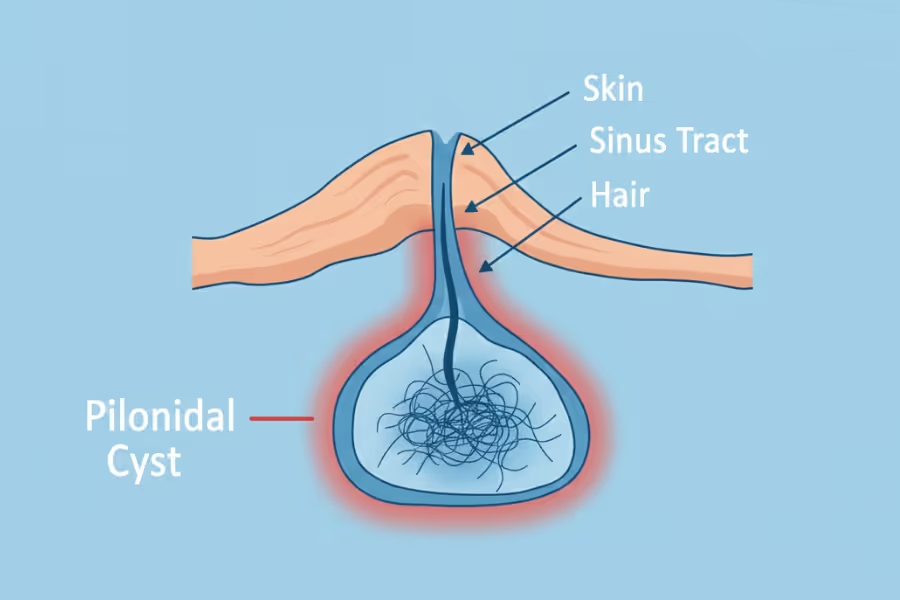
Pilonidal cyst excision is a surgical procedure that removes a chronic cyst, infection, or sinus tract located at the tailbone (the top of the buttocks/gluteal cleft).

A pilonidal cyst is often more than just a simple lump. It is usually a nest of hair and debris that has burrowed under the skin, creating a sinus tract (tunnel) that leads to the surface. Unlike a general body-wide sinus tract or an anal fistula (which connects to the bowel), a pilonidal sinus is confined to the skin and fat of the tailbone area but is notorious for being recurrent and difficult to heal due to friction and hair growth.

In an excision, the surgeon aims to remove the entire cyst cavity, the skin pores (“pits”) that allow hair to enter, and the chronically inflamed tract lining. Depending on the size, infection history, and complexity, the surgeon may:

  • remove the tissue and close the wound with stitches (often moving the incision off the midline—e.g., a Cleft Lift or Flap—to prevent future friction),
  • or remove the tissue and leave the wound open to heal from the inside out (requiring daily packing), which can reduce infection risk in certain dirty wounds.

This surgery is different from simply treating flare-ups with antibiotics or incision and drainage (I&D). Those steps can relieve acute pain and release pus during an infection, but they do not remove the hair nest or the tract—so the problem usually keeps recurring.

Why do Canadians get pilonidal cyst excision surgery done privately?

Temps d’attente plus courts

Time matters when pilonidal disease keeps flaring—painful abscesses, persistent drainage, odour, ruined clothing, and repeated antibiotics or urgent care visits. Private clinics can often book assessment and treatment sooner, reducing months of “bandage management” and missed work/school/gym.

Choix et contrôle

  • Choose a surgeon who treats pilonidal disease frequently (not just occasional abscess drainage)
  • Ask for (and access) lower-recurrence techniques such as off‑midline closure (e.g., cleft lift / flap approaches) when appropriate
  • Schedule surgery around work, school, travel, and caregiving
  • Choose the right setting (clinic vs. accredited day‑surgery centre), depending on extent and anaesthesia needs

Tranquillité d’esprit

You know who will do the procedure, what technique is planned (open healing vs. closure vs. flap), what aftercare looks like (dressings, drains, hair control), and when follow-ups happen. A clear date and itemized quote make planning time off easier.

Prévenir une détérioration supplémentaire

  • Fewer flare-ups and disruptions: definitive treatment reduces recurrent abscess cycles and drainage episodes
  • Lower complication burden: repeated inflammation can create wider sinus networks and scarring that complicate later surgery
  • Mental load: less day‑to‑day uncertainty—no constant “is it going to burst again?”
Maquette de tableau de bord
Pourquoi choisir Surgency

Pour les Canadiens qui souhaitent une chirurgie en quelques semaines, et non en quelques mois

Surgency est une ressource gratuite, offerte par un médecin canadien du système public, pour vous aider à trouver le bon chirurgien selon vos besoins.

  1. Confirmez votre diagnostic. La plupart des patients commencent par consulter un médecin de famille ou un spécialiste qui confirme que la chirurgie est conseillée. Un chirurgien privé peut également confirmer le diagnostic si nécessaire.
  2. Faites des recherches.
    • Vous pouvez trouver des chirurgiens à Vancouver, en Colombie-Britannique; Calgary, en Alberta; Toronto, en Ontario; et Montréal, au Québec sur notre application, et consulter leurs qualifications ainsi que les tarifs.
  3. Planifiez une consultation initiale. La plupart des chirurgiens proposent des consultations en clinique et en ligne.
    • Les consultations sont généralement fixées en quelques jours ou quelques semaines.
    • Remarque : prévoyez des frais de consultation entre 150 $ et 350 $.
    • Nous vous recommandons de prendre 2 à 4 consultations avec différents chirurgiens afin de mieux comprendre vos options.
  4. Consultation. Le chirurgien examinera votre état, vos symptômes et tout traitement ou diagnostic antérieur, comme des radiographies ou des IRM.
  5. Après la consultation. Le chirurgien examinera ensuite votre dossier et vous proposera des options chirurgicales (et non chirurgicales) en fonction de vos besoins; il passera en revue les risques et les résultats attendus; et présentera les options de tarification et de planification.
  6. Planifiez la date de votre chirurgie. Une fois que vous aurez confirmé la procédure et le paiement, la clinique fixera la date de votre chirurgie – généralement dans un délai de quelques semaines.

Pilonidal cyst excision steps: what to expect

Pilonidal surgery is often an outpatient procedure. Procedure time commonly ranges 30–90+ minutes, depending on how extensive the sinus tracts are and whether a flap/cleft‑lift is done. Expect to be at the clinic or surgical centre for several hours including intake and recovery.

1) Check-in and confirmation

  • The surgeon confirms symptoms (abscess history, drainage, prior I&Ds).
  • The cleft is examined for pits/openings and the likely extent of disease.
  • You’ll confirm the plan: limited excision, excision with open healing, or excision with closure (often off‑midline).

2) Anaesthesia

  • General anesthesia or deep IV sedation is common, especially for more involved disease or flap procedures.
  • Local-only procedures are less common due to location and the need for careful dissection.

3) Prep and sterile setup

  • The area is cleaned with antiseptic and draped.
  • Hair management is typically done by the team (avoid shaving at home unless instructed—micro-cuts can raise infection risk).

4) Excision and tract management

  • The surgeon removes the inflamed cyst cavity plus the pits and any sinus tracts.
  • In some cases, dye or probing is used to map tunnels.
  • The surgeon manages “dead space” to reduce fluid collection (technique varies—drain placement or layered closure).

5) Closure (or open healing)

  • Closed (primary closure): skin is stitched closed. Many surgeons prefer off‑midline closure to reduce wound breakdown and recurrence risk.
  • Open (healing by secondary intention): the wound is left open to heal from the bottom up; packing/dressings are used. This can lower trapped-infection risk in certain settings but often means longer wound care.

6) Same-day discharge

  • You go home once you’re stable and pain is controlled.
  • You’ll receive specific instructions on dressing changes, showering, sitting limits, activity, and follow-up.
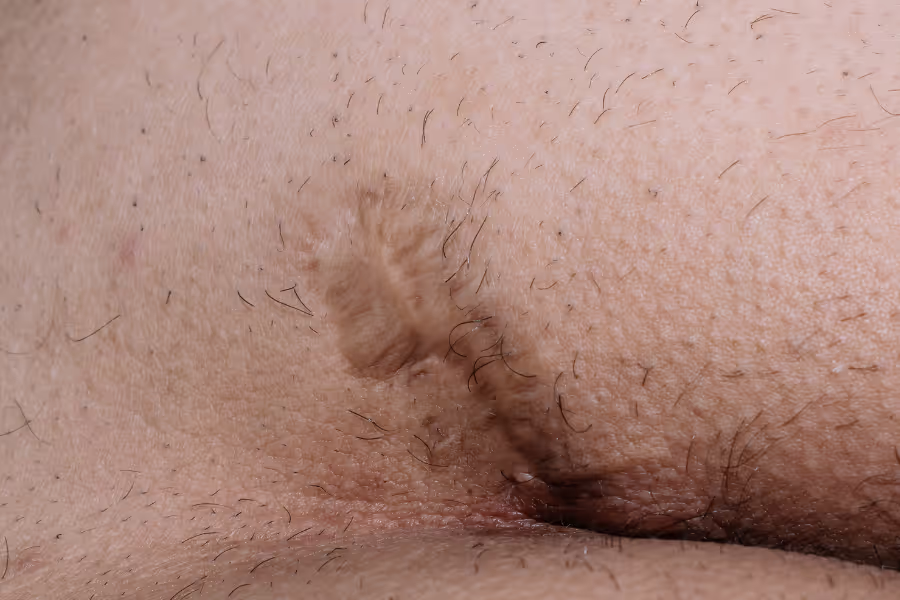
Scar left by pilonidal cyst excision surgery

What can I expect from the pilonidal cyst excision recovery process?

Your surgeon’s instructions come first. Recovery depends heavily on the technique (open healing vs. closed/flap) and how extensive the disease is.

Premiers jours

Ce que vous ressentirez

  • Soreness, tightness, and discomfort with sitting/standing transitions
  • Drainage onto the dressing (common)
  • Fatigue if you had general anesthesia

Objectifs principaux

  • Control pain and protect the wound
  • Keep the area clean and dry as instructed
  • Avoid pressure/friction and reduce sweating

Instructions typiques

  • Use pain relief as directed
  • Short walks are usually encouraged
  • Showering/rinsing guidance (often allowed after 24–48 hours, but varies)
  • If you have a drain (more common with flap/closure), you’ll be taught how to measure output

Semaines 1 à 3

Ce que vous ressentirez

  • Pain steadily improves
  • Drainage decreases (timing varies)
  • Itching is common as healing progresses

Objectifs principaux

  • Prevent wound breakdown or infection
  • Maintain hygiene and reduce friction
  • Return to light work/school as tolerated

Typical steps

  • Wound checks to ensure proper healing
  • If closed: stitch management/removal (if non‑dissolving)
  • If open: ongoing packing or dressing changes (often daily at first)
  • Gradual increase in sitting time, often with positioning tips or a cushion (if cleared)

Weeks 4–8+ (and beyond)

Ce que vous ressentirez

  • The area feels stronger but may remain tender with prolonged sitting
  • Scar tissue firmness can persist for weeks to months

Objectifs principaux

  • Full skin closure (especially for open wounds)
  • Return to exercise and sport safely
  • Reduce recurrence risk

Typical steps

  • Return to gym/sport once cleared and the wound is stable/closed
  • Long-term prevention plan often includes hair control (clipping/depilatory/laser—surgeon preference) and keeping the cleft clean/dry

Red flags anytime (call your care team)

  • Fever (>38°C) or chills
  • Rapidly increasing pain, swelling, or a new lump (possible abscess/hematoma)
  • Spreading redness or foul-smelling pus
  • Bleeding that soaks through dressings quickly
  • Wound edges separating significantly (for closed procedures)

How much does private pilonidal cyst excision cost in Canada?

Pilonidal surgery is usually more expensive than a simple skin cyst excision because it often involves deeper tissue, a higher infection/recurrence risk, and (commonly) sedation or general anesthesia in an accredited surgical centre rather than a basic procedure room.

Private cost of pilonidal cyst excision in Canada (typical ranges)

Typical range for private surgery in Canada: $2,500 - $6,500+

Pourquoi cette portée?

Limited disease / simpler excision ($2,500 - $3,500)

  • Small, localized pilonidal disease
  • Shorter operative time
  • Sometimes suitable for lighter sedation / simpler facility setup

Chronic or recurrent disease with off‑midline closure ($3,500 - $5,500)

  • More common for patients with multiple pits/sinus tracts or repeated abscesses
  • Often includes a closure technique designed to reduce recurrence (e.g., cleft lift / flap-type closure)

Complex/recurrent/extensive disease ($5,500 - $6,500+)

  • Wider sinus networks, prior failed surgeries, or significant scarring
  • Longer operative time, more supplies, sometimes drains, and more follow-up

Ce qui est habituellement inclus

  • Honoraires du chirurgien ou frais de procédure
  • Facility/procedure room or surgical centre fee
  • Local anesthetic and routine surgical supplies
  • Pansements standards et instructions de base pour les soins post-service
  • Early follow-up visit(s) (wound check; stitch removal if needed)

What may cost extra

  • Anesthesia fees (if billed separately for an anesthesiologist/CRNA-style provider)
  • Pre-op tests (rarely imaging for pilonidal, but sometimes requested in atypical cases)
  • Prescription meds (pain meds, antibiotics)
  • Home nursing or wound care supplies (more likely if healing open/packing)
  • Additional procedures (e.g., revision surgery for recurrence, or treatment of a post-op abscess/seroma)

Insurance note

Medically necessary pilonidal care can be covered publicly, but private excision is out-of-pocket. Some extended health plans may reimburse limited portions—ask the clinic for an itemized invoice.

Choisir un chirurgien et une clinique

Choosing your surgeon is one of the benefits of going private. Here’s how to choose wisely.

Ce qu'il faut rechercher

Experience and volume (specific to pilonidal disease)

  • Ask how often they perform pilonidal excisions (not just lancing abscesses).
  • Ask if they use modern techniques to reduce recurrence (e.g., cleft lift, flap procedures, or off-midline closure) rather than just deep midline excision, which has higher failure rates.
  • If you have recurrent disease or complex sinus tracts, ask if they have experience with flap repairs or difficult closures.

Qualifications et formation

  • Confirm they are licensed with the provincial college (CPSO, CPSBC, CPSA, etc.).
  • Recherchez :
    • FRCSC General Surgeon (most common for pilonidal disease)
    • FRCSC Plastic Surgeon (often best for complex recurrent cases requiring flaps or extensive reconstruction)
    • Colorectal Surgeon (specialized knowledge of anal/rectal anatomy, though pilonidal is skin/subcutaneous)

Diagnostic confidence

  • Ask how they determine the extent of the tracts (pits, sinuses) before cutting.
  • Confirm they will send the tissue to pathology (standard to rule out rare skin conditions or malignancies).

Sécurité et résultats

  • Recurrence rate: Pilonidal disease is notorious for coming back. Ask what their recurrence rate is and which technique they recommend to minimize it.
  • Wound healing: Ask about the risk of wound breakdown (dehiscence) if they stitch it closed, versus the healing time if they leave it open.
  • Hair management plan: Ask if they have a specific protocol for hair removal (shaving/laser/creams) post-operatively to prevent recurrence.

Clinic standards and facility

  • Sedation/Anaesthesia: Pilonidal surgery often requires deep sedation or general anesthesia (spinal is less common in private clinics). Ensure the facility is an accredited surgical centre (e.g., Accreditation Canada, CAAASF) with proper monitoring.
  • Emergency plan: What is the protocol if you have bleeding, severe pain, or wound separation after hours?

Questions à apporter à votre consultation

  • À propos du chirurgien et du plan
    • How many pilonidal surgeries do you do per year?
    • Do you recommend open healing (packing) or closure (stitches/flaps)? Why?
    • If you close it, do you move the incision off the midline to help it heal?
  • Technique and strategy
    • Will you use a drain? If so, when does it come out?
    • How deep do you anticipate the excision will be?
    • Do I need to remove hair from the area afterwards? When and how?
  • Infection-specific questions
    • If it is currently draining or has an abscess, should we drain it first and wait for it to calm down before excising?
    • What is the plan if it abscesses again while I am waiting for the surgery date?
  • Recovery and costs
    • What is included in the quote (surgery, facility, pathology, follow-ups)?
    • Does the quote cover a revision if the wound doesn’t heal or opens up?
    • When can I sit comfortably / drive / return to work/school?

Pilonidal cyst excision - frequently asked questions

How do I know if pilonidal cyst excision excision is right for me?

Pilonidal excision is usually not the first step if the issue is a one-time, small abscess that heals well. It is something you consider when the disease is chronic, recurrent, or refuses to heal. Pilonidal sinuses rarely disappear permanently without removing the pits and tracts.

Signs excision might be right for you

  • The area keeps flaring or coming back: Repeated abscesses in the tailbone area (pain, swelling, pus). You have had an incision and drainage (I&D) previously, but the lump or drainage returned.
  • Chronic drainage: Persistent leakage of fluid, blood, or pus from a small opening (sinus). Constant need to wear pads or protect clothing. Unpleasant odour or skin irritation in the cleft.
  • Interfering with daily life: Pain or discomfort when sitting (driving, working, studying), cycling, or doing sit-ups. It affects your hygiene or confidence.
  • Diagnostic clarity: A clinician has confirmed the presence of midline pits (small holes) or sinus tracts in the gluteal cleft.

Quand ce n’est peut-être pas encore le moment

  • There is an active, large acute abscess (hot, red, tense). This usually requires simple drainage (I&D) and antibiotics first to let inflammation subside before the actual tracts can be safely excised.
  • The diagnosis is unclear, or it might be a different condition (e.g., anal fistula, hidradenitis).
  • You are asymptomatic (no pain, no drainage) and it was found incidentally (some surgeons advise waiting).

Quand se faire évaluer plus tôt

  • You develop a fever, chills, or feel systemically unwell (signs of sepsis).
  • The pain becomes severe and throbbing, preventing sleep or sitting.
  • Redness spreads rapidly away from the cleft.
  • You have new difficulty with bowel movements or severe rectal pain.

Ai-je besoin d'une référence?

No, you do not need a referral for private pilonidal cyst excision in Canada. You can book a consultation directly with a surgeon, and they will review your condition, symptoms, and any previous treatments or diagnostics.

How do I prepare for pilonidal cyst excision?

Your surgeon will give you a specific plan. Preparation focuses on hygiene and reducing infection risk in this bacteria-prone area.

Santé et préparation à la médication

  • Medication List: Provide a full list of prescriptions, OTC meds, and supplements.
  • Blood Thinners: You will likely need to pause blood thinners (e.g., aspirin, anticoagulants) earlier than for minor skin procedures. Wait for surgeon instructions.
  • Smoking/Vaping: Nicotine significantly increases the risk of wound breakdown and recurrence. Stopping 4+ weeks prior is highly recommended.

Site-specific prep

  • Hair Removal: Do not shave the area yourself right before surgery unless told to (micro-cuts increase infection risk). The team will usually clip it in the OR.
  • Hygiene: Shower thoroughly with antibacterial soap (e.g., chlorhexidine) the night before and morning of surgery, paying attention to the lower back and buttocks.
  • Bowel Prep (sometimes): Some surgeons ask for a Fleet enema or mild laxative the day before to reduce bowel movements in the first 24 hours post-op.

Logistics

  • Ride Home: You cannot drive yourself if you have sedation/general anesthesia. Arrange a ride and responsible adult to stay with you for 24 hours.
  • Home Setup:
    • Buy gauze, tape, and pads if you will have an open wound or drainage.
    • A coccyx cushion (donut or wedge pillow) can make sitting much more comfortable.
    • A handheld showerhead is very helpful for keeping the area clean.
  • Clothing: Wear loose, baggy sweatpants or a skirt. Avoid tight waistbands, jeans, or thongs.

Ce qu'il faut apporter

  • Photo ID and health card.
  • A pad or extra loose underwear (you may have drainage/dressing bulk).
  • Your medication list.

What are the risks if I delay or don't get a pilonidal cyst excision?

Your situation depends on how extensive your pilonidal disease is (single pit vs. multiple pits/sinus tracts), how often it flares, whether you’ve needed incision & drainage (I&D) before, and what your exam shows. Some cases can be managed for a while, but pilonidal disease often runs in cycles—and delay can mean more infection episodes and more complex disease. Review your personal risks with a clinician.

Main risks of delaying (when symptoms are persistent or recurrent)

More flare-ups: swelling, pain, and drainage

Pilonidal disease commonly alternates between “quiet” and “active.” Delaying definitive treatment can mean more episodes of painful swelling, drainage, and downtime—often interfering with sitting, driving, work/school, exercise, and sleep.

Higher chance of abscess and infection (and urgent visits)

A blocked pilonidal sinus can form a tailbone abscess, which may require urgent I&D and antibiotics. Recurrent abscesses can mean repeated urgent care visits, repeated antibiotics (and side effects), and repeated missed days.

The disease can spread and become more complex over time

Ongoing inflammation can lead to:

  • additional pits/openings forming in the midline
  • longer or branching sinus tracts
  • wider areas of chronic inflamed tissue
    This can make later surgery larger and sometimes more likely to require advanced closure techniques (e.g., flap/cleft-lift) rather than a simple limited excision.

More scarring and harder surgery later

Repeated infections and prior drainages create scar tissue that can:

  • make the anatomy less clear
  • increase the difficulty of fully removing diseased tissue
  • increase the likelihood of prolonged healing or wound problems after surgery

Ongoing skin breakdown, odour, and constant wound care

Chronic drainage can irritate the surrounding skin, cause rashes and breakdown, stain clothing, and keep you stuck in daily pads/gauze and hygiene workarounds.

Impact on quality of life and mental load

Many people start avoiding long drives, desk work, cycling, gym, swimming, intimacy, or travel because they can’t trust the area not to flare or drain. The unpredictability (“Will it abscess again this week?”) is a real burden.

Rarely: missing something else

Most issues in this location are pilonidal, but if a wound is atypical, not in the usual cleft location, unusually firm, or not healing as expected, delaying assessment can delay diagnosis of other skin or soft-tissue problems.

When “watch and wait” can be reasonable

Delaying excision may make sense if:

  • symptoms are mild, infrequent, and manageable
  • there’s no recurrent abscess and minimal/no ongoing drainage
  • you and your clinician have a clear diagnosis and a monitoring plan
  • you’re optimizing modifiable risks first (especially stopping nicotine, improving diabetes control, or weight management)

When it’s probably not wise to keep delaying (get assessed soon)

  • fever, chills, or feeling unwell
  • rapidly worsening pain/swelling or a new lump (possible abscess)
  • spreading redness, increasing drainage, or foul smell
  • recurrent infections or repeated drainages in the same spot
  • a persistent opening that won’t heal after weeks

What are the risks involved with pilonidal cyst excision surgery?

Every surgery has risks. Your personal risk depends on your overall health, the extent of disease, whether it’s inflamed/infected, the technique used (open healing vs. closed/off-midline closure), and how closely you follow wound-care instructions. Review your specific situation with your surgeon.

Courants et généralement temporaires

  • Douleur, gonflement, ecchymoses autour de l’incision
  • Saignements/suintements légers dans les premières 24 à 48 heures
  • Ongoing drainage (often expected—especially if left to heal open or if a drain is placed)
  • Tension ou traction lors d’un mouvement près de l’incision
  • Temporary numbness or tingling near the scar
  • Démangeaisons, rougeurs ou sensibilité de la cicatrice pendant la guérison

Risques moins courants

  • Infection (skin or deeper tissue), especially if there’s active inflammation
  • Wound healing problems (opening, delayed healing), more likely with diabetes, nicotine use, or high-friction/sweaty cleft anatomy
  • Hematoma (blood collection) or seroma (fluid pocket)
  • Noticeable scarring or scar tenderness
  • Persistent drainage longer than expected
  • Recurrence (pilonidal disease returns), especially with midline wounds, complex disease, or inadequate long-term hair/moisture control
  • Need for additional procedures (e.g., debridement, drainage, revision surgery—more likely in recurrent/complex cases)

Peu commun mais plus sérieux

  • Saignement important nécessitant un traitement urgent (rare)
  • Blood clots (DVT/PE) in higher-risk patients or longer operations (uncommon)
  • Unexpected pathology (rare) which can change follow-up or treatment

Comment réduire votre risque

  • Arrêtez la nicotine (fumer/vapoter) avant et après la chirurgie si vous le pouvez
  • Share a full list of medications/supplements, especially blood thinners and anti-inflammatories
  • Follow wound-care instructions closely (dressings, showering, activity limits)
  • Reduce friction/sweating in the cleft during healing (loose clothing, keep area dry as advised)
  • Follow your surgeon’s prevention plan after healing (often includes hair control, hygiene, and minimizing prolonged pressure)
  • Attend follow-ups so problems are caught early

Drapeaux rouges : quand appeler

  • Fièvre/frissons ou malaise
  • Increasing redness, warmth, worsening pain, or pus-like drainage/bad smell
  • Rapid new swelling or a tense expanding lump (possible abscess/hematoma/seroma)
  • Des saignements qui ne s’arrêtent pas avec une pression ferme
  • Wound edges separating significantly (for closed procedures)

J'ai encore des questions

Si vous avez encore des questions, n'hésitez pas à nous contacter directement.

Browse Accredited Private Surgeons for Pilonidal Cyst Excision

Les chirurgiens de Surgency sont vérifiés :

✓ Diplôme de médecine reconnu
✓ Permis d'exercice canadien (LMCC)
✓ Permis d'exercice médical provincial actif
✓ Certification du conseil (FRCSC/ABMS)
QC
Accepte les patients de toutes les provinces, y compris le Québec
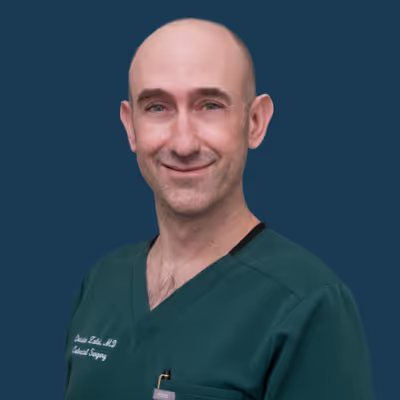
Christian Zalai
MD, M. Sc., FRCSC, FACS
Icône de localisation du chirurgien
Montréal, QC
Anglais, Français
Accepte les patients adultes

Chirurgien colorectal et général doublement certifié, ayant une formation avancée en chirurgie mini-invasive et 14 ans d'expérience.

C.-B.
Accepte les patients de l'extérieur de la Colombie-Britannique
Nathan How
MD, FRCSC
Icône de localisation du chirurgien
Kamloops, C.-B.
Anglais
Accepte les patients adultes

Chirurgien général certifié FRCSC, spécialisé en chirurgie mini-invasive et sans filet pour les hernies, avec un intérêt particulier pour la reconstruction et le rajeunissement anal.
QC
Accepte les patients de toutes les provinces, y compris le Québec
Simon Bergman
MD, FRCSC
Icône de localisation du chirurgien
Montréal, QC
Anglais,
Accepte les patients adultes

Chirurgien général certifié FRCSC avec 17 ans d'expérience, spécialisé en chirurgie mini-invasive (laparoscopique), dont la pratique est axée sur les hernies et les maladies de la vésicule biliaire.
QC
Accepte les patients de toutes les provinces
Cassandre Benay, photo de profil du chirurgien
Cassandre Benay
MD, MSc, FRCSC
Icône de localisation du chirurgien
Montréal, QC
Anglais, Français
Accepte les patients adultes

Chirurgienne endocrinienne hautement spécialisée avec 7 ans d'expérience, offrant une gestion experte des troubles thyroïdiens et parathyroïdiens, en mettant l'accent sur les techniques mini-invasives et les soins axés sur le patient.
QC
Accepte les patients de toutes les provinces
Gerry Polyhronopoulos, photo de profil du chirurgien
Gerry Polyhronopoulos
MD, FRCSC
Icône de localisation du chirurgien
Montréal, QC
Anglais, Français
Accepte les patients adultes

Chirurgien général polyvalent, reconnu pour son approche humaine et son efficacité technique, avec 14 ans d'expérience.