

.avif)
À titre informatif seulement, ne constitue pas un avis médical ou juridique. Veuillez consulter votre médecin ou votre chirurgien.



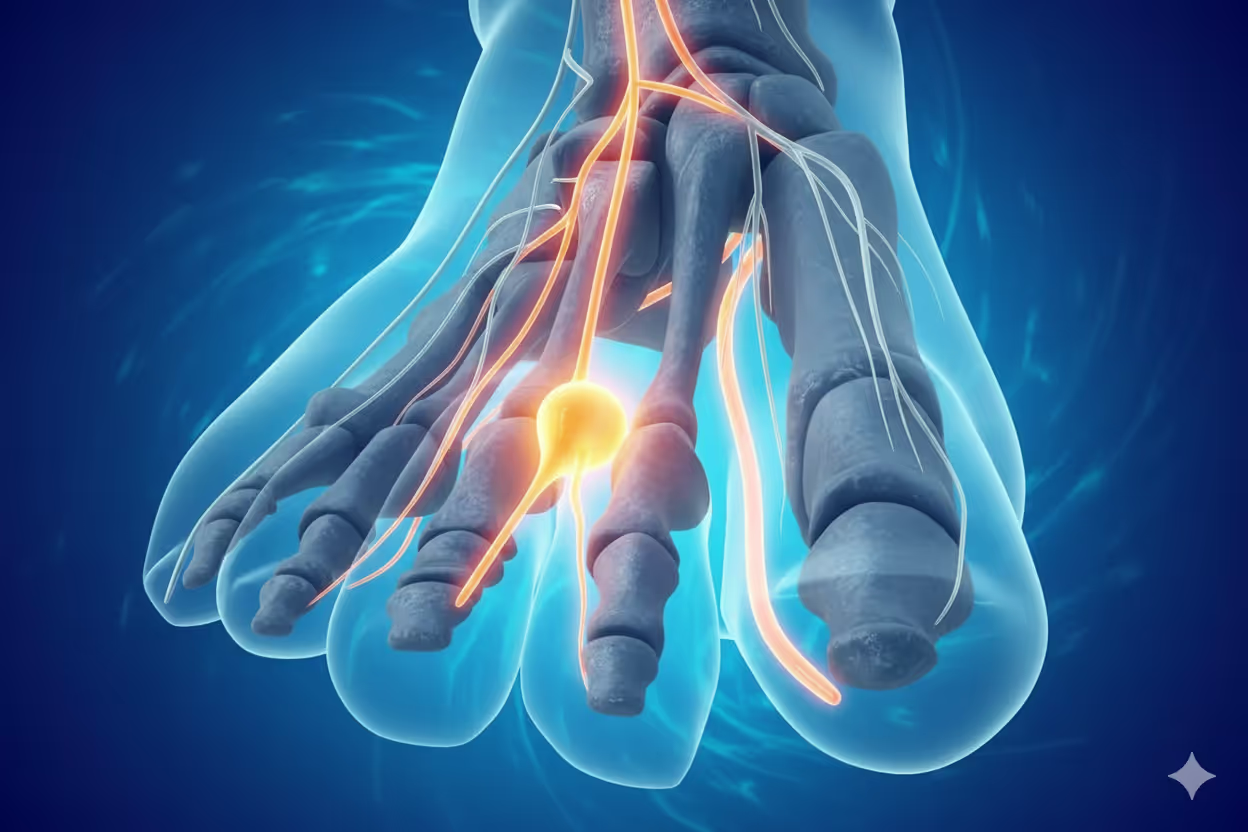
Morton’s neuroma excision is a foot operation where a swollen, irritated nerve in the ball of your foot is carefully removed to reduce pain. Normally, small nerves run between the long bones of your foot (metatarsals) and split toward your toes. With Morton’s neuroma, one of these nerves—most often between the third and fourth toes—gets thickened and inflamed, often from pressure, tight shoes, or foot mechanics.
In a neuroma excision, the surgeon makes a small cut on the top or bottom of the foot, gently moves aside soft tissues, and finds the enlarged nerve bundle. They then remove the thick, damaged segment of nerve while protecting nearby structures like blood vessels and tendons. The goal is to stop the nerve from constantly firing pain signals when you walk, stand, or wear shoes.
This surgery is usually considered when non‑surgical options—like wider footwear, orthotics, padding, or injections—haven’t given enough relief and the neuroma is clearly identified on exam or imaging.
Opter pour le privé vous permet de :
Surgery usually takes 20–60 minutes for one neuroma (longer if more than one). Expect to be at the clinic or hospital for several hours (check‑in, anaesthesia, surgery, and early recovery).
1. Enregistrement et planification
2. Anesthésie
3. Positionnement et préparation
4. Incision
5. Finding and removing the neuroma
6. Closure and dressing
7. Early recovery
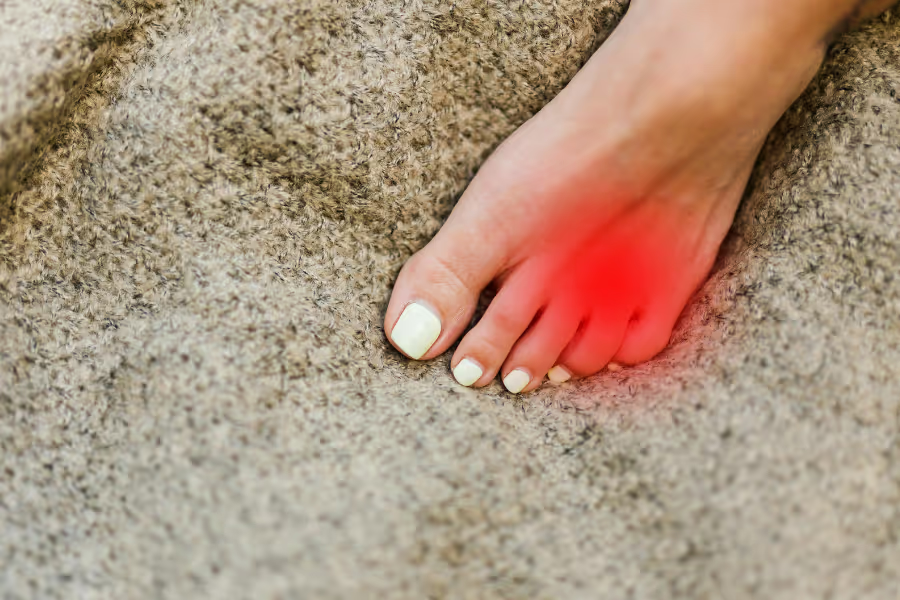
Your exact plan comes from your surgeon, but here’s the general idea. Take it seriously—how you protect and use your foot after surgery affects your result.
Ce que vous ressentirez
Objectifs principaux
Instructions typiques
Ce que vous ressentirez
Objectifs principaux
Typical steps
Ce que vous ressentirez
Objectifs principaux
Typical steps
Ce que vous ressentirez
Objectifs principaux
Call your care team or seek urgent help if you notice:
Morton’s neuroma excision is a smaller foot surgery, so costs are usually lower than big joint operations.
Things that change the cost:
Most private quotes will bundle:
Often billed separately or handled elsewhere:
Choosing your surgeon is one of the benefits of going private. Here's how to choose wisely.
Expérience et volume d'interventions
Qualifications et formation
Sécurité et résultats
Technique
Accréditation de l'établissement
Rehab and follow‑up
About the surgeon and surgery plan
Anesthésie et sécurité
Rétablissement et suivi postopératoire
Coûts et logistique
Choosing a surgeon for Morton’s neuroma excision is about more than price. Look for clear communication, real experience with forefoot surgery, a safe accredited facility, and a recovery plan that actually fits your life.
Morton’s neuroma excision is usually not the first step. It’s something you and a foot/ankle specialist consider after other options.
If you have
And you’ve already tried non‑surgical options like:
but you still have significant pain or can’t do what you need to do.
Surgery may not be right now if,
If the neuroma is clearly causing your pain, you’ve done the conservative stuff, and it’s still wrecking your daily life, Morton’s neuroma excision can be a reasonable next step. The decision should be made together with a surgeon who explains the trade‑offs clearly, including expected numbness and what success usually looks like.
No, you do not need a referral for private Morton's neuroma excision in Canada. You can book a consultation directly with a surgeon, and they will review your condition, symptoms, and any previous treatments or diagnostics.
Your surgeon will give you a plan that fits you, but here’s the basic roadmap. Good prep makes for better recovery.
Tell your team everything you take: itemize meds, vitamins, and supplements. Your surgeon or family doctor may ask you to pause:
Smoking/vaping: If you smoke or vape nicotine, try to quit at least 4 weeks before surgery. It improves healing and lowers infection risk.
General health: Aim for decent sleep, simple, balanced meals, and light movement (walking, gentle cycling) if your foot allows.
Footwear check:
Practice getting around
If you’ll use crutches or a cane, practice:
Safe pathways
Chill/elevation zone
Set up a spot with:
Bathroom tweaks
Une personne pour vous aider
Work and life
Jeûne
Suivez scrupuleusement les règles d’anesthésie :
Skin and clothes
Ce qu'il faut apporter
Your situation depends on how bad your pain is, how far you can walk, what your exam/imaging show, and how well non‑surgical stuff (shoes, orthotics, injections, meds) is working. Always talk specifics with your surgeon. Here’s the general picture.
(lorsque les symptômes sont importants et persistants)
1. Progressive pain and limits
2. Changing the way you walk
3. Other foot problems developing
4. Muscle and fitness decline
5. Lower quality of life and mood
6. Medication‑related issues
Delaying surgery can make sense if:
You and your surgeon should seriously discuss surgery if:
Morton’s neuroma excision is not for every little twinge in the forefoot. But if the neuroma is clearly the main problem and conservative treatments have failed, putting it off can mean more pain, more limits, and more knock‑on problems elsewhere.
Every surgery has risks. Your personal risk depends on your health, foot shape, circulation, and how closely you follow post‑op instructions. Always go over your own situation with your surgeon.
These are annoying but expected for many people:
These happen less often but are important to know about:
Rare, but you need to know they exist:
You can’t get risk to zero, but you can help:
Contact your care team or seek urgent help if you notice:
Morton’s neuroma excision is usually a low‑to‑moderate risk surgery, but it is still real surgery. Understanding the risks helps you make a clear decision and prepares you to spot problems early.
Si vous avez encore des questions, n'hésitez pas à nous contacter directement.
Parcourez les chirurgiens approuvés à travers le Canada. Comparez les tarifs, les qualifications et les lieux.
PARCOURIR LES CHIRURGIENS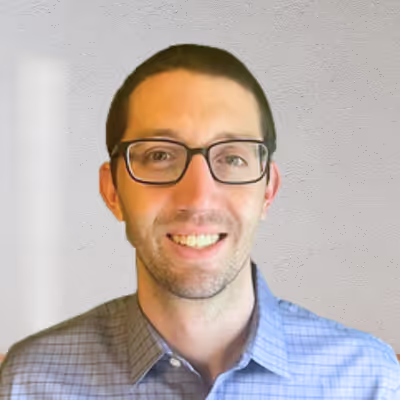



Chirurgien du pied et de la cheville certifié par le conseil, spécialisé dans la reconstruction mini-invasive de l'avant-pied et la chirurgie reconstructive du pied et de la cheville pour la préservation des membres diabétiques, avec 8 ans d'expérience.
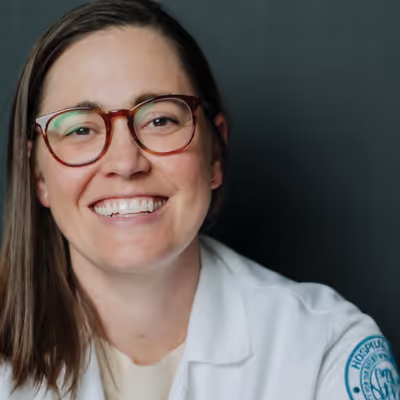
Chirurgien orthopédiste ayant une formation postdoctorale, axé sur les traumatismes et la reconstruction complexes du pied et de la cheville. Ancien nageur de niveau national et professeur adjoint de clinique à l'UBC.
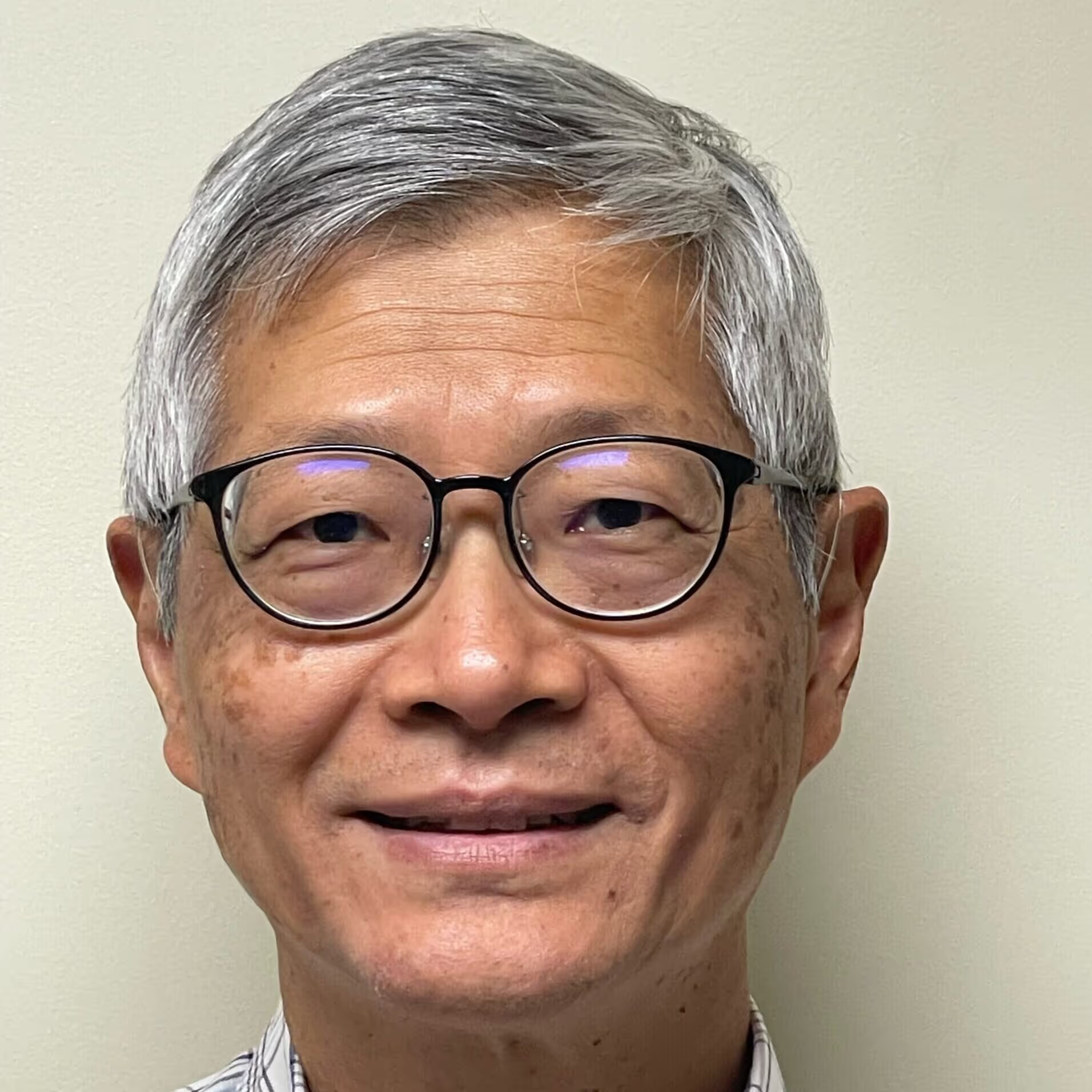
Chirurgien orthopédiste très expérimenté, comptant plus de 30 ans d'expérience. Il est considéré comme un chef de file régional en chirurgie du pied et de la cheville, axé sur les déformations complexes, les blessures sportives et les affections dégénératives.