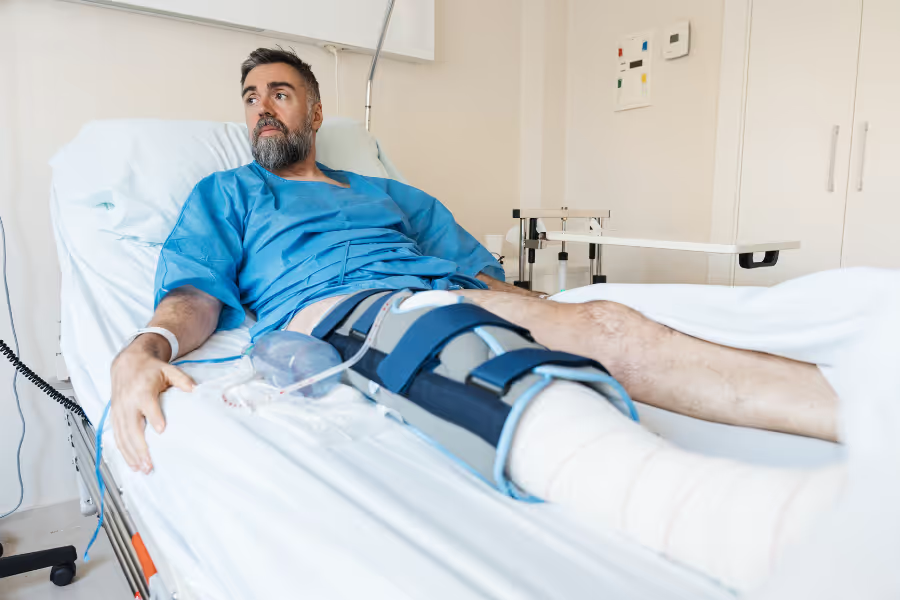

Whether you need a meniscal repair or meniscectomy, find the right surgeon serving Canadians in major cities like Vancouver, British Columbia; Calgary, Alberta; Toronto, Ontario; and Montréal, Québec.
.avif)
À titre informatif seulement, ne constitue pas un avis médical ou juridique. Veuillez consulter votre médecin ou votre chirurgien.



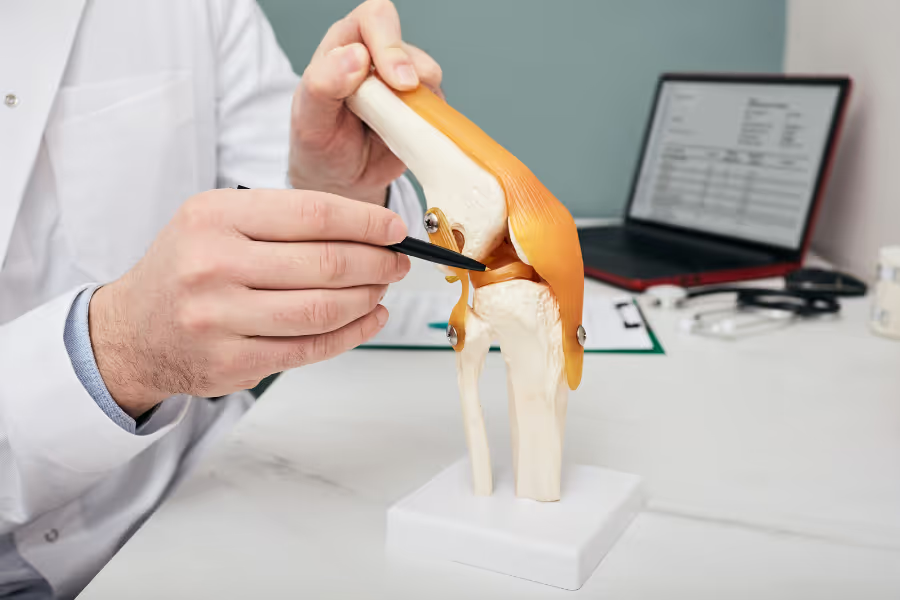
Meniscal surgery treats a tear in the knee’s “shock absorber” cartilage (the meniscus).
Think of the meniscus like a rubber gasket between the thighbone and shinbone. When it tears, it can flap or pinch inside the joint—causing pain, swelling, and sometimes locking.
Ce qui se passe réellement
If knee symptoms are limiting work, sleep, or sport, time matters. Private pathways can offer more choice and faster scheduling.
Public wait times can be long—especially when you factor in MRI delays and the referral-to-consult (“Wait 1”) stage. Private care can shorten the path from diagnosis to surgery, often within weeks.
Private options may let you:
Private programs typically provide a clear timeline, helping you plan time off, transportation, caregiver support, and physiotherapy.
Some tears worsen with time and can shift from “repairable” to “not repairable.” Ongoing locking/catching may also drive cartilage damage—timely care can protect the joint in select cases.

The surgery itself is no different from what’s performed in the public system. Surgeons use the same arthroscopic techniques, implants (when needed), and safety standards.
Typical operating time: about 30–90 minutes (can be longer for complex repairs or additional procedures). Add a few hours at the centre for check‑in, anaesthesia, and recovery.
Étapes de base
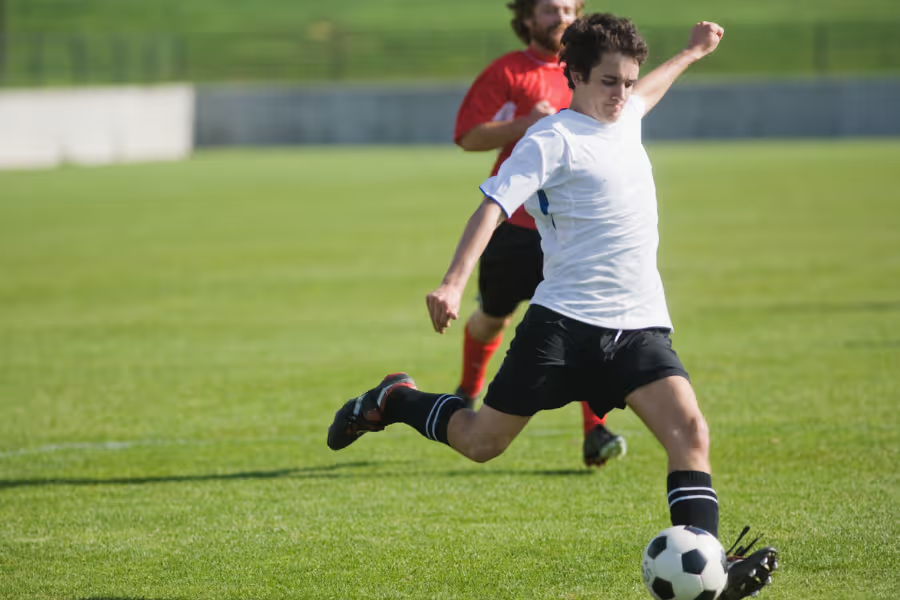
Your clinic should provide a detailed plan covering pain control, swelling management, physiotherapy, and follow-up. Recovery varies a lot depending on whether you had a meniscectomy (faster) or a meniscal repair (slower, more protected)—so follow your surgeon’s protocol exactly.
Some private clinics offer virtual follow-ups, while others coordinate with local providers in your home province.
Reality check: Swelling and soreness are expected. Getting comfortable walking and sleeping can be annoying.
Goals: Pain control, swelling reduction, safe walking, and early range of motion.
Activities: Ice/elevation, short walks, basic exercises (quad activation, gentle ROM). Wound care and meds as directed.
Meniscectomy (typical): Rapid improvement; many return to desk work quickly.
Meniscal repair (typical): Still protective—brace and/or crutches are common; knee bending may be limited early.
Goals: Normalize gait (as allowed), restore motion, build routine strength without flare-ups.
Activities: Structured physio, stationary bike if cleared, progressive strengthening.
La phase de travail.
Fever, increasing redness/drainage, calf swelling/pain, chest pain/shortness of breath, worsening inability to bear weight, or sudden locking after initial improvement.
Exact pricing depends on the province, facility fees, whether it’s repair vs meniscectomy, whether both knees are treated, and whether any add-ons are done (cartilage procedures, loose body removal, microfracture, etc.). Always ask for a written, itemized quote.
Choosing your surgeon is one of the benefits of going the private route. For meniscus surgery, the key decision is often repair vs trim—and that depends heavily on surgeon judgment, tear type, and rehab planning.
Ask how many knee arthroscopies they do each year, and specifically:
Higher relevant volume usually means smoother care, better decision-making intra‑op, and a clearer rehab pathway.
For a deep dive on understanding surgeon credentials, visit How to Understand Surgeon Credentials in Canada.
Un chirurgien de qualité devrait expliquer, en termes simples :
Request clinic or surgeon-level rates (when available), such as:
You want a written, phased protocol tailored to:
Meniscus surgery isn’t for everyone. It may be worth considering when:
A consultation is especially important if you’re being advised to “just trim it” without a clear explanation of whether a repair is possible.
No, you do not need a referral for private meniscal repair or meniscectomy in Canada. You can book a consultation directly with a surgeon, and they will review your condition, symptoms, and any previous treatments or diagnostics.
Your surgeon will provide specific instructions, but common prep includes:
Individual risk varies with age, health, tear type, surgical technique, and rehab. Discuss your specifics with your surgeon.
Smoking, uncontrolled diabetes, poor rehab adherence, high BMI, significant cartilage wear/arthritis, ligament instability (e.g., ACL deficiency), and returning to pivoting too early.
If you still have questions, please feel free to contact us directly.
Veuillez noter : Surgency n’est pas une clinique en soi. Nous ne pouvons pas non plus vous aider en situation d’urgence, ni fournir des conseils médicaux personnalisés — cela dépend de vous et votre chirurgien. Si vous présentez des symptômes aigus ou sévères, veuillez vous présenter à votre service d’urgence local ou à un centre de soins urgents.



Chirurgien orthopédiste ayant une formation postdoctorale—16 ans d'expérience—spécialisé en médecine sportive et en préservation articulaire, avec une expertise en reconstruction du genou et de l'épaule.

Chirurgien orthopédiste certifié par le FRCSC, comptant plus de 23 ans d'expérience en remplacement et reconstruction de la hanche et du genou, avec plus de 10 000 chirurgies réalisées à ce jour.
Chirurgien orthopédiste expérimenté, reconnu pour son approche axée sur le patient et sa polyvalence technique, allant de la réparation des tissus mous (médecine sportive) aux remplacements articulaires complets (genou, épaule, hanche).
Chirurgien orthopédiste doublement certifié et ayant bénéficié de deux formations postdoctorales, spécialisé en reconstruction adulte (arthroplastie de la hanche et du genou) et en traumatologie orthopédique, avec 14 ans d'expérience.
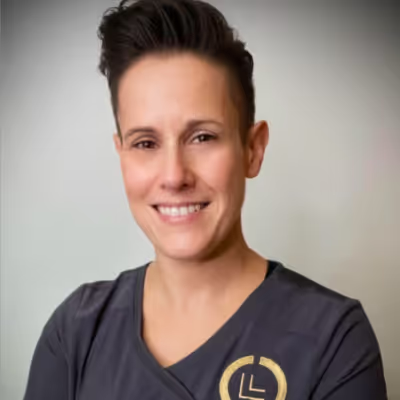
Chirurgienne orthopédiste ayant complété deux bourses de perfectionnement, profondément spécialisée en allongement des membres et en correction des difformités, avec plus de 15 ans d'expérience clinique.

Chirurgienne orthopédiste formée à Harvard, spécialisée en médecine sportive pédiatrique et en chirurgie de la cheville. Elle est chercheuse principale au CHU Sainte-Justine et professeure à l'Université McGill.
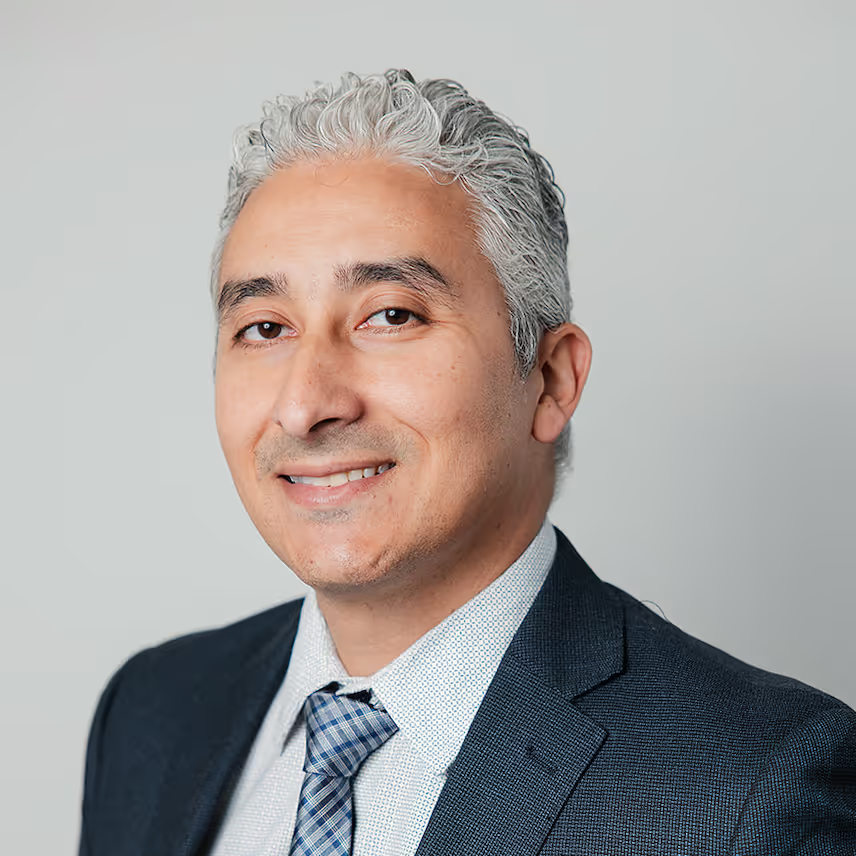
Chirurgien orthopédiste spécialisé dans la chirurgie de remplacement de la hanche et du genou, avec 7 ans d'expérience. Son expertise comprend les remplacements totaux et partiels de la hanche et du genou, ainsi que les chirurgies de révision complexes.
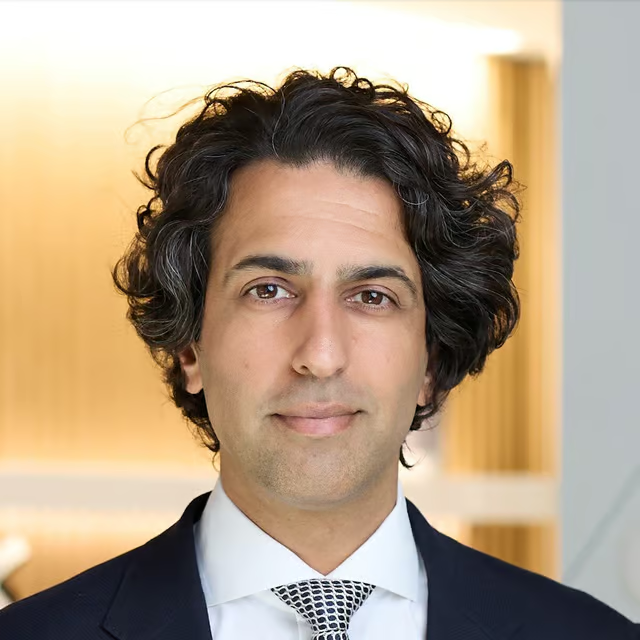
Chirurgien orthopédiste de renommée nationale. Il est chef de la division de chirurgie orthopédique à l'Hôpital Women's College et médecin-chef d'équipe pour d'importantes organisations sportives professionnelles.
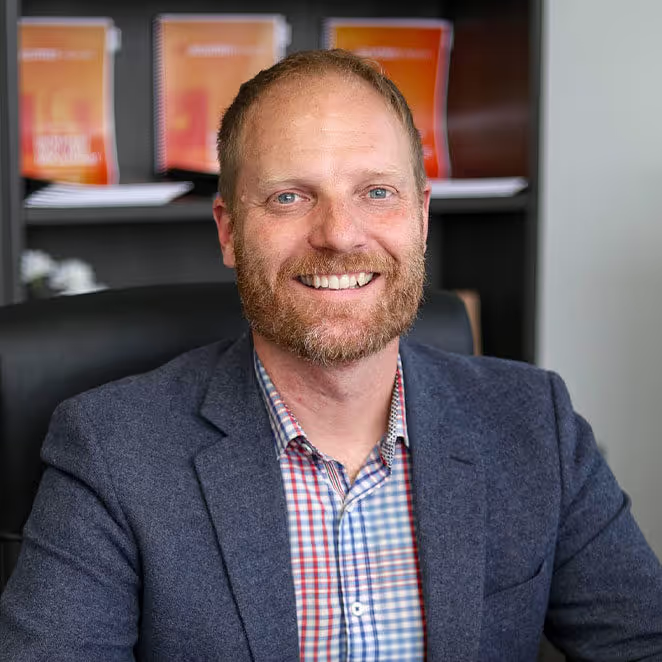
Chirurgien orthopédiste comptant 14 ans d'expérience, spécialisé dans les chirurgies arthroscopiques et ouvertes de l'épaule, du genou, du coude et des affections liées au sport.

Chirurgien formé en surspécialité, spécialisé en arthroplastie de la hanche et du genou ainsi qu'en traumatologie orthopédique, avec plus de 10 ans d'expérience.