

Private Bladder Surgery (TURBT)

TURBT removes bladder tumours via the urethra using a resectoscope, to diagnose and treat cancer. Find the right urologist who fits your needs below, serving Canadians in major cities like Vancouver, British Columbia; Edmonton, Alberta; Toronto, Ontario; and Montréal, Québec.
Le fondateur de Surgency, le Dr Sean Haffey, souriant
Révisé et approuvé par le Dr Sean Haffey
Maquette de carte de crédit

À titre informatif seulement, ne constitue pas un avis médical ou juridique. Veuillez consulter votre médecin ou votre chirurgien.

Comment fonctionne Surgency

Icône indiquant le lieu de l'intervention chirurgicale

Décidez où aller

La chirurgie privée au Canada nécessite généralement de voyager hors de sa province. La première étape consiste donc à décider où.
Icône indiquant la recherche sur la plateforme

Rechercher par spécialité

Notre application facilite la recherche de chirurgiens par spécialité et par emplacement.
Icône indiquant l'envoi d'une demande de consultation sécurisée au chirurgien

Planifiez une consultation

Prenez rendez-vous pour une consultation directement sur Surgency. C'est sécurisé, confidentiel et rapide.

What is bladder lift surgery?

Transurethral Resection of Bladder Tumour (TURBT) is a procedure doctors use to find and remove growths on the inside lining of the bladder.

“Transurethral” means they go through the urethra—the tube you pee through—so there are no cuts on the outside. The doctor guides a thin instrument called a resectoscope into the bladder. It has a tiny camera that shows a clear, magnified view on a screen and a loop of wire at the tip that can shave off the tumour layer by layer using gentle electrical energy. The pieces are washed out and sent to a lab so pathologists can examine them under a microscope and tell exactly what the tumour is and how deep it goes.

Sometimes the doctor also smooths the base of the area or uses energy to cauterize (seal) tiny blood vessels. TURBT is both diagnostic and therapeutic: it helps confirm the type and stage of the tumour and, in many cases, removes the visible growth at the same time—all through natural passages without external incisions.
Why do Canadians get bladder surgery (TURBT) done privately?

Délais d'attente plus courts

  • Queues for cystoscopy and TURBT can take months. Private centres often book consults, cystoscopy, and TURBT within days to weeks—reducing time spent with bleeding, urgency, and anxiety, and helping you return to work or school sooner.

Choix et contrôle

  • Choose a high‑volume urologist with specific bladder cancer experience and hospital privileges.
  • Select the clinic location (often out‑of‑province) and coordinate dates around family, travel, or job demands.
  • Discuss anesthesia options and whether enhanced visualization (e.g., blue‑light or narrow‑band) is available.

Tranquillité d'esprit

  • Clear, confirmed timelines and a detailed plan (diagnostic cystoscopy, TURBT, pathology reporting, and next‑step pathway) reduce uncertainty.
  • You know who will operate, where it will happen, and how results will be delivered—easier planning for rides, time off, and support.

Prévenir une détérioration supplémentaire

  • Earlier diagnosis and tumour removal can limit ongoing bleeding, clot retention episodes, and repeat ER visits.
  • Faster pathology means quicker staging and timely next treatments (intravesical therapy, surveillance), avoiding schedule drift.
  • If re‑resection is needed, it can often be arranged promptly, reducing gaps in care.

Services additionnels pratiques

  • Access to specific tech (blue‑light, high‑definition scopes), meticulous photo/video documentation, and coordinated post‑op scheduling (BCG/mitomycin, surveillance cystoscopy).
  • Itemized pricing and direct messaging with the care team for rapid questions and results.
Maquette de tableau de bord
Pourquoi choisir Surgency

Pour les Canadiens qui souhaitent une chirurgie en quelques semaines, et non en quelques mois

Surgency est une ressource gratuite, offerte par un médecin canadien du système public, pour vous aider à trouver le bon chirurgien selon vos besoins.

How do I get private bladder surgery (TURBT) in Canada?

  1. Confirmez votre diagnostic. La plupart des patients commencent par consulter un médecin de famille ou un spécialiste qui confirme que la chirurgie est conseillée. Un chirurgien privé peut également confirmer le diagnostic si nécessaire.
  2. Faites des recherches.
    • Vous pouvez trouver des chirurgiens à Vancouver, en Colombie-Britannique; Calgary, en Alberta; Toronto, en Ontario; et Montréal, au Québec sur notre application, et consulter leurs qualifications ainsi que les tarifs.
  3. Planifiez une consultation initiale. La plupart des chirurgiens proposent des consultations en clinique et en ligne.
    • Les consultations sont généralement fixées en quelques jours ou quelques semaines.
    • Remarque : prévoyez des frais de consultation entre 150 $ et 350 $.
    • Nous vous recommandons de prendre 2 à 4 consultations avec différents chirurgiens afin de mieux comprendre vos options.
  4. Consultation. Le chirurgien examinera votre état, vos symptômes et tout traitement ou diagnostic antérieur, comme des radiographies ou des IRM.
  5. Après la consultation. Le chirurgien examinera ensuite votre dossier et vous proposera des options chirurgicales (et non chirurgicales) en fonction de vos besoins; il passera en revue les risques et les résultats attendus; et présentera les options de tarification et de planification.
  6. Planifiez la date de votre chirurgie. Une fois que vous aurez confirmé la procédure et le paiement, la clinique fixera la date de votre chirurgie – généralement dans un délai de quelques semaines.

Bladder surgery: what to expect

Most TURBTs take about 30–60 minutes of operating time. Expect extra time at the surgical centre for check‑in, anaesthesia, and recovery. Many people go home the same day.

Étapes de base

Enregistrement et planification

  • You meet the team, review your scans/tests, and confirm the plan.

Anesthésie

  • You’ll get general anaesthesia (asleep) or spinal anaesthesia (numb from the waist down). You won’t feel the procedure.

Positionnement et préparation

  • You lie on a padded table. The area is cleaned and draped. A sterile fluid system is set up to gently fill the bladder so the surgeon can see clearly.

Portée dans

  • A thin instrument called a resectoscope goes through the urethra (the tube you pee through) into the bladder—no outside cuts.

Find and view the tumour

  • A tiny camera shows the inside of the bladder on a screen. Sometimes special blue‑light or filters are used to highlight abnormal areas.

Resect (remove) the tumour

  • A small wire loop uses electrical energy to shave the tumour layer by layer. Pieces are washed out and saved for the lab to study.

Control bleeding and tidy up

  • The surgeon cauterises tiny blood vessels to stop bleeding and smooths the base of the resection.

Catheter and wrap‑up

  • A soft catheter may be left in the bladder to drain urine and keep things comfortable. You go to recovery, get instructions, and head home once you’re safe to leave.

À quoi s'attendre pendant la période de récupération?

Everyone heals differently—follow your urologist’s plan. TURBT recovery is usually short, but the bladder can be cranky for a bit.

En général, à quoi s'attendre

Jours 1 à 3

  • Reality check: burning when you pee, going more often, urgency, and pink/red urine with tiny clots. Crampy lower belly feelings are common.
  • Goals: keep urine flowing, control discomfort, avoid clots.
  • Activities: drink plenty of water; short walks a few times a day; take approved pain/antispasm meds. If you go home with a catheter, follow the care sheet and keep the bag below your bladder.

Jours 4 à 7

  • Usually improving.
  • Goals: settle irritation and lighten the urine colour.
  • Activities: most people manage school/desk work in a few days. Avoid heavy lifting, straining, cycling, and high‑impact exercise.

Semaines 2 à 4

  • Steady phase.
  • Goals: near‑normal bathroom habits.
  • Activities: gradually resume regular exercise when cleared. If you had a catheter, it’s often removed in the first week, then a day of extra urgency is normal.

If intravesical medicine was given in recovery (e.g., mitomycin)

  • You may have extra urgency for a day. Follow handling/toileting instructions exactly.

Signes d'alerte : appelez votre équipe soignante ou rendez-vous aux urgences

  • Fièvre ou frissons
  • Can’t pee, or stream suddenly stops
  • Bright‑red urine that doesn’t lighten after pushing fluids, or large clots
  • Severe/worsening lower belly or flank pain, nausea/vomiting
  • Catheter not draining or leaking around the tube

How much does bladder surgery (TURBT) cost in Canada?

In Canada private clinics usually charge $4,000 – $9,500.

In the United States, the cost ranges between $4,200 - $13,500.

Exact prices vary by province/clinic, tumour size/location, anaesthesia (spinal vs general), whether blue‑light is used, and if a catheter or same‑day intravesical medicine is included. Always request a written, itemized quote.

Ce qui est habituellement inclus

  • Surgeon professional fee
  • Anaesthesia (spinal or general) and monitoring
  • Facility/OR fees, nursing, standard disposables, cystoscope/resectoscope use
  • Basic pathology submission (specimen handling) and immediate recovery care
  • Standard catheter placement and a brief follow‑up visit

Ce qui n'est souvent pas inclus

  • Pre‑op tests and imaging (urinalysis/culture, bloodwork, ultrasound/CT)
  • Pathology interpretation fee (the lab bills separately)
  • Blue‑light equipment/consumables, intravesical chemotherapy (mitomycin/BCG), or special implants
  • Extra OR time beyond the booked block, unplanned admission/overnight stay
  • Prescriptions after surgery (pain, antispasmodics), additional catheter supplies
  • Frais de déplacement/hébergement si vous venez d'une autre province/d'un autre État
  • Second‑look TURBT or additional procedures if margins are unclear or re‑resection is required

Choisir un chirurgien et une clinique

Choosing your surgeon and clinic is a big benefit of going private—use it to your advantage.

Ce qu'il faut rechercher

Expérience et volume d'interventions

  • Ask how many cystoscopies and TURBTs they perform per month/year, and their case mix (diagnostic cystoscopy, bladder cancer surveillance, blue‑light cystoscopy, biopsies, resections, re‑resections).
  • Higher volume and standardized outpatient pathways usually mean smoother care and fewer complications.

Qualifications et formation

  • Vérifiez le permis d'exercice auprès de votre ordre professionnel provincial (CPSO Ontario, CPSBC C.-B., CPSA Alberta, CMQ Québec, etc.).
  • Look for FRCSC‑certified urologists; added fellowship or focused practice in uro‑oncology/endourology is a plus for TURBT.

Résultats et sécurité

  • Ask for recent metrics: infection/UTI rate after office cystoscopy, unplanned ER visits within 72 hours, catheter reinsertion rate, early re‑resection rate, complete resection rates, and on‑time pathology turnaround.
  • For cancer care: adherence to guideline timelines (e.g., first TURBT → pathology → intravesical therapy/surveillance).

Indications and plan

  • Ensure the reason for cystoscopy/TURBT is clear and matches your tests.
  • Confirm pre‑op workup (urinalysis/culture, imaging) and what decisions the procedure will answer.

Technique and technology

  • Flexible vs rigid cystoscope; availability of enhanced visualisation (blue‑light/narrow‑band) when indicated.
  • Ability to perform same‑visit biopsy/fulguration, immediate intravesical mitomycin when appropriate, and high‑quality photo/video documentation.

Accréditation de l'établissement

  • Choose accredited non‑hospital surgical facilities (Accreditation Canada/CAAASF or provincial programs).
  • Ask about scope reprocessing standards, back‑up equipment, and hospital transfer agreements.

Communication and logistics

  • Clear written instructions, direct contact for urgent issues, and defined turnaround for results.
  • Options for virtual follow‑ups; coordination with your family doctor/oncology team.

Transparence des prix (privé/paiement direct)

  • Request an itemized quote: surgeon, facility, anaesthesia, pathology (lab fee), blue‑light consumables, intravesical meds, catheter supplies, and follow‑ups.
  • Ask how costs change if the plan expands (larger tumour, need for re‑resection).

Bladder surgery frequently asked questions

How do I know if bladder surgery (TURBT) is right for me?

TURBT (Transurethral Resection of Bladder Tumour) is a procedure where a urologist uses a tiny camera and wire loop through the urethra (no outside cuts) to look inside the bladder and remove tumours or suspicious growths.

Cela pourrait vous convenir si :

  • You have blood in your urine (visible or on tests) and imaging suggests a bladder lesion
  • Cystoscopy showed a growth that needs to be removed and tested
  • You have ongoing bladder symptoms (bleeding, clots, irritation) without a clear cause on scans alone
  • Your doctor needs tissue to confirm the diagnosis and plan next steps

Common reasons people get TURBT

  • Remove and sample bladder tumours to find out type and depth
  • Control bleeding from a growth
  • Do a “re‑resection” to make sure the first removal got the whole area

When TURBT might not be right (yet)

  • No evidence of a bladder lesion on imaging/cystoscopy and symptoms have another clear cause
  • Active urinary infection that hasn’t been treated
  • You aren’t medically cleared for anaesthesia right now

Ai-je besoin d'une référence?

No, you do not need a referral for a private bladder surgery in Canada. You can book a consultation directly with a urologist, and they will review your options and diagnostics.

Comment me préparer ?

Les instructions de votre urologue sont prioritaires; suivez son plan s'il diffère.

Pré-réadaptation et optimisation de la santé

  • Stop smoking/vaping: Nicotine raises infection and healing risks. Quitting 4+ weeks before helps.
  • Medications: Share all meds/supplements. You may need to pause blood thinners (aspirin, warfarin, DOACs), certain anti‑inflammatories, and some herbal products that increase bleeding. Only stop if your surgeon or family doctor tells you to.
  • Infection check: Report fever, burning urine, foul smell, or new pain—an untreated UTI can delay surgery.
  • Fitness, sleep, hydration: Light walking, good sleep, and a balanced diet (adequate protein) support recovery.
  • Medical clearance: Some patients need bloodwork, ECG, or a pre‑op assessment based on age/health.

Préparation à domicile

  • Bathroom setup: Stock pads/liners (pink urine is common after), soft toilet paper, and a clean water bottle.
  • Comfort aids: Heating pad (low), acetaminophen/ibuprofen if allowed, fibre/stool softener to avoid straining.
  • Catheter readiness: There’s a chance you’ll go home with a catheter—clear a spot to hang the night bag below bladder level; have extra underwear/loose pants.

Soutien et logistique

  • A helper: Arrange a ride home (you’ll have anaesthesia) and someone to stay the first night if possible.
  • Work/school: Plan 2–3 lighter days; heavy labour and intense workouts are usually paused briefly.
  • Follow‑ups: Schedule your pathology/result visit and any intravesical therapy appointments in advance.

Aliments, médicaments et préparation le jour de la chirurgie

  • Jeûne : Suivez les règles d'anesthésie (souvent, pas de solides après minuit; liquides clairs jusqu'à une heure précise).
  • Skin prep: Shower the night before and morning of surgery; no lotions near the genital area.
  • What to bring: Photo ID/health card, medication list, glasses, a pad/liner, and comfortable loose clothing.
  • Bladder plan: You’ll provide a urine sample on arrival if requested.

Post‑procedure practice

  • Hydration and walking: Plan to sip water and take short walks to help flush the bladder and prevent clots.
  • Activity: Gentle daily activity is fine; avoid heavy lifting/straining, cycling, and high‑impact exercise until cleared.
  • If you have a catheter: Keep the bag below bladder level, don’t kink the tubing, and follow the cleaning/drainage instructions.

Quels sont les risques associés?

Your individual risk depends on your health, anatomy, tumour size/location, what’s done during TURBT (biopsy only, full resection, blue‑light, intravesical medicine), the type of anaesthesia, and how closely you follow instructions. Discuss your personal risks with your urologist.

Courants et généralement temporaires

  • Burning when you pee, urgency/frequency, and mild bladder cramps for a few days
  • Pink or red urine, sometimes tiny clots
  • Nausées ou étourdissements dus à l'anesthésie; constipation due aux analgésiques.
  • Soreness where a catheter sits if one is used

Moins courants

  • Infection urinaire (fièvre, frissons, douleurs qui s’aggravent)
  • More bleeding than expected or passing clots that are hard to clear
  • Temporary trouble peeing (urinary retention) needing a short‑term catheter
  • Bladder wall irritation causing spasms and leakage for a few days

Risques spécifiques à l'intervention (dépendent de la procédure effectuée)

  • Deeper resection: thicker clots or longer catheter time
  • Biopsy of the ureteric orifice or near the bladder neck: brief swelling or irritation affecting urine flow
  • Immediate intravesical medicine (e.g., mitomycin): chemical cystitis (extra burning/urgency for a short time)

Rare mais important

  • Significant bleeding requiring return to hospital or another procedure to wash out clots
  • Perforation (a small hole) in the bladder wall, sometimes needing a longer catheter or rarely surgery
  • Infection spreading to the bloodstream (sepsis) — rare but urgent
  • Scar tissue causing a weak stream (urethral stricture) or bladder‑neck narrowing
  • Need for a second‑look TURBT if pathology shows it’s necessary

Comment réduire les risques

  • Follow pre‑op rules (medication holds, fasting, antiseptic shower) and treat any UTI before surgery
  • Hydrate well after, walk, and take meds as prescribed (pain/spasm/antibiotics if given)
  • Avoid heavy lifting/straining until cleared; keep catheter care clean and the bag below bladder level
  • Know red flags: fever/chills, can’t pee, bright‑red urine that doesn’t lighten with fluids, large clots, severe lower‑belly/flank pain — call your care team or go to urgent care/ER

TURBT is the standard way to diagnose and remove bladder tumours through natural passages. Most side effects are mild and short‑lived; serious problems are uncommon, especially with experienced teams and good after‑care. Your urologist can explain which risks matter most for you.

Quels sont les risques de retarder ou de ne pas subir la chirurgie?

Your situation depends on your symptoms (blood in urine, clots, bladder irritation), what cystoscopy/imaging shows, tumour size/location, and your overall health. Talk specifics with your urologist.

Main risks of delaying or not having TURBT (when there’s a suspected or confirmed bladder tumour)

Progressive symptoms and life disruption

  • Ongoing bleeding, clots, urgency, and night trips to the bathroom.
  • More ER visits for clot retention or trouble peeing.

Progression de la maladie

  • Small, surface tumours can grow or multiply.
  • Some tumours can invade deeper bladder layers over time, which may require bigger treatments later.

Traitement plus difficile ultérieurement

  • Larger or deeper tumours can mean longer surgery, higher chance of needing a second TURBT, hospital admission, or more intensive therapies.
  • Delays can push back follow‑on care (like intravesical therapy or surveillance schedules).

Complications from blockage or clots

  • Clots can plug the bladder outlet, causing painful retention or kidney back‑pressure (hydronephrosis).

Uncertainty and stress

  • Not knowing what the tumour is (type/grade/stage) increases anxiety and complicates planning for school, work, or family.

Quand l'observation attentive peut être raisonnable

  • Your urologist has ruled out a visible lesion, symptoms are mild and improving, and tests are normal—with a clear plan for monitoring.

Quand il ne faut pas tarder

  • Visible blood in urine (especially repeated), clots, or difficulty peeing
  • A lesion seen on cystoscopy or imaging that needs tissue diagnosis
  • Worsening symptoms, anaemia from bleeding, or risk factors (e.g., smoking history)

If a bladder growth is suspected or seen, timely TURBT gives a diagnosis and removes the visible tumour through natural passages. Waiting with ongoing red flags can let problems grow and make treatment tougher. If symptoms are mild and tests are clear, close monitoring with your urologist may be okay.

J'ai encore des questions

Si vous avez encore des questions, n'hésitez pas à nous contacter directement.
Vous cherchez un urologue privé?

Parcourez les urologues agréés partout au Canada. Comparez les prix, les qualifications et les emplacements.

PARCOURIR LES CHIRURGIENS

Browse Accredited Private Surgeons for Bladder Surgery (TURBT)

Les chirurgiens de Surgency sont vérifiés :

✓ Diplôme de médecine reconnu
✓ Permis d'exercice canadien (LMCC)
✓ Permis d'exercice médical provincial actif
✓ Certification du conseil (FRCSC/ABMS)
QC
Accepte les patients de toutes les provinces, y compris le Québec
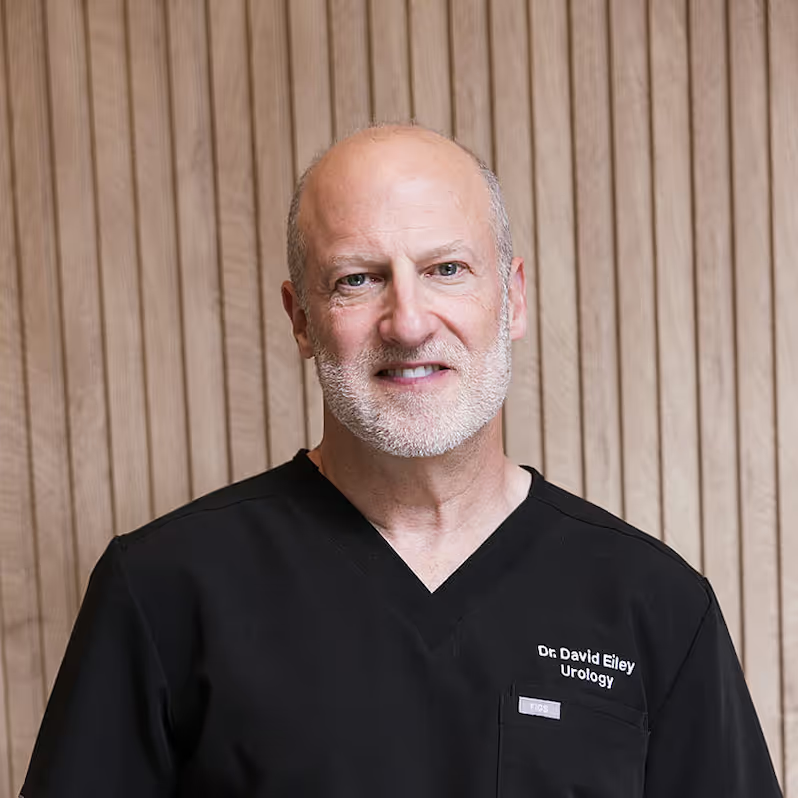
Photo de profil du chirurgien David Eiley
David Eiley
MD, FRCSC
Icône de localisation du chirurgien
Montréal, QC
Anglais, Français
Accepte les patients adultes

Urologue certifié FRCSC, avec 25 ans d'expérience et plus de 10 000 procédures réalisées. Expérimenté dans le traitement des maladies de la prostate, de l'incontinence urinaire, de la dysfonction érectile, ainsi que des affections de la vessie et des testicules.
QC
Accepte les patients de toutes les provinces
Daniel Liberman
MD, MSc, FRCSC
Icône de localisation du chirurgien
Montréal, QC
Anglais, Français
Accepte les patients adultes

Urologue à Montréal, spécialisé dans les dérivations urinaires, la continence et l'incontinence pour la vessie neurogène, ainsi que la réparation des fistules urinaires compliquées.
QC
Accepte les patients de toutes les provinces
Francis Petrella
MD, FRCSC
Icône de localisation du chirurgien
Montréal, QC
Anglais, Français
Accepte les patients adultes

Urologue formé en fellowship spécialisé dans la santé sexuelle et la fertilité masculine, incluant la dysfonction érectile, la maladie de La Peyronie, l'hormonothérapie et les renversements de vasectomie.
QC
Accepte tous les patients.
Hiba Abou-Haidar
MD, FRCSC
Icône de localisation du chirurgien
Montréal, QC
Anglais, Français
Accepte les patients adultes

Urologue général certifié FRCSC, spécialisé dans le traitement des calculs, la réparation du prolapsus des organes pelviens et l'hypertrophie bénigne de la prostate (HBP).

QC
Accepte les patients qui résident à l'extérieur du Québec
Lysanne Campeau
MD, PhD, FRCSC
Icône de localisation du chirurgien
Montréal, QC
Anglais, Français
Accepte les patients adultes

Urologue de premier plan spécialisée en médecine pelvienne féminine et chirurgie reconstructive. Ses domaines d'expertise comprennent le prolapsus des organes pelviens, l'incontinence urinaire (masculine et féminine), les troubles mictionnels et l'HBP.