

.avif)

À titre informatif seulement, ne constitue pas un avis médical ou juridique. Veuillez consulter votre médecin ou votre chirurgien.



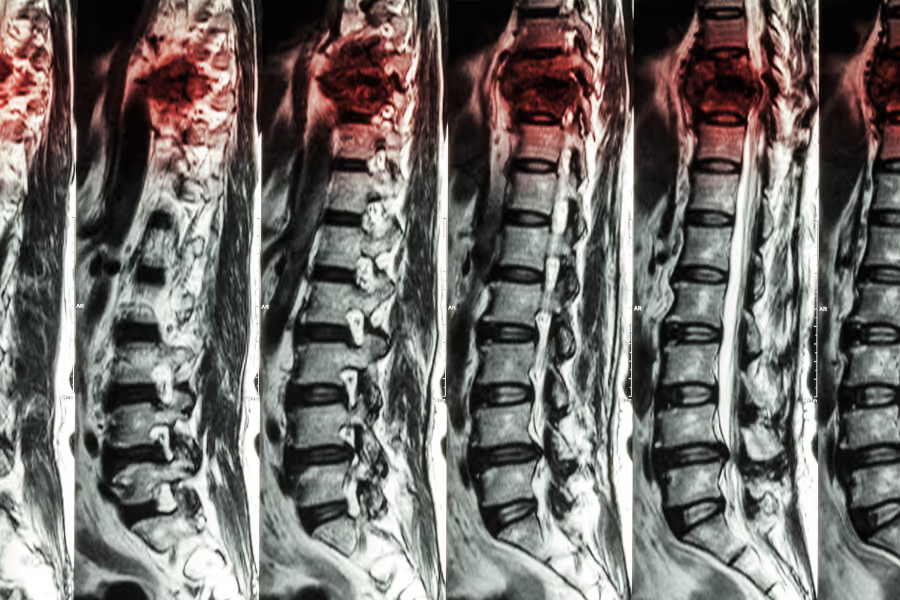
Kyphoplasty is a minimally invasive spine procedure used to treat painful compression fractures in the vertebrae (the building blocks of your spine). Imagine one of those blocks gets crushed down, often from osteoporosis or a hard fall. That collapse can cause sharp back pain and change your posture.
During kyphoplasty, the surgeon uses live X‑ray to guide a needle into the broken vertebra through a tiny skin puncture. Through this needle, a small balloon is slid into the bone and gently inflated. This can help lift the collapsed area and create a controlled space inside the vertebra. Once the space is shaped, the balloon is removed and the cavity is filled with a special bone cement. The cement hardens quickly, stabilizing the fracture from the inside so the bone doesn’t keep shifting.
Kyphoplasty doesn’t replace the whole vertebra; it reinforces the damaged part. The goal is simple: stabilize the crushed bone so movement hurts less, standing and walking feel more secure, and you can get back to everyday activities with better comfort.
Going private gives you more say in your care. You can:

Most kyphoplasty procedures take about 30–60 minutes per fractured vertebra of operating time. Add a few extra hours at the surgical centre for check‑in, anaesthesia, and recovery before you go home.

Every spine is different—follow your surgeon’s plan. The goal after kyphoplasty is to let the cemented bone settle while you slowly get your movement and confidence back.
Reality check: your back will feel sore at the puncture site, and you might be tired from anaesthesia.
Still annoying but usually much better than the original fracture pain for many people.
The “get your life back” phase.
Building strength and confidence.
Exact prices depend on how many vertebrae are treated, why they fractured, and whether you stay overnight. Always ask for a written, itemized quote.
In Canada, private clinics charge between $15,000 – $35,000.
In the United States, you can expect between CA$15,500 - CA$42,700.
Prices climb with more levels treated, extra cement, or if you need admission instead of same‑day discharge.
Choosing your surgeon/clinic is one of the biggest benefits of going private. Here's how to choose wisely.
Expérience et volume d'interventions
Qualifications et formation
Résultats et sécurité
Indications et alternatives
Imagerie et planification
Accréditation de l'établissement
Intégration de la réadaptation
Tarification transparente
Kyphoplasty is a minimally invasive spine procedure where a surgeon stabilizes a crushed vertebra with bone cement.
No, you do not need a referral for a private kyphoplasty in Canada. You can book a consultation directly with a surgeon, and they will review your options and diagnostics.
Your surgeon’s instructions always come first—follow their plan if it’s different.
Stay moving (safely)
Quit smoking/vaping
Médicaments
Santé générale
Autorisation médicale
Disposition sécuritaire
Bed and bathroom
Comfort gear
Vêtements
Une personne pour vous aider
École et travail
Travel
Préparation des repas
Pain and bowel plan
Jeûne
Préparation de la peau
Ce qu'il faut apporter
Your individual risk depends on your health, bone quality, how many vertebrae are treated, why they fractured (osteoporosis, cancer, trauma), anaesthesia, and how closely you follow instructions. Talk through your personal risks with your spine surgeon doctor.
Kyphoplasty is generally considered safe and can help many people with painful compression fractures. Most issues are mild and short‑term. The bigger worries are cement leakage, infection, blood clots, and ongoing pain if the fracture isn’t the only problem. An experienced spine team will explain which risks actually apply to you and how they’ll minimize them.
Your situation depends on how bad your pain is, how many vertebrae are fractured, what imaging shows (fresh vs old fractures, amount of collapse), your bone health (osteoporosis, cancer, trauma), and how well non‑surgical care is working (brace, meds, gentle movement). Always discuss details with your spine team.
(when pain from a compression fracture is significant and persistent)
Douleur progressive et perte de fonction
Spinal collapse and posture changes
Breathing and fitness issues (with multiple fractures)
Lower quality of life and mood
Harder recovery later
Medication‑related harms
Si vous avez encore des questions, n'hésitez pas à nous contacter directement.
Parcourez les chirurgiens de la colonne vertébrale vérifiés partout au Canada. Comparez les prix, les qualifications et les lieux.
PARCOURIR LES CHIRURGIENS



Neurochirurgien ayant grandi dans la région, spécialisé en neurochirurgie à accès minimal et en neurochirurgie endovasculaire; avec un intérêt clinique pour la neurochirurgie cérébrovasculaire, spinale et oncologique, et 21 ans d'expérience.