


.png)


What is thyroidectomy and why do people need it?
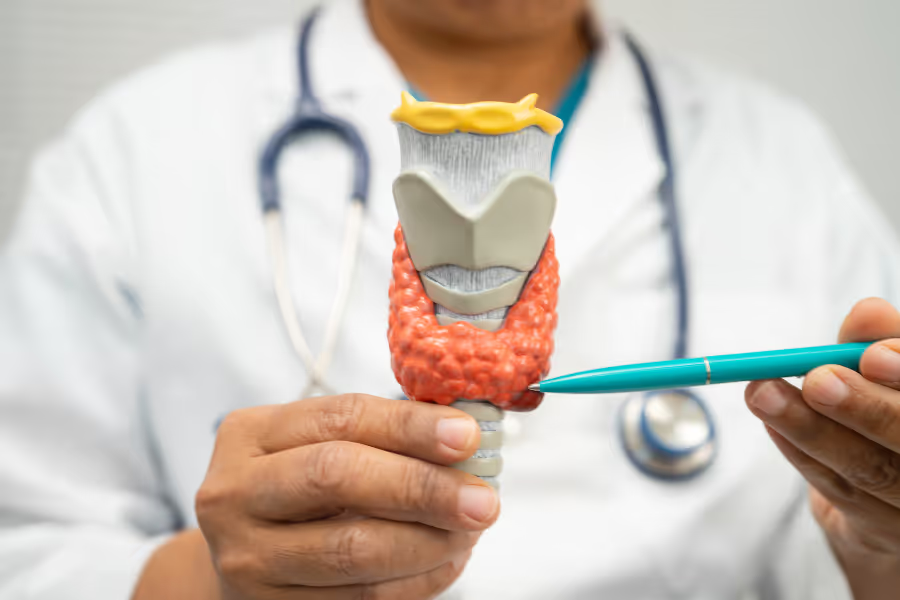
Thyroidectomy is a surgery to remove part or all of the thyroid gland—a butterfly-shaped gland at the front of your neck, just below your Adam's apple. The thyroid makes hormones that control your metabolism, heart rate, body temperature, and energy levels. When things go wrong with the thyroid, surgery may be the best or only option.
There are a few main types of thyroidectomy:
- Total thyroidectomy: The entire thyroid gland is removed. This is the most common approach for thyroid cancer and large goitres. After a total thyroidectomy, you'll need to take thyroid hormone replacement medication every day for the rest of your life.
- Hemithyroidectomy (lobectomy): Only one half (lobe) of the thyroid is removed. This is often used for suspicious nodules, small cancers confined to one side, or a goitre affecting only one lobe. Your remaining lobe may produce enough hormone on its own, so you might not need daily medication.
- Subtotal (near-total) thyroidectomy: One full lobe, the connecting strip (isthmus), and part of the other lobe are removed. This is less common but may be used for certain cases of hyperthyroidism or goitre.
People need thyroidectomy for several reasons:
- Thyroid cancer: Surgery is the primary treatment for most thyroid cancers. Other treatments like radioactive iodine work best when as much thyroid tissue as possible has been removed.
- Goitre (enlarged thyroid): A goitre can press on your windpipe or oesophagus, making it hard to breathe or swallow. If it's large, growing, or causing symptoms, surgery can relieve the pressure.
- Hyperthyroidism (overactive thyroid): When the thyroid makes too much hormone—often from Graves' disease or toxic nodules—and medication or radioactive iodine aren't working or aren't suitable, surgery is an option.
- Suspicious or indeterminate nodules: If a biopsy can't rule out cancer, removing the nodule (or the affected lobe) lets pathologists examine the tissue more thoroughly.
How much does thyroidectomy cost?
In Canada, private thyroidectomy generally ranges from $12,000 - $28,000+.
Comparatively, in the United States, you can expect to pay CA$16,000 - CA$45,000+, depending on the facility, type of thyroidectomy, and whether lymph node dissection is involved.
This estimate includes surgeon fees, hospital or surgical centre charges, anaesthesia, and immediate post-surgical care. Costs vary substantially depending on type of thyroidectomy (partial, total) and if you require additional procedures (lymph node dissection, intraoperative nerve monitoring equipment, extended hospital stay) or special pathology.
What's included
- Surgeon and anaesthesiologist fees
- Hospital or clinic facility fees (OR time, nursing, standard supplies)
- Intraoperative nerve monitoring
- Immediate post-op recovery and routine early follow-ups
- Standard pathology on removed tissue
- Basic post-op dressings and wound care supplies
What's usually not included
- Pre-op imaging (ultrasound, CT, fine-needle aspiration biopsy) and lab work
- Travel and accommodation (if surgery is out-of-province)
- Long-term thyroid hormone medication and ongoing blood work
- Extended physiotherapy or voice therapy if needed
- Prescription medications after discharge
- Additional pathology (molecular testing, genetic panels)
- Treatment of complications outside the normal post-op period
- Insurance deductibles/coinsurance (U.S.) or third-party financing fees
Insurance and financing options
- Private health insurance: Some plans may cover part of the costs. Check your policy directly.
- Financing plans: Many clinics offer monthly payment options to help spread out the cost. Learn more about your financing options here.
- Medical Expense Tax Credit (METC): This is a non-refundable credit that reduces your taxes when you pay out-of-pocket for eligible medical expenses. Learn more about how to claim METC for private surgeries.
How does thyroidectomy work? What are the steps?
The surgery itself is no different from what's performed in the public system. Surgeons use the same techniques, instruments, and safety standards. The operation usually takes 1 to 3 hours, depending on whether it's a partial or total thyroidectomy and whether lymph nodes need to be removed.
Here's what to expect:
- Check-in and planning: You meet the surgical team, review the plan, and the surgeon confirms what will be removed.
- Anaesthesia: You go to sleep under general anaesthesia.
- Incision: A horizontal cut is made in a natural skin crease at the lower front of your neck. Surgeons aim to place it where it will heal into a thin, barely visible line.
- Expose the thyroid: The neck muscles are gently separated (not cut) to reach the thyroid gland.
- Identify and protect key structures: The surgeon carefully identifies and preserves the recurrent laryngeal nerves (which control your vocal cords) and the parathyroid glands (tiny glands behind the thyroid that control calcium). Many surgeons use a nerve-monitoring device during the procedure.
- Remove the thyroid tissue: For a total thyroidectomy, both lobes and the isthmus are removed. For a hemithyroidectomy, only the affected lobe (and sometimes the isthmus) is removed. If cancer is suspected, nearby lymph nodes may also be removed (central neck dissection).
- Check and close: The surgeon checks for bleeding, ensures the nerve monitor shows normal function, and closes the incision in layers. Skin closure may use dissolvable stitches, steri-strips, or surgical glue.
- Recovery room: You wake up, and the team monitors your voice, breathing, and calcium levels before you head to a ward or home.
Most patients stay in hospital for one night after a total thyroidectomy. Many hemithyroidectomy patients go home the same day.
What can I expect from the thyroidectomy recovery process?
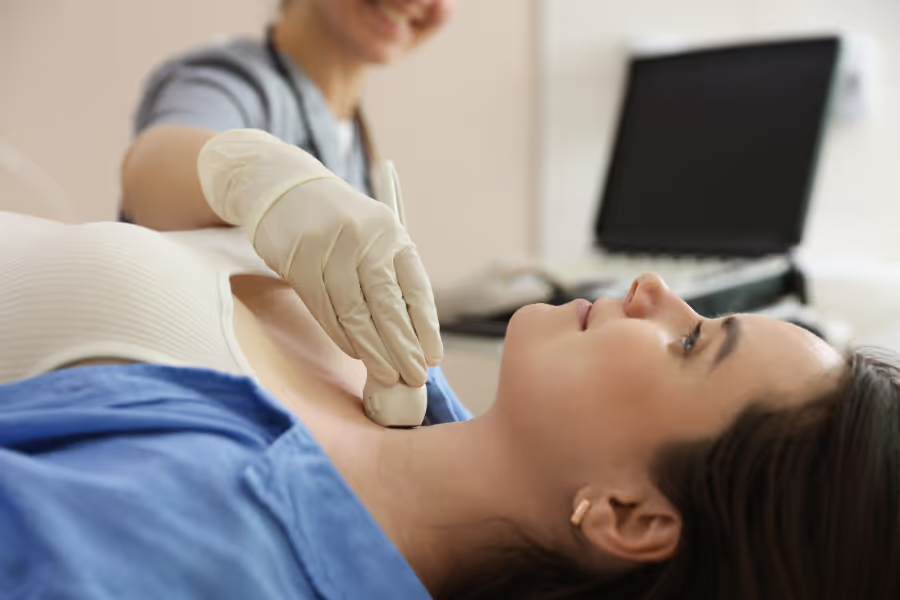
The clinic will provide you with a detailed recovery plan that includes pain management, wound care, and follow-up monitoring. Recovery varies from patient to patient, so please seek further guidance from your surgeon. Taking post-operative care seriously leads to better outcomes.
Some private clinics offer virtual follow-up appointments, while others coordinate with local providers in your home province.
In general, here is what you can expect:
Week 1
The first few days are the toughest—sore throat, neck stiffness, tiredness, and some swelling. Not fun.
- Goals: Pain management, swelling reduction, wound care, monitoring calcium and voice.
- Activities:
- Rest with your head slightly elevated to reduce swelling
- Take pain medication as prescribed (usually over-the-counter pain relievers are enough after day 2–3)
- If you had a total thyroidectomy, start taking thyroid hormone replacement and calcium/vitamin D supplements as directed
- Keep the incision clean and dry; no submerging in water
- Eat soft foods at first—your throat may be sore from the breathing tube
- Short, gentle walks to keep circulation going
- Avoid heavy lifting, straining, or vigorous activity
Weeks 2–4
Swelling and soreness settle down. Energy starts to return.
- Goals: Resume normal daily activities, incision healing, stabilize thyroid hormone levels.
- Activities:
- Most people return to desk work within 1–2 weeks
- Stitch removal or steri-strip follow-up if needed
- Continue thyroid hormone medication (your dose may be adjusted based on blood work)
- Gradually increase activity—light exercise like walking is encouraged
- Avoid heavy lifting (over 4.5 kg / 10 lbs) and strenuous exercise until cleared
- Protect the scar from sun exposure (sunscreen or a scarf) to minimize darkening
- Voice may still be slightly hoarse; this usually improves within a few weeks
Weeks 5–12
Most people feel close to normal.
- Goals: Return to full activity, optimize thyroid hormone levels, scar maturation.
- Activities:
- Return to physical work and exercise once cleared by your surgeon
- Follow-up blood work to fine-tune thyroid hormone dose (TSH, T4 levels)
- If you had surgery for cancer, discuss any further treatment (radioactive iodine, ongoing monitoring)
- The scar continues to fade—silicone strips or scar cream may help
- Most voice changes resolve by this point; if hoarseness persists, mention it to your surgeon
Months 3–12+
- Thyroid hormone levels should stabilize with the right medication dose
- Ongoing blood work (usually every 6–12 months) to monitor hormone levels
- For cancer patients, regular follow-up with your endocrinologist or oncologist
- The scar typically becomes a thin, pale line that blends into the neck crease
Red flags anytime: Fever, worsening redness or drainage from the incision, difficulty breathing, severe neck swelling, tingling or numbness in your hands, feet, or face (sign of low calcium), chest pain, or sudden voice loss—contact your care team or go to the ER.
What is Surgency?
As a family doctor in the public system, I believe transparency is a form of care. I created Surgency to help my patients struggling on long waitlists who wanted to understand all their options for timely medical attention.
Surgency is a free resource designed to empower and educate—helping you understand private pathways and find accredited surgeons within Canada. I hope Surgency brings you clarity.
Dr. Sean Haffey
Why do Canadians choose to have thyroidectomy done privately?
Shorter wait times
Thyroidectomy can have significant wait times in the public system—averaging over 21 weeks in some provinces. Instead of waiting months for consultation and OR time, private centres can often schedule surgery within weeks. For patients with thyroid cancer or a growing goitre, reducing this wait can ease anxiety and prevent the condition from worsening.
Choice and control
Going private gives you more say in your care. You can:
- Choose your thyroid surgeon based on experience, volume, and credentials
- Select the clinic location (often out-of-province)
- Plan surgery around your own schedule, work, and family commitments
Peace of mind
Waiting for thyroid surgery—especially when cancer is a possibility—takes an emotional toll. With private care, patients value the clarity of knowing who will operate, when it will happen, and the detailed plan. This certainty can ease anxiety and help families prepare.
Preventing further decline
- Function and quality of life: Reduces months of living with difficulty breathing, swallowing, or an uncomfortable lump in the neck. For hyperthyroidism, it stops ongoing symptoms like rapid heart rate, weight loss, tremors, and anxiety.
- Cancer management: Earlier surgery can prevent cancer from growing or spreading to lymph nodes, potentially reducing the need for more extensive surgery or additional treatment later.
- Goitre progression: Waiting can allow a goitre to grow larger, making surgery more complex, longer, and riskier.
- Mental load: Shortens time living with uncertainty, restricted activities, and the stress of an unresolved diagnosis.
How to choose a surgeon or clinic
Choosing your surgeon is one of the benefits of going the private route. Here's what to consider and the key questions to bring to your thyroidectomy consultation.
What to look for
Experience and volume
Ask how many thyroidectomies they perform per year—total vs partial, cancer vs benign, and whether they routinely perform central neck dissections. Higher volume often correlates with lower complication rates (especially for nerve injury and hypoparathyroidism).
Credentials and training
Verify licensure with the provincial college (e.g., CPSO in Ontario, CPSBC in BC, CPSA in Alberta). Look for FRCSC-certified surgeons (general surgery or otolaryngology–head & neck surgery) with fellowship or focused training in endocrine/thyroid surgery.
Outcomes and safety
Ask for their rates of recurrent laryngeal nerve injury (temporary and permanent), hypoparathyroidism (temporary and permanent), post-op hematoma, infection, and readmissions. Request outcomes specific to your procedure type.
Nerve monitoring
Ask whether they use intraoperative nerve monitoring (IONM) to help protect your vocal cord nerves during surgery. This is standard at high-volume centres.
Facility accreditation
Make sure the clinic is accredited by national bodies such as Accreditation Canada or the Canadian Association for Accreditation of Ambulatory Surgical Facilities (CAAASF).
Pathology and follow-up
Ask about on-site or rapid pathology, coordination with endocrinology for hormone management, and a clear plan for cancer follow-up if needed.
Questions to ask during your thyroidectomy consultation
Surgeon and surgery plan
- How many thyroidectomies do you perform yearly? What are your complication rates (nerve injury, hypocalcaemia, hematoma) in the last 12–24 months?
- Do you recommend total or partial thyroidectomy for me, and why?
- Will you perform a central neck dissection? How does that change risks and recovery?
- Do you use intraoperative nerve monitoring?
- What anaesthesia do you recommend and what is your pain-control plan?
- Is this an overnight stay or same-day surgery? What determines this?
Recovery and aftercare
- What's my timeline to: normal voice, return to desk work, return to physical work, exercise?
- How will my calcium be monitored after surgery? What supplements will I need?
- When do I start thyroid hormone replacement, and who manages my dose long-term?
- What red flags should prompt me to call or go to the ER?
- Who is my post-op contact (direct phone/email) and typical response time? How many follow-ups are included?
Costs and logistics
- What exactly is included in my quote (surgeon, anaesthesiologist, facility fees, nerve monitoring, pathology, follow-ups)?
- What could add cost (lymph node dissection, extended stay, additional pathology, complications)?
- If I'm travelling from another province, which follow-ups can be virtual? Will I receive the operative note, pathology report, and medication plan for my local care team?
If you're currently interested in private surgical pathways within Canada, you can click here for a list of providers.

Frequently asked questions
How do I know if thyroidectomy is right for me?
Thyroidectomy might be right for you if:
- You've been diagnosed with thyroid cancer and surgery is part of your treatment plan
- You have a large or growing goitre that's causing difficulty breathing, swallowing, or discomfort
- You have hyperthyroidism (overactive thyroid) that hasn't responded to medication or radioactive iodine, or those treatments aren't suitable for you
- You have a thyroid nodule with suspicious or indeterminate biopsy results that needs to be removed for a definitive diagnosis
- You have a multinodular goitre causing cosmetic concerns or compressive symptoms
The decision is always made between you and your doctor. Your surgeon and endocrinologist will review your imaging, biopsy results, blood work, symptoms, and overall health to recommend the best approach. If you're unsure, a second opinion is always a reasonable step.
Do I need a referral?
Yes and no—you can reach out to any of the private surgeons listed on Surgency without a referral. Their intake teams are happy to answer questions, explain what they treat, share pricing ranges, and walk you through next steps.
However, to book a formal consultation with the surgeon, you'll typically need a referral from your family doctor or nurse practitioner. Don't have one? Many of the clinics can help coordinate a virtual GP appointment to get the referral paperwork sorted. All surgeons listed on Surgency offer virtual initial consultations, so you don't need to travel until you and the surgeon have agreed on a plan.
Before your consultation, expect the clinic to request relevant medical records and recent diagnostic imaging (X-ray, MRI, CT, ultrasound, lab work, etc.). Having these ready speeds up the process and lets the surgeon give you specific guidance on your very first call.
How to prepare for thyroidectomy
Your surgical team will give you a detailed preparation plan. In general:
- Blood work and imaging: Expect thyroid function tests (TSH, T3, T4), calcium levels, and neck ultrasound. Some cases need a CT scan or fine-needle aspiration biopsy.
- Medication review: Tell your surgeon about all medications, supplements, and blood thinners. You may need to stop certain medications before surgery (e.g., anti-inflammatory drugs, blood thinners, certain supplements).
- Voice assessment: Some surgeons request a pre-operative vocal cord check (laryngoscopy) to document baseline function.
- Fasting: No food or drink for a set period before surgery (usually 8–12 hours).
- Arrange support: Have someone to drive you home and help for the first 1–2 days. Stock up on soft foods, ice packs, and extra pillows to keep your head elevated.
- Plan time off: Most people need 1–2 weeks off work (desk jobs) and 2–4 weeks for physical jobs.
- Ask questions: Bring your question list to the pre-op appointment. Understand what type of thyroidectomy is planned, what will happen with your pathology, and what medications you'll need afterward.
How much does Surgency cost?
Surgency is free for patients, funded for by surgeons.
Surgeons—who meet our listing criteria—pay a flat fee to list on the Surgency platform. To maintain objectivity, there are no commissions, referral fees, nor any ranking or recommending one surgeon over another.
Surgency is patient-first. Our goal is to make the process of finding a private surgeon as simple as possible. You choose who to contact. Learn more in our Advertising Policy.
What are the risks of thyroidectomy?
Thyroidectomy is generally a safe surgery when performed by an experienced surgeon. But like any operation, there are risks—always consult your surgeon for your own personal situation.
- Voice changes/hoarseness: The recurrent laryngeal nerves run right behind the thyroid and control your vocal cords. Temporary hoarseness happens in roughly 5–10% of cases and usually resolves within weeks to months. Permanent voice changes are uncommon (about 1–2%) at high-volume centres.
- Low calcium (hypocalcaemia): The parathyroid glands—four tiny glands behind the thyroid that regulate calcium—can be temporarily affected. About 20–30% of total thyroidectomy patients experience temporary low calcium (tingling in hands, feet, or face, muscle cramps). Permanent hypoparathyroidism occurs in roughly 1–4% of cases. Hemithyroidectomy carries a much lower risk.
- Bleeding/hematoma: A neck hematoma (blood collection under the skin) is rare (about 1–2%) but serious because swelling can compress the airway. This is why most patients stay overnight for monitoring.
- Infection: Uncommon (less than 1%) with proper surgical technique and wound care.
- Scarring: The incision is placed in a natural neck crease and usually heals to a thin, pale line. Some people develop thickened or darker scars, which can be treated.
- Hypothyroidism: After a total thyroidectomy, you will need lifelong thyroid hormone replacement. After a hemithyroidectomy, about 20–30% of patients eventually need hormone supplementation.
- Seroma: A small fluid collection under the incision that usually resolves on its own.
- Anaesthesia risks: Standard risks of general anaesthesia (nausea, sore throat from the breathing tube, rare allergic reactions).
What are the risks of delaying thyroidectomy?
Waiting too long for thyroidectomy can lead to:
- Cancer progression: Thyroid cancer can grow, invade surrounding structures (muscles, nerves, trachea), or spread to lymph nodes. What could have been a straightforward surgery may become more complex, requiring lymph node dissection or additional treatments.
- Goitre growth: A goitre that's left untreated can continue to enlarge, making breathing and swallowing progressively worse. Larger goitres may also extend behind the breastbone (substernal goitre), making surgery significantly more complex.
- Worsening hyperthyroidism: Uncontrolled overactive thyroid can lead to heart problems (atrial fibrillation, heart failure), bone loss (osteoporosis), eye problems (Graves' ophthalmopathy), and in rare cases, thyroid storm—a life-threatening emergency.
- Diagnostic uncertainty: If you have a suspicious nodule, delaying removal means living with the uncertainty of not knowing whether it's cancerous.
- More complex surgery: Larger tumours, more extensive goitres, or thyroid conditions that have progressed may require longer, more difficult operations with higher risk of complications.
- Mental and emotional toll: Months of uncertainty, symptoms, and restricted quality of life take a real toll on mental health and daily functioning.
I still have questions
If you still have questions, please feel free to contact us directly.
Please note: Surgency is not a clinic itself. Nor can we help with emergency situations, or provide personalized medical advice—that is between you and your surgeon. If you are experiencing acute or severe symptoms, please present to your local emergency department or urgent care centre.
.avif)