


.png)


What is Peyronie's surgery why do people typically need it?
Peyronie’s disease causes firm scar tissue (called plaque) to form beneath the skin of the penis. This plaque acts like a tether, pulling the penis to one side or causing an hourglass indentation during an erection. When the condition stabilizes (stops changing or aching), surgery can correct the curve and restore normal function.
Think of the penis as two elastic cylinders that fill with blood. When one side has tough scar tissue, it can't stretch, forcing the penis to bend. This can make intercourse difficult, painful for you or your partner, or impossible.
What actually happens
There are three main surgical options, depending on your specific curve, penile length, and whether you also have erectile dysfunction (ED):
- Penile Plication: The surgeon places permanent sutures (stitches) on the side of the penis opposite the curve. This slightly shortens the longer side to pull the penis straight. It is very safe and effective, but typically results in a small loss of overall length.
- Incision and Grafting: The surgeon makes cuts in the scar tissue to release the tension and fills the gap with a flexible graft material. This option is best for severe curves or indentations and helps preserve length, but it carries a higher risk of postoperative erectile dysfunction.
- Penile Implant (Prosthesis): If you have Peyronie's disease alongside significant erectile dysfunction, a penile implant straightens the penis and restores firm, reliable erections at the same time.
Why do it? When the disease has been stable for 3 to 6 months and the curvature prevents normal sexual intercourse, surgery is the most definitive way to restore your physical function and confidence.
How much does Peyronie's surgery cost in Canada?
How we estimate surgical costs: Ranges are estimates drawn from our network of 100+ private clinics and surgeons, and they're intentionally broad. Two people seeking the same procedure can receive very different quotes depending on province, surgeon, facility fees, and case complexity. Published prices aren't always comparable either—some are complete bundles, others exclude consultation, imaging, or follow-up. Only the clinic can give you an exact, itemized quote.
Exact prices depend on the specific procedure chosen (plication vs. grafting vs. implant) and the clinic. Always ask for a written, itemized quote.
Cost in Canada (private)
Typical range for Plication or Grafting: $5,000 - $10,000+
Typical range for Penile Implants: $15,000 - $25,000+
Cost in the United States
Typical range: CA$10,000 - CA$35,000+
What’s usually included
- Surgeon fee and anaesthesia services.
- The cost of the implant or graft material (if applicable).
- Accredited facility/OR time, nursing, and standard disposables.
- Immediate recovery care and early follow-up visit(s).
What’s often not included
- Initial consults and specialized ultrasound imaging outside the clinic.
- Prescriptions after discharge.
- Travel and accommodation if you’re out-of-province/state.
Insurance and financing options
- Private health insurance: Some plans may cover part of the costs, though coverage varies widely for sexual medicine procedures. Check your policy directly.
- Financing plans: Many clinics offer monthly payment options to help spread out the cost. Learn more about your financing options here.
- Medical Expense Tax Credit (METC): This is a non-refundable credit that reduces your taxes when you pay out-of-pocket for eligible medical expenses. Learn more about how to claim METC for private surgeries.
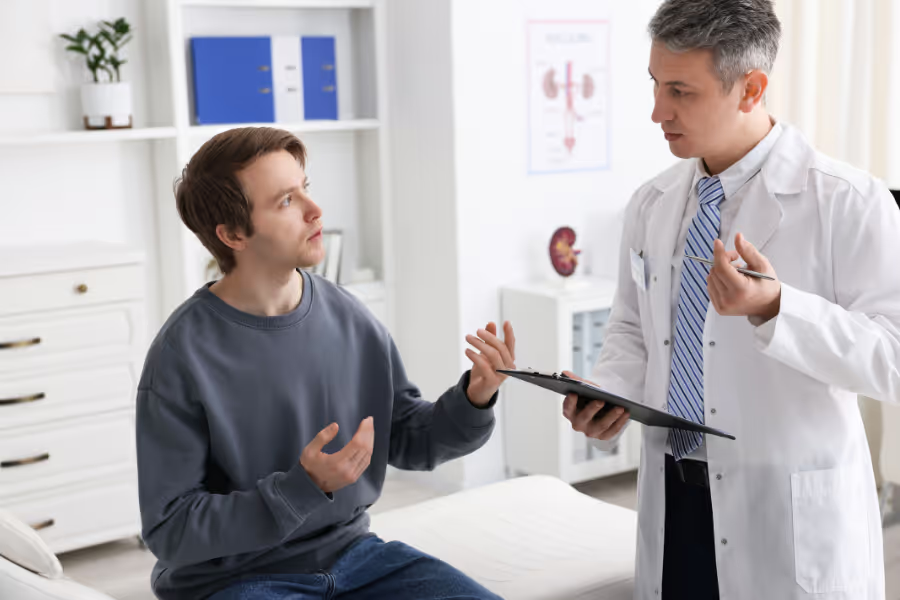
What to expect from the Peyronie's surgery process
Peyronie's surgery takes 1 to 3 hours depending on the specific procedure (plication is faster; grafting or implants take longer). Add time for check-in, anaesthesia, and recovery.
Basic steps
1. Check-in and confirmation
You meet the surgical team, review the plan, and complete safety checks.
2. Anaesthesia
The surgery is typically done under general anaesthesia (you’re fully asleep) or with a spinal block and sedation.
3. Artificial erection
The surgeon safely induces an artificial erection in the operating room to see the exact degree and angle of the curve.
4. Placement
Depending on the plan, the surgeon either places plication sutures, cuts the plaque and places a graft, or inserts a penile implant.
5. Close up
The incisions are closed with dissolving sutures, and a light pressure dressing is applied.
6. Wake-up and instructions
You recover in the post-anaesthesia care unit. Most patients go home the exact same day, though implant patients occasionally stay overnight.

What to expect from the recovery process
Healing requires patience and strict adherence to your surgeon's guidelines to protect the repair.
Week 1
Reality check:
You will have swelling, bruising, and moderate discomfort. Spontaneous erections during the night can be uncomfortable and pull on the stitches.
Goals: Control swelling and pain, and keep the incision clean.
Activities: Rest. Apply ice packs (indirectly) as directed. Wear supportive underwear (briefs) to keep the penis elevated toward your abdomen, which helps reduce swelling.
Weeks 2–4
Still annoying but improving:
The swelling and bruising will begin to fade. The incision will heal, and the dissolving stitches will start to fall out.
Goals: Avoid trauma to the surgical site.
Activities: Return to light work and normal daily routines. Strictly no sexual activity or masturbation. Avoid heavy lifting or strenuous exercise.
Weeks 5–8
Confidence building:
Internal healing is maturing.
Activities: You can gradually return to all normal physical activities. Your surgeon will clear you for sexual intercourse and masturbation, usually around the 6-week mark.
Helpful tips
- Supportive underwear: Wearing snug briefs rather than boxers for the first few weeks makes a huge difference in comfort.
- Managing night erections: Waking up and applying a cold pack can help a painful nighttime erection subside quickly.
Red flags—call your care team
- Severe, spreading redness, worsening pain, or foul-smelling drainage from the incision.
- A fever over 38°C (100.4°F).
- Inability to urinate.
What is Surgency?
As a family doctor in the public system, I believe transparency is a form of care. I created Surgency to help my patients struggling on long waitlists who wanted to understand all their options for timely medical attention.
Surgency is a free resource designed to empower and educate—helping you understand private pathways and find accredited surgeons within Canada. I hope Surgency brings you clarity.
Dr. Sean Haffey

Why do Canadians get Peyronie's surgery done privately?
When deemed medically necessary, provincial health plans (like OHIP, MSP, or RAMQ) cover the surgeon and hospital fees for Peyronie's treatments.
- Penile Plication & Incision/Grafting: Fully covered by your provincial plan.
- Penile Implants: The surgery is covered, but funding for the physical implant device varies by province (ranging from full coverage to requiring out-of-pocket payment).
Shorter wait times
Public wait lists to see a urologist specializing in reconstructive surgery can stretch for months or even years. Living with the physical and emotional impact of Peyronie's disease takes a toll on relationships and self-esteem. Private centres can arrange an assessment and surgery in weeks.
Choice and control
Going private lets you pick a surgeon with specific, high-volume expertise in sexual medicine and these complex techniques. You can also schedule the procedure when it works best for your life.
Peace of mind
You know exactly when your treatment will happen. Predictable dates make it easier to arrange time off, travel, and recovery without the anxiety of an open-ended waitlist.
Integrated care
Private pathways offer streamlined consultations, fast access to the operating room, and clear post-operative support.
How to choose a surgeon/clinic?
Choosing your surgeon is a major benefit of pursuing private surgery. Here’s how to choose wisely for Peyronie's surgery (plication, grafting, or implants).
What to look for
Experience and volume (Peyronie's-specific)
Ask how many Peyronie's reconstructive surgeries they perform each year.
These procedures have a steep learning curve and are precision-dependent because:
- the technique must be tailored to the exact degree of curvature, hinge effect, and underlying erectile function.
- outcomes depend on appropriate patient selection (active vs. stable phase of the disease).
- revision options can be incredibly complex.
Also ask about their case mix:
- plication vs incision/excision and grafting
- penile implant placements for concurrent erectile dysfunction.
Credentials and training
- Verify licensure with your provincial college (CPSO Ontario, CPSBC BC, CPSA Alberta, CMQ Québec, etc.)
- Look for FRCSC-certified urologists with fellowship training in sexual medicine, andrology, or urologic reconstruction.
Outcomes and safety (ask for real numbers)
Request recent data, ideally for Peyronie's reconstructive surgery specifically:
- Infection rate (critical for implants and grafts).
- Recurrence of curvature (the curve returning after surgery).
- Post-operative erectile dysfunction (especially important to ask if you are considering a grafting procedure).
- Patient-reported outcomes: satisfaction with length, straightness, and ability to have intercourse.
Clear indications and alternatives
Make sure they confirm you’re a good candidate for surgery. A careful surgeon should explicitly assess:
- whether your disease has been in the stable phase (no pain, no change in curve) for at least 3-6 months.
- the exact degree of curvature (using an induced artificial erection in the clinic).
- your baseline erectile function (using questionnaires or Doppler ultrasound).
They should also compare surgery to:
- Xiaflex (collagenase) injections
- traction therapy
- continued observation.
Surgical plan and implant strategy
Ask:
- Which technique do they recommend (plication, graft, or implant) and why?
- If recommending a graft, what graft material do they use and why?
- If recommending an implant, which specific device (e.g., inflatable vs malleable) fits your anatomy best?
- How do they manage the risk of penile shortening?
Facility accreditation and safety systems
Choose accredited centres (CAAASF, Accreditation Canada)
- stringent infection control protocols (especially if hardware is being implanted).
- experienced anaesthesia staff.
Transparent pricing
Request an itemized quote including:
- surgeon fee
- facility/OR fees
- anaesthesia
- implant/graft material cost (and whether it’s included)
- follow-ups (and whether virtual follow-ups are included)
Questions to ask at your consultation
Surgeon and plan
- How many Peyronie's surgeries do you perform yearly (and what types)?
- Am I a candidate for plication, grafting, or an implant—and why?
Technique and safety
- What are your rates of infection, curve recurrence, and new-onset erectile dysfunction?
- How much penile length should I expect to lose?
Recovery and after-care
- When can I resume sexual activity?
- What symptoms should prompt an urgent call?
Costs and logistics
- What exactly is included in my quote (especially the graft/implant)?
- How are follow-ups handled?
Signals of a high-quality program
- Performs Peyronie's reconstructions regularly and explains candidacy clearly.
- Shares complication rates openly and sets realistic expectations about penile shortening.
- Operates in an accredited facility.
- Provides a written recovery plan and coordinates post-operative care.
If you're currently interested in private surgical pathways within Canada, you can click here for a list of providers.
Frequently asked questions
How do I know this surgery is right for me?
Peyronie's surgery is the definitive treatment to restore straightness. It is right for patients whose disease is stable and whose curvature prevents normal sexual function.
Signs surgery might be right for you
- Stable disease: Your curvature or indentations have not worsened, and any pain during erections has resolved, for at least 3 to 6 months.
- Intercourse is compromised: The curve is severe enough (often greater than 30 degrees) or there is a severe "hinge" effect that makes penetrative sex difficult, painful, or impossible.
- Failed conservative therapy: You have tried or are not a candidate for Xiaflex injections or traction therapy.
- Realistic expectations: You understand and accept the potential trade-offs, such as a reduction in penile length to achieve straightness.
When it might not be the right option
- Active disease: If your curve is still changing or your erections are still painful without being touched, surgery is contraindicated as the disease will likely alter the surgical results.
- Mild curves: If the curve does not prevent normal sexual activity, the risks of surgery (like numbness or ED) generally outweigh the benefits.
- Unrealistic length expectations: If preserving maximum length is your only priority, some surgical options (like plication) may cause distress.
When to get assessed sooner
- You should be assessed early in the disease process to discuss medical therapies that might prevent the curve from worsening, but surgery itself is rarely an emergency.
Do I need a referral?
Yes and no—you can reach out to any of the private surgeons listed on Surgency without a referral. Their intake teams are happy to answer questions, explain what they treat, share pricing ranges, and walk you through next steps.
However, to book a formal consultation with the surgeon, you'll typically need a referral from your family doctor or nurse practitioner. Don't have one? Many of the clinics can help coordinate a virtual GP appointment to get the referral paperwork sorted. All surgeons listed on Surgency offer virtual initial consultations, so you don't need to travel until you and the surgeon have agreed on a plan.
Before your consultation, expect the clinic to request relevant medical records and recent diagnostic imaging (X-ray, MRI, CT, ultrasound, lab work, etc.). Having these ready speeds up the process and lets the surgeon give you specific guidance on your very first call.
How do I prepare for surgery?
Your surgeon’s instructions come first—follow their plan if it differs.
Prehab and health optimization
Quit nicotine
- Crucial for grafts and implants: Nicotine constricts blood vessels and severely impairs wound healing. Stop smoking at least 4-6 weeks before surgery to significantly reduce the risk of graft failure, implant infection, and tissue death.
Optimize blood sugar
- If you have diabetes, strict blood sugar control before surgery is essential to lower the risk of infection, which is devastating if an implant is involved.
Walk and light cardio
- Build a daily walking habit now; better cardiovascular health improves healing and blood flow to the pelvis.
Medication review
- Share all prescriptions, OTC meds, and supplements.
- Pause blood thinners and anti‑inflammatories as directed (bleeding control is vital to prevent hematomas).
Home prep
Wardrobe and support
- Purchase snug, supportive briefs or an athletic supporter to keep the penis elevated toward the abdomen post-surgery. This prevents excessive swelling.
Ice packs
- Have flexible gel ice packs ready at home (to be used indirectly) to manage swelling and painful nighttime erections.
Skin prep
- Use an antibacterial wash as directed (usually the night before and morning of).
- You will likely be asked to shave the surgical area. Follow specific instructions on when/how to do this to avoid micro-cuts that harbor bacteria.
What to bring
- Health card/ID, medication list.
- Loose, comfortable clothing (sweatpants) for the ride home.
Red flags to know
- Wound issues: Spreading redness, foul drainage, or excessive swelling.
- Fever or chills: Signs of a potential systemic infection.
- Inability to urinate: A temporary side effect of pelvic surgery and anaesthesia that requires medical attention if prolonged.
How much does Surgency cost?
Surgency is free for patients, funded for by surgeons.
Surgeons—who meet our listing criteria—pay a flat fee to list on the Surgency platform. To maintain objectivity, there are no commissions, referral fees, nor any ranking or recommending one surgeon over another.
Surgency is patient-first. Our goal is to make the process of finding a private surgeon as simple as possible. You choose who to contact. Learn more in our Advertising Policy.
What are the risks involved with surgery?
Your personal risk depends on your anatomy, the specific procedure chosen (plication vs. graft vs. implant), and your general health. Discuss your specific risks with your surgeon.
Common and usually expected
- Decreased penile length: Very common, especially with penile plication (where the longer side is shortened). Even with grafting, the penis will rarely be as long as it was before Peyronie's disease started.
- Bruising and swelling: Significant bruising of the penis and scrotum is completely normal and resolves over weeks.
- Palpable sutures/knots: With plication, you may be able to feel the permanent stitches under the skin.
Less common but important
- Erectile dysfunction: A risk of new or worsening difficulty achieving an erection. This is much higher with incision and grafting procedures than with plication.
- Decreased sensation: Temporary or permanent numbness or altered sensation in the head or shaft of the penis due to nerve stretching or irritation during the dissection.
- Recurrent curvature: The curve may slightly return over time, or the disease could reactivate and cause new bending.
Procedure-specific considerations (Grafts & Implants)
- Infection: A catastrophic risk if a penile implant or foreign graft is placed. Infection often requires total removal of the device and a prolonged healing period before another attempt can be made.
- Graft failure/contracture: The graft tissue may shrink or fail to integrate, leading to recurrent curvature or severe ED.
- Device malfunction: Penile implants are mechanical devices with a lifespan and may eventually require revision surgery.
How you can lower risk
- Stop nicotine: Essential for tissue survival.
- Strictly adhere to activity limits: No sexual activity until explicitly cleared by your surgeon to prevent tearing the repair.
- Manage nighttime erections: Follow your surgeon's advice (like using ice packs or prescribed medications) to reduce the strain of nocturnal erections on the fresh surgical site.
What are the risks of delaying or not pursuing surgery?
From a strictly medical standpoint, Peyronie's disease is not life-threatening. There is no physical danger in delaying or declining surgery once the disease is in the stable phase.
Main risks of delaying (when symptoms are significant)
Psychological and relationship distress
- Severe, uncorrected Peyronie's disease often leads to profound performance anxiety, depression, and avoidance of intimacy, causing significant strain on relationships.
Inability to have intercourse
- If the curve or hinge effect is severe enough to prevent penetration, delaying surgery means indefinitely pausing this aspect of your sex life.
Progressive erectile dysfunction
- While the plaque itself may be stable, the emotional toll and the physical mechanics of the curve can contribute to worsening erectile dysfunction over time.
When watchful waiting can be reasonable
- The curve is mild (less than 30 degrees).
- You are still able to have comfortable, fulfilling intercourse.
- The disease is still in the active (painful/changing) phase.
When not to delay (seek prompt assessment)
- If you are in the active phase, prompt medical assessment is crucial to discuss early non-surgical interventions that might limit the severity of the final curve.
I still have questions
If you still have questions, please feel free to contact us directly.
Please note: Surgency is not a clinic itself. Nor can we help with emergency situations, or provide personalized medical advice—that is between you and your surgeon. If you are experiencing acute or severe symptoms, please present to your local emergency department or urgent care centre.
.avif)