
.png)
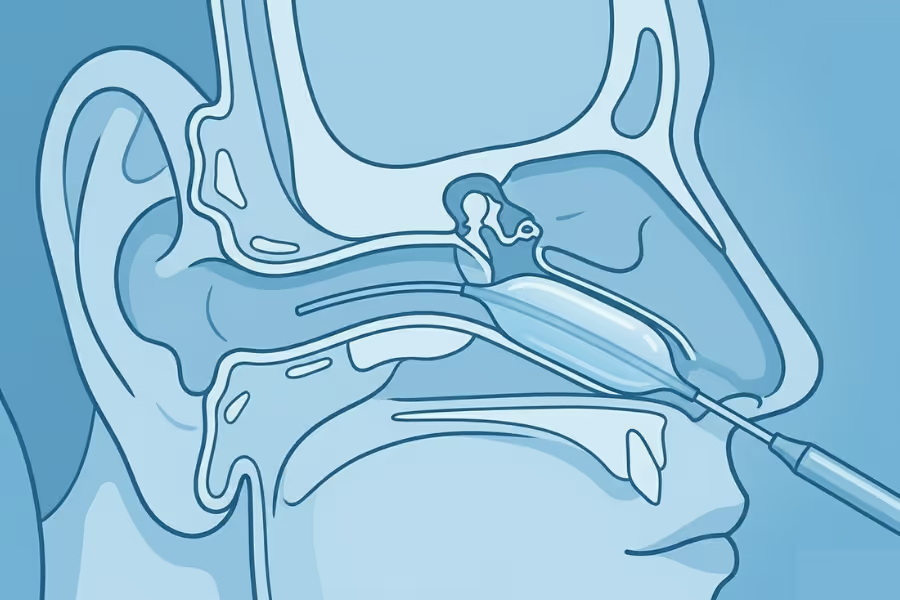

What Is Eustachian tube balloon dilation?
Eustachian tube balloon dilation (also called balloon tuboplasty or balloon Eustachian tuboplasty) is a minimally invasive surgery for the ear that relieves chronic blockage of the Eustachian tube—the narrow passage connecting the middle ear to the back of the nose—by inflating a small balloon catheter inside the tube to widen it and restore normal function.
Think of the Eustachian tube like a pressure-relief valve for your ear. Every time you swallow, yawn, or pop your ears, the tube opens briefly to equalize pressure between the middle ear and the outside world. When the tube stays swollen, inflamed, or blocked, pressure builds up behind the eardrum. This can cause ear fullness or a plugged sensation, muffled hearing, popping or crackling sounds, ear pain, dizziness, and in some cases recurrent middle ear infections or fluid buildup.
What actually happens
- Access through the nose: The surgeon uses a small endoscope (camera) inserted through the nostril to see the opening of the Eustachian tube—no external incisions.
- Balloon insertion and inflation: A thin balloon catheter is guided into the Eustachian tube and inflated for approximately two minutes to gently stretch and open the cartilaginous portion of the tube.
- Deflation and removal: The balloon is deflated and removed. The tube is now wider, allowing air to pass through normally.
Why do it? When nasal sprays, decongestants, and other treatments haven't resolved your Eustachian tube dysfunction, balloon dilation can restore the tube's ability to equalize pressure—helping relieve that persistent plugged-ear feeling and improving hearing and comfort.
How much does Eustachian tube balloon dilation surgery cost?
How we estimate surgical costs: Ranges are estimates drawn from our network of 100+ private clinics and surgeons, and they're intentionally broad. Two people seeking the same procedure can receive very different quotes depending on province, surgeon, facility fees, and case complexity. Published prices aren't always comparable either—some are complete bundles, others exclude consultation, imaging, or follow-up. Only the clinic can give you an exact, itemized quote.
Exact prices depend on whether one or both sides are treated, the balloon system used, and where you have it done. Eustachian tube balloon dilation is not covered by most provincial health insurance plans (e.g., OHIP in Ontario) as it is considered a newer procedure. Always ask for a written, itemized quote.
Cost in Canada (private)
Typical range: $4,500 - $8,000+
Note: Bilateral (both sides) is typically at the higher end. Costs may be higher if combined with other procedures such as septoplasty or sinus surgery.
Cost in the United States
Typical range: CA$6,000 - CA$13,000+
What's usually included
- Surgeon fee and anaesthesia services.
- The balloon catheter device.
- Accredited facility/OR time, nursing, and standard disposables.
- Endoscopic equipment and routine supplies.
- Immediate recovery care (PACU) and early follow-up visit(s).
What's often not included
- Initial consults and pre-op imaging/tests (CT scan, audiogram) done outside the clinic.
- Additional procedures performed at the same time (septoplasty, turbinate reduction, tympanostomy tubes).
- Prescriptions after discharge (pain medication, nasal sprays).
- Post-op follow-up visits beyond the first one or two.
- Travel and accommodation if you're out-of-province/state.
Tips to compare quotes
Ask if it's a global bundle and request line items for: surgeon, facility, anaesthesia, balloon catheter device, endoscopy, follow-ups, and what triggers extra charges (e.g., bilateral treatment, combination with sinus surgery).
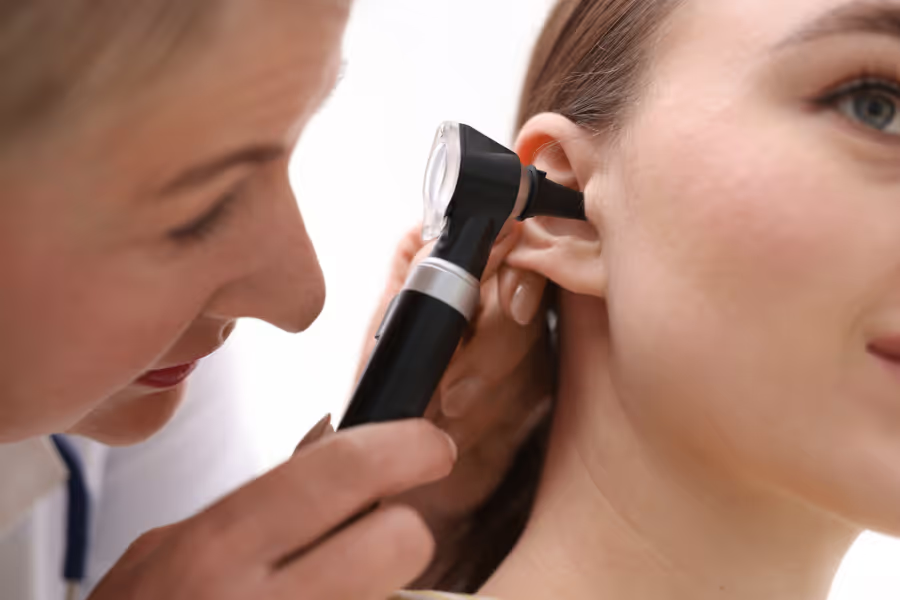
Eustachian tube balloon dilation: what to expect
Typical Eustachian tube balloon dilation often takes about 15–30 minutes of procedure time per side. Add time at the centre for check-in, anaesthesia, and recovery (usually a few extra hours). Bilateral cases (both ears) take slightly longer.
Basic steps
1. Check-in and confirmation
You meet the team, confirm which side(s) will be treated, review imaging, and go over the plan. Safety checks are completed.
2. Anaesthesia
General anaesthesia (fully asleep) or local anaesthesia with sedation, depending on surgeon preference and patient factors. Many cases are done under general anaesthesia for comfort.
3. Position and prep
You're positioned on your back. The nasal passages are prepared with decongestant and anaesthetic.
4. Endoscopic access
A small endoscope (camera) is inserted through the nostril to visualize the opening of the Eustachian tube at the back of the nose. No external incisions are made.
5. Balloon catheter insertion
A thin balloon catheter is guided through the nose and into the Eustachian tube under direct visualization.
6. Balloon inflation
The balloon is inflated with saline to a controlled pressure for approximately two minutes, gently dilating the cartilaginous portion of the tube.
7. Deflation and removal
The balloon is deflated and carefully removed. If both sides are being treated, the process is repeated on the other side.
8. Final check
The surgeon confirms the tube opening looks adequate and checks for any bleeding.
9. Wake-up and instructions
You recover in the post-anaesthesia care unit, and receive wound-care and activity instructions. Most patients go home the same day.
What to expect from the recovery process
Every ear is different—follow your surgeon's plan. This is one of the quicker recoveries in surgical medicine.
Days 1–3
Reality check:
Mild nasal congestion, minor ear fullness, and low energy from anaesthesia are common. Some patients notice immediate improvement; others find it takes a couple of weeks for the full benefit. Minor nosebleeds or blood-tinged mucus are normal.
Goals: Rest, stay hydrated, and avoid anything that creates pressure in the nose or ears.
Activities: Light activity around the house. Avoid blowing your nose (or blow very gently if absolutely necessary). No heavy lifting, straining, or bending over. Sneeze with your mouth open.
Days 4–7
Improving steadily.
Goals: Gentle return to normal routine; protect the healing tube.
Activities: Most people return to desk or school work within 2–3 days. Continue avoiding forceful nose blowing. Nasal saline rinses as directed by your surgeon. Light walking is fine.
Weeks 2–4
The settling phase.
Goals: The Eustachian tube remodels and function improves.
Activities: First post-op review (usually around 2–3 weeks). Your surgeon will assess improvement in your ability to equalize your ears. Resume gentle exercise if cleared. Most daily activities are unrestricted by this point.
Weeks 5–8
Full assessment.
Goals: Confirm sustained improvement.
Activities: Second post-op review. A symptom questionnaire (ETDQ-7) may be repeated to objectively measure change. Return to full activity including flying, diving, and exercise as cleared.
Helpful tips
- Don't blow your nose hard for the first two weeks—this is the most important instruction.
- Saline rinses: Help keep the nasal passages clear and promote healing.
- Yawning and swallowing: These natural motions help the tube open; don't be alarmed by popping or crackling as the tube heals.
- Flying/altitude: Ask your surgeon when it's safe to fly—many patients can fly within 1–2 weeks.
Red flags—call your care team
- Significant nosebleed that doesn't stop with gentle pressure.
- Fever or signs of infection.
- Sudden hearing loss, severe ear pain, or new dizziness/vertigo.
- Clear fluid draining from the nose (possible CSF leak—very rare).
What is Surgency?
As a family doctor in the public system, I believe transparency is a form of care. I created Surgency to help my patients struggling on long waitlists who wanted to understand all their options for timely medical attention.
Surgency is a free resource designed to empower and educate—helping you understand private pathways and find accredited surgeons within Canada. I hope Surgency brings you clarity.
Dr. Sean Haffey

Why do Canadians get this surgery done privately?
Limited public coverage and access
Eustachian tube balloon dilation is not routinely publicly funded or widely available in every part of Canada. In many cases, patients must pay out of pocket if they want this procedure done privately. Even where ENT assessment is publicly covered, the balloon device itself or access to a surgeon who offers the procedure may not be. This means you can see a private surgeon in your home province for this procedure.
Shorter path to treatment
Public ENT consults, hearing tests, and OR access can still take time—especially for conditions like chronic eustachian tube dysfunction that affect quality of life but are not considered emergencies. Private care can sometimes move from assessment to treatment in weeks rather than months.
Choice and control
Going private can let you:
- choose your surgeon based on experience with eustachian tube dysfunction and balloon dilation
- schedule around work, school, caregiving, or travel
- get a clear plan on whether you’re a candidate for balloon dilation, ear tubes, or non-surgical treatment instead
Peace of mind
You know who is performing the procedure, when it is happening, and what the treatment plan is. Predictable timing can make it easier to arrange time off, travel, and follow-up care.
Preventing ongoing ear problems
- Hearing: chronic dysfunction can lead to repeated fluid buildup and muffled hearing
- Ear health: long-term pressure problems may contribute to eardrum retraction or repeated infections in some people
- Daily life: ongoing ear pressure can affect focus, sleep, comfort during flights, and tolerance of altitude changes
Integrated care
Private pathways may offer streamlined hearing tests, nasal endoscopy, and coordinated follow-up plans, with virtual follow-ups if you live far away.
How to choose a surgeon and clinic
Choosing your surgeon is a major benefit of pursuing private surgery. Here's how to choose wisely for Eustachian tube balloon dilation.
What to look for
Experience and volume (balloon dilation–specific)
Ask how many Eustachian tube balloon dilations they perform each year (not just general ENT procedures).
Balloon dilation requires familiarity with Eustachian tube anatomy and proper patient selection because:
- the balloon must be positioned and inflated correctly within the tube
- outcomes depend on appropriate patient selection (true obstructive ETD vs. patulous tube or other causes)
- the procedure is relatively new and technique continues to evolve
Also ask about their case mix:
- unilateral vs. bilateral dilation
- standalone vs. combined cases (e.g., with septoplasty, sinus surgery, or tube insertion)
- revision cases (repeat dilation or conversion to other treatment)
Credentials and training
- Verify licensure with your provincial college (CPSO Ontario, CPSBC BC, CPSA Alberta, CMQ Québec, etc.)
- Look for FRCSC-certified otolaryngologists (ENT surgeons)** with fellowship or subspecialty training in otology or rhinology
- Bonus: surgeons who have specific training in balloon Eustachian tuboplasty, publish outcomes, or participate in otology societies
For a more in-depth guide read, How to Understand Surgeon Credentials in Canada
Outcomes and safety (ask for real numbers)
Request recent data, ideally for balloon dilation specifically:
- Success rate (symptom improvement on validated questionnaires like ETDQ-7)
- Complication rate (bleeding, infection, failure to improve)
- Revision/repeat procedure rate and reasons
- Patient-reported outcomes: ear pressure relief, hearing improvement, satisfaction, and typical return-to-work timelines
Clear indications and alternatives
Make sure they confirm you're a good candidate for balloon dilation, not just "able to pay for it." Note: This shouldn't be a problem, as Canadian surgeons are bound to act in the patient's best interests.
A careful surgeon should explicitly assess:
- whether symptoms are consistent with obstructive Eustachian tube dysfunction and match imaging/test findings
- whether there are other causes for your symptoms (patulous tube, TMJ, inner ear conditions)
- whether the problem is inflammatory/mucosal vs. bony obstruction (bony causes may not respond to balloon dilation)
They should also compare balloon dilation to:
- Tympanostomy tubes (grommets) as an alternative
- Continued medical management if symptoms are mild or improving
Surgical plan
Ask:
- Which side(s) and why?
- Is this standalone or combined with another procedure (septoplasty, turbinate reduction)?
- Which balloon system do they use and why?
Imaging and planning (must be thorough)
Good programs use imaging and testing to confirm candidacy:
- CT scan of the temporal bones and sinuses
- Audiogram (hearing test)
- Tympanometry (middle ear pressure test)
- Nasal endoscopy
Confirm the findings match your specific ear symptoms and side (left vs. right vs. both).
Facility accreditation and safety systems
Choose accredited centres (e.g., Accreditation Canada / CAAASF) with:
- modern endoscopic equipment
- experienced anaesthesia teams
- a clear transfer pathway to a hospital if needed
Rehab integration
You want clear instructions for:
- nose-blowing restrictions and nasal care
- return to work, exercise, flying, and diving timelines
- follow-up assessment schedule (typically 2–3 weeks and 6–8 weeks)
Transparent pricing
Request an itemized quote including:
- surgeon fee
- facility/OR fees
- anaesthesia
- balloon catheter device cost (and whether it's included)
- endoscopy
- follow-ups (and whether virtual follow-ups are included)
Clarify add-ons:
- bilateral (both sides)
- combined procedures (septoplasty, turbinate reduction, tubes)
Questions to ask at your Eustachian tube balloon dilation consultation
Surgeon and plan
- How many Eustachian tube balloon dilations do you perform yearly?
- How many cases like mine (same side, same symptoms, similar test results)?
- Am I a candidate for balloon dilation, tympanostomy tubes, or continued medical management—and why?
Technique and safety
- Which balloon system do you use and why?
- How do you confirm proper balloon positioning?
- What are your rates of: failure to improve, bleeding, and revision?
- What's the plan if balloon dilation doesn't resolve my symptoms?
Recovery and after-care
- When can I blow my nose normally?
- When can I fly, dive, or exercise?
- What symptoms should prompt an urgent call?
Costs and logistics
- What exactly is included in my quote (especially the balloon device)?
- What could increase the cost (bilateral, combined procedures)?
- How are follow-ups handled if I live out of province?
Signals of a high-quality balloon dilation program
- Performs balloon dilations regularly (not rarely) and explains candidacy clearly
- Shares complication/revision rates openly and sets realistic expectations
- Operates in an accredited facility with experienced anaesthesia and emergency pathways
- Provides clear recovery instructions and coordinates follow-up assessments/virtual visits
- Offers transparent, itemized pricing—including the balloon device and clear "what if we add another procedure" terms
If you're currently interested in private surgical pathways within Canada, you can click here for a list of providers.
Frequently asked questions
How do I know this surgery is right for me?
Eustachian tube balloon dilation is right for patients with obstructive Eustachian tube dysfunction who haven't improved with conservative treatment and want a minimally invasive, tissue-preserving option.
Signs balloon dilation might be right for you
- Chronic ear fullness or pressure that won't resolve: You've had that plugged-ear feeling for months and nasal sprays, decongestants, and allergy treatments haven't helped.
- Difficulty equalizing pressure: You can't pop your ears on flights, in elevators, or during altitude changes, and it causes significant pain or discomfort.
- Recurrent middle ear fluid or infections: You keep getting fluid behind the eardrum or repeated ear infections linked to a poorly functioning Eustachian tube.
- Tired of tympanostomy tubes: You've had ear tubes placed multiple times and want a longer-term solution that addresses the root cause.
- Diagnostic clarity: CT imaging and tympanometry confirm the Eustachian tube is not opening properly, and your symptoms match the findings.
When it might not be the right option
- Patulous Eustachian tube: If your tube is too open (not blocked), balloon dilation would make it worse. Symptoms of patulous tube include hearing your own voice/breathing loudly (autophony).
- Bony obstruction: If the blockage is in the bony portion of the Eustachian tube (near the middle ear), the balloon only dilates the cartilaginous portion and may not help.
- Active infection: Acute ear infection or sinusitis should be treated first before considering dilation.
- Other causes for symptoms: TMJ dysfunction, inner ear conditions (Ménière's disease), or superior canal dehiscence can mimic ETD symptoms and won't respond to balloon dilation.
When to get assessed sooner
- Rapidly worsening hearing loss in one or both ears.
- Persistent fluid behind the eardrum despite medical treatment.
- Recurrent ear infections affecting your quality of life or work.
- Ear symptoms causing significant dizziness or balance problems.
Do I need a referral?
Yes and no—you can reach out to any of the private surgeons listed on Surgency without a referral. Their intake teams are happy to answer questions, explain what they treat, share pricing ranges, and walk you through next steps.
However, to book a formal consultation with the surgeon, you'll typically need a referral from your family doctor or nurse practitioner. Don't have one? Many of the clinics can help coordinate a virtual GP appointment to get the referral paperwork sorted. All surgeons listed on Surgency offer virtual initial consultations, so you don't need to travel until you and the surgeon have agreed on a plan.
Before your consultation, expect the clinic to request relevant medical records and recent diagnostic imaging (X-ray, MRI, CT, ultrasound, lab work, etc.). Having these ready speeds up the process and lets the surgeon give you specific guidance on your very first call.
How do I prepare for surgery?
Your surgeon's instructions come first—follow their plan if it differs.
Prehab and health optimization
Manage allergies and nasal inflammation
- If you have allergies, get them under control before surgery. Continue nasal steroid sprays and antihistamines as directed.
- Treat any active sinus infection before the procedure.
Quit nicotine
- Smoking and vaping irritate the Eustachian tube lining and slow healing. Stop 4+ weeks before surgery if possible.
Medication review
- Share all prescriptions, OTC meds, and supplements.
- Pause blood thinners and anti-inflammatories as directed (bleeding control is important even for minimally invasive nasal procedures).
Light cardio
- Build a daily walking habit; better cardiovascular health improves healing and reduces anaesthesia risk.
Home prep
Stock up on supplies
- Nasal saline rinse kit (e.g., NeilMed sinus rinse) — your surgeon will likely prescribe this for post-op care.
- Soft tissues (you may have mild nasal drainage for a few days).
- Any prescribed nasal sprays ready to go.
Safe layout
- Clear clutter/rugs to prevent falls (anaesthesia can leave you groggy).
- Set up a comfortable resting area with entertainment — you'll want to take it easy for a day or two.
Food, meds, and surgery-day prep
Eating and fasting
- Follow your centre's fasting instructions (typically nothing to eat or drink after midnight the night before if general anaesthesia is planned).
- A normal diet can resume immediately after the procedure.
Skin/nasal prep
- Do not insert anything into your nose before surgery unless instructed.
- Use any prescribed antiseptic or pre-op nasal spray as directed.
What to bring
- Health card/ID, medication list, and imaging (CT scan, audiogram results).
- A driver — you cannot drive yourself home after anaesthesia.
- Lip balm (lips get dry during anaesthesia).
Practice ahead
- Practice sneezing with your mouth open — you'll need to avoid building pressure in your nose post-op.
- Practice gentle nose care — no forceful blowing.
Red flags to know
- New cold or sinus infection in the days before surgery — call your surgeon, as it may need to be postponed.
- Fever or feeling unwell — notify the surgical team immediately.
How much does Surgency cost?
Surgency is free for patients, funded for by surgeons.
Surgeons—who meet our listing criteria—pay a flat fee to list on the Surgency platform. To maintain objectivity, there are no commissions, referral fees, nor any ranking or recommending one surgeon over another.
Surgency is patient-first. Our goal is to make the process of finding a private surgeon as simple as possible. You choose who to contact. Learn more in our Advertising Policy.
What are the risks involved with surgery?
Your personal risk depends on your anatomy, whether one or both sides are treated, and your general health. Discuss your specific risks with your surgeon.
Common and usually temporary
- Mild nasal discomfort or congestion: A stuffy or slightly sore nose for a few days is very common.
- Minor nosebleed or blood-tinged mucus: Usually resolves within a day or two.
- Ear popping, crackling, or fullness: As the tube heals and remodels, you may notice new sounds — this is usually a sign of the tube opening and closing.
- Temporary worsening of ear symptoms: Some patients feel slightly worse before they feel better as the area heals.
Less common
- Failure to improve: Balloon dilation does not work for everyone. Studies show improvement in roughly 70–80% of patients, but some may not notice a significant change.
- Need for repeat procedure: A small percentage of patients may need a second dilation or a different approach (e.g., tympanostomy tubes).
- Infection: Low risk given the minimally invasive nature of the procedure.
- Subcutaneous emphysema: Air trapped under the skin near the procedure site — usually resolves on its own.
Uncommon but important
- Damage to surrounding structures: Very rare injury to the internal carotid artery (which runs near the Eustachian tube), though the balloon is designed to stay within the cartilaginous portion well away from this area.
- Tympanic membrane perforation: Rare, but possible if pressure transmits to the eardrum.
- CSF leak: Extremely rare complication if the skull base is inadvertently affected.
How you can lower risk
- Stop nicotine: Improves mucosal healing.
- Control allergies: Reduces inflammation around the tube before and after surgery.
- Don't blow your nose hard after surgery — this is the single most important post-op instruction.
- Follow up on schedule: Allows your surgeon to catch and manage any issues early.
What are the risks of delaying or not pursuing surgery?
Your situation depends on symptom severity, how long you've had Eustachian tube dysfunction, and whether complications like middle ear fluid or eardrum retraction are developing.
Main risks of delaying (when symptoms are significant)
Chronic middle ear fluid (effusion)
- A tube that won't open traps fluid behind the eardrum. Over months, this can cause persistent hearing loss and increase infection risk.
Eardrum retraction and damage
- Chronic negative pressure in the middle ear can pull the eardrum inward (retraction pocket). Over time, this can erode the tiny hearing bones (ossicles) or create a cholesteatoma — a growth that may require more extensive surgery to remove.
Recurrent ear infections
- A poorly ventilated middle ear is prone to repeated infections, each of which can cause pain, hearing loss, and further eardrum damage.
Progressive hearing loss
- Ongoing fluid and negative pressure can cause conductive hearing loss that worsens over time. The longer it persists, the harder it may be to fully reverse.
Quality of life
- Chronic ear pressure, muffled hearing, dizziness, and inability to fly or change altitude comfortably can significantly affect work, travel, sleep, and mood.
Medication dependence
- Relying on nasal sprays, decongestants, and repeated courses of antibiotics for months or years carries its own risks.
When watchful waiting can be reasonable
- Symptoms are mild and manageable.
- You are still improving with conservative treatment.
- There is no fluid behind the eardrum and no eardrum retraction.
When not to delay (seek prompt assessment)
- Hearing loss: You notice conversations are harder to follow, especially in one ear.
- Persistent fluid: Your doctor sees fluid behind the eardrum that isn't resolving.
- Eardrum retraction: Imaging or examination shows the eardrum is being pulled inward.
- Recurrent infections: Three or more ear infections in six months, or symptoms affecting daily life.
- Significant dizziness or balance issues linked to middle ear dysfunction.
I still have questions
If you still have questions, please feel free to contact us directly.
Please note: Surgency is not a clinic itself. Nor can we help with emergency situations, or provide personalized medical advice—that is between you and your surgeon. If you are experiencing acute or severe symptoms, please present to your local emergency department or urgent care centre.


.avif)