


.png)
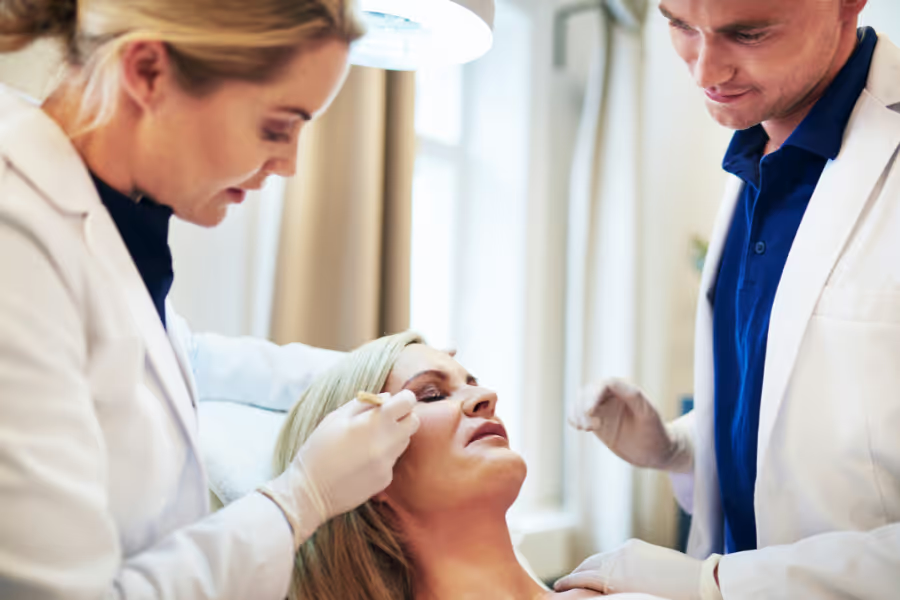

What is a facelift, and why do people typically choose to do it?
Facelift surgery (rhytidectomy) is a procedure that lifts and repositions sagging tissue in the lower face and neck, tightens the deeper muscle layer (the SMAS), and removes excess skin. Despite the name, a modern facelift mainly addresses the lower face and neck—the jawline, jowls, and neck. It does not lift the brow or treat the eyelids; those need separate procedures.
Think of the face as layers: skin on top, fat compartments beneath, then a fibrous muscle layer called the SMAS (superficial musculoaponeurotic system), then deeper structures. With age, gravity, sun exposure, and volume loss, these layers slide downward and forward. Skin loses elasticity, fat pads descend, and the jawline blurs. A facelift repositions the SMAS and skin upward and backward, then removes the excess skin that's left over.
What actually happens
The surgeon makes incisions hidden in and around the ear (and sometimes a small one under the chin), lifts the skin off the deeper tissue, then tightens the SMAS layer. The skin is redraped, excess is trimmed, and the incisions are closed with fine sutures.
Types of facelift
- SMAS facelift (traditional): The most common modern technique. Lifts and tightens the SMAS layer separately from the skin, giving longer-lasting results that look natural rather than "pulled."
- Deep plane facelift: Releases and lifts the SMAS and deeper tissues as a single unit. Often produces the most natural, longest-lasting result for significant midface and jowl sagging—but is technically demanding and not every surgeon performs it.
- Mini facelift (short-scar / S-lift): Shorter incisions, smaller lift. Best for younger patients with mild jowling and minimal neck laxity. Recovery is faster, but results are less dramatic and don't last as long.
- Neck lift (platysmaplasty): Tightens the neck muscles (platysma) and removes excess neck skin. Often combined with a facelift; can also be done alone for patients whose main concern is the neck.
- Extended / lower facelift with neck lift: The most common combination, addressing jowls, jawline, and neck together.
- Combined approaches: Often paired with eyelid surgery, brow lift, fat grafting, or laser resurfacing for a more harmonious result.
Why do it?
Many patients say they look tired, angry, or older than they feel—and that creams, lasers, and injectables no longer move the needle. Facelift surgery is the most reliable way to restore a defined jawline and a smoother neck. It doesn't change who you are; a well-done facelift makes you look like a more rested version of yourself.
How we estimate surgical costs: Ranges are estimates drawn from our network of 100+ private clinics and surgeons, and they're intentionally broad. Two people seeking the same procedure can receive very different quotes depending on province, surgeon, facility fees, and case complexity. Published prices aren't always comparable either—some are complete bundles, others exclude consultation, imaging, or follow-up. Only the clinic can give you an exact, itemized quote.
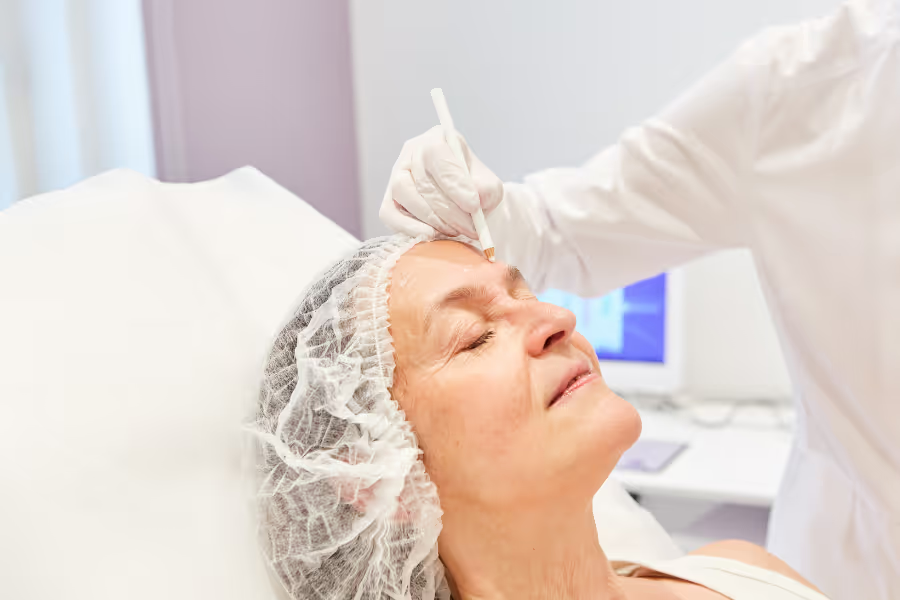
How long does a facelift take?
A standard SMAS facelift with neck lift typically takes about 3–5 hours. Deep plane facelifts often take 4–6 hours. Mini facelifts are usually 2–3 hours. Add time at the centre for check-in, anaesthesia, and recovery.
Basic steps
1. Check-in and confirmation
You meet the team, review your surgical plan, and the surgeon marks the planned incisions and key landmarks while you're sitting upright (this matters—facial tissue sits differently when you're lying down).
2. Anaesthesia
Most facelifts are done under general anaesthesia or deep IV sedation with local anaesthetic. Your anaesthesiologist will choose what's safest for you.
3. Position and prep
You're positioned on your back with your head slightly elevated. Your hair is tied back away from the incision lines, and the area is cleaned and draped sterilely. Eye lubricant and protective shields keep the eyes safe.
4. Local anaesthetic with adrenaline
A dilute local anaesthetic mixed with adrenaline is injected throughout the surgical area. This minimizes bleeding and helps with pain control after surgery.
5. Incisions
Incisions are placed in well-hidden locations: starting in the temple hair, curving down in front of the ear (in a natural crease or just inside the cartilage), around the earlobe, and behind the ear into the hairline. A small incision under the chin is often added for the neck.
6. Skin elevation and SMAS work
The surgeon carefully lifts the skin off the deeper tissue, then addresses the SMAS layer—either tightening it with sutures, repositioning it as a flap, or releasing and lifting it as part of a deep plane technique. For the neck, the platysma muscle is tightened in the midline and along the jawline.
7. Fat sculpting (if needed)
Excess fat in the jowls or under the chin may be carefully reduced; thin or hollow areas (e.g., cheeks, tear troughs) may be augmented with fat grafting.
8. Skin redraping and trimming
The skin is redraped upward and backward along natural tension lines, excess skin is trimmed conservatively, and the earlobe is repositioned to avoid distortion.
9. Drains and closure
Fine drains may be placed behind the ears to prevent fluid collection. Incisions are closed in layers with absorbable deep sutures and very fine surface sutures.
10. Dressings and wake-up
A soft, supportive head dressing is applied. You recover in the post-anaesthesia area. Most patients stay overnight at the surgical facility or a recovery suite for monitoring; some go home the same day with a responsible adult.

What to expect from the recovery process—facelift recovery time
This is generalized information. Every body heals differently—follow your surgeon's plan.
Most people are presentable in 2–3 weeks and back to most normal activities by 4–6 weeks. Final, refined results emerge over 6–12 months as swelling fully resolves and scars mature.
Days 1–3
Reality check:
You'll have significant swelling, bruising, tightness, and a "wooden" or numb feeling across the cheeks and neck. Sleeping is best done on your back with the head elevated. A supportive dressing or chin strap is usually worn most of the time.
Goals: Manage swelling and pain, protect the incisions, rest.
Activities: Sleep with head elevated on 2–3 pillows or a wedge; cool compresses (not ice) on the cheeks intermittently; light walking around the house; soft, low-salt foods; chin strap as directed; drains emptied and recorded as instructed.
Days 4–7
Bruising peaks, then begins to fade.
Goals: Reduce swelling, return to light routines.
Activities: Drains usually removed. First post-op visit is typically in this window. Showering and gentle hair washing are often allowed. Continue head elevation and chin strap at night. Most patients are not yet ready to be seen socially.
Weeks 2–3
Most visible bruising gone; tightness and lumpiness linger.
Goals: Return to most daily activities; protect from sun.
Activities: Sutures (if non-dissolving) typically removed at 7–14 days. Many patients return to desk work and light social activities by 2–3 weeks—often with help from hair, makeup, and a scarf. Light cardio (walking) is usually fine. Skin still feels tight and slightly numb; small lumps along the incisions are normal.
Weeks 3–6
Building toward final result.
Goals: Resume full exercise; gentle scar care.
Activities: Most patients return to gym workouts and most physical activities around 4–6 weeks. Scars are pink but well-camouflaged in and around the ear and hairline. Continue sun protection—fresh scars darken with sun exposure. Numbness around the ears and cheeks slowly improves.
Months 2–6
Final result emerges.
Goals: Allow scars to mature, swelling to settle, and sensation to return.
Activities: No restrictions. Subtle swelling can persist for several months, especially in the neck and jawline. Scars continue to fade for up to a year. Numbness usually resolves over 3–6 months but can take longer in patches.
Months 6–12
The final "snapshot" you'll remember.
Deep plane and SMAS work fully settles. Scars are typically pale and very hard to spot when placed and cared for properly.
Helpful tips
- Sleep on your back, head elevated for at least 2–3 weeks.
- Cool compresses, not ice: Direct ice on numb skin can cause damage.
- No bending, lifting, or straining for the first 2–3 weeks—it raises blood pressure and the risk of bleeding.
- Low-salt diet for the first 1–2 weeks to reduce swelling.
- No alcohol for the first 1–2 weeks (worsens swelling and interacts with pain meds).
- Sunglasses and a wide-brimmed hat for the first months—sun is the enemy of fresh facelift scars.
- Stop smoking and vaping—nicotine is the single biggest cause of poor facelift healing and visible scarring. Stop at least 4 weeks before and after.
- Be patient with numbness and lumpiness—both are normal and almost always improve over months.
Warning signs after facelift surgery—when to call your care team
Most recoveries are uneventful, but the face has a rich blood supply and some warning signs need same-day attention. Call your surgeon or seek care immediately if you notice any of the following:
- Sudden, severe, one-sided swelling of the cheek or neck—especially with increasing pain, tightness, or bruising. This can signal a hematoma (blood collection under the skin), the most common serious early complication of a facelift, and it usually needs urgent evacuation.
- Spreading redness, warmth, foul-smelling drainage, or fever above 38.5 °C (101 °F)—signs of infection.
- Skin that turns dark, dusky, or blistered, especially behind the ears—this can signal a problem with skin blood supply (skin necrosis) and needs urgent assessment.
- Sudden loss of facial movement on one side—drooping mouth, inability to close one eye, or asymmetric smile—may signal a nerve injury and needs urgent evaluation.
- Wound problems: Edges of an incision opening up, or sudden heavy bleeding.
- Severe nausea, vomiting, or inability to keep fluids down for more than 24 hours.
- Painful, swollen calf, chest pain, or shortness of breath—possible signs of a blood clot.
- Signs of allergic reaction to medication: Rash, hives, swelling of the face/throat, or trouble breathing.
When in doubt, call. Hematomas in particular are time-sensitive—your surgical team would always rather hear from you early than late.
What is Surgency?
As a family doctor in the public system, I believe transparency is a form of care. I created Surgency to help my patients struggling on long waitlists who wanted to understand all their options for timely medical attention.
Surgency is a free resource designed to empower and educate—helping you understand private pathways and find accredited surgeons within Canada. I hope Surgency brings you clarity.
Dr. Sean Haffey
How to choose a surgeon and clinic
Facelift surgery is one of the most technique-sensitive procedures in plastic surgery. The difference between a natural, long-lasting result and an obviously "done" one comes down to surgeon judgement, technique, and volume.
What to look for
Experience and volume (facelift-specific)
Ask how many facelifts they perform each year—not just "facial procedures" or injectables.
Facelift surgery is technique-sensitive because:
- Lifting only the skin (without the SMAS) creates the dreaded "pulled" or "windswept" look that doesn't last
- Over-tightening at the earlobe creates a "pixie ear" deformity
- Pulling in the wrong vector flattens the cheek or distorts the smile
- Mishandling the platysma in the neck leaves visible bands or an under-corrected jawline
- Working too superficially in front of the ear risks injury to facial nerve branches
Also ask about their case mix:
- Mini vs. SMAS vs. deep plane facelifts
- Facelift with neck lift (the most common combination)
- Combination facelifts with eyelid surgery, brow lift, fat grafting, or resurfacing
- Revision facelifts (correcting another surgeon's result)
- Male facelifts (different incision design, different beard considerations)
Right type of specialist
Two types of surgeons commonly perform facelift surgery in Canada:
- Plastic surgeons (FRCSC): broad surgical training, often perform full-body cosmetic and reconstructive work alongside facelifts
- Facial plastic surgeons (FRCSC, ENT-trained): facial-focused; often perform facelift, rhinoplasty, eyelid surgery, and brow lifts as their primary practice
Either can be excellent—the question is volume, results, and fit.
Credentials and training
- Verify licensure with your provincial college (CPSO Ontario, CPSBC BC, CPSA Alberta, CMQ Québec, etc.)
- Look for FRCSC certification in plastic surgery or otolaryngology (head & neck/facial plastic surgery)
- Be cautious of "cosmetic surgeons" without one of those Royal College credentials; in Canada, any licensed physician can advertise as a "cosmetic surgeon"
- Bonus: surgeons who teach facelift technique, publish outcomes, or are members of the Canadian Society of Plastic Surgeons (CSPS), the Canadian Academy of Facial Plastic and Reconstructive Surgery, or the Aesthetic Society
For a more in-depth guide read, How to Understand Surgeon Credentials in Canada
Outcomes and safety (ask for real numbers)
Request recent data, ideally for facelift surgery specifically:
- Hematoma rate (the most common serious facelift complication)
- Infection rate
- Skin healing problems / skin necrosis rate (especially behind the ears)
- Temporary and permanent facial nerve injury rates
- Revision rate (how often a touch-up is needed) and what triggers it
- Patient satisfaction and typical return-to-work timelines
Clear indications and alternatives
A careful surgeon should explicitly assess:
- whether your concerns are mainly jawline/jowls, mainly neck, or both
- whether midface volume loss is contributing (a facelift alone can't replace lost cheek volume—fat grafting or fillers may be needed)
- whether brow position or eyelid sagging is contributing (these need separate procedures)
- your skin quality, smoking status, and weight history, all of which influence healing and long-term results
- whether non-surgical options (energy-based tightening, fillers, neuromodulators) might be enough for now
Surgical plan
Ask:
- Which technique do you recommend (mini, SMAS, deep plane), and why?
- Will a neck lift be included? What about a chin implant or fat grafting?
- Where exactly will the incisions be?
- Will you use drains? An overnight stay?
- What anaesthesia do you recommend (general vs. deep sedation)?
Facility accreditation and safety systems
Choose accredited centres (e.g., Accreditation Canada or CAAASF) with:
- a dedicated, certified anaesthesiologist
- emergency equipment and clear hospital transfer protocols
- specific protocols for hematoma management (the rare but time-sensitive facelift emergency)
- overnight monitoring or a partnered recovery suite
Recovery integration
You want a written plan for:
- head elevation, dressings, and chin-strap routine
- drain care
- pain control plan
- showering and hair washing
- return-to-work and exercise milestones
- scar care (silicone, sun protection, possible laser later)
- when virtual follow-ups are appropriate
Transparent pricing
Request an itemized quote including:
- surgeon fee
- facility/OR fee
- anaesthesia
- overnight stay
- drains, dressings, chin strap
- follow-ups
- revision policy
Questions to ask at your facelift consultation
Surgeon and plan
- How many facelifts do you perform yearly?
- How many cases like mine (mini, SMAS, deep plane, with/without neck lift, revision, male)?
- Which technique do you recommend for me, and why?
- Should we add a neck lift, eyelid surgery, brow lift, fat grafting, or resurfacing?
Technique and safety
- What are your rates of: hematoma, infection, skin healing problems, and facial nerve injury?
- What's your protocol for hematoma if it happens?
- What's your plan if I develop a complication?
Recovery and after-care
- When will I be presentable in public? When can I return to desk work, driving, the gym, and full social life?
- What symptoms should prompt an urgent call?
- What's included in follow-up care, and for how long?
Costs and logistics
- What exactly is included in my quote?
- What could increase the cost?
- What is your revision policy if I'm not happy with the result?
- How are follow-ups handled if I live out of province?
Signals of a high-quality facelift program
- Performs facelift surgery regularly (not occasionally) and explains technique choices clearly
- FRCSC-certified plastic surgeon or facial plastic surgeon working in an accredited facility with a certified anaesthesiologist
- Honest about non-surgical alternatives—willing to say "surgery isn't the right answer yet" when true
- Shares complication and revision rates openly and sets realistic expectations
- Provides a written recovery plan, dressing protocol, and clear warning-sign list
- Offers transparent, itemized pricing—including the revision policy
If you're currently interested in private surgical pathways within Canada, you can click here for a list of providers.

Frequently asked questions
How do I know a facelift is right for me?
A facelift can make sense for the right candidate. It's a deeply personal decision, and should come with significant thought and reflection.
Reminder: this is general information, please seek guidance from a medical professional.
Signs you are a candidate for facelift surgery
- You have realistic expectations: A facelift restores a more youthful jawline and neck—but it doesn't change your skin texture, doesn't lift your brow or eyelids, and doesn't replace lost cheek volume on its own.
- You're a non-smoker (or willing to quit completely): Smoking dramatically increases the risk of poor wound healing, skin loss, and visible scarring.
- You're in good general health with controlled medical conditions and no active major medical issues.
- You have a realistic recovery window: 2–3 weeks of looking obviously post-op, and 6+ weeks back to full activity.
When it might not be the right option
- You're an active smoker or vaper not ready to quit: Many surgeons will not perform a facelift on active smokers because of the risk of skin necrosis.
- Significant unmanaged blood-pressure issues, bleeding disorders, or blood-thinner use that can't be paused: Increases the risk of hematoma.
- Very loose skin from massive weight loss only: A facelift can help, but the plan and expectations are different—be sure your surgeon has experience in this group.
- Active skin infections, untreated rosacea flares, or recent facial procedures: Wait until cleared.
- Body dysmorphia or unrealistic expectations: A careful surgeon will pause if expectations don't match what surgery can deliver.
- You're hoping a facelift will fix the eyelids or brow: It won't—different procedures are needed.
Do I need a referral?
Yes and no—you can reach out to any of the private surgeons listed on Surgency without a referral. Their intake teams are happy to answer questions, explain what they treat, share pricing ranges, and walk you through next steps.
However, to book a formal consultation with the surgeon, you'll typically need a referral from your family doctor or nurse practitioner. Don't have one? Many of the clinics can help coordinate a virtual GP appointment to get the referral paperwork sorted. All surgeons listed on Surgency offer virtual initial consultations, so you don't need to travel until you and the surgeon have agreed on a plan.
Before your consultation, expect the clinic to request relevant medical records and recent diagnostic imaging (X-ray, MRI, CT, ultrasound, lab work, etc.). Having these ready speeds up the process and lets the surgeon give you specific guidance on your very first call.
How do I prepare for facelift surgery?
Your surgeon's instructions come first—follow their plan if it differs.
Prehab and health optimization
Quit nicotine—this is critical
- Stop smoking, vaping, and nicotine pouches at least 4 weeks before and after surgery. Nicotine constricts blood vessels and is the single biggest cause of skin necrosis after a facelift, especially behind the ears. Many surgeons require negative nicotine testing before surgery.
Medication review
- Share all prescriptions, OTC meds, and supplements.
- Pause blood thinners, anti-inflammatories (NSAIDs like ibuprofen), and certain herbal supplements (fish oil, vitamin E, ginkgo, garlic, ginseng) as directed—usually 1–2 weeks before surgery. These increase the risk of bleeding and hematoma.
Optimize medical conditions
- Blood pressure: Well-controlled BP dramatically lowers the risk of hematoma. Your surgeon may ask for a check-in close to your surgery date.
- Diabetes: Tight blood-sugar control improves healing.
- Sleep apnea: Bring your CPAP—it matters during recovery.
Skin and hair
- Avoid retinoids, glycolic acids, and aggressive skincare for 1–2 weeks before surgery.
- Treat any active acne, rosacea flares, or skin infections before surgery.
- Plan a haircut/colour appointment well before surgery; you'll want to wait 4–6 weeks after to colour again.
Home prep
Set up a recovery zone
- A recliner or bed with plenty of pillows is ideal—you'll sleep with your head elevated for 2–3 weeks.
- Keep cool-compress materials ready (gel packs in the fridge—not freezer—or clean washcloths).
- Stock easy-open water bottles, straws, and plenty of soft foods.
- Have your chin strap, dressings, and any prescribed wound-care supplies ready.
Clothing
- Loose, button-up or zippered tops only—no pulling shirts over your head for the first 1–2 weeks.
- Slip-on shoes (you won't be bending easily).
- A loose scarf or wide-brimmed hat for going out.
Help at home
- Arrange for an adult to stay with you for at least the first 24–48 hours; ideally a few days.
- Plan for help with cooking, childcare, and errands for the first 1–2 weeks.
- You won't be able to drive yourself home, and you may not feel safe driving for 1–2 weeks.
Food, meds, and surgery-day prep
Stock easy meals
- Soft, easy-to-chew foods: soups, smoothies, yogurt, eggs, mashed potatoes, well-cooked pasta, fish.
- Low-salt for the first 1–2 weeks—salt worsens facial swelling significantly.
- Hydrate well in the days before.
- Avoid alcohol for at least 1 week before and 1–2 weeks after.
Bowel plan
- Pain meds slow the gut. Have stool softeners, fibre, and plenty of fluids ready.
Skin prep
- Use the antiseptic wash as directed (usually night before and morning of). Avoid getting it in your eyes.
- Wash your hair the night before (shampooing is restricted in the first days post-op).
- No makeup, jewellery, or contact lenses to the procedure.
What to bring
- Health card/ID, medication list, and a list of allergies.
- A loose, button-up top.
- Glasses (no contacts).
- CPAP machine if you have sleep apnea.
- Lip balm (lips get dry during anaesthesia).
Day-before checklist
- No food after midnight (or as instructed).
- Confirm your ride home—you cannot drive yourself.
- Confirm your support person is ready for the first 24–48 hours.
- Charge your phone and put it within reach.
How much does Surgency cost?
Surgency is free for patients, funded for by surgeons.
Surgeons—who meet our listing criteria—pay a flat fee to list on the Surgency platform. To maintain objectivity, there are no commissions, referral fees, nor any ranking or recommending one surgeon over another.
Surgency is patient-first. Our goal is to make the process of finding a private surgeon as simple as possible. You choose who to contact. Learn more in our Advertising Policy.
What are the risks involved with surgery?
Your personal risk depends on your anatomy, skin quality, medical history, smoking status, and the technique used. The content below is generalized information, always discuss your specific risks with your surgeon.
Common and usually temporary
- Swelling and bruising: Significant for the first 2–3 weeks; subtle swelling can persist for several months.
- Numbness or altered sensation: Especially around the ears and cheeks. Usually resolves over 3–6 months, sometimes longer in patches.
- Tightness and a "wooden" feeling: Common for several weeks; eases gradually.
- Small lumps and firmness along the incisions: Normal; usually softens over weeks to months.
- Itching as nerves regenerate: Common between weeks 2 and 8.
- Mild ear discomfort or earlobe swelling: Common for several weeks.
Less common
- Hematoma: Blood collection under the skin, usually within the first 24 hours. The most common serious facelift complication, often requiring urgent return to the OR. Risk is higher in men and in poorly controlled blood pressure.
- Infection: Treated with antibiotics; rarely requires drainage.
- Skin healing problems / skin necrosis: Especially behind the ears, and especially in smokers. May leave a wider or darker scar; rarely needs revision.
- Visible or asymmetric scars: Most facelift scars are very well hidden, but a small number remain noticeable.
- Hair loss along the incisions (alopecia): Usually temporary; occasionally permanent at the temple.
- Earlobe distortion ("pixie ear"): From over-tightening; may need revision.
- Small skin irregularities or asymmetry: May need a touch-up.
Procedure-specific considerations
- Temporary facial nerve weakness: Drooping of the lip, asymmetric smile, or weakness closing one eye, usually from local anaesthetic or stretch. Almost always resolves within weeks to a few months.
- Permanent facial nerve injury: Rare, but possible. Most often affects the marginal mandibular branch (lower lip) or the temporal branch (forehead/brow lift).
- Salivary gland injury (parotid sialocele or fistula): Rare; usually treated conservatively.
- Persistent neck banding or under-corrected jawline: May need revision.
- "Pulled" or unnatural appearance: Usually a result of over-tightening or skin-only technique; difficult to fully correct.
- Need for revision: A small percentage of patients want or need a touch-up.
Uncommon but important
- Deep vein thrombosis (DVT) and pulmonary embolism: Rare; risk reduced with early walking and compression devices during surgery.
- Anaesthesia complications: Rare, but discussed by your anaesthesiologist.
- Allergic reactions to medications, dressings, or antiseptics.
How you can lower risk
- Stop nicotine completely for at least 4 weeks before and after surgery.
- Control blood pressure before surgery—this is one of the biggest hematoma-prevention steps.
- Pause blood thinners and supplements as directed.
- Treat dental, sinus, and skin infections before surgery.
- Choose an experienced, board-certified specialist in an accredited facility.
- Sleep with head elevated, follow chin-strap and dressing instructions exactly, and avoid bending or lifting in the first 2–3 weeks.
- Low-salt diet and no alcohol in the early weeks.
- Keep all follow-up appointments—early detection of problems makes them easier to manage.
- Be honest about your medical history, including supplements and recreational drug use.
How long do facelift results last?
This is general information, your situation may differ. Please consult with your surgeon for your unique circumstances.
A facelift doesn't stop aging—but it sets the clock back. Most patients enjoy their result for 10–15 years, and many never need a second facelift.
- Mini facelift: Generally lasts 5–8 years. Best for younger patients with mild laxity.
- SMAS facelift: Generally lasts 8–12 years.
- Deep plane facelift: Generally lasts 10–15 years or more in well-selected patients with good tissue quality.
- Neck lift: Often lasts 10+ years, especially when combined with platysmaplasty.
What can change the result over time
- Aging and gravity: Continue regardless of surgery.
- Sun exposure: The single biggest preventable factor. Sunglasses, hats, and SPF protect both your scars and your long-term result.
- Smoking and vaping: Accelerate skin aging dramatically.
- Significant weight changes: Major weight loss after a facelift can reintroduce laxity.
- Skin quality and genetics: Some skin types hold a result longer than others.
What to expect long term
Most patients eventually pair their facelift with non-surgical maintenance—neuromodulators, fillers, lasers, or energy-based tightening—as the rest of the face continues to age. A small number choose a touch-up procedure or a second facelift years down the road. Many are happy with their original result for life.
I still have questions
If you still have questions, please feel free to contact us directly.
Please note: Surgency is not a clinic itself. Nor can we help with emergency situations, or provide personalized medical advice—that is between you and your surgeon. If you are experiencing acute or severe symptoms, please present to your local emergency department or urgent care centre.


.avif)