
.png)


Quelles sont les varices et pourquoi les personnes concernées consultent un médecin ?
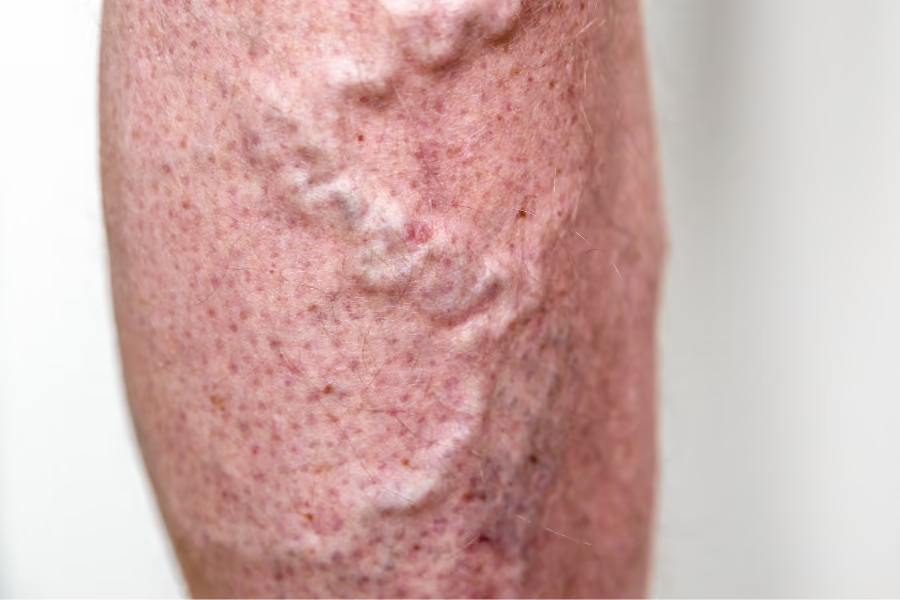
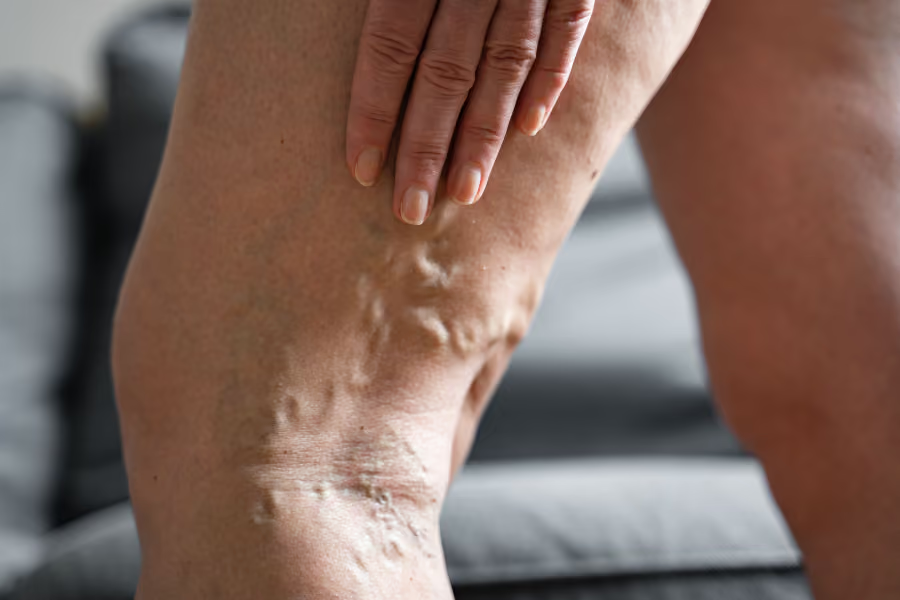
Les varices sont des veines dilatées et tortueuses, généralement situées dans les jambes. Elles se forment lorsque les valves unidirectionnelles à l'intérieur d'une veine cessent de se fermer correctement. Le sang reflue alors et stagne, ce qui augmente la pression dans la veine.
Imaginez les valvules des veines saines comme de petites portes qui permettent au sang de circuler vers le cœur. Lorsque l'une de ces portes devient perméable, le sang s'accumule en dessous et la veine peut s'étirer, se dilater et devenir visible.
Les varices ne sont pas toujours seulement esthétiques. Elles peuvent entraîner :
- Douleurs, brûlures, élancements ou lourdeur
- Gonflement autour des chevilles ou du bas des jambes
- Démangeaisons, crampes ou jambes sans repos
- Symptômes s'aggravant après une position debout prolongée
- Décoloration de la peau, eczéma, durcissement ou plaies ouvertes près de la cheville
- Inflammation douloureuse ou caillot dans une veine superficielle
- Saignement d'une veine près de la peau
L' échographie duplex est souvent utilisée pour cartographier les veines superficielles et profondes, identifier le reflux veineux (flux rétrograde), exclure la présence de caillots importants et planifier le traitement.
Ce qui se passe réellement
Le traitement dépend des veines touchées, des résultats de l'échographie, de vos symptômes et de vos objectifs. Il peut combiner plusieurs approches.
- Mesures liées au mode de vie : La marche, les exercices des mollets, l’élévation des jambes, la gestion du poids et le fait d’éviter les périodes prolongées d’inactivité peuvent réduire la pression et les symptômes. Elles ne permettent pas de faire disparaître une varice existante.
- Bas de contention : Les bas à compression dégressive exercent une pression maximale à la cheville et diminuent graduellement sur la jambe. Ils peuvent soulager la douleur et l'enflure, mais ne réparent pas une valve défectueuse.
- Sclérothérapie : un médicament liquide ou en mousse est injecté dans une veine de petite ou moyenne taille. La veine se ferme et est graduellement résorbée. Plusieurs séances pourraient être nécessaires.
- Sclérothérapie à la mousse sous contrôle échographique : les ultrasons guident la mousse dans une veine superficielle anormale, plus large ou plus profonde. Ce traitement permet de soigner les veines qui ne peuvent pas être fermées par la chaleur.
- Ablation endoveineuse au laser (EVLA/EVLT) : Un cathéter mince est placé dans la veine. La chaleur du laser le scelle de l’intérieur.
- Ablation par radiofréquence (RFA) : Semblable à l'ablation laser, mais l'énergie radiofréquence chauffe et ferme la veine.
- Fermeture par adhésif médical : un cathéter permet d’injecter une petite quantité d’adhésif médical pour sceller la veine. Cette technique évite l'utilisation de la chaleur et nécessite généralement moins d'injections anesthésiantes.
- Ablation mécanochimique : un cathéter rotatif irrite la paroi veineuse tout en y délivrant un agent sclérosant. Il s’agit d’une autre option non thermique, mais sa disponibilité est variable.
- Phlébectomie ambulatoire ou microphlébectomie : le clinicien enlève les branches superficielles saillantes par de minuscules ouvertures cutanées sous anesthésie locale.
- Ligature et stripping : par de petites incisions, le chirurgien ligature et retire une veine malade. Cette intervention est maintenant généralement réservée aux cas anatomiques qui ne peuvent être traités de manière appropriée par des méthodes moins invasives.
Fermeture adhésive au cyanoacrylate
Un cathéter permet d'injecter un adhésif médical pour sceller la veine malade, sans recourir à la chaleur ni à de multiples injections anesthésiantes. Le traitement dure généralement moins d'une heure et la plupart des patients reprennent une activité légère en un ou deux jours. Il peut être plus coûteux qu'une ablation thermique et peut entraîner des ecchymoses, une sensibilité au toucher ou une réaction inflammatoire ou allergique. Une sclérothérapie ou une phlébectomie peut néanmoins être nécessaire pour les veines collatérales visibles.
Ablation laser endoveineuse
L'ablation endoveineuse au laser (EVLA ou EVLT) utilise une fibre laser et la chaleur pour sceller une veine superficielle présentant un reflux. Une anesthésie locale tumescente protège les tissus environnants, et le traitement dure généralement de 45 à 90 minutes. La plupart des patients peuvent marcher immédiatement après l'intervention et reprendre leur travail de bureau en quelques jours. Des ecchymoses et une sensation de tension sont fréquentes ; les risques moins fréquents incluent les brûlures, l’irritation nerveuse, l’infection ou la formation de caillots. Le port d'un pantalon de compression peut être recommandé.
fermeture par cyanoacrylate versus ablation endoveineuse au laser
Ces deux interventions par cathéter permettent de fermer une veine superficielle malade afin que le sang puisse circuler à nouveau dans des vaisseaux plus sains. La cyanoacrylate utilise un adhésif et nécessite généralement moins d'anesthésie ; l'EVLA utilise la chaleur et bénéficie d'une plus grande expérience clinique à long terme. Le choix de la technique dépend des résultats de l'échographie, de l'anatomie veineuse, des antécédents médicaux, du coût et de l'expertise locale. Aucune de ces interventions ne prévient l'apparition de nouvelles varices et un traitement complémentaire peut être nécessaire.
Combien coûte un traitement des varices ?
Comment nous estimons les coûts chirurgicaux : Les fourchettes de prix indiquées sont des estimations basées sur notre réseau de plus de 100 cliniques et chirurgiens privés. Elles sont volontairement larges. Deux personnes souhaitant subir la même intervention peuvent recevoir des devis très différents selon la province, le chirurgien, les frais d’établissement et la complexité du cas. Les prix publiés ne sont pas toujours comparables : certains sont des forfaits tout compris, d’autres excluent la consultation, l’imagerie ou le suivi. Seule la clinique peut vous fournir un devis précis et détaillé.
Les prix varient selon le traitement, le nombre et la longueur des veines, la jambe traitée (une ou les deux), les besoins en échographie, les honoraires du praticien, les frais d'établissement et le nombre de séances. Demandez un devis écrit et détaillé après la cartographie échographique.
Coût au Canada
Coefficients approximatifs de paiement direct en dollars canadiens :
- Consultation et échographie duplex : 200 $ à 600 $ et plus
- Sclérothérapie : 250 $ à plus de 600 $ par séance
- Sclérothérapie à la mousse guidée par échographie : de 500 $ à plus de 1 500 $ par zone ou séance traitée
- EVLA ou RFA : de 3 000 $ à 5 000 $ et plus pour une jambe ; un traitement bilatéral peut coûter de 6 000 $ à 8 000 $ et plus.
- Fermeture adhésive médicale : généralement entre 4 000 et 6 000 $ par jambe.
- Microphlébectomie ou traitement combiné : généralement entre 3 500 et 6 500 $ et plus
- Ligature et stripping privés : généralement entre 3 000 et 5 000 $ (voire plus), selon l’établissement et l’anesthésie.
Il s'agit d'estimations, pas de prix garantis. La couverture varie selon la province et la clinique.
Coût aux États-Unis
Fourchette approximative des paiements directs en dollars américains :
- Sclérothérapie : 300 $US à 825 $US+ par séance
- EVLA : de 1 000 à plus de 3 000 $US par veine
- RFA : 2 000 $ à 5 000 $ et plus par veine ou zone traitée
- Phlébectomie ambulatoire : 2 000 $US à 4 000 $US et plus
- Adhésifs médicaux et nouvelles options non thermiques : 5 000 $ à plus de 13 000 $, selon l’étendue.
Aux États-Unis, l'assurance maladie peut prendre en charge les traitements médicalement nécessaires lorsque les symptômes, le reflux gastro-œsophagien confirmé par échographie et la nécessité d'un traitement conservateur sont documentés. Les franchises, les quotes-parts et les frais de soins hors réseau peuvent néanmoins demeurer élevés.
Ce qui peut être inclus
- Évaluation spécialisée et planification du traitement
- Anesthésie locale et matériel standard
- Frais de salle d'examen ou d'installation
- Le cathéter, la fibre, l'adhésif ou le sclérosant
- Pansements de compression ou bas de contention
- Un suivi précoce et, parfois, une échographie post-traitement
Ce qui pourrait ne pas être inclus
- Échographie initiale duplex ou imagerie répétée
- Traitement d'une deuxième jambe ou de veines supplémentaires
- séances de sclérothérapie de suivi
- Médicaments sur ordonnance ou bas supplémentaires
- Frais de sédation, d'anesthésie générale ou d'hospitalisation
- Traitement de la récidive
- Voyages et hébergement
Conseils pour comparer les soumissions
Demandez si le devis comprend toutes les prestations. Demandez les détails des éléments suivants : consultation, échographie, praticien, établissement, appareil, anesthésie, compression, imagerie de suivi et séances supplémentaires. Confirmez la procédure à suivre si l'échographie modifie le plan de traitement.
Options d'assurance et de financement
- Couverture provinciale : Informez-vous pour savoir si vos symptômes répondent aux critères provinciaux de nécessité médicale et quels traitements sont couverts.
- Assurance maladie privée : Certains contrats couvrent les vêtements de compression ou une partie d’une intervention médicalement nécessaire. Les soins esthétiques sont généralement exclus.
- Modalités de financement : Certaines cliniques offrent des plans de paiement. Consultez les taux d’intérêt, les frais et les conditions d’annulation.
- Crédit d'impôt pour frais médicaux (CIFM) : Les frais médicaux non remboursés admissibles peuvent donner droit à un crédit d'impôt fédéral non remboursable. Apprenez-en plus sur la façon de demander le CIFM pour les chirurgies privées au Canada .
À quoi s'attendre du processus de traitement
La durée exacte de l'intervention dépend de l'option choisie. La sclérothérapie dure habituellement entre 15 et 45 minutes. La fermeture endoveineuse ou la phlébectomie prennent généralement entre 45 et 90 minutes par zone traitée. Les traitements complexes, bilatéraux ou combinés peuvent être plus longs.
Étapes de base
Consultation et examen
- Le médecin examine vos symptômes, vos antécédents médicaux, vos traitements médicamenteux, vos antécédents de thrombose, vos grossesses, vos traitements veineux antérieurs et vos objectifs. Il examine également votre pouls, votre peau, tout gonflement et vos veines visibles.
cartographie par échographie duplex
- L'échographie permet de visualiser le sens du flux sanguin, d'identifier les valvules défectueuses et les veines refluxantes, et d'examiner les veines profondes. Une bonne planification du traitement vise à traiter la source du reflux, et non seulement les branches visibles.
Choix du traitement et consentement
- Le médecin explique les traitements conservateurs et les interventions appropriées, en précisant les avantages escomptés, les limites, le risque de récidive, les alternatives et les risques. Il est possible que vous ayez besoin de plusieurs types de traitements.
Préparation
- La jambe est marquée, nettoyée et recouverte d'un champ opératoire. La plupart des interventions veineuses modernes sont effectuées sous anesthésie locale. Une sédation ou une anesthésie générale peuvent être utilisées dans certains cas.
Traitement de la veine principale, au besoin
- Pour l'ablation endoveineuse au laser (EVLA), l'ablation par radiofréquence (RFA), la fermeture adhésive ou l'ablation mécanochimique, une aiguille fine et un cathéter sont introduits dans la veine sous contrôle échographique. La veine est ensuite scellée selon la méthode choisie.
Traitement des branches visibles, au besoin
- Les branches saillantes peuvent être enlevées par phlébectomie, par de minuscules incisions ou par injection de sclérosant. Cette intervention peut avoir lieu lors de la même consultation ou ultérieurement.
Pansements et compressions
- De petits pansements sont appliqués. Votre médecin pourrait vous recommander des bas de contention ou des bandages ; le type et la durée dépendent de l'intervention et de vos besoins médicaux.
Marche et sortie
- La plupart des patients marchent peu après le traitement et reviennent à la maison le jour même. Prévoyez un accompagnateur si vous recevez une sédation ou si votre clinique l'exige.
Faire le suivi
- Certaines interventions nécessitent une échographie de contrôle pour confirmer la fermeture et vérifier l'absence de caillots. L'amélioration esthétique se poursuit à mesure que les ecchymoses disparaissent et que la veine traitée s'estompe.
À quoi s'attendre pendant la convalescence
La durée de la convalescence varie selon le traitement, la taille des veines et si les deux jambes ont été traitées. Suivez les recommandations de votre médecin.
Premières 24 à 48 heures
Symptômes courants : douleurs légères, sensation de tiraillement, ecchymoses, sensibilité et petits saignements sous le pansement.
Objectifs : Maintenir la circulation sanguine, contrôler l'inconfort et protéger la zone traitée.
Activités : Marchez régulièrement. Évitez de rester assis ou debout trop longtemps. Portez un vêtement de compression si prescrit. Gardez vos pansements au sec pendant la durée indiquée par votre clinique.
Après une sclérothérapie, une ablation ou une phlébectomie limitée, la plupart des patients reprennent une activité de bureau un ou deux jours après l'intervention. Le stripping chirurgical nécessite souvent un temps de rétablissement plus long.
Jours 3 à 7
Les ecchymoses et la sensibilité peuvent s'accentuer avant de s'atténuer. Une zone ferme et cordiforme peut se former le long d'une veine fermée. Continuez à marcher et suivez les instructions concernant les douches, les bas de contention, la conduite et les médicaments.
Évitez de soulever des charges lourdes, de faire des exercices intenses sollicitant le bas du corps, de prendre des bains chauds et de vous exposer à une chaleur prolongée jusqu'à nouvel ordre. Les restrictions varient selon qu'il s'agisse d'une ablation thermique, d'une fermeture adhésive, d'injections ou d'une intervention chirurgicale.
Semaines 2 à 4
La plupart des gens reprennent leurs activités quotidiennes normales. Des ecchymoses, une sensation de fermeté et des changements de couleur peuvent persister. Les veines traitées s'atténuent graduellement plutôt que de disparaître immédiatement.
Après un stripping chirurgical ou une phlébectomie prolongée, l'œdème et la douleur peuvent persister plusieurs semaines avant de disparaître. La reprise d'une activité physique doit être adaptée à chaque cas.
Semaines 4 à 12
Les symptômes et l'apparence continuent généralement de s'améliorer. Une sclérothérapie de suivi peut être proposée pour les varicosités résiduelles ou les télangiectasies. De nouvelles varices ou des récidives peuvent apparaître plus tard, car le traitement ne supprime pas la prédisposition sous-jacente aux maladies veineuses.
Conseils utiles
- Marchez souvent : des promenades courtes et fréquentes favorisent la circulation sanguine.
- Utilisez correctement la compression : portez la taille et la force recommandées ; des bas mal ajustés peuvent être inconfortables, voire dangereux.
- Protégez la peau : suivez les instructions pour les pansements et le bain. N'appliquez pas de crème sur les points de piqûre, sauf avis contraire.
- Évitez l'immobilité : renseignez-vous sur les conditions optimales pour effectuer un long vol ou un long voyage en voiture.
- Attendez-vous à des changements cosmétiques progressifs : le sang emprisonné, les taches ou la fermeté peuvent prendre des semaines ou des mois à disparaître.
Signes d'alerte — consultez un médecin
Contactez rapidement votre équipe soignante en cas de rougeur croissante, de chaleur, d'écoulement, de fièvre, de douleur intense, d'aggravation de l'enflure, d'engourdissement ou d'apparition d'une nouvelle veine dure et sensible.
Consultez un médecin d'urgence en cas de gonflement soudain d'un seul côté de la jambe, de douleur thoracique, d'essoufflement, de toux sanglante, d'évanouissement, de saignement non contrôlé ou de signes d'une réaction allergique grave.
Qu’est-ce que c’est Surgency?
En tant que médecin de famille dans le système public, je crois que la transparence est une forme de soins. J’ai créé Surgency pour aider mes patients en difficulté avec de longues listes d’attente qui voulaient comprendre toutes leurs options pour des soins médicaux rapides.
Surgency est une ressource gratuite conçue pour autonomiser et éduquer — vous aidant à comprendre les voies privées et à trouver des chirurgiens accrédités au Canada. J’espère Surgency Ça t’apporte de la clarté.
Dr Sean Haffey

Pourquoi les Canadiens envisagent-ils un traitement privé des varices ?
Accès à un plus large éventail de traitements
Les régimes provinciaux peuvent couvrir l'évaluation ou le traitement lorsque les varices entraînent des problèmes médicaux importants, mais les critères varient. Les traitements esthétiques et certaines interventions plus récentes par cathéter pourraient ne pas être couverts. Une clinique privée peut offrir des options comme la sclérothérapie, l'ablation endoveineuse au laser (EVLA), l'ablation par radiofréquence (RFA), la fermeture par adhésif médical et la microphlébectomie.
Des délais plus courts et plus prévisibles
Une évaluation privée peut permettre d'obtenir une consultation, une échographie et un rendez-vous de traitement plus rapidement. Cela peut être important lorsque des douleurs, un gonflement, une irritation cutanée ou une position debout prolongée limitent le travail et les activités quotidiennes. Les varices accompagnées de saignements, d'un ulcère, d'une suspicion de formation de caillots ou de symptômes évoluant rapidement nécessitent une évaluation médicale plutôt qu'une prise de rendez-vous de routine.
Choix et contrôle
Passer au privé peut vous permettre de :
- Choisissez un chirurgien vasculaire, un radiologiste interventionnel ou un médecin spécialisé dans le traitement des veines.
- Comparer les options thermiques, non thermiques, par injection et chirurgicales
- Adaptez votre horaire au travail, aux responsabilités familiales, aux voyages ou aux exigences saisonnières.
- Recevez un plan écrit pour une jambe, les deux jambes ou un traitement par étapes
- Coordonner l'échographie, le traitement, la compression et le suivi
Une planification plus claire
Un plan de traitement écrit peut expliquer quelle veine principale de reflux doit être fermée, quelles branches superficielles peuvent nécessiter une phlébectomie ou une sclérothérapie, combien de séances sont prévues et ce qui pourrait nécessiter un traitement ultérieur.
Comment choisir un spécialiste ou une clinique vasculaire
Choisir le bon praticien est essentiel, car les veines apparentes peuvent être le symptôme d'un reflux plus profond. Une bonne clinique évalue l'ensemble du système veineux et recommande un traitement en fonction de l'anatomie et des symptômes, et non en utilisant un seul appareil.
Expérience et gamme de traitements
Demandez au praticien combien d'examens et d'interventions pour varices il pratique chaque année. Son expérience doit correspondre au traitement envisagé.
Cherchez de l'expérience avec :
- Interprétation de l'échographie duplex et planification du traitement
- Sclérothérapie à la mousse liquide et guidée par échographie
- EVLA et RFA
- Adhésif médical ou fermeture mécanochimique, si disponible
- phlébectomie ambulatoire
- Varices récurrentes et traitements antérieurs
- Ulcères veineux, modifications cutanées et thrombose superficielle
- Ligature et stripping chirurgicaux lorsque les soins moins invasifs ne conviennent pas
Une clinique offrant plusieurs approches sera peut-être mieux en mesure d'adapter le traitement à votre anatomie plutôt que d'orienter tous les patients vers une seule technologie.
Qualifications et champ d'exercice
Assurez-vous que le médecin traitant est bien inscrit au tableau de l’ordre des médecins de la province concernée. Selon l’intervention, les professionnels de la santé appropriés peuvent inclure des chirurgiens vasculaires, des radiologistes interventionnels, des chirurgiens généraux spécialisés en pathologie veineuse, des dermatologues ou d’autres médecins ayant une formation documentée en phlébologie.
Pour une intervention chirurgicale, vérifiez la certification du Collège royal et l'autorisation d'exercer dans un hôpital ou un établissement agréé. Renseignez-vous sur le médecin qui fait l'échographie, celui qui pratique l'intervention et celui qui s'occupe des complications.
Pour un guide plus détaillé, consultez Comment comprendre les qualifications des chirurgiens au Canada .
Échographie et rigueur diagnostique
Pour les varices symptomatiques ou de grande taille, le plan de traitement devrait généralement comprendre une échographie-doppler. Demandez si l'examen comprend :
- Perméabilité veineuse profonde et antécédents de thrombose
- reflux des veines saphènes interne et externe
- Veines accessoires et perforantes, le cas échéant
- La source des branches visibles
- Les deux jambes lorsque les symptômes sont bilatéraux
- Traitements antérieurs et voies de récidive
Faites attention si une clinique recommande de traiter les grosses veines en se basant uniquement sur leur apparence, sans évaluer la circulation sous-jacente.
Indications claires et alternatives
Un clinicien consciencieux devrait expliquer :
- Que votre préoccupation soit d'ordre esthétique, symptomatique ou médicalement compliquée
- Si les soins conservateurs sont raisonnables
- Quelle veine est responsable du reflux et en quoi cela correspond-il à vos symptômes ?
- Pourquoi la chaleur, l'adhésif, la mousse, la phlébectomie ou la chirurgie sont-ils recommandés ?
- Il faudra déterminer si plusieurs étapes seront nécessaires.
- Pourquoi l'absence de traitement ou la poursuite de la surveillance peuvent être raisonnables
Résultats et sécurité
Demandez des renseignements récents et spécifiques à la procédure, notamment :
- Taux de réussite de la fermeture veineuse ou technique
- Nécessité de répéter le traitement
- Taux de thrombose veineuse profonde ou d'extension du caillot
- taux de lésions nerveuses, de brûlures, d'infections et de colorations cutanées
- Réactions allergiques ou inflammatoires au sclérosant ou à l'adhésif
- Transfert non planifié ou évaluation hospitalière
- Récurrence et période de suivi typique
Aucune clinique responsable ne peut garantir une élimination définitive ou un résultat sans complications.
Accréditation des installations et planification d'urgence
Vérifiez que la clinique respecte les normes provinciales et que tout établissement chirurgical non hospitalier possède l'agrément requis. Informez-vous sur :
- Salles d'intervention stériles et équipement d'échographie
- Préparation aux médicaments et à la réanimation
- Prévention et prise en charge des caillots sanguins
- Une voie de transfert vers l'hôpital
- Instructions de contact en dehors des heures de bureau
- Échographie de contrôle lorsque cela est cliniquement approprié
Un plan de rétablissement complet
Vous devriez recevoir des instructions écrites concernant :
- Marche et activité
- Type et durée de compression
- Soins des plaies et des pansements
- Analgésique
- Conduire, travailler, faire de l'exercice et voyager
- Rendez-vous de suivi et échographie
- Symptômes d'alerte et soins d'urgence
Tarification transparente
Demandez un devis détaillé qui précise :
- Consultation et échographie
- Chaque veine et chaque jambe sont traitées
- Frais de clinicien et d'établissement
- Coûts des dispositifs, adhésifs ou sclérosants
- Phlébectomie ou sclérothérapie en supplément
- vêtements de compression
- Visites de suivi et imagerie
- Frais pour un traitement répété ou par étapes
Questions à poser lors de votre consultation
Diagnostic et plan
- Qu'est-ce que mon échographie duplex montre ?
- Quelle veine est à l'origine du problème ?
- Mes symptômes risquent-ils de s'améliorer grâce au traitement ?
- Les soins conservateurs sont-ils raisonnables dans mon cas ?
- Pourquoi ce traitement me convient-il mieux que les autres ?
Expérience et sécurité
- Combien de ces interventions faites-vous chaque année ?
- Qui effectue l'échographie et le traitement ?
- Quels sont vos taux de formation de caillots, d'infections, de dommages aux nerfs, de brûlures et de récidives ?
- Comment les complications sont-elles gérées en dehors des heures de travail ?
Détails du traitement
- Aurais-je besoin d'une sclérothérapie ou d'une phlébectomie après la fermeture de la veine principale ?
- Une seule jambe ou les deux seront-elles traitées, et en combien de séances ?
- Aurais-je besoin d'une anesthésie locale, d'une sédation ou d'une anesthésie générale ?
- Quel examen échographique de suivi est inclus ?
Récupération et coûts
- Combien de temps devrai-je porter la compression ?
- Quand vais-je pouvoir conduire, travailler, faire de l'exercice et prendre l'avion ?
- Qu'est-ce qui est inclus dans la soumission ?
- Qu'est-ce qui pourrait faire augmenter le coût total ?
Signes d'un programme veineux de haute qualité
- Utilise l'échographie duplex pour diagnostiquer et planifier le traitement lorsque cela est approprié.
- Propose ou discute de plusieurs options fondées sur des preuves
- Explique clairement la différence entre les objectifs médicaux et esthétiques.
- Partage des renseignements réalistes sur les résultats, les récidives et les complications.
- Utilise un établissement dûment accrédité doté d'un plan d'urgence
- Fournit un suivi écrit et une tarification transparente et détaillée
Si vous êtes actuellement intéressé par les parcours chirurgicaux privés au Canada, vous pouvez cliquer ici pour une liste de fournisseurs.

Foire aux questions
Comment savoir quel traitement me convient le mieux ?
Il n’existe pas de traitement unique et optimal pour toutes les varices. La prise en charge appropriée dépend des symptômes, des résultats de l'échographie, de la taille et de la forme des veines, des antécédents de thrombose ou d'interventions, de l'état de santé général et des objectifs personnels.
Des soins conservateurs peuvent être raisonnables lorsque
- Les symptômes sont légers et gérables.
- Il n'y a ni ulcère, ni saignement, ni lésion cutanée importante, ni caillot inquiétant.
- Vous êtes enceinte ou avez récemment accouché et votre médecin vous recommande d'attendre.
- L'intervention n'est pas médicalement appropriée ou vous préférez ne pas y avoir recours.
- La compression et les changements d'activité procurent un soulagement suffisant
Les traitements conservateurs peuvent contrôler les symptômes, mais ne font généralement pas disparaître les varices déjà installées.
La sclérothérapie peut être appropriée lorsque
- Les veines sont des varicosités, de petites ramifications ou des veines plus importantes sélectionnées.
- La principale source de reflux a déjà été traitée ou ne nécessite pas d'ablation.
- La mousse guidée par échographie est adaptée à votre anatomie.
- Vous comprenez que plusieurs séances et des taches temporaires ou des traces de sang peuvent être possibles.
L'ablation endoveineuse peut convenir lorsque
- L'échographie confirme le reflux dans une veine superficielle principale relativement rectiligne
- Des symptômes, des modifications cutanées, des saignements ou un ulcère justifient une intervention.
- Vous voulez une option peu invasive, habituellement en ambulatoire
- Votre anatomie permet une pose de cathéter en toute sécurité.
Les techniques EVLA et RFA utilisent la chaleur. Les traitements adhésifs et mécanochimiques sont des alternatives non thermiques pour certaines personnes.
La phlébectomie peut être appropriée lorsque
- De grosses branches renflées sont placées près de la peau.
- La cause du reflux a été ou sera traitée simultanément.
- L'élimination de la branche est susceptible d'améliorer les symptômes ou l'apparence.
La chirurgie traditionnelle peut convenir lorsque
- La veine est trop tortueuse ou inadéquate pour un traitement par cathéter.
- Les antécédents chirurgicaux ou anatomiques rendent une approche chirurgicale plus fiable.
- Plusieurs branches doivent être enlevées
- Les options moins invasives sont indisponibles, inappropriées ou ont échoué.
Raisons pour lesquelles un plan peut nécessiter une prudence accrue
Signalez à votre médecin toute grossesse, allaitement, prise d'anticoagulants, troubles de la coagulation, antécédents de thrombose veineuse profonde ou d'embolie pulmonaire, mobilité réduite, maladie artérielle sévère, antécédents d'allergies, infection en cours ou maladie cardiaque ou pulmonaire grave. Ces facteurs n'empêchent pas systématiquement le traitement, mais ils peuvent influencer le choix de l'option la plus sûre et son moment d'application.
Quand se faire évaluer plus tôt
Consultez rapidement un médecin pour :
- Une varice saignante
- Une plaie ouverte ou une aggravation d'une lésion cutanée près de la cheville
- Une nouvelle veine rouge, dure et tendre
- Enflure ou douleur unilatérale augmentant rapidement
- Changement de couleur, sensation de chaleur ou grande sensibilité
Une sensation soudaine d'essoufflement, des douleurs thoraciques, des crachats de sang ou des évanouissements nécessitent probablement des soins d'urgence.
Ai-je besoin d'un référence médicale ?
Oui et non — vous pouvez contacter n'importe lequel des chirurgiens privés énumérés sur Surgency sans référence médicale Leurs équipes d'accueil se feront un plaisir de répondre à vos questions, de vous expliquer les pathologies qu'elles traitent, de vous communiquer leurs tarifs et de vous guider dans les prochaines étapes.
Cependant, pour réserver une consultation officielle avec le chirurgien, vous aurez généralement besoin d'un référence médicale auprès de votre médecin de famille ou de votre infirmière praticienne. Vous n'en avez pas ? De nombreuses cliniques peuvent vous aider à organiser une consultation virtuelle avec un médecin de famille pour obtenir le diagnostic. référence médicale Les formalités administratives sont réglées. Tous les chirurgiens sont énumérés sur Surgency Ils offrent des consultations initiales virtuelles, vous n'avez donc pas besoin de vous déplacer tant que vous n'avez pas convenu d'un plan avec le chirurgien.
Avant votre consultation, attendez-vous à ce que la clinique demande des dossiers médicaux pertinents et des images diagnostiques récentes (radiographie, IRM, CT, échographie, analyses de laboratoire, etc.). Les avoir prêts accélère le processus et permet au chirurgien de vous donner des conseils précis dès votre premier appel.
Comment se préparer à un traitement des varices ?
Les instructions de votre médecin sont primordiales. La préparation diffère selon qu'il s'agisse d'injections, de pose de cathéter, de phlébectomie ou d'intervention chirurgicale.
Examen médical
- Partagez toutes vos ordonnances, vos médicaments en vente libre, vos hormones, vos vitamines et vos suppléments alimentaires.
- Signalez tout traitement anticoagulant, antécédent de TVP ou d'embolie pulmonaire, troubles de la coagulation, grossesse, allergies et réactions aux anesthésiques, adhésifs ou sclérosants.
- N'arrêtez pas les anticoagulants, l'aspirine, les anti-inflammatoires ou les suppléments alimentaires, à moins que votre médecin traitant vous le demande.
- Demandez si vous avez besoin d'une prise de sang, d'un électrocardiogramme ou d'une autorisation médicale pour une sédation ou une intervention chirurgicale.
Favoriser la circulation avant le traitement
- Marchez régulièrement si cela ne présente aucun danger pour vous.
- Évitez de rester assis ou debout pendant de longues périodes sans bouger les mollets.
- Utilisez la compression seulement comme indiqué et assurez-vous qu'elle est bien ajustée.
- Arrêtez de fumer. Cela peut nuire à la circulation sanguine et à la guérison des plaies et augmenter les risques chirurgicaux.
- Gérer au mieux le diabète et les autres problèmes de santé.
Préparation de la peau et des jambes
- Signalez à la clinique toute éruption cutanée, infection, ulcère ou lésion cutanée à proximité de la zone traitée.
- N'appliquez pas de lotion, d'huile ou d'autobronzant sur la jambe le jour du traitement, sauf indication contraire.
- Ne vous rasez pas immédiatement avant le traitement si la clinique vous le déconseille ; les petites coupures peuvent irriter la peau.
- Apportez des vêtements amples et des chaussures de marche confortables.
Planification du logement et des voyages
- Se procurer des bas de contention prescrits à la bonne taille avant le traitement.
- Prévoyez un moyen de transport si vous devez recevoir une sédation ou si la clinique a besoin d'un chauffeur.
- Prévoyez des promenades courtes et régulières à domicile.
- Demandez combien de temps faut-il reporter un voyage en voiture ou en avion sur une longue distance.
- Prévoyez de l'aide pour les tâches physiques lourdes, la garde d'enfants ou les travaux manuels si vous devez subir une phlébectomie ou une intervention chirurgicale importante.
Directives relatives à l'alimentation et au jour du traitement
- Pour les traitements sous anesthésie locale, de nombreuses cliniques autorisent un repas léger ; veuillez suivre les instructions de la clinique.
- En cas de sédation ou d'anesthésie générale, suivez scrupuleusement les instructions relatives au jeûne.
- Apportez une pièce d'identité avec photo, votre liste de médicaments, vos vêtements de compression et les rapports d'échographie pertinents.
Questions à régler au préalable
- Quelle veine et quelle jambe sont traitées ?
- Quelles technologies ou quels médicaments seront utilisés ?
- Les autres branches seront-elles traitées maintenant ou plus tard ?
- Quel traitement de la douleur est prévu ?
- Quand l'échographie de contrôle aura-t-elle lieu ?
- Qui contacter en dehors des heures d'ouverture ?
Combien coûte l’utilisation de Surgency?
Surgency est gratuit pour les patients, financé par des chirurgiens.
Les chirurgiens — qui répondent à nos critères d'inscription — paient un forfait pour figurer sur le site. Surgency plateforme. Afin de préserver l'objectivité, il n'y a pas de commissions. référence médicale ni les frais, ni aucun classement ou recommandation d'un chirurgien plutôt qu'un autre.
Surgency c’est le patient d’abord. Notre objectif est de rendre le processus de recherche d’un chirurgien privé aussi simple que possible. Vous choisissez qui contacter. Pour en savoir plus, consultez notre politique publicitaire.
Quels sont les risques associés au traitement des varices ?
Votre risque dépend du traitement, de l'anatomie veineuse, de vos antécédents de coagulation, de votre mobilité, de vos médicaments et de votre état de santé général.
Ces renseignements sont d'ordre général. Discutez de vos risques personnels avec le médecin qui vous traite.
Courants et généralement temporaires
- Ecchymoses, sensibilité, douleurs ou sensation de tiraillement
- Petites zones de saignement ou d'enflure
- Sensation de fermeté ou de cordon le long de la veine traitée
- Démangeaisons ou irritations cutanées dues aux pansements ou aux bas de contention
- décoloration temporaire de la peau
- Petits caillots piégés dans une veine superficielle traitée, pouvant donner une sensation de grumeau.
Risques de sclérothérapie
- Coloration brune ou matification des minuscules vaisseaux superficiels nouvellement formés
- Inflammation ou accumulation de sang dans la veine traitée
- Lésions cutanées ou ulcérations si le médicament pénètre dans les tissus environnants
- Réaction allergique
- Symptômes visuels temporaires, maux de tête ou symptômes de type migraineux, en particulier avec la mousse
- La thrombose veineuse profonde ou l'embolie pulmonaire, qui sont rares mais importantes
Risques liés à l'ablation thermique
- Brûlure cutanée ou lésion thermique
- Irritation nerveuse, engourdissement ou picotements, en particulier au bas du mollet.
- Inflammation de la veine traitée
- Extension du caillot dans une veine profonde
- TVP ou embolie pulmonaire
- Fermeture incomplète ou réouverture ultérieure
Risques liés aux adhésifs médicaux ou aux traitements mécanochimiques
- Réaction inflammatoire ou de type allergique
- Sensibilité et rougeur dans la veine
- Réaction à un corps étranger liée à un adhésif
- Coagulation, infection ou fermeture incomplète
- Problèmes spécifiques à l'appareil que votre clinicien devrait vous expliquer
Risques liés à la phlébectomie ou au stripping chirurgical
- Problèmes de saignement, d'infection, de cicatrices ou de guérison des plaies
- Engourdissement ou lésion nerveuse
- Des ecchymoses plus importantes, un gonflement et une douleur postopératoire plus intense.
- Complications liées à l'anesthésie
- TVP ou embolie pulmonaire
- Lésion lymphatique ou fuite de liquide prolongée, rarement
limitations à long terme
- Une veine traitée peut se rouvrir.
- De nouvelles veines peuvent se former ailleurs.
- Les symptômes peuvent persister si une autre affection veineuse ou non veineuse y contribue.
- Plusieurs séances de traitement pourraient être nécessaires.
- L'amélioration esthétique ne peut être garantie.
Comment réduire les risques
- Choisissez un clinicien bien formé et un établissement dûment accrédité.
- Évaluation complète par échographie duplex recommandée.
- Veuillez fournir tous vos antécédents en matière de coagulation, de médicaments, d'allergies et de grossesses.
- Marchez comme indiqué et évitez l'immobilité prolongée.
- Portez les vêtements de compression exactement comme prescrit.
- Suivez les instructions relatives aux soins des plaies, à l'exercice, aux voyages et au suivi médical.
- Consultez rapidement un médecin en cas de symptômes alarmants.
Quels sont les risques liés au retard ou à l'absence de traitement ?
Plusieurs varices légères restent stables ou progressent lentement. Une intervention n'est pas systématiquement nécessaire. Le risque lié à l'attente dépend des symptômes, des modifications cutanées, des résultats de l'échographie et de la présence éventuelle de complications.
Ces renseignements sont d'ordre général. Veuillez consulter votre médecin ou un spécialiste pour obtenir des conseils personnalisés.
Les symptômes peuvent persister ou s'aggraver.
- La douleur, la sensation de lourdeur, les démangeaisons et l'enflure peuvent de plus en plus gêner la position debout, l'exercice physique, le sommeil, le travail ou les voyages.
- Une gêne persistante peut entraîner une réduction de l'activité, ce qui peut affecter davantage la mobilité et le bien-être.
Les lésions cutanées peuvent progresser
Une hypertension veineuse prolongée peut entraîner un gonflement des chevilles, de l'eczéma, une coloration brune, un durcissement de la peau et des tissus sous-jacents, ou un ulcère veineux ouvert. Les lésions cutanées avancées peuvent être difficiles à faire disparaître complètement.
Une inflammation ou une coagulation des veines superficielles peut survenir.
Une varice peut devenir rouge, dure et douloureuse à la suite d'une thrombose veineuse superficielle. Bien que différente d'une TVP (thrombose veineuse profonde), une évaluation médicale est nécessaire car un caillot peut parfois s'étendre ou se former en même temps qu'une thrombose plus profonde.
Des saignements sont possibles.
Une veine située près d'une peau fine ou abîmée peut saigner après un traumatisme mineur ou, plus rarement, sans lésion apparente. Soulevez la jambe et appliquez une pression ferme et directe. Consultez un médecin d'urgence si le saignement ne s'arrête pas ou est abondant.
Le traitement peut devenir plus complexe
Un reflux plus important, des ramifications plus larges, une inflammation récurrente ou des lésions cutanées peuvent nécessiter un traitement plus approfondi. Cependant, un traitement précoce visant uniquement à prévenir tout problème futur n'est pas toujours nécessaire ; la décision doit tenir compte de vos symptômes et des risques réels.
Quand l'observation attentive peut être raisonnable
- Les symptômes sont légers ou absents.
- On ne remarque aucune modification cutanée, aucun ulcère, aucun épisode de saignement ni aucun caillot inquiétant.
- Les mesures conservatrices apportent un soulagement adéquat.
- Vous comprenez quels changements devraient inciter à une réévaluation.
Quand il ne faut pas tarder
Consultez rapidement un médecin en cas de saignement, d'ulcère, d'aggravation des lésions cutanées, de thrombose superficielle récurrente ou de douleur et d'enflure importants.
Consultez un médecin d'urgence en cas de gonflement soudain d'un seul côté, de douleur thoracique, d'essoufflement, de crachats de sang, d'évanouissement ou de saignement incontrôlé.
J'ai encore des questions
Si vous avez encore des questions, n’hésitez pas à nous contacter directement.
Veuillez noter : Surgency n’est pas une clinique en soi. Nous ne pouvons pas non plus vous aider en situation d’urgence, ni fournir des conseils médicaux personnalisés — cela dépend de vous et votre chirurgien. Si vous présentez des symptômes aigus ou sévères, veuillez vous présenter à votre service d’urgence local ou à un centre de soins urgents.

.avif)