


.png)
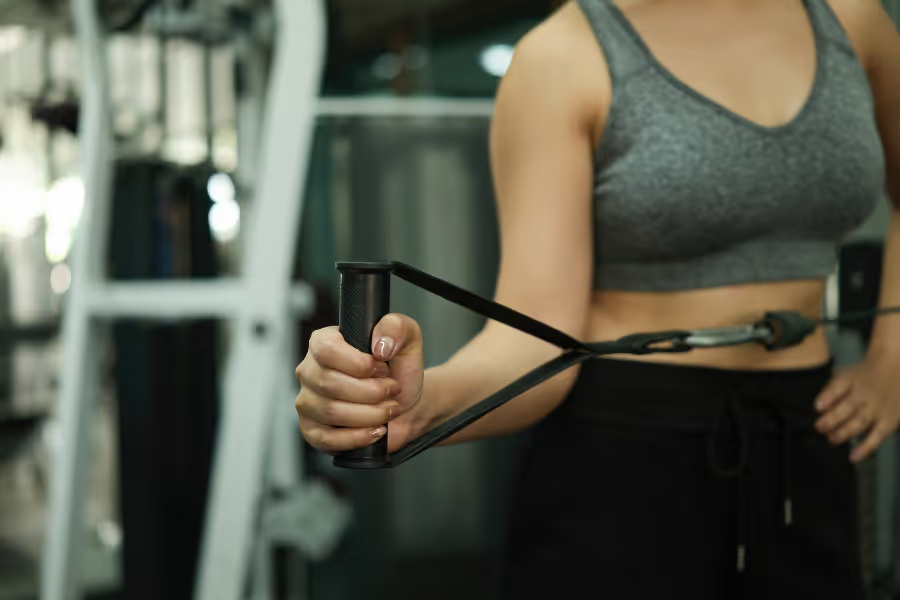

What is shoulder stabilization surgery?
Shoulder stabilization surgery repairs and tightens the structures that keep your shoulder in place so it stops popping out.
Think of your shoulder like a golf ball on a tee. It has lots of motion, but that makes it easier to slip out. After a dislocation, you can tear:
- the labrum (a rim of cartilage that deepens the socket)
- the capsule/ligaments (the “seatbelt” tissue)
- sometimes bone on the socket or ball side (bony defects)
Surgery is typically done to:
- prevent repeat dislocations
- reduce the fear of the shoulder “giving way”
- protect the joint from further damage over time
Common types include:
- Arthroscopic Bankart repair (re-attach the torn labrum)
- Capsular shift/plication (tighten a loose capsule)
- Latarjet or bone‑block procedures (for significant bone loss or high‑risk recurrence)
How much does shoulder stabilization cost?
How we estimate surgical costs: Ranges are estimates drawn from our network of 100+ private clinics and surgeons, and they're intentionally broad. Two people seeking the same procedure can receive very different quotes depending on province, surgeon, facility fees, and case complexity. Published prices aren't always comparable either—some are complete bundles, others exclude consultation, imaging, or follow-up. Only the clinic can give you an exact, itemized quote.
Exact prices depend on the procedure (arthroscopic repair vs Latarjet), number of anchors, facility fees, anesthesia, and whether imaging and follow-ups are bundled.
Cost in Canada
Typical range: $7,000 - $20,000+
(Latarjet/bone procedures can be higher than a straightforward arthroscopic Bankart repair.)
What’s included (most quotes)
- Surgeon and anesthesiologist fees
- Facility/OR fees and nursing care
- Arthroscopy equipment and standard supplies
- Implants (anchors) — confirm this line item
- Immediate post-op care and follow-up visit(s)
What’s usually not included
- MRI/X-rays done outside the clinic
- Sling/brace (sometimes included, sometimes not)
- Physiotherapy after discharge
- Medications at home
- Travel/accommodation if out-of-province
Insurance and financing
- Private insurance often covers parts (physio, imaging), but not always the private surgical fee—confirm with your plan.
- Some clinics offer payment plans.
- Eligible out-of-pocket costs may qualify for the Medical Expense Tax Credit (METC)—keep itemized receipts. Learn more about the METC here.
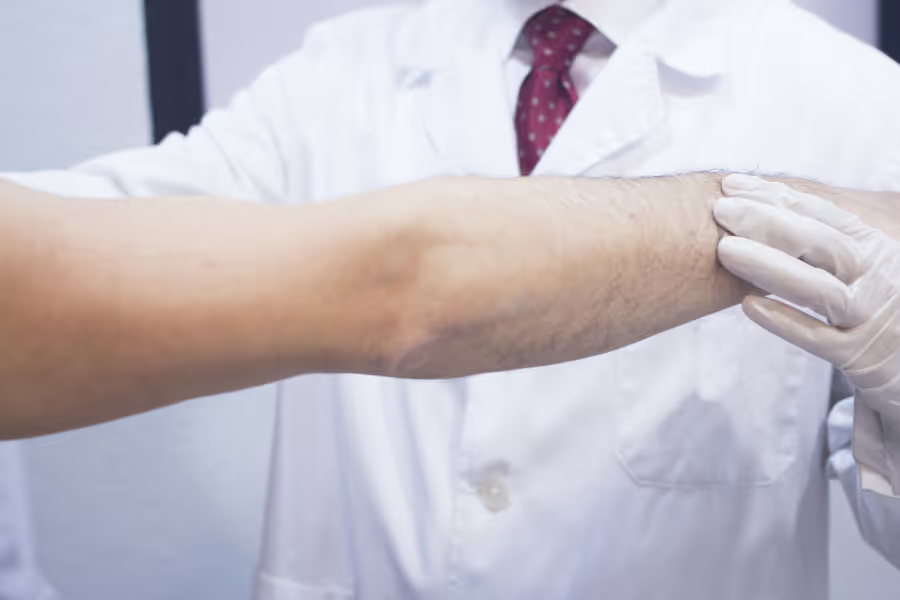
Shoulder stabilization: what to expect
The surgery itself is no different from what’s performed in the public system. Surgeons use the same techniques, implants, and safety standards. The operation often takes 1–2 hours (longer for Latarjet/bone procedures).
Typical steps:
- Anesthesia: Usually general anesthesia. Many patients also get a nerve block for pain control.
- Incisions: Small cuts (arthroscopy) around the shoulder; sometimes a larger incision for bone‑block procedures.
- Repair/tightening: The surgeon reattaches the labrum with small anchors, and tightens the capsule if needed.
- If bone loss: A bone‑block procedure may be done to make the socket “bigger” and more stable.
- Close and dressings: Skin closed, bandage applied.
- Sling on: You’ll usually leave in a sling the same day with a written rehab plan.
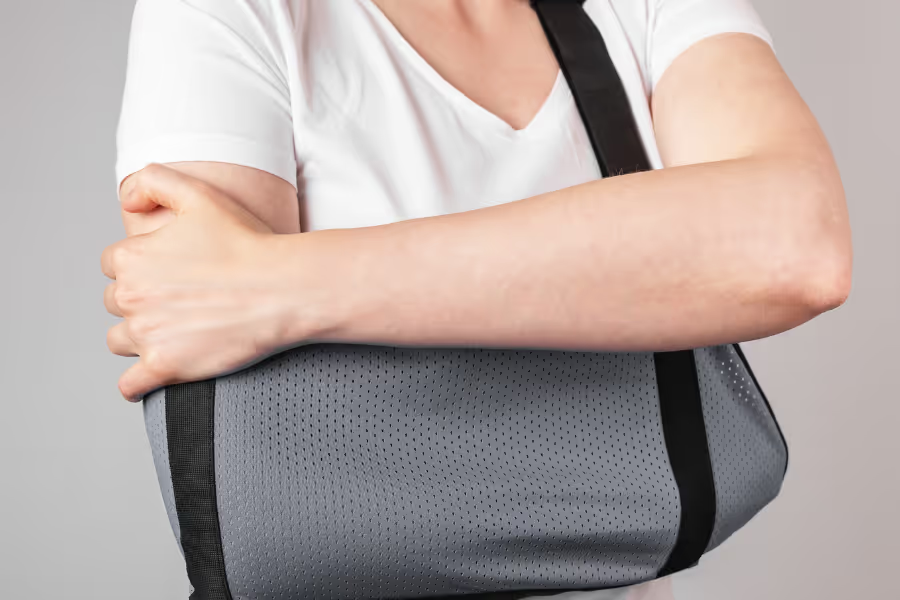
What to expect from the recovery process
Your clinic should give you a detailed recovery plan (pain control, physio, restrictions, and follow-ups). Recovery varies depending on the procedure and your sport. Follow the protocol closely—this is one surgery where rehab rules really matter.
Some private clinics offer virtual follow-ups; others coordinate with your local providers in your home province.
Week 1
Goals: Pain control, protect the repair, manage swelling.
What it’s like: Sleeping can be awkward; the sling is annoying but important.
Activities: Sling full-time (usually), gentle hand/wrist/elbow motion, short walks, wound care.
Weeks 2–6
Goals: Protect healing tissue, start safe range of motion (ROM) as directed.
Activities: Physio begins (timing varies). ROM is often limited early to protect the repair. No lifting, pushing, or sudden reaching.
Weeks 6–12
Goals: Gradually restore ROM, start strengthening the rotator cuff and shoulder blade muscles.
Activities: Sling often comes off around this phase (depends on procedure). Strength work progresses slowly and should be pain‑guided.
Months 3–6+
Goals: Build strength, control, and confidence; sport-specific training.
Activities: Return to sport depends on sport type:
- non-contact activities often earlier
- contact/collision or overhead sports often closer to 4–6+ months
Your surgeon/physio should give criteria (strength, ROM, control), not just dates.
Red flags—seek help
Fever, increasing redness/drainage, severe worsening pain, new numbness/hand weakness, shortness of breath, or the shoulder dislocating again.
What is Surgency?
As a family doctor in the public system, I believe transparency is a form of care. I created Surgency to help my patients struggling on long waitlists who wanted to understand all their options for timely medical attention.
Surgency is a free resource designed to empower and educate—helping you understand private pathways and find accredited surgeons within Canada. I hope Surgency brings you clarity.
Dr. Sean Haffey

Why do Canadians get shoulder stabilization surgery done privately?
If your shoulder keeps dislocating, time matters. Exploring a private pathway can give you more choice, control, and flexibility.
Timing
Wait times can be long in the public system, especially when you include MRI delays and specialist consult waitlists. Private clinics may offer surgery within weeks, which can mean fewer repeat dislocations while you wait.
Choice and control
Going private can let you:
- choose a shoulder-focused orthopedic surgeon
- choose the clinic location
- plan surgery around school, work, or your sport season
Clarity upfront
Private pathways often provide a clear timeline so you can plan time off, rides, and rehab.
Preventing further damage
Each dislocation can cause more labrum and cartilage damage, and sometimes bone loss. Earlier stabilization can reduce the chance the problem becomes more complex.
Choosing a surgeon & clinic
Choosing your surgeon is one of the benefits of going private. For instability surgery, correct procedure selection (Bankart vs Latarjet, etc.) matters as much as technical skill.
What to look for
Experience and volume
- How many shoulder stabilizations do they do yearly?
- How many are Bankart repairs vs Latarjet/bone‑block procedures?
- Do they treat athletes in your sport (contact vs overhead)?
Credentials and training
- Confirm licensure with the provincial college (e.g., CPSO, CPSBC, CPSA).
- Look for FRCSC-certified orthopedic surgeons, ideally with fellowship training in shoulder/elbow or sports medicine/arthroscopy.
Learn more about surgeon credentials, read How to Understand Surgeon Credentials in Canada.
Outcomes and safety
Ask for their rates of:
- recurrent instability/dislocation
- infection
- nerve injury (rare, but important)
- stiffness/frozen shoulder
- reoperation
Imaging and planning
A good program reviews the actual images (not just reports):
- MRI/MRA for labrum and soft tissues
- CT (sometimes) to measure bone loss if instability is recurrent
Facility accreditation
Choose an accredited surgical facility (e.g., Accreditation Canada / CAAASF standards) with clear emergency pathways.
Rehab integration
You want:
- a written phased protocol
- coordination with your local physio if travelling
- clear return-to-work/sport milestones
Questions to ask at your consultation
- What is causing my instability: labrum tear, loose capsule, bone loss, or all three?
- Am I a better fit for a Bankart repair or a Latarjet, and why?
- How many anchors do you expect to use, and are they included in the quote?
- What are my chances of redislocation in my sport?
- How long will I be in a sling? When can I drive, return to work/school, and return to training?
- If I’m from another province, how are follow-ups handled?
If you're currently interested in private surgical pathways within Canada, you can click here for a list of providers.

Frequently asked questions
How do I know this surgery is right for me?
Shoulder stabilization isn’t for everyone, but it becomes more likely when:
- you’ve had more than one dislocation, or your shoulder feels unstable often
- you can’t trust your shoulder for sport, work, or sleep
- physiotherapy hasn’t restored stability
- imaging shows a labrum tear and/or bone loss that matches your symptoms
If you have frequent dislocations, are in a contact sport, or have meaningful bone loss, getting assessed sooner is smart—delays can make future surgery more complex.
Do I need a referral?
Yes and no—you can reach out to any of the private surgeons listed on Surgency without a referral. Their intake teams are happy to answer questions, explain what they treat, share pricing ranges, and walk you through next steps.
However, to book a formal consultation with the surgeon, you'll typically need a referral from your family doctor or nurse practitioner. Don't have one? Many of the clinics can help coordinate a virtual GP appointment to get the referral paperwork sorted. All surgeons listed on Surgency offer virtual initial consultations, so you don't need to travel until you and the surgeon have agreed on a plan.
Before your consultation, expect the clinic to request relevant medical records and recent diagnostic imaging (X-ray, MRI, CT, ultrasound, lab work, etc.). Having these ready speeds up the process and lets the surgeon give you specific guidance on your very first call.
What are the risks involved with shoulder stabilization surgery?
Individual risk varies with age, sport, anatomy (bone loss), procedure choice, surgical technique, and rehab. Discuss your specifics with your surgeon.
Common and usually temporary
- Pain and swelling; sleep disruption early on
- Temporary stiffness (often improves with physio)
- Bruising and incision soreness
- Temporary numbness near the incision sites
Less common
- Infection
- Recurrent instability/dislocation (risk depends on sport and bone loss)
- Frozen shoulder (stiffness that takes longer to settle)
- Anchor irritation or failure (rare)
Uncommon but important
- Nerve injury (rare, but can affect sensation or strength)
- Blood clots (rare in upper-limb surgery, but possible)
- Bone complications after Latarjet (graft issues, hardware irritation)
- Ongoing pain from arthritis or cartilage damage
How much does Surgency cost?
Surgency is free for patients, funded for by surgeons.
Surgeons—who meet our listing criteria—pay a flat fee to list on the Surgency platform. To maintain objectivity, there are no commissions, referral fees, nor any ranking or recommending one surgeon over another.
Surgency is patient-first. Our goal is to make the process of finding a private surgeon as simple as possible. You choose who to contact. Learn more in our Advertising Policy.
What are the risks of delaying or not pursuing surgery?
- More dislocations: each event can be painful, disruptive, and risky
- More joint damage: repeated dislocations can increase labrum/cartilage damage and create bone loss
- Harder surgery later: larger bone defects may require more complex operations
- Lower confidence and activity: many people stop sports, work tasks, or normal movement due to fear of dislocation
- Deconditioning: weaker shoulder/upper-back muscles can make rehab longer
Watchful waiting can be reasonable if it was a single dislocation, you’re improving with physio, and you don’t have high-risk features (contact sport, significant bone loss, repeated episodes).
Do I need a referral?
No, you do not need a referral for private shoulder stabilization in Canada. You can book a consultation directly with a surgeon, and they will review your condition, symptoms, and any previous treatments or diagnostics.
I still have questions
If you still have questions, please feel free to contact us directly.
Please note: Surgency is not a clinic itself. Nor can we help with emergency situations, or provide personalized medical advice—that is between you and your surgeon. If you are experiencing acute or severe symptoms, please present to your local emergency department or urgent care centre.









.avif)