



Why some exercises are risky after knee replacement
To understand why some moves are off-limits, it helps to know what’s happening inside your knee.
During a total knee replacement, the damaged ends of your thigh bone (femur) and shin bone (tibia) are removed and replaced with artificial components. Your surgeon also balances the soft tissues—the ligaments and muscles—around the joint so it moves correctly.
After surgery, your body is busy healing not just the bone, but also the incision, muscles, and capsule around the joint.
- Swelling is your body’s natural reaction to surgery, but too much swelling limits how much your knee can bend.
- Muscles (especially your quadriceps on the front of your thigh) often “shut down” temporarily after surgery and need to be gently woken up, not forced.
- Balance can be tricky because the nerves that tell your brain where your leg is in space need time to adjust.
Risky exercises are usually those that place high force, twisting pressure, or excessive bending on the joint before it is ready. Even if a movement doesn’t hurt in the moment, it can cause inflammation that wakes you up with throbbing pain that night. This sort of stress can increase the chances of needing a revision knee replacement sooner.
If you are currently waiting for knee replacement surgery and curious about private surgical options in Canada, visit Cost of Knee Replacement in Canada: What Patients Need to Know.
How healing tissues respond to stress
Your new knee is strong, but the tissues around it are sensitive. Think of them like fresh sod laid on a lawn. If you walk gently, it roots and grows. If you sprint and pivot on it immediately, you tear it up.
Controlled movement helps tissues heal in an organized way; chaotic or heavy stress causes inflammation. That’s why we avoid certain things early on.
If you walk gently, it roots and grows. If you sprint and pivot on it immediately, you tear it up.
Knee replacement exercises to avoid in early recovery
In the first few weeks (usually weeks 1–6), your main goals are simple: manage swelling, straighten your knee fully, and bend it enough to sit and walk comfortably. This is not the time for power or speed.
Unless your physiotherapist tells you otherwise, steer clear of these movements.
For a deeper look into knee replacement recovery, visit Knee Replacement Surgery Recovery: What to Expect Week by Week.
High-impact movements
Avoid anything that involves jumping or pounding.
- Examples: Jumping jacks, box jumps, skipping rope, running, or jogging.
- Why: The impact sends a shockwave through the bone-implant interface. While modern implants are tough, high impact early on can irritate the bone as it bonds with the implant and cause significant swelling.
Avoid explosive, concussive, high impact movements
Deep squats and lunges
Squatting is a natural human movement, but deep squats require your knee to bend past 90 degrees while carrying your body weight.
- Examples: deeply bending to pick something up, deep lunges, or below parallel squats.
- Biomechanical modeling shows that deep flexion (squatting past 90 degrees) creates 'shear' forces that strain the implant-bone interface, which is why surgeons recommend sticking to 'mini-squats' during the first three months.
- Why: Deep flexion under load can put massive pressure on the kneecap (patella) and the new joint surfaces. Early on, your quadriceps muscles aren’t strong enough to control this, meaning your joint takes all the stress.
Even unweighted, deep squats can apply too much stress on your knee replacement
Twisting or pivoting exercises
Your new knee is designed mostly for bending and straightening (like a hinge), with a little bit of rotation. It is not designed for sharp, forceful twists.
- Examples: Golf swings (if done aggressively early on), racquet sports like tennis or pickleball, or dance moves that involve planting your foot and turning your body.
- A landmark study using sensor-equipped implants found that activities like jogging or aggressive golf swings can subject the new joint to forces over 4 times your body weight, significantly higher than walking or cycling.
- Why: Twisting creates “shear” force. This can strain the ligaments that support your new knee and, in rare cases, risk dislocation or instability.
Avoid activities where you frequently have to jerk or pivot
Kneeling without clearance
Kneeling can be problematic, especially soon after surgery.
- Why: It can be very uncomfortable because the incision is sensitive, and the skin feels tight.
- The verdict: Kneeling isn’t strictly “dangerous” for the implant itself once the wound is healed, but it is often painful and discouraged in the first few months. Never kneel directly on a hard surface. If you must get down, use a thick pad and place your weight on your shin, not your kneecap.
Exercises to be cautious with during mid-stage recovery
As you get stronger (months 2–3 and beyond), you’ll feel ready for more. This is a common danger zone where patients feel “healed” and accidentally overdo it.
Resistance machines at the gym
Gym machines look safe, but they can force your knee into unnatural positions if not set up perfectly.
- Leg Extension Machine: Be very careful. Kicking a heavy weight up puts high stress on the ACL-replacement mechanics and the kneecap. Many physios prefer “closed chain” exercises (like mini-squats) instead.
- Leg Press: Safe if done lightly, but dangerous if you go too deep or use too much weight. Never lock your knees straight at the top of the movement.
Uneven surface or balance training
Walking on hiking trails, cobblestones, or soft sand requires tiny, rapid adjustments from your knee muscles.
- Why: If your balance isn’t fully restored, a sudden wobble can lead to a fall. A fall is the number one risk to a new knee replacement. Stick to flat, predictable surfaces until your balance is better.
Note: hiking is a great activity once your coordination, balance, and strength have improved (potentially around the 10-12 month mark), but it is easy to overdo it while you're still recovering. Keeps walks flat and smooth initially, and build up difficulty overtime with surgeon/physio guidance.
Yoga and Pilates (proceed with caution)
Yoga is wonderful for balance and stiffness, but many traditional poses are dangerous for a new knee replacement because they involve extreme bending or twisting.
- The Risk: Poses like Child’s Pose (which forces your heel to your bum) or Pigeon Pose (which twists the knee sideways) put massive stress on the joint components.
- General consensus guidelines classify high-flexion yoga and high-impact sports as 'not recommended' due to the increased risk of polyethylene (plastic spacer) wear over time.
- The Fix: You don’t have to quit yoga, but you must modify it. Avoid kneeling directly on the mat. Use yoga blocks to support your weight. Tell your instructor about your surgery so they can give you safer versions of the poses, or look for a "Chair Yoga" class to start.
Yoga can be alright if you modify the positions and protect your knee.
What to do instead: safer exercise alternatives
You don’t need to be sedentary. In fact, moving is the best medicine. Focus on low-impact, controlled movements.
Note: movement is encouraged, even before surgery. Visit What Happens If You Delay Knee Replacement Surgery? for more information about the pre-surgery process.
Recommended early-stage movements
- Walking: The gold standard. Start with short walks around your house. Focus on heel-strike-to-toe-off (walking normally, not shuffling).
- Ankle Pumps & Thigh Squeezes: Do these in bed to wake up muscles and move blood.
- Heel Slides: Lying on your back, gently slide your heel toward your bum to bend the knee, then slide it back. Do not force it to the point of agony—just to a firm stretch.
Walking is the gold standard for post-knee replacement exercise
Low-impact conditioning options
- Stationary Cycling: One of the absolute best exercises for knee replacements. It improves range of motion without pounding. Pro tip: Start with the seat high so you don’t have to bend your knee too much. As you get flexible, lower the seat to normal height.
- Swimming / Water Aerobics: Once your incision is 100% healed and watertight (ask your surgeon!), the water takes the weight off your joints while letting you move freely.
- Sit-to-Stand: Practice standing up from a chair without using your hands (or using them less). This builds thigh strength safely.
Long-term active living (once fully recovered)
Once you are fully healed (usually 12+ months), you want exercises that keep you fit without wearing out the plastic spacer in your new knee. Consult your physio or surgeon to better understand your unique situation.
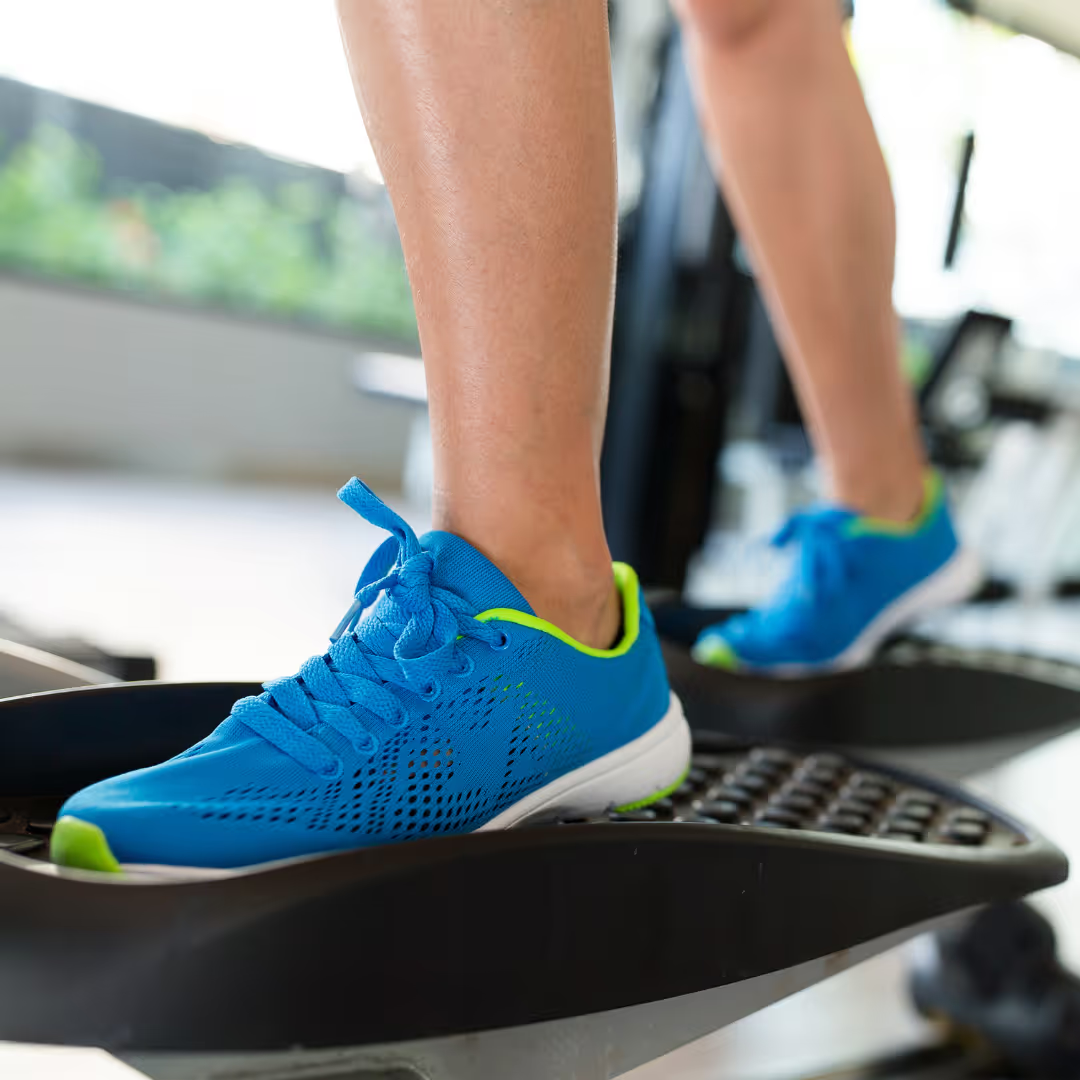
- Elliptical Machine: If you miss the feeling of running, this is your best friend. It gives you a full cardio workout and strengthens your legs, but because your feet never leave the pedals, there is zero impact on the joint.
- Golf: Yes, you can get back on the course! Pro tip: Wear spikeless shoes. Spikes can get stuck in the grass, forcing your knee to twist when you swing. Smooth soles let your foot turn safely.
- Doubles Tennis or Pickleball: The key word here is doubles. Playing with a partner means you cover less ground, reducing the need for sudden, jerky stops and sprints that are hard on the implant.
- Hiking (on even ground): Walking in nature is great for your mental health and leg strength. Stick to established trails and use walking poles—they take a huge amount of weight off your knees, especially on downhill sections.
The elliptical is an underrated exercise machine. It's fully body, easy on the knees, wonderful for cardiovascular health.
Common Recovery Mistakes to Avoid
Recovery isn’t a straight line, but you can avoid the potholes.
- Pushing through pain: Pushing through sharp pain usually backfires. It causes swelling, which shuts down muscle power.
- Comparison: Don’t compare your recovery to your neighbour or a forum post. Every knee is different.
- Ignoring swelling: If your knee looks like a balloon after exercise, you did too much. Ice, elevate, and rest.
- Skipping rest days: Your tissues heal while you sleep, not while you exercise. Rest is part of the work.
When to recheck your exercise plan
It is smart to check in with your physiotherapist or surgeon if:
- You have pain that lasts more than 2 hours after exercising.
- You lose range of motion (you feel stiffer this week than last week).
- You notice new clicking, clunking, or instability coupled with pain.
- The incision gets red, hot, or oozes fluid.
Adjusting your plan isn’t quitting; it’s being smart. If a certain exercise hurts, stop doing it and ask for an alternative.
Listen to your body. Modify workouts. Build strength slowly.
FAQs
What exercises can you never do after knee replacement?
Most surgeons advise avoiding high-impact activities forever. This includes jogging/running on concrete, jumping sports (basketball, volleyball), and heavy contact sports (football, soccer, rugby). These activities increase the risk of the implant wearing out early or loosening.
What are the best exercises after knee replacement?
The best exercises are low-impact and repetitive. Walking, stationary cycling, swimming, and elliptical training are top choices. They keep the heart healthy and legs strong without hammering the joint.
What exercise is hardest on the knees?
Deep lunges, deep squats with heavy weights, and leg extension machines (lifting weight with your ankles while sitting) place the most mechanical stress on the knee joint and kneecap.
Conclusion
Recovering from knee replacement surgery is a marathon, not a sprint. Avoiding risky exercises like deep squats, heavy lifting, and high-impact jumping protects your new joint and gives it the best chance to heal smoothly.
Focus on what you can do: walk, cycle, swim, and build strength gradually. Your new knee is designed to last you 15 to 20 years or more—protecting it in the first few months is the best investment you can make.
If you are currently waiting for surgery and wondering if private options could get you back to activity sooner, you can compare knee replacement timelines and providers clearly in Toronto, Montréal, Calgary, Vancouver, Edmonton.