


.png)

What is cervical laminectomy & discectomy?
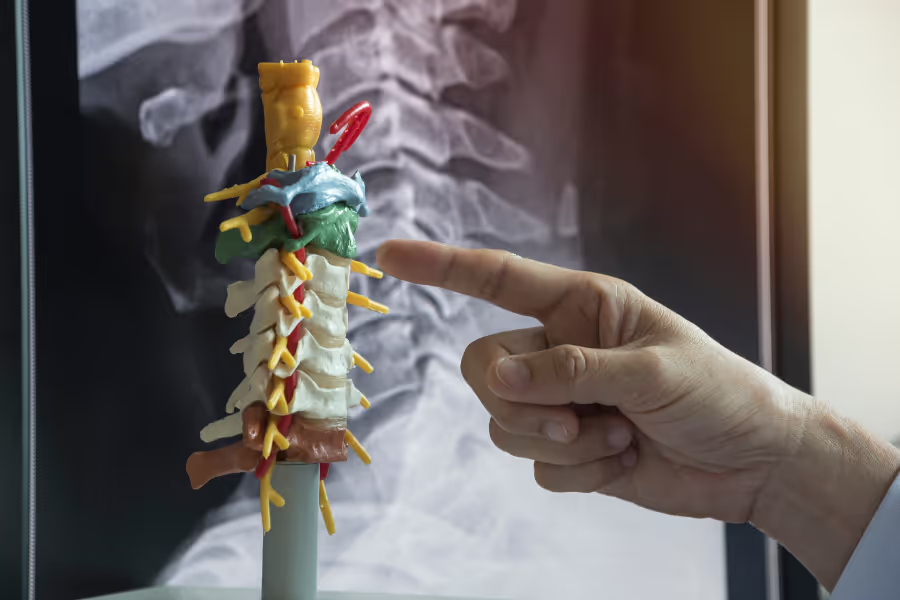
Cervical laminectomy and discectomy are surgeries for the neck (cervical spine) that relieve pressure on pinched nerve roots and/or the spinal cord. Think of the spinal canal like a hallway. In the neck, extra bone from arthritis (bone spurs), thickened ligaments, or a herniated cervical disc can crowd that hallway, squeezing nerves and sometimes the spinal cord—leading to arm pain, numbness/tingling, weakness, clumsiness, balance problems, or (in more severe cases) symptoms of spinal cord compression.
A laminectomy widens the hallway. The surgeon removes part of the lamina—the bony “roof” over the spinal canal—to create more space around the spinal cord and nerves. A discectomy targets the disc itself. The surgeon removes the portion of the herniated disc that has bulged out and is compressing a nerve root or the spinal cord. Many patients have both steps in the same operation: make space (laminectomy) and remove the disc fragment (discectomy). The surgeon may also use a microscope or minimally invasive tools depending on the level and anatomy.
How it differs from lumbar laminectomy and discectomy
- Location: Cervical = neck; lumbar = lower back.
- Symptoms treated: Cervical problems usually cause arm/hand symptoms (and sometimes balance/coordination issues if the spinal cord is compressed). Lumbar problems more often cause leg symptoms like sciatica.
- Spinal cord involvement: In the cervical spine, the spinal cord is still present, so decompression may be aimed at protecting/improving cord function (myelopathy). In the lumbar spine, the cord has typically ended higher up, and surgery is more often focused on nerve roots.
- Approach considerations: Cervical decompression can be done from the front (anterior) or back (posterior) of the neck depending on the pattern of compression; lumbar decompression is most commonly approached from the back.
Why do it? When imaging (like an MRI) matches your symptoms—such as cervical radiculopathy from a herniated disc or cervical stenosis from bone overgrowth—surgically clearing the pressure can let the nerve and/or spinal cord “breathe,” improving pain and function and helping prevent worsening neurologic deficits. The goal is simple: decompress the nerve/spinal cord so symptoms improve and you can move more confidently.
How much does cervical laminectomy & discectomy cost in Canada?
How we estimate surgical costs: Ranges are estimates drawn from our network of 100+ private clinics and surgeons, and they're intentionally broad. Two people seeking the same procedure can receive very different quotes depending on province, surgeon, facility fees, and case complexity. Published prices aren't always comparable either—some are complete bundles, others exclude consultation, imaging, or follow-up. Only the clinic can give you an exact, itemized quote.
Exact prices depend on how many levels are treated (one vs. two or more); whether you need a laminectomy, discectomy, or both; overall complexity (primary vs. revision surgery); and where you have it done. Hospital stays, advanced imaging, and special tech (navigation/neuromonitoring) can push costs higher. Always ask for a written, itemized quote.
Cost in Canada (private)
Typical range: $21,000 - $40,000+
Cost in the United States
Typical range: $32,000 - $100,000+
What’s usually included
- Surgeon fee and anaesthesia services
- Accredited facility/OR time, nursing, standard disposables
- Basic intra‑op imaging (fluoroscopy) and routine supplies/instruments
- Immediate recovery care (PACU) and early follow‑up visit(s) within the “global” period
What’s often not included
- Initial consults and pre‑op imaging/labs (MRI/CT, X‑rays) done outside the clinic
- Extra procedures (additional levels, extensive bone work) or longer OR time beyond the booked block
- Advanced tech add‑ons: navigation/robotics fees, full neuromonitoring, or biologics (unless explicitly bundled)
- Overnight admission or extra hospital days if you don’t go home the same day
- Prescriptions after discharge (pain, nausea, stool softeners)
- Post‑op physiotherapy beyond the first visits; back brace if required
- Travel and accommodation if you’re out‑of‑province/state
Tips to compare quotes
Ask if it’s a global bundle and request line items for: surgeon, facility, anaesthesia, implants/supplies, imaging, neuromonitoring, navigation, follow‑ups, and what triggers extra charges (e.g., adding another level).

Cervical laminectomy & discectomy: what to expect
Typical single‑level cervical decompression often takes about 1.5 - 3 hours of operating time, depending on approach and complexity. Add time at the centre for check‑in, anaesthesia, and recovery (usually a few extra hours). Multi‑level, revision, or complex stenosis cases can take longer.
Basic steps
1. Check‑in and confirmation
You meet the team, confirm the cervical level(s), review imaging, and go over the plan. The surgical site is marked and safety checks are done (including side/level verification).
2. Anaesthesia
General anaesthesia (you’re fully asleep). Many centres use X‑ray guidance; some use neuromonitoring depending on cord/nerve risk and surgeon preference.
3. Position and prep
You’re positioned carefully (often on your back for anterior approaches or on your stomach for posterior approaches). The neck area is cleaned and draped sterilely.
4. Small incision and exposure
A short incision is made. The surgeon gently moves tissues aside to reach the spine while protecting nearby structures.
5. Laminectomy (make space)
From a posterior approach, the surgeon removes part of the lamina (the “roof” of the spinal canal) and may trim thickened ligament/bone spurs to widen the canal and relieve pressure.
6. Discectomy (remove the culprit)
If a disc herniation is compressing a nerve root or the cord, the surgeon removes the offending disc fragment. Bone spurs may also be smoothed if they’re contributing to narrowing.
7. Rinse and check
The area is irrigated. The surgeon confirms decompression and may verify levels with X‑ray.
8. Close up
Layers are closed with sutures; a dressing is applied. A drain is sometimes used, depending on the approach and extent.
9. Wake‑up and instructions
You recover in post-anesthesia care unit, begin gentle movement when safe, and receive wound‑care and activity instructions. Many patients go home the same day; some stay overnight based on complexity, pain control, and medical history.
What can I expect from the recovery process?
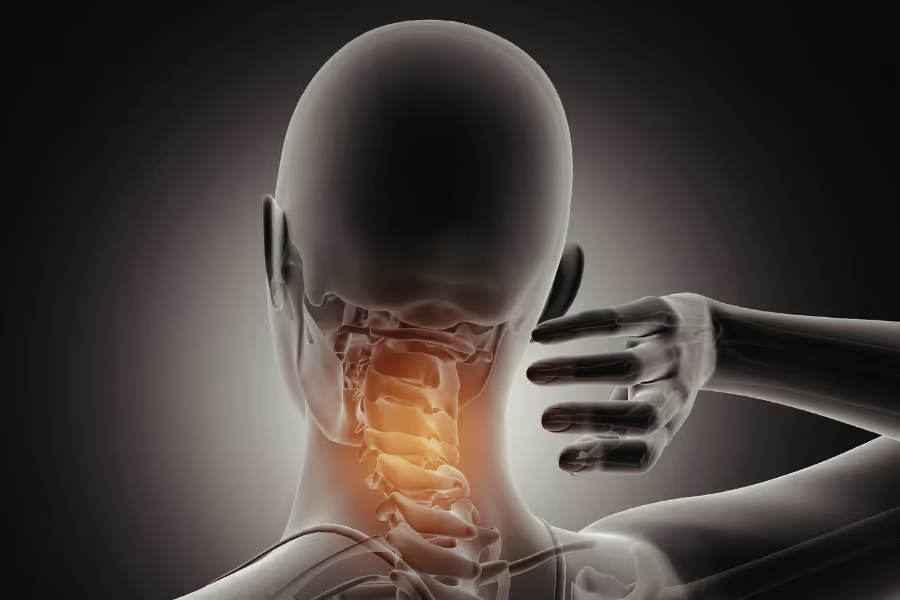
Every neck is different—follow your surgeon’s plan. Steady, smart progress beats pushing too hard.
Week 1
Reality check: neck soreness, tight muscles/spasms, low energy, and some swallowing discomfort can occur (especially with anterior approaches). Arm symptoms may improve quickly, but numbness can take longer.
Goals: control pain, protect the neck, walk safely.
Activities: short, frequent walks; gentle shoulder/arm movement as allowed; keep the incision clean/dry. Avoid heavy lifting and sudden neck movements. If given a collar/brace, wear it exactly as prescribed.
Weeks 2–4
Still annoying but improving.
Goals: build a walking habit, reduce stiffness, avoid flare‑ups.
Activities: daily walks increasing time/distance; light self‑care at counter height; start prescribed physio if/when cleared. Many people return to desk/school work (often with restrictions). Stitches removed if needed.
Weeks 5–8
The work phase.
Goals: better posture, endurance, and controlled strength without stressing the neck.
Activities: longer walks; upright stationary bike if cleared; gentle upper‑back/scapular strengthening; gradual return to light household tasks. Continue to avoid heavy lifting and high‑impact activity unless specifically cleared.
Weeks 9–12
Confidence building.
Goals: near‑normal daily activity; gradual fitness.
Activities: progress strengthening and mobility with guidance. Many people are significantly improved by this point, though nerve recovery can continue.
Months 3–6
Back to most normal life (for many).
Goals: return to usual routines; work/sport‑specific training if approved.
Activities: add impact and heavier lifting only with explicit clearance. Keep neck‑smart habits (neutral posture, avoid prolonged awkward positions).
Helpful tips
- Walk often (best for circulation and stiffness)
- Posture breaks: avoid long periods of looking down at phones/laptops early
- Bowel plan: pain meds can constipate—hydrate, fibre/stool softeners if needed
- If you’re given a collar: don’t “self‑wean” without instructions
Red flags—call your care team
- Fever, spreading redness, or foul drainage from the incision
- New or worsening arm/hand weakness, numbness, coordination issues, or balance changes
- Severe headache (especially with nausea/light sensitivity), or clear fluid leakage from the wound
- Trouble breathing or swallowing that is worsening
- Loss of bladder/bowel control
- Painful swollen calf, chest pain, or shortness of breath
For a more detailed overview read our article on spine surgery recovery.
What is Surgency?
As a family doctor in the public system, I believe transparency is a form of care. I created Surgency to help my patients struggling on long waitlists who wanted to understand all their options for timely medical attention.
Surgency is a free resource designed to empower and educate—helping you understand private pathways and find accredited surgeons within Canada. I hope Surgency brings you clarity.
Dr. Sean Haffey

Why do Canadians get cervical laminectomy & discectomy done privately?
Shorter wait times
Public wait lists for spine consults, MRI, and OR time can be long—especially if your symptoms are severe but not considered emergent. Private centres can sometimes line up assessment and surgery in weeks rather than months, cutting time spent with arm pain, numbness/weakness, sleep‑killing pain, or (in some cases) progressing spinal cord symptoms like clumsiness or balance trouble.
Choice and control
Going private can let you:
- Pick your surgeon (orthopedic spine surgeon or neurosurgeon) based on cervical decompression expertise and case volume
- Choose the clinic location (sometimes out‑of‑province) and schedule around work, exams, caregiving, or travel
- Get a clear plan for the exact level(s) involved, whether it’s mainly disc, bone spurs/stenosis, or both, and whether the recommended route is anterior (front of neck) vs posterior (back of neck)
Peace of mind
You know who’s operating, when it’s happening, and the approach they’ll use. Direct communication and predictable dates make it easier to arrange time off, travel, and post‑op physiotherapy.
Preventing further decline
- Function: ongoing cervical nerve pressure can mean worsening arm pain, numbness/tingling, grip weakness, or shoulder/hand dysfunction
- Cord risk (myelopathy): if the spinal cord is compressed, delaying decompression can risk progression of balance/coordination problems and fine‑motor issues
- Performance and wellbeing: faster relief can protect sleep, mood, and ability to exercise/work
Integrated care
Private pathways may offer:
- streamlined imaging and specialist assessment
- microsurgical tools, navigation, and (when appropriate) neuromonitoring in accredited facilities
- coordinated anaesthesia, pain management, and physio plans, including virtual follow‑ups if you live far away
Choosing a surgeon and clinic
Choosing your surgeon is a major benefit of pursuing private surgery. Here’s how to choose wisely for cervical spine procedures.
What to look for
Experience and volume
Ask how many cervical laminectomies/discectomies they perform yearly.
- Context matters: Cervical spine surgery (neck) has different risks than lumbar surgery (back), including proximity to the spinal cord. High-volume surgeons who specialize in cervical decompression often have lower complication rates.
Credentials and training
- Verify licensure with your provincial college (CPSO Ontario, CPSBC BC, CPSA Alberta, CMQ Québec, etc.).
- Look for FRCSC-certified orthopaedic spine surgeons or neurosurgeons with specific fellowship training in spine surgery.
Outcomes and safety
Request recent data:
- Complication rates: infection, dural tear (CSF leak), nerve root injury, or worsening myelopathy.
- Re-operation rates: specifically for recurrent disc herniation or instability at the same level.
- Patient-reported outcomes: relief of arm pain (radiculopathy) vs. improvement/stabilization of coordination and balance (myelopathy).
Clear indications and alternatives
Make sure non-operative care was considered (physio, medications, injections) unless there is urgent cord compression. Clear reasons for surgery = better expectations.
Surgical plan and techniques
- Which level(s) and why? Laminectomy (bone removal), discectomy (disc removal), or both?
- Approach: Posterior (back of neck) vs. Anterior (front of neck)? Minimally invasive tubes vs. open?
- Instrumentation: Will you need fusion (screws/rods) or just decompression? (Note: Simple decompression without fusion is common in lumbar, but cervical laminectomy sometimes requires fusion to prevent deformity—ask about this.)
Imaging and planning
- How MRI/CT and X-rays guide level selection. Confirm that imaging matches your specific arm/hand symptoms.
Facility accreditation
- Choose accredited centres (Accreditation Canada/CAAASF) with appropriate equipment (microscope, high-speed drills) and a transfer plan to a hospital if needed.
Rehab integration
- Written, phased recovery plan (collar use if any, walking, lifting limits, return to desk/driving).
- Coordination with a local physiotherapist and clear red-flag instructions.
Transparent pricing
- Itemized quote: surgeon, facility, anaesthesia, imaging, supplies, and follow-ups.
- Clarify add-ons (extra levels, implants if fusion is needed, longer OR time, overnight stay).
Questions to ask at your cervical laminectomy/discectomy consultation
Surgeon and plan
- How many of these cervical surgeries do you perform yearly?
- What are your rates for infection, dural tear, nerve complications, and need for re-operation?
- Will I need fusion with this decompression, or just bone/disc removal? Why?
Technique and safety
- Posterior vs. Anterior: Why are you choosing this approach for my anatomy?
- Minimally invasive: Is this an option for me? What are the pros/cons?
- How do you protect the spinal cord and nerve roots during the decompression?
Recovery and after-care
- Will I need to wear a neck brace/collar? For how long?
- When can I drive, return to desk work, and lift heavier objects?
- What symptoms should prompt me to call you immediately (e.g., balance changes, severe headache)?
Costs and logistics
- What exactly is included in my quote? What could add cost (e.g., implants)?
- If you find instability during surgery, do we have a plan for that?
Signals of a high-quality program
- Shares outcomes and complication rates openly.
- Provides a written recovery plan and coordinates with local physio.
- Operates in accredited facilities with modern tools (microscopes, neuromonitoring) and clear emergency pathways.
- Offers responsive communication and transparent, itemized pricing.
If you're currently interested in private surgical pathways within Canada, you can click here for a list of providers.

Frequently asked questions
How do I know if cervical laminectomy and/or discectomy is right for me?
Surgery is usually not the first step if the issue is mild neck pain or a new pinched nerve that is improving with time. It is something you consider when the nerve or spinal cord compression is chronic, worsening, or refuses to respond to non-surgical care. Mechanical compression (bone spurs or large disc fragments) rarely disappears on its own.
Signs decompression might be right for you
- Nerve symptoms won’t go away: You have persistent radiculopathy—pain, numbness, or tingling radiating down the arm into the hand/fingers—that hasn’t improved after 6–12 weeks of physio and meds.
- Signs of spinal cord compression (Myelopathy): This is distinct from pain. You feel clumsy with your hands (dropping buttons/coins), have trouble with balance or walking, or feel "heavy" legs. Decompression is often recommended promptly here to stop progression.
- Interfering with daily life: The arm pain or weakness prevents you from working, driving, sleeping, or doing basic tasks like hair/hygiene.
- Diagnostic clarity: An MRI or CT has confirmed that bone spurs, thickened ligaments, or a herniated disc are physically squeezing the nerve root or spinal cord.
When it might not be time yet
- You primarily have “axial” neck pain: If you only have pain in the back of the neck (stiff neck) but no arm pain or nerve issues, laminectomy is often less effective.
- Symptoms are improving: If your arm pain is less intense than last month, your body might be reabsorbing the disc naturally.
- You haven’t tried conservative care: Unless there is urgent weakness, most surgeons want to see if 6+ weeks of physiotherapy and medications help first.
When to get assessed sooner
- You develop profound weakness in an arm or hand (e.g., foot drop, or can’t grip a cup).
- You notice rapid loss of balance or coordination.
- You have new difficulty urinating or controlling bowel movements (rare but urgent).
Do I need a referral?
Yes and no—you can reach out to any of the private surgeons listed on Surgency without a referral. Their intake teams are happy to answer questions, explain what they treat, share pricing ranges, and walk you through next steps.
However, to book a formal consultation with the surgeon, you'll typically need a referral from your family doctor or nurse practitioner. Don't have one? Many of the clinics can help coordinate a virtual GP appointment to get the referral paperwork sorted. All surgeons listed on Surgency offer virtual initial consultations, so you don't need to travel until you and the surgeon have agreed on a plan.
Before your consultation, expect the clinic to request relevant medical records and recent diagnostic imaging (X-ray, MRI, CT, ultrasound, lab work, etc.). Having these ready speeds up the process and lets the surgeon give you specific guidance on your very first call.
How do I prepare?
Your surgeon’s instructions come first—follow their plan if it differs.
Prehab and health optimization
Learn “spine‑smart” moves (neck edition)
- Practise log‑rolling to get in/out of bed without twisting your spine.
- Practise chin‑tuck neutral posture (avoid forward head posture), and learn how to sit/stand without “jutting” your head forward.
- Ask your physio to teach safe shoulder blade (scapular) setting and gentle upper‑back posture drills (pain‑free only).
Walk and light cardio
- Build a daily walking habit now; better conditioning generally improves recovery.
Gentle strength (pain‑free only)
- Light core and hip work is fine, but prioritize upper‑back and shoulder‑girdle endurance (posture muscles) if cleared by your clinician.
- Avoid heavy overhead lifting or movements that reproduce arm symptoms.
Quit nicotine
Smoking/vaping slows healing and raises infection risk. Stopping 4+ weeks before surgery (and staying off afterward) helps.
Medication review
- Share all prescriptions, OTC meds, and supplements.
- You may need to pause blood thinners, certain anti‑inflammatories, and some herbals (only if your surgeon/primary care says so).
- If you take diabetes meds, GLP‑1 meds, or steroids, ask for a specific peri‑op plan.
Medical checks
- Many patients need bloodwork ± ECG.
- Bring your MRI/CT reports (and images if requested).
- If you have sleep apnea, tell the team and bring your CPAP if instructed.
Home prep
Safe layout
- Clear clutter and loose rugs; keep pathways wide.
- Set up a main “recovery zone” on one floor if possible.
Bed and neck support
- Plan for neutral neck positioning: a supportive pillow (not too high) and, if you’re a side sleeper, a pillow that keeps your head level (not tilted).
- Have a second pillow to support your arms (this can reduce neck/shoulder tension).
Bath setup
- Non‑slip mat, handheld shower, and shower chair if you’re unsteady or prone to dizziness.
- A raised toilet seat can help some people avoid straining early on.
Everyday items
- Move essentials to waist‑to‑chest height.
- Pre‑open difficult containers; keep meds, water, charger, and tissues within reach.
Clothing
- Loose, comfortable clothing.
- If your approach is anterior (front of neck), consider front‑opening tops that don’t need to be pulled over your head.
Support and logistics
A helper
- Arrange a ride home and someone to stay with you for the first 24–72 hours (or longer if you live alone).
- Line up help for pets, groceries, laundry, and garbage for 1–2 weeks.
School/work planning
- Confirm realistic timelines for return to desk work vs. physical work.
- Plan your workstation: screen at eye level, chair support, frequent posture breaks.
Travel (if out‑of‑province)
- Ask which follow‑ups can be virtual.
- Confirm where you’ll get any required local X‑rays or wound checks.
Food, meds, and surgery‑day prep
Meal prep
- Cook and freeze easy, high‑protein meals; stock snacks and water bottles.
Constipation plan
- Pain meds can slow your gut—have stool softeners, fibre, and hydration ready.
Pain plan
- Pick up acetaminophen/NSAIDs if allowed, plus any prescriptions before surgery.
Fasting
- Follow anaesthesia rules (often no solids after midnight; clear fluids allowed up to a set time).
Skin prep
- Use the antiseptic wash as directed the night before and morning of surgery.
- No lotions, perfumes, or deodorant near the surgical area if instructed.
What to bring
- Health card/ID
- Medication list
- Imaging/report access if requested
- Phone/charger
- Lip balm
- Comfy clothes
- If you use CPAP, bring it if told to
Practice ahead (makes the first week easier)
- Log‑roll, sit‑to‑stand, and getting into/out of a car while keeping your spine aligned.
- Set up short indoor walking routes; plan reminders to walk every few hours.
- If you’re given a collar/brace plan, ask how to sleep, shower, and change clothes with it.
Red flags to know (call urgently)
- Fever, spreading redness, or foul drainage from the incision
- New/worsening arm or hand weakness, numbness, coordination issues, or balance problems
- Trouble swallowing or breathing that is worsening
- Severe headache (especially with nausea/light sensitivity)
- Loss of bladder/bowel control
- Painful swollen calf; chest pain or shortness of breath
How much does Surgency cost?
Surgency is free for patients, funded for by surgeons.
Surgeons—who meet our listing criteria—pay a flat fee to list on the Surgency platform. To maintain objectivity, there are no commissions, referral fees, nor any ranking or recommending one surgeon over another.
Surgency is patient-first. Our goal is to make the process of finding a private surgeon as simple as possible. You choose who to contact. Learn more in our Advertising Policy.
What are the risks involved?
Your personal risk depends on your health, the level(s) involved, the exact problem (soft disc herniation vs. bone-spur stenosis), whether the spinal cord is compressed, the approach/technique (microsurgical, minimally invasive, anterior vs posterior), anaesthesia, and how closely you follow post‑op instructions. Discuss your specific risks with your spine surgeon.
Common and usually temporary
- Neck pain, swelling, bruising, muscle spasms, and stiffness
- Shoulder/upper back soreness from positioning during surgery
- Sleep trouble the first few nights; fatigue as anaesthesia wears off
- Nausea from anaesthesia; constipation from pain meds
- Temporary numbness or tenderness around the incision
- Temporary nerve “settling” symptoms: arm tingling, aching, or sensitivity as the nerve calms down
Less common
- Infection (skin or deeper): risk is lower with clean wound care and good health optimization
- Blood clots (DVT/PE): uncommon but possible; early walking and prevention steps help
- Wound-healing issues or hematoma/seroma (fluid/blood collection under the skin)
- Dural tear / CSF leak (spinal fluid leak): can cause a positional headache; often recognized and managed during surgery
- Temporary nerve root irritation causing transient arm pain, tingling, or mild weakness
- Swallowing discomfort/hoarseness (more common with anterior/front-of-neck approaches, but can occur with airway irritation from the breathing tube even in posterior cases)
Procedure-specific considerations (cervical)
- Residual or recurrent compression if stenosis exists at multiple levels or the main culprit isn’t fully addressed
- Recurrent disc herniation (a new fragment at the same level can occur later, more relevant in disc-driven cases)
- Post‑laminectomy instability or kyphosis (loss of normal neck alignment): risk varies by number of levels, age, pre-existing alignment, and whether fusion is performed
- Need for additional surgery later (for recurrence, adjacent level disease, or instability)
Approach nuances (your surgeon should explain which applies)
- Posterior (laminectomy) approach: more muscle-related neck soreness; alignment/instability considerations, especially multi-level
- Anterior approach (if used for discectomy in your case): higher chance of temporary swallowing issues or hoarseness; rare risks to nearby structures in the neck
- Minimally invasive/tubular vs open: smaller incision and often less muscle disruption, but still real surgery with nerve/cord/CSF risks
Uncommon
- Lasting nerve injury with persistent numbness, pain, or weakness
- Spinal cord injury or worsening neurologic function (rare, but a key cervical-specific risk)
- Deep infection requiring another operation and IV antibiotics
- Significant bleeding or transfusion (rare in routine cases)
- Ongoing symptoms if pain is coming from multiple sources (multiple levels, shoulder pathology, peripheral nerve entrapment, etc.)
How you can lower risk
- Stop nicotine (smoking/vaping) before and after surgery if you can
- Share a complete meds/supplements list; follow hold instructions for blood thinners/NSAIDs as directed
- Use antiseptic wash as instructed; keep incision clean and dry
- Walk early and often; follow lifting and activity restrictions
- Use a bowel plan while on pain meds (hydration, fibre, stool softeners)
- Do physio/home exercises exactly as prescribed; pace activity and avoid overdoing it
What are the risks of delaying or not pursuing surgery?
Your situation depends on symptom severity, what imaging shows (disc herniation vs stenosis, which level and side), whether there are signs of spinal cord compression (myelopathy), your daily demands (work/school/sport), and how well non‑surgical care is working. Talk specifics with your spine surgeon.
Main risks of delaying (when symptoms are significant/persistent)
Progressive pain and functional limits
- Arm pain, burning, numbness, or weakness can become more frequent and last longer
- Sleep, concentration, driving tolerance, and desk work often get worse
- Increased reliance on pain meds can bring side effects over time
Worsening nerve problems (radiculopathy)
- Ongoing compression can irritate or injure the nerve root
- The longer a nerve is compressed, the slower—and sometimes less fully—it may recover
Spinal cord progression (if myelopathy is present or developing)
- Cervical stenosis can compress the spinal cord, causing worsening balance, hand dexterity problems, weakness, or falls
- In myelopathy, delay can risk permanent neurologic decline, and outcomes are often better when decompression isn’t postponed
Mechanics and anatomy can worsen
- Disc fragments can shift; new fragments can occur
- Bone/ligament overgrowth can gradually narrow more, especially with reduced activity
- Chronic inflammation around the nerve can build, making later surgery more complex
Lower quality of life and deconditioning
- Avoiding activity leads to weaker postural muscles and reduced fitness
- Mood and sleep often slide, which can amplify pain sensitivity
Medication-related downsides
- Long-term NSAIDs or opioids carry risks (stomach/kidney issues, dependence) and can complicate later care
When watchful waiting can be reasonable
- Symptoms are mild, intermittent, and improving with physiotherapy, pacing, and meds
- No progressive weakness
- No signs of myelopathy and imaging doesn’t show severe cord compression
When not to delay (seek prompt assessment)
- New or progressive weakness in the arm/hand (dropping objects, grip loss)
- Worsening balance, clumsiness, coordination issues, or frequent falls (possible myelopathy)
- New bowel/bladder dysfunction, severe gait change, or rapidly worsening neurologic symptoms (seek urgent care)
I still have questions
If you still have questions, then feel free to contact us directly.




.avif)