


.png)
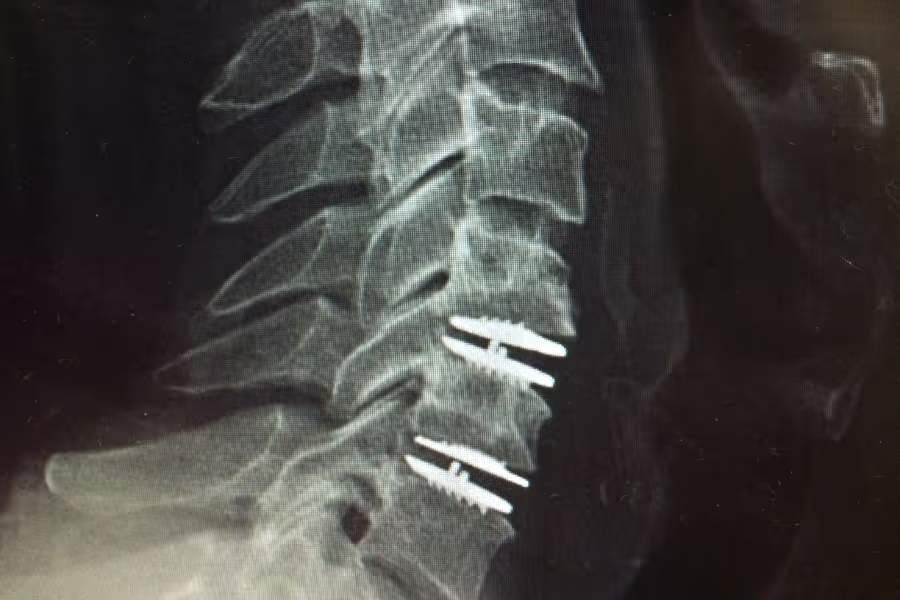

What is cervical disc replacement?
Cervical disc replacement (also called cervical artificial disc replacement or cervical arthroplasty) is a surgery for the neck (cervical spine) that relieves pressure on a pinched nerve root and/or the spinal cord by removing a damaged disc and replacing it with a mobile implant designed to preserve motion at that level.
Think of the spinal canal and nerve openings like a hallway with side doorways. In the neck, a worn or herniated disc can bulge into that space, and arthritis can add bone spurs—crowding the hallway and squeezing nerves (and sometimes the spinal cord). This can cause arm pain, numbness/tingling, weakness, and in more severe cases signs of cord compression such as clumsiness or balance problems.
What actually happens
- Discectomy (remove the problem disc): The surgeon removes the diseased/herniated cervical disc (and often trims bone spurs) to decompress the nerve/spinal cord.
- Disc replacement (keep motion): Instead of fusing the level, the surgeon places an artificial disc between the vertebrae to maintain spacing and allow controlled movement.
How it differs from cervical laminectomy & discectomy
- Approach: Disc replacement is most commonly done from the front of the neck (anterior). A laminectomy is typically a posterior (back of neck) decompression.
- What’s removed: Laminectomy removes bone (lamina) to widen the spinal canal; disc replacement focuses on removing the disc (plus spurs if needed).
- Motion at that level: Disc replacement aims to preserve motion. Laminectomy may or may not affect motion directly, but some cervical decompressions (especially multi-level posterior work) can require fusion to maintain stability/alignment.
Why do it? When MRI findings match your symptoms (cervical radiculopathy or certain cases of cord compression), disc replacement can decompress the nerve/spinal cord while preserving movement—helping reduce arm pain and improve function.
How much does cervical replacement cost in Canada?
How we estimate surgical costs: Ranges are estimates drawn from our network of 100+ private clinics and surgeons, and they're intentionally broad. Two people seeking the same procedure can receive very different quotes depending on province, surgeon, facility fees, and case complexity. Published prices aren't always comparable either—some are complete bundles, others exclude consultation, imaging, or follow-up. Only the clinic can give you an exact, itemized quote.
Exact prices depend on how many levels are treated (one vs. two), the specific artificial disc implant used (devices can be expensive), and where you have it done. Hospital stays (often required for airway monitoring after neck surgery) can push costs higher. Always ask for a written, itemized quote.
Cost in Canada (private)
Typical range: $28,000 - $45,000+
Note: Disc replacement is often slightly more expensive than simple fusion or decompression due to the cost of the artificial disc device.
Cost in the United States
Typical range: CA$70,000 - CA$110,000+
What’s usually included
- Surgeon fee and anaesthesia services.
- The artificial disc implant(s) (verify this, as hardware is costly).
- Accredited facility/OR time, nursing, and standard disposables.
- Basic intra‑op imaging (fluoroscopy) and routine supplies.
- Immediate recovery care (PACU) and early follow‑up visit(s).
What’s often not included
- Initial consults and pre‑op imaging/labs (MRI/CT, X‑rays) done outside the clinic.
- Extra procedures (additional levels) or longer OR time beyond the booked block.
- Overnight admission (common for cervical anterior surgery to monitor airway) if not bundled.
- Prescriptions after discharge (pain, nausea, stool softeners).
- Post‑op physiotherapy beyond the first visits.
- Travel and accommodation if you’re out‑of‑province/state.
Tips to compare quotes
Ask if it’s a global bundle and request line items for: surgeon, facility, anaesthesia, implants (device cost), imaging, follow‑ups, and what triggers extra charges (e.g., if they need to switch to a fusion during surgery due to anatomy).
Cervical disc replacement: what to expect
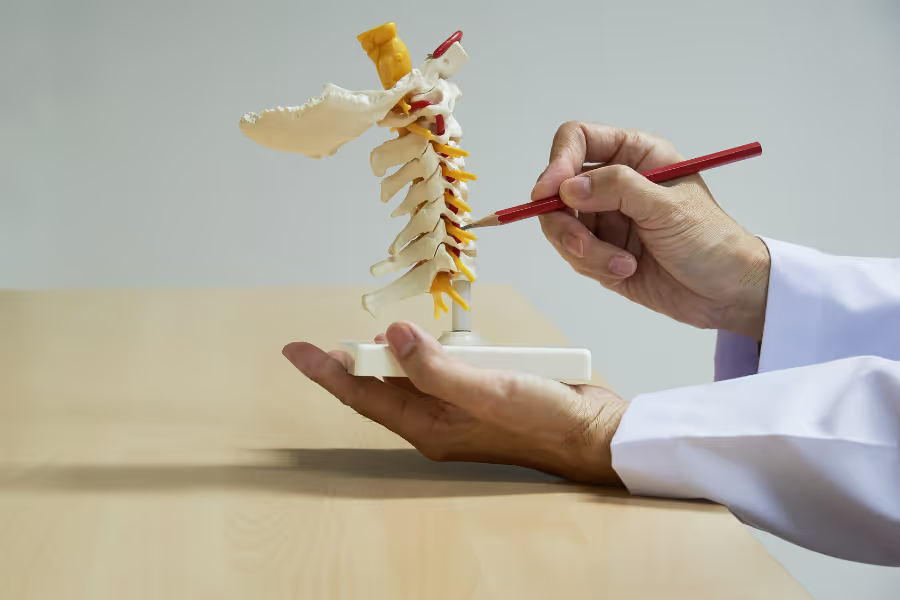
Typical single‑level cervical disc replacement often takes about 1.5–3 hours of operating time depending on complexity. Add time at the centre for check‑in, anaesthesia, and recovery (usually a few extra hours). Multi‑level or revision cases can take longer.
Basic steps
1. Check‑in and confirmation
You meet the team, confirm the cervical level(s), review imaging, and go over the plan. Safety checks are done (including side/level verification).
2. Anaesthesia
General anaesthesia (you’re fully asleep). Many centres use X‑ray guidance; some use neuromonitoring depending on cord/nerve risk.
3. Position and prep
You’re positioned on your back. The neck/chest area is cleaned and draped sterilely.
4. Small incision and exposure
A short incision is made in the front of the neck. The surgeon gently moves tissues aside to reach the spine while protecting nearby structures.
5. Discectomy and decompression
The damaged disc is removed. Bone spurs or tight ligaments compressing the nerve/spinal cord may be trimmed to fully free the space.
6. Implant placement (disc replacement)
Trial spacers are used to choose size/fit, then the artificial disc is placed and position is confirmed with imaging.
7. Rinse and check
The surgeon confirms decompression and implant positioning.
8. Close up
Layers are closed with sutures and a dressing is applied. A drain is sometimes used, depending on surgeon preference and bleeding risk.
9. Wake‑up and instructions
You recover in the post‑anaesthesia care unit, begin gentle movement when safe, and receive wound‑care and activity instructions. Many patients go home the same day; some stay overnight based on complexity, pain control, and medical history.
What can I expect from the recovery process?
Every neck is different—follow your surgeon’s plan. Steady, smart progress beats pushing too hard.
Week 1
Reality check:
Neck soreness, tight muscles/spasms, and low energy are common. Swallowing discomfort (dysphagia) or a "lump in the throat" sensation is very common with the anterior approach but usually improves quickly. Arm pain often improves immediately, though numbness may take longer to fade.
Goals: Control pain, protect the neck, and walk safely.
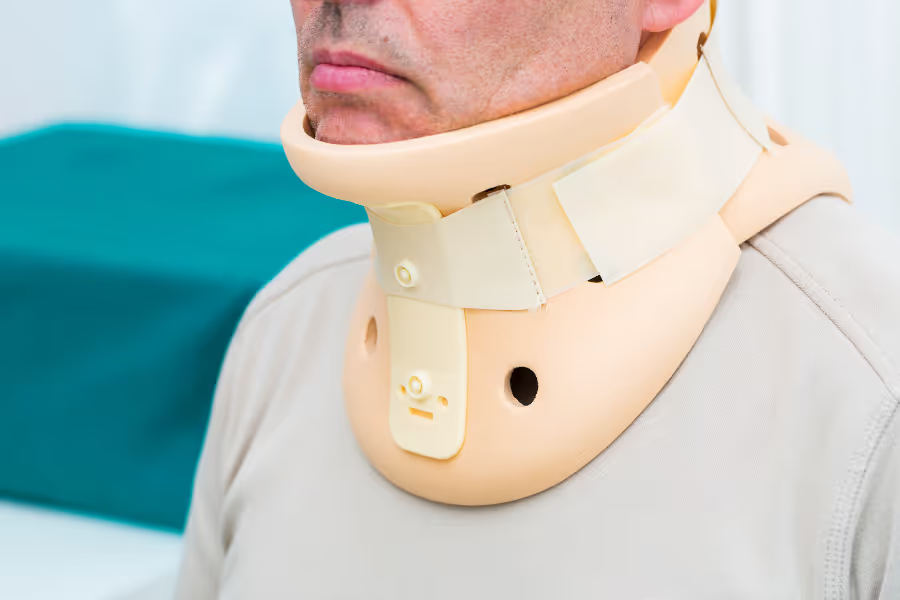
Activities: Short, frequent walks; gentle shoulder/arm movement as allowed; keep the incision clean/dry. Avoid heavy lifting and sudden neck movements. If given a soft collar, wear it exactly as prescribed (some surgeons use them for comfort, others don't use them at all for disc replacement to encourage motion).
Weeks 2–4
Still annoying but improving.
Goals: Build a walking habit, reduce stiffness, avoid flare‑ups.
Activities: Daily walks increasing time/distance; light self‑care at counter height. Start prescribed physio if/when cleared. Many people return to desk/school work (often with restrictions). Stitches/staples removed if needed.
Weeks 5–8
The work phase.
Goals: Better posture, endurance, and controlled strength without stressing the neck.
Activities: Longer walks; upright stationary bike if cleared; gentle upper‑back/scapular strengthening; gradual return to light household tasks. Continue to avoid heavy lifting and high‑impact activity unless specifically cleared.
Weeks 9–12
Confidence building.
Goals: Near‑normal daily activity; gradual fitness.
Activities: Progress strengthening and mobility with guidance. Many people are significantly improved by this point, though nerve recovery can continue.
Months 3–6
Back to most normal life.
Goals: Return to usual routines; work/sport‑specific training if approved.
Activities: Add impact and heavier lifting only with explicit clearance. Keep neck‑smart habits (neutral posture, avoid prolonged awkward positions).
Helpful tips
- Walk often: Best for circulation and stiffness.
- Posture breaks: Avoid long periods of looking down at phones/laptops early in recovery.
- Bowel plan: Pain meds can constipate—hydrate and use fibre/stool softeners if needed.
- Swallowing: Soft foods/liquids may be easier for the first few days if your throat is sore.
Red flags—call your care team
- Fever, spreading redness, or foul drainage from the incision.
- New or worsening arm/hand weakness, numbness, coordination issues, or balance changes.
- Severe headache (especially with nausea/light sensitivity) or clear fluid leakage from the wound.
- Trouble breathing or swallowing that is worsening.
- Painful swollen calf, chest pain, or shortness of breath.
What is Surgency?
As a family doctor in the public system, I believe transparency is a form of care. I created Surgency to help my patients struggling on long waitlists who wanted to understand all their options for timely medical attention.
Surgency is a free resource designed to empower and educate—helping you understand private pathways and find accredited surgeons within Canada. I hope Surgency brings you clarity.
Dr. Sean Haffey

Why do Canadians get cervical disc replacement done privately?
Shorter wait times
Public wait lists for spine consults, MRI, and OR time can be long—especially if your symptoms are severe but not considered emergent. Private centres can sometimes line up assessment and surgery in weeks rather than months, cutting time spent with arm pain, numbness/weakness, sleep‑killing pain, or (in some cases) progressing spinal cord symptoms like clumsiness or balance trouble.
Choice and control
Going private can let you:
- Pick your surgeon (orthopedic spine surgeon or neurosurgeon) based on cervical disc replacement experience and case volume
- Schedule around work, exams, caregiving, or travel
- Get a clear plan for the exact level(s), whether you’re a candidate for disc replacement vs fusion, and what implant system is recommended
Peace of mind
You know who’s operating, when it’s happening, and what approach and implant plan they’ll use. Predictable dates make it easier to arrange time off, travel, and post‑op physiotherapy.
Preventing further decline
- Function: ongoing cervical nerve pressure can mean worsening arm pain, numbness/tingling, grip weakness, or shoulder/hand dysfunction
- Cord risk (myelopathy): if the spinal cord is compressed, delaying decompression can risk progression of balance/coordination problems and fine‑motor issues
- Performance and wellbeing: faster relief can protect sleep, mood, and ability to exercise/work
Integrated care
Private pathways may offer streamlined imaging, advanced surgical tools, and coordinated anaesthesia/pain/physio plans—with virtual follow‑ups if you live far away.
Choosing a surgeon and clinic
Choosing your surgeon is a major benefit of pursuing private surgery. Here’s how to choose wisely for cervical disc replacement (arthroplasty).
What to look for
Experience and volume (disc replacement–specific)
Ask how many cervical disc replacements they do each year (not just fusions or decompressions).
Disc replacement has a learning curve and is more “precision-dependent” than many decompressions because:
- the implant must be sized and positioned accurately
- outcomes depend on appropriate patient selection (disc-driven pain/nerve compression vs. advanced arthritis)
- revision options can be more complex than a standard first-time fusion
Also ask about their case mix:
- single-level vs two-level arthroplasty
- hybrid cases (disc replacement at one level + fusion at another)
- revision cases (converting a failed disc replacement to a fusion, or revising adjacent levels)
Credentials and training
- Verify licensure with your provincial college (CPSO Ontario, CPSBC BC, CPSA Alberta, CMQ Québec, etc.)
- Look for FRCSC-certified orthopedic spine surgeons or neurosurgeons with fellowship training in spine
- Bonus: surgeons who regularly teach arthroplasty techniques, publish outcomes, or participate in spine societies (not required, but often correlates with high-volume subspecialization)
Outcomes and safety (ask for real numbers)
Request recent data, ideally for disc replacement specifically:
- Infection rate
- Nerve injury / neurologic worsening
- Dysphagia/hoarseness rates (temporary swallowing/voice issues are common with anterior neck surgery—ask what’s typical and what’s prolonged)
- Unplanned return to OR within 30–90 days
- Revision rate (reoperation at the index level) and reasons (implant migration, persistent symptoms, device failure, heterotopic ossification)
- Patient-reported outcomes: arm pain relief, disability scores, satisfaction, and typical return-to-work timelines
Clear indications and alternatives
Make sure they confirm you’re a good candidate for arthroplasty, not just “able to pay for it.” Note: This shouldn't be a problem, as Canadian surgeons are bound to act in the patient's best interests.
A careful surgeon should explicitly assess:
- whether symptoms are mainly radiculopathy (arm pain from nerve compression) and match MRI findings
- whether there’s myelopathy and whether disc replacement is appropriate in your specific cord-compression pattern
- whether the problem is disc-driven vs. primarily facet joint arthritis (facet arthritis can make disc replacement a poor fit)
- whether you have any instability (disc replacement usually requires a stable segment)
They should also compare disc replacement to:
- ACDF (fusion) as the main alternative
- continued non-operative care if you’re still improving
Surgical plan and implant strategy
Ask:
- Which level(s) and why? (e.g., C5–6, C6–7)
- Is this one-level or two-level replacement?
- Is a hybrid plan on the table (replace one level, fuse another) and why?
- Which implant system do they use and why that device is right for your anatomy?
Key disc replacement questions:
- How do they size the implant (trialing process)?
- How do they ensure midline positioning and avoid malalignment?
- What’s their plan if they discover the disc is not suitable for replacement once they’re in (convert to fusion)?
Imaging and planning (must be thorough)
Good programs use imaging to confirm candidacy:
- MRI for disc/nerve/cord compression
- X-rays (often flexion-extension) to look for instability
- Sometimes CT to evaluate bone spurs or facet joints
Confirm the imaging findings match:
- your specific arm/hand symptoms (dermatome/myotome)
- side (left vs right)
- level (C5–6 vs C6–7, etc.)
Facility accreditation and safety systems
Choose accredited centres (e.g., Accreditation Canada / CAAASF) with:
- modern fluoroscopy (X-ray) for implant positioning
- experienced anesthesia for anterior cervical cases (airway considerations)
- ability to manage postoperative swallowing/airway issues
- a clear transfer pathway to a hospital if needed
Ask whether they use:
- microscope or loupes (common)
- neuromonitoring (surgeon-dependent—more common in complex cord cases)
Rehab integration (disc replacement is motion-preserving—recovery should reflect that)
You want a written plan for:
- collar use (often minimal or none, but varies)
- walking, lifting limits, return to desk/driving
- posture and ergonomics (screen height, phone habits)
- physiotherapy timeline (mobility + gradual strengthening)
Transparent pricing (implants can be a major line item)
Request an itemized quote including:
- surgeon fee
- facility/OR fees
- anesthesia
- implant/device cost (and whether it’s included)
- imaging/fluoroscopy
- overnight stay (if applicable)
- follow-ups (and whether virtual follow-ups are included)
Clarify add-ons:
- second level
- longer OR time
- conversion to fusion if arthroplasty isn’t feasible intra-op
Questions to ask at your cervical disc replacement consultation
Surgeon and plan
- How many cervical disc replacements do you perform yearly (and how many two-level)?
- How many cases like mine (same level(s), same symptoms, similar imaging)?
- Am I a candidate for disc replacement, fusion (ACDF), or a hybrid—and why?
Technique and safety
- Which artificial disc device will you use and why?
- How do you confirm the correct level and optimal implant position?
- What are your rates of: infection, nerve injury, prolonged dysphagia/hoarseness, and revision surgery?
- If you find severe facet arthritis or instability during surgery, what’s the plan—do you convert to fusion?
Recovery and after-care
- Will I need a collar? For how long?
- When can I drive, return to desk work, and resume gym activities?
- What symptoms should prompt an urgent call (worsening weakness, severe swallowing trouble, breathing issues)?
Costs and logistics
- What exactly is included in my quote (especially the implant)?
- What could increase the cost (extra level, overnight stay, conversion to fusion)?
- How are follow-ups handled if I live out of province?
Signals of a high-quality disc replacement program
- Performs disc replacements regularly (not rarely) and explains candidacy clearly
- Shares complication/revision rates openly and sets realistic expectations
- Operates in an accredited facility with experienced anesthesia and emergency pathways
- Provides a written recovery plan and coordinates physiotherapy/virtual follow-ups
- Offers transparent, itemized pricing—including the implant and clear “what if we switch to fusion” terms
If you're currently interested in private surgical pathways within Canada, you can click here for a list of providers.

Frequently asked questions
How do I know if cervical disc replacement is right for me?
Cervical disc replacement (arthroplasty) is a specific alternative to fusion (ACDF). It is right for patients who need decompression but want to preserve motion at that level.
Signs disc replacement might be right for you
- You want to maintain neck mobility: Unlike a fusion (which locks the bones together), a replacement allows the neck to twist and nod naturally, which may reduce stress on the discs above and below.
- The problem is mainly the disc: Your compression is caused by a soft disc herniation or moderate degeneration, rather than massive arthritis or instability.
- You are younger or active: Younger patients often benefit most from motion preservation to protect the rest of their spine over the decades.
- Diagnostic clarity: MRI confirms a herniated disc at one or two levels, but your facet joints (the hinges in the back of the neck) are still healthy.
When it might not be the right option (or fusion might be better)
- Severe arthritis or instability: If the joints are too worn or the spine is unstable (slipping), a replacement might not stay in place or could cause pain. Fusion is better for stabilizing these cases.
- Bone health issues: If you have osteoporosis or soft bone, the artificial disc may not seat correctly.
- Anatomy constraints: Sometimes the shape of your vertebrae or the extent of bone spurs makes a replacement technically difficult or risky.
When to get assessed sooner
- Same as above: Rapidly worsening arm weakness, numbness, or signs of spinal cord trouble (balance/coordination issues) mean you should seek a surgical opinion quickly, regardless of the technique used.
Do I need a referral?
Yes and no—you can reach out to any of the private surgeons listed on Surgency without a referral. Their intake teams are happy to answer questions, explain what they treat, share pricing ranges, and walk you through next steps.
However, to book a formal consultation with the surgeon, you'll typically need a referral from your family doctor or nurse practitioner. Don't have one? Many of the clinics can help coordinate a virtual GP appointment to get the referral paperwork sorted. All surgeons listed on Surgency offer virtual initial consultations, so you don't need to travel until you and the surgeon have agreed on a plan.
Before your consultation, expect the clinic to request relevant medical records and recent diagnostic imaging (X-ray, MRI, CT, ultrasound, lab work, etc.). Having these ready speeds up the process and lets the surgeon give you specific guidance on your very first call.
How do I prepare?
Your surgeon’s instructions come first—follow their plan if it differs.
Prehab and health optimization
Learn “spine‑smart” moves (neck edition)
- Practise log‑rolling to get in/out of bed without lifting your head off the pillow or twisting.
- Practise chin‑tuck neutral posture (avoid forward head posture) to reduce strain on the implant site.
- Ask your physio to teach safe shoulder blade (scapular) setting to support the neck.
Walk and light cardio
- Build a daily walking habit now; better cardiovascular health improves healing.
Gentle strength (pain‑free only)
- Prioritize upper‑back and shoulder‑girdle endurance if cleared.
- Avoid heavy overhead lifting or movements that provoke arm symptoms.
Quit nicotine
- Crucial for implants: Even though this isn’t a fusion, bone needs to grow into the metal endplates of the artificial disc to secure it. Nicotine inhibits this and increases infection risk. Stop 4+ weeks before surgery.
Medication review
- Share all prescriptions, OTC meds, and supplements.
- Pause blood thinners and anti‑inflammatories as directed (bleeding control is vital for anterior neck surgery).
Home prep
Safe layout
- Clear clutter/rugs to prevent falls.
- Set up a “recovery zone” with essentials at waist height so you don't have to look up/down constantly.
Bed and neck support
- Plan for neutral neck positioning: a supportive pillow (not too high, not too flat).
- If you sleep on your side, ensure the pillow fills the gap between ear and mattress to keep the spine straight.
Bath setup
- Non‑slip mat and handheld shower.
- A shower chair is helpful if you feel dizzy or unsteady after anaesthesia.
Clothing (Important for Anterior Approach)
- Button-up or zippered tops: Since the incision is on the front of the neck, you will likely want to avoid pulling tight t-shirts over your head for the first week.
Food, meds, and surgery‑day prep
Soft food diet (The "Swallow Plan")
- Because the surgery is done through the front of the neck, you may have a sore throat or trouble swallowing (dysphagia) for a few days. Stock up on:
- Smoothies, protein shakes, apple sauce, yogurt, soups, and mashed potatoes.
Constipation plan
- Pain meds slow the gut; have stool softeners and hydration ready.
Skin prep
- Use the antiseptic wash as directed (usually night before and morning of).
- Men may need to shave the front of the neck—follow specific instructions on when/how to do this to avoid micro-cuts.
What to bring
- Health card/ID, medication list, and imaging.
- CPAP machine if you have sleep apnea (vital for airway safety).
- Lip balm (lips get dry during anaesthesia).
Practice ahead
- Log‑roll and sit‑to‑stand while keeping your eyes on the horizon (neutral neck).
- Set up short indoor walking routes.
Red flags to know
- Breathing trouble: Difficulty breathing, stridor (noisy breathing), or a feeling of swelling in the throat.
- Wound issues: Spreading redness, foul drainage, or clear fluid leaking.
- Neurologic changes: Worsening arm/hand weakness, numbness, or loss of fine motor skills.
- Severe headache: Especially when sitting up (potential fluid leak).
How much does Surgency cost?
Surgency is free for patients, funded for by surgeons.
Surgeons—who meet our listing criteria—pay a flat fee to list on the Surgency platform. To maintain objectivity, there are no commissions, referral fees, nor any ranking or recommending one surgeon over another.
Surgency is patient-first. Our goal is to make the process of finding a private surgeon as simple as possible. You choose who to contact. Learn more in our Advertising Policy.
What are the risks involved?
Your personal risk depends on your anatomy, the number of levels treated, the specific implant used, and your general health. Discuss your specific risks with your surgeon.
Common and usually temporary
- Sore throat and hoarseness: Very common because the trachea (windpipe) and esophagus are gently retracted during the anterior approach.
- Swallowing difficulty (Dysphagia): Feeling like there is a "lump in the throat" or trouble swallowing solids. This usually resolves in days to weeks but can occasionally last longer.
- Neck pain and muscle spasms: Stiffness in the back of the neck is common as muscles adjust to the new alignment.
- Temporary nerve “settling”: Arm tingling or aching as the decompressed nerve wakes up.
Less common
- Infection: Risk is generally low with this minimally invasive approach.
- Wound healing issues: Hematoma (blood collection) or seroma which might require drainage.
- Implant Migration or Subsidence: The artificial disc could shift slightly or settle into the bone before it fully bonds.
- Heterotopic Ossification (HO): The body may grow bone around the artificial disc over time, essentially freezing it. This turns the replacement into a fusion (loss of motion) but usually doesn't require re-operation unless symptomatic.
- Dural tear: Leakage of spinal fluid, usually repaired during surgery.
Procedure-specific considerations (Disc Replacement)
- Auto-fusion: Over many years, the segment may stiffen and stop moving, behaving like a natural fusion.
- Persistent rotation/movement issues: If the implant size or placement isn't perfect, it may feel "catchy" or stiff.
- Need for revision: If the device wears out or loosens (rare in the short term, but these are mechanical devices with a lifespan), or if arthritis develops at that level.
Uncommon but important
- Recurrent Laryngeal Nerve injury: Can cause lasting hoarseness or voice changes (vocal cord paralysis).
- Esophageal or Tracheal injury: Rare damage to the food pipe or windpipe.
- Spinal cord injury: Extremely rare, but possible given the proximity.
- Vascular injury: Damage to the carotid artery or jugular vein (very rare).
How you can lower risk
- Stop nicotine: Essential for the bone-to-implant bonding process.
- Follow the soft-diet plan: Reduces irritation to the esophagus while the throat heals.
- Respect the "No NSAIDs" rule (if applicable): Some surgeons restrict anti-inflammatories to prevent bleeding; others encourage them to prevent bone overgrowth (HO). Follow your specific surgeon's protocol exactly.
- Posture: Avoid prolonged "text neck" (looking down) during recovery.
What are the risks of delaying or not pursuing surgery?
Your situation depends on symptom severity, whether you have radiculopathy (nerve root pain) or myelopathy (cord compression), and whether your anatomy is changing in a way that might disqualify you for a disc replacement later.
Main risks of delaying (when symptoms are significant)
The 'Window of Opportunity' closes
- Losing candidacy for replacement: Disc replacement requires valid facet joints and reasonable disc height. If you wait too long and the disc collapses completely or severe arthritis sets in, you may no longer be a candidate for an artificial disc and might be forced to have a fusion (ACDF) instead.
Progressive nerve damage (Radiculopathy)
- Ongoing compression can scar or injure the nerve root.
- The longer a nerve is squeezed, the slower—and sometimes less fully—it recovers sensation and strength (e.g., permanent grip weakness).
Spinal cord progression (Myelopathy)
- If the cord is compressed, delay is dangerous. It can lead to permanent balance issues, loss of hand dexterity (clumsiness), and walking difficulties.
- Cord damage is often irreversible; surgery stops it from getting worse but doesn't always undo the damage.
Compensatory neck problems
- Avoiding movement due to pain leads to stiffening and atrophy of neck muscles.
- Altered mechanics can accelerate wear-and-tear at other levels of the spine.
Medication dependence
- Relying on opioids or high-dose NSAIDs for months carries stomach, kidney, and addiction risks.
When watchful waiting can be reasonable
- Symptoms are purely pain/sensory (no weakness) and are manageable.
- You are improving with physio and time.
- There is no evidence of spinal cord compression (myelopathy).
When not to delay (seek prompt assessment)
- Weakness: You notice you are dropping things, can't open jars, or your arm feels heavy.
- Coordination loss: You feel unsteady on your feet or your handwriting has changed.
- Bowel/Bladder changes: Any new incontinence or retention requires emergency care.
I still have questions
If you still have questions, then feel free to contact us directly.


.avif)