


.png)
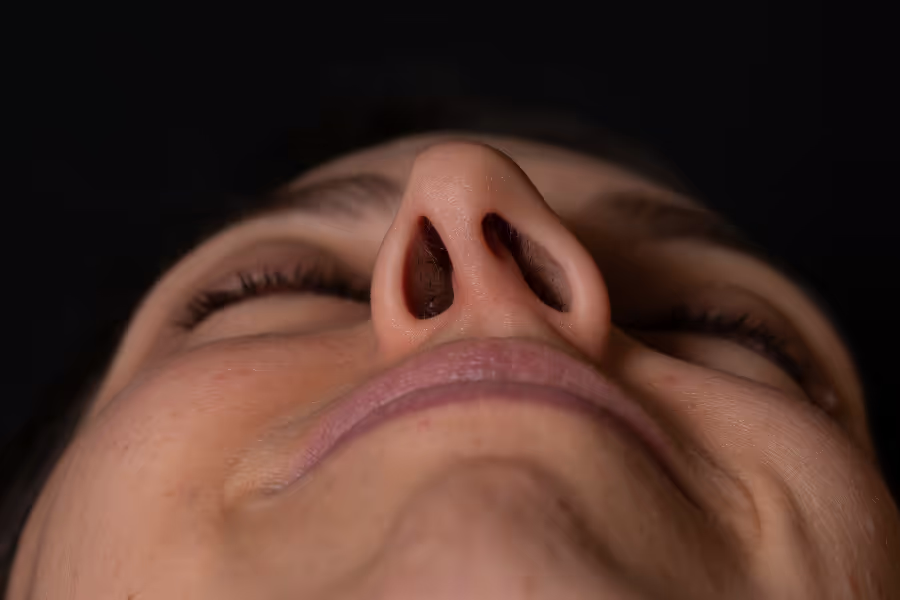

What is septoplasty?
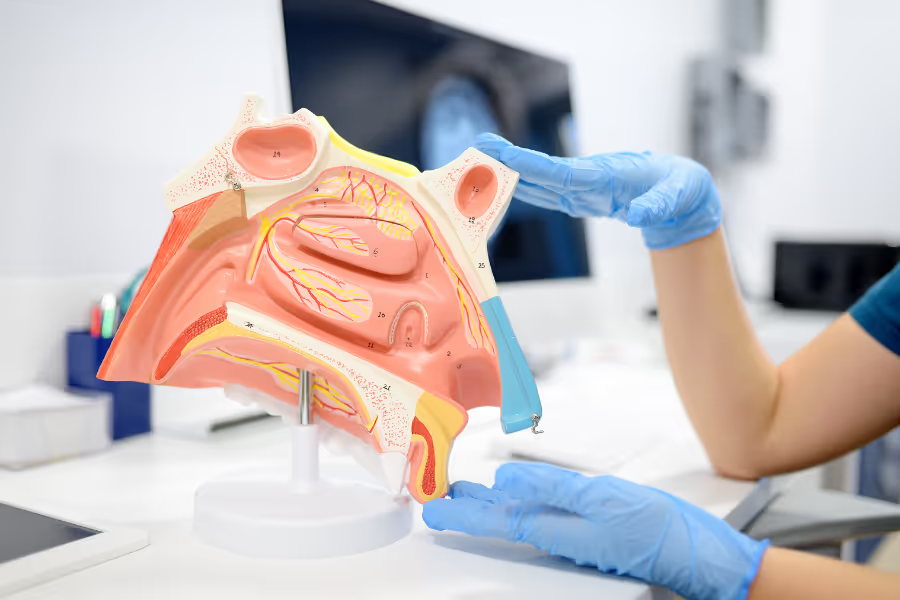
Septoplasty is surgery to straighten the wall inside your nose, called the septum. The septum divides your nose into left and right sides. If it’s bent (a “deviated septum”), airflow can be blocked, causing stuffiness, mouth‑breathing, snoring, nosebleeds, or trouble with sports and sleep. During septoplasty, the surgeon works through the nostrils—no external cuts—lifting the thin lining inside the nose to see the crooked cartilage and bone. They carefully reshape, trim, or reposition those parts so the septum sits in the middle and both nasal passages are more open.
Why do it? The goal is better airflow and easier nasal breathing, which can improve exercise tolerance, sleep quality, and how well sprays or allergy treatments work. Septoplasty focuses on function, not appearance. If someone also wants changes to the outside of the nose (like a hump or tip), that’s a different procedure called rhinoplasty; both can be combined as “septorhinoplasty” when needed.
How much does septoplasty cost in Canada?
How we estimate surgical costs: Ranges are estimates drawn from our network of 100+ private clinics and surgeons, and they're intentionally broad. Two people seeking the same procedure can receive very different quotes depending on province, surgeon, facility fees, and case complexity. Published prices aren't always comparable either—some are complete bundles, others exclude consultation, imaging, or follow-up. Only the clinic can give you an exact, itemized quote.
In Canada, private clinics charge between $5,000 to $12,000+.
In the United States, septoplasty can cost CA$4,500 to CA$30,000+ (the average being ~$13,500).
Exact prices depend on how complex your septum is, whether turbinate reduction is added, clinic location, and OR time. Many cosmetic clinics perform rhinoplasty + septoplasty (septorhinoplasty), which adds to the overall cost. Always ask for a written, itemized quote.
What’s usually included
- Surgeon fee (ENT) and anaesthesia services
- Accredited facility/OR time, nursing, standard disposables, and routine instruments
- Immediate recovery care (PACU) and 1 short follow‑up visit (varies by clinic)
- For bundled cases: basic internal splints or soft packing if used
What’s often not included
- Initial consults, diagnostic nasal endoscopy, and pre‑op imaging (CT) if done externally
- Add‑ons: turbinate reduction, sinus surgery, or cosmetic rhinoplasty elements
- Extra OR time beyond the booked block, unplanned overnight stay, or hospital admission
- Prescriptions after discharge (pain meds, antibiotics, saline, ointments)
- Additional follow‑ups beyond the “global” period, or splint removal if billed separately
- Travel and accommodation if you’re out‑of‑province/state
Tips to compare quotes
- Ask if it’s a global bundle (surgeon + facility + anaesthesia) and request line items.
- Confirm whether turbinate work, internal splints, and any imaging/endoscopy are included.
- Check cancellation/rescheduling policies and fees for extra OR time.
Septoplasty: what to expect
Most septoplasties take about 60–120 minutes of operating time. Expect a few extra hours at the surgical centre for check‑in, anaesthesia, and recovery before you go home.
Basic steps (what actually happens)
Check‑in and plan
- You meet the team, review your symptoms and exam, and confirm if anything else is planned (e.g., turbinate reduction).
Anaesthesia
- Usually general anaesthesia (asleep). Some centres use deep sedation with local freezing.
Position and prep
- You lie on a padded table. The nose is cleaned and numbed inside; sterile drapes are placed.
Inside access (no outside cuts)
- The surgeon works through the nostrils. The thin lining (mucosa) is gently lifted to expose the crooked cartilage and bone.
Straighten the septum
- Bent sections are trimmed, reshaped, or repositioned. The goal is a midline septum so both nasal passages open better.
Stabilise
- Fine stitches hold the lining in place. Soft internal splints or silicone sheets may be placed to keep things straight while they settle.
Rinse and check
- The nose is rinsed; bleeding points are sealed. Airflow and stability are re‑checked.
Close up
- Splints (if used) stay inside temporarily; tiny dissolving stitches are left inside the nose. A small moustache‑style dressing may be applied.
Wake‑up and instructions
- You recover in PACU, get simple care instructions (saline sprays, head elevation), and usually go home the same day.

What can I expect from the recovery process?
Every nose is different—follow your surgeon’s plan.
In general, what to expect
Days 1–3
- Reality check: stuffy nose, pressure, mild ache, and a “full” feeling. You’ll breathe mostly through your mouth.
- Goals: control swelling/bleeding and keep the inside clean.
- Activities: head elevated, cool compresses, sneeze with your mouth open, no nose blowing. Use saline sprays as told. A small moustache dressing may catch drips.
Days 4–7
- Still annoying but improving.
- Goals: less congestion and crusting.
- Activities: steady saline sprays/rinses, short walks, avoid heavy lifting/straining and sports. If you have internal splints, they’re often removed near the end of this week.
Weeks 2–3
- The “I can finally breathe better” phase starts.
- Goals: normal light activity, minimal crusting.
- Activities: keep rinsing, return to desk/school when comfy, gentle exercise like walking or easy bike. Still no contact sports or heavy weights.
Weeks 4–6
- The work phase for airflow.
- Goals: stable, clearer breathing; swelling mostly gone.
- Activities: resume most daily tasks and non‑contact exercise. Ask before restarting vigorous workouts or swimming.
Months 2–3
- Getting back to “normal‑ish.”
- Goals: consistent nasal airflow.
- Activities: full activity, including sports, when cleared.
Red flags—call your care team
- Fever, worsening pain, foul smell, or thick green discharge
- Heavy bleeding that soaks dressings or won’t stop with gentle pressure
- Sudden swelling/deformity, vision changes, severe headache, or neck stiffness
What is Surgency?
As a family doctor in the public system, I believe transparency is a form of care. I created Surgency to help my patients struggling on long waitlists who wanted to understand all their options for timely medical attention.
Surgency is a free resource designed to empower and educate—helping you understand private pathways and find accredited surgeons within Canada. I hope Surgency brings you clarity.
Dr. Sean Haffey

Why do Canadians get septoplasty done privately?
Shorter wait times
- Public queues for ENT consults, imaging, and OR time can take over a year. Private centres often arrange assessment and surgery within weeks—reducing months of mouth‑breathing, congestion, poor sleep, and exercise limits.
Choice and control
- Choose a high‑volume septoplasty surgeon with expertise in functional nasal surgery or combined septorhinoplasty.
- Pick the clinic location (including out‑of‑province) and schedule around exams, travel, or job demands.
- Discuss approach (endoscopic vs traditional), anaesthesia preferences, and whether to combine with turbinate reduction if appropriate.
Peace of mind
- Clear timelines and a detailed plan—who’s operating, the technique, anaesthesia, and follow‑ups—lower uncertainty.
- Direct communication and prompt sharing of results help coordinate time off, rides, and after‑care.
Preventing further decline
- Persistent blockage can worsen mouth‑breathing, snoring, dry throat, and recurrent sinus issues; earlier correction can improve airflow and daytime focus.
- Athletes and wind‑instrument players may regain performance sooner with reliable nasal breathing.
Practical extras
- Access to endoscopic equipment, intra‑op imaging guidance (when needed), and the option to bundle functional and cosmetic work in the same session.
- Transparent, itemized pricing and coordinated follow‑ups, including virtual check‑ins.
Choosing a surgeon and clinic
Choosing your surgeon is a benefit of pursuing private surgery. Here's how to make a wise choice.
What to look for
Experience and volume
- Ask how many septoplasties they perform per year and how often they handle complex deviations, revisions, turbinate reduction, or combined septorhinoplasty.
- Higher volume with routine same‑day pathways usually means smoother care and fewer complications.
Credentials and training
- Verify licensure with your provincial college (CPSO Ontario, CPSBC BC, CPSA Alberta, CMQ Québec, etc.).
- Look for FRCSC‑certified Otolaryngologists (ENT). For cosmetic add‑ons, confirm extra training in facial plastic surgery.
Outcomes and safety
- Request recent data: infection/bleeding rates, return to OR within 30–90 days, unplanned admissions, and revision rates.
- Ask about patient‑reported results (breathing scores like NOSE scale) and how often they add turbinate reduction.
Indications and alternatives
- Make sure non‑surgical options were discussed (allergy control, nasal steroids, saline rinses). Clear indications = better odds of meeting expectations.
Surgical plan and techniques
- Endoscopic vs traditional approach, cartilage reshaping vs resection, spreader grafts if needed, and whether turbinates will be reduced.
- For athletes/wind‑instrument players, confirm the plan to maximise airflow and stability.
Facility accreditation
- Confirm the clinic or surgical centre is accredited (Accreditation Canada/CAAASF or provincial program), with ENT‑appropriate equipment, anaesthesia coverage, and a hospital transfer agreement.
After‑care integration
- Written after‑care (saline schedule, activity limits), clear follow‑up timing, and a reachable post‑op contact.
Pricing transparency (private/self‑pay)
- Itemized quote for surgeon, facility, anaesthesia, splints/packing, and follow‑ups. Clarify charges for turbinate reduction, imaging, or revisions.
Special note on cosmetic clinics
- If you want cosmetic changes too, you’re looking at septorhinoplasty. Choose a certified surgeon who routinely does combined functional + cosmetic cases, and who photographs and measures results.
- Ensure the quote clearly separates functional (septoplasty) from cosmetic (rhinoplasty) fees. Insurance/private plans rarely cover cosmetic parts.
- Beware “cosmetic‑only” clinics that don’t emphasize airway function—ask to see breathing outcomes, not just before/after photos.
Questions to ask during your septoplasty consultation
Surgeon and plan
- How many septoplasties do you do yearly, and how many are like mine?
- What are your rates for significant bleeding, infection, and revision in the past 12–24 months?
- Will you also reduce turbinates or place grafts? Why or why not?
Anaesthesia and logistics
- General anaesthesia vs deep sedation + local? Same‑day discharge or any chance of overnight stay?
- Will you use internal splints? When are they removed?
Recovery and after‑care
- Timeline to breathe clearly, return to school/desk work, workouts, and contact sports?
- Exact saline/ointment routine and activity limits? Who do I call after hours? How many follow‑ups are included?
Costs and documentation
- What’s included in my quote (surgeon, facility, anaesthesia, splints, first follow‑ups)?
- What could add cost (turbinate work, longer OR time, unplanned admission, imaging)?
- Will I receive an operative note for my family doctor?
Signals of a high‑quality program
- Shares outcomes (NOSE scores, revision rates) openly.
- Provides written after‑care and accessible post‑op support.
- Uses accredited facilities and standard safety checklists.
- Offers transparent, itemized pricing with clear inclusion/exclusion lists.
If you're currently interested in private surgical pathways within Canada, you can click here for a list of providers.

Frequently asked questions
How do I know if septoplasty is right for me?
Septoplasty is surgery to straighten the wall inside your nose (the septum) so air flows better.
It might be right for you if:
- You feel blocked on one or both sides most days, especially with exercise or sleep.
- You’ve tried simpler treatments (saline rinses, allergy meds/sprays, decongestant limits) and they haven’t helped enough.
- Exam/endoscopy shows a deviated septum that matches your symptoms (often with swollen turbinates).
- You mouth‑breathe a lot, snore, or get frequent nosebleeds or sinus pressure linked to the blockage.
Common reasons people choose septoplasty
- Daily congestion and poor airflow despite good medical therapy
- Trouble sleeping or performing in sports because you can’t move air through your nose
- Recurrent nosebleeds or crusting where the septum is bent and rubbing
- Need for better airflow before other nasal/sinus treatments will work well
When septoplasty might not be right (yet)
- Mild, on‑and‑off stuffiness that improves with allergy control or steroid sprays
- Blockage mainly from active allergies, viral colds, or polyps that need medical/sinus care first
- You haven’t tried consistent medical therapy (usually 4–8 weeks)
Do I need a referral?
Yes and no—you can reach out to any of the private surgeons listed on Surgency without a referral. Their intake teams are happy to answer questions, explain what they treat, share pricing ranges, and walk you through next steps.
However, to book a formal consultation with the surgeon, you'll typically need a referral from your family doctor or nurse practitioner. Don't have one? Many of the clinics can help coordinate a virtual GP appointment to get the referral paperwork sorted. All surgeons listed on Surgency offer virtual initial consultations, so you don't need to travel until you and the surgeon have agreed on a plan.
Before your consultation, expect the clinic to request relevant medical records and recent diagnostic imaging (X-ray, MRI, CT, ultrasound, lab work, etc.). Having these ready speeds up the process and lets the surgeon give you specific guidance on your very first call.
How do I prepare?
Your surgeon’s instructions come first—follow their plan if it differs.
Prehab and health optimisation
- Breathing routine: Practise gentle saline sprays/rinses once or twice daily. Learn to sneeze with your mouth open and avoid nose‑blowing—these habits help right after surgery.
- Stop smoking/vaping: Nicotine reduces blood flow and slows healing. Quitting 4+ weeks before surgery lowers bleeding and infection risks.
- Medications: Tell your team about all prescriptions, OTC meds, and supplements. You may need to pause blood thinners (aspirin, warfarin, DOACs), some anti‑inflammatories, and certain herbals (e.g., ginseng, garlic, ginkgo)—only if your doctor says so.
- Allergies and congestion plan: Use prescribed nasal steroid sprays/antihistamines up to the cut‑off date your surgeon gives; they can reduce swelling.
- Fitness, sleep, nutrition: Light cardio, solid sleep, and protein‑rich meals support recovery. Hydrate well—dry air worsens crusting.
- Medical clearance: Some people need pre‑op bloodwork, ECG, or a CT scan/endoscopy depending on symptoms and history.
Home prep
- Sleep setup: Extra pillows or a wedge to keep your head elevated the first week.
- Bathroom: Stock saline sprays/rinse bottles, petrolatum or antibiotic ointment (if advised), and a small “moustache” dressing supply (gauze/tape).
- Comfort kit: Cool compresses, lip balm, humidifier, and a long phone charger.
- Clothing: Loose, front‑opening tops; avoid tight neck holes that might bump your nose.
- Food: Prep soft, easy meals and drinks you can sip through a straw if your mouth is dry.
Support and logistics
- A helper: Arrange a ride home and someone to stay the first 24 hours.
- School/work: Plan 3–7 days off for basic septoplasty (longer if combined with other procedures). Avoid heavy lifting early on.
- Sports/music: If you play contact sports or wind instruments, flag this—return timing will affect your schedule.
Surgery‑day prep
- Fasting: Follow anaesthesia rules (often no solids after midnight; clear fluids up to a set time).
- Skin and nose prep: Shower the night before and morning of surgery. Don’t apply makeup, heavy moisturisers, or perfume on surgery day.
- What to bring: Health card/ID, medication list, glasses (not contacts), lip balm, and a small pack of tissues/gauze.
- Jewellery and piercings: Remove nose rings/studs and facial jewellery; avoid acrylic nails if they use finger oxygen monitors.
Post‑surgery practice (beforehand)
- Saline technique: Practise gentle sprays/rinses so you’re confident on day one.
- Mouth‑open sneeze: Train yourself now; it becomes automatic after surgery.
- Cool‑compress routine: Prepare gel packs or a clean cloth for short, gentle cooling sessions.
How much does Surgency cost?
Surgency is free for patients, funded for by surgeons.
Surgeons—who meet our listing criteria—pay a flat fee to list on the Surgency platform. To maintain objectivity, there are no commissions, referral fees, nor any ranking or recommending one surgeon over another.
Surgency is patient-first. Our goal is to make the process of finding a private surgeon as simple as possible. You choose who to contact. Learn more in our Advertising Policy.
What are the risks involved?
Your personal risk depends on your health, how crooked your septum is, whether turbinates are also treated, the type of anaesthesia, and how closely you follow after‑care. Discuss your own risks with your ENT.
Common and usually temporary
- Nose stuffiness, pressure, mild pain, swelling, and bruising around the nose/under eyes
- Light bleeding or pink‑tinged drip for a few days
- Crusting and dryness inside the nose while it heals
- Headache, nausea from anaesthesia; a sore throat from the breathing tube
- Temporary numbness of the front teeth or nose tip
Less common
- Infection inside the nose or a sinus flare
- More bleeding than expected, sometimes needing nasal packing
- Septal haematoma (blood collecting under the lining) that needs quick drainage
- Persistent blockage if swelling lasts or if turbinates rebound
- Adhesions (little scar bands) that stick the inside walls together and may need in‑office release
- Change in smell for a while (usually improves)
Procedure‑specific considerations
- Septal perforation (a small hole in the septum) causing whistling or crusting
- Shape changes at the bridge or tip if a lot of cartilage is moved, especially in revision cases
- Ongoing need for turbinate treatment if allergies are strong
Uncommon but important
- Poor healing or a change in septum support that affects nasal shape
- Significant bleeding requiring a return to the OR
- Injury to nearby structures (very rare), such as the tear duct area or skull base
- Long‑lasting numbness, pain, or dissatisfaction with airflow
How you can lower risk
- Follow pre‑op instructions (hold blood thinners only if your doctor says so; no smoking/vaping)
- After surgery: head up, no nose‑blowing, sneeze with your mouth open, use saline as directed
- Keep follow‑up visits for splint/crust care; report heavy bleeding, fever, or foul discharge
Red flags—call your care team
- Soaking bleeding, fever, worsening pain or swelling, pus‑like discharge
- Severe headache, vision changes, stiff neck, or a new crooked look after an injury
Septoplasty is generally safe and helps airflow for many people. Most issues are mild and short‑term; serious complications are uncommon, especially with careful after‑care and an experienced ENT.
What are the risks of delaying or not pursuing surgery?
Your situation depends on how blocked your nose feels day‑to‑day, what your exam/endoscopy shows (deviated septum, swollen turbinates, polyps), your allergy control, and how well non‑surgical care works (saline, steroid sprays, antihistamines). Talk specifics with your ENT.
Main risks of delaying or not having septoplasty (when symptoms are significant/persistent)
Progressive symptoms and limits
- Ongoing stuffiness, mouth‑breathing, and snoring that mess with sleep, focus at school, and workouts.
- More dry mouth, sore throat, and morning headaches from chronic mouth‑breathing.
Sinus and nose problems
- Harder drainage on the narrow side can lead to more sinus pressure, infections, or repeated “colds.”
- Crusting and nosebleeds where the septum rubs or dries out.
Lower quality of life and performance
- Struggling with cardio sports, singing, or wind instruments due to poor airflow.
- Tiredness from poor sleep; mood and motivation dips.
Medication dependence and side effects
- Relying on decongestant sprays or pills can cause rebound congestion, jitteriness, or blood pressure issues.
- Long‑term steroid sprays are generally safe, but if they don’t fix the blockage, you’re stuck with ongoing symptoms.
Harder problem to treat later
- Long‑standing blockage can lead to turbinate overgrowth or compensations that make surgery and healing a bit more complex.
- If you need sinus surgery later, a crooked septum can make access and recovery tougher.
When watchful waiting can be reasonable
- Mild, on‑and‑off congestion that improves with allergy control and regular saline/steroid sprays.
- No frequent infections, nosebleeds, or sleep disruption, and you’re comfortable with the current routine.
When not to delay
- Daily obstruction, snoring, or sleep disruption despite proper medical therapy for 4–8 weeks.
- Recurrent sinus infections, frequent nosebleeds, or constant mouth‑breathing.
- A clearly deviated septum on exam that matches your blocked side(s).
If a crooked septum keeps you congested despite good medical care, delaying septoplasty can mean more mouth‑breathing, worse sleep, and recurring sinus issues. If symptoms are mild and controlled, careful non‑surgical management with regular check‑ins is a reasonable option. An ENT can help you decide which path fits your goals.
I still have questions
If you still have questions, then feel free to contact us directly.

.avif)