This guide breaks down typical private price ranges (including partial, total, robotic-assisted, and revision knee replacements), what’s usually included, what often costs extra, and the legal/provincial rules that shape what’s possible.
The information on this website is intended for informational purposes only and is not a substitute for medical, legal, or financial advice. Always consult a health provider, legal counsel, or financial professional if you have questions or concerns. The use of the information on this website does not create a physician-patient relationship between Surgency and you.
Why Albertans look for private knee replacements
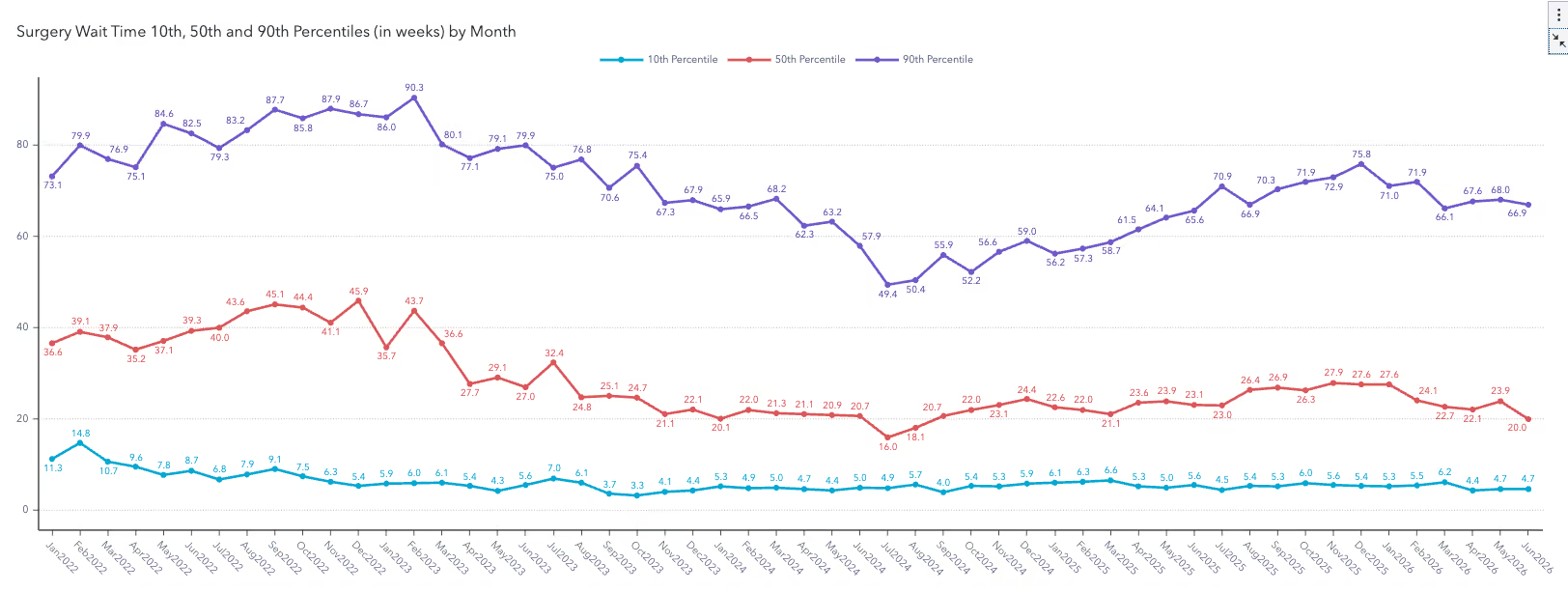
In the public system, knee replacement is typically covered under Alberta’s provincial plan, but wait times can be substantial. Provincial reporting shows an average wait for knee surgery around27 weeks, with the 90th percentile taking 72 weeks.
Most people start with the public pathway. They do physiotherapy. They try injections. They adjust their lifestyle. And when the knee still doesn’t let up, they’re referred onward.
The difficult part is not always the decision to have surgery—it’s living with the in-between:
Private care is not the right fit for everyone. But for patients who can’t afford to wait—and want a clearer timeline—private options can offer a more predictable pathway.
Alberta knee replacement wait times (public system)
Wait times in Alberta for knee replacements range from 6 weeks for the top 10th percentile to 72 weeks for the 90th percentile. When it is determined someone needs a knee replacement, the benchmark is 26 weeks.
These numbers reflect province wide wait times, but there is quite a bit of variance. Waits in major cities, such as Calgary and Edmonton, tend to be longer than rural wait times.
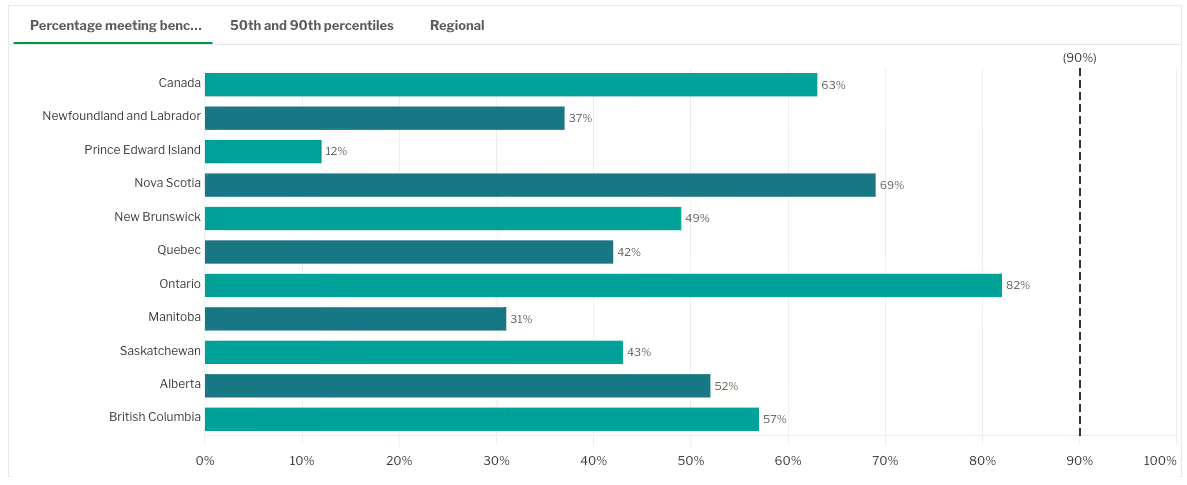
Looking at the entire country, Alberta is actually above average in terms of working through wait lists, with over 60% of knee replacements occurring within benchmark.
How much does a private knee replacement cost in Alberta?
The short answer: it depends on what procedure you need and what the quote includes.
In Canada, private knee replacement (for one knee) falls in the range of $21,000 – $38,000+, and can be higher for complex cases, or range from $33,000 – $50,000+ for bilateral knee replacements (both knees).
Below is a practical breakdown by surgery type.
Partial knee replacement (private cost)
$26,000 - $38,000+
Typical private cost: often within the broader private knee replacement range, unlike a less invasive knee arthroscopy, but your quote may differ depending on implant choice, facility fees, and included rehab.
(Clinics may price partial similarly to total, so it’s important to confirm.)
Common reasons cost can increase:
Additional imaging requirements
Higher complexity than expected (more compartments involved)
A partial knee replacement may be an option when arthritis is limited to one compartment of the knee. It can be less invasive than a total replacement for the right patient. Note: less than 10% of knee replacements are partial knee replacements.
A partial knee replacement fixes only the damaged section (like the inside, outside, or under the kneecap). Because more of your natural knee stays in place, it can mean a smaller surgery and sometimes a faster recovery—but it only works if the damage is limited to one area.
Total knee replacement (private cost)
$26,000 to $38,000+ (one knee)
Total knee replacement is necessary for over 90% of cases when arthritis affects multiple compartments.
A total knee replacement replaces most or all of the joint surfaces. It’s more common when arthritis or damage affects multiple parts of the knee. Your surgeon will recommend the safest fit for your knee.
Robotic-assisted knee replacement (private cost)
Add on cost of $1,500 to $2,500
Robotic-assisted knee replacement typically means the surgeon uses a robotic system to support planning and precision during implant positioning. It’s still surgeon-led surgery, and it does not automatically mean better outcomes for every patient—but it can be valuable in specific contexts.
What may add cost with robotic cases:
Pre-op CT planning (if required by the system)
Specific implant platform compatibility
Facility availability and scheduling
Revision knee replacement (private cost)
$28,000 to $40,000+ (highly variable)
Revision surgery is usually more complex than a first-time knee replacement. It may involve removing old components, addressing bone loss, infection risk management, and longer operating time.
Because revision cases vary so much, it’s especially important to request a written, itemized quote and ask what circumstances could change the price (e.g., longer stay, unexpected implant needs).
What’s typically included in a private knee replacement quote?
Private pricing is often easiest to compare when you know what categories should be on the page.
Many private packages include:
Surgeon fee
Facility/operating room fee
Anesthesia
Knee implant and standard surgical supplies
Post-op follow-up (varies by clinic)
Alberta cost breakdown
Alberta cost breakdown
Typical range ($CA)
Facility / operating room fee
(OR time, nursing, recovery, 1–3 night stay)
$10,000 to $15,000
Knee implant (prosthesis)
$3,500 to $8,000
Surgeon’s professional fee
$4,000 to $7,500
Anesthesiologist
(spinal or general, including nerve blocks)
$1,500 to $3,000
Pre-operative workup
(consultation, imaging, labs and clearance)
$1,000 to $2,500
Included follow-up appointments
$1,000 to $2,000
Robotic assistance (optional add-on)
+$1,500 to $2,500
Typical bundled quote in Alberta (one knee)
$26,000 to $38,000
Usually not included
Typical range ($CA)
Physiotherapy after discharge
(3–6 months; often partly covered by extended health plans)
$500 to $2,500+
Travel and accommodation
(patients travelling within Alberta or from another province)
$1,000 to $3,000+
Mobility aids and home equipment
(walker, cane and raised toilet seat)
$150 to $500
Medications after discharge
$100 to $300
What is often not included (or may be partially included):
Initial consultation fees (often $200–$800 in private settings)
Pre-op medical clearance or tests
Physiotherapy and longer rehab programs
Travel and accommodation (if leaving Alberta)
Mobility aids (walker, raised toilet seat)
A useful rule: if a quote is short, ask for an itemized breakdown before you compare it to another clinic.
Important legal and provincial considerations (Alberta)
This is where many patients feel the most uncertainty—so here is the simplest, compliance-first way to understand it.
Insured vs. uninsured: what you can (and can’t) pay for
Insured services are medically necessary services covered by Alberta’s public plan (AHCIP). Under Alberta rules and the Canada Health Act framework, patients can not be charged extra for insured physician services when a physician is participating in the public plan.
Uninsured services (or services not covered by the provincial plan) can be billed to patients, but fees must not be used to restrict access to insured care.
Private knee replacement in Alberta
Can I pay privately for knee replacement in Alberta?
For Alberta residents, the answer is no—unless the surgeon is opted-out of AHCIP.
Is the surgeon opted out of AHCIP?
Yes — opted out of AHCIP
Private care may be available
An Alberta resident may be able to pay privately for a knee replacement in Alberta when the surgeon is formally opted out of AHCIP.
Fully opted-out surgeons are currently rare, so in-province options may be limited. Confirm the surgeon's status directly with the clinic. You can find opted-out surgeons on Surgency (look for "Accepting patients from all provinces" on surgeon profiles).
Important to verify
AHCIP status • Facility accreditation • What the quote includes
No — participates in AHCIP
Public care in Alberta
Under the current framework, an AHCIP-participating surgeon cannot charge an Alberta resident privately for an insured knee replacement.
Hip replacement remains available through Alberta's publicly funded system without direct patient payment. If a suitable private option is not available in Alberta, some Albertans choose to travel to British Columbia, Ontario, or Québec for faster knee replacement surgery.
Other private-pay pathways
British Columbia • Ontario • Québec
Information current as of September 2026. This is general information, not medical or legal advice. Confirm current AHCIP rules and provider eligibility before booking.
Opt-out exception
If a surgeon is opted out of AHCIP, they may render surgical services to Albertans within the province of Alberta.
Why many private knee replacements involve travel
In practice, some Canadians choose to access private knee surgery by travelling to jurisdictions where the private pathway is structured differently (e.g., surgeons who are opted-out/un-enrolled, or private centres operating within local rules).
If you are exploring a private option, the important step is ensuring:
The clinic is accredited/appropriate for the level of surgery
Your quote clearly states what is insured vs uninsured
You understand what follow-up care looks like when you return home
Private knee replacement is a major purchase. It’s reasonable to want to know the “real total,” not just the base surgical number.
Budgeting: additional cost categories
When you pay for private knee surgery (or even use the public system but recover at home), the surgery fee is usually only part of the total cost.
Below is a breakdown of the most common “extra” expenses Canadians pay out of pocket. In many cases, these can add $2,500 – $6,000 to your overall bill, depending on where you live and what your insurance covers.
Physiotherapy (often the biggest variable)
Physiotherapy is a major part of recovery after a knee replacement.
Typical cost: around $120 for an assessment, and $90–$110 per follow-up visit
Typical frequency: often 2–3 sessions per week for the first 6–8 weeks, then less as you progress
Estimated total: $1,500–$2,500 for a full rehab course
Insurance gap: many extended health plans cap physio around $500/year, which may be used up quickly
Public coverage: publicly funded home-care physio varies, but is often limited to a small number of visits focused on safety at home—not full rehab
Travel and accommodation (if you travel for surgery)
If your surgery is out of province, you may need to stay nearby before heading home.
Hotel stay: commonly 3–6 days post-op
Typical cost: about $200/night (often $1,000+ total)
Travel home: you may need extra legroom for comfort and safety
Companion costs: many clinics require you to have someone with you for discharge and early recovery, which can increase travel and meal expenses
Recovery and medical equipment
Many patients need to buy or rent equipment before surgery.
Standard extended health benefits (e.g. Sun Life, Manulife) typically do not cover the cost of the surgery itself. However, they often cover related costs such as:
Post-op physiotherapy
Prescription medications
Custom braces or crutches
Medical devices (e.g., CPAP after sleep surgery)
Health spending account
If your employer provides a Health Spending Account (HSA) or "flex account," you can often use these funds to pay for the surgery. Unlike standard benefits, HSAs are usually flexible enough to cover CRA-eligible medical expenses, including private facility fees.
Is private knee replacement surgery tax-deductible in Alberta?
Alberta Provincial Credit: Alberta has a parallel medical expense tax credit that can further reduce your provincial tax liability.
Travel costs: Mileage, parking, and accommodation may also be claimable if you travel more than 40 km (for travel expenses) or 80 km (for accommodation and meals) to receive medical services not available near your home.
Claiming out of province private surgery for Albertans
This is unique to Alberta: if you are an Albertan, and receive private surgery out of province, then you may be eligible to claim the physician component up to the amount payable under the province’s applicable fee schedule. You pay any excess, plus the entire private facility fee.
If you are an Albertan and pay for private surgery within Alberta, then you cannot make this claim.
Why Albertans consider private options
For many Albertans, the decision to look at private surgery comes down to time. Knee pain often worsens the longer surgery is delayed, making daily activities harder and diminishing their quality of life.
In Alberta, wait times for knee replacements are as little as 3 weeks for the fastest 10% of patients, but as long as 62 weeks for the slowest 10% of patients. ~65% of patients are seen within the target benchmark (26 weeks). And these numbers only account for the wait between the decision to treat and the surgery date, not the wait to get a referral, nor the wait to see a specialist, which can double the total amount of wait time.
Planning and paying for private knee replacement surgery
If you’re considering a private knee replacement in Alberta, it's helpful to think beyond the basic surgical fee. The price you see in a quote usually covers the core procedure, but there are other expenses that can add up.
A realistic budget often includes:
Surgical fees, implant, anaesthesia, and facility costs – usually the largest portion of the bill.
Pre-operative tests and imaging – bloodwork, X-rays, or other scans your surgeon may request.
Medications – such as blood clot prevention (DVT prophylaxis) or pain management.
Rehabilitation and physiotherapy – an essential part of recovery that may or may not be bundled in.
Travel and lodging – especially if your surgery takes place out of province.
Time off work for you or a caregiver – an often-overlooked cost that can affect the household.
Thinking about these line items ahead of time can help you plan with fewer surprises and make sure you’re financially ready for the full journey of surgery and recovery.
For many families, the cost of a private knee replacement can be daunting. The good news is that most clinics understand this and offer ways to make payment more manageable. Some provide payment plans or financing arrangements, allowing you to spread the cost over time rather than paying it all upfront. Others may offer staged payments tied to milestones in your care.
Before booking, it’s also wise to ask about the clinic’s cancellation and refund policies. Life circumstances and health conditions can change, and knowing where you stand financially if plans shift can give you peace of mind.
Get started with Surgency
Knee replacement is a life-changing surgery. In Alberta though, the wait for public care can be long. Private options are not for everyone, but for some, they offer an alternative pathway — one with significant costs, but also the potential for shorter wait times and more control.
If you’re considering private knee replacement, focus on three things:
What’s included in the cost
How wait times compare
Whether the clinic is fully accredited
Through Surgency, you can browse vetted providers, see exactly what’s included in their quotes, and request consultations, all in one place. Every clinic on our platform is accredited and complies with Canadian regulations so that you can make an informed decision with confidence.
How long is the waiting list for knee replacement in Alberta?
For knee replacement surgery, wait times vary considerably. The tenth percentile gets surgery within 5 weeks. 50% are seen within 23 weeks. And the 90th percentile are seen within 66 weeks.
Does Alberta Health (AHCIP) cover any part of private knee replacement surgery?
Generally, private surgeries performed in Canada are paid for out-of-pocket or via private insurance/ employer benefits.
Provincial plans (like OHIP, MSP, or AHCIP) typically do not cover procedures at private clinics, though some exceptions exist for WCB (Workers' Compensation) claims or specific inter-provincial programs.
Where can I get private orthopedic surgery if I live in Alberta?
Some private orthopedic services exist. There are a few surgeons currently opted out of AHCIP who can treat Albertans within Alberta. But for many medically necessary procedures, Albertans often explore out-of-province private options in Vancouver, Montréal, or Toronto.
What factors affect the cost of private knee surgery?
The biggest drivers are procedure type (partial vs total vs revision), implant, surgeon/facility fees, anesthesia, robotic assistance add-ons, bundled rehab, and medical complexity (which can increase OR time and resource needs).
Final word
When you’re dealing with chronic knee pain, “just wait” can feel like a plan with no end date.
You deserve clear information: what the public pathway looks like, what private care truly costs, and what is legal in Alberta when a service is insured versus uninsured.
If you’re ready to explore your options with more confidence, Surgency can help you compare Alberta-focused private pathways and next steps—clearly and safely.
There are surgeons in Canada who can see you in weeks
If you, or a loved one, are on a wait list and interested in a timely second opinion or a private surgical procedure, then click below to browse private Canadian providers based on experience, location & approach.