




Is buttock pain normal after hip replacement?
In short: Yes, some buttock pain is very common.
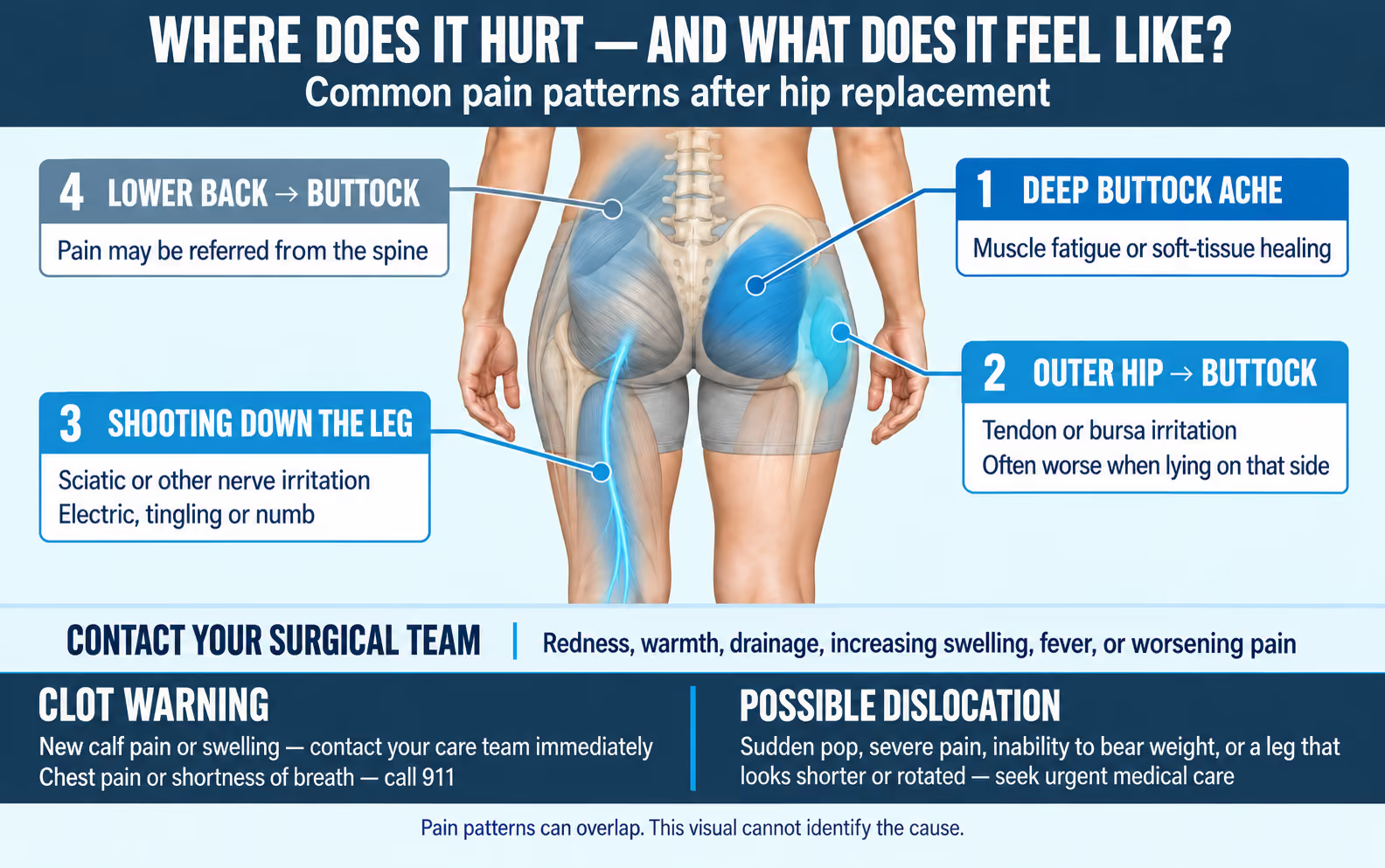
Think about what happens during surgery. Your surgeon has to move muscles and tissues aside to reach the hip joint. After the surgery, you are asking those same muscles to work in a new way to support your new joint. It is a lot to ask of your body!
Typical post-surgical healing patterns
For the first few weeks, soreness in the glutes (buttock muscles) is almost expected. Your body is healing from the trauma of surgery. You might feel:
- Stiffness when you wake up or stand after sitting.
- A dull ache deep in the buttock cheek.
- Soreness similar to how you feel after a really hard workout.
This "normal" pain should gradually get better week by week as you heal and get stronger.
Research comparing surgical approaches shows that while the anterior method spares muscles from being cut, the gluteal group still experiences 'retraction stress'—which explains why you might still feel a deep ache even without a posterior incision.
For an in-depth look into recovery, read: Hip Replacement Recovery: What to Expect Week by Week.
How surgical approach can affect pain location
The type of surgery you had matters.
- Posterior Approach: The surgeon makes an incision through the buttock muscles to reach the hip. Because the muscles were cut and repaired, buttock pain is very common during recovery.
- Anterior Approach: The surgeon goes through the front of the thigh. While this spares the buttock muscles from being cut, your glutes still have to work hard to stabilize your new hip, which can cause strain and fatigue pain in the buttock area.
Learn more about the differences here: Which Hip Replacement Method Is Best?
Common causes of buttock pain after hip replacement
After a hip replacement or revision hip replacement, most of the time, the pain isn't coming from the artificial hip itself. It is usually coming from the support crew—the muscles, tendons, and nerves around the joint.
Muscle strain and soft tissue healing
Your gluteal muscles are the powerhouses of your hip. Before surgery, you probably walked with a limp or avoided using that hip fully because of arthritis pain. This means your glute muscles likely got weak.
After surgery, you are suddenly asking these weak muscles to work normally again. This can lead to muscle strain and fatigue. It’s like running a marathon without training—your muscles will complain.
Tendon or bursa irritation (bursitis)
There are fluid-filled sacs called bursae that act as cushions between your bones and tendons. If your walking pattern (gait) changes quickly, or if you do too much physical therapy too soon, these sacs can get inflamed. This is called bursitis.
- Symptoms: A sharp or burning pain on the outside of the hip that radiates into the buttock, often worse when lying on that side.
For a general timeline on walking after hip surgery, check out: How Long After Hip Surgery Can You Walk? A Clear Recovery Timeline.

Nerve irritation or compression (sciatica)
The sciatic nerve is a large nerve that runs from your lower back, through your buttock, and down your leg. During surgery, tissues are stretched to place the implant, which can sometimes irritate this nerve.
- Symptoms: Shooting, electric-shock type pain, tingling, or numbness that travels from the buttock down the back of the leg. This usually settles down with time, but it can be uncomfortable.
Deep gluteal syndrome (Piriformis)
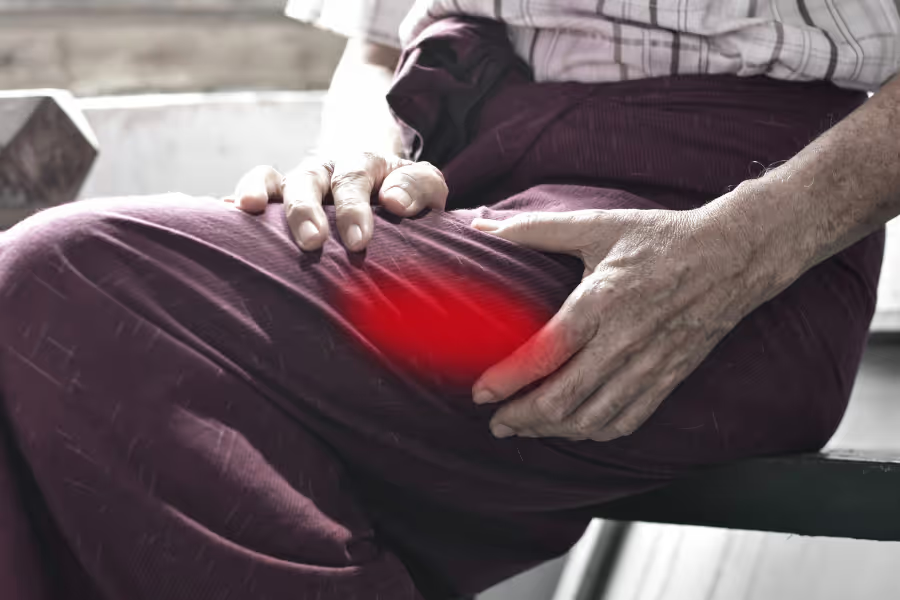
The piriformis is a small muscle deep in your buttock. It helps rotate your hip. Sometimes, this muscle gets tight or goes into spasm after surgery. Because the sciatic nerve runs right under (or sometimes through) this muscle, a tight piriformis can squeeze the nerve. This mimics sciatica but is caused by a muscle knot.
Clinicians now often refer to this as 'Deep Gluteal Syndrome.' It’s a specialized way of describing how any structure in the 'gluteal space'—not just the piriformis—can compress the sciatic nerve after a total hip replacement.

Referred pain from the lower back
Sometimes, the problem isn't your hip at all. The lower spine (lumbar spine) shares many nerves with the hip and buttock. If you have arthritis in your back or a bulging disc, your brain might interpret that back pain as buttock pain. This is called referred pain.
Less common but important causes
While muscle and nerve issues are the most likely culprits, there are other causes that your surgical team will want to rule out if pain persists.
Implant-related Issues
Rarely, the components of the hip replacement might not be perfectly fixed, or they might loosen over time.
- Loosening: If the bone doesn't grow into the implant correctly, the metal stem can wiggle slightly. This often causes pain in the thigh or groin, but it can sometimes be felt in the buttock.
- Malposition: If the cup is placed at a specific angle, it might rub against a tendon (like the iliopsoas tendon), causing irritation.
Infection
Deep infection is rare but serious. It usually happens weeks or months after surgery but can happen sooner.
- Warning Signs: This pain is often different—it might be constant (even at rest or at night), and you might notice redness, warmth, swelling, or have a fever. This requires immediate medical attention.
When buttock pain may be a sign to follow up
You don't need to panic over every ache. However, you should trust your instincts. If the pain is stopping you from doing your rehab exercises or is getting worse instead of better, it’s time to ask questions.
See your doctor or physiotherapist if:
- The pain is severe and not relieved by your prescribed pain medication.
- You have difficulty lifting your foot or toes (this can signal nerve stress).
- You have a fever or the incision looks red and angry.
- You fall or feel the hip "clunk" painfully.
- The pain prevents you from sleeping or walking.
For more information on precautions after hip replacement, see: Lifetime Precautions After Hip Replacement: What You Need to Know.

What doctors may evaluate
If you go back to your surgeon or see a specialist for buttock pain, here is what they will likely look at. It is a process of elimination.
- Physical Exam: They will move your leg to see which positions cause pain. They will press on specific spots (like the bursa or piriformis muscle) to see if it’s tender.
- Gait Analysis: They will watch you walk. Often, a limp caused by weak muscles is the main driver of pain. Fixing the walk fixes the pain.
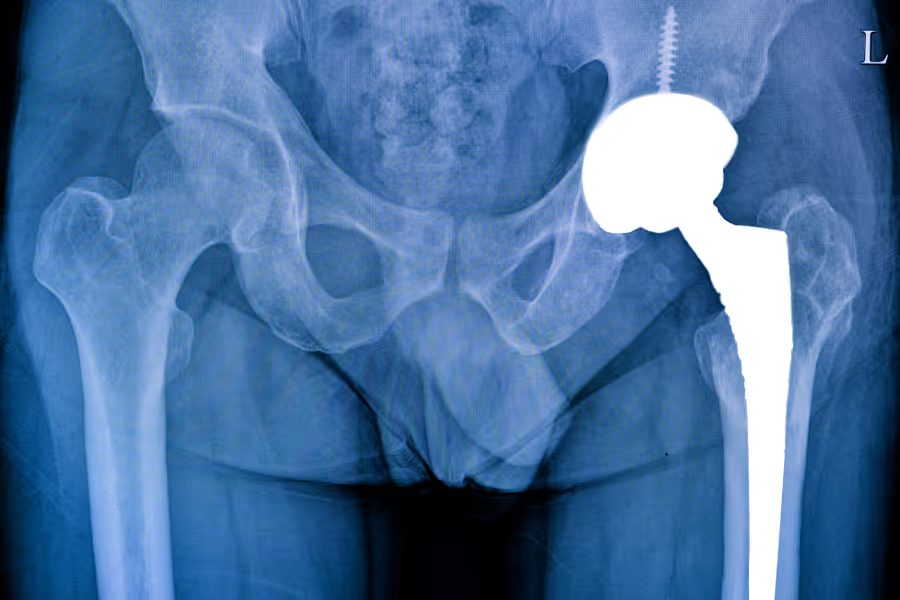
- X-Rays: Simple images check if the implant is sitting correctly and if the bone looks healthy.
- Blood Work: If infection is suspected, simple blood tests can check for inflammation markers.
- Spine Check: They may check your lower back to ensure the pain isn't coming from your spine.
Options to consider if pain persists
If you are dealing with lingering buttock pain, it doesn't mean your surgery was a failure. It usually means you need a slightly different recovery plan.
- Physiotherapy: Specific exercises to strengthen the glutes or stretch the piriformis can work wonders.
- Massage Therapy: If scar tissue or muscle knots are the cause, deep tissue work can help.
- Injections: Sometimes, a doctor might suggest a cortisone injection into a bursa or muscle to calm down inflammation so you can do your rehab exercises comfortably.
- Time: Nerves and soft tissues heal slowly. Sometimes, simply knowing that nothing is "broken" allows you to be patient while your body finishes healing.
If you feel stuck or aren't getting answers, getting a second opinion or a comprehensive review can be helpful. Understanding why it hurts is the first step to making it stop.
FAQs
Is it normal to have pain in the buttock after hip replacement?
Yes, it is very common in the first few months. It is usually caused by muscles recovering from surgery, stiffness, or your body getting used to a new way of walking.
What are signs that your body is rejecting a hip replacement?
"Rejection" like an organ transplant doesn't really happen with hips. However, you can have a reaction to the metal (rare) or an infection. Signs include persistent pain, swelling, fluid drainage from the incision, and fever.
What is deep gluteal syndrome after hip replacement?
This is a fancy term for pain caused by nerves being compressed in the buttock, often by tight muscles or scar tissue. Piriformis syndrome is a type of deep gluteal syndrome.
Should I be worried about buttock pain?
Most of the time, no. If the pain is improving gradually, it is likely just muscle healing. If it is severe, constant, or accompanied by fever or weakness, you should see your doctor.
How much does hip replacement surgery cost?
For location-specific cost breakdowns, please see our Canada, Alberta, Ontario cost guides.

Conclusion
Buttock pain after hip replacement can be a literal pain in the... well, you know. But it is rarely a sign of a disaster. Usually, it is a sign that your muscles are waking up, your nerves are adjusting, or your walking pattern needs some fine-tuning.
Stay consistent with your exercises, listen to your body, and don’t be afraid to ask for help if things don’t feel right. Your new hip is designed to give you freedom, and sorting out these aches and pains is the final step in getting there.
If you are currently waiting for hip surgery and want to explore your options, you can find private hip surgeons in Vancouver, Edmonton, Calgary, Toronto, or Montréal.
Check average patient ages: Average Age for Hip Replacement in Canada