




Most people begin standing and walking with support within the first day after hip surgery, then gradually progress from a walker to a cane and, for many, to independent walking over the following weeks. Early recovery focuses on wound healing, swelling control, safe movement, and regaining basic daily activities. Longer-term recovery continues for months as muscles rebuild strength, balance improves, and the body adapts to the artificial hip (hip implant / hip prosthesis). Many patients notice steady progress over 3–12 months, especially with consistent physiotherapy and safe activity.
(This is general information. Your surgeon’s plan should always come first.)
What Is Hip Replacement Recovery?
Hip replacement recovery is the process of healing and rebuilding function after an orthopedic joint replacement surgery—specifically after part (or all) of your hip joint is replaced with an artificial hip.
It helps to think of recovery as two tracks happening at the same time:
- Surgical healing: your incision closes, tissues calm down, swelling decreases, and the immediate effects of the hip operation settle.
- Functional recovery: you relearn movement patterns, rebuild strength in your hip and leg muscles, restore balance and endurance, and return to daily life.
Being “discharged” from hospital doesn’t mean you’re “recovered.” Discharge usually means you’re safe to continue healing at home, with a plan for mobility, pain control, and rehabilitation. True recovery is what happens in the weeks and months after.

Hip replacement recovery timeline (week by week)
Every patient is different, this is purely for a a general understanding of timelines.
Follow your surgeon's instructions.
First 1–3 days after surgery
This phase is about safety, pain control, and getting you moving—gently.
Most patients will:
- Receive a plan for pain management (often a combination of medications rather than relying on one single option).
- Begin sitting up, standing, and walking with help—often within the first day, depending on your surgeon and your medical situation.
- Work with physiotherapy on basic goals: getting in and out of bed safely, walking short distances with a walker, and learning how to move in a way that protects your hip joint.
Some people go home quickly (within 2 days); others stay longer (2-6 days). That can depend on factors like dizziness, blood pressure, pain control, home supports, and whether there are stairs at home.
The first stand can feel wobbly and intimidating. That doesn’t mean something is wrong—it usually means your muscles have been through a major event, and your nervous system is adjusting.
Weeks 1–4
This is the “getting through the day” phase.
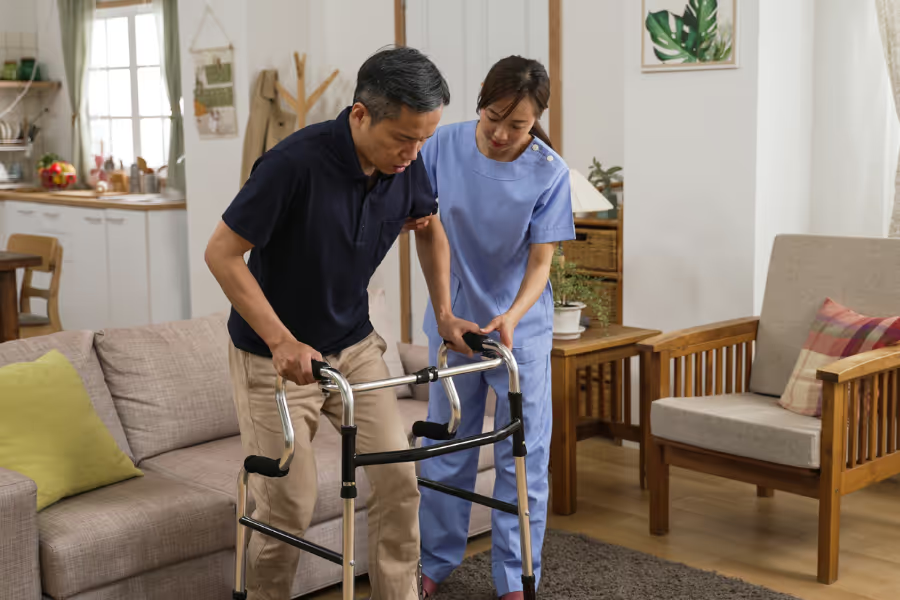
During weeks 1–4, most patients are:
- Using a walker (or crutches) and gradually increasing walking distance.
- Managing swelling and bruising that can extend down the thigh.
- Focusing on wound care and watching for signs of infection.
- Practising simple but important movements: getting dressed, using the bathroom safely, sitting down and standing up without twisting, and navigating stairs (if needed).
- Sitting for longer periods, but continuing to use firm, straight backed chairs with raised seats and armrests.
Physiotherapy often focuses on:
- Gentle range of motion
- Activating the glutes and thigh muscles
- Improving balance and gait (how you walk)
Daily life: showers may require planning. Chairs that are too low can be difficult early on. Many people do best with a firm chair, a supportive bed height, and a home set-up that minimizes bending and rushing.
Weeks 4–12
This phase is where many patients start to feel their confidence returning.
Common milestones in weeks 4–12 include:
- Transitioning from a walker to a cane, then (for some) walking short distances without any aid.
- Walking more smoothly, with fewer “protective” habits like limping.
- Building strength and endurance—usually through a structured routine rather than intensity.
- Achieving 90° hip flexion and 25° abduction.
Many patients begin discussing:
- Driving: Often possible once you can safely control the pedals, are off sedating pain medications, and can react quickly. Your surgeon will give the safest timeline for you.
- Work: Light or desk work may be possible earlier; physically demanding jobs typically take longer.

3–12 months
The worst of the pain and swelling usually subside around 12 weeks, but this is the long game—where outcomes are built.
Even when you look “back to normal” from the outside, your body may still be:
- Rebuilding muscle strength and coordination
- Adapting to your hip prosthesis
- Improving stamina (especially if you were limited by hip pain for months or years)
It’s also normal for some people to notice:
- Stiffness after sitting too long
- Fatigue after more active days
- Occasional aches as activity levels increase
The goal isn’t perfection by a certain date. The goal is steady progress toward durable joint health and hip mobility.
Walking After Hip Replacement: What’s Normal?
Walking is usually introduced early because movement supports circulation, reduces clot risk, and helps the hip joint regain function.
A common progression looks like this:
- Walker (early stability and safety)
- Cane (as strength and balance improve)
- Unaided walking (short distances first, then longer)
Two common concerns:
- “My leg feels longer.” Sometimes this is temporary, related to swelling, muscle tightness, or how you’re holding your pelvis while walking.
- “I’m limping.” A limp is common early on. The key is addressing it with guided physiotherapy so it doesn’t become a habit.
If walking gets suddenly worse—especially with new sharp pain, fever, increasing redness, or calf swelling—contact your care team.
Pain, Swelling, and Sleep During Recovery
Pain after hip reconstruction is real, but it should generally subside over the first 12 weeks.
What’s normal
- Soreness around the incision
- Deep muscle aching in the buttock, thigh, or groin
- Swelling that’s worse later in the day
- Sleep disruption (especially in the first few weeks)
What’s not “just normal recovery”
Contact a provider if you notice:
- Increasing redness, warmth, drainage, or a wound that opens
- Fever or chills
- Sudden worsening pain that doesn’t settle
- Calf pain/swelling or shortness of breath (urgent)
Sleep tips
- Use pillows to keep your body aligned (your surgeon’s instructions matter here).
- Keep a consistent bedtime routine, even if sleep is broken.
- Plan pain medication timing so you’re not “chasing” pain at night.
- Accept that sleep may come in blocks at first. This usually improves.

Physiotherapy and rehab: why it matters
Rehab is not a “nice to have.” It’s a major part of what determines the outcome of your hip surgery.
Physiotherapy helps you:
- Restore strength in glutes and thigh muscles
- Improve balance and reduce fall risk
- Normalize walking mechanics
- Build endurance safely
Some patients do in-clinic physiotherapy. Others do a mix of home-based exercises and periodic check-ins. What matters most is consistency over intensity—showing up, repeating the fundamentals, and progressing safely.
A real barrier in Canada is access: not everyone can easily get timely physiotherapy, especially outside major centres or when coverage is limited. If you’re a caregiver, helping to schedule appointments, arrange transportation, and keep routines steady can make a meaningful difference.
Factors that can affect hip replacement recovery
Recovery is not just about the day of surgery. It’s also about what your body brings into surgery—and what support exists after.
Key factors include:
- Age and overall health: chronic conditions can affect energy, healing, and rehab pace.
- Pre-surgery mobility: the more deconditioned you are from long-standing hip pain, the more time your muscles may need to rebuild.
- Surgical approach and implant choices: these decisions can influence precautions and early movement plans (your surgeon will tailor this).
- Timing of surgery: prolonged time on a waitlist can affect strength, mood, and readiness for recovery.
- Access to rehab and home support: consistent physiotherapy and a safe environment matter.
Recovery challenges many Canadians face
Many Canadians approach hip replacement with two simultaneous truths:
- Gratitude for publicly funded orthopedic care.
- Frustration with how long it can take to access it.
When surgery is delayed, people often adapt by moving less. Over months, that can lead to muscle weakness, reduced cardiovascular fitness, and a sense of isolation. Caregivers often carry more than people realize—extra errands, mobility support, appointment management, and emotional reassurance.
None of this is about blaming the system. It’s about acknowledging lived reality: prolonged hip pain can make recovery feel harder before it even begins.
Exploring your options
If you’re still waiting for surgery, it’s reasonable to wonder whether delays could affect your recovery trajectory. For some patients, earlier treatment can mean less time spent in pain and less deconditioning beforehand.
Surgency is not a surgical provider, we help Canadians navigate their options and research accredited surgeons in the private system. Canadian-physician founded, designed to help patients compare options with clarity and confidence.
If you want to learn more about hip replacement as a procedure (and what the pathway can look like), start here.
Step-by-step:
- Click here to find private surgeons who specialize in hip replacement.
- Browse surgical provider profiles—training, years in practice, areas of focus.
- Request a consult—we recommend reaching out to 2-4 surgeons to better understand your options.
FAQs
What is the recovery time for a hip replacement?
Many people make meaningful progress in the first 6–12 weeks, but recovery continues for months. It can take 3–12 months (sometimes 16 or 24) to rebuild strength and feel fully settled into your new hip joint.
What are the restrictions after a hip replacement?
Restrictions vary by surgical approach and surgeon preference, but often include guidance around bending, twisting, and certain positions early on. Your surgeon and physiotherapist will give the safest rules for your specific hip implant and hip operation.
Can I live a normal life after hip replacement?
Many patients return to a full, active life after joint replacement, including walking, travelling, and low-impact exercise. The best outcomes usually come from steady rehab, safe progression, and good joint health habits.
How long should I be off work after hip replacement?
It depends on your job. A return to desk work may be possible earlier—within 4-12 weeks—while physically demanding work typically requires more time (3-6 months). Your surgeon can give guidance based on your healing and hip mobility milestones.
Final thoughts
Hip replacement recovery isn’t a single milestone. It’s a process of healing, rebuilding, and relearning trust in your body.
If you’re approaching surgery, focus on what you can control: a safe home set-up, a plan for support, and a commitment to physiotherapy. If you’re still waiting, know this: wanting clarity and options is not “giving up” on the system. It’s taking care of yourself (or someone you love) with calm, informed intention.
If you’re ready to explore your options, Surgency can help you compare accredited providers and understand what’s possible—step by step.
Compare private hip replacement surgery providers on Surgency.
Medical disclaimer: This article is for informational purposes only and does not replace medical advice. Always follow the guidance of your surgeon and healthcare team, and seek urgent care for emergency symptoms.