


.png)


What is varicocele repair surgery?
Varicocele repair, or varicocelectomy, closes enlarged veins around a testicle so blood drains through other veins. It may relieve aching or improve sperm quality, but many varicoceles cause no problems and need no treatment.
Surgery versus embolization
- Microsurgical repair: A urologist works through a small groin incision, using a microscope to identify veins and protect nearby structures.
- Laparoscopic repair: A surgeon uses a camera and instruments through small abdominal incisions to close the veins.
- Embolization: An interventional radiologist threads a thin tube through a vein and blocks abnormal blood flow with coils or a liquid agent. This is a separate procedure with different risks, anaesthesia and recovery.
This page focuses on surgical repair, especially microsurgery. Ask which approach suits your anatomy and treatment goals.
How much does varicocele surgery cost in Canada?
How we estimate surgical costs: Ranges are estimates drawn from our network of 100+ private clinics and surgeons, and they're intentionally broad. Two people seeking the same procedure can receive very different quotes depending on province, surgeon, facility fees, and case complexity. Published prices aren't always comparable either—some are complete bundles, others exclude consultation, imaging, or follow-up. Only the clinic can give you an exact, itemized quote.
Prices vary by province/clinic, anaesthesia, unilateral vs bilateral, and OR time. Ask for a written, itemised quote.
In Canada, private urology clinics charge $6,000 - $16,000.
What’s usually included
- Surgeon fee
- Anaesthesia and monitoring (usually general, sometimes spinal)
- Accredited facility/OR fees, nursing, standard supplies
- Use of an operating microscope and/or Doppler (if part of the technique)
- Immediate recovery care and one routine post‑op visit
What’s often not included
- Initial consults and pre‑op tests (ultrasound, bloodwork)
- Extra OR time beyond the booked block or an unplanned overnight stay
- Prescriptions after surgery (pain meds, stool softener)
- Follow‑up semen analyses or additional imaging
- Travel/accommodation if you’re out‑of‑province/state
Tips to compare quotes
- Request line items for surgeon, facility, anaesthesia, and any microscope/Doppler fees.
- Confirm pricing for bilateral repair and what happens if more time or a second procedure is needed.
Is varicocele surgery covered by provincial insurance?
Ask whether your recommended repair qualifies as medically necessary insured care before considering self-payment. For example, Alberta covers medically necessary physician and surgical services for eligible residents; your clinician determines medical necessity. Confirm your procedure, provider and location with your provincial plan.
Insurance, financing and tax
Get written confirmation of any insurance reimbursement before booking. If considering financing, compare interest, fees and total repayment. Some eligible, unreimbursed medical expenses may qualify for the Medical Expense Tax Credit; this does not reimburse the full bill. Keep receipts and check.

How is varicocele surgery performed?
Microsurgical repair usually involves general anaesthesia. Operating time is usually ~2–3 hours for this approach; your surgeon will estimate the time for your repair. Check-in and recovery add several hours to the visit, and you generally do not stay overnight.
- Confirm the plan: The team reviews consent, relevant results and whether one or both sides need treatment.
- Give anaesthesia: You receive the agreed anaesthetic, and the groin is cleaned and prepared.
- Reach the veins: The surgeon makes a small groin incision and exposes the cord containing the veins and other structures.
- Close affected veins: Under magnification, the surgeon ties off the enlarged veins while preserving the artery, lymphatic drainage channels and sperm-carrying tube.
- Recover: The incision is closed and the team monitors you. Many patients go home that day once ready, with an escort and written instructions.
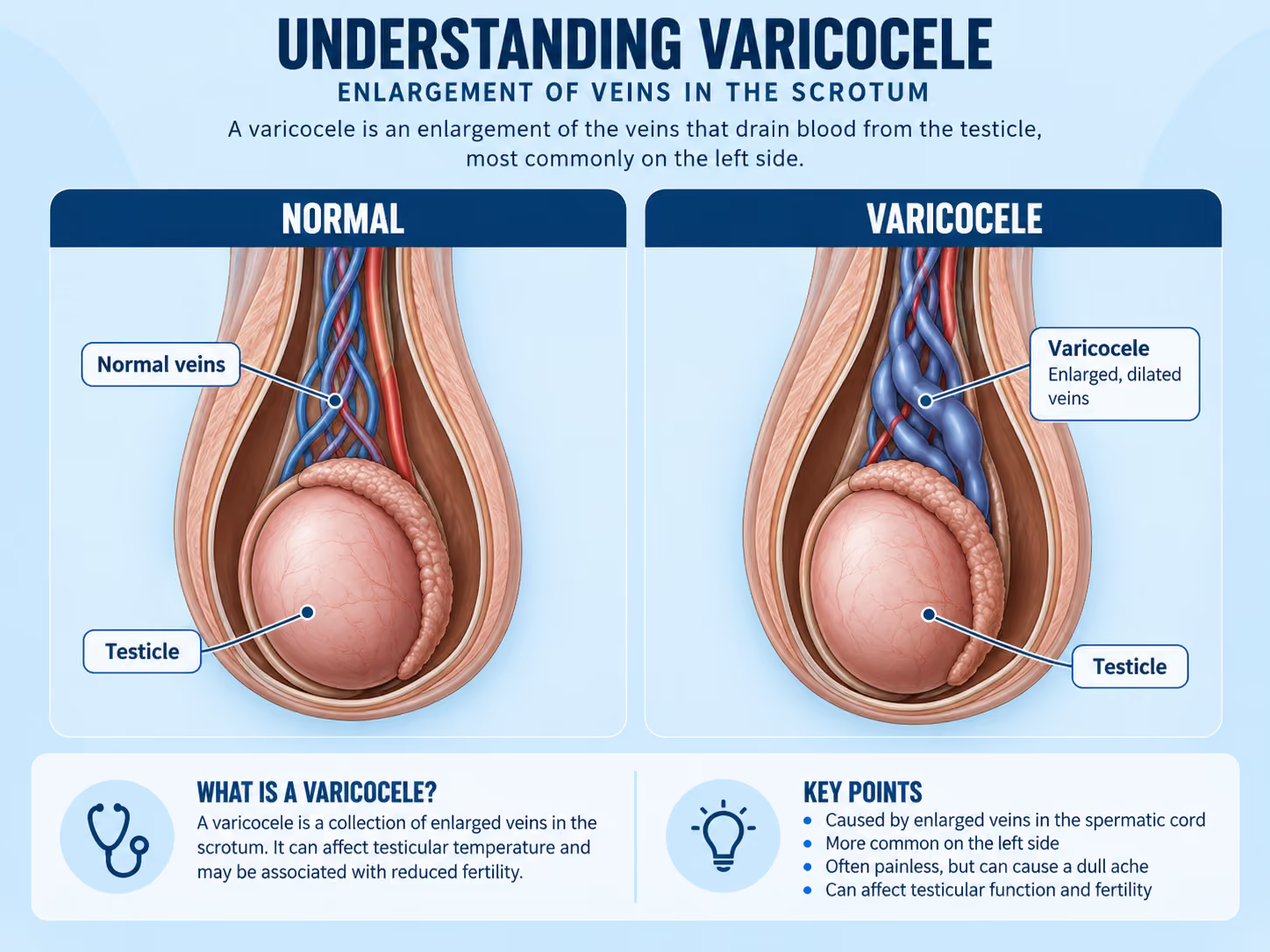
What can I expect from the recovery process?
Everyone heals differently—follow your surgeon’s plan. Varicocele repair is usually a same‑day procedure, but the area can be tender for a bit.
In general, what to expect
Days 1–3
- Reality check: groin/scrotum soreness, swelling, and a bruised look. Walking feels tight.
- Goals: control pain and swelling; keep the incision clean and dry.
- Activities: short walks around the house, scrotal support (snug briefs or a jockstrap), ice packs 15–20 minutes at a time, sit or lie with the scrotum supported. Avoid heavy lifting and straining.
Days 4–7
- Still annoying but improving.
- Goals: move comfortably and avoid pulling on the incision.
- Activities: light daily tasks and desk/school work as tolerated. Keep support underwear on. Quick showers are OK; no baths/hot tubs.
Weeks 2–4
- The steady phase.
- Goals: return to normal routines without swelling flares.
- Activities: gradually add easy cardio (walking, light bike). Most people can drive and do non‑physical work. No heavy lifting, sprinting, or contact sports yet. Sexual activity typically after your surgeon clears you (often around 2 weeks if comfortable).
Weeks 5–8
- Back to most activities.
- Goals: full comfort in daily life; begin heavier activity.
- Activities: ease into running, gym, and sport drills; lift progressively. Stop if you feel pulling or ache that lingers.
Red flags—call your care team
- Fever, worsening redness, pus, or spreading pain
- Scrotum suddenly much larger, very tight, or severely painful
- Persistent vomiting, trouble peeing, or calf/chest pain
Fertility follow-up
Sperm changes take months to assess. Arrange follow-up semen testing with your urologist; improved results do not guarantee pregnancy.
What is Surgency?
As a family doctor in the public system, I believe transparency is a form of care. I created Surgency to help my patients struggling on long waitlists who wanted to understand all their options for timely medical attention.
Surgency is a free resource designed to empower and educate—helping you understand private pathways and find accredited surgeons within Canada. I hope Surgency brings you clarity.
Dr. Sean Haffey

Why do Canadians get varicocele repair surgery done privately?
Shorter wait times
- Public queues for consults, ultrasounds, and OR time can be long. Private centres often arrange assessment and surgery within weeks—reducing time spent with aching, heaviness, and activity limits, and helping you get back to school, work, or training sooner.
Choice and control
- Choose a high‑volume surgeon with microsurgical or laparoscopic varicocele experience.
- Pick the clinic location (out‑of‑province) and schedule around exams, season play, or job demands.
- Discuss the approach that fits you best (microsurgical ligation vs embolisation) and anaesthesia preferences.
Peace of mind
- Clear timelines and a detailed plan—who’s operating, the technique, anaesthesia, and follow‑up—lower uncertainty.
- Direct messaging and prompt result sharing make it easier to coordinate rides, time off, and support.
Preventing further decline
- Persistent varicoceles can mean ongoing scrotal discomfort, testicular warmth, and, in some cases, slowed testicular growth or reduced sperm quality. Earlier repair may relieve symptoms and optimize future fertility potential.
- Fewer ER/clinic visits for flare‑ups and faster access to semen analysis and follow‑up imaging.
Choosing a surgeon and clinic
Getting to choose your urologist is one of the main benefits of pursuing private healthcare. Here's how to choose wisely.
What to look for
Experience and volume
- Ask how many varicocelectomies they do per month/year and what proportion are microsurgical (subinguinal/inguinal) versus laparoscopic.
- Higher volume and a standard same‑day pathway usually mean smoother care.
Credentials and training
- Verify licensure with your provincial college (CPSO Ontario, CPSBC BC, CPSA Alberta, CMQ Québec, etc.).
- Look for FRCSC‑certified urologists. Microsurgical fellowship or specific training in male fertility is a plus.
Technique and tools
- Do they use an operating microscope and micro‑Doppler to identify the artery and lymphatics?
- Ask about their approach for bilateral cases and how they reduce recurrence and hydrocele risk.
Outcomes and safety
- Request recent metrics: unplanned ER/clinic returns within 30 days, infection rate, hematoma rate, hydrocele rate, and recurrence/persistence rate.
- Ask how often they convert plans mid‑procedure and how that’s handled.
Pre‑op and after‑care
- Clear plan for ultrasound review, semen analysis (if fertility is a goal), and medication holds.
- Written after‑care, direct contact for urgent issues, and scheduled follow‑ups. When do they typically repeat semen testing?
Facility quality
- Accredited non‑hospital surgical facility (Accreditation Canada/CAAASF or provincial program), modern sterilisation, and hospital transfer agreements.
- Consistent anaesthesia coverage and availability of necessary equipment.
Pricing transparency
- Ask for an itemised quote: surgeon, facility, anaesthesia, microscope/Doppler fees, and follow‑ups.
- Clarify costs for bilateral repair, extra OR time, or unexpected overnight stay.
Questions to ask during your varicocelectomy consultation
Surgeon and surgical plan
- How many microsurgical varicocelectomies do you perform yearly? What are your recurrence and hydrocele rates in the last 12–24 months?
- Which approach do you recommend for me (subinguinal vs inguinal vs laparoscopic) and why?
- Will you use a microscope and micro‑Doppler to identify and protect the artery and lymphatics?
- If you find something unexpected (e.g., additional veins, hernia), how will that change the plan and risks?
Anaesthesia and logistics
- What anaesthesia do you recommend (general vs spinal)? What’s the pain‑control plan after?
- Is this guaranteed same‑day discharge, or could I need an overnight stay?
Recovery and follow‑up
- When can I return to school/desk work, light exercise, heavier workouts, and contact sports?
- How long should I wear supportive underwear? Any lifting limits?
- What red flags should prompt a call or ER visit?
- If fertility is a goal, when do we repeat semen analysis, and what changes are realistic?
Costs and documentation
- What exactly is included in my quote (surgeon, facility, anaesthesia, microscope/Doppler, dressings, first follow‑up)?
- What could add cost (bilateral repair, longer OR time, complications)? How do you handle consent and pricing if the plan changes mid‑procedure?
- Will I receive the operative note and a written after‑care plan?
Signals of a high‑quality program
- Shares outcomes data openly, uses microscope and Doppler routinely, provides clear after‑care and rapid access for questions, and offers transparent, itemized pricing.
If you're currently interested in private surgical pathways within Canada, you can click here for a list of providers.

Frequently asked questions
How do I know if varicocele surgery is right for me?
Varicocelectomy is a surgery where a urologist ties off enlarged veins around a testicle (a “varicocele”) so blood stops pooling.
It might be right for you if:
- You have ongoing scrotal aching, heaviness, or swelling that hasn’t improved with simpler steps (supportive underwear, anti‑inflammatories, activity tweaks).
- An ultrasound and exam clearly show a varicocele that matches your symptoms (usually grade II–III).
- Fertility is a goal and tests suggest the varicocele may be hurting sperm quality or testicular growth.
- You’ve had repeat varicocele‑related flare‑ups that interfere with school, sport, or work.
Common reasons people get varicocelectomy
- Pain or dragging discomfort from a clinically significant varicocele
- Fertility concerns (abnormal semen tests, testicular atrophy on the affected side)
- Teen growth issues: the affected testicle is smaller and not catching up on follow‑up exams
When varicocelectomy might not be right (yet)
- No symptoms and only a tiny or “subclinical” varicocele on ultrasound
- Pain that doesn’t match the exam (other causes suspected)
- Untreated infection or you’re not cleared for anaesthesia right now
If your symptoms and tests line up with a significant varicocele—and simpler measures haven’t solved it—varicocelectomy can be a sensible next step. Your urologist can confirm if it fits your goals now or if watchful waiting is better.
Do I need a referral?
Yes and no—you can reach out to any of the private surgeons listed on Surgency without a referral. Their intake teams are happy to answer questions, explain what they treat, share pricing ranges, and walk you through next steps.
However, to book a formal consultation with the surgeon, you'll typically need a referral from your family doctor or nurse practitioner. Don't have one? Many of the clinics can help coordinate a virtual GP appointment to get the referral paperwork sorted. All surgeons listed on Surgency offer virtual initial consultations, so you don't need to travel until you and the surgeon have agreed on a plan.
Before your consultation, expect the clinic to request relevant medical records and recent diagnostic imaging (X-ray, MRI, CT, ultrasound, lab work, etc.). Having these ready speeds up the process and lets the surgeon give you specific guidance on your very first call.
How do I prepare?
Your urologist’s instructions come first—follow their plan if it differs.
Health prep
- Stop nicotine: Smoking/vaping slows healing. Quitting 4+ weeks before surgery helps.
- Medications: Share every med/supplement. You may need to pause blood thinners (aspirin, warfarin, DOACs), certain anti‑inflammatories, and some herbals that increase bleeding—only if your doctor says so.
- Infection check: Tell your team about fever, cough, or urinary symptoms before surgery.
- Fitness, sleep, hydration: Light cardio, good sleep, and balanced meals (including protein) make recovery easier.
- Tests and clearance: Ultrasound, bloodwork, and sometimes semen analysis (if fertility is a goal).
Home setup
- Support gear: Snug briefs or a jockstrap for 1–2 weeks; ice packs; loose sweatpants.
- Bathroom: Stock gentle soap, clean towels, and a small bin for dressings.
- Comfort zone: Extra pillows to elevate the scrotum/hips; a spot to rest with easy access to water, phone, and meds.
Support and logistics
- Ride and helper: Arrange a drive home and someone to stay the first night.
- School/work: Plan a few light days off; avoid heavy lifting for a bit.
- Travel: If coming from out‑of‑province, confirm which follow‑ups can be virtual.
Surgery‑day details
- Fasting: Follow anaesthesia rules (often no solids after midnight; clear fluids up to a set time).
- Skin prep: Shower the night before and morning of surgery; no lotions/powders near the groin. Don’t shave the area—your team will handle hair if needed.
- What to bring: Health card/ID, medication list, snug briefs/jockstrap, and loose clothing.
After‑care practice
- Icing and support: 15–20 minutes at a time, with fabric between ice and skin.
- Activity: Short walks to keep blood moving; avoid straining, sprinting, and heavy lifting until cleared.
- Bowel plan: Fibre/stool softener to prevent constipation and bearing down.
How much does Surgency cost?
Surgency is free for patients, funded for by surgeons.
Surgeons—who meet our listing criteria—pay a flat fee to list on the Surgency platform. To maintain objectivity, there are no commissions, referral fees, nor any ranking or recommending one surgeon over another.
Surgency is patient-first. Our goal is to make the process of finding a private surgeon as simple as possible. You choose who to contact. Learn more in our Advertising Policy.
What are the risks involved?
Your personal risk depends on your health, anatomy, whether one or both sides are fixed, the exact technique (microsurgical subinguinal/inguinal or laparoscopic), the type of anaesthesia, and how closely you follow after‑care. Talk through your own risks with your urologist.
Common and usually temporary
- Groin/scrotum pain, swelling, and bruising for a few days to weeks
- Mild numbness or tingling near the small incision
- Nausea or grogginess from anaesthesia; constipation from pain meds
- Small firm “healing lumps” under the incision that soften over time
Less common
- Wound infection or skin irritation
- Hematoma (a pocket of blood) or fluid build‑up that makes the area look puffy
- Hydrocele (extra fluid around the testicle) that may need drainage or, rarely, surgery
- Persistent ache that takes longer than expected to settle
- Recurrence or persistence of the varicocele if tiny veins remain open
Procedure‑specific considerations
- Artery or lymphatic injury is rare with experienced microsurgical teams, but can cause problems if it happens (reduced blood flow or more swelling)
- Nerve irritation near the incision can cause temporary sensitivity or numb spots
- For bilateral cases, recovery soreness can feel more widespread
Uncommon but important
- Significant bleeding needing a return visit or procedure
- Testicular atrophy (shrinkage) from arterial injury — very rare with microscope/Doppler use
- Blood clots in the legs/lungs (DVT/PE) — uncommon in healthy patients but possible after any surgery
How you can lower risk
- Follow pre‑op instructions (nicotine stop, medication holds, antiseptic shower)
- Wear supportive underwear, use ice as directed, and avoid heavy lifting/straining early on
- Keep the incision clean and dry; take meds exactly as prescribed
- Walk daily to keep blood moving and prevent clots
- Know red flags: fever/chills, spreading redness or pus, rapidly increasing swelling, severe pain, trouble peeing, calf pain or shortness of breath—contact your team or go to urgent care/ER
Varicocelectomy is a routine operation with a strong safety record, especially in experienced hands using a microscope and Doppler. Most side effects are mild and short‑lived; serious complications are uncommon. Your surgeon can explain which risks matter most for your situation.
What are the risks of delaying or not pursuing surgery?
Your situation depends on your symptoms (ache/heaviness), exam and ultrasound findings, your goals (pain relief, fertility), and how well basic steps help (supportive underwear, anti‑inflammatories, activity tweaks). Talk specifics with your urologist.
Main risks of delaying or not having varicocelectomy (when symptoms or tests are significant)
Progressive symptoms and limits
- Ongoing aching, heaviness, and swelling that make sports, lifting, or long days uncomfortable.
- More reliance on pain meds or repeated clinic visits for flare‑ups.
Potential impact on testicular health and fertility
- Warm, pooled blood around the testicle can persist. Over time, this may affect testicular growth in teens or sperm quality in those trying for kids.
- If semen results are already abnormal, improvement may be slower or less likely the longer a significant varicocele is left untreated.
Harder problem to treat later
- Larger, long‑standing varicoceles can be more complex and may have a higher chance of persistence/recurrence even after repair.
- Chronic pain patterns can become harder to settle, even if the veins are fixed later.
Quality‑of‑life drag
- Skipping activities you enjoy, awkward support garments, and nagging discomfort can affect mood, sleep, and focus.
Medication‑related downsides
- Regular anti‑inflammatories can irritate the stomach or kidneys; using them long‑term to “get by” isn’t ideal.
When watchful waiting can be reasonable
- Mild or no symptoms, normal testicular size, and normal semen tests.
- Clear plan for check‑ins (exam/ultrasound, symptom review) and you’re comfortable with the trade‑offs.
When not to delay
- Daily ache or heaviness limiting school, sport, or work despite good conservative care.
- A clearly palpable/visible varicocele (often grade II–III) that matches your symptoms.
- Teen with a smaller testicle on the affected side, or an adult with abnormal semen results when fertility is a goal.
If a significant varicocele is causing pain, testicular size changes, or fertility concerns, timely repair can relieve symptoms and may protect testicular function. If your symptoms are mild and tests are normal, a monitored, non‑surgical plan can be safe—just stick to scheduled follow‑ups.
I still have questions
If you still have questions, then feel free to contact us directly.

.avif)