


.png)


What is lipoma excision surgery?
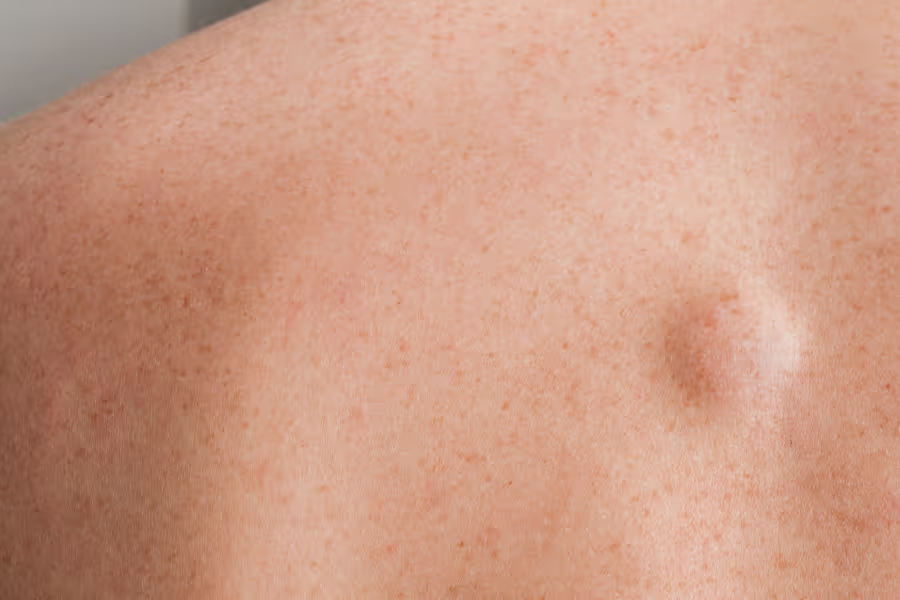
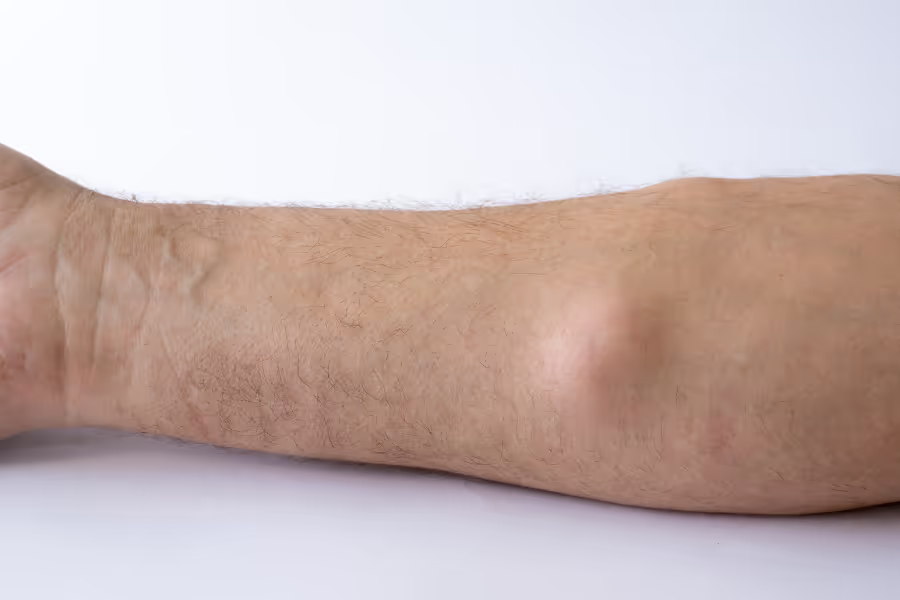
Lipoma excision is a minor surgical procedure where a lipoma—a soft, usually painless, benign lump made of fatty tissue under the skin—is removed.
Lipomas commonly appear on the neck, shoulders, back, arms, thighs, or torso. They tend to feel rubbery, move slightly under the skin, and grow slowly over time. While most are harmless, some become uncomfortable, noticeable, or confusing to diagnose without removal.
In a lipoma excision, the surgeon makes a small incision over the lump, gently separates the lipoma from the surrounding tissue (it’s often encapsulated), and removes it—usually in one piece. The incision is then closed with stitches. The goal is to remove the lump completely, relieve discomfort or cosmetic concern, and—when appropriate—send it to pathology to confirm it’s benign.
This procedure is usually considered when the lump is growing, painful or tender, restricting movement, located in an irritating spot, or when there’s any uncertainty about the diagnosis.
How much does private lipoma excision cost in Canada?
How we estimate surgical costs: Ranges are estimates drawn from our network of 100+ private clinics and surgeons, and they're intentionally broad. Two people seeking the same procedure can receive very different quotes depending on province, surgeon, facility fees, and case complexity. Published prices aren't always comparable either—some are complete bundles, others exclude consultation, imaging, or follow-up. Only the clinic can give you an exact, itemized quote.
Lipoma excision is usually a minor outpatient procedure, so pricing is often closer to “in‑clinic surgery” than full operating-room surgery. Costs vary mainly byLipoma excision is a minor soft-tissue procedure, so costs are generally lower than major surgeries—but they vary widely based on size, depth, location, and complexity.
In Canada
Typical range: $300–$3,000 per lipoma
Why the range?
- Small, superficial lipoma (easy access, local anesthetic only): $300–$1,200
- Medium or deeper lipoma (requires more dissection, sedation): $1,200–$2,000
- Large, deep, or complex lipoma (near nerves/vessels, longer procedure, OR setting): $2,000–$3,000+
In the United States
Typical range: $1,500 - $6,800+
Why the range?
- Simple office-based excision (local anesthetic): $1,500 - $2,500
- Moderate complexity (sedation, larger lipoma): $2,500 - $4,000
- Complex or hospital-based (deep location, general anesthesia): $4,000 - $7,000+
Why does the price vary so much?
Factors that change the cost:
- Size and depth: Larger or deeper lipomas take longer and may need imaging guidance or more complex closure
- Location: Face, neck, or areas near nerves/vessels often cost more (precision, cosmetic concern)
- Anesthesia type: Local only vs. sedation vs. general anesthesia
- Setting: In-office procedure room vs. day surgery centre vs. hospital OR
- Surgeon specialty: Plastic surgeon, dermatologist, or general surgeon—fees vary
- City/province or state: Urban centres and high-cost regions charge more
- Number of lipomas: Removing multiple lipomas in one session may be discounted per lesion
What's usually included
Most private quotes bundle:
- Surgeon fee (consultation, procedure, immediate follow-up)
- Anesthesia costs (local, sedation, or anesthesiologist if needed)
- Facility fees (procedure room or OR time, nursing, equipment)
- Surgical materials (sutures, dressings, sterile supplies)
- Pathology (sending the lipoma to confirm it's benign—often included, sometimes extra)
- Early follow-up visits (wound check, stitch removal if non-dissolvable)
What's usually not included
Often billed separately or handled elsewhere:
- Pre-op tests or imaging (ultrasound, MRI if needed to assess depth)
- Prescription medications after discharge (pain meds, antibiotics if prescribed)
- Travel and accommodation if you go out-of-province or to the U.S.
- Extended follow-up or scar revision (if complications arise or cosmetic touch-up needed later)
- Scar treatments (silicone sheets, laser, etc.—usually separate)
Insurance and payment notes
Private or workplace insurance
- Some extended health plans cover medically necessary lipoma removal (e.g., painful, restricting movement, rapid growth)
- Cosmetic-only removal is usually not covered
- Check your policy and ask for a detailed invoice with procedure codes
Financing plans
- Many private clinics offer monthly payment options or work with third-party medical financing
Lipoma excision steps: what to expect
Lipoma excision is usually a short outpatient procedure. Many removals take 20–60 minutes depending on the lipoma’s size, depth, and location. Expect to be at the clinic or day surgery unit for a few hours total (check‑in, procedure, and short recovery).
Basic steps (start to finish)
1. Check‑in and planning
- You arrive, complete forms, and change if needed.
- The surgeon confirms the location of the lump, examines it, and marks the site.
- You’ll review the plan, expected scar, and whether the lump will be sent to pathology.
2. Anaesthesia
Most lipomas are removed with:
- Local anesthetic (freezing injections around the lump), sometimes
- Local + light sedation if the area is sensitive or the lipoma is larger/deeper
You should not feel sharp pain—mostly pressure or tugging.
3. Position and prep
- You’re positioned to give access to the area (back, shoulder, arm, thigh, etc.).
- The skin is cleaned with antiseptic and covered with sterile drapes.
4. Incision
- The surgeon makes an incision over or near the lipoma.
- The cut is often placed to minimize visible scarring when possible (depending on location).
5. Removing the lipoma
- The surgeon gently separates the lipoma from surrounding tissue.
- If it’s encapsulated, it may come out in one piece; if large, it may be removed in sections.
- Bleeding is controlled carefully.
6. Closure and dressing
- The area is rinsed and closed with sutures:
- Deep dissolvable stitches may be used, plus
- Skin stitches or skin glue/steri‑strips on the surface
- A dressing is applied; sometimes a pressure dressing helps reduce bruising/seroma.
7. Early recovery (same-day)
- You’ll be monitored briefly, then go home the same day.
- You’ll get instructions on wound care, activity limits, pain control, and when to return for stitch removal (often 7–14 days, depending on location).
What you’ll likely feel afterward
- Mild soreness, bruising, and swelling for a few days
- Tightness around the incision
- Temporary numbness or tingling near the site (especially if nerves were stretched)

What can I expect from the lipoma excision recovery process?
Your exact recovery plan comes from your surgeon, but here’s the general idea. Recovery depends on the lipoma’s size, depth, and location (e.g., back vs. face vs. near a joint). The main goals are to protect the incision, prevent fluid build-up, and minimize scarring.
First few days
What it feels like
- Soreness and tightness around the incision
- Bruising and swelling
- Mild oozing onto the dressing can happen early on
- If it was large/deep: more tenderness and a “pulled” feeling with movement
Main goals
- Control pain and swelling
- Protect the incision and keep it clean/dry
- Prevent bleeding and reduce risk of a seroma (fluid pocket)
Typical instructions
- Use acetaminophen/ibuprofen as directed (sometimes stronger meds for 1–2 days)
- Limit stretching or heavy use of the area (especially if on the shoulder, thigh, or near a joint)
- Keep the dressing clean and dry; follow shower instructions
- If you have a pressure dressing: keep it in place as instructed
- Short, gentle movement is usually encouraged (unless told otherwise)
Weeks 1–2
What it feels like
- Swelling improves but can come and go
- Itching as the skin heals
- Tenderness if you bump the area
- If stitches are present: mild pulling
Main goals
- Let the skin seal and stitches do their job
- Reduce swelling and bruising
- Watch for early signs of infection or fluid buildup
Typical steps
- Stitches removed around 7–14 days if they aren’t dissolvable (location-dependent)
- Gradually return to light daily activities
- Avoid swimming/hot tubs until the incision is fully closed
- Scar care may start once the incision is sealed (surgeon-dependent)
Weeks 3–6
What it feels like
- Less pain; more stiffness or “lumpiness” under the scar as healing tissue forms
- Some numbness or tingling near the incision (often temporary)
- A firmer ridge under the incision is common early scar tissue
Main goals
- Restore normal movement (if near a joint)
- Prevent thick/raised scars
- Return to normal activity without reopening the wound
Typical steps
- Resume exercise gradually as cleared (avoid direct pressure/friction on the scar at first)
- Start scar management if recommended:
- silicone gel/sheets
- gentle scar massage
- sun protection (important to prevent darkening)
Beyond 6–12 weeks
What it feels like
- Scar continues to fade and soften (often over 6–12 months)
- Residual numbness may linger, especially if the lipoma was large or near small skin nerves
- Most people are back to full activities
Main goals
- Full return to sport/work
- Scar maturation and cosmetic improvement
- Monitor for recurrence (uncommon if completely removed)
Red flags anytime (call your surgeon/seek urgent care)
- Fever, chills, or feeling unwell
- Increasing redness, warmth, worsening pain, or pus-like drainage
- Rapid swelling, a tense fluid pocket, or persistent leaking (possible seroma/hematoma)
- Wound opening or bleeding that won’t stop with firm pressure
- New weakness, severe numbness, or loss of function near the area
What is Surgency?
As a family doctor in the public system, I believe transparency is a form of care. I created Surgency to help my patients struggling on long waitlists who wanted to understand all their options for timely medical attention.
Surgency is a free resource designed to empower and educate—helping you understand private pathways and find accredited surgeons within Canada. I hope Surgency brings you clarity.
Dr. Sean Haffey

Why do people get lipoma excision surgery done privately?
Shorter wait times
Time matters when a lump is growing, painful, catching on clothing, or constantly on your mind. Instead of waiting months for a consult and procedure slot, private clinics can often book excision within weeks. That means less time with discomfort or irritation—and faster closure if you want it checked by pathology.
Choice and control
- Choose a surgeon experienced in minor soft‑tissue procedures and scar‑minimizing techniques
- Pick a setting that fits your needs (in‑clinic procedure room vs. day surgery, local anesthesia options)
- Plan around work, travel, and caregiving—often with more flexible scheduling
Peace of mind
You know exactly who will remove it, when, and what the plan is. Clear timelines and an itemized quote make it easier to arrange time off, transportation (if needed), and follow‑up visits. Many people also value the ability to get a pathology result sooner.
Preventing further decline
- Function and comfort: Removes lumps that rub, press on nerves, or limit movement—so you can return to normal activity sooner.
- Skin and irritation: Avoids repeated friction, inflammation, or tenderness in high-contact areas (waistbands, bras, shoulder straps).
- Mental load: Reduces the ongoing stress of watching a lump change and wondering when you’ll finally be able to deal with it.
Choosing a surgeon and clinic
Choosing your surgeon is one of the benefits of going private. Here’s how to choose wisely for lipoma excision.
What to look for
Experience and volume
- Ask how often they remove lipomas or soft‑tissue lumps (not just “minor procedures” in general).
- If your lipoma is large, deep, recurrent, or in a sensitive area (face/neck/armpit/groin/near a nerve), ask if they regularly handle more complex soft‑tissue excisions.
Credentials and training
- Confirm they’re licensed with the provincial college (CPSO, CPSBC, CPSA, etc.).
- Depending on location/complexity, look for:
- FRCSC general surgeon (common for trunk/limbs, deeper lipomas)
- FRCSC plastic surgeon (often best for cosmetically sensitive areas and scar optimization)
- Dermatologist with procedural expertise (often for smaller, superficial lumps)
Diagnostic confidence (making sure it is a lipoma)
- Ask how they confirm the diagnosis:
- Clinical exam vs. ultrasound/MRI if needed
- What features would prompt imaging or referral (fast growth, firmness, fixation, deep location)
- Confirm whether the tissue will be sent to pathology (usually yes) and when you’ll get results.
Safety and outcomes
Ask about:
- Infection rate
- Bleeding/hematoma risk
- Seroma risk (especially for larger removals)
- Recurrence rate (rare if fully removed, higher if incomplete or multiple lipomas)
- Numbness risk if the lipoma is near small skin nerves
Facility and sterility standards
- For in‑clinic procedures: confirm sterile technique, emergency protocols, and who’s present (nurse/assistant).
- For larger/deeper cases: choose an accredited surgical centre (e.g., Accreditation Canada, CAAASF, or equivalent provincial body).
Follow‑up and aftercare
Make sure you’ll get:
- Clear written wound-care instructions
- A plan for showering, activity limits, and return to work/exercise
- Easy access to the clinic if you have swelling, drainage, or concerns
- Stitch removal timing (if non‑dissolving) and scar-care guidance
Questions to bring to your consultation
About the surgeon and plan
- How many lipoma (or soft‑tissue mass) excisions do you do each year?
- Do you think this is definitely a lipoma, or should I get an ultrasound first?
- Will you remove the whole capsule, and what’s the recurrence risk?
Technique, scarring, and pathology
- Where will you place the incision, and what scar should I expect?
- Will the specimen be sent to pathology? When do results come back?
- If it’s larger/deeper, how will you reduce the risk of seroma?
Anaesthesia and safety
- Is this done under local only, or local + sedation / general anesthesia?
- What pain control do you recommend after?
- If there’s an emergency, what is your transfer plan?
Recovery and aftercare
- When can I return to:
- Desk work?
- Lifting/manual work?
- Gym/sports?
- Who do I contact if I notice redness, drainage, or a fluid pocket?
Costs and logistics
- What exactly is included in the quote (consult, procedure, facility, anesthesia, dressings, follow-ups, pathology)?
- What might cost extra (imaging, sedation/anesthesiologist, drains, additional follow-ups, scar treatment)?
- If I’m traveling, which follow-ups can be virtual, and which need in-person visits?
If you're currently interested in private surgical pathways within Canada, you can click here for a list of providers.
Frequently asked questions
How do I know if lipoma excision is right for me?
Lipoma excision is usually not the first step if a lump is clearly a benign, stable lipoma. It’s something you and a clinician consider when the lipoma is bothering you, changing, or uncertain.
Signs lipoma excision might be right for you
If the lump is causing symptoms or problems
- Pain or tenderness, especially when pressed or bumped
- Irritation from clothing (waistbands, bra straps, backpack straps)
- It’s in a spot that limits movement or is uncomfortable when you sit/lie down (near joints, back, thigh, shoulder)
- It’s affecting sleep, work, sport, or daily comfort
If it’s changing
- Noticeable growth over time
- Feels like it’s becoming firmer or more “stuck” to deeper tissues
- New skin changes over it (redness, recurrent inflammation)
If there’s diagnostic uncertainty (you want clarity)
Excision is often recommended when:
- The diagnosis isn’t fully certain on exam
- Imaging suggests it’s not a simple superficial lipoma
- You want it removed and sent to pathology for confirmation
If you’ve tried “watch and wait” and it’s still on your mind
Some lipomas are harmless but create constant anxiety or self-consciousness. If it’s affecting your peace of mind and the surgeon agrees it’s safe to remove, excision can be a reasonable choice.
When it might not be time yet
Surgery may not be right now if:
- The lump is small, soft, painless, and stable
- It isn’t interfering with movement, clothing, or activities
- You’re comfortable monitoring it and there’s high confidence it’s a lipoma
- You have medical factors that increase risk (e.g., bleeding issues) and the lipoma isn’t causing problems
When to get assessed sooner (don’t just assume it’s a lipoma)
Before jumping to excision, see a clinician promptly if the lump is:
- Rapidly growing
- Hard, irregular, or fixed in place
- Deep (not easily movable under the skin)
- Associated with unexplained weight loss, fevers, or persistent night pain
- Larger than about 5 cm (rule-of-thumb threshold that often warrants imaging)
If a lump is clearly a lipoma but it’s painful, growing, irritating, limiting your movement, cosmetically bothersome, or causing uncertainty, lipoma excision can be a reasonable next step. The decision should be made with a surgeon who explains the trade-offs—scar, infection/bleeding risk, possible numbness, and the recovery plan.
Do I need a referral?
Yes and no—you can reach out to any of the private surgeons listed on Surgency without a referral. Their intake teams are happy to answer questions, explain what they treat, share pricing ranges, and walk you through next steps.
However, to book a formal consultation with the surgeon, you'll typically need a referral from your family doctor or nurse practitioner. Don't have one? Many of the clinics can help coordinate a virtual GP appointment to get the referral paperwork sorted. All surgeons listed on Surgency offer virtual initial consultations, so you don't need to travel until you and the surgeon have agreed on a plan.
Before your consultation, expect the clinic to request relevant medical records and recent diagnostic imaging (X-ray, MRI, CT, ultrasound, lab work, etc.). Having these ready speeds up the process and lets the surgeon give you specific guidance on your very first call.
How do I prepare for lipoma excision?
Your surgeon will give you a plan that fits you, but here’s the basic roadmap. Good prep helps reduce bleeding, infection risk, and makes the day smoother.
Health and medication prep
- Tell your team everything you take: prescription meds, OTC painkillers, vitamins, and supplements.
- Your surgeon may ask you to pause certain items that increase bleeding, such as:
- Blood thinners (only stop if your prescriber approves)
- Anti‑inflammatories (e.g., ibuprofen/naproxen) for a period before surgery
- Herbal supplements that affect bleeding (e.g., garlic, ginkgo, ginseng, fish oil)
- Smoking/vaping nicotine: aim to quit at least 4 weeks before (and after) if possible—this improves healing and lowers infection risk.
- General health: prioritize sleep, hydration, and simple balanced meals in the week leading up.
Site-specific prep (where the lipoma is)
- If the lipoma is in an area that rubs (waistline, bra line, shoulder strap area), plan to wear loose, non‑irritating clothing afterward.
- If it’s near a joint (shoulder, elbow, knee), plan for a few days of reduced range of motion and avoid heavy lifting until cleared.
Logistics and home setup
- Ride home: if you’re having sedation or general anesthesia, you’ll need someone to drive you (and ideally stay with you for the first 24 hours).
- Recovery supplies: have at home:
- clean gauze/dressings if instructed
- acetaminophen/ibuprofen (if allowed)
- ice pack (if recommended)
- a place to rest with pillows for support
- Work/life planning: consider time off if your job involves lifting, repetitive movement, or friction over the incision site.
Surgery-day prep
Fasting (if sedation/general anesthesia)
- Follow anesthesia rules exactly:
- no food after the cutoff time they give you
- clear fluids only up to the allowed time (if permitted)
Skin and clothing
- Shower as instructed (often the night before or morning of).
- Do not shave over the lump—small cuts increase infection risk.
- Wear loose, easy-on clothing that won’t rub the surgical area.
What to bring
- Photo ID and health card
- Your requisition/consult notes (if you have them)
- A written medication/supplement list
- If you’ll be sedated: a responsible adult to accompany you home
How much does Surgency cost?
Surgency is free for patients, funded for by surgeons.
Surgeons—who meet our listing criteria—pay a flat fee to list on the Surgency platform. To maintain objectivity, there are no commissions, referral fees, nor any ranking or recommending one surgeon over another.
Surgency is patient-first. Our goal is to make the process of finding a private surgeon as simple as possible. You choose who to contact. Learn more in our Advertising Policy.
What are the risks if I delay or don't get a lipoma excision?
Your situation depends on the lump’s size, location, symptoms, and how confident your clinician is that it’s a simple lipoma. Most lipomas are benign and can be safely observed—but there are a few real downsides to delaying or not removing one. Consult your doctor or a surgeon for a better understanding of your situation.
Main risks of delaying or not having lipoma excision (when it’s symptomatic or changing)
- It may keep growing (and get harder to remove later)
- Lipomas often grow slowly, but some become large over years.
- Larger/deeper lipomas can mean a bigger incision, more dissection, and a more noticeable scar.
- Ongoing discomfort and irritation
- If it rubs on clothing (waistband/bra strap) or presses when you sit/lie down, symptoms can persist.
- Lipomas near nerves or in tight spaces can cause aching, tenderness, or pressure symptoms.
- Cosmetic concern often increases over time
- As it enlarges, it may become more visible and harder to ignore, affecting confidence and clothing choices.
- Repeated inflammation or “flare-ups”
- Some lumps get intermittently sore, irritated, or inflamed from friction or minor trauma, even if they aren’t dangerous.
- Missing something that isn’t a simple lipoma (the important one)
Most “lipomas” are harmless, but if a lump is not clearly a lipoma, delaying evaluation (and possible removal/biopsy) can delay diagnosis of a more serious condition. This is why changing or atypical lumps should be assessed.
When “watch and wait” can be reasonable
Delaying excision often makes sense if the lump is:
- Small, soft, mobile, painless
- Not growing
- In a low‑irritation spot
- Clinically consistent with a lipoma, and your doctor isn’t concerned
In that case, monitoring and taking note of size/symptoms is common.
When it’s probably not wise to keep delaying
You and your clinician should take a closer look (often with imaging or referral) if the lump is:
- Rapidly growing
- Firm, irregular, or fixed to deeper tissue
- Deep (not easily pinched/moved under the skin)
- Painful without clear irritation, or associated with new numbness/weakness
- Larger than about 5 cm (a common threshold for imaging)
- Associated with systemic symptoms (unexplained weight loss, fevers)
What are the risks involved with lipoma excision surgery?
Every surgery has risks. Your personal risk depends on your overall health, the lipoma’s size/depth/location, and how well you follow wound-care instructions. Review your specific situation with your doctor or surgeon.
Common and usually temporary
These are annoying but expected for many people:
- Pain, swelling, bruising around the incision
- Mild bleeding/oozing in the first 24–48 hours
- Tightness or pulling with movement near the incision
- Temporary numbness or tingling near the scar (small skin nerves can be stretched or cut)
- Scar redness, itching, or sensitivity as it heals
Less common risks
These happen less often but are important to know about:
- Infection (skin or deeper tissue)
- Wound healing problems (opening, delayed healing), especially with diabetes or smoking
- Hematoma (collection of blood) or seroma (fluid pocket), more likely with larger/deeper lipomas
- Noticeable scarring (raised/hypertrophic or widened scars), particularly on the chest/shoulders/back
- Persistent tenderness or “lumpiness” from scar tissue
- Incomplete removal or recurrence (uncommon, but can happen—especially if the lipoma is not well-encapsulated or has multiple lobules)
Uncommon but more serious
Rare, but you should know they exist:
- Nerve injury causing lasting numbness, burning pain, or weakness (risk depends heavily on location)
- Damage to nearby structures (blood vessels, muscle) in deep or anatomically complex areas
- Significant bleeding requiring urgent treatment (rare)
- Unexpected pathology (the mass is not a simple lipoma), which can change follow-up or treatment
How you can lower your risk
You can’t get risk to zero, but you can help:
- Stop nicotine (smoking/vaping) before and after surgery if you can
- Share a full list of medications/supplements, especially blood thinners and anti-inflammatories
- Follow wound-care instructions: keep dressings clean/dry, avoid soaking until cleared
- Avoid heavy lifting, stretching, or friction over the incision until healed
- Attend follow-ups (stitch removal, wound checks)
Red flags to call about
Contact your care team or seek urgent help if you notice:
- Fever/chills or feeling unwell
- Increasing redness, warmth, worsening pain, or pus-like drainage
- Rapid swelling or a tense, expanding lump (possible hematoma/seroma)
- Bleeding that won’t stop with firm pressure
- New or worsening numbness/weakness beyond what you were told to expect
I still have questions
If you still have questions, then feel free to contact us directly.





.avif)