


.png)


What is hydrocele surgery?
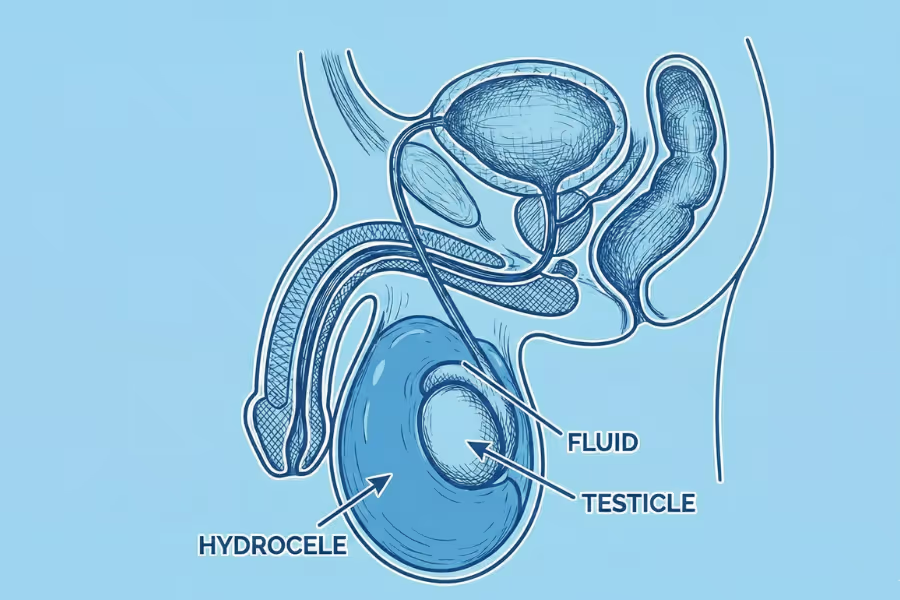
Hydrocele surgery is a procedure to fix a hydrocele—a buildup of fluid in the thin sac that surrounds the testicle. Think of it like a water balloon slowly forming around the testicle inside the scrotum. This extra fluid can make one side of the scrotum look swollen or feel heavy, and it may cause discomfort, especially with activity or at the end of the day.
During surgery, the goal is to drain the fluid and prevent it from coming back. There are two main approaches:
Hydrocelectomy: Through a small incision in the scrotum or lower abdomen, the surgeon opens the fluid‑filled sac, drains it, and either removes or reshapes the lining so fluid can't pool again.
Aspiration with sclerotherapy (less common): A needle drains the fluid, and a solution is injected to help seal the sac walls together. This is simpler but has a higher chance of the hydrocele returning.
Most hydrocelectomies are done as same‑day surgery under general or spinal anaesthesia. The aim is to get rid of the swelling, ease that heavy or achy feeling, and return the scrotum to a more normal size and comfort level.
How much does hydrocele surgery cost in Canada?
Costs can vary a lot, so always ask each clinic for a written, itemized quote. Here’s a general idea.
How much does hydrocele surgery cost with a Canadian private surgeon?
Prices change by province, clinic, whether one or both sides are done, and how long the OR time is.
- Many private urology centres in Canada charge roughly $5,500–CA$11,000 for hydrocelectomy.
- Doing both sides or needing extra time can push the price higher.
How much does it cost in the United States on average?
In the U.S., charges are usually higher once hospital and anaesthesia bills are included.
- Total costs can run from around CA$7,200–CA$16,800+, depending on:
- Hospital vs outpatient centre
- Surgeon fees
- How complex the case is
What’s usually included in the cost?
- Surgeon fee (and sometimes assistant)
- Anaesthesia and monitoring (usually general)
- Facility/OR fees, nursing, and standard supplies
- Immediate recovery care after surgery
- One routine post‑op visit to check healing
What’s often not included?
These parts may be billed separately or not covered in the package:
- Initial consult visit(s)
- Pre‑op tests (ultrasound, bloodwork, ECG, etc.)
- Extra OR time if the case runs longer than booked, or an unplanned overnight stay
- Prescriptions after surgery (pain meds, antibiotics, stool softeners)
- Any extra imaging or follow‑up beyond the standard visit(s)
- Travel and accommodation if you’re coming from another province or country
Tips to compare quotes
- Ask for line items: surgeon, facility, anaesthesia, and any special equipment.
- Confirm whether follow‑up visits are included, and what happens if you need more time in the OR or a second procedure.
Hydrocele surgery: what to expect
Timings vary a bit by clinic and whether one or both sides are done, but here’s the general idea.
How long does hydrocele surgery take?
- Operating time: usually about 30–60 minutes for a straightforward hydrocelectomy.
- If both sides are done, it can be a bit longer.
- Total time at the centre: expect a few hours for check‑in, anaesthesia, surgery, and recovery before you go home.
Basic steps (what actually happens)
1. Check‑in and plan: You arrive, change into a gown, and meet the nurse, anaesthesiologist, and surgeon. They review your history and ultrasound, confirm which side(s) has the hydrocele, and answer last‑minute questions.
2. Anaesthesia: Most people get general anaesthesia, so you’re asleep and feel nothing. Some centres may use a spinal or local with sedation, depending on the case and your health.
3. Position and prep: You lie on a padded table. The scrotum and nearby skin are cleaned with antiseptic and covered with sterile drapes. The testicle is gently positioned so the surgeon can reach the hydrocele sac.
4. Incision and exposing the hydrocele: The surgeon makes a short incision in the scrotal skin over the swollen side. They carefully go down to the fluid‑filled sac around the testicle, protecting blood vessels and structures.
5. Draining and fixing the sac: The hydrocele sac is opened and the fluid is drained. Then, depending on the technique, the sac is either partly removed or turned and stitched in a way that stops fluid from easily collecting again.
6. Closing up: Bleeding is checked and controlled. The layers are closed with dissolving stitches, and a small dressing is placed. Supportive underwear or a scrotal support is usually put on to hold things in place.
7. Wake‑up and instructions: You wake up in recovery with nurses monitoring you. Once you’re stable, you get simple instructions about support, icing, activity limits, and pain meds, and you usually go home the same day with a ride.

What can I expect from the recovery process?
Everyone heals a bit differently. Always follow your surgeon's plan. Hydrocele surgery is usually a same‑day procedure, but the area can be tender and swollen for a while.
Days 1–3
Reality check: the scrotum often looks bigger, bruised, and feels tight or heavy. Walking can be awkward.
- Goals: control pain and swelling; protect the incision; keep things clean and dry.
- What you’ll do: short walks around the house, wear snug briefs or a jockstrap, rest with the scrotum supported on a small towel, and use ice packs 15–20 minutes at a time (with fabric between ice and skin). No heavy lifting or straining.
Days 4–7
Still annoying, but usually improving.
- Goals: move a bit more without pulling on the incision.
- What you’ll do: light daily tasks and desk/school work if you feel up to it, keep wearing support underwear, and take quick showers if your surgeon says it’s okay. Still avoid baths, hot tubs, and sports.
Weeks 2–4
This is the “steady” phase.
- Goals: get back to normal routines without flare‑ups of swelling.
- What you’ll do: gradually add easy cardio like walking or light cycling. Many people can drive and do non‑physical work. Heavy lifting, sprinting, and contact sports are usually still on hold until cleared. Sexual activity is usually okay once your surgeon gives the green light and you feel comfortable.
Weeks 5–8
Most people are close to full comfort in daily life.
- Goals: rebuild confidence with exercise and sport.
- What you’ll do: ease back into running, gym workouts, and sport drills. Increase slowly; if you feel sharp pulling or an ache that lingers into the next day, back off and let things settle.
Red flags – call your care team or go to urgent care
- Fever, chills, worsening redness, or pus‑like drainage from the incision
- Scrotum suddenly much larger, rock‑hard, or extremely painful
- Persistent vomiting, trouble urinating, or burning that’s getting worse
- Calf pain/swelling or chest pain/shortness of breath
Overall, expect some bruising and weirdness at first, but with support, rest, and following instructions, most people are back to regular life over a few weeks.
What is Surgency?
As a family doctor in the public system, I believe transparency is a form of care. I created Surgency to help my patients struggling on long waitlists who wanted to understand all their options for timely medical attention.
Surgency is a free resource designed to empower and educate—helping you understand private pathways and find accredited surgeons within Canada. I hope Surgency brings you clarity.
Dr. Sean Haffey

Why do Canadians get hydrocele surgery done privately?
Shorter wait times
- Public wait lists for urology consults, ultrasounds, and OR time can take months.
- Private clinics can often arrange assessment and surgery within days or weeks, not months.
- That means less time dealing with scrotal swelling, heaviness, and awkwardness at school, work, or the gym.
More choice and control
- You can choose an experienced urologist who regularly does hydrocelectomies.
- You can pick the clinic location and line surgery up with exams, work projects, or sport seasons.
- There’s usually more room to discuss anaesthesia preferences and specific concerns (appearance, return to activity, etc.).
Peace of mind
- You know who is doing the procedure, what they plan to do, and when it will happen.
- Clear timelines and an itemized quote make it easier to organize time off, travel, and support at home.
- Direct messaging and faster sharing of scope images and reports reduce the “waiting in the dark” feeling.
Preventing ongoing problems
- A persistent hydrocele can mean constant swelling, a dragging or heavy feeling, and self‑consciousness in clothes or during sport.
- Having it fixed sooner can reduce repeated clinic/ER visits for reassurance and let you move on with a more “normal” scrotal size and comfort.
Choosing a surgeon and clinic
Getting to choose your urologist is one of the main benefits of going the private route. Hydrocele surgery is pretty routine, but you still want someone who does it well and runs an organized program.
What to look for
Experience and volume
- Ask how many hydrocelectomies they do per month or year.
- Surgeons who see a steady flow of these cases usually have smoother routines and fewer surprises.
Credentials and training
- Check they’re licensed with your provincial college (CPSO, CPSBC, CPSA, CMQ, etc.).
- Look for an FRCSC‑certified urologist; extra training in men’s health or andrology is a bonus.
Technique and approach
- Ask which technique they use (e.g., Jaboulay, Lord) and why they prefer it.
- Ask how they handle bilateral hydroceles and what they do to reduce recurrence and cosmetic issues (shape/size).
Outcomes and safety
- Ask about:
- Infection and haematoma (blood‑clot) rates
- Hydrocele recurrence rates
- How often patients need to come back unexpectedly in the first 30 days
- A good surgeon should be comfortable talking about their recent results.
Pre‑op and after‑care plan
- There should be a clear plan for:
- Pre‑op tests (ultrasound, bloodwork, meds to hold)
- Pain‑control strategy
- Written after‑care instructions (support underwear, activity limits, showering)
- How to reach them for urgent questions and when follow‑ups happen
Facility quality
- Prefer an accredited surgical centre or hospital (e.g. Accreditation Canada, CAAASF).
- Ask about anaesthesia coverage, sterilisation standards, and what happens if you ever need hospital transfer.
Good questions to ask at your consult
- How many hydrocele surgeries do you perform each year?
- What technique do you recommend for me and why?
- Is this a same‑day procedure in your program, or could I stay overnight?
- When can I go back to school/desk work, sports, and the gym?
- What exactly is included in my quote, and what could change the price?
- How do I reach you or your team if I’m worried after surgery?
A high‑quality program is open about results, clear on the plan, easy to contact, and fully transparent about costs.
If you're currently interested in private surgical pathways within Canada, you can click here for a list of providers.

Frequently asked questions
How do I know if hydrocele surgery is right for me?
Deciding on hydrocele surgery is about how much it bothers you, what the ultrasound shows, and what your goals are. Your urologist will help you determine if surgery makes sense.
Hydrocele surgery might be right for you if:
- You have obvious swelling on one or both sides of the scrotum that’s not going away.
- There’s a heavy, dragging, or achy feeling, especially by the end of the day or with sports.
- Supportive underwear, rest, and basic pain meds haven’t made a real difference.
- An exam and ultrasound clearly show a hydrocele, and it matches what you feel (no surprise hernia or other issue).
- The size or look of the hydrocele makes you feel self‑conscious in clothes, at the gym, or with a partner.
- The swelling is big enough that it gets in the way of school, work, or activities (running, jumping, certain jobs).
When hydrocele surgery might not be right yet
- The hydrocele is small, not painful, and you barely notice it.
- It was just found on ultrasound and you had no symptoms.
- There’s an untreated infection, or you’re not cleared for anaesthesia right now.
If your symptoms and the ultrasound line up—and simpler stuff hasn’t solved the problem—hydrocele surgery can be a sensible next step. Your urologist can explain if now is the right time or if watchful waiting with check‑ins is safer.
Do I need a referral?
Yes and no—you can reach out to any of the private surgeons listed on Surgency without a referral. Their intake teams are happy to answer questions, explain what they treat, share pricing ranges, and walk you through next steps.
However, to book a formal consultation with the surgeon, you'll typically need a referral from your family doctor or nurse practitioner. Don't have one? Many of the clinics can help coordinate a virtual GP appointment to get the referral paperwork sorted. All surgeons listed on Surgency offer virtual initial consultations, so you don't need to travel until you and the surgeon have agreed on a plan.
Before your consultation, expect the clinic to request relevant medical records and recent diagnostic imaging (X-ray, MRI, CT, ultrasound, lab work, etc.). Having these ready speeds up the process and lets the surgeon give you specific guidance on your very first call.
How do I prepare?
Your urologist’s instructions always come first—if their plan is different from this, follow them. Think of this as a simple checklist to make surgery and recovery smoother.
Health prep
Stop nicotine: Smoking/vaping slows healing and increases infection risk. Quitting 4+ weeks before surgery helps a lot.
Itemize your meds: Tell your team about every medication and supplement (prescriptions, Advil/ibuprofen, aspirin, vitamins, herbals). They may ask you to pause blood thinners, some anti‑inflammatories, or certain supplements that increase bleeding—only if your doctor says so.
General health: Light cardio (like walking), decent sleep, and balanced meals with some protein all make recovery easier.
Tests: Expect at least an ultrasound and bloodwork; other tests depend on your age and health.
Home setup
Support gear: Have snug briefs or a jockstrap ready for 1–2 weeks after surgery, plus ice packs and loose sweatpants/joggers that fit over the dressing.
Bathroom: Stock gentle soap, clean towels, and a small bin or bag for used dressings.
Comfort zone: Set up a spot to rest with extra pillows (to support the scrotum/hips), easy access to water, your phone + charger, and your meds.
Support and logistics
Ride and helper: Arrange a drive home—you cannot drive yourself—and try to have someone stay with you the first night.
School/work: Plan a few lighter days off. Avoid heavy lifting and intense physical jobs for a bit (your surgeon will give a timeline).
Travelling: If you’re coming from out of town, ask which follow‑ups can be virtual and how long you should stay nearby after surgery.
Surgery‑day details
Fasting: Follow anaesthesia rules exactly (often no solid food after midnight, clear fluids only up to a set time).
Skin prep: Shower the night before and the morning of surgery. No lotions or powders near the groin. Don’t shave—your team will do any hair trimming if needed.
What to bring: Health card/ID, a list of medications, snug briefs or a jockstrap, and loose, easy‑on clothing for going home.
How much does Surgency cost?
Surgency is free for patients, funded for by surgeons.
Surgeons—who meet our listing criteria—pay a flat fee to list on the Surgency platform. To maintain objectivity, there are no commissions, referral fees, nor any ranking or recommending one surgeon over another.
Surgency is patient-first. Our goal is to make the process of finding a private surgeon as simple as possible. You choose who to contact. Learn more in our Advertising Policy.
What are the risks involved?
Your personal risk depends on your health, how big the hydrocele is, whether one or both sides are done, the exact technique your surgeon uses, and how closely you follow after‑care. Go over your own situation with your urologist.
Common and usually temporary
These are the things most people notice:
- Pain, swelling, and bruising in the scrotum for a few days to a couple of weeks
- A heavy or tight feeling when you walk or stand
- Mild numbness or tingling near the incision
- Nausea, grogginess, or constipation from anaesthesia and pain meds
- Small, firm “healing lumps” under the skin that slowly soften over time
Less common problems
These happen less often, but you should know about them:
- Wound infection or skin irritation (redness, warmth, or oozing at the cut)
- Haematoma—a pocket of blood—or extra fluid that makes the area look very puffy
- Persistent ache or sensitivity that takes longer than expected to calm down
- The hydrocele coming back (recurrence), needing another procedure in some cases
Uncommon but important risks
These are rare, but more serious:
- Significant bleeding that needs a return visit or another procedure to drain it
- Injury to structures around the testicle, which could, in extreme cases, affect testicular size or function
- Blood clots in the legs or lungs (DVT/PE) — not common in healthy people, but possible after any surgery if you are very inactive
How you can lower your risk
You can’t make risk zero, but you can tilt the odds your way:
- Follow pre‑op instructions: nicotine stop, medication changes, fasting, and antiseptic showers
- Wear supportive underwear, use ice as directed, and avoid heavy lifting or straining early on
- Keep the incision clean and dry; take antibiotics and pain meds exactly as prescribed
- Walk short distances every day (as allowed) to keep blood moving and reduce clot risk
Know red flags
fever or chills, spreading redness or pus, rapidly growing swelling, scrotum that suddenly feels rock‑hard and very painful, trouble urinating, calf pain, or shortness of breath. If these show up, contact your team or go to urgent care/ER.
Hydrocele surgery is a routine operation with a good safety record in experienced hands. Most side effects are mild and short‑lived; serious complications are uncommon.
What are the risks of delaying or not pursuing surgery?
Your situation depends on how big the hydrocele is, how much it actually bothers you, what the ultrasound shows, and what your goals are (comfort, confidence, sport, etc.). Talk specifics with your urologist. Here’s the general picture.
Main risks of delaying or not having hydrocele surgery
(when symptoms or size are significant)
Progressive symptoms and limits
A hydrocele is basically a “water balloon” of fluid around the testicle. If it keeps growing or staying big:
- Swelling, heaviness, and dragging discomfort can get worse.
- Sports, running, or even long days on your feet can feel awkward or sore.
- You may rely more on tight support garments or pain meds just to get through school, work, or training.
Harder problem to ignore (and treat) later
- A small hydrocele is usually simple to remove; a very large, long‑standing one can be trickier, with more stretched skin and tissue.
- The bigger it gets, the more room it takes in your clothes, and the more obvious the size difference may be.
- Long‑term discomfort can become a “habit” for your nervous system, so pain or sensitivity sometimes takes longer to settle even after it’s fixed.
Quality‑of‑life drag
- You might avoid certain sports, tight clothing, change rooms, or intimacy because you feel self‑conscious.
- Sitting, biking, or sleeping on your stomach can be uncomfortable.
- Constant awareness of the swelling can chip away at mood, focus, and confidence over time.
Medication‑related downsides
If you’re always using anti‑inflammatories or painkillers to “get by” instead of dealing with the root problem:
- Long‑term use can irritate your stomach or kidneys.
- You may end up with more clinic/ER visits just for reassurance when the swelling flares.
When watchful waiting can be reasonable
- The hydrocele is small, not painful, and you mostly forget it’s there.
- Ultrasound confirms it’s a simple hydrocele with no red‑flags.
- Supportive underwear and simple measures are enough, and you’re not changing your life around it.
- You and your urologist have a clear plan for check‑ins (exam, ultrasound, symptom review), and you’re comfortable with the trade‑offs.
When it’s usually not wise to keep delaying
You and your urologist should talk seriously about surgery if:
- There’s daily heaviness, ache, or embarrassment affecting school, sport, work, or relationships.
- The swelling is clearly enlarging over time or becoming lopsided in a way that really bugs you.
- You’ve had repeated visits for reassurance or pain, despite good conservative care.
Hydrocele surgery isn’t urgent for everyone, but if the swelling is big, persistent, and messing with your life, fixing it sooner can improve comfort and confidence and reduce the need for constant work‑arounds.
I still have questions
If you still have questions, then feel free to contact us directly.





.avif)