


.png)
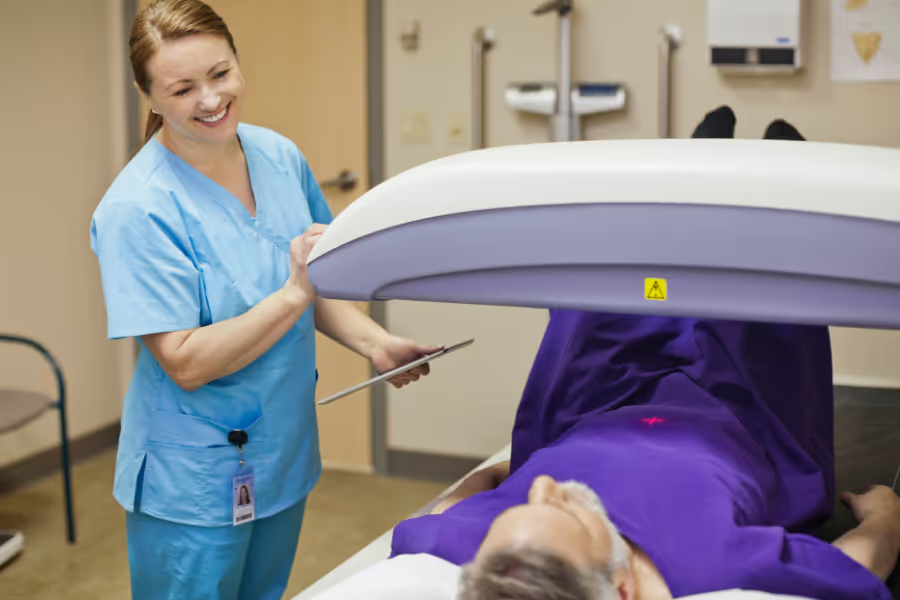

What is a DEXA scan?
A DEXA scan (dual‑energy X‑ray absorptiometry) is a bone density test that uses a very low dose of X‑rays to measure how strong your bones are—most commonly at the hip and spine. The result helps estimate your risk of osteoporosis and fractures.
DEXA can also provide detailed body composition analysis, breaking down:
- Total body fat percentage
- Lean muscle mass (by region and total)
- Visceral (abdominal) fat estimates
- Bone mineral content
A private DEXA scan means you book the test at an accredited, fee‑for‑service imaging clinic instead of waiting for a publicly funded appointment. The scan itself is the same type of test—the main difference is timing, scheduling, and convenience.
How much does a private DEXA scan cost in Canada?
How we estimate surgical costs: Ranges are estimates drawn from our network of 100+ private clinics and surgeons, and they're intentionally broad. Two people seeking the same procedure can receive very different quotes depending on province, surgeon, facility fees, and case complexity. Published prices aren't always comparable either—some are complete bundles, others exclude consultation, imaging, or follow-up. Only the clinic can give you an exact, itemized quote.
Private DEXA pricing in Canada varies mainly by what you’re scanning (bone density vs. body composition), the clinic, and province. Typical ranges:
Typical private costs (Canada)
Bone density DEXA (hip/spine)
- $75–$200 per scan
- Sometimes $200–$350 if it includes extra sites (forearm) or add-ons (e.g., vertebral fracture assessment).
DEXA body composition
- $100–$250 per scan
- Some clinics price it higher ($250–$350) for advanced reports (regional lean mass, visceral fat/VAT, comparisons over time).
Combined bone density + body composition
- Commonly CA$300–CA$500 total, depending on the clinic and reporting.
What affects the price
- Region(s) scanned: hip/spine only vs. multiple sites
- Add-ons: vertebral fracture assessment (VFA), body composition report, VAT estimate
- Report speed: standard vs. rush
- Consultation included: some clinics bundle a review with a physician or specialist report
Note on insurance coverage
- Bone density DEXA is sometimes reimbursed by extended health plans if medically indicated and you have a doctor’s requisition.
- Body composition DEXA is usually treated as wellness/fitness and often not covered, though some spending accounts (HSA/WSA) may reimburse it.
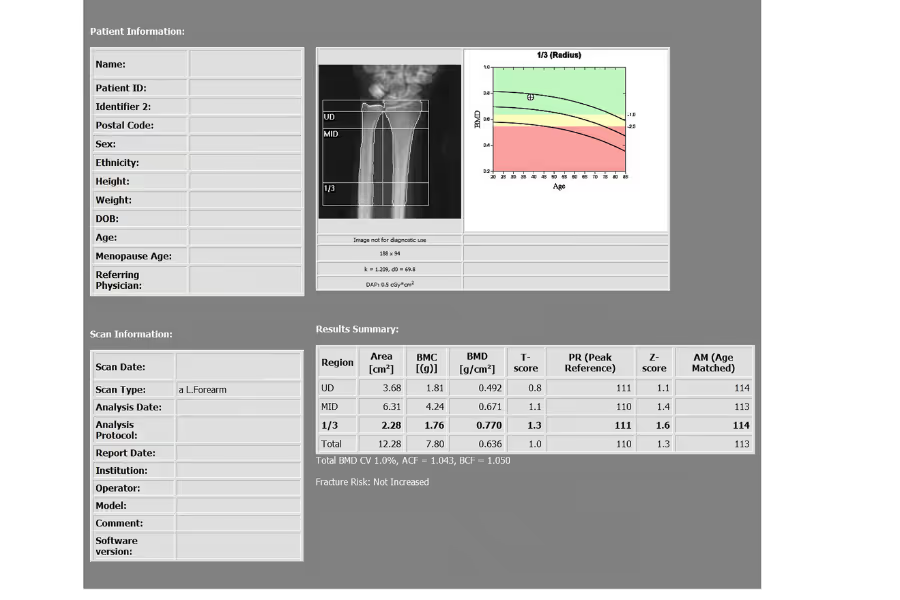
What can a DEXA scan help measure?
For bone density (osteoporosis screening):
T‑score
Compares your bone density to a healthy young adult reference.
- Above −1.0: normal
- Between −1.0 and −2.5: low bone density (osteopenia)
- ≤ −2.5: osteoporosis
Z‑score
Compares your bone density to people your age/sex. This can be useful if you're younger or if there's concern about secondary causes of bone loss.
Fracture risk context (often combined with FRAX)
Many clinicians combine DEXA results with a fracture‑risk tool (like FRAX) plus factors such as:
- age, prior fracture, smoking, alcohol intake
- steroid use, rheumatoid arthritis
- family history of hip fracture
For body composition:
- Body fat percentage (total and by region—arms, legs, trunk)
- Lean muscle mass (skeletal muscle by region)
- Visceral adipose tissue (VAT) estimates (abdominal fat linked to metabolic risk)
- Bone mineral content
- Android/gynoid fat ratio (apple vs pear body shape—important for metabolic health)
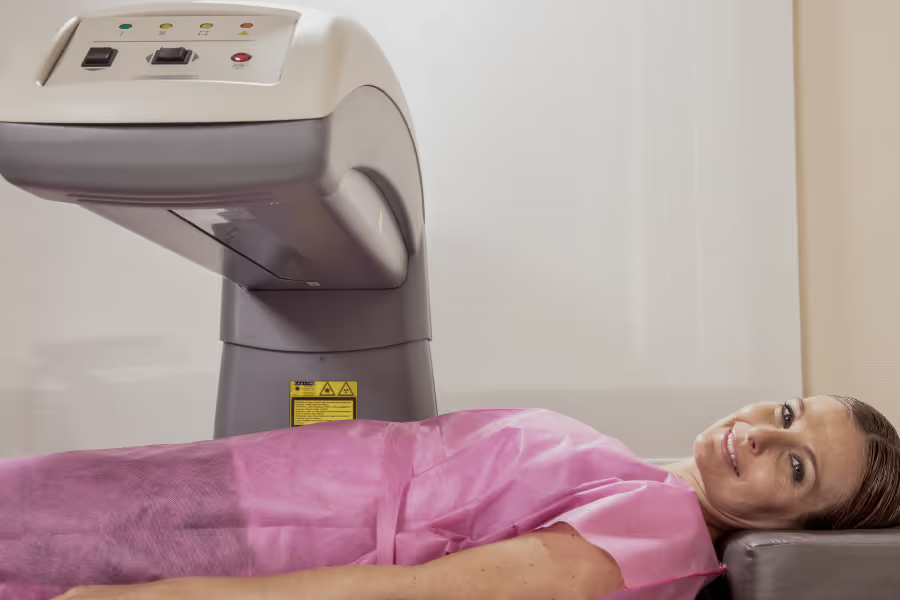
What is Surgency?
As a family doctor in the public system, I believe transparency is a form of care. I created Surgency to help my patients struggling on long waitlists who wanted to understand all their options for timely medical attention.
Surgency is a free resource designed to empower and educate—helping you understand private pathways and find accredited surgeons within Canada. I hope Surgency brings you clarity.
Dr. Sean Haffey

Why do Canadians choose to get DEXA scans done privately?
Canadians might consider a private DEXA scan when public access is delayed and they want clarity on bone density and fracture risk—especially after a fracture, during menopause, or before starting (or reassessing) osteoporosis medication. Long delays can mean missed opportunities to prevent fractures, avoid height loss, reduce chronic pain, and protect long‑term mobility and independence.
Recently, there's also been growing interest in DEXA for body composition analysis—precise measurement of lean muscle mass, body fat percentage, and fat distribution. Athletes, fitness enthusiasts, people managing weight loss or muscle gain, and those tracking metabolic health are increasingly seeking DEXA scans for this purpose.
Private DEXA scans offer faster access to accredited imaging clinics with clear timelines—often within days. For many people, going private is about getting an objective baseline sooner, making treatment decisions earlier, and tracking progress over time, while putting less strain on the public healthcare system.
Surgency is your guide—not a clinic—connecting you with out‑of‑province options through accredited, licensed imaging centres. We help you compare options, costs, clinic qualifications, and provide the resources you need to make confident, informed decisions.
Choosing a clinic
Choosing the right DEXA provider matters because small differences in technique, calibration, and reporting can change results—and DEXA is often used to track change over time.
What to look for
Accreditation and quality control
- Accreditation (provincial requirements like DAP in BC, CPSA in AB, Accreditation Canada, and/or recognized accreditation bodies)
- Documented quality assurance (QA): routine calibration, phantom testing, and standardized protocols
- Clear privacy practices and secure report delivery
DEXA equipment and consistency
- Ask what brand/model they use (e.g., Hologic or GE Lunar) and whether it’s regularly calibrated
- Ideally, do follow-up scans at the same clinic/machine to make comparisons more reliable
- Ask if they use standardized positioning and software updates (changes can affect comparability)
Interpreting clinician credentials
- Bone density scans should be interpreted by a qualified physician/radiologist experienced in bone densitometry
- Ask whether the report includes:
- T-scores and Z-scores
- Which sites were measured (lumbar spine, total hip, femoral neck, forearm)
- A clear impression (normal / osteopenia / osteoporosis)
- Comparison to prior scans when available
Report quality and turnaround time
- How quickly you’ll receive results (often same-day to 1–3 days privately)
- Whether the report goes directly to your family doctor/specialist
- Whether you can get a copy of the full report (and body comp breakdown if done)
Costs and transparency
- Request an itemized quote:
- Bone density scan vs. body composition vs. VFA add-on
- Whether interpretation/reporting is included
- Any extra fee for sending results to multiple providers
Insurance / reimbursement clarity
- Ask whether they provide invoices with appropriate medical billing details
- Clarify whether the scan is billed as medical bone density (sometimes reimbursable) vs. wellness body composition (often not covered)
- If you have a Health Spending Account (HSA), ask if the receipt will qualify
Questions to ask the clinic (copy/paste)
Scan details
- Which sites do you scan: lumbar spine + hip? Do you include femoral neck and/or forearm when appropriate?
- Do you offer VFA if needed?
- If I’m doing body composition, what metrics are included (regional lean mass, VAT, android/gynoid)?
Quality and comparability
- What DEXA machine do you use (brand/model), and how often is it calibrated?
- If I return in 12–24 months, will I likely be scanned on the same machine?
- Do you provide least significant change (LSC) or guidance on what counts as a meaningful change over time?
Safety and preparation
- What’s the radiation dose like?
- Any prep needed (calcium supplements, clothing without metal)?
- What if I recently had contrast imaging (CT with contrast/barium study)?
Results
- When will the report be ready?
- Will the report be sent to my doctor automatically?
- Can I receive a copy of the full report and numeric results?
Costs & insurance
- What exactly is included in the price?
- Is the body composition scan considered wellness/fitness on the receipt?
- Do you have experience with extended benefits or HSA reimbursement?
Quick rule of thumb
- If your goal is osteoporosis diagnosis or monitoring, prioritize report quality, consistent equipment, and comparison to prior scans.
- If your goal is body composition tracking, prioritize clear metrics, consistent repeatability, and transparent “wellness” billing expectations.
If you're currently interested in private surgical pathways within Canada, you can click here for a list of providers.
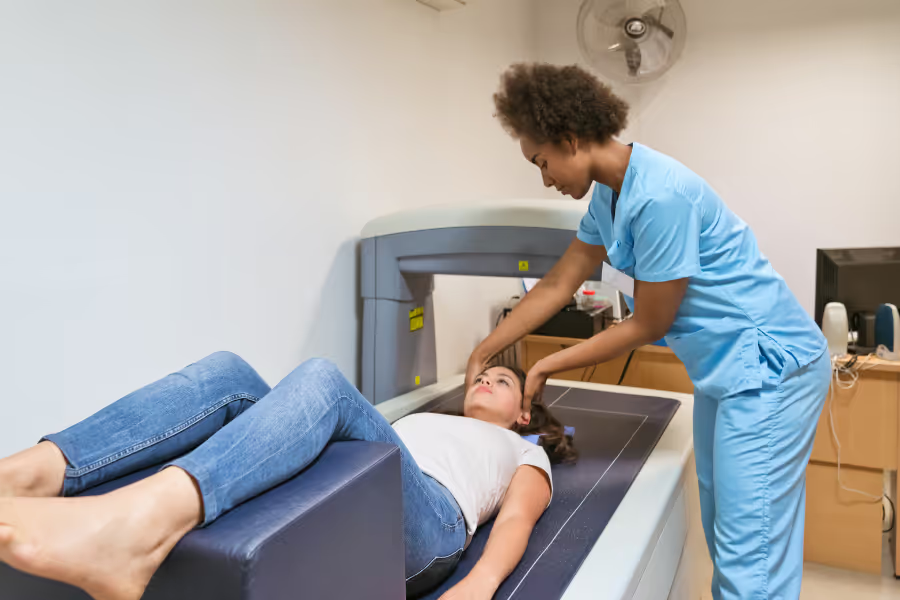
Frequently asked questions
How do I know if I should get a Dexa scan?
A DEXA scan is “right” for you if it will change what you do next—either by confirming osteoporosis risk and guiding treatment, or by giving a precise baseline for body composition tracking. Consult your medical provider for guidance.
DEXA (bone density) may be right if
- You’re post‑menopausal or age 50+ and want to assess osteoporosis risk
- You’ve had a low‑impact fracture (a break from a fall from standing height or less)
- You have height loss, a stooped posture, or possible vertebral compression fracture
- You take steroids long‑term (e.g., prednisone) or other meds that affect bone
- You have conditions linked to bone loss (e.g., rheumatoid arthritis, malabsorption/celiac, hyperthyroidism, hyperparathyroidism)
- You’re considering starting, stopping, or changing osteoporosis medication
- You need a baseline to track bone density over time (typically every 1–3 years depending on risk)
DEXA (body composition) might be right if
- You want a more accurate measure than a scale or BMI for fat vs. lean mass
- You’re tracking muscle gain, fat loss, or recovery after illness/injury
- You’re an athlete or training seriously and want regional breakdown (arms/legs/trunk)
- You’re focused on metabolic health and want estimates like visceral fat (VAT)
DEXA may not be the best first step if:
- You’re young, low-risk, and the result wouldn’t change your plan
- You want body comp data but don’t plan to repeat it consistently (the value is in trend tracking)
- You’re pregnant (DEXA uses low-dose X-ray, so it’s generally avoided)
Questions to ask your doctor before booking
- What decision will this scan help us make?
- Do I need bone density, body composition, or both?
- If it’s normal, what’s the plan?
- If it’s abnormal, what would we do next?
- When should I repeat it for meaningful comparison?
Do I need a referral?
Yes and no—you can reach out to any of the private surgeons listed on Surgency without a referral. Their intake teams are happy to answer questions, explain what they treat, share pricing ranges, and walk you through next steps.
However, to book a formal consultation with the surgeon, you'll typically need a referral from your family doctor or nurse practitioner. Don't have one? Many of the clinics can help coordinate a virtual GP appointment to get the referral paperwork sorted. All surgeons listed on Surgency offer virtual initial consultations, so you don't need to travel until you and the surgeon have agreed on a plan.
Before your consultation, expect the clinic to request relevant medical records and recent diagnostic imaging (X-ray, MRI, CT, ultrasound, lab work, etc.). Having these ready speeds up the process and lets the surgeon give you specific guidance on your very first call.
What happens after the DEXA scan?
1. Your images are analyzed and a report is generated
A physician or radiologist trained in bone densitometry reviews your scan and writes a report that typically includes:
- T‑scores (comparison to healthy young adults) for each site scanned (lumbar spine, total hip, femoral neck, sometimes forearm)
- Z‑scores (comparison to people your age and sex)
- Diagnosis: normal bone density, osteopenia (low bone mass), or osteoporosis
- Comparison to prior scans (if available) to show stability, improvement, or decline
- Recommendations for follow‑up timing or further evaluation
2. You get the report
Turnaround time: Private clinics often provide reports within 24–72 hours (some offer same‑day).
The report usually goes to:
- Your referring doctor (family doctor, endocrinologist, rheumatologist, gynecologist)
- You directly (ask for a copy—it's your right, and you'll want it for future comparisons)
3. Your doctor reviews the report and assesses your overall fracture risk
The DEXA result is important, but it's usually combined with other factors to estimate your 10‑year fracture risk, often using a tool like FRAX (Fracture Risk Assessment Tool), which considers:
- Age, sex, weight, height
- Prior fracture history
- Parent with hip fracture
- Current smoking or excess alcohol use
- Rheumatoid arthritis
- Long‑term steroid use
- Secondary causes of osteoporosis (e.g., thyroid issues, malabsorption)
Your doctor connects your T‑score + clinical risk factors to decide on next steps.
4. You get a plan
Common next steps based on results:
Normal bone density (T‑score above −1.0)
- Reassurance and focus on prevention
- Lifestyle: weight‑bearing exercise, resistance training, adequate protein
- Nutrition: calcium and vitamin D (through diet or supplements as needed)
- Repeat DEXA in 2–5 years depending on risk factors (or sooner if new risk factors emerge)
Osteopenia (T‑score between −1.0 and −2.5)
- Risk stratification: your doctor may calculate FRAX or use clinical judgment
- If low risk:
- Focus on lifestyle, nutrition, fall prevention
- Repeat DEXA in 1–3 years
- If moderate to high risk (prior fracture, multiple risk factors):
- Consider starting osteoporosis medication (bisphosphonates, denosumab, etc.)
- Repeat DEXA to monitor response (often 1–2 years after starting treatment)
Osteoporosis (T‑score ≤ −2.5)
- Treatment discussion: medication is usually recommended to reduce fracture risk
- Common options: bisphosphonates (alendronate, risedronate), denosumab, raloxifene, teriparatide, romosozumab (depending on severity and patient factors)
- Fall prevention: vision checks, home safety, footwear, balance training
- Optimize calcium and vitamin D
- Monitor response: repeat DEXA typically in 1–2 years to assess treatment effectiveness
- Vertebral fracture assessment (VFA) may be recommended if not already done
Significant bone loss since last scan
- Investigate secondary causes: thyroid issues, vitamin D deficiency, celiac, hyperparathyroidism, medication side effects
- Adjust or start treatment
- Closer monitoring
5. Treatment can start (or be adjusted) sooner
This is a big reason people go private: once you have a clear DEXA result, you and your doctor can:
- Start osteoporosis medication confidently
- Avoid unnecessary treatment if bone density is normal
- Track whether treatment is working over time
- Make informed decisions about supplements, exercise, and fall prevention
How much does Surgency cost?
Surgency is free for patients, funded for by surgeons.
Surgeons—who meet our listing criteria—pay a flat fee to list on the Surgency platform. To maintain objectivity, there are no commissions, referral fees, nor any ranking or recommending one surgeon over another.
Surgency is patient-first. Our goal is to make the process of finding a private surgeon as simple as possible. You choose who to contact. Learn more in our Advertising Policy.
What are the risks involved with DEXA scans?
DEXA scans are considered safe. The main “risks” are usually about radiation exposure, interpretation limits, and (less commonly) not using the right test for the right question.
DEXA has minimal risks: extremely low radiation, no needles, no contrast. The main risk is not getting one when you need it—undiagnosed osteoporosis can lead to fractures, disability, and loss of independence. If you're at risk, the benefit far outweighs the minimal risks.
Consult your medical provider for more guidance.
Radiation exposure (very low)
- DEXA uses extremely low radiation: about 0.001–0.01 mSv per scan
- For comparison:
- Chest X-ray: ~0.1 mSv (10× more)
- CT scan: ~7 mSv (700× more)
- Annual background radiation: ~2–3 mSv
- Pregnant women should avoid DEXA (though dose is low, it's unnecessary)
- Radiation is cumulative, but DEXA contributes very little to lifetime exposure
Accuracy considerations
- Positioning errors or machine variability can slightly affect results—ideally, repeat scans should be on the same machine
- Arthritis or spine calcifications can falsely elevate bone density readings in the spine
- Results should be interpreted by someone experienced in bone densitometry
Overdiagnosis/undertreatment (rare)
- Borderline T-scores can lead to uncertainty—use FRAX and clinical risk factors, not just the number
- A "normal" DEXA doesn't mean zero fracture risk—fall prevention and lifestyle still matter
How do I prepare for a DEXA scan?
DEXA scans require minimal preparation—much simpler than most imaging tests.
Clothing
- Wear comfortable clothing without metal:
- No zippers, buttons, snaps, or underwire bras
- Avoid belts, jewelry, or clothing with metal embellishments
- You may be asked to change into a gown depending on the clinic
Calcium supplements
- Avoid calcium supplements for 24 hours before the scan (some clinics recommend this—follow their instructions)
- Calcium can sometimes create artifacts on the image
Recent imaging with contrast
- Tell the clinic if you've recently had:
- Barium study (e.g., barium swallow, barium enema)
- CT scan with contrast
- Nuclear medicine scan
- You may need to wait a few days to a week before your DEXA to avoid interference
Medications
- If you take osteoporosis medication (bisphosphonates, denosumab, etc.), bring a list or let the clinic know—it helps with interpretation
Pregnancy
- Tell the clinic if you might be pregnant—DEXA is generally avoided during pregnancy
What to bring
- Your requisition (if required by the clinic)
- Prior DEXA reports (if you have them—essential for comparison over time)
- A list of current medications, especially:
- Steroids (prednisone, etc.)
- Thyroid medication
- Osteoporosis treatments
- Health card or insurance information (if applicable)
Bottom line
DEXA prep is simple: wear clothes without metal, skip calcium supplements for 24 hours, and bring prior reports if you have them. No fasting, no needles, no special diet.
I still have questions
If you still have questions, then feel free to contact us directly.


.avif)