


.png)
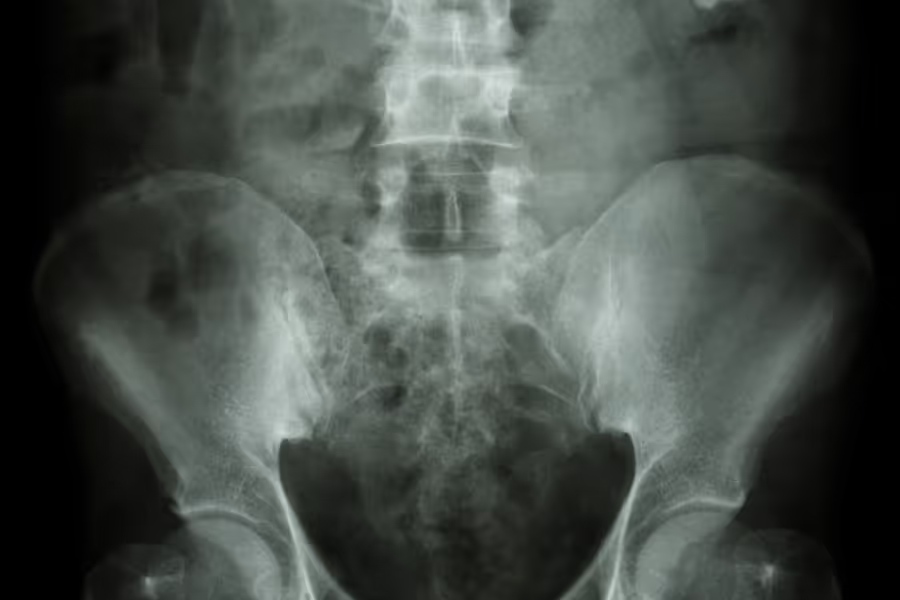

What is bladder stone surgery?
Bladder stone removal surgery is a procedure that gets rid of hard mineral stones sitting inside the bladder. Bladder stones can form when urine doesn’t empty fully and leftover urine concentrates into crystal clumps. Over time, those crystals can stick together and turn into a stone that irritates the bladder or blocks urine flow.
Most bladder stone removal is done with a small camera called a cystoscope. The urologist passes the scope through the urethra into the bladder, so there are no outside cuts. Once the stone is found, the surgeon breaks it into smaller pieces using energy (often a laser or ultrasound tool). Then the fragments are washed out or removed with tiny graspers through the scope.
In some cases—usually if the stone is very large or the anatomy makes scope access difficult—removal can be done through a small incision into the bladder instead. The main goal is simple: clear the bladder of stones so urine can flow normally again.
How much does bladder stone removal cost in Canada?
How we estimate surgical costs: Ranges are estimates drawn from our network of 100+ private clinics and surgeons, and they're intentionally broad. Two people seeking the same procedure can receive very different quotes depending on province, surgeon, facility fees, and case complexity. Published prices aren't always comparable either—some are complete bundles, others exclude consultation, imaging, or follow-up. Only the clinic can give you an exact, itemized quote.
Pricing depends on stone size/number, whether it’s done by scope (most common), what anaesthesia is used, and whether you need extra procedures (like treating a blockage at the same time). Always ask for a written, itemized quote.
For a typical scope procedure (cystolitholapaxy / cystoscopic bladder stone removal), Canadian private centres charge: $6,000–CA$12,000+
If it’s a very large stone or requires a more complex approach (or longer OR time), costs can be higher.
How much does it cost in the United States (average)?
In the United States, total charges can be higher: CA$7,000–CA$20,000+
What’s usually included in the cost?
Most bundled/private quotes typically include:
- Surgeon fee
- Anaesthesia and monitoring (often general anaesthesia)
- Facility/OR fees and nursing care
- Standard equipment and supplies (scope use, stone‑breaking tools, irrigation)
- Immediate post‑procedure recovery care
- Often one routine follow‑up visit
What’s often not included?
These are commonly separate or outside the package:
- Initial consult and pre‑op workup done elsewhere (urine tests, bloodwork, CT/ultrasound)
- Extra OR time beyond the booked block or an unplanned overnight stay
- Prescriptions after the procedure (pain meds, antibiotics)
- Catheter supplies (if you go home with one)
- Repeat imaging to confirm clearance (sometimes)
- Travel and accommodation if you’re coming from another province/state
- Treating the underlying cause (for example BPH treatment) if it’s done as a separate procedure/booking

Bladder stone removal: what to expect
How long bladder stone removal takes depends mostly on stone size/number and whether it’s done with a scope (most common) or through a small incision (less common).
Most common (scope removal: cystolitholapaxy)
- Operating time is often 30–90 minutes.
- Plan to be at the centre half a day for check‑in, anaesthesia, surgery, and recovery.
Less common (open or small‑incision bladder stone removal)
- Operating time can be 60–120+ minutes.
- Some patients may need a longer stay depending on the clinic and situation.
Basic steps (what actually happens)
Check‑in and plan
- You meet the nurse, anaesthesia team, and urologist.
- They review your imaging (ultrasound/CT) and confirm the plan, including whether a catheter is expected.
Anaesthesia
- Usually general anaesthesia (you’re asleep).
- Sometimes a spinal anaesthetic is used, depending on the centre.
Position and prep
- You’re positioned safely on a padded table.
- The area is cleaned with antiseptic and covered with sterile drapes.
Scope into the bladder (no outside cuts)
- A thin camera (cystoscope) goes through the urethra into the bladder.
- Saline fluid is used to gently fill the bladder so the surgeon can see clearly.
Break the stone and remove pieces
- The stone is broken into smaller fragments (often with a laser or ultrasonic tool).
- The fragments are washed out and/or removed with tiny graspers.
Finish up (catheter if needed)
- The surgeon checks the bladder for leftover fragments and bleeding.
- A temporary urinary catheter may be placed at the end.
Wake‑up and discharge plan
- You wake up in recovery, get instructions, and (for most scope cases) go home the same day with a ride.
What can I expect from the recovery process?
Everyone heals a bit differently, so your surgeon’s instructions come first. Bladder stone removal is usually a scope procedure, so recovery is often faster than “big” surgery, but your bladder can feel irritated for a while.
In general, what to expect
First 1–3 days
What it feels like
- Burning or stinging when you urinate
- Feeling like you need to urinate often (even if not much comes out)
- Pink urine or small bits of blood
- Mild cramping low in your belly
Main goals
- Keep urine flowing
- Control pain and bladder spasms
- Stay hydrated
Typical activities
- Drink plenty of water
- Short, easy walks around the house
- Avoid heavy lifting, intense exercise, and straining on the toilet
Days 4–10
What it feels like
- Burning and urgency should slowly improve
- Urine should trend from pink back to yellow
- You may still feel “bladder cranky,” especially after activity
Main goals
- Return to normal routines without overdoing it
- Finish any prescribed meds (like antibiotics) exactly as directed
Typical activities
- Light daily tasks and school/desk work if you feel up to it
- Keep avoiding heavy lifting and high‑impact workouts until cleared
Weeks 2–4
What it feels like
- Most irritation fades
- Urinating should feel more normal and less urgent
Main goals
- Get back to your usual schedule
- Follow up with your urologist, especially if they want repeat imaging or stone analysis results
If you go home with a catheter (sometimes)
- The catheter drains urine so your bladder can settle down.
- It’s usually temporary, and you’ll be told when and how it comes out.
Red flags — call your team immediately
- Fever or chills, or feeling very unwell
- You cannot urinate at all, or the catheter stops draining
- Dark red “tomato juice” urine, large clots, or bleeding that keeps getting worse
- Severe lower belly pain/pressure (could be retention)
- Vomiting and you can’t keep fluids down
Most people feel noticeably better as the bladder lining calms down and the irritation from the stone and instruments settles.
What is Surgency?
As a family doctor in the public system, I believe transparency is a form of care. I created Surgency to help my patients struggling on long waitlists who wanted to understand all their options for timely medical attention.
Surgency is a free resource designed to empower and educate—helping you understand private pathways and find accredited surgeons within Canada. I hope Surgency brings you clarity.
Dr. Sean Haffey

Why do Canadians get bladder stone removal done privately?
Canadians usually choose private bladder stone removal for the same reason people go private for many procedures: time, control, and fewer repeat crises. Your best option depends on symptoms, stone size, and whether there’s an underlying blockage (like BPH) causing poor emptying.
Shorter wait times
- Public queues for urology consults, cystoscopy, imaging, and OR time can be long.
- Private centres may arrange assessment and stone removal within days to weeks, not months.
- Less time dealing with bladder pain, burning, blood in urine, and constant urgency.
Choice and control
- Choose a urologist who regularly performs cystolitholapaxy (scope removal of bladder stones).
- Pick a date that fits work, school, caregiving, or travel.
- More time to talk through the plan (scope approach vs small incision if the stone is huge).
Peace of mind
- Clear timelines: you know who is operating and when it will happen.
- Itemized quotes make it easier to plan costs, time off, and logistics.
- Faster access to your results (stone analysis, scope findings) and next steps.
Preventing ongoing problems
- Earlier removal can reduce repeat ER visits for pain, bleeding, or retention scares.
- Clearing the stone sooner can lower the chance of recurring UTIs and worsening bladder irritation.
- Treating stones before they grow can mean a simpler procedure.
Practical extras (often)
- Streamlined imaging/labs and direct post‑procedure contact.
- Coordinated plans to address the cause (for example, BPH treatment) so stones don’t keep coming back.
Choosing a surgeon and clinic
Choosing your surgeon is one of the biggest benefits of going private—here's how to use it to your advantage.
What to look for
Experience and volume
- Ask how many bladder stone removals they do per year (not just “urology scopes”).
- Ask what they commonly treat alongside stones, like BPH (enlarged prostate), catheters, or incomplete emptying, because these are common causes.
Credentials and training
- Verify they’re licensed with your provincial college (CPSO, CPSBC, CPSA, CMQ, etc.).
- Look for an FRCSC‑certified urologist with a strong endourology practice (lots of scope procedures).
Imaging and planning
A good clinic should review your imaging and itemize:
- Stone size, number, and location (CT or ultrasound)
- Whether you’re retaining urine (bladder scan / post‑void residual)
- Whether there’s a likely cause (BPH, stricture, neurogenic bladder, catheter use)
Surgical plan and tools
Ask how they plan to remove the stone:
- Scope approach through the urethra vs a small incision (rare, usually only for very large stones)
- How they break the stone (laser vs ultrasound/pneumatic tool)
- Whether a catheter is expected after, and for how long
Outcomes and safety
Ask for practical, real‑world numbers:
- How often patients need a second procedure for leftover fragments
- Infection/ER return rates in their recent cases
- Their plan for antibiotics if your urine culture isn’t clear
Facility quality
- Prefer an accredited surgical centre (Accreditation Canada, CAAASF, or provincial equivalent).
- Confirm they have proper sterile processing, modern scopes, and clear emergency backup/transfer pathways.
Aftercare and follow‑through
The best clinics don’t just remove the stone—they connect the dots:
- Will they send the stone for analysis?
- Will they address likely causes (for example, BPH treatment, catheter strategy, or bladder emptying issues)?
- Is follow‑up imaging included to confirm the bladder is clear?
Questions to ask at your consult
- How many bladder stone removals do you do each year?
- Based on my imaging, what’s the plan (scope vs incision), and why?
- Will I likely need a catheter? How is removal handled and is it included?
- How do you reduce infection risk (urine testing, antibiotics plan)?
- What’s included in the quote, and what is not included?
A high‑quality bladder stone program is organized, transparent, high‑volume with scopes, and has a clear plan to remove the stone and deal with the reason it formed.
If you're currently interested in private surgical pathways within Canada, you can click here for a list of providers.

Frequently asked questions
How do I know if I should get bladder stone removal?
Bladder stone removal surgery is when a urologist uses a small scope (camera) through the urethra to break up and remove stones sitting in the bladder.
It might be right for you if
- You have pain, burning, or pressure low in your abdomen that keeps coming back
- You’re seeing blood in your urine, especially more than once
- You get recurrent UTIs (repeat bladder infections), and scans show a stone
- You’re having trouble passing urine: weak stream, stop‑start flow, straining, or feeling like you can’t empty fully
- You’ve had urinary retention (unable to pass urine) or repeated near‑retention “scares”
- Imaging (ultrasound/CT) shows a stone that is too large to pass or is just sitting in the bladder
- The stone is linked to an underlying problem like BPH (enlarged prostate), a urethral stricture, a catheter, or poor bladder emptying, and your urologist wants to break that cycle
When surgery might not be right (yet)
- The stone is very small, you have mild or no symptoms, and your urologist thinks it could pass
- There’s no infection, you’re emptying well, and you and your doctor choose a short, supervised “watch and wait” plan
- Another health issue makes anaesthesia unsafe right now, so the plan is to stabilize that first
When it’s urgent to get help
Don’t wait at home if you have:
- Fever or chills (possible infection)
- You cannot pass urine at all
- Severe pain with vomiting or inability to keep fluids down
- Heavy bleeding or clots that block urine flow
A simple way to think about it: if a bladder stone is causing blockage, bleeding, infections, or repeated major symptoms, removal is often the most direct fix. If it’s tiny and quiet, monitoring may be reasonable.
Do I need a referral?
Yes and no—you can reach out to any of the private surgeons listed on Surgency without a referral. Their intake teams are happy to answer questions, explain what they treat, share pricing ranges, and walk you through next steps.
However, to book a formal consultation with the surgeon, you'll typically need a referral from your family doctor or nurse practitioner. Don't have one? Many of the clinics can help coordinate a virtual GP appointment to get the referral paperwork sorted. All surgeons listed on Surgency offer virtual initial consultations, so you don't need to travel until you and the surgeon have agreed on a plan.
Before your consultation, expect the clinic to request relevant medical records and recent diagnostic imaging (X-ray, MRI, CT, ultrasound, lab work, etc.). Having these ready speeds up the process and lets the surgeon give you specific guidance on your very first call.
How do I prepare?
Your surgeon’s instructions come first—follow their plan if it differs. Bladder stone removal is usually done with a scope through the urethra, so prep is mostly about safety (infection/bleeding risk) and smooth logistics.
Health optimization
- Hydration habit: Aim for pale‑yellow urine unless your team says to limit fluids.
- Nicotine: Stop smoking/vaping if you can. Nicotine increases infection risk and slows healing.
- Medication review: Give the clinic a complete list of everything you take (prescriptions, over‑the‑counter meds, vitamins, protein/creatine, and herbal supplements).
- You may need to pause blood thinners (aspirin, warfarin, DOACs) and some anti‑inflammatories.
- Only stop medications if your surgeon/doctor tells you to.
- Infection check: Tell them right away if you have fever, chills, burning with urination, cloudy/foul‑smelling urine, or new pelvic pain. A urine test/culture is often required before surgery.
- Basic fitness and sleep: Light walks, normal meals, and good sleep help your body handle anaesthesia.
Tests and paperwork
Depending on your age and history, the clinic may itemize:
- Urine test (sometimes culture)
- Bloodwork
- ECG
- Imaging review (ultrasound/CT)
Home and logistics prep
- Ride home: Arrange someone to drive you and stay nearby for the first 24 hours (common rule after anaesthesia).
- Time off: Plan for a few days of lighter activity, especially if you do physical work or sports.
- Bathroom setup: Have easy access to a bathroom, extra toilet paper, and a dark towel (a bit of blood in urine can look dramatic).
- Comfort items: Water bottle, simple snacks, and any recommended pain or bladder spasm meds.
The day before and day of surgery
- Fasting: Follow the anaesthesia rules exactly (often no solid food after midnight; clear fluids allowed until a set time).
- Shower: Shower the night before or morning of; avoid lotions or oils.
- What to bring: Photo ID, health card, medication list, and loose clothing/underwear.
- Leave at home: Jewelry/valuables; remove rings and bracelets.
How much does Surgency cost?
Surgency is free for patients, funded for by surgeons.
Surgeons—who meet our listing criteria—pay a flat fee to list on the Surgency platform. To maintain objectivity, there are no commissions, referral fees, nor any ranking or recommending one surgeon over another.
Surgency is patient-first. Our goal is to make the process of finding a private surgeon as simple as possible. You choose who to contact. Learn more in our Advertising Policy.
What are the risks involved?
Your individual risk depends on your health, the size/number of stones, whether you have an infection, the approach used (usually a scope through the urethra), and the type of anaesthetic. Your urologist should explain what applies to you.
Common and usually temporary
- Burning with urination and bladder irritation for a few days
- Pink or light red urine (small amount of bleeding)
- Feeling like you need to urinate more often or urgently
- Mild lower‑belly cramping or bladder spasms
- Nausea from anaesthesia; constipation from pain meds
- Soreness at the urethra opening from the scope
Less common
- Urinary tract infection after the procedure (may need antibiotics)
- Bleeding that lasts longer than expected or clots in the urine
- Temporary urinary retention (trouble passing urine), sometimes from swelling or spasms
- Scrapes/irritation to the urethra or bladder lining from instruments
- Need for another procedure if stone fragments remain
Uncommon
- Severe infection (sepsis): fever, chills, shaking, feeling very unwell
- Significant bleeding needing extra treatment
- Injury to the urethra or bladder
- Anaesthesia complications (reaction to meds, breathing issues)
Red flags after surgery
- Fever or chills
- You cannot pass urine at all
- Worsening severe pain not controlled by prescribed meds
- Heavy bleeding or large clots, or urine turning bright red and staying that way
- Repeated vomiting or inability to keep fluids down
Many people have mild, short‑term irritation and do well. The serious risks are uncommon, especially with an experienced team and good pre‑op infection screening.
What are the risks of delaying or not pursuing surgery?
Whether it’s safe to delay depends on your symptoms, stone size/number, whether you’re getting infections, and why the stone formed (often poor bladder emptying). Your urologist can match the plan to your scans and your health.
Symptoms can keep coming back (and get worse)
- Repeated lower‑belly pain, burning with urination, and “always need to go” feelings
- Blood in the urine that comes and goes
- Sleep disruption from frequent nighttime bathroom trips
- More urgent visits to walk‑in, urgent care, or the ER
Infection risk goes up
- A bladder stone can act like a “germ magnet,” making UTIs more likely
- Recurrent infections can become harder to treat over time
- In rare cases, an infection can spread and make you very sick (fever, chills, weakness)
Blockage and retention problems
- Stones can partially block the bladder outlet and cause:
- weak stream
- stop‑start flow
- straining
- Some people develop urinary retention (unable to pass urine), which can become an emergency
Bladder irritation and damage over time
- Constant rubbing/irritation can inflame the bladder lining
- Long‑term poor emptying can stretch or weaken bladder function, making symptoms harder to fix later
The stone can grow or multiply
- Small stones can turn into larger stones
- Larger/multiple stones may mean a longer procedure and sometimes a more invasive approach
The real “root cause” keeps causing trouble
Bladder stones often happen because urine isn’t emptying well (for example BPH, urethral stricture, neurogenic bladder, catheter use). If the stone stays, the cycle often continues.
When waiting can be reasonable
- The stone is very small, symptoms are mild, and you have a clear follow‑up plan with repeat imaging/testing
- There’s no infection and you’re emptying the bladder well
When you should not delay
- Fever or chills (possible infection)
- You cannot pass urine
- Worsening pain, heavy bleeding, or repeated infections
- Imaging shows a large stone or significant leftover urine after voiding
I still have questions
If you still have questions, then feel free to contact us directly.





.avif)