


.png)

What is kidney stone surgery?
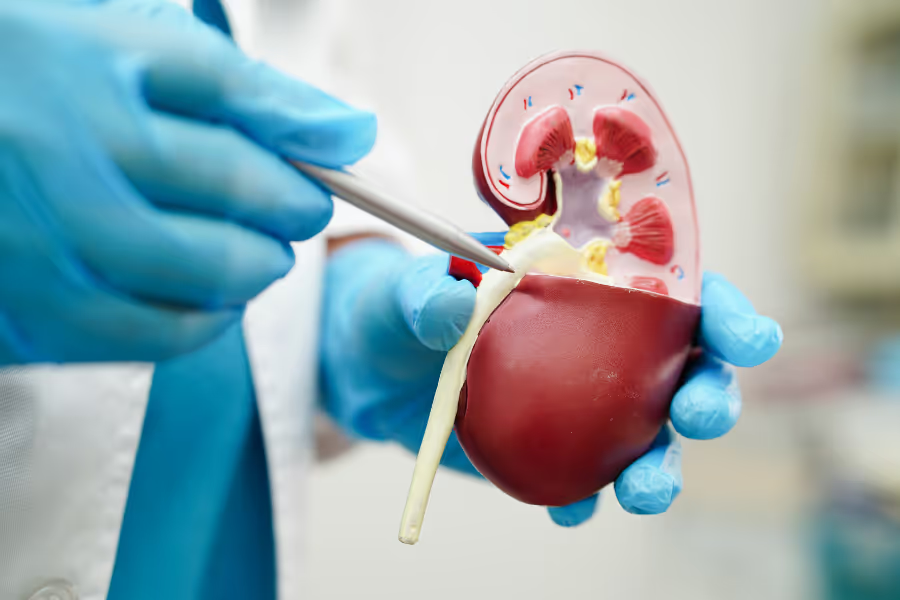
Kidney stone surgery is how a urologist removes or breaks up a stone that is blocking the flow of urine. Stones are hard clumps of minerals that form in the kidney and can lodge in the kidney itself or in the ureter — the narrow tube that carries urine from the kidney to the bladder.
Think of the ureter as a garden hose. A small piece of grit will wash through. A larger stone jams in place, pressure builds behind it, and the kidney swells. That pressure is what causes the waves of severe side and back pain known as renal colic.
Which symptoms need urgent care
Most stone symptoms can be managed at home while the stone passes. These cannot. Seek emergency care the same day if you have:
- Fever or chills alongside stone pain — this can mean an infected blockage, which can progress to sepsis.
- Pain you cannot control with the medication you were prescribed.
- Vomiting that stops you keeping fluids down, which leads to dehydration quickly.
- A sudden stop in urine output, or urinating far less than usual.
- A known single kidney, a transplanted kidney, or pregnancy with stone symptoms.
Otherwise, the usual pattern is sharp waves of flank pain that may move toward the groin, blood in the urine, nausea, and a persistent urge to urinate.
From symptoms to surgery: the usual pathway
- Diagnosis. A low-dose CT scan is the standard test. It shows the stone's size, position, and density, which together determine your treatment options. Ultrasound is often used first in pregnancy and for follow-up.
- Trial of passage. For smaller stones with manageable symptoms, your doctor may recommend fluids, pain medication, and sometimes tamsulosin to relax the ureter, with repeat imaging in a few weeks.
- Referral to a urologist. If the stone is not moving, is too large to pass, or symptoms are severe, you are referred for a surgical opinion.
- Procedure selection. The urologist matches the technique to your stone — see the comparison below.
- Prevention. After clearance, stone analysis and a metabolic workup help reduce the chance of the next one.
How much does kidney stone removal cost in Canada?
How we estimate surgical costs: Ranges are estimates drawn from our network of 100+ private clinics and surgeons, and they're intentionally broad. Two people seeking the same procedure can receive very different quotes depending on province, surgeon, facility fees, and case complexity. Published prices aren't always comparable either—some are complete bundles, others exclude consultation, imaging, or follow-up. Only the clinic can give you an exact, itemized quote.
In Canada, private ureteroscopy typically costs $6,000 - $16,000, and shock wave lithotripsy typically costs $2,500 - $6,000 or more.
Several factors drive the variance in cost: surgeon experience, facility location, the size and location of the stone, the type of anaesthesia required, and whether a ureteral stent is placed and later removed.
For comparison, in the United States ureteroscopy costs roughly USD$6,000 - $18,000, with both ranging considerably higher.
Prices vary by province, clinic, stone characteristics, and anaesthesia plan. Always request a written, itemized quote before you commit, and ask specifically what would change the total.
Insurance and financing options
- Private health insurance: Some plans cover part of the cost. Check your policy directly.
- Financing plans: Many clinics offer monthly payment options. Learn more about your financing options here.
- Medical Expense Tax Credit (METC): A non-refundable credit that reduces your taxes when you pay out of pocket for eligible medical expenses. Learn more about how to claim METC for private surgeries.

Kidney stone removal: what to expect
Ureteroscopy with laser: about 45–90 minutes of operating time (one side). Plan a few extra hours for check‑in, anesthesia, and recovery.
Shock Wave Lithotripsy: about 30–60 minutes. Often outpatient.
Percutaneous nephrolithotomy (PCNL/mini‑PCNL): 1.5–3 hours for larger stones; usually involves an overnight stay.
Basic steps
- Check-in and confirmation. You meet the team, review your CT or ultrasound, and confirm which procedure you are having and which side. A urine test may be repeated to rule out infection.
- Anaesthesia. General anaesthesia for ureteroscopy, so you are fully asleep. Shock wave lithotripsy typically uses sedation instead.
- Position and prep. You are positioned safely, monitors and an IV are placed, and the area is cleaned and draped.
- Scope insertion. A thin scope passes through the urethra, into the bladder, and up the ureter. There are no cuts on the skin. An access sheath is sometimes used to protect the ureter and make it easier to remove fragments.
- Laser lithotripsy. A laser fibre breaks the stone. Surgeons use one of two strategies: dusting, which reduces the stone to fine particles you pass naturally, or fragmentation, which creates larger pieces removed with a small basket. Many surgeons combine both.
- Checking for clearance. The surgeon inspects the ureter and kidney to confirm the stone is gone and there is no injury.
- Stent placement. A soft temporary ureteral stent is often left in place to keep urine flowing while swelling settles. Not everyone needs one.
- Wake-up and instructions. You recover in the post-anaesthesia care unit and receive instructions for pain, hydration, and follow-up. Most people go home the same day.
Stent removal timing
If a stent is placed after ureteroscopy, it usually stays in for 3 to 14 days, and sometimes longer after PCNL or a complicated case. Removal is quick and is often done in clinic with a small flexible scope, or by pulling a string left attached to the stent. Expect a day of extra urgency or side discomfort afterward.
Before your procedure, confirm three things: whether a stent is planned, who removes it and where, and whether removal is inside your quote.
When a staged (two-step) procedure is needed
Sometimes the ureter is too narrow, too swollen, or too inflamed for the scope to pass safely on the first attempt. Rather than force it and risk injuring the ureter, the surgeon places a double-J stent and stops. The stent passively dilates the ureter over one to two weeks, and you return for the actual stone removal.
This is not a complication or a sign anything went wrong—it is a deliberate safety decision, and it happens in roughly one in ten ureteroscopy cases. Pre-stenting is also planned in advance for some patients, particularly with an impacted stone or signs of infection.
What it means practically:
- Timeline: add about two to three weeks and one extra procedure date.
- Cost: ask whether a staged procedure is billed as one bundled case or two. This is the single most useful question to ask before signing a quote.
- Comfort: stents commonly cause urinary urgency, some flank discomfort when you urinate, and blood-tinged urine. It is temporary and medication helps.
Ureteroscopy vs shock wave lithotripsy vs PCNL
There is no single best kidney stone procedure. The right choice depends on how big the stone is, where it sits, how dense it is on CT, and your own anatomy and health history. A urologist is the only person who can confirm which option suits your case, and the plan can change once they see your imaging.
Broadly: shock wave lithotripsy is the least invasive but the least certain to clear the stone in one attempt. Ureteroscopy is the workhorse — it reaches nearly any stone in the ureter or kidney and clears most of them in a single session. Percutaneous nephrolithotomy (PCNL) is the most involved, and is reserved for stones too large for the other two.
Related procedures you may see discussed alongside stone surgery include private cystoscopy, used to look inside the bladder, and private bladder stone removal, which addresses stones that have formed in or dropped into the bladder rather than the kidney.

Expert Surgeon Insight
David Eiley MD, FRCSC: what to expect from the consultation
Consultations—virtual and in-person—are conducted directly with the surgeon, who will carefully review relevant symptoms, local lab results, xrays, and doctor evaluations.
These should not be rushed, and you should come prepared, as the surgeon will digest all this information to create a tailored treatment plan. Recommendations will be individualized to your specific case as there is no ‘one size fits all’ template to be applied. No surgeon should ever pressure you to pursue one option or another, and should give you the time and space you need to decide the path forward.
Kidney stone pain can be intense and come and go without any warning. It is damaging to your kidneys and limits your ability to work, travel, and enjoy the quality of life you deserve. Surgical wait lists across the country have become increasingly long, and at Montréal Urology Clinic, our commitment is to achieve a ’stone-free’ status for you as soon as possible. Visit Dr. Eiley's profile for more information.

What can I expect from the recovery process?
Everyone heals differently—follow your surgeon's plan. Taking the instructions seriously usually means a smoother recovery.
Week 1
Reality check: crampy side and back pain, burning when you urinate, pink or red urine, and a frequent urge to go—especially with a stent in place. Uncomfortable, but expected.
Goals: control pain, keep urine flowing, stay hydrated.
Activities: drink plenty of water; short walks a few times a day; avoid heavy lifting and straining. Keep any dressing clean and dry if you had PCNL. Use medication as prescribed, including bladder spasm medication if given.
Weeks 2–3
Still annoying, but improving.
Goals: settle the irritation and return to normal routines.
Activities: increase walking and light daily tasks. Most people return to desk or school work within a few days after ureteroscopy or shock wave lithotripsy, and after roughly one to two weeks following PCNL. Urine should clear, and burning and urgency fade—often noticeably once the stent is out.
Weeks 4–6
The steady phase.
Goals: feel close to normal and resume regular activity as cleared.
Activities: back to usual exercise when approved. A PCNL back incision is typically healed by now. This is also when your urologist may arrange stone analysis and prevention bloodwork or a 24-hour urine collection.
Helpful tips
- Hydrate steadily: pale-yellow urine is the target, unless you have been told to restrict fluids.
- Expect fragments: you may pass gritty pieces for a couple of weeks. Straining your urine, if asked, lets the lab analyse the stone.
- Bowel plan: pain medication constipates. Use fibre and a stool softener.
- Know your stent date: put it in your calendar before surgery day.
Red flags—call your care team or go to urgent care
- Fever or chills, or severe or worsening back or side pain not relieved by medication
- Vomiting with an inability to keep fluids down
- Urine slowing dramatically or stopping (possible blockage)
- Heavy bleeding, or cherry-red urine that does not lighten
- Chest pain, shortness of breath, or calf swelling and pain
What is Surgency?
As a family doctor in the public system, I believe transparency is a form of care. I created Surgency to help my patients struggling on long waitlists who wanted to understand all their options for timely medical attention.
Surgency is a free resource designed to empower and educate—helping you understand private pathways and find accredited surgeons within Canada. I hope Surgency brings you clarity.
Dr. Sean Haffey

Why do Canadians get kidney stone removal done privately?
Public queues for ureteroscopy and shock wave lithotripsy can be long when your case is painful but not judged emergent. Private centres can often arrange a consultation within days and a procedure within a few weeks, reducing time spent with colic, nausea, and missed work.
Choice and control
You can choose a high-volume stone surgeon and discuss which technique fits your stone, then pick a date that works around your job, caregiving, and travel. Many clinics offer virtual consultations, so you do not travel until there is a plan. Some people are also managing more than one urological issue at once and want a single surgeon they trust across private prostate procedures and stone care.
Preventing further decline
Earlier clearance can mean fewer emergency visits, less risk of an infected blockage or kidney strain, and a simpler procedure than would be needed if the stone grows, multiplies, or migrates to a tighter spot.
Choosing a surgeon and clinic
Choosing your surgeon is one of the biggest benefits of going private—use it to your advantage.
What to look for
Experience and volume
- Ask how many stone procedures they perform per year and their case mix:
- Ureteroscopy with laser (flexible/rigid), ESWL (shock wave lithotripsy), mini/micro‑PCNL, standard PCNL, stent/nephrostomy management.
- Ask for outcomes in patients like you (stone size, location, density/Hounsfield units, anatomy, prior surgeries).
- High volume and standardized pathways generally mean smoother care and fewer complications.
Credentials and training
- Verify licensure with your provincial college (CPSO Ontario, CPSBC BC, CPSA Alberta, CMQ Québec, etc.).
- Look for FRCSC‑certified urologists with endourology/stone fellowship or clear high‑volume stone practice; for PCNL, confirm specific training and team experience.
Outcomes and safety
- Request stone‑free rates by procedure and size/location, unplanned ER visits, infection/sepsis rates, need for second‑look surgery, stent discomfort readmissions.
- Ask about same‑day discharge rates for URS/ESWL and overnight needs for PCNL.
Indications and alternatives
- Confirm non‑operative options were considered (trial of passage, medical expulsive therapy, hydration/pain plan).
- Clear indications = better odds of meeting expectations.
Surgical plan and techniques
- Ureteroscopy: laser settings (dusting vs fragmentation), use of access sheath, basketing strategy, plan for stent (yes/no, how long).
- ESWL: targeting method (ultrasound/X‑ray), max shocks/energy, policy on repeat sessions.
- PCNL: tract size (mini vs standard), imaging guidance, single‑step vs staged, plan for nephrostomy tube.
- Approach if multiple stones or both sides; plan if they encounter tight ureter or impacted stone.
Imaging and planning
- Use of low‑dose CT for size/location/density, KUB/ultrasound for follow‑up.
- How imaging changes the plan (e.g., high‑density stones → URS/PCNL over ESWL).
Facility accreditation
- Confirm the centre is accredited (Accreditation Canada/CAAASF or provincial non‑hospital program) with appropriate equipment: modern laser, flexible scopes, ESWL unit, fluoroscopy/ultrasound, and sterile processing.
- Hospital transfer agreements for emergencies.
Aftercare integration
- Clear written instructions: hydration, pain/bladder spasm meds, when to seek help.
- Stent removal plan (where, when, included in cost).
- Prevention program: stone analysis, metabolic workup, diet advice; coordination with your local provider.
Questions to ask during your kidney stone consultation
Surgeon and surgery plan
- How many URS/ESWL/PCNL cases do you do yearly? What are your stone‑free rates for stones like mine?
- What are your recent (last 12–24 months) rates for infection/sepsis, ER returns, unplanned admissions, and need for second procedures?
- Which option do you recommend for me (and why) given stone size, location, and density?
- Will you place a stent? For how long? How is removal handled?
Anesthesia and logistics
- What anesthesia do you use for my procedure? Same‑day discharge or overnight?
- If access is difficult (tight ureter, impacted stone), what’s the backup plan?
Recovery and follow‑up
- Expected timeline to return to desk work vs manual work, exercise, and travel?
- What imaging do you use to confirm clearance, and when?
- Who do I contact after hours? Typical response time? How many follow‑ups are included, and can some be virtual?
Costs and transparency
- What exactly is included in my quote (surgeon, anesthesia, facility, laser fees, disposables, imaging during the procedure, stent placement/removal, immediate follow‑ups)?
- What could add cost (extra OR time, repeat ESWL, second‑look URS, hospital admission, unexpected imaging, nephrostomy)?
- If you need to change the plan mid‑procedure, how are consent and pricing handled?
Signals of a high‑quality program
- Publishes or shares stone‑free and complication rates by procedure and stone size/location.
- Has modern endourology equipment and standardized safety protocols (antibiotic screening, temperature/urinalysis check, time‑outs).
- Provides itemized, transparent pricing with clear inclusions/exclusions.
- Coordinates prevention workup and gives you direct post‑op contact details and a clear stent plan.
If you're currently interested in private surgical pathways within Canada, you can click here for a list of providers.
Frequently asked questions
How do I know if I should get kidney stone removal?
Kidney stone removal is when a urologist breaks or removes a stone that’s blocking urine or causing bad pain.
It might be right for you if:
- You have severe, repeated flank/side pain, vomiting, or can’t keep fluids down
- The stone is stuck, big, or not moving after a fair trial of “watch and wait”
- Imaging (CT/ultrasound/X‑ray) shows a stone that’s unlikely to pass on its own
- There are signs of infection with a blockage (this needs urgent treatment)
- You have one kidney, are pregnant, or have medical reasons not to wait
Common reasons people get kidney stone surgery
- Ureter stones causing ongoing colic pain or blockage
- Large kidney stones or hard stones unlikely to break up naturally
- Recurrent ER visits, dehydration, or missed school/work because of the stone
- Stones with infection risk or kidney swelling (hydronephrosis)
When surgery might not be right (yet)
- Small stone (often ≤5 mm) with improving pain and good urine flow
- No infection, normal kidney function, and you can drink and manage pain at home
- You and your doctor choose a short trial of passage with meds
If your stone is large, stuck, or causing infection, blockage, or repeated severe pain, timely surgery can clear it and protect your kidney. If it’s small and moving with manageable symptoms, a short, supervised trial of passage can be safe. A urologist can match the plan to your scans and goals.
Do I need a referral?
Yes and no—you can reach out to any of the private surgeons listed on Surgency without a referral. Their intake teams are happy to answer questions, explain what they treat, share pricing ranges, and walk you through next steps.
However, to book a formal consultation with the surgeon, you'll typically need a referral from your family doctor or nurse practitioner. Don't have one? Many of the clinics can help coordinate a virtual GP appointment to get the referral paperwork sorted. All surgeons listed on Surgency offer virtual initial consultations, so you don't need to travel until you and the surgeon have agreed on a plan.
Before your consultation, expect the clinic to request relevant medical records and recent diagnostic imaging (X-ray, MRI, CT, ultrasound, lab work, etc.). Having these ready speeds up the process and lets the surgeon give you specific guidance on your very first call.
How do I prepare?
Your surgeon’s instructions come first—follow their plan if it differs.
Prehab and health optimization
- Hydration habit: Aim for pale-yellow urine in the days before surgery unless told otherwise.
- Stop smoking/vaping: Nicotine slows healing and raises infection risks. Quitting 4+ weeks before helps.
- Medications: Share all meds/supplements. You may need to pause blood thinners (aspirin, warfarin, DOACs), certain anti‑inflammatories, and some herbal products. Only stop if your physician says so.
- Infection check: Tell the team about any fever, burning pee, or foul urine; a urine test is often required pre‑op.
- Fitness and diet: Light walks, balanced meals, adequate protein, and good sleep support recovery.
- Medical clearance: Some people need bloodwork, ECG, or imaging depending on age/medical history.
Home prep
- Bathroom: Stock extra toilet paper, a clean urinal/collection hat if provided, and a dark towel (pink urine can look dramatic).
- Comfort aids: Heating pad (low), ice pack, water bottle, fibre/stool softener, anti‑nausea plan if you’re prone.
- Rest zone: Set up a comfy spot with charger, meds, water, and a small trash bin.
- Clothing: Loose pants/underwear. For PCNL, have gauze/skin tape for the small back incision.
Support and logistics
- A helper: Arrange a ride home and someone to stay the first 24 hours.
- Work/school: Plan time off. Typical: 1–3 days for ESWL/ureteroscopy; longer for PCNL or heavy labour.
- Follow-ups: Book stent removal (if planned) and post‑op imaging before surgery day to avoid delays.
Food, meds, and surgery‑day prep
- Fasting: Follow anesthesia rules (often no solids after midnight; clear fluids up to a set time).
- Pain/spasm plan: Pick up acetaminophen/ibuprofen (if allowed) and any prescribed meds (e.g., tamsulosin, bladder spasm meds).
- Constipation plan: Start fibre and a stool softener 1–2 days before—opioids and reduced activity can constipate.
- Skin prep: Shower night before and morning of surgery; no lotions. Do not shave the operative area.
- What to bring: Photo ID/health card, medication list, comfortable clothes, and a sanitary pad or brief (pink urine can drip after).
- Jewelry and nails: Remove rings/bracelets; keep at least one fingernail natural for oxygen monitoring.
How much does Surgency cost?
Surgency is free for patients, funded for by surgeons.
Surgeons—who meet our listing criteria—pay a flat fee to list on the Surgency platform. To maintain objectivity, there are no commissions, referral fees, nor any ranking or recommending one surgeon over another.
Surgency is patient-first. Our goal is to make the process of finding a private surgeon as simple as possible. You choose who to contact. Learn more in our Advertising Policy.
What are the risks involved?
Your individual risk depends on your health, stone size/location, the exact procedure (ESWL shock waves, ureteroscopy with laser, or PCNL), anesthesia, and how closely you follow after‑care. Discuss your personal risks with your urologist.
Common and usually temporary
- Crampy side/back pain, burning with peeing, and pink/red urine for a few days
- Nausea from anesthesia; constipation from pain meds
- Peeing more often or urgently, especially if a stent is placed
- Mild bruising or soreness at the back incision if you had PCNL
Less common
- Infection (urinary tract or wound), sometimes needing antibiotics
- Hematoma or bleeding that lasts longer than expected
- Temporary urinary retention (trouble peeing), often related to swelling or a stent
- Ureter spasm or irritation causing colicky waves of pain as fragments pass
- Need for another procedure if pieces remain
Procedure‑specific risks (depend on what’s being done)
- ESWL: bruising on the skin, incomplete break‑up so a repeat session is needed
- Ureteroscopy: ureter injury/tear or narrowing (stricture) later; stent discomfort until removal
- PCNL: more bleeding, fever/infection risk, lung/nearby organ irritation in rare cases due to the back tract
Uncommon but important
- Severe infection/sepsis (fever, chills, feeling very ill)
- Significant bleeding needing a procedure or transfusion (more relevant in PCNL)
- Persistent obstruction from fragments (“steinstrasse”) requiring another treatment
- Lasting ureter stricture causing ongoing blockage
- Blood clots in the legs/lungs (rare but serious)
How you can lower risk
- Follow pre‑op instructions (urine culture if asked, medication holds, antiseptic shower)
- Don’t ignore fever or worsening pain; start prescribed antibiotics promptly if given
- Hydrate, walk, and take pain/bladder spasm meds as directed
- Keep any incision clean/dry (PCNL); know your stent removal date and plan
Kidney stone surgery is generally safe and effective at clearing stones and protecting the kidney. Most issues are mild and short‑term. Serious problems are uncommon—especially with an experienced urology team and good after‑care. Your urologist will explain which risks matter most for your stone and the chosen procedure.
How long can you wait for kidney stone surgery?
If you have no infection, your pain is controlled, and your kidney function is normal, it is generally reasonable to wait under supervision to see whether the stone passes. Most stones that will pass on their own do so within about a month, and the American Urological Association recommends that if observation has not worked after four to six weeks, definitive treatment should be offered. Canadian guidelines note there is no precisely defined point at which waiting becomes unsafe, which is why the decision is individual—your stone's size and position, your kidney function, and how well you are coping all factor in.
What can happen if you delay
- Repeated colic attacks, emergency visits, and missed work
- Kidney swelling (hydronephrosis) and, over time, reduced kidney function
- Scarring or narrowing of the ureter, making future blockages more likely
- Infection behind the blockage, which can lead to sepsis
- Stone growth or migration, turning a simple procedure into a more involved one
- Longer reliance on NSAIDs or opioids, with their own risks
Which kidney stone symptoms need urgent care?
It is generally advisable to seek urgent care if you have fever or chills with stone pain, pain or vomiting you cannot control, a sudden drop or stop in urine output, or if you have a single kidney, a transplanted kidney, or are pregnant. An infected, blocked kidney is a medical emergency.
I still have questions
If you still have questions, then feel free to contact us directly.





.avif)